Posterior Tibial Tendon
Dysfunction:
Pulling it all together
(Aerosmith, 2008, I tunes download)
Major Points
• The human body depends on tendons to connect muscles to
bones and to stretch across joints allowing for movement
(American Orthopaedic Foot and Ankle Society, 2017)
• Posterior Tibial Tendon Dysfunction (PTTD) is a common cause of
acquired flatfoot in adults (Kohls-Gatzoulis et al., 2004)
• PTTD is most commonly seen in middle age women, individuals
with a history of obesity, hypertension, or diabetes. PTTD may
present in people who have suffered prior trauma to the foot
(Bubra, Keighley, Rateesh and Carmody, 2015).
• The posterior tibial tendon is hypo-vascularized where it extends
around the medial malleolus. This area is prone to damage and
rupture (Satomi et al., 2008).
• For some people, microscopic changes in collagen structure and
synthesis may interfere with tendon structure (Satomi et al.,
2008 and Erol et al., 2015).
• PTTD is diagnosed in stages (I-IV) (Bubra et al., 2015).
• PTTD is painful, inflammatory in nature, and debilitating with a
tendency to cause permanent foot malformation. In later
stages, surgery may be the only treatment option.
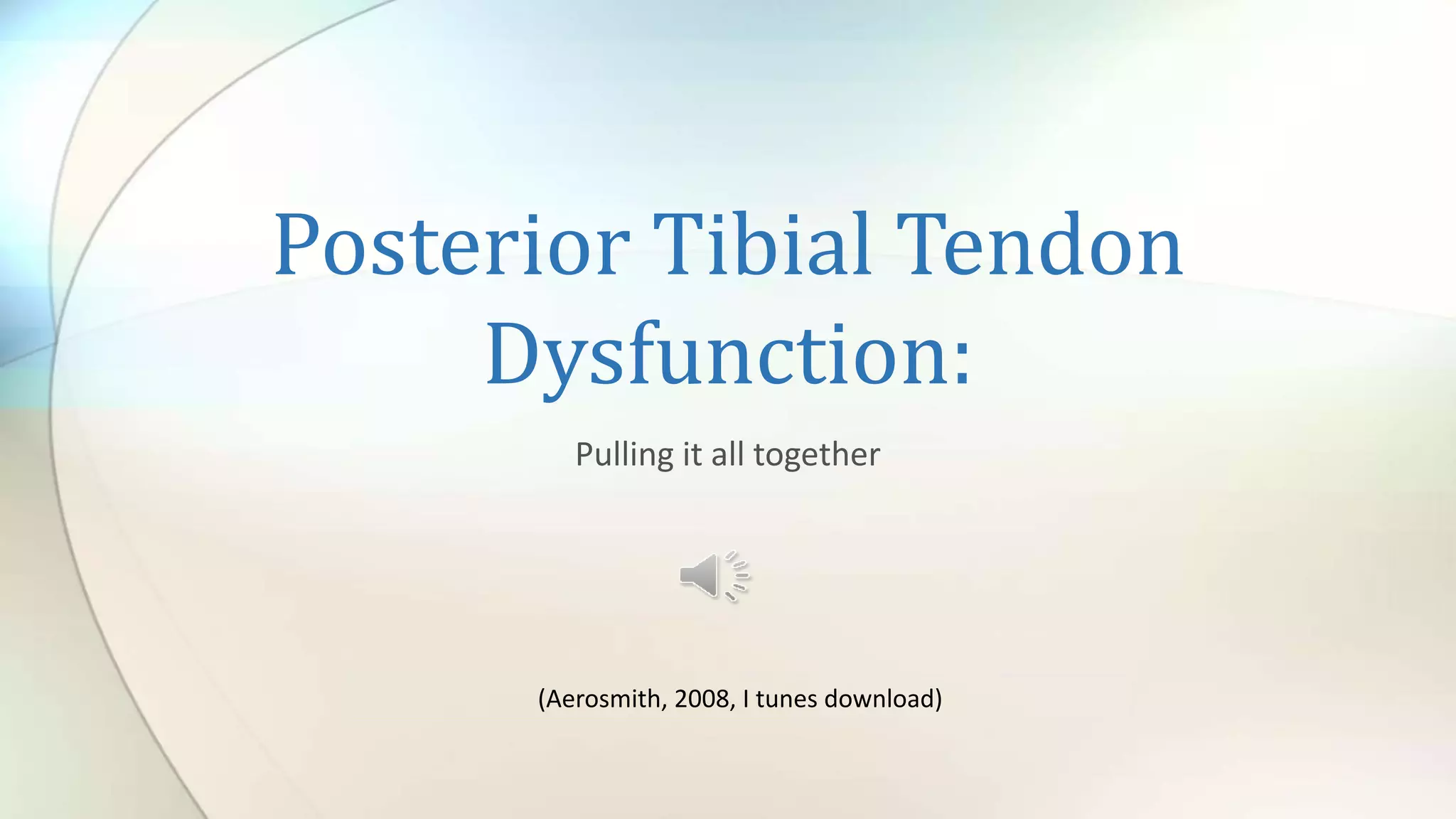
A Personal Reflection
Pictured Left- Dr. Kevin Bryant My Foot X-ray
My x-ray showing pathologic flat foot changes in
the lateral view
References
• Aerosmith (1980). Walk this way. Aerosmith’s Greatest Hits [I tunes download]. New York, NY: Columbia Records
• American Orthopaedic Foot and Ankle Society. (2017). Progressive flatfoot (posterior tibial tendon dysfunction).
Retrieved from http://www.aofas.org/footcaremd/conditions/ailments-of-the-midfoot/Pages/Progressive-
Flatfoot.aspx
• Bubra, P., Keighley, G., Rateesh, S., & Carmody, D. (2014). Posterior tibial tendon dysfucntion: An overlooked
cause of foot deformity. Journal of Family Medicine and Primary Care, 4(1), 26-29. doi: 10.4103/2249-
4863.152245
• Erol, K., Karahan, A., Kerimoglu, U., Ordahan, B., & Tekin, L. S. (2015). An important cause of pes planus: the
posterior tibial tendon dysfunction. Clinics and Practice, 5(699), 11-13.
• Kohls-Gatzoulis, J., Angel, J., Singh, D., Haddad, F., Livingstone, J., & Berry, G. (2004). Tibial posterior dysfunction:
A common and treatable cause of adult acquired flatfoot. British Medical Journal, 329, 1328-1333.
• Satomi, E., Teodoro, W., Parra, E., Fernandes, T., Velosa, A., Capeozzi, V., & Yoshinari, N. (2008). Changes in
histoanatomical distribution of types I, III and V collage promote adapative remodeling in posterior tibial tendon
rupture. Clinics, 63(1), 9-13. doi: 10.1590/S1807-59322008000100003

Pttd powerpoint

  • 1.
    Posterior Tibial Tendon Dysfunction: Pullingit all together (Aerosmith, 2008, I tunes download)
  • 2.
    Major Points • Thehuman body depends on tendons to connect muscles to bones and to stretch across joints allowing for movement (American Orthopaedic Foot and Ankle Society, 2017) • Posterior Tibial Tendon Dysfunction (PTTD) is a common cause of acquired flatfoot in adults (Kohls-Gatzoulis et al., 2004) • PTTD is most commonly seen in middle age women, individuals with a history of obesity, hypertension, or diabetes. PTTD may present in people who have suffered prior trauma to the foot (Bubra, Keighley, Rateesh and Carmody, 2015).
  • 3.
    • The posteriortibial tendon is hypo-vascularized where it extends around the medial malleolus. This area is prone to damage and rupture (Satomi et al., 2008). • For some people, microscopic changes in collagen structure and synthesis may interfere with tendon structure (Satomi et al., 2008 and Erol et al., 2015). • PTTD is diagnosed in stages (I-IV) (Bubra et al., 2015). • PTTD is painful, inflammatory in nature, and debilitating with a tendency to cause permanent foot malformation. In later stages, surgery may be the only treatment option.
  • 4.
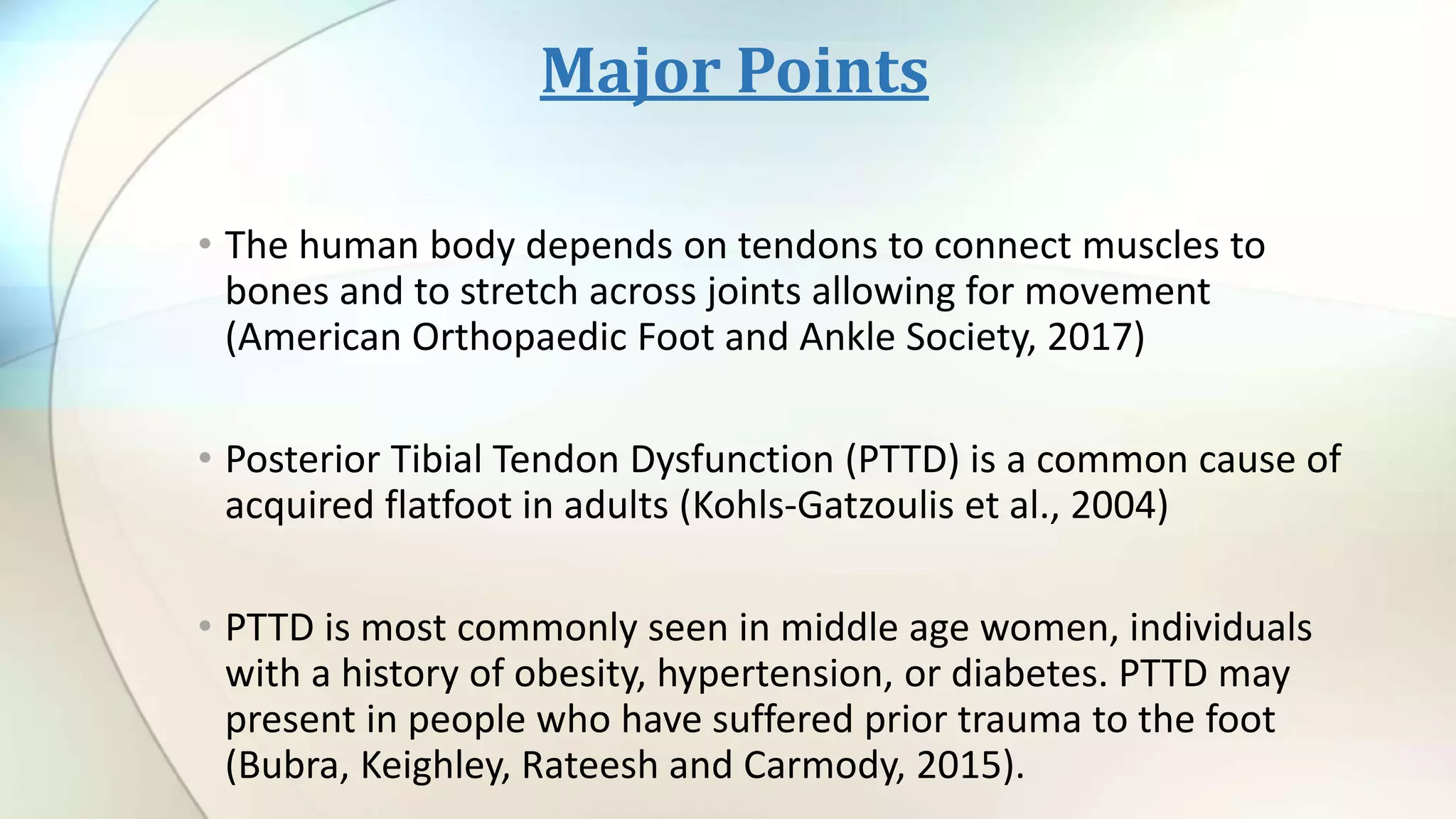
    A Personal Reflection PicturedLeft- Dr. Kevin Bryant My Foot X-ray My x-ray showing pathologic flat foot changes in the lateral view
  • 6.
    References • Aerosmith (1980).Walk this way. Aerosmith’s Greatest Hits [I tunes download]. New York, NY: Columbia Records • American Orthopaedic Foot and Ankle Society. (2017). Progressive flatfoot (posterior tibial tendon dysfunction). Retrieved from http://www.aofas.org/footcaremd/conditions/ailments-of-the-midfoot/Pages/Progressive- Flatfoot.aspx • Bubra, P., Keighley, G., Rateesh, S., & Carmody, D. (2014). Posterior tibial tendon dysfucntion: An overlooked cause of foot deformity. Journal of Family Medicine and Primary Care, 4(1), 26-29. doi: 10.4103/2249- 4863.152245 • Erol, K., Karahan, A., Kerimoglu, U., Ordahan, B., & Tekin, L. S. (2015). An important cause of pes planus: the posterior tibial tendon dysfunction. Clinics and Practice, 5(699), 11-13. • Kohls-Gatzoulis, J., Angel, J., Singh, D., Haddad, F., Livingstone, J., & Berry, G. (2004). Tibial posterior dysfunction: A common and treatable cause of adult acquired flatfoot. British Medical Journal, 329, 1328-1333. • Satomi, E., Teodoro, W., Parra, E., Fernandes, T., Velosa, A., Capeozzi, V., & Yoshinari, N. (2008). Changes in histoanatomical distribution of types I, III and V collage promote adapative remodeling in posterior tibial tendon rupture. Clinics, 63(1), 9-13. doi: 10.1590/S1807-59322008000100003