Psycho-Sensory Principles of Brand-Building 
The Attribution Bias 
Frank Schab | CEO Six-Degrees Brand-Building 
01
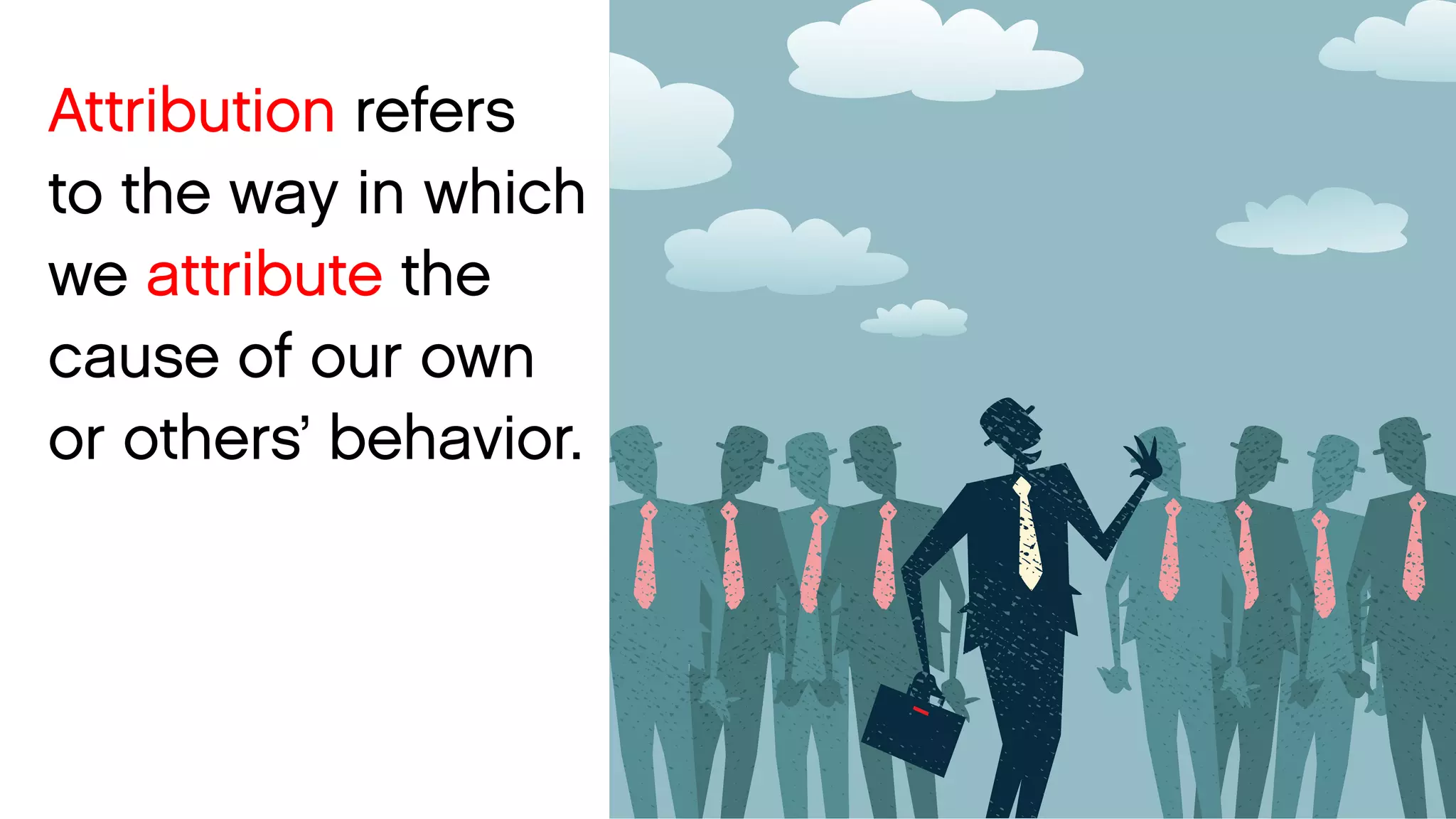
Attribution refers to the way in which we attribute the cause of our own 
or others’ behavior.
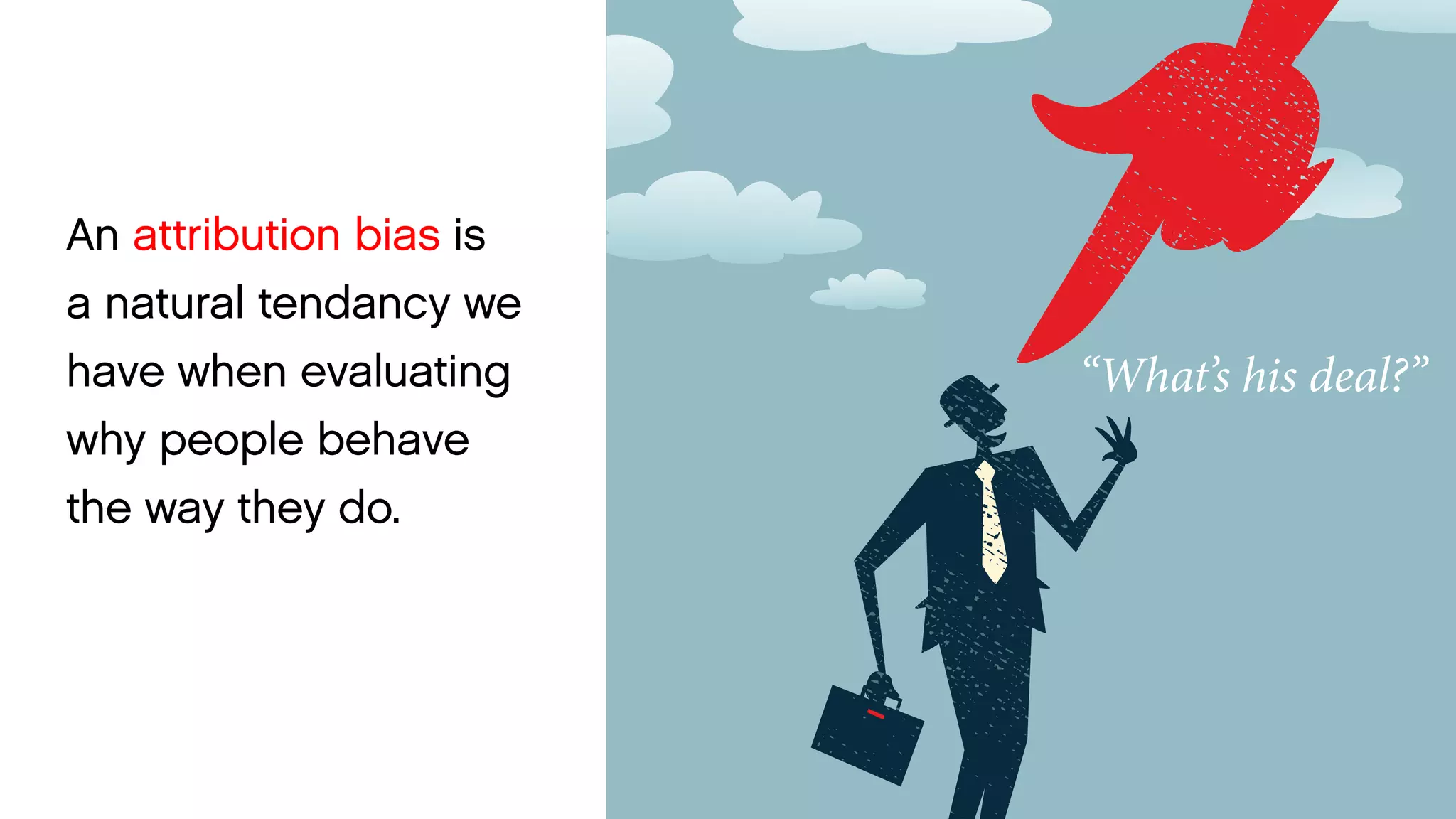
An attribution bias is a natural tendancy we have when evaluating why people behave 
the way they do. 
“What’s his deal?”
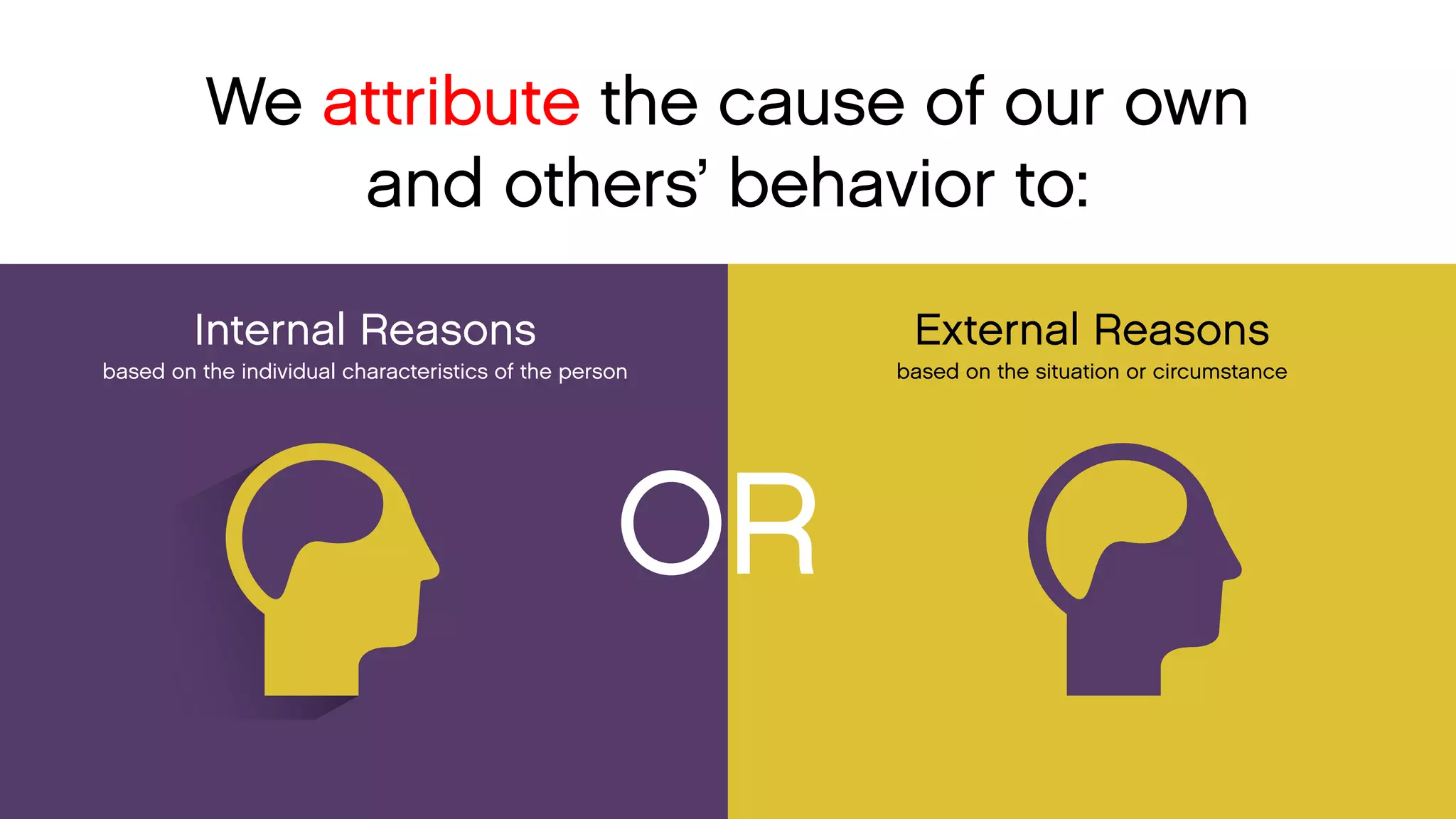
We attribute the cause of our own 
and others’ behavior to: 
External Reasons 
based on the situation or circumstance 
Internal Reasons 
based on the individual characteristics of the person 
OR
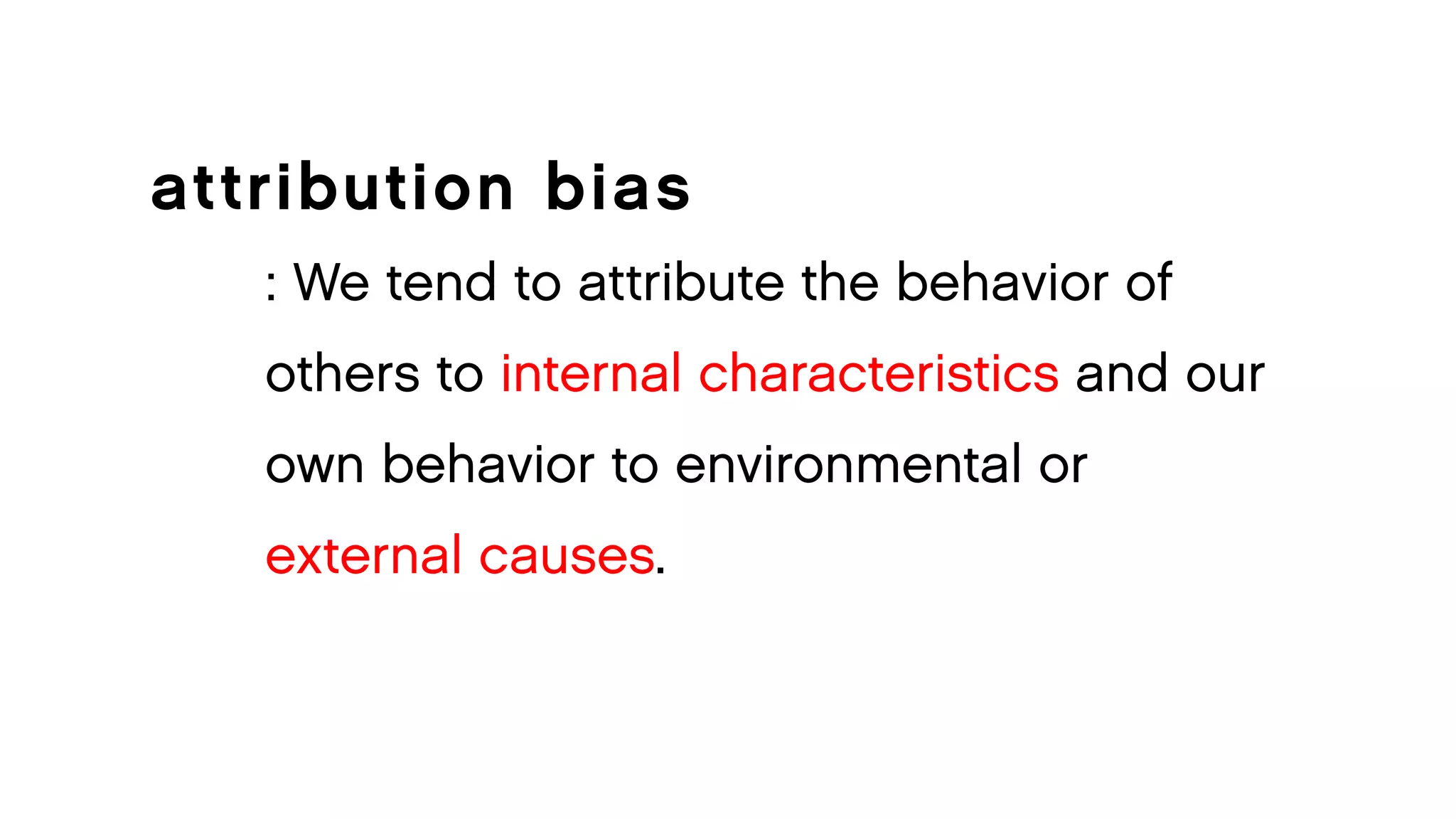
attribution bias 
: We tend to attribute the behavior of 
others to internal characteristics and our 
own behavior to environmental or 
external causes.
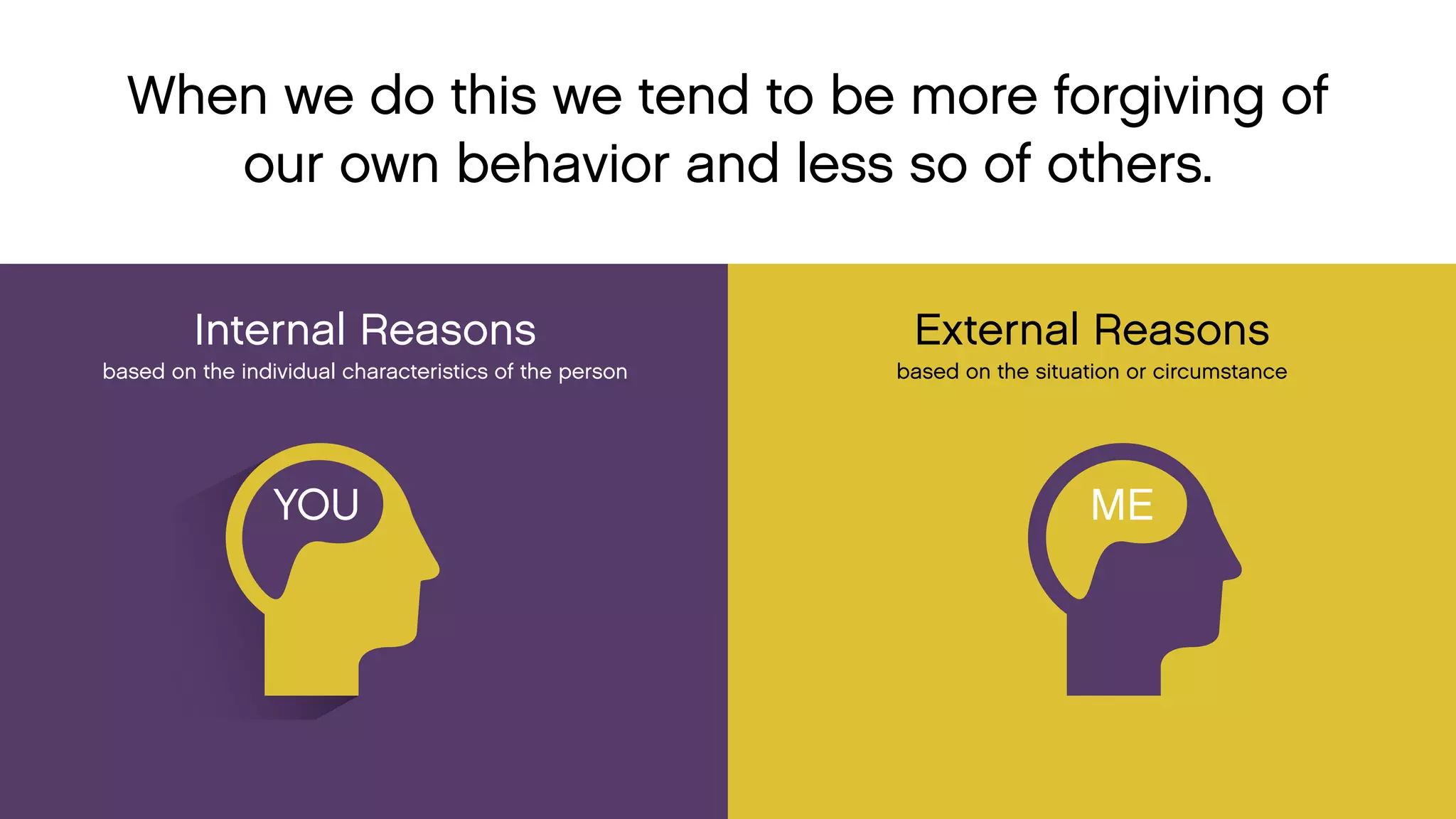
When we do this we tend to be more forgiving of 
our own behavior and less so of others. 
External Reasons 
based on the situation or circumstance 
Internal Reasons 
based on the individual characteristics of the person 
ME 
YOU
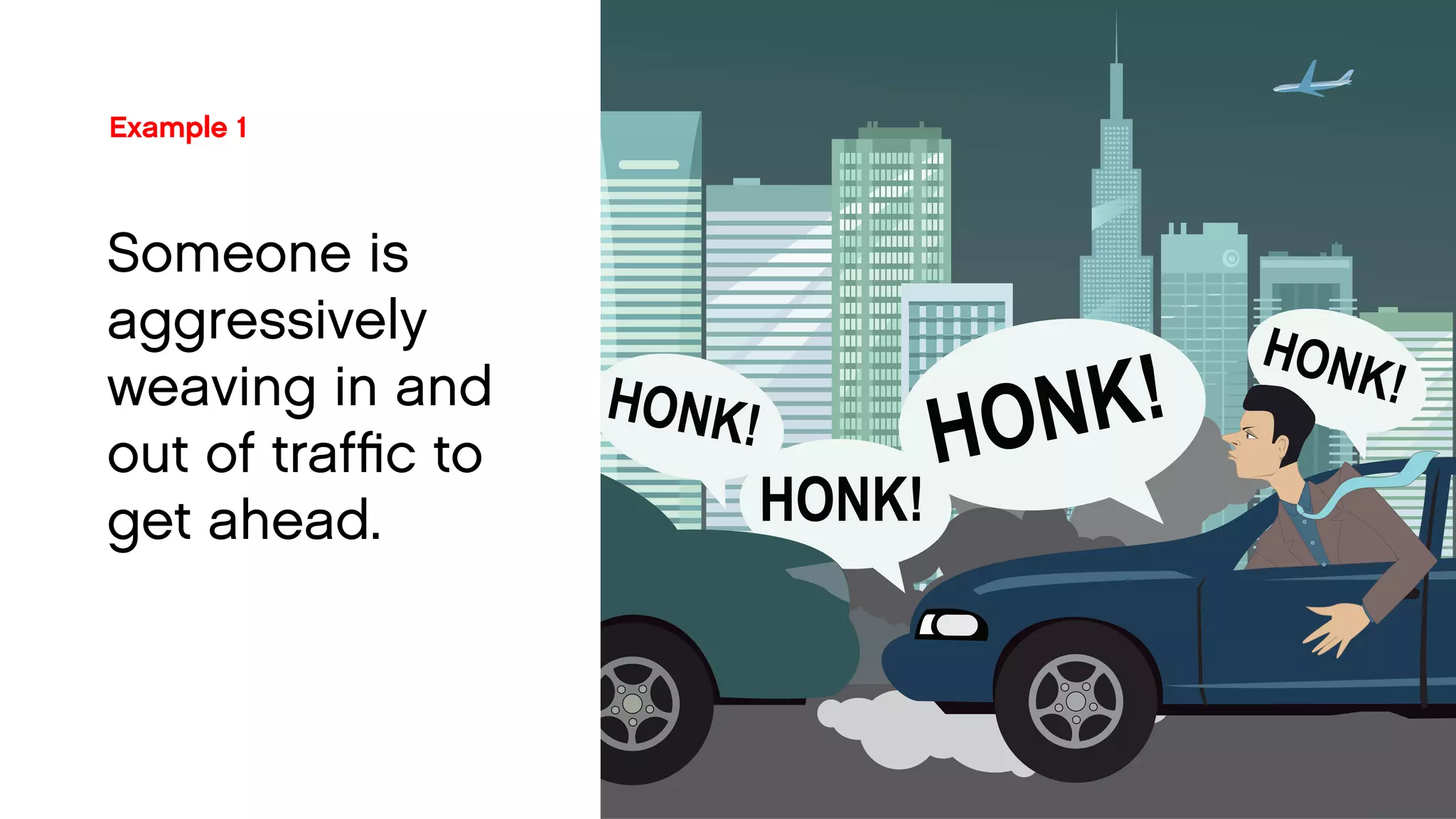
Example 1 
Someone is 
aggressively 
weaving in and 
out of traffic to 
get ahead.
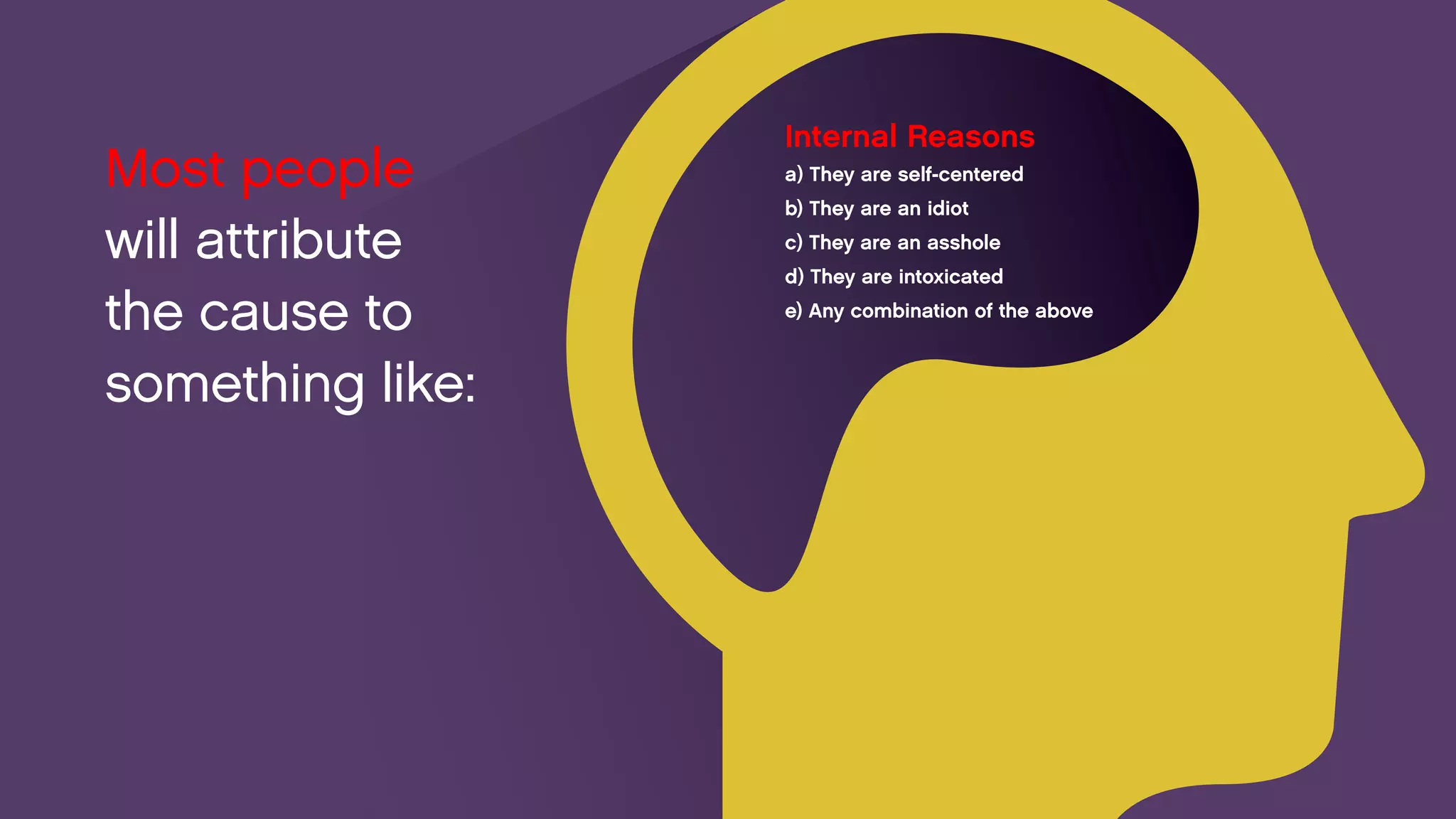
Most people 
will attribute 
the cause to something like: 
Internal Reasons 
a) They are self-centered 
b) They are an idiot 
c) They are an asshole 
d) They are intoxicated 
e) Any combination of the above
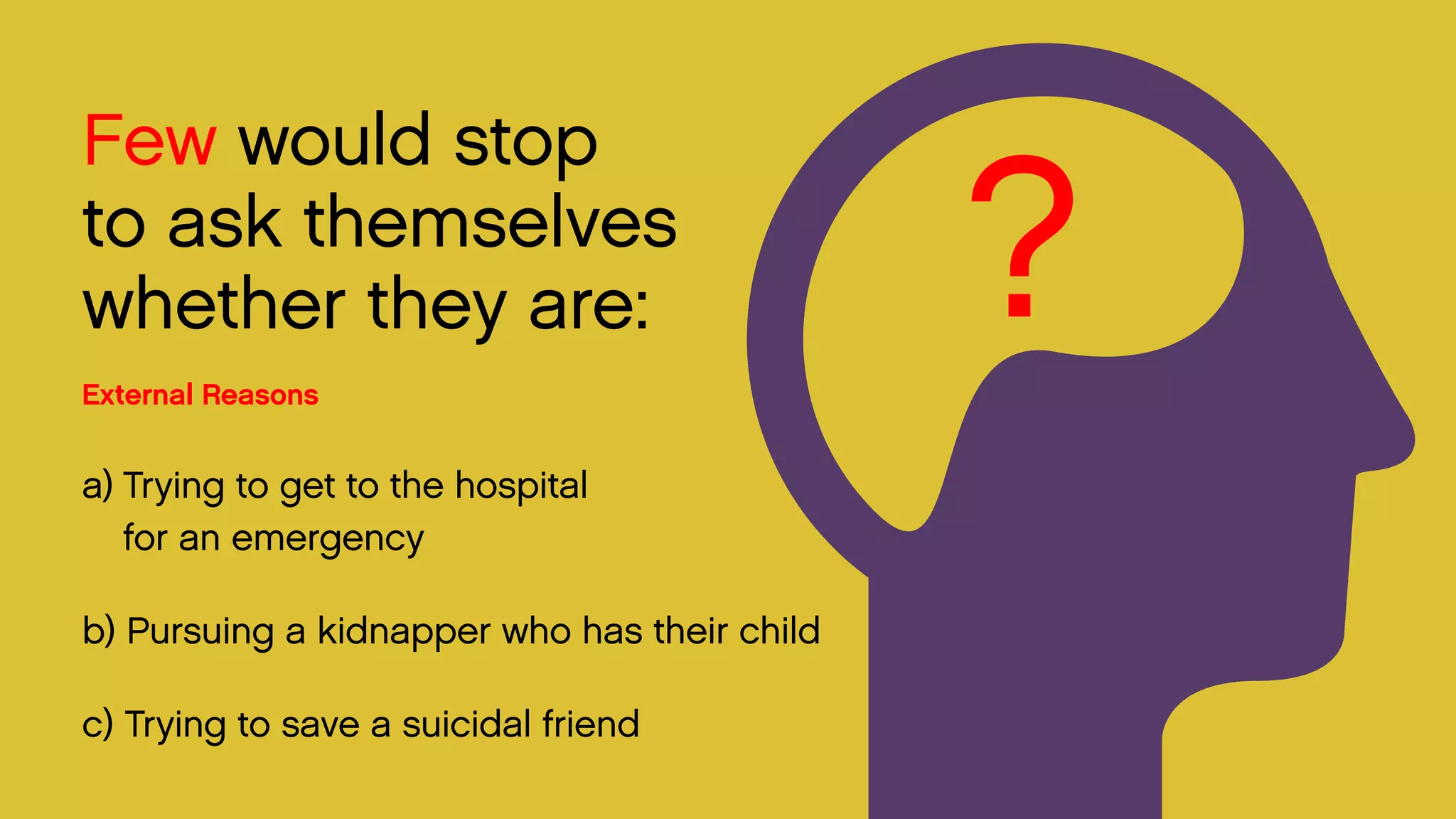
Few would stop 
to ask themselves whether they are: 
External Reasons 
a) Trying to get to the hospital 
for an emergency 
b) Pursuing a kidnapper who has their child 
c) Trying to save a suicidal friend 
?
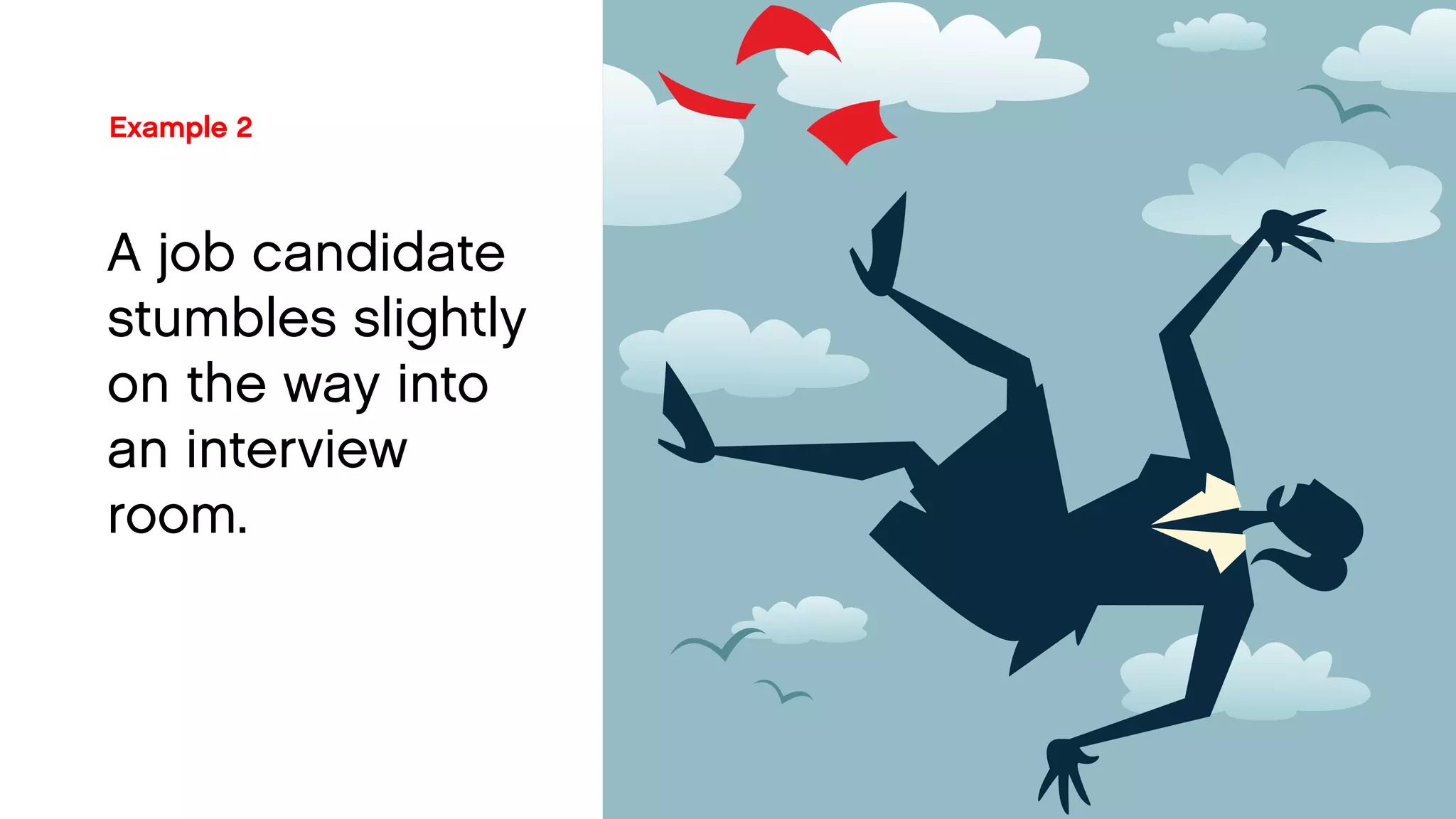
Example 2 
A job candidate stumbles slightly on the way into 
an interview room.
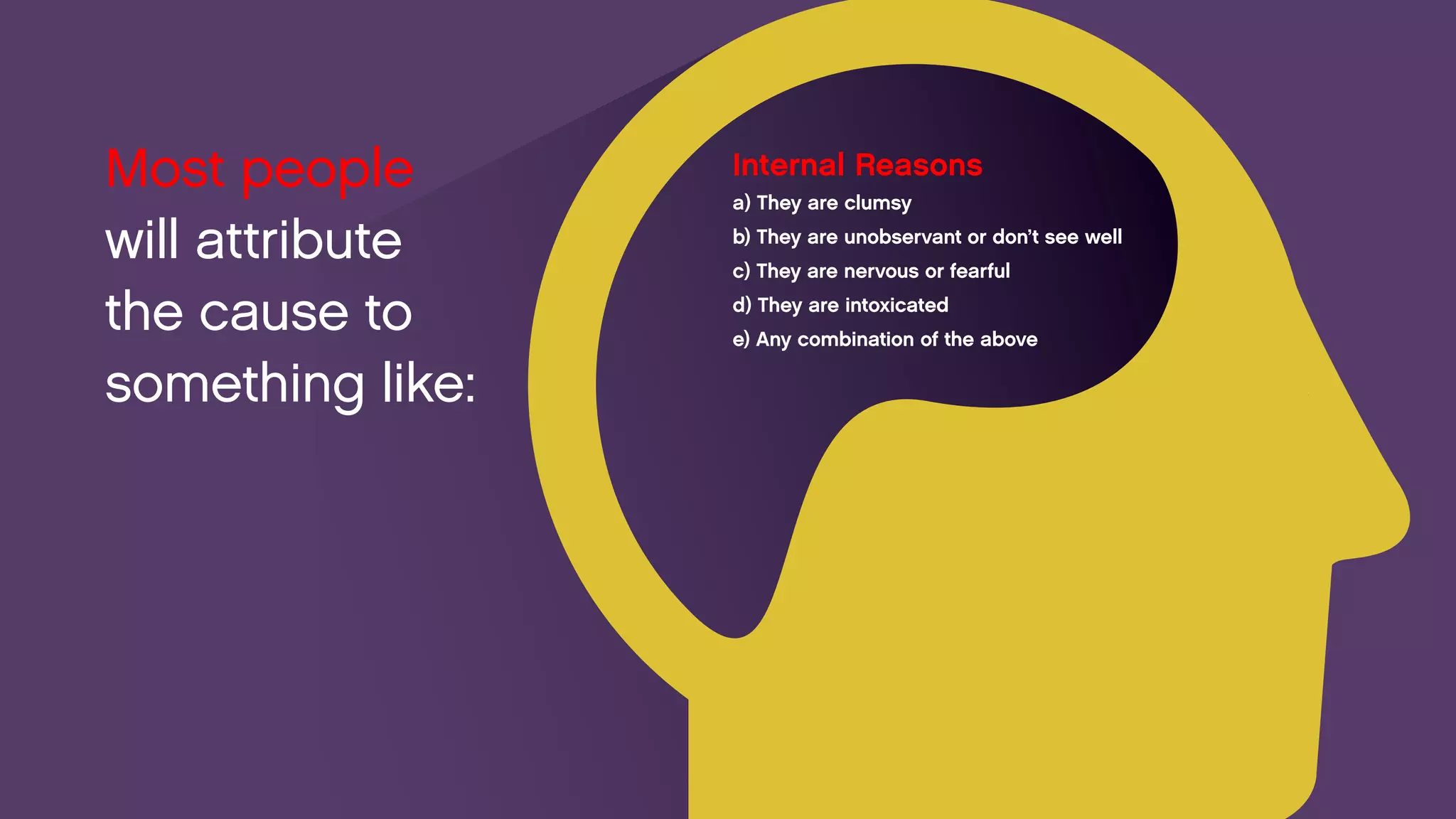
Internal Reasons 
a) They are clumsy 
b) They are unobservant or don’t see well 
c) They are nervous or fearful 
d) They are intoxicated 
e) Any combination of the above 
Most people 
will attribute 
the cause to something like:
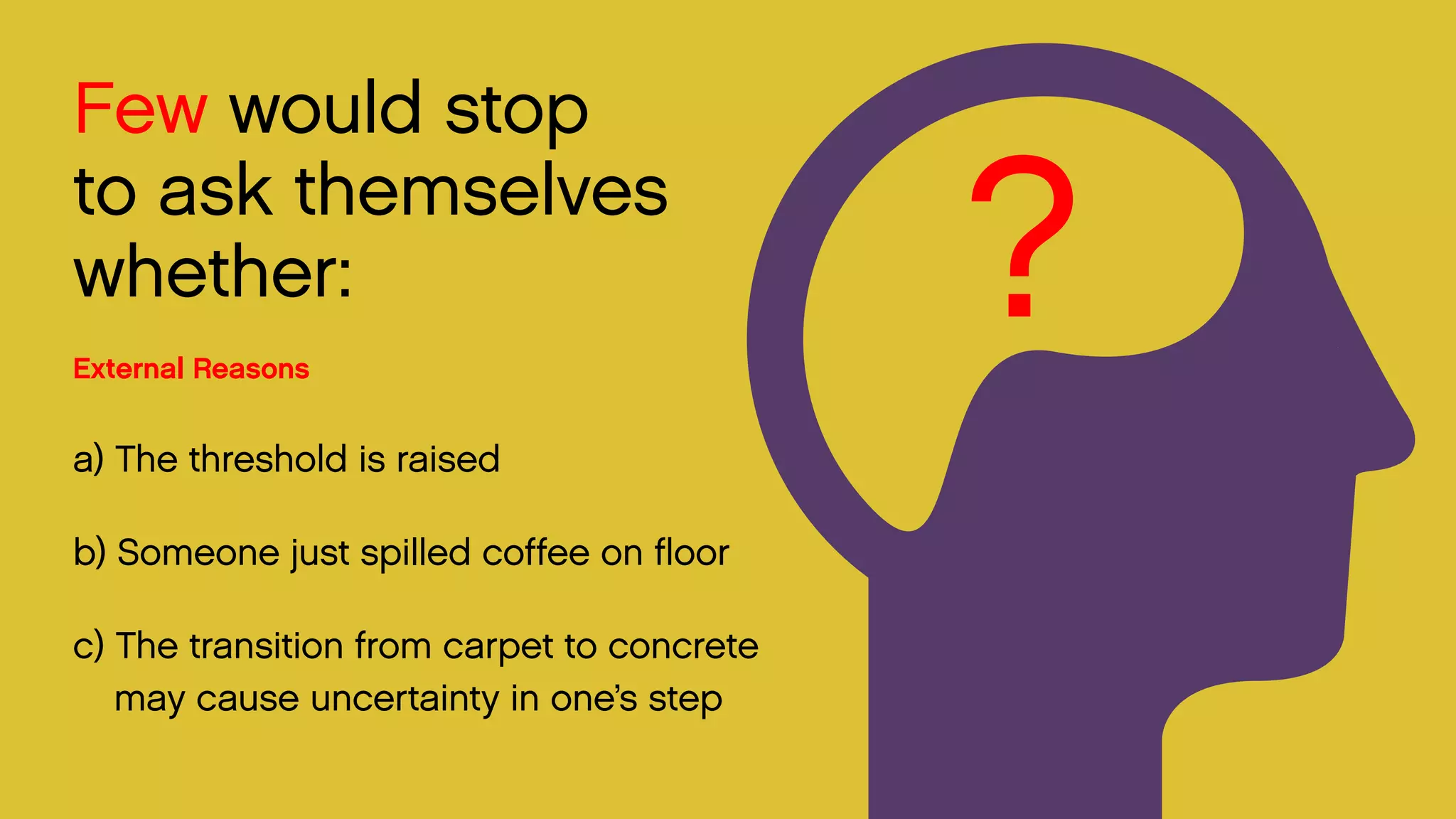
Few would stop 
to ask themselves whether: 
External Reasons 
a) The threshold is raised 
b) Someone just spilled coffee on floor 
c) The transition from carpet to concrete may cause uncertainty in one’s step 
?
So, what does this mean for brands?
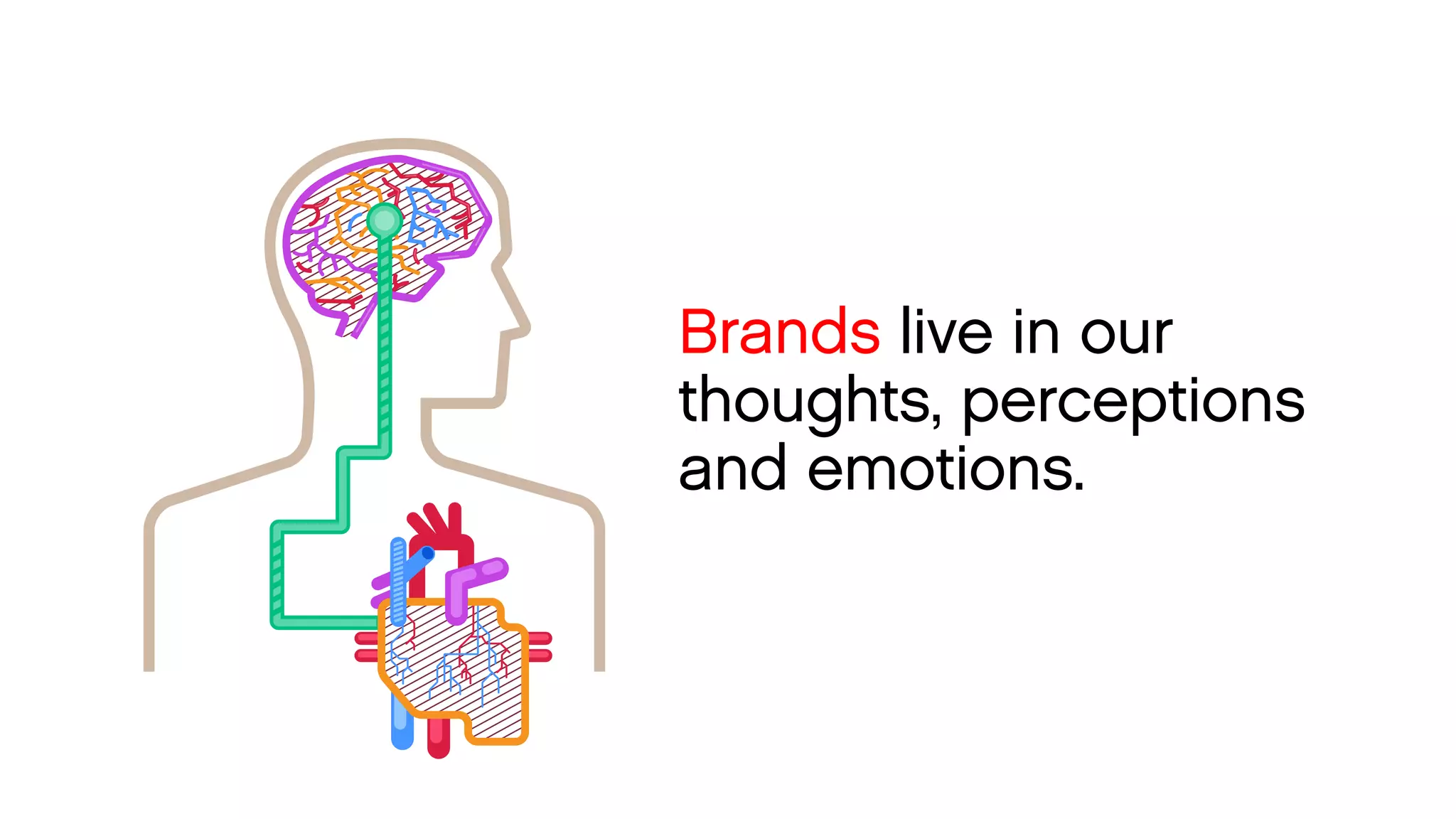
Brands live in our thoughts, perceptions 
and emotions.
That means when a brand does something, or something happens 
to it, that brand is subject to the same attribution bias that affects 
how we interpret human behavior.
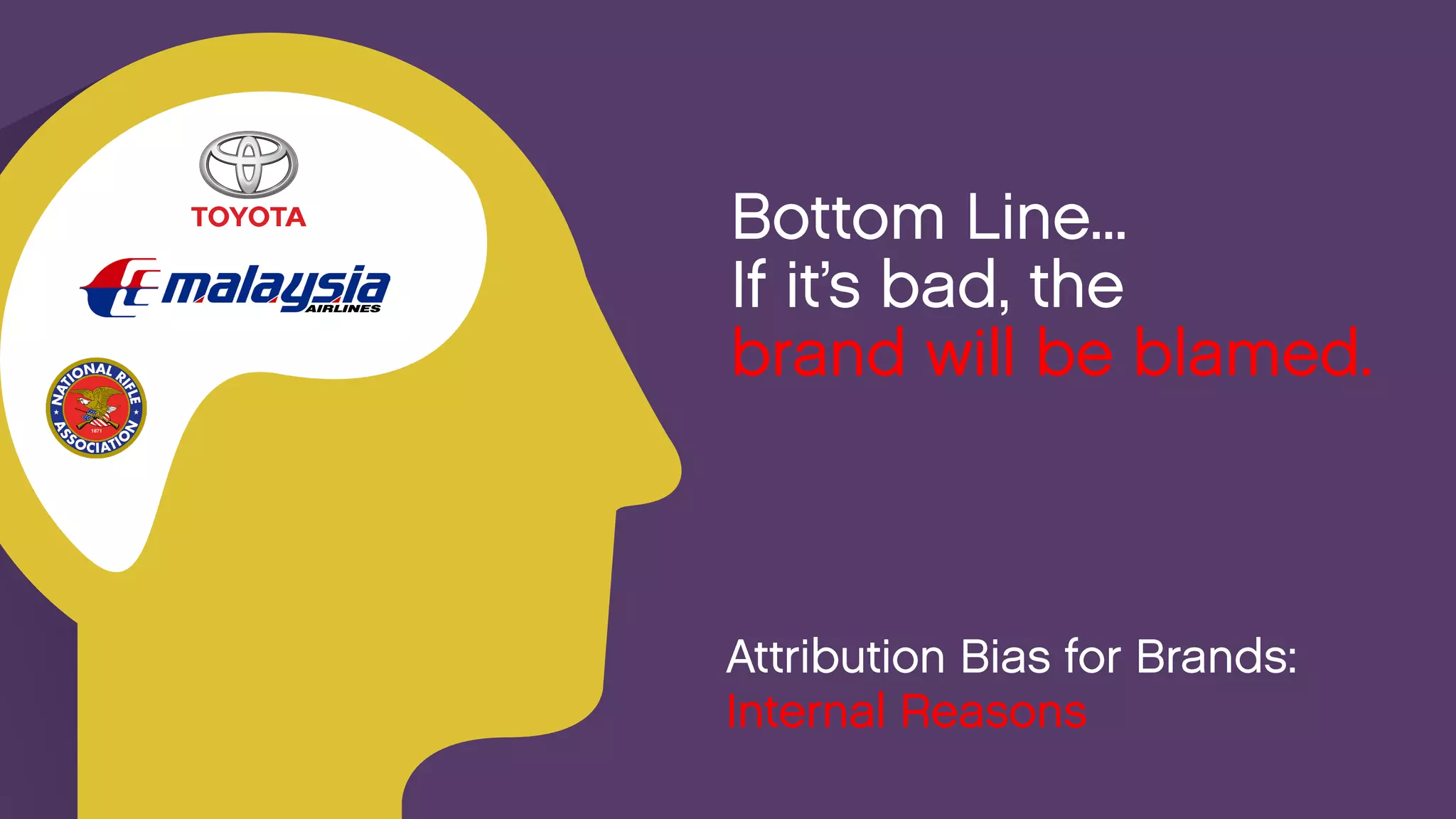
Bottom Line... 
If it’s bad, the 
brand will be blamed. 
Attribution Bias for Brands: 
Internal Reasons
Internal Reasons 
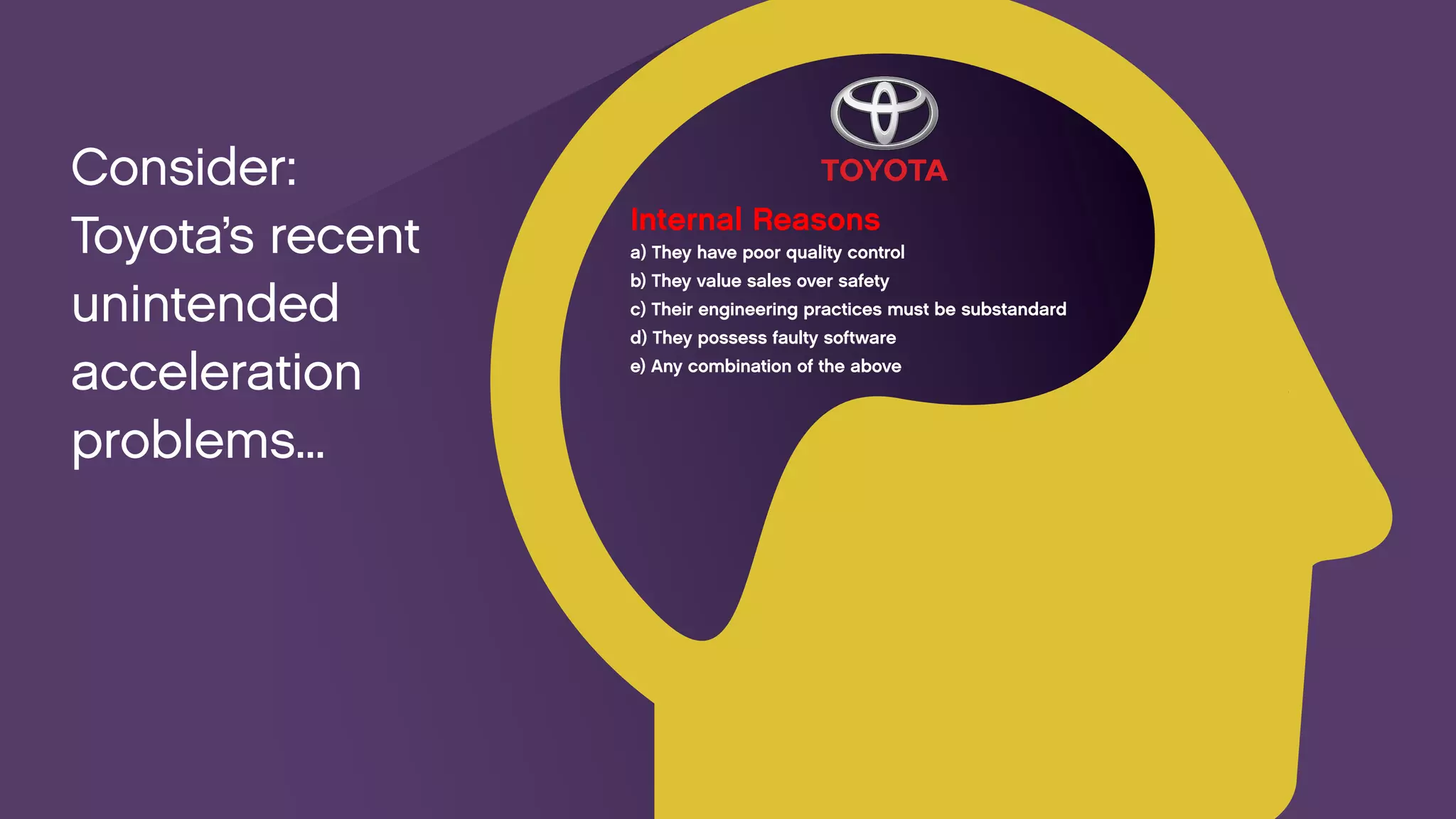
a) They have poor quality control 
b) They value sales over safety 
c) Their engineering practices must be substandard 
d) They possess faulty software 
e) Any combination of the above 
Consider: 
Toyota’s recent unintended 
acceleration problems...
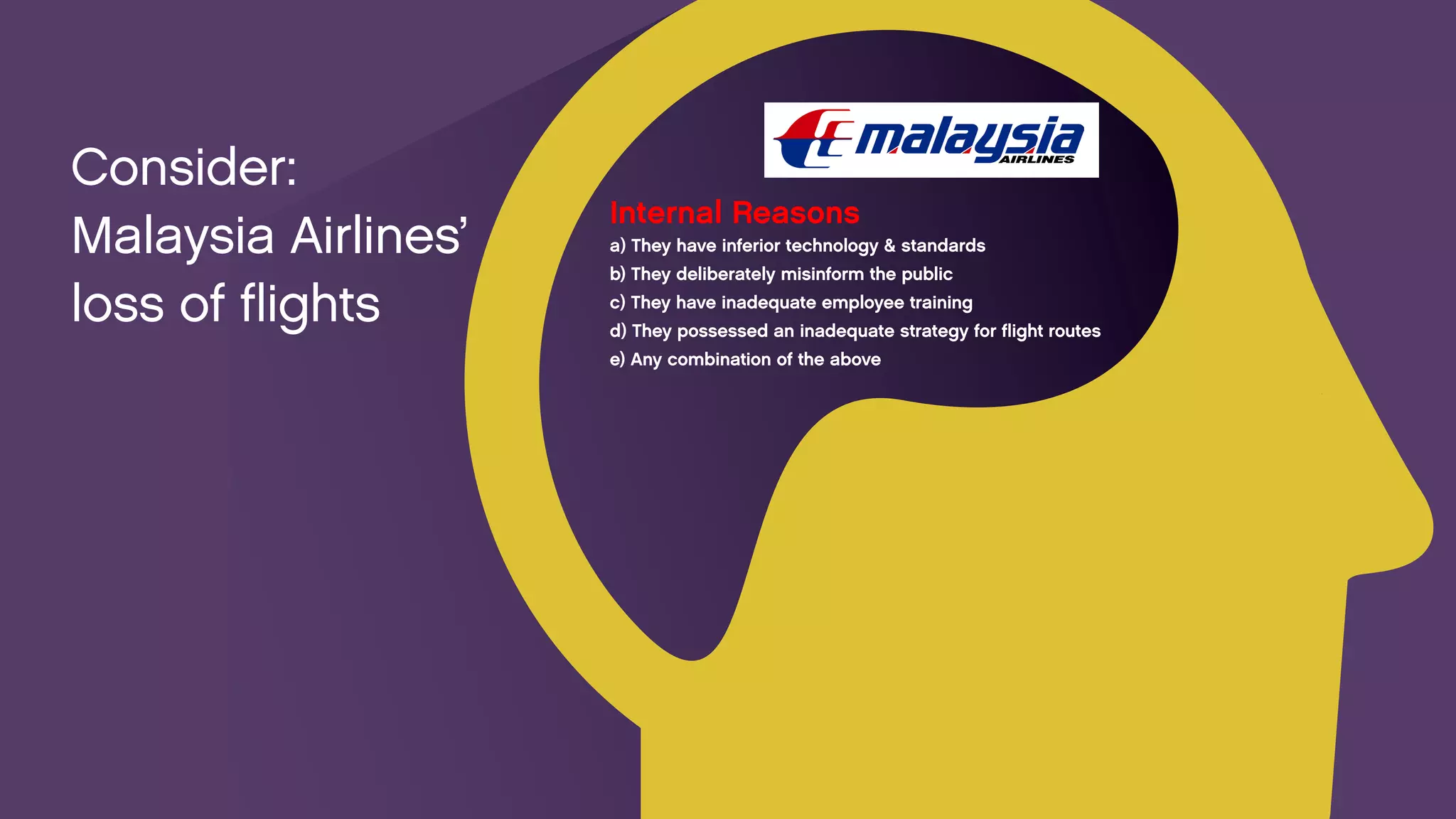
Internal Reasons 
a) They have inferior technology & standards 
b) They deliberately misinform the public 
c) They have inadequate employee training 
d) They possessed an inadequate strategy for flight routes 
e) Any combination of the above 
Consider: 
Malaysia Airlines’ loss of flights
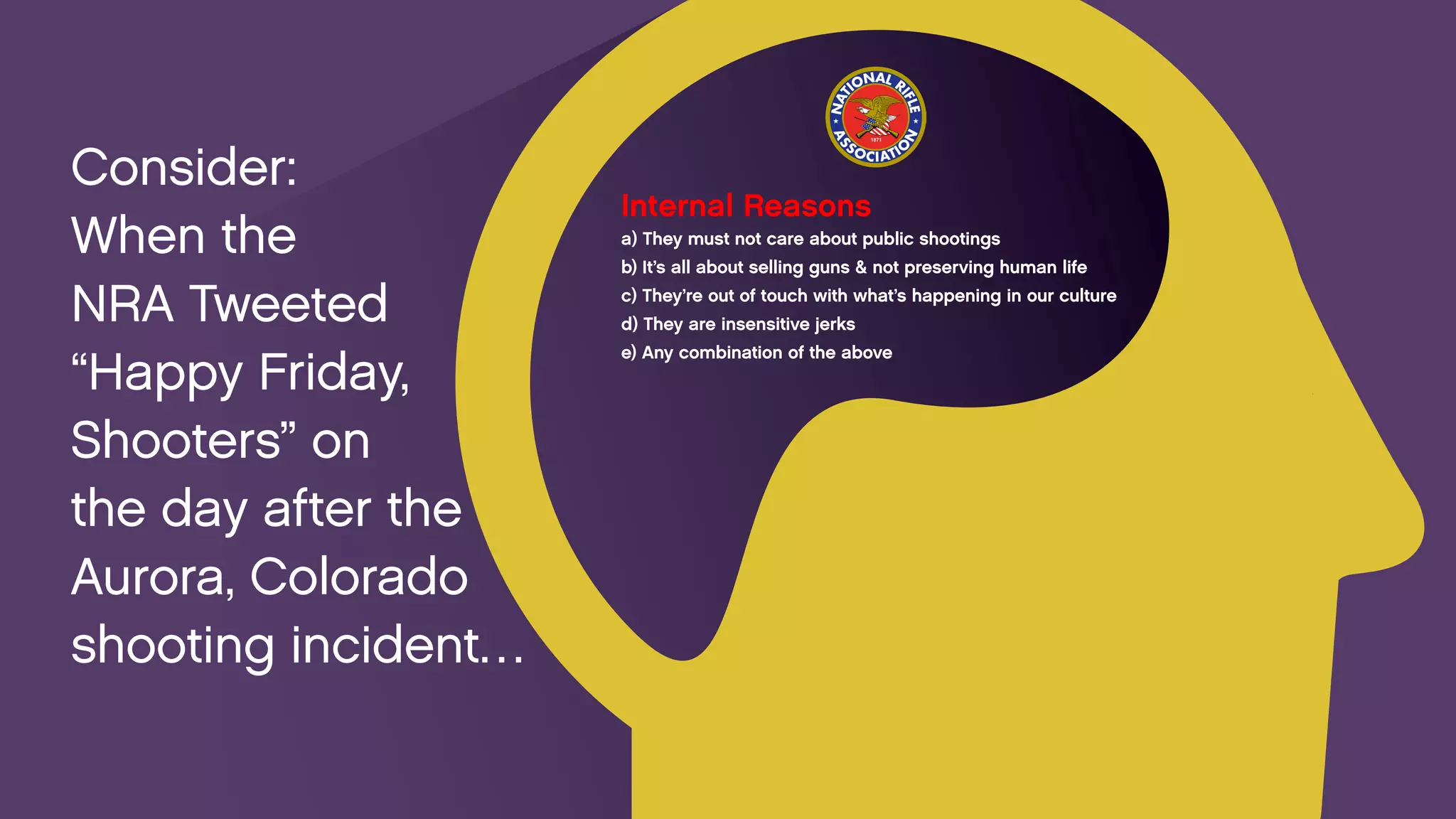
Internal Reasons 
a) They must not care about public shootings 
b) It’s all about selling guns & not preserving human life 
c) They’re out of touch with what’s happening in our culture 
d) They are insensitive jerks 
e) Any combination of the above 
Consider: 
When the 
NRA Tweeted 
“Happy Friday, 
Shooters” on 
the day after the 
Aurora, Colorado 
shooting incident…
The Lesson 
Because… 
the public will have the tendency to attribute bad news or behaviors 
to a brand’s character… 
It should… 
Plan for the negative eventualities and leverage them for the positives!
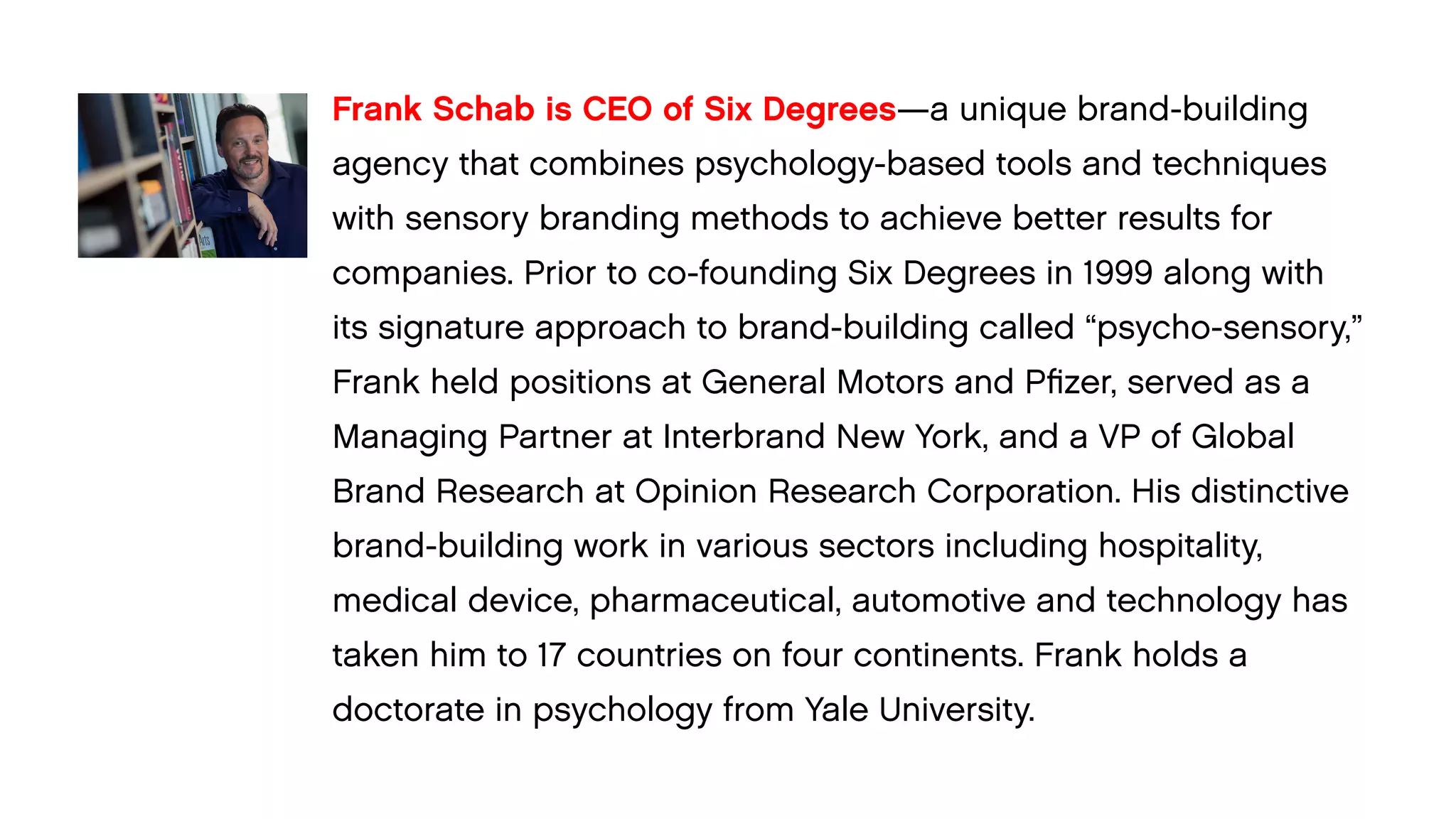
Frank Schab is CEO of Six Degrees—a unique brand-building agency that combines psychology-based tools and techniques with sensory branding methods to achieve better results for 
companies. Prior to co-founding Six Degrees in 1999 along with 
its signature approach to brand-building called “psycho-sensory,” Frank held positions at General Motors and Pfizer, served as a Managing Partner at Interbrand New York, and a VP of Global Brand Research at Opinion Research Corporation. His distinctive brand-building work in various sectors including hospitality, 
medical device, pharmaceutical, automotive and technology has taken him to 17 countries on four continents. Frank holds a 
doctorate in psychology from Yale University.
PSYCHO-SENSORY 
BRAND-BUILDING 
Psychology-based tools & techniques 
+ sensory branding methods 
Learn more at: www.six-degrees.com

Psycho-Sensory Principles of Brand-Building: The Attribution Bias

  • 1.
    Psycho-Sensory Principles ofBrand-Building The Attribution Bias Frank Schab | CEO Six-Degrees Brand-Building 01
  • 2.
    Attribution refers tothe way in which we attribute the cause of our own or others’ behavior.
  • 3.
    An attribution biasis a natural tendancy we have when evaluating why people behave the way they do. “What’s his deal?”
  • 4.
    We attribute thecause of our own and others’ behavior to: External Reasons based on the situation or circumstance Internal Reasons based on the individual characteristics of the person OR
  • 5.
    attribution bias :We tend to attribute the behavior of others to internal characteristics and our own behavior to environmental or external causes.
  • 6.
    When we dothis we tend to be more forgiving of our own behavior and less so of others. External Reasons based on the situation or circumstance Internal Reasons based on the individual characteristics of the person ME YOU
  • 7.
    Example 1 Someoneis aggressively weaving in and out of traffic to get ahead.
  • 8.
    Most people willattribute the cause to something like: Internal Reasons a) They are self-centered b) They are an idiot c) They are an asshole d) They are intoxicated e) Any combination of the above
  • 9.
    Few would stop to ask themselves whether they are: External Reasons a) Trying to get to the hospital for an emergency b) Pursuing a kidnapper who has their child c) Trying to save a suicidal friend ?
  • 10.
    Example 2 Ajob candidate stumbles slightly on the way into an interview room.
  • 11.
    Internal Reasons a)They are clumsy b) They are unobservant or don’t see well c) They are nervous or fearful d) They are intoxicated e) Any combination of the above Most people will attribute the cause to something like:
  • 12.
    Few would stop to ask themselves whether: External Reasons a) The threshold is raised b) Someone just spilled coffee on floor c) The transition from carpet to concrete may cause uncertainty in one’s step ?
  • 13.
    So, what doesthis mean for brands?
  • 14.
    Brands live inour thoughts, perceptions and emotions.
  • 15.
    That means whena brand does something, or something happens to it, that brand is subject to the same attribution bias that affects how we interpret human behavior.
  • 16.
    Bottom Line... Ifit’s bad, the brand will be blamed. Attribution Bias for Brands: Internal Reasons
  • 17.
    Internal Reasons a)They have poor quality control b) They value sales over safety c) Their engineering practices must be substandard d) They possess faulty software e) Any combination of the above Consider: Toyota’s recent unintended acceleration problems...
  • 18.
    Internal Reasons a)They have inferior technology & standards b) They deliberately misinform the public c) They have inadequate employee training d) They possessed an inadequate strategy for flight routes e) Any combination of the above Consider: Malaysia Airlines’ loss of flights
  • 19.
    Internal Reasons a)They must not care about public shootings b) It’s all about selling guns & not preserving human life c) They’re out of touch with what’s happening in our culture d) They are insensitive jerks e) Any combination of the above Consider: When the NRA Tweeted “Happy Friday, Shooters” on the day after the Aurora, Colorado shooting incident…
  • 20.
    The Lesson Because… the public will have the tendency to attribute bad news or behaviors to a brand’s character… It should… Plan for the negative eventualities and leverage them for the positives!
  • 21.
    Frank Schab isCEO of Six Degrees—a unique brand-building agency that combines psychology-based tools and techniques with sensory branding methods to achieve better results for companies. Prior to co-founding Six Degrees in 1999 along with its signature approach to brand-building called “psycho-sensory,” Frank held positions at General Motors and Pfizer, served as a Managing Partner at Interbrand New York, and a VP of Global Brand Research at Opinion Research Corporation. His distinctive brand-building work in various sectors including hospitality, medical device, pharmaceutical, automotive and technology has taken him to 17 countries on four continents. Frank holds a doctorate in psychology from Yale University.
  • 22.
    PSYCHO-SENSORY BRAND-BUILDING Psychology-basedtools & techniques + sensory branding methods Learn more at: www.six-degrees.com