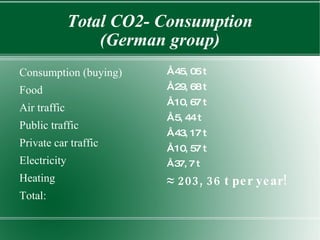
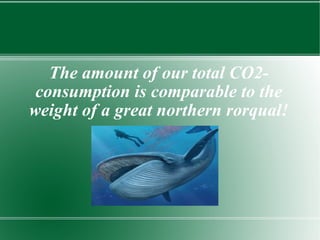
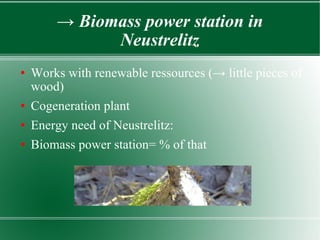
The document discusses carbon footprint and ways to reduce CO2 emissions. It provides data showing that the total CO2 consumption of a German group is over 200,000 tons per year, comparable to the weight of a great northern rorqual whale. It then lists numerous possibilities for reducing emissions through changes in daily life such as using energy efficient appliances and lightbulbs, line drying clothes, lowering heating, and reducing car and air travel. Local renewable energy projects in Neustrelitz that generate energy from biomass are highlighted as an example.