
 Prostaglandins and related compounds are collectively known
as eicosanoids, they all contain 20C parent cyclopentane ring.
 Discovered by Ulf Von Euler (1930), extracted from human
semen (prostate gland).
 Produced & released by nearly all mammalian cells;(Except
RBCs)
 Perform a variety of functions
 Produced in minute amounts and are not stored.
 Have a half-life of 5 minutes or less, hence they are destroyed
very rapidly in the body.
INTRODUCTION

CLASSIFICATION

 The structure of PG is based on 20C parent saturated acid
called “Prostanoic Acid”
STRUCTURE
 All PGs are 20C fatty acids containing a cyclopentane
ring.
 All PGs have:
 -OH group at 15th position, some at 19th
 trans double bond at 13th position

BIOSYNTHESIS OF PROSTAGLANDINS

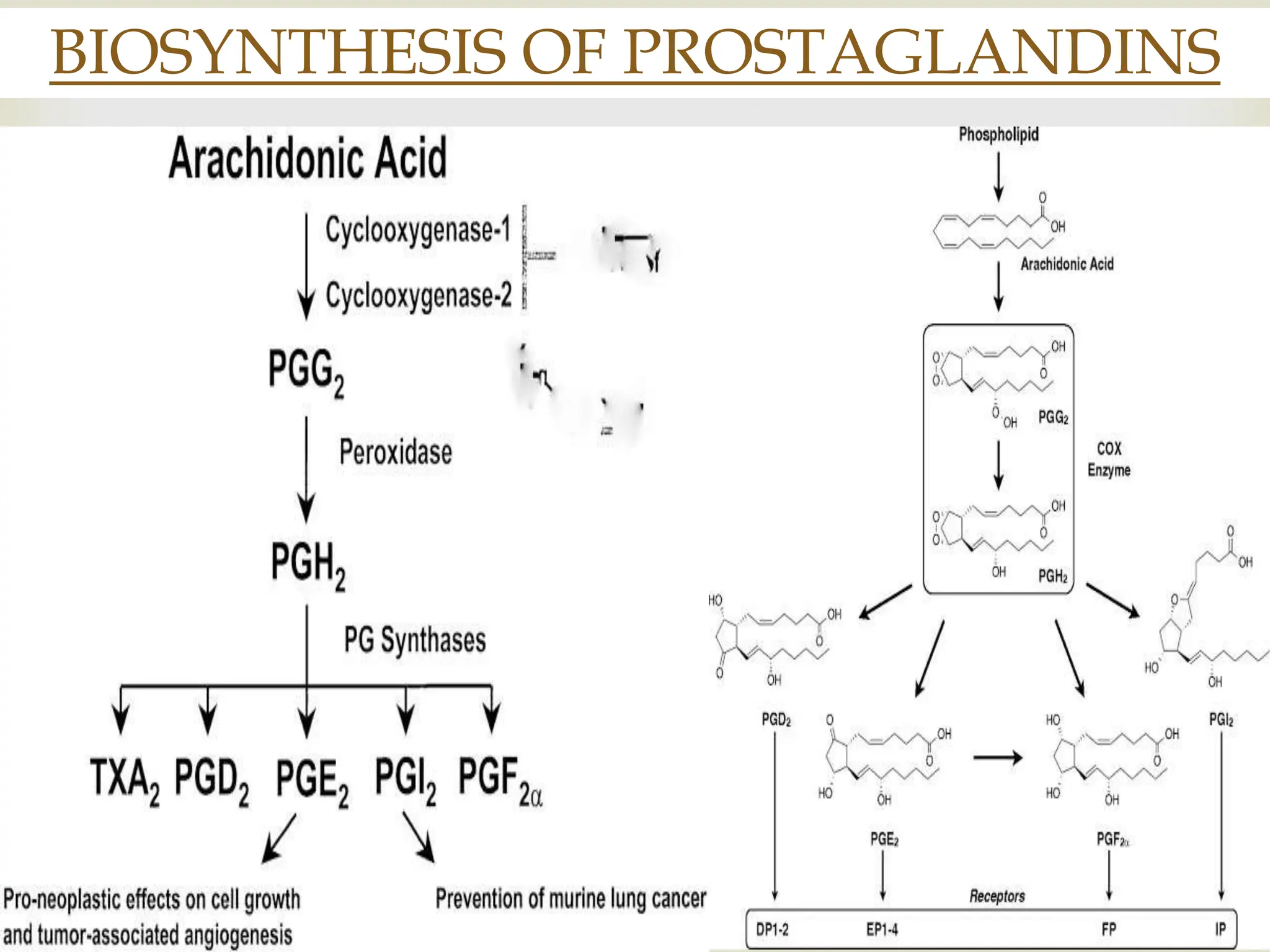
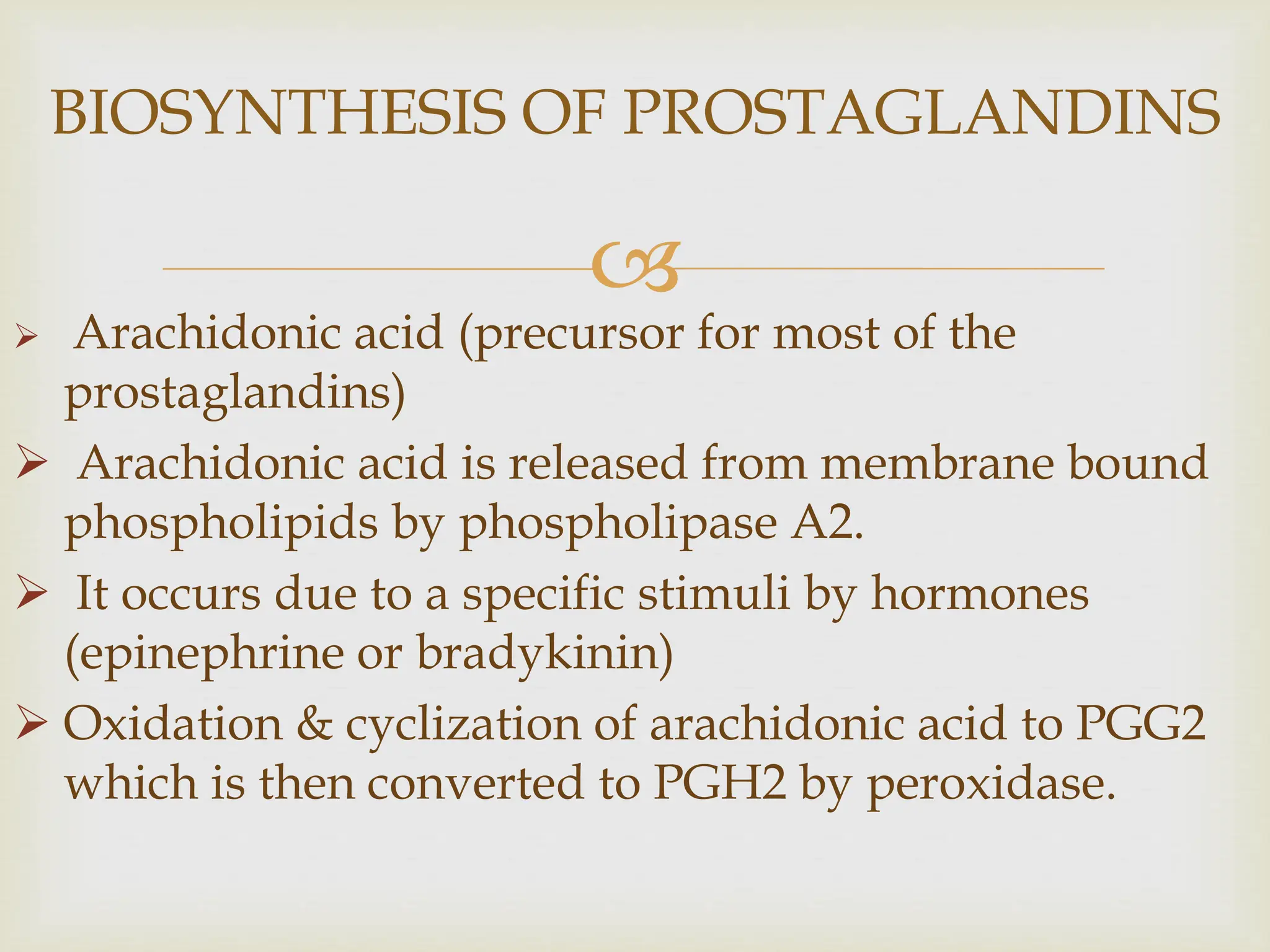
 Arachidonic acid (precursor for most of the
prostaglandins)
 Arachidonic acid is released from membrane bound
phospholipids by phospholipase A2.
 It occurs due to a specific stimuli by hormones
(epinephrine or bradykinin)
 Oxidation & cyclization of arachidonic acid to PGG2
which is then converted to PGH2 by peroxidase.
BIOSYNTHESIS OF PROSTAGLANDINS

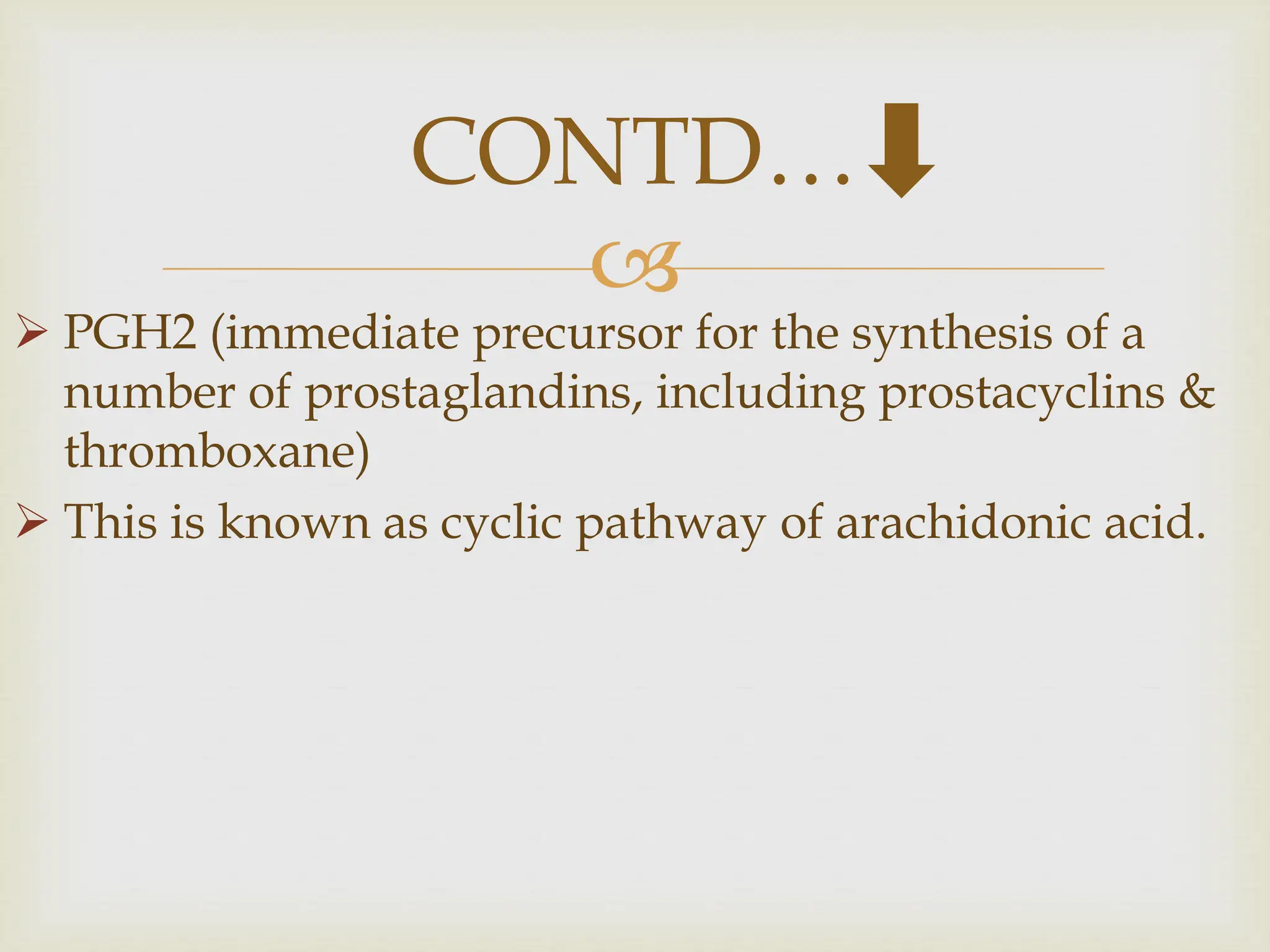
 PGH2 (immediate precursor for the synthesis of a
number of prostaglandins, including prostacyclins &
thromboxane)
 This is known as cyclic pathway of arachidonic acid.
CONTD…

 Act as local hormones:
 Regulation of blood pressure : PGE, PGA & PGl2 increased
blood flow and decreased peripheral resistance to lower the
blood pressure.
 Inflammation: PGEI & PGE2 induce the symptoms of
inflammation (redness, swelling, edema etc.) due to arteriolar
vasodilation.
 Reproduction: PGE2 & PGF2 are used for the medical
termination of pregnancy & induction of labor.
 Regulation of gastric secretion: PGs stimulate pancreatic
secretion & increase the motility of intestine which often causes
diarrhea.
BIOCHEMICAL ACTIONS OF
PROSTAGLANDINS

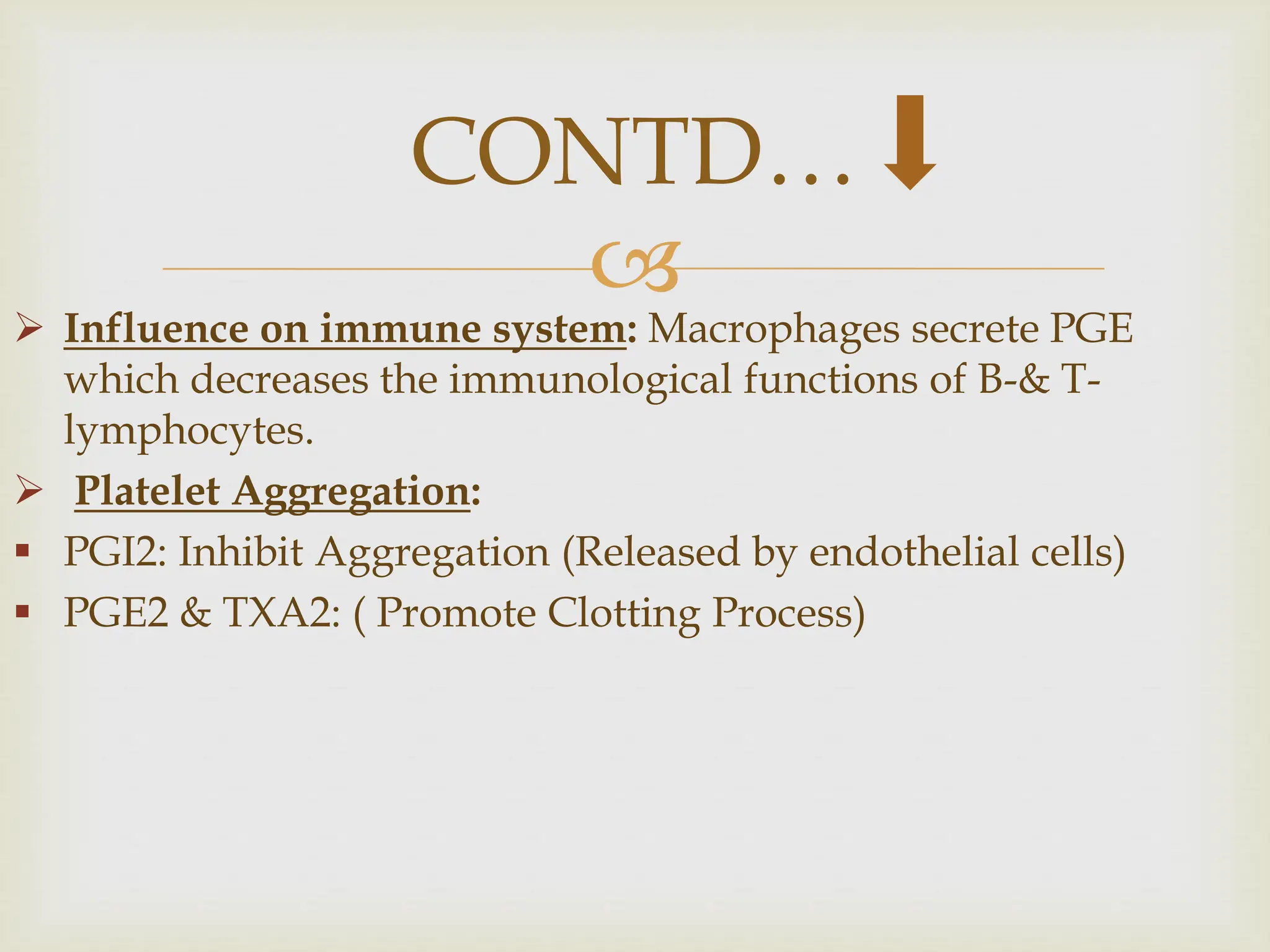
 Influence on immune system: Macrophages secrete PGE
which decreases the immunological functions of B-& T-
lymphocytes.
 Platelet Aggregation:
 PGI2: Inhibit Aggregation (Released by endothelial cells)
 PGE2 & TXA2: ( Promote Clotting Process)
CONTD…

(NSAIDs)
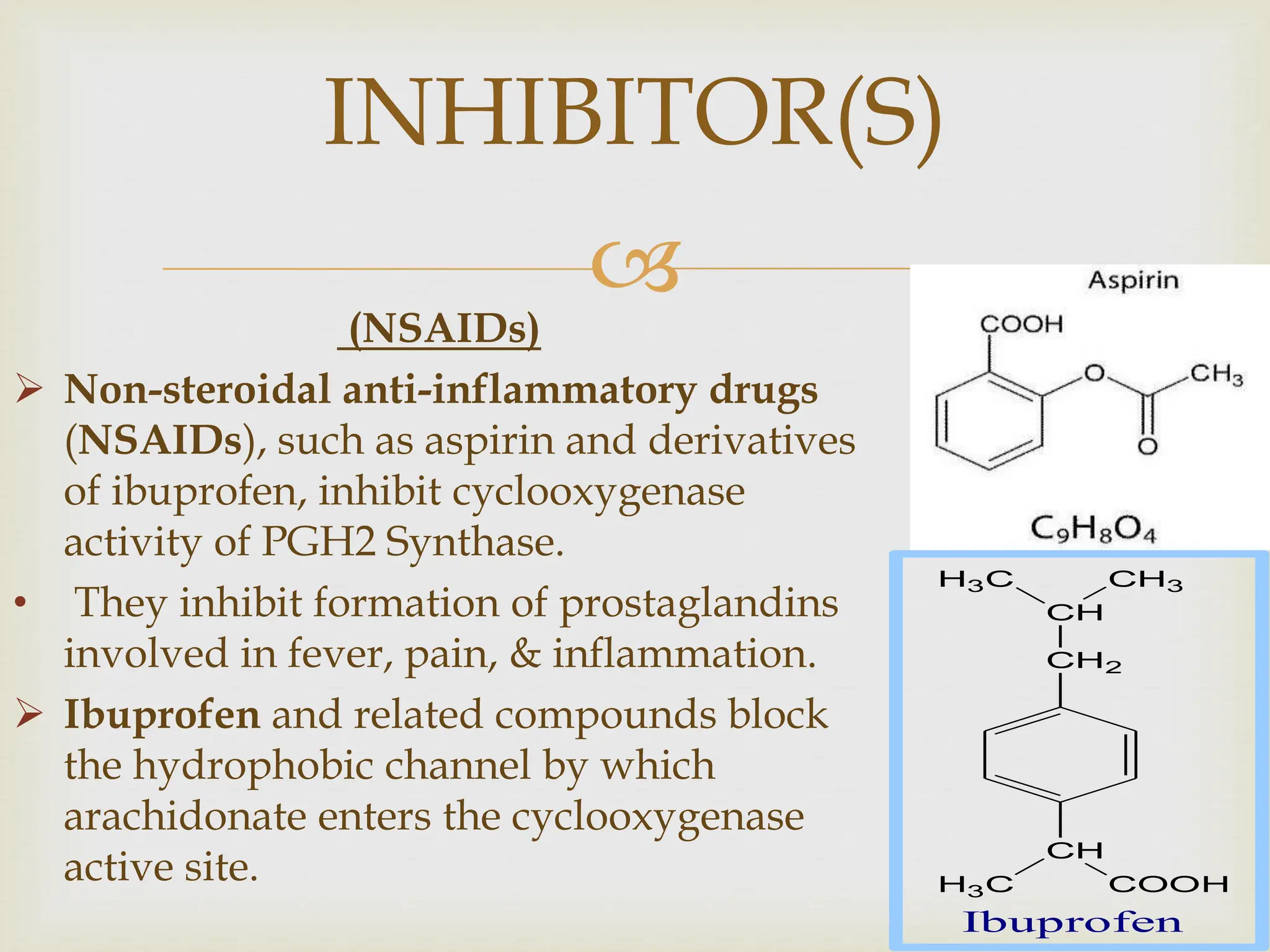
 Non-steroidal anti-inflammatory drugs
(NSAIDs), such as aspirin and derivatives
of ibuprofen, inhibit cyclooxygenase
activity of PGH2 Synthase.
• They inhibit formation of prostaglandins
involved in fever, pain, & inflammation.
 Ibuprofen and related compounds block
the hydrophobic channel by which
arachidonate enters the cyclooxygenase
active site.
INHIBITOR(S)
CH
COOH
H3C
CH2
CH
CH3
H3C
Ibuprofen


 Aspirin acetylates a serine hydroxyl group near the active site,
preventing arachidonate binding.
 The inhibition by aspirin is irreversible.
Anti inflammatory Drugs inhibit Eicosanoid Synthesis

 Yes aspirin-like drugs inhibited the formation of
prostaglandins , but it does have some side effects.
 Aspirin is not recommended for patients with low risk of heart
attack or stroke or those having history of gastric ulcers or have
genetic problem like clotting such as Hemophilia.
 Aspirin is not also recommended for babies and children
because it may cause Reye’s syndrome which involves life
threatening damage to both the liver and brain
CONCLUSION


PROSTAGLANDINS.pptx

  • 2.
      Prostaglandins andrelated compounds are collectively known as eicosanoids, they all contain 20C parent cyclopentane ring.  Discovered by Ulf Von Euler (1930), extracted from human semen (prostate gland).  Produced & released by nearly all mammalian cells;(Except RBCs)  Perform a variety of functions  Produced in minute amounts and are not stored.  Have a half-life of 5 minutes or less, hence they are destroyed very rapidly in the body. INTRODUCTION
  • 3.
  • 4.
      The structureof PG is based on 20C parent saturated acid called “Prostanoic Acid” STRUCTURE  All PGs are 20C fatty acids containing a cyclopentane ring.  All PGs have:  -OH group at 15th position, some at 19th  trans double bond at 13th position
  • 5.
  • 6.
      Arachidonic acid(precursor for most of the prostaglandins)  Arachidonic acid is released from membrane bound phospholipids by phospholipase A2.  It occurs due to a specific stimuli by hormones (epinephrine or bradykinin)  Oxidation & cyclization of arachidonic acid to PGG2 which is then converted to PGH2 by peroxidase. BIOSYNTHESIS OF PROSTAGLANDINS
  • 7.
      PGH2 (immediateprecursor for the synthesis of a number of prostaglandins, including prostacyclins & thromboxane)  This is known as cyclic pathway of arachidonic acid. CONTD…
  • 8.
      Act aslocal hormones:  Regulation of blood pressure : PGE, PGA & PGl2 increased blood flow and decreased peripheral resistance to lower the blood pressure.  Inflammation: PGEI & PGE2 induce the symptoms of inflammation (redness, swelling, edema etc.) due to arteriolar vasodilation.  Reproduction: PGE2 & PGF2 are used for the medical termination of pregnancy & induction of labor.  Regulation of gastric secretion: PGs stimulate pancreatic secretion & increase the motility of intestine which often causes diarrhea. BIOCHEMICAL ACTIONS OF PROSTAGLANDINS
  • 9.
      Influence onimmune system: Macrophages secrete PGE which decreases the immunological functions of B-& T- lymphocytes.  Platelet Aggregation:  PGI2: Inhibit Aggregation (Released by endothelial cells)  PGE2 & TXA2: ( Promote Clotting Process) CONTD…
  • 10.
     (NSAIDs)  Non-steroidal anti-inflammatorydrugs (NSAIDs), such as aspirin and derivatives of ibuprofen, inhibit cyclooxygenase activity of PGH2 Synthase. • They inhibit formation of prostaglandins involved in fever, pain, & inflammation.  Ibuprofen and related compounds block the hydrophobic channel by which arachidonate enters the cyclooxygenase active site. INHIBITOR(S) CH COOH H3C CH2 CH CH3 H3C Ibuprofen
  • 11.
  • 12.
      Aspirin acetylatesa serine hydroxyl group near the active site, preventing arachidonate binding.  The inhibition by aspirin is irreversible. Anti inflammatory Drugs inhibit Eicosanoid Synthesis
  • 13.
      Yes aspirin-likedrugs inhibited the formation of prostaglandins , but it does have some side effects.  Aspirin is not recommended for patients with low risk of heart attack or stroke or those having history of gastric ulcers or have genetic problem like clotting such as Hemophilia.  Aspirin is not also recommended for babies and children because it may cause Reye’s syndrome which involves life threatening damage to both the liver and brain CONCLUSION
  • 14.