PROPER USE OF
TOOLS
TLE - ICT
What are the
components of
Computer System?
Review
Review
Review
Give an example of
Operating System
Review
Give an example of
Operating System
Review
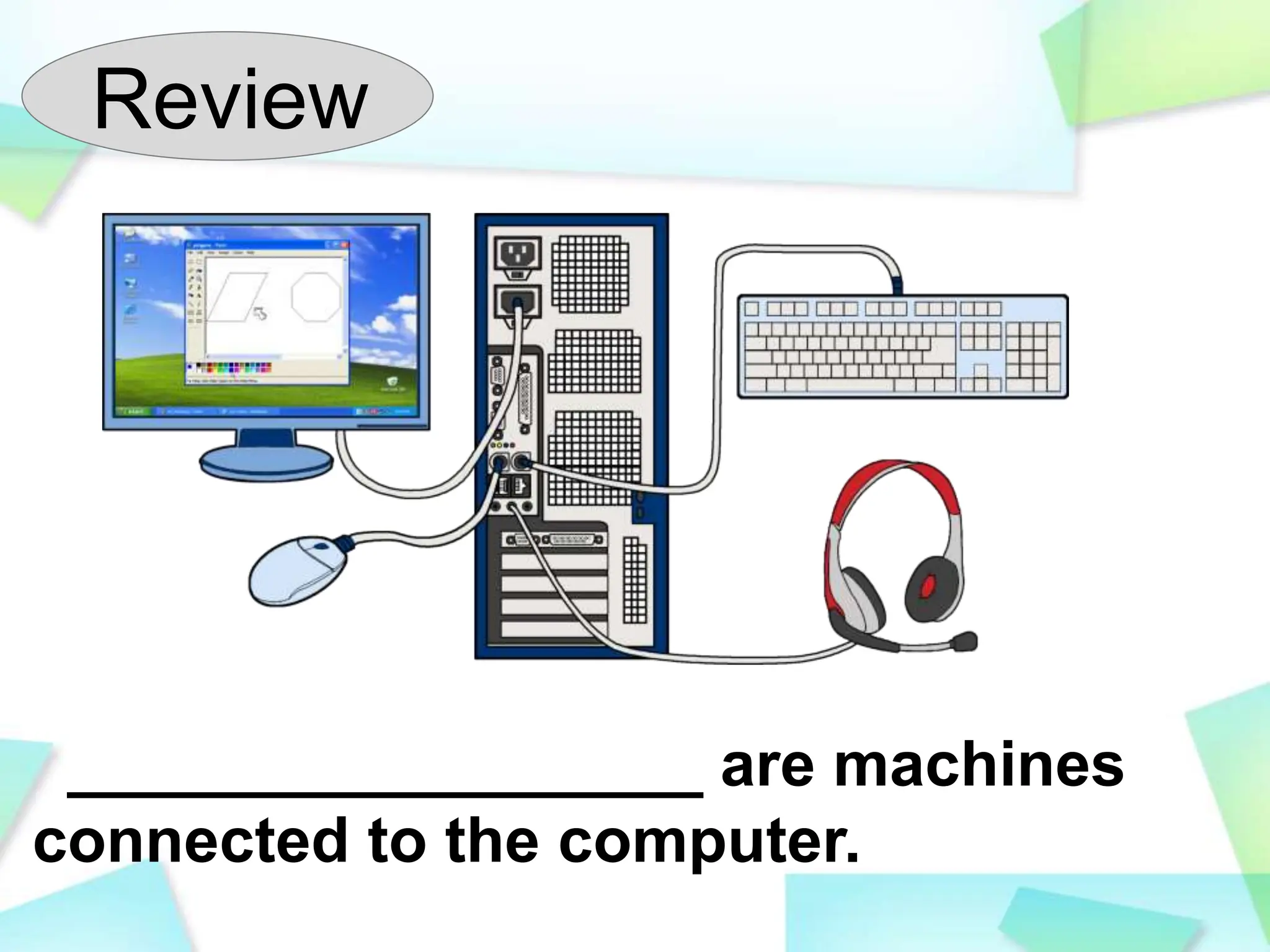
__________________ are machines
connected to the computer.
Review
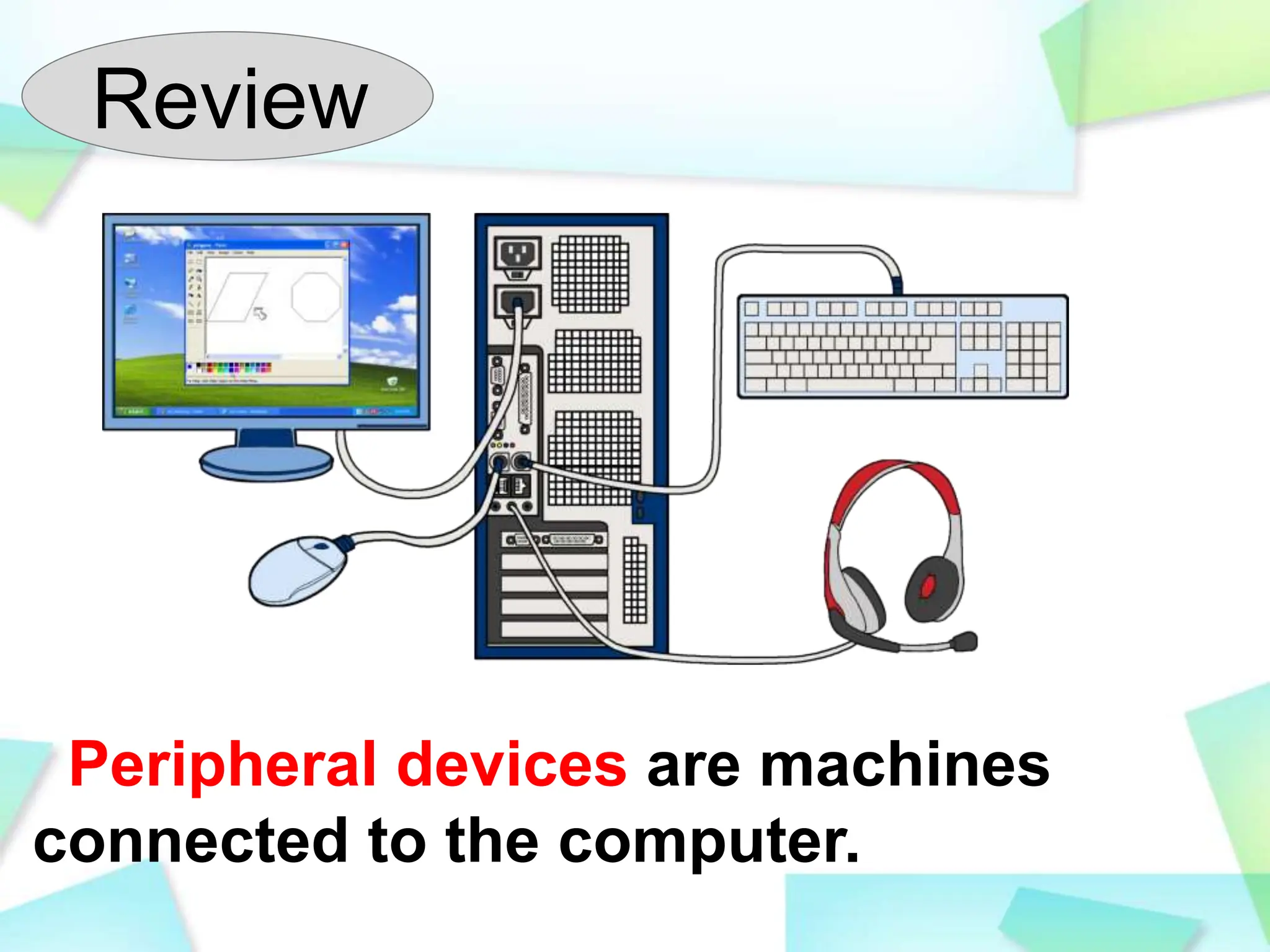
Peripheral devices are machines
connected to the computer.
Topics of the Lesson
Proper use of hardware tools
Maintain hand tools
Familiarizing with the tools
REMEMBER!
For every job there is the
right tool. Skilled use of tools
makes the job less difficult
and ensures that tasks are
performed properly and safely.
Familiarizing with the
Proper use of Tools
Electro-Static
Discharge (ESD)
Tools
ANTI-STATIC WRIST
STRAP
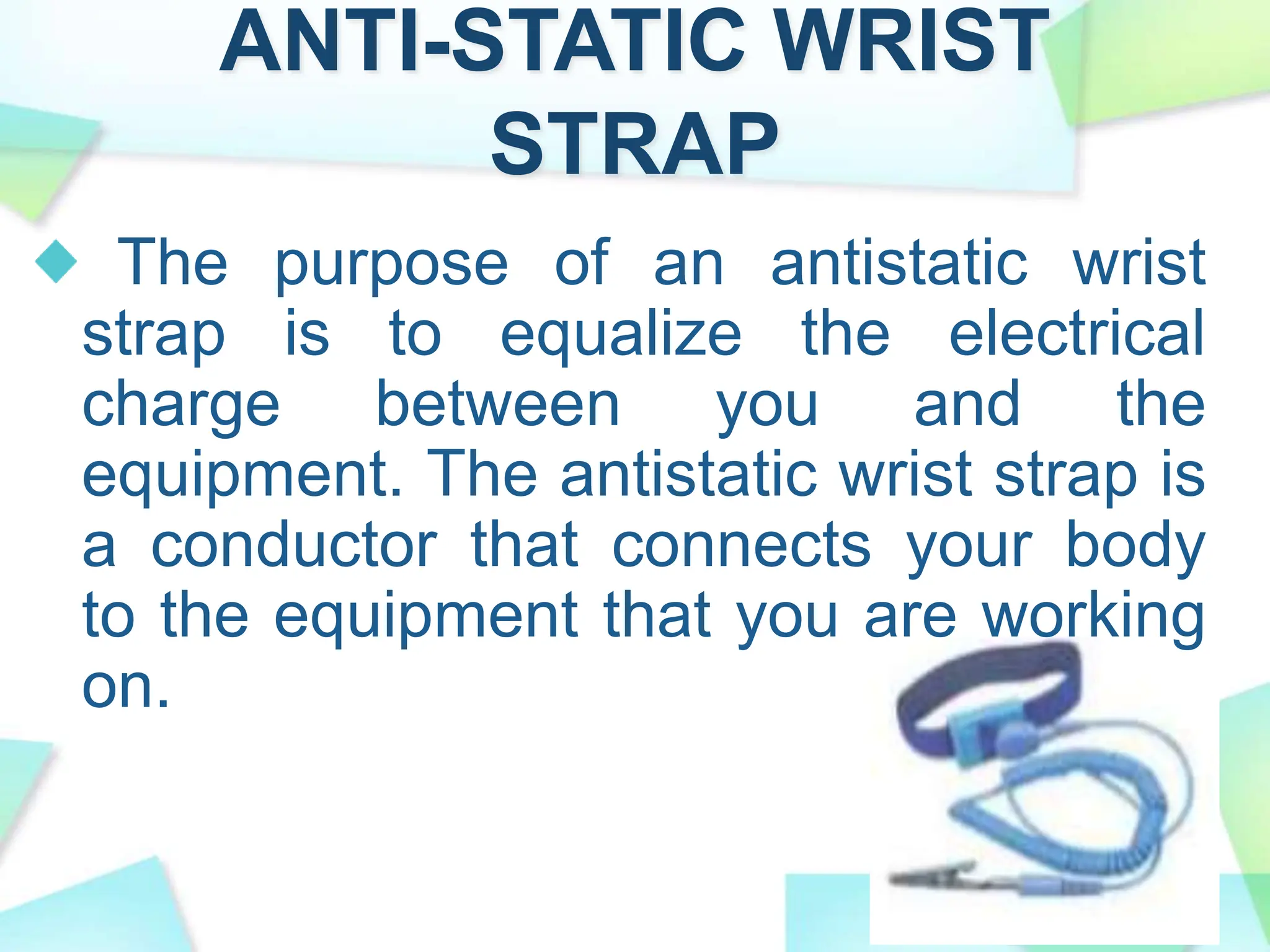
The purpose of an antistatic wrist
strap is to equalize the electrical
charge between you and the
equipment. The antistatic wrist strap is
a conductor that connects your body
to the equipment that you are working
on.
ANTI-STATIC WRIST
STRAP
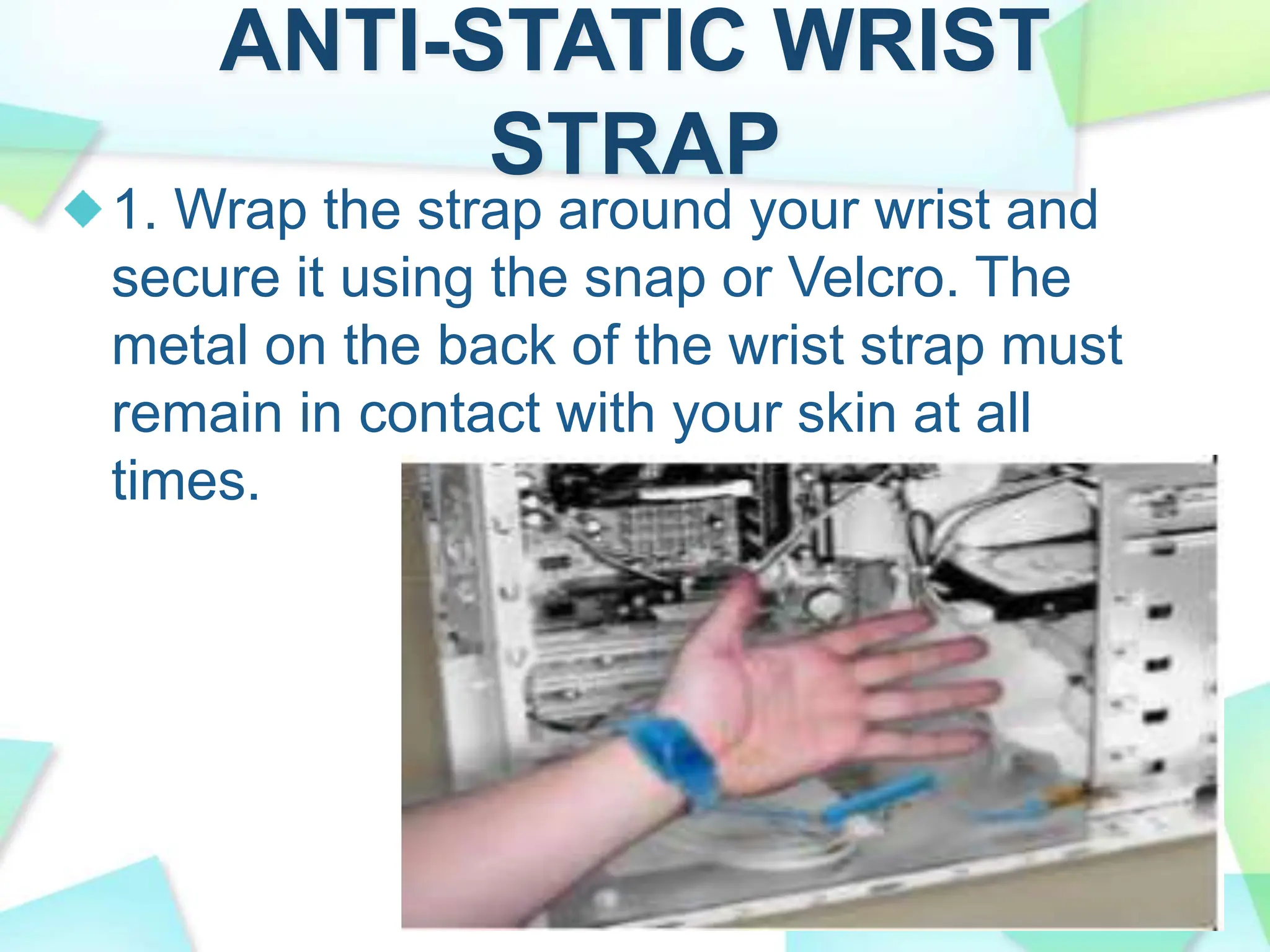
1. Wrap the strap around your wrist and
secure it using the snap or Velcro. The
metal on the back of the wrist strap must
remain in contact with your skin at all
times.
ANTI-STATIC WRIST
STRAP
2. Snap the connector at the end of the wire
to the wrist strap, and connect the other end
either to the equipment or to the same
grounding point that the antistatic mat is
connected to. The metal skeleton of the case
is a good place to connect the wire. When
connecting the wire to equipment that you are
working on, choose an unpainted metal
surface. A painted surface does not conduct
the electricity as well as unpainted metal
ANTI-STATIC MAT
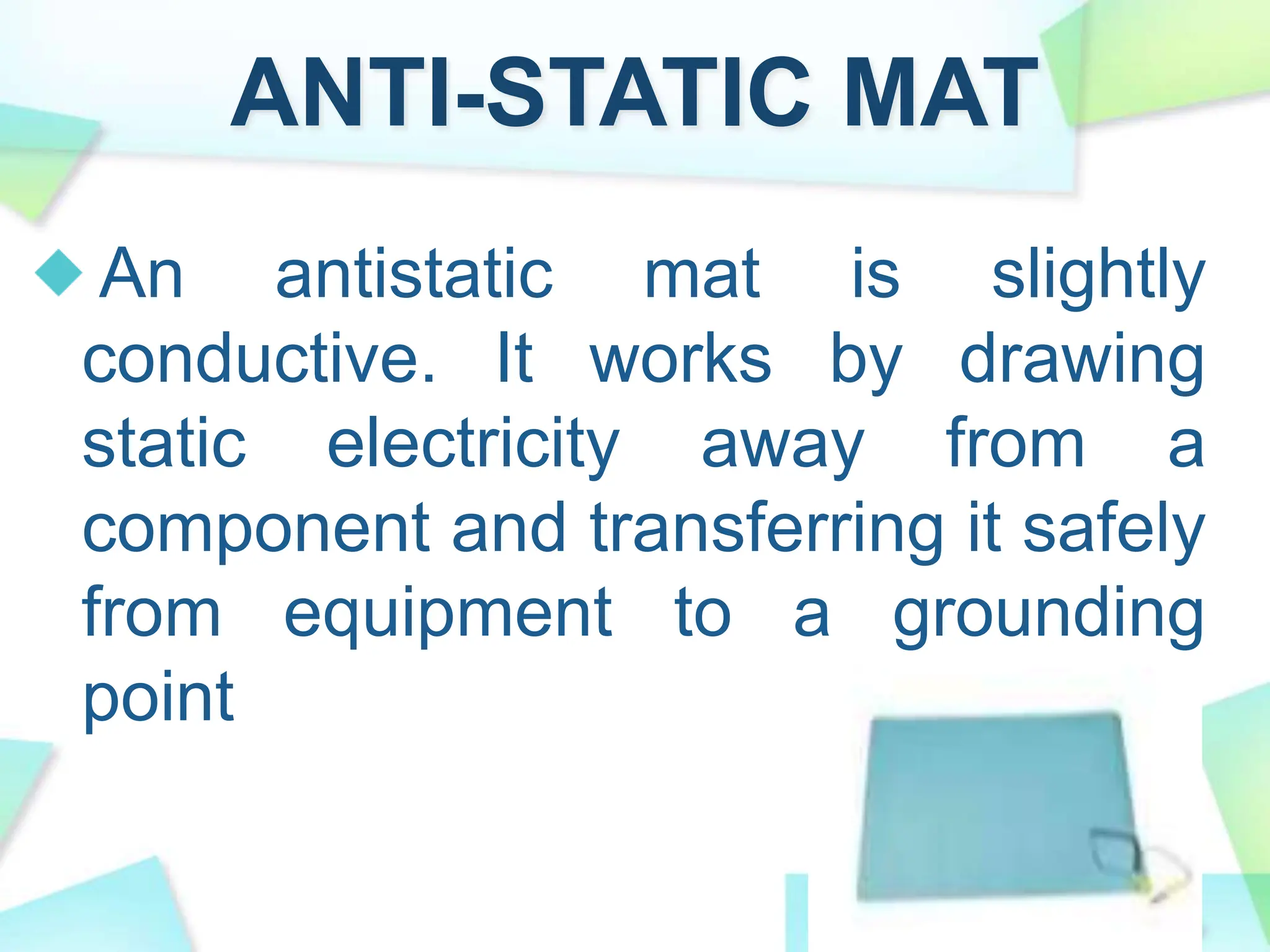
An antistatic mat is slightly
conductive. It works by drawing
static electricity away from a
component and transferring it safely
from equipment to a grounding
point
ANTI-STATIC MAT
1. Lay the mat on the workspace next to
or under the computer case.
2. Clip the mat to the case to provide a
grounded surface on which you can
place parts as you remove them from
the system.
REMEMBER!
Reducing the potential for
ESD reduces the likelihood of
damage to delicate circuits or
components.
Hand Tools
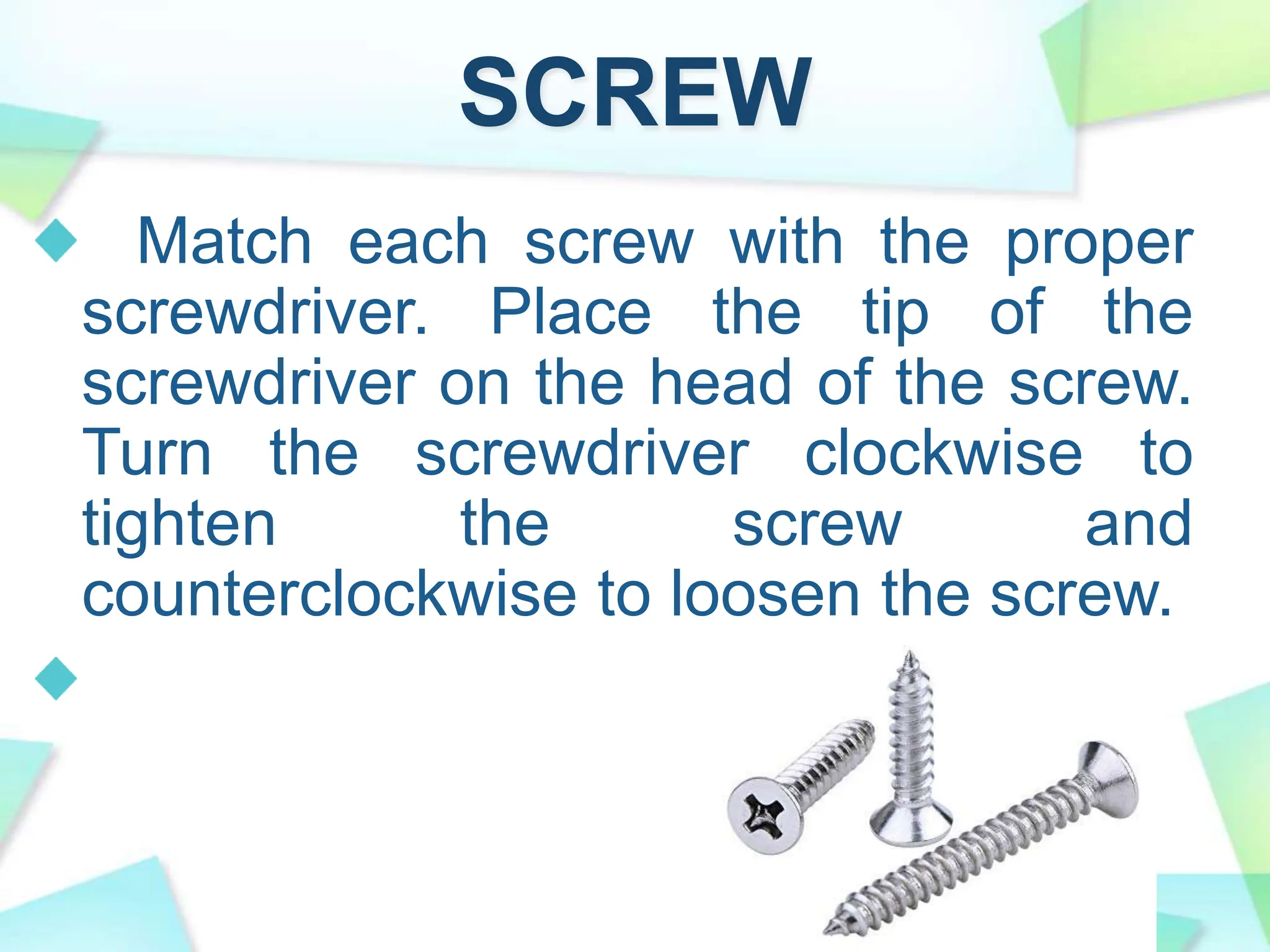
SCREW
Match each screw with the proper
screwdriver. Place the tip of the
screwdriver on the head of the screw.
Turn the screwdriver clockwise to
tighten the screw and
counterclockwise to loosen the screw.
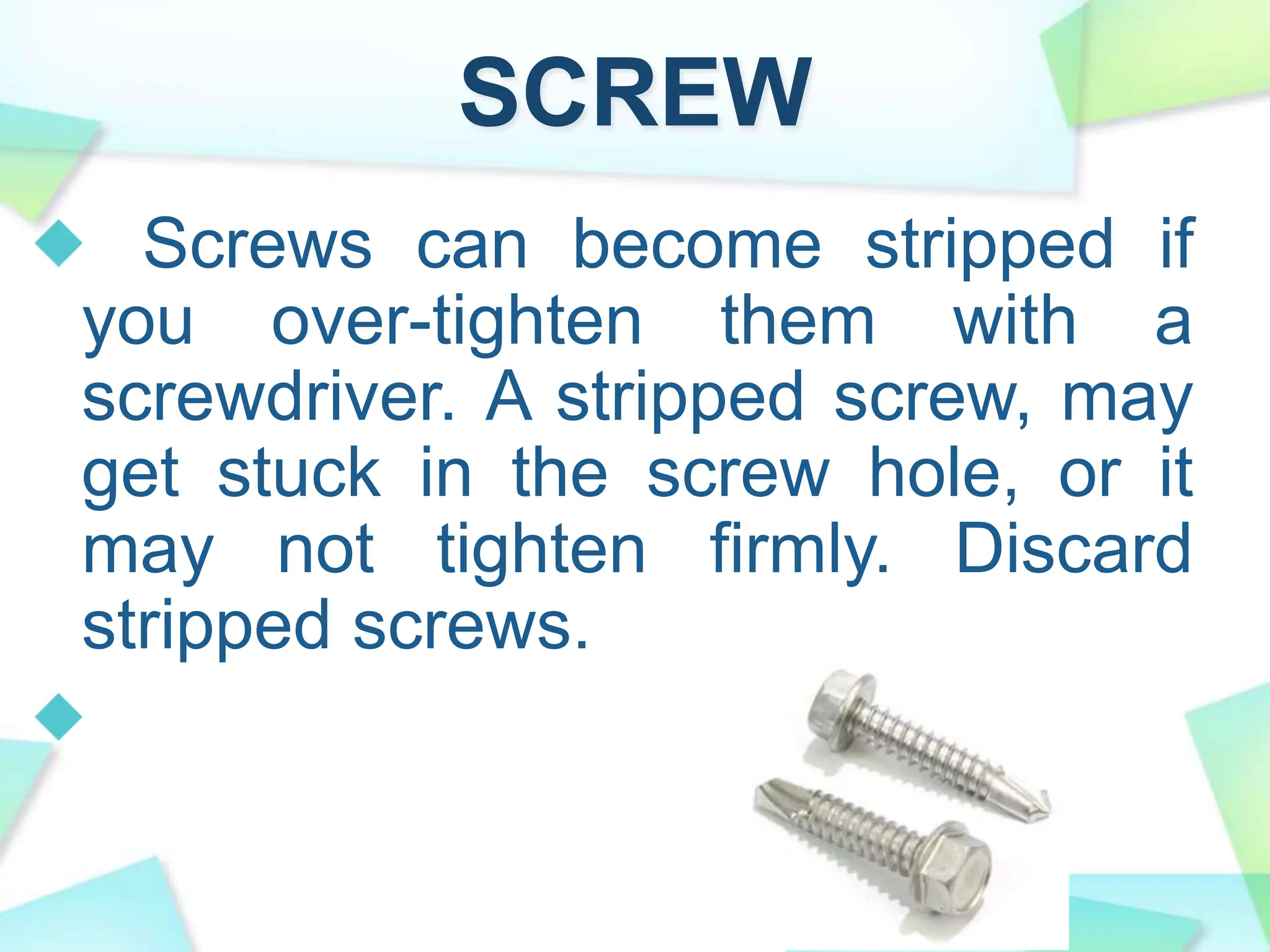
SCREW
Screws can become stripped if
you over-tighten them with a
screwdriver. A stripped screw, may
get stuck in the screw hole, or it
may not tighten firmly. Discard
stripped screws.

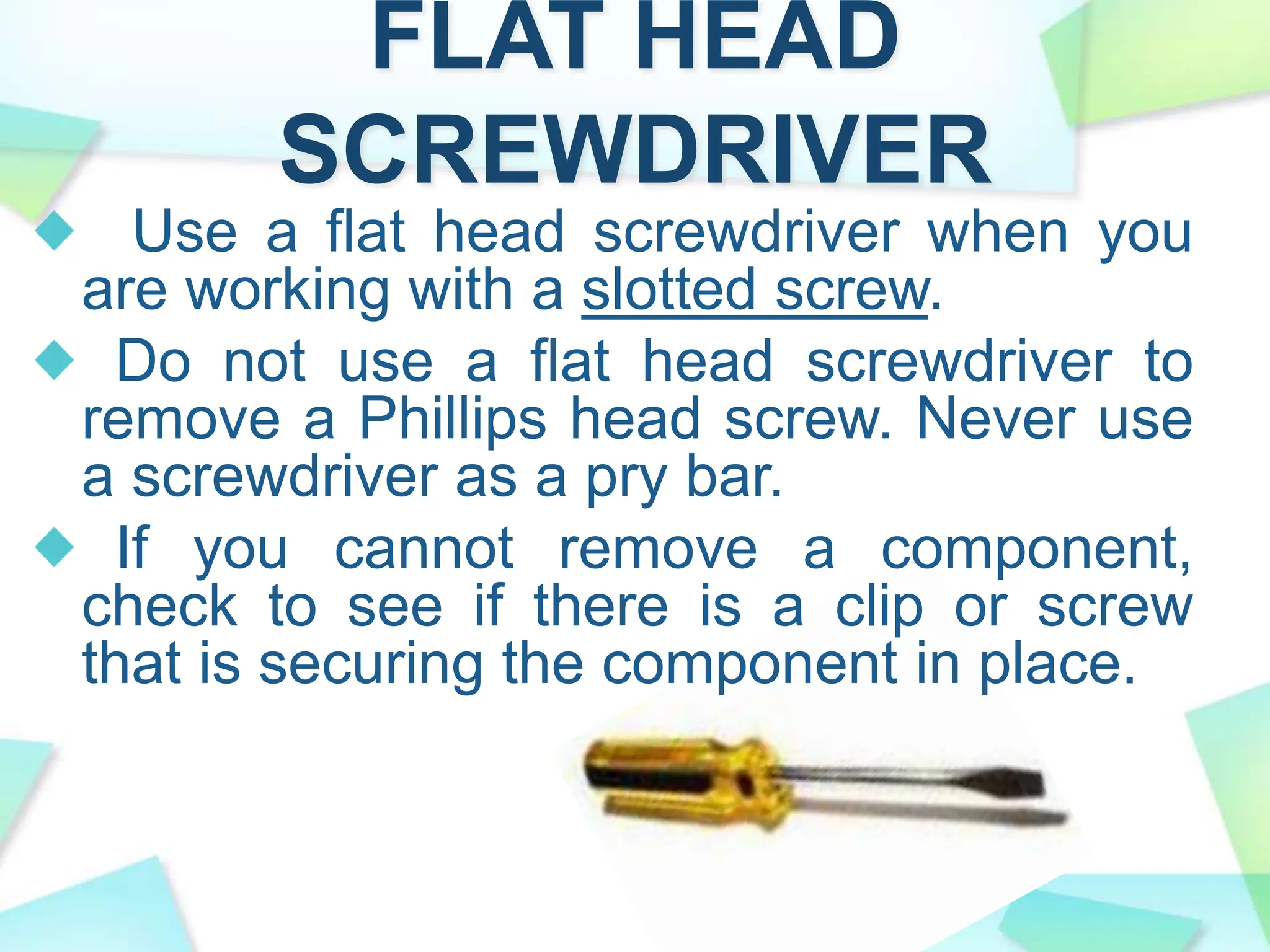
FLAT HEAD
SCREWDRIVER
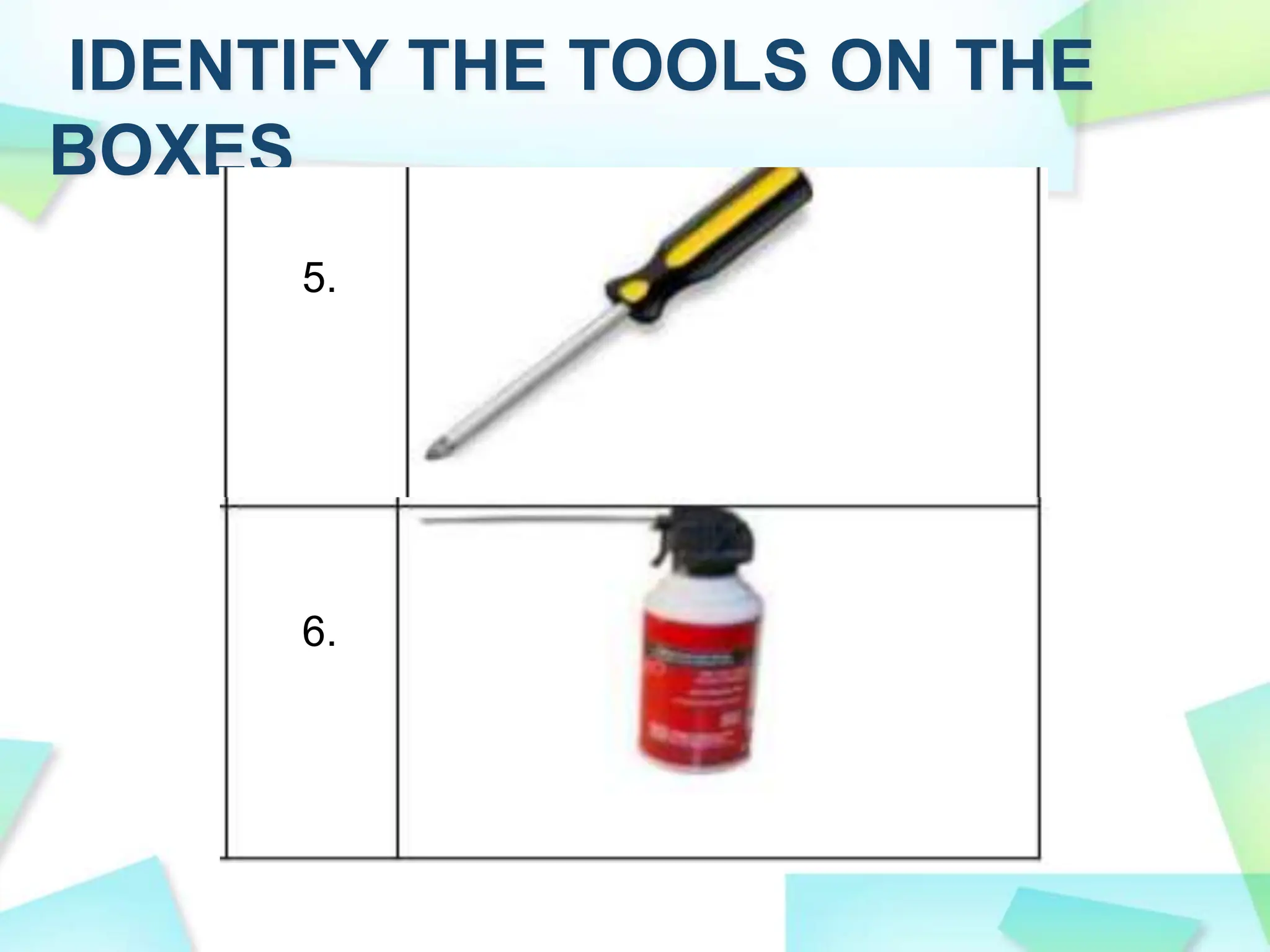
Use a flat head screwdriver when you
are working with a slotted screw.
Do not use a flat head screwdriver to
remove a Phillips head screw. Never use
a screwdriver as a pry bar.
If you cannot remove a component,
check to see if there is a clip or screw
that is securing the component in place.
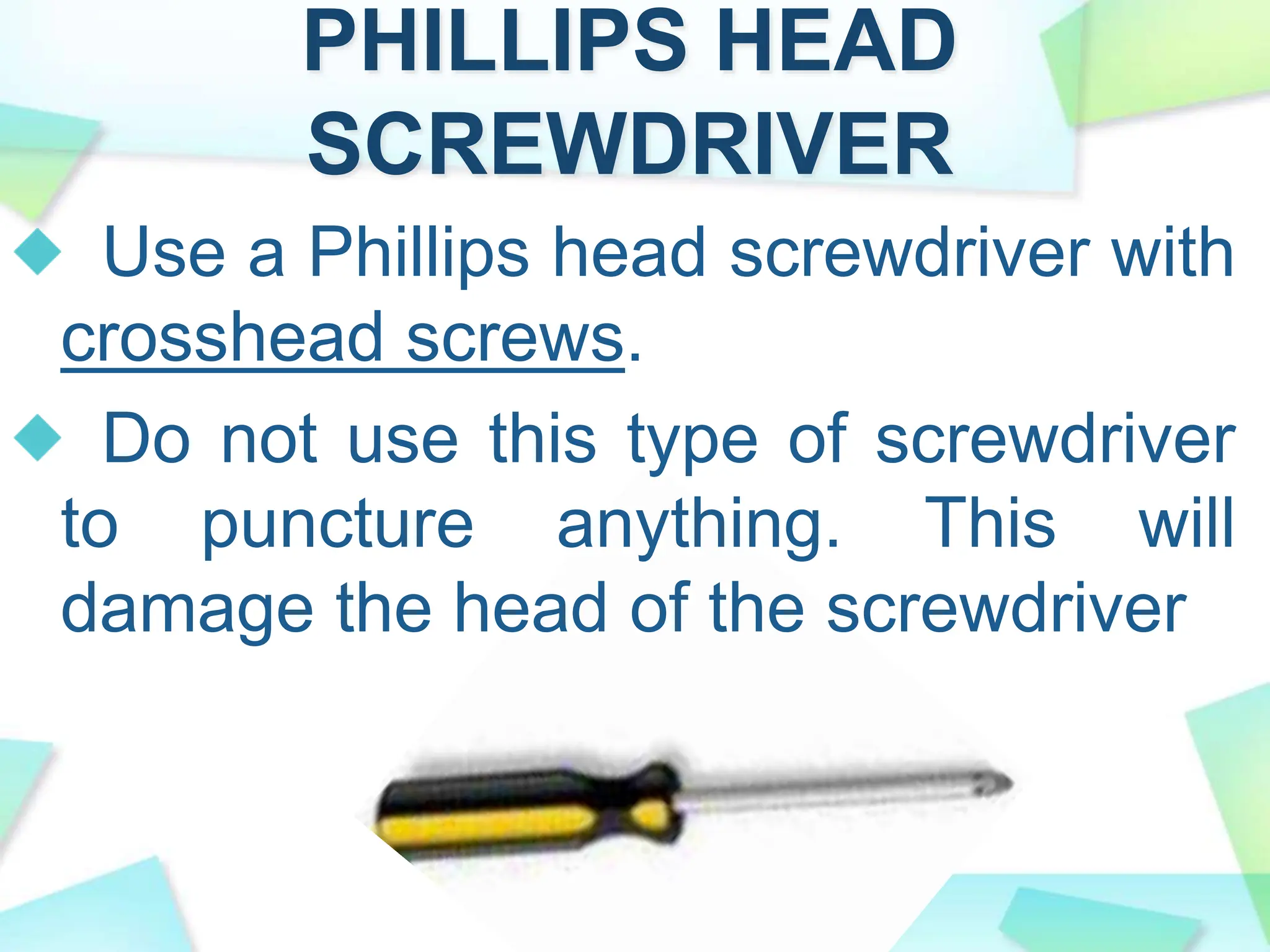
PHILLIPS HEAD
SCREWDRIVER
Use a Phillips head screwdriver with
crosshead screws.
Do not use this type of screwdriver
to puncture anything. This will
damage the head of the screwdriver
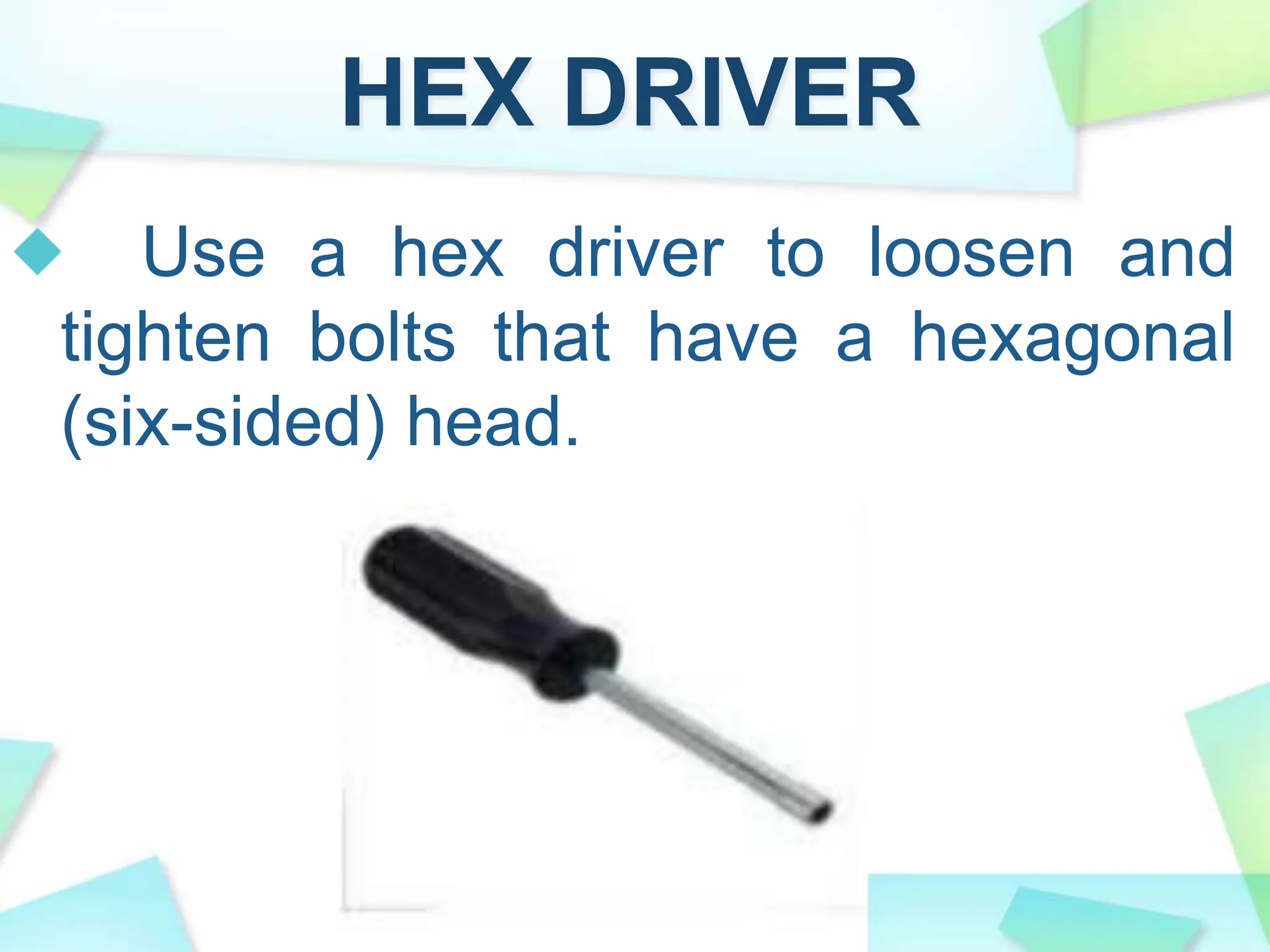
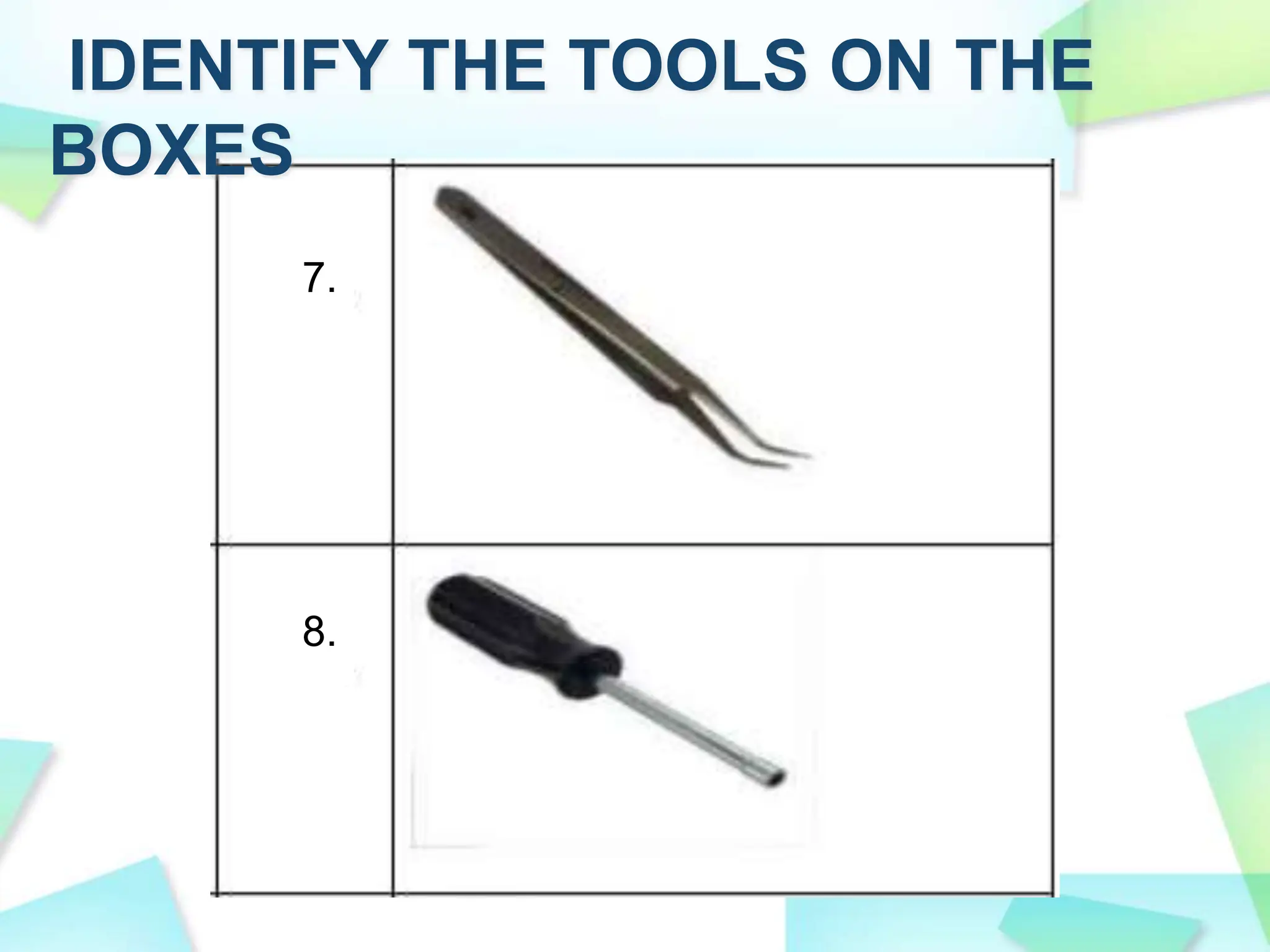
HEX DRIVER
Use a hex driver to loosen and
tighten bolts that have a hexagonal
(six-sided) head.
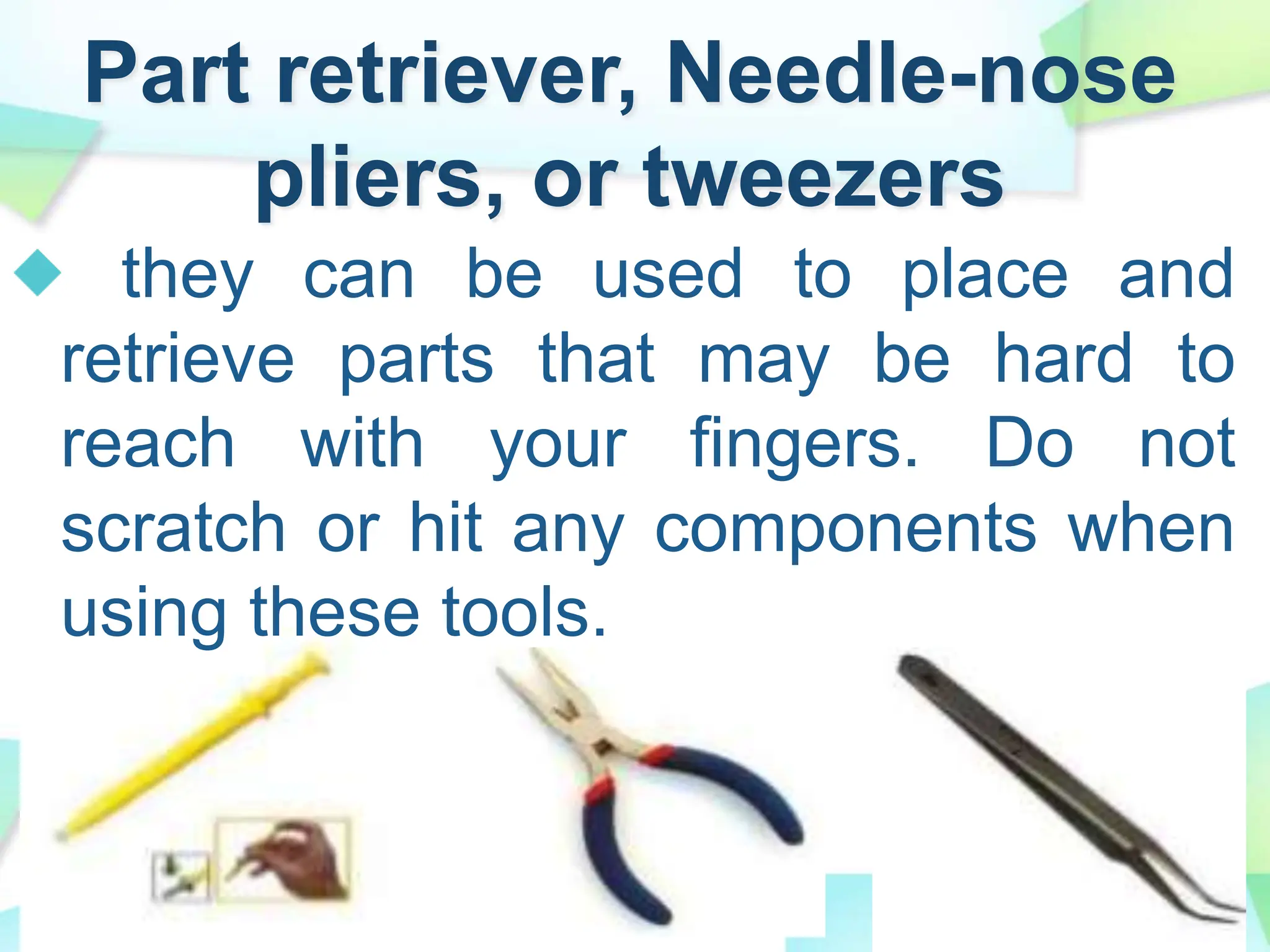
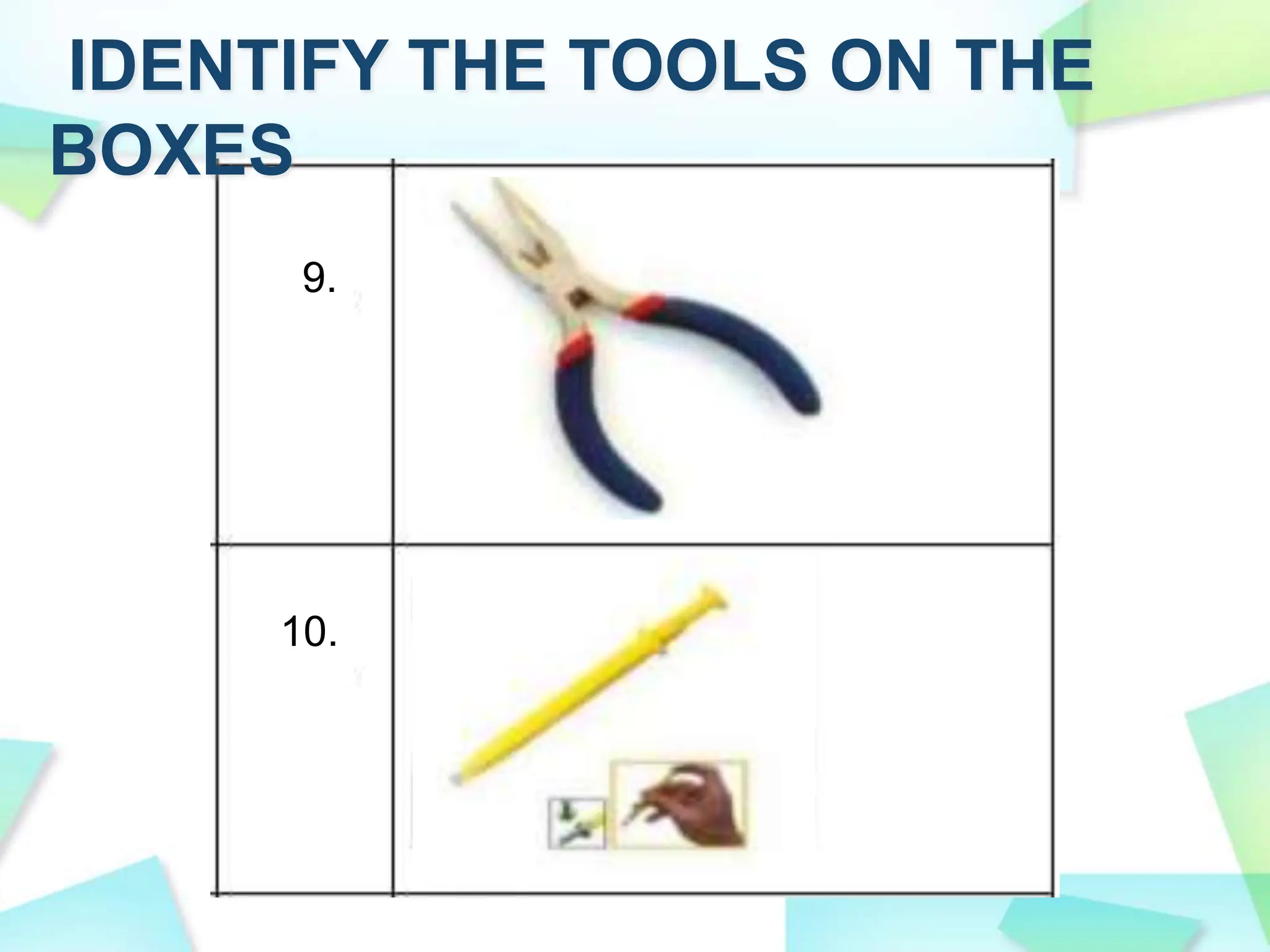
Part retriever, Needle-nose
pliers, or tweezers
they can be used to place and
retrieve parts that may be hard to
reach with your fingers. Do not
scratch or hit any components when
using these tools.
CAUTION
Pencils should not be used
inside the computer to change
the setting of switches or to pry
off jumpers. The pencil lead can
act as a conductor and may
damage the computer
components.
Cleaning
Materials
REMEMBER!
Keeping computers clean
inside and out is a vital part of a
maintenance program. Dirt can
cause problems with the
physical operation of fans,
buttons, and other mechanical
components.
CAUTION
Before cleaning any device,
turn it off and unplug the
device from the power source
Computer Cases and
Monitors
Clean computer cases and the
outside of monitors with a mild
cleaning solution on a damp, lint-free
cloth.
Computer Cases and
Monitors
Mix one drop of dishwashing liquid
with four ounces of water to create the
cleaning solution. If any water drips
inside the case, allow enough time for
the liquid to dry before powering on the
computer
LCD Screens
Do not use ammoniated glass
cleaners or any other solution on an
LCD screen, unless the cleaner is
specifically designed for the purpose.
LCD Screens
There is no glass protecting these
screens, so be gentle when cleaning
them and do not press firmly on the
screen.
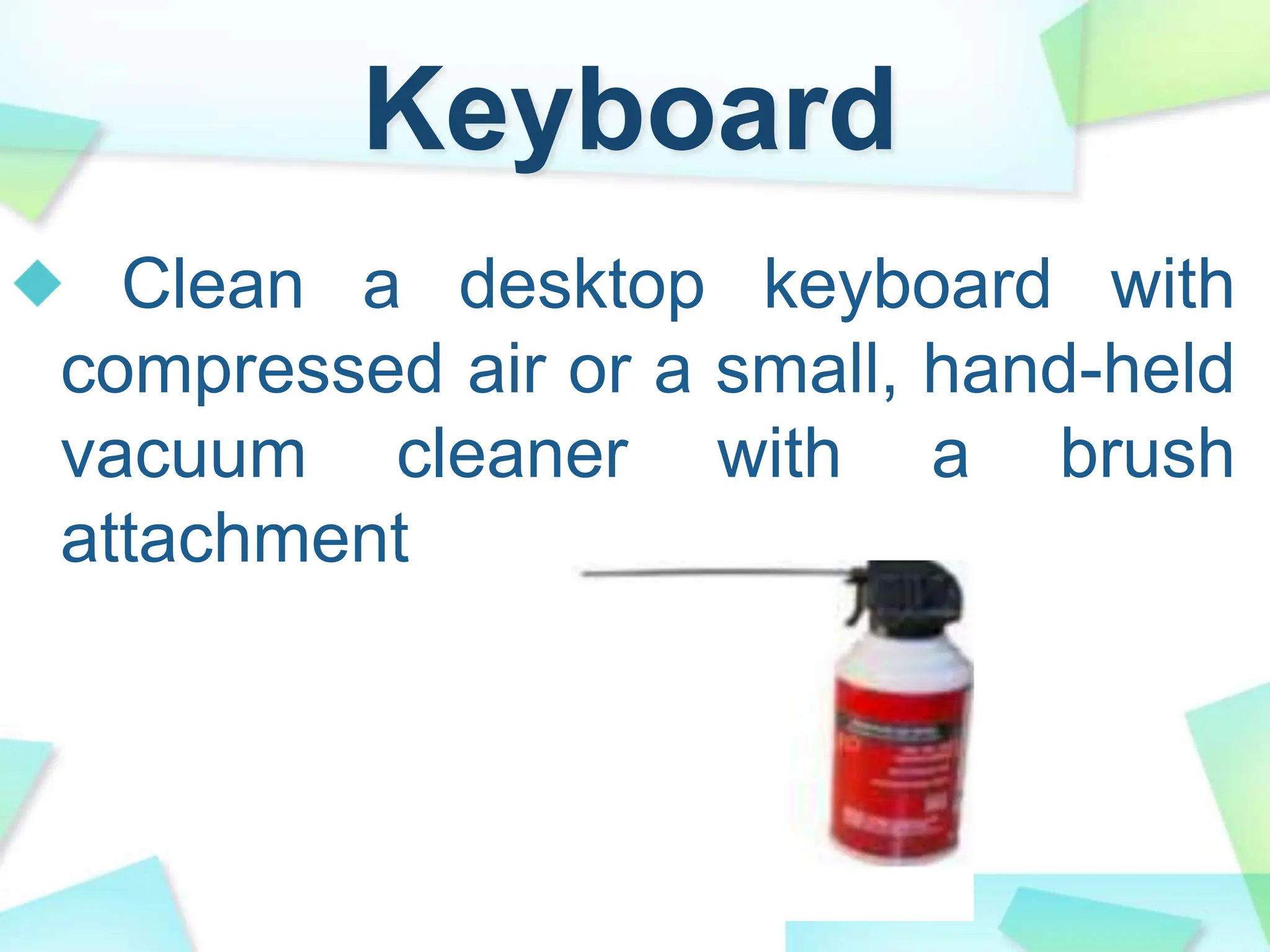
Keyboard
Clean a desktop keyboard with
compressed air or a small, hand-held
vacuum cleaner with a brush
attachment
CAUTION
When compressed air is used to
clean inside the computer, the
air should be blown around the
components with a minimum
distance of four inches from the
nozzle. The power supply and
the fan should be cleaned from
the back of the case.
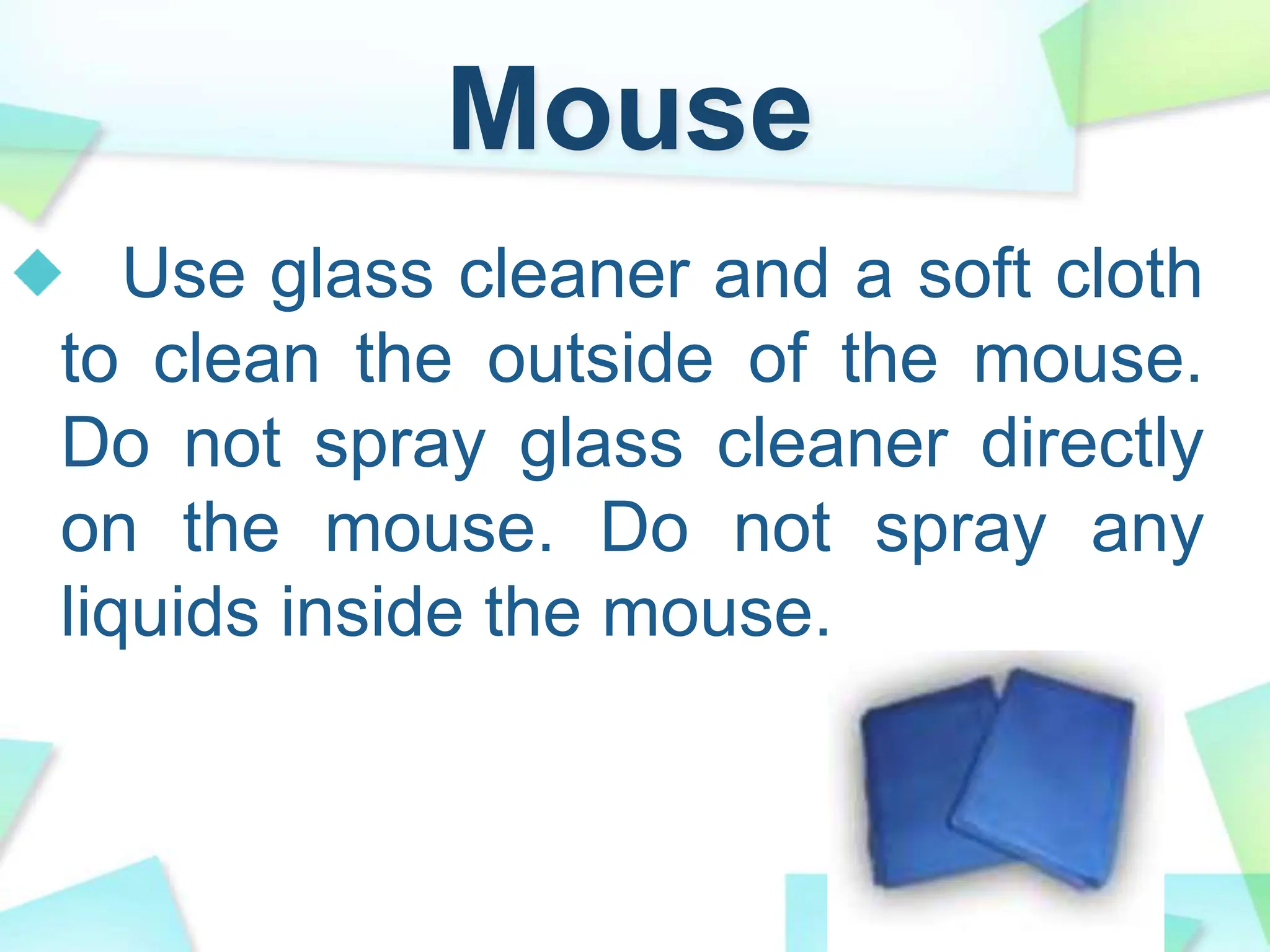
Mouse
Use glass cleaner and a soft cloth
to clean the outside of the mouse.
Do not spray glass cleaner directly
on the mouse. Do not spray any
liquids inside the mouse.
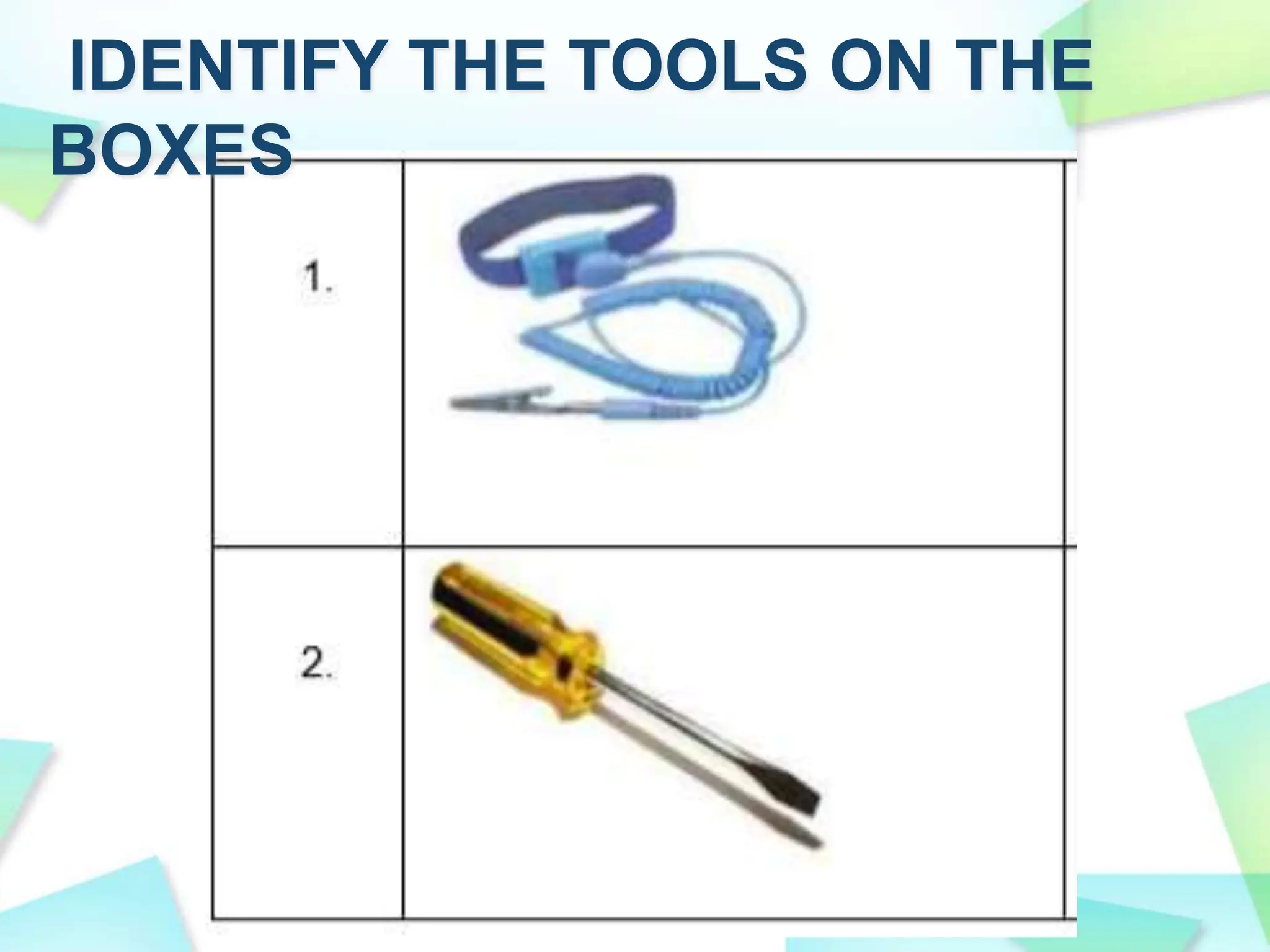
IDENTIFY THE TOOLS ON THE
BOXES
IDENTIFY THE TOOLS ON THE
BOXES
IDENTIFY THE TOOLS ON THE
BOXES
6.
5.
IDENTIFY THE TOOLS ON THE
BOXES
8.
7.
IDENTIFY THE TOOLS ON THE
BOXES
10.
9.
PROPER USE OF TOOLS-Computer System Servicing.pptx

PROPER USE OF TOOLS-Computer System Servicing.pptx

  • 1.
  • 2.
    What are the componentsof Computer System? Review
  • 3.
  • 4.
    Review Give an exampleof Operating System
  • 5.
    Review Give an exampleof Operating System
  • 6.
  • 7.
    Review Peripheral devices aremachines connected to the computer.
  • 9.
    Topics of theLesson Proper use of hardware tools Maintain hand tools Familiarizing with the tools
  • 10.
    REMEMBER! For every jobthere is the right tool. Skilled use of tools makes the job less difficult and ensures that tasks are performed properly and safely.
  • 11.
  • 12.
  • 13.
    ANTI-STATIC WRIST STRAP The purposeof an antistatic wrist strap is to equalize the electrical charge between you and the equipment. The antistatic wrist strap is a conductor that connects your body to the equipment that you are working on.
  • 14.
    ANTI-STATIC WRIST STRAP 1. Wrapthe strap around your wrist and secure it using the snap or Velcro. The metal on the back of the wrist strap must remain in contact with your skin at all times.
  • 15.
    ANTI-STATIC WRIST STRAP 2. Snapthe connector at the end of the wire to the wrist strap, and connect the other end either to the equipment or to the same grounding point that the antistatic mat is connected to. The metal skeleton of the case is a good place to connect the wire. When connecting the wire to equipment that you are working on, choose an unpainted metal surface. A painted surface does not conduct the electricity as well as unpainted metal
  • 17.
    ANTI-STATIC MAT An antistaticmat is slightly conductive. It works by drawing static electricity away from a component and transferring it safely from equipment to a grounding point
  • 18.
    ANTI-STATIC MAT 1. Laythe mat on the workspace next to or under the computer case. 2. Clip the mat to the case to provide a grounded surface on which you can place parts as you remove them from the system.
  • 19.
    REMEMBER! Reducing the potentialfor ESD reduces the likelihood of damage to delicate circuits or components.
  • 20.
  • 21.
    SCREW Match each screwwith the proper screwdriver. Place the tip of the screwdriver on the head of the screw. Turn the screwdriver clockwise to tighten the screw and counterclockwise to loosen the screw.
  • 22.
    SCREW Screws can becomestripped if you over-tighten them with a screwdriver. A stripped screw, may get stuck in the screw hole, or it may not tighten firmly. Discard stripped screws.
  • 23.
    FLAT HEAD SCREWDRIVER Use aflat head screwdriver when you are working with a slotted screw. Do not use a flat head screwdriver to remove a Phillips head screw. Never use a screwdriver as a pry bar. If you cannot remove a component, check to see if there is a clip or screw that is securing the component in place.
  • 24.
    PHILLIPS HEAD SCREWDRIVER Use aPhillips head screwdriver with crosshead screws. Do not use this type of screwdriver to puncture anything. This will damage the head of the screwdriver
  • 25.
    HEX DRIVER Use ahex driver to loosen and tighten bolts that have a hexagonal (six-sided) head.
  • 26.
    Part retriever, Needle-nose pliers,or tweezers they can be used to place and retrieve parts that may be hard to reach with your fingers. Do not scratch or hit any components when using these tools.
  • 27.
    CAUTION Pencils should notbe used inside the computer to change the setting of switches or to pry off jumpers. The pencil lead can act as a conductor and may damage the computer components.
  • 28.
  • 29.
    REMEMBER! Keeping computers clean insideand out is a vital part of a maintenance program. Dirt can cause problems with the physical operation of fans, buttons, and other mechanical components.
  • 30.
    CAUTION Before cleaning anydevice, turn it off and unplug the device from the power source
  • 31.
    Computer Cases and Monitors Cleancomputer cases and the outside of monitors with a mild cleaning solution on a damp, lint-free cloth.
  • 32.
    Computer Cases and Monitors Mixone drop of dishwashing liquid with four ounces of water to create the cleaning solution. If any water drips inside the case, allow enough time for the liquid to dry before powering on the computer
  • 33.
    LCD Screens Do notuse ammoniated glass cleaners or any other solution on an LCD screen, unless the cleaner is specifically designed for the purpose.
  • 34.
    LCD Screens There isno glass protecting these screens, so be gentle when cleaning them and do not press firmly on the screen.
  • 35.
    Keyboard Clean a desktopkeyboard with compressed air or a small, hand-held vacuum cleaner with a brush attachment
  • 36.
    CAUTION When compressed airis used to clean inside the computer, the air should be blown around the components with a minimum distance of four inches from the nozzle. The power supply and the fan should be cleaned from the back of the case.
  • 37.
    Mouse Use glass cleanerand a soft cloth to clean the outside of the mouse. Do not spray glass cleaner directly on the mouse. Do not spray any liquids inside the mouse.
  • 39.
    IDENTIFY THE TOOLSON THE BOXES
  • 40.
    IDENTIFY THE TOOLSON THE BOXES
  • 41.
    IDENTIFY THE TOOLSON THE BOXES 6. 5.
  • 42.
    IDENTIFY THE TOOLSON THE BOXES 8. 7.
  • 43.
    IDENTIFY THE TOOLSON THE BOXES 10. 9.