Proper Footwear for
     Walking
 Making the right choices for the
           right shoe
3 functions of a good shoe
1. Protection against injuries, cuts and general
   safety
2. Stability to prevent improper movement in
   foot (to avoid problems in ankle, knee, hip,
   pelvis)
3. Shock absorption to decrease stress on leg
   and soften impact
4 parts to a shoe
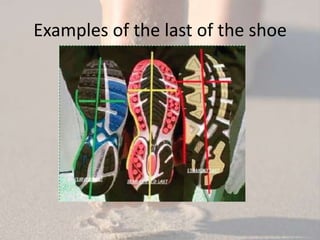
1. Last (Shape of the bottom of the shoe):
  a. Straight (motion control, stability)
  b. Semi-curved (normal arches)
  c. Curved (high arches)
2. Toe break (where shoe bends)
3. Heel cup
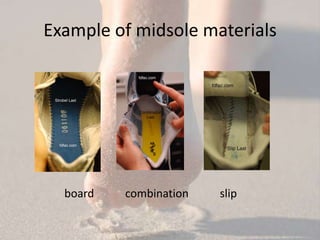
4. Midsole material (bridge between heel & ball)
  a. Slip lasted (seam along length)
  b. Board lasted (cardboard along length)
  c. Combination (cardboard in rear, seam in front)
Examples of the last of the shoe
Example of midsole materials


  board   combination   slip
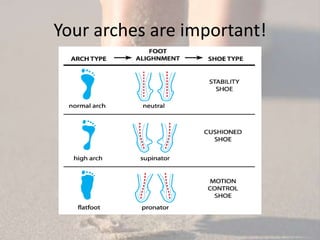
Your arches are important!
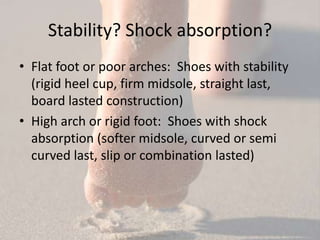
Stability? Shock absorption?
• Flat foot or poor arches: Shoes with stability
  (rigid heel cup, firm midsole, straight last,
  board lasted construction)
• High arch or rigid foot: Shoes with shock
  absorption (softer midsole, curved or semi
  curved last, slip or combination lasted)
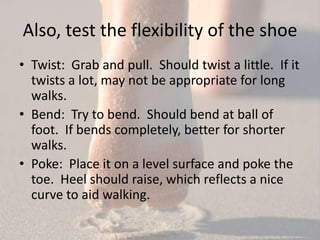
Also, test the flexibility of the shoe
• Twist: Grab and pull. Should twist a little. If it
  twists a lot, may not be appropriate for long
  walks.
• Bend: Try to bend. Should bend at ball of
  foot. If bends completely, better for shorter
  walks.
• Poke: Place it on a level surface and poke the
  toe. Heel should raise, which reflects a nice
  curve to aid walking.
Basic advice for shopping for shoes
• Shop at end of day
• Measure your shoe size periodically
• Don’t buy the most expensive shoe, unless it is
  the right shoe for you
• Wear the type of socks you will be using when
  you walk
• Go to a specialty store and talk with a
  professional
• If you have a medical condition (diabetes,
  neuropathy), talk with physician
Good shoes make for happy
          feet!

Proper footwear for walking

  • 1.
    Proper Footwear for Walking Making the right choices for the right shoe
  • 2.
    3 functions ofa good shoe 1. Protection against injuries, cuts and general safety 2. Stability to prevent improper movement in foot (to avoid problems in ankle, knee, hip, pelvis) 3. Shock absorption to decrease stress on leg and soften impact
  • 3.
    4 parts toa shoe 1. Last (Shape of the bottom of the shoe): a. Straight (motion control, stability) b. Semi-curved (normal arches) c. Curved (high arches) 2. Toe break (where shoe bends) 3. Heel cup 4. Midsole material (bridge between heel & ball) a. Slip lasted (seam along length) b. Board lasted (cardboard along length) c. Combination (cardboard in rear, seam in front)
  • 4.
    Examples of thelast of the shoe
  • 5.
    Example of midsolematerials board combination slip
  • 6.
    Your arches areimportant!
  • 7.
    Stability? Shock absorption? •Flat foot or poor arches: Shoes with stability (rigid heel cup, firm midsole, straight last, board lasted construction) • High arch or rigid foot: Shoes with shock absorption (softer midsole, curved or semi curved last, slip or combination lasted)
  • 8.
    Also, test theflexibility of the shoe • Twist: Grab and pull. Should twist a little. If it twists a lot, may not be appropriate for long walks. • Bend: Try to bend. Should bend at ball of foot. If bends completely, better for shorter walks. • Poke: Place it on a level surface and poke the toe. Heel should raise, which reflects a nice curve to aid walking.
  • 9.
    Basic advice forshopping for shoes • Shop at end of day • Measure your shoe size periodically • Don’t buy the most expensive shoe, unless it is the right shoe for you • Wear the type of socks you will be using when you walk • Go to a specialty store and talk with a professional • If you have a medical condition (diabetes, neuropathy), talk with physician
  • 10.
    Good shoes makefor happy feet!