Marketing Mix
Dr.K.THIRUMAVALAVAN
Introduction
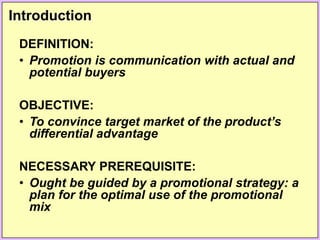
DEFINITION:
• Promotion is communication with actual and
potential buyers
OBJECTIVE:
• To convince target market of the product’s
differential advantage
NECESSARY PREREQUISITE:
• Ought be guided by a promotional strategy: a
plan for the optimal use of the promotional
mix
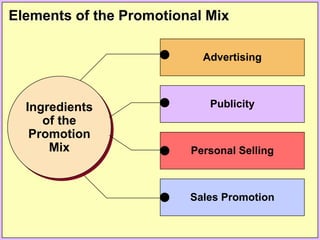
Elements of the Promotional Mix
Advertising
Ingredients
of the
Promotion
Mix
Publicity
Personal Selling
Sales Promotion
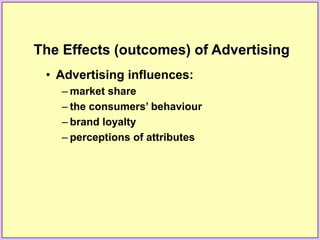
The Effects (outcomes) of Advertising
• Advertising influences:
– market share
– the consumers’ behaviour
– brand loyalty
– perceptions of attributes
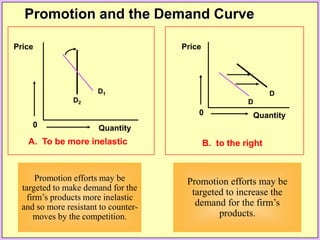
0
Price
Quantity
D2
D1
A. To be more inelastic
Promotion efforts may be
targeted to make demand for the
firm’s products more inelastic
and so more resistant to counter-
moves by the competition.
Promotion and the Demand Curve
0
Price
Quantity
D
D
B. to the right
Promotion efforts may be
targeted to increase the
demand for the firm’s
products.
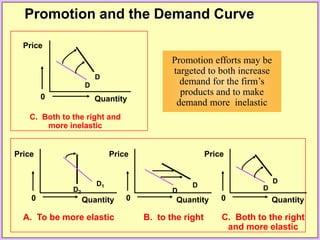
0
Price
Quantity
D
D
C. Both to the right and
more inelastic
Promotion efforts may be
targeted to both increase
demand for the firm’s
products and to make
demand more inelastic
Promotion and the Demand Curve
0
Price
Quantity
D
0
Price
Quantity 0
Price
Quantity
D2
D1 D D
D
B. to the right
A. To be more elastic C. Both to the right
and more elastic
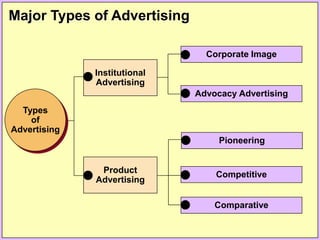
Major Types of Advertising
Corporate Image
Advocacy Advertising
Types
of
Advertising
Pioneering
Competitive
Comparative
Product
Advertising
Institutional
Advertising
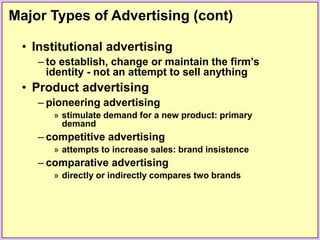
Major Types of Advertising (cont)
• Institutional advertising
– to establish, change or maintain the firm’s
identity - not an attempt to sell anything
• Product advertising
– pioneering advertising
» stimulate demand for a new product: primary
demand
– competitive advertising
» attempts to increase sales: brand insistence
– comparative advertising
» directly or indirectly compares two brands
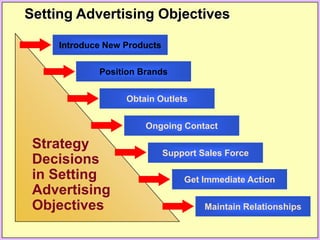
Introduce New Products
Position Brands
Obtain Outlets
Ongoing Contact
Support Sales Force
Get Immediate Action
Maintain Relationships
Strategy
Decisions
in Setting
Advertising
Objectives
Setting Advertising Objectives
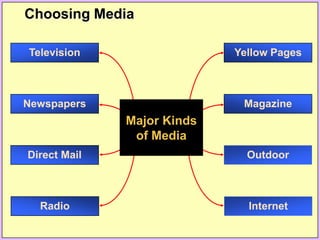
Yellow Pages
Outdoor
Internet
Magazine
Television
Direct Mail
Radio
Newspapers
Major Kinds
of Media
Choosing Media
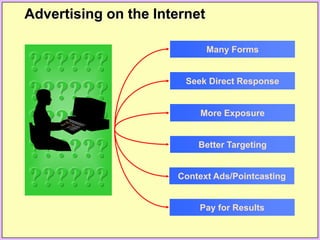
Many Forms
Seek Direct Response
More Exposure
Better Targeting
Context Ads/Pointcasting
Pay for Results
??????
??????
??????
??????
??????
Advertising on the Internet
Public Relations and Publicity
• Public relations: shape the public’s
perceptions of and attitudes towards the
firm
• Communicates with stakeholders in
manners other than advertising
• Publicity: non-paid for media exposure for
the firm: both positive and negative
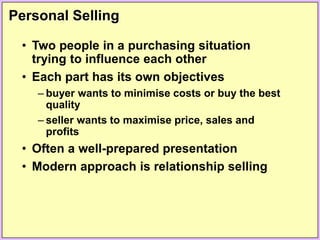
Personal Selling
• Two people in a purchasing situation
trying to influence each other
• Each part has its own objectives
– buyer wants to minimise costs or buy the best
quality
– seller wants to maximise price, sales and
profits
• Often a well-prepared presentation
• Modern approach is relationship selling
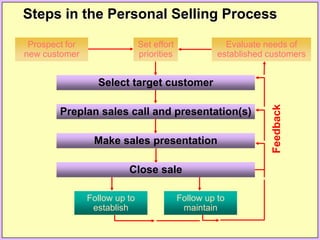
Evaluate needs of
established customers
Prospect for
new customer
Set effort
priorities
Select target customer
Preplan sales call and presentation(s)
Make sales presentation
Close sale
Follow up to
establish
Follow up to
maintain
Feedback
Steps in the Personal Selling Process
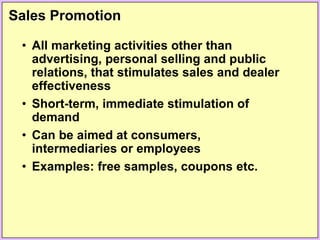
Sales Promotion
• All marketing activities other than
advertising, personal selling and public
relations, that stimulates sales and dealer
effectiveness
• Short-term, immediate stimulation of
demand
• Can be aimed at consumers,
intermediaries or employees
• Examples: free samples, coupons etc.
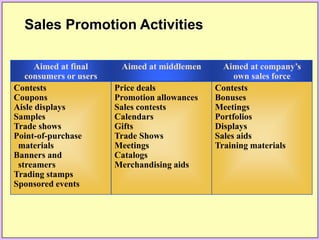
Aimed at middlemen
Price deals
Promotion allowances
Sales contests
Calendars
Gifts
Trade Shows
Meetings
Catalogs
Merchandising aids
Aimed at final
consumers or users
Contests
Coupons
Aisle displays
Samples
Trade shows
Point-of-purchase
materials
Banners and
streamers
Trading stamps
Sponsored events
Aimed at company’s
own sales force
Contests
Bonuses
Meetings
Portfolios
Displays
Sales aids
Training materials
Sales Promotion Activities
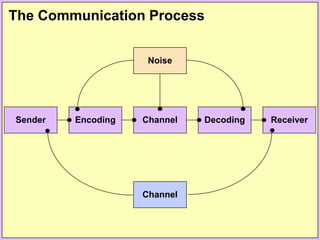
The Communication Process
Receiver
Decoding
Channel
Encoding
Sender
Noise
Channel
Integrated Marketing Communications
• Ideally communication from each
promotional element ought to be
integrated
• The message reaching the consumer must
be consistent irrespective of the medium
used
• Organisational arrangements must ensure
IMC
• The responsibility of the marketing
communications manager
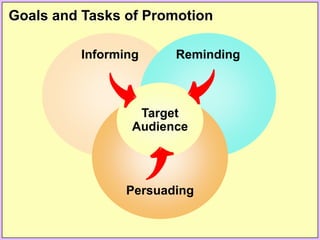
Goals and Tasks of Promotion
Informing Reminding
Persuading
Target
Audience
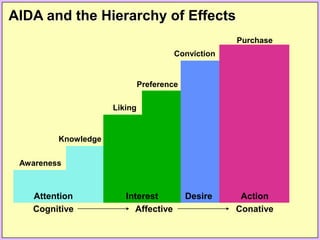
AIDA and the Hierarchy of Effects
Attention Interest Desire Action
Awareness
Knowledge
Liking
Preference
Conviction
Purchase
Cognitive Affective Conative
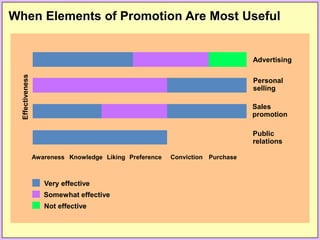
When Elements of Promotion Are Most Useful
Advertising
Personal
selling
Sales
promotion
Public
relations
Not effective
Very effective
Somewhat effective
Awareness Knowledge Liking Preference Conviction
Effectiveness
Purchase
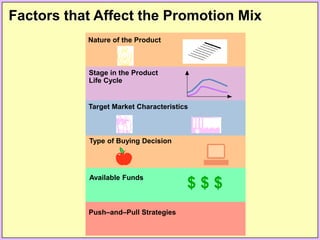
Factors that Affect the Promotion Mix
Push–and–Pull Strategies
Nature of the Product
Stage in the Product
Life Cycle
Target Market Characteristics
Type of Buying Decision
Available Funds
$ $ $
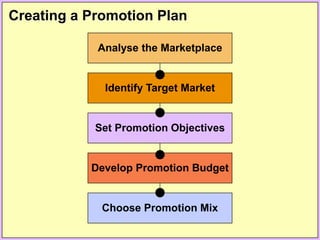
Creating a Promotion Plan
Choose Promotion Mix
Develop Promotion Budget
Set Promotion Objectives
Identify Target Market
Analyse the Marketplace
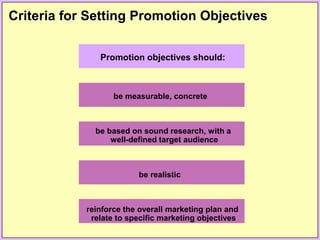
Criteria for Setting Promotion Objectives
Promotion objectives should:
be measurable, concrete
be based on sound research, with a
well-defined target audience
be realistic
reinforce the overall marketing plan and
relate to specific marketing objectives
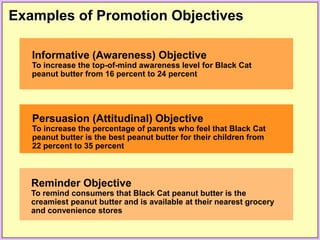
Examples of Promotion Objectives
Reminder Objective
To remind consumers that Black Cat peanut butter is the
creamiest peanut butter and is available at their nearest grocery
and convenience stores
Informative (Awareness) Objective
To increase the top-of-mind awareness level for Black Cat
peanut butter from 16 percent to 24 percent
Persuasion (Attitudinal) Objective
To increase the percentage of parents who feel that Black Cat
peanut butter is the best peanut butter for their children from
22 percent to 35 percent
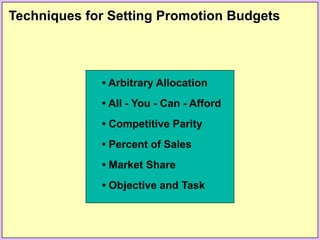
Techniques for Setting Promotion Budgets
• Arbitrary Allocation
• All - You - Can - Afford
• Competitive Parity
• Percent of Sales
• Market Share
• Objective and Task

Promotion.ppt

  • 1.
  • 2.
    Introduction DEFINITION: • Promotion iscommunication with actual and potential buyers OBJECTIVE: • To convince target market of the product’s differential advantage NECESSARY PREREQUISITE: • Ought be guided by a promotional strategy: a plan for the optimal use of the promotional mix
  • 3.
    Elements of thePromotional Mix Advertising Ingredients of the Promotion Mix Publicity Personal Selling Sales Promotion
  • 4.
    The Effects (outcomes)of Advertising • Advertising influences: – market share – the consumers’ behaviour – brand loyalty – perceptions of attributes
  • 5.
    0 Price Quantity D2 D1 A. To bemore inelastic Promotion efforts may be targeted to make demand for the firm’s products more inelastic and so more resistant to counter- moves by the competition. Promotion and the Demand Curve 0 Price Quantity D D B. to the right Promotion efforts may be targeted to increase the demand for the firm’s products.
  • 6.
    0 Price Quantity D D C. Both tothe right and more inelastic Promotion efforts may be targeted to both increase demand for the firm’s products and to make demand more inelastic Promotion and the Demand Curve 0 Price Quantity D 0 Price Quantity 0 Price Quantity D2 D1 D D D B. to the right A. To be more elastic C. Both to the right and more elastic
  • 7.
    Major Types ofAdvertising Corporate Image Advocacy Advertising Types of Advertising Pioneering Competitive Comparative Product Advertising Institutional Advertising
  • 8.
    Major Types ofAdvertising (cont) • Institutional advertising – to establish, change or maintain the firm’s identity - not an attempt to sell anything • Product advertising – pioneering advertising » stimulate demand for a new product: primary demand – competitive advertising » attempts to increase sales: brand insistence – comparative advertising » directly or indirectly compares two brands
  • 9.
    Introduce New Products PositionBrands Obtain Outlets Ongoing Contact Support Sales Force Get Immediate Action Maintain Relationships Strategy Decisions in Setting Advertising Objectives Setting Advertising Objectives
  • 10.
  • 11.
    Many Forms Seek DirectResponse More Exposure Better Targeting Context Ads/Pointcasting Pay for Results ?????? ?????? ?????? ?????? ?????? Advertising on the Internet
  • 12.
    Public Relations andPublicity • Public relations: shape the public’s perceptions of and attitudes towards the firm • Communicates with stakeholders in manners other than advertising • Publicity: non-paid for media exposure for the firm: both positive and negative
  • 13.
    Personal Selling • Twopeople in a purchasing situation trying to influence each other • Each part has its own objectives – buyer wants to minimise costs or buy the best quality – seller wants to maximise price, sales and profits • Often a well-prepared presentation • Modern approach is relationship selling
  • 14.
    Evaluate needs of establishedcustomers Prospect for new customer Set effort priorities Select target customer Preplan sales call and presentation(s) Make sales presentation Close sale Follow up to establish Follow up to maintain Feedback Steps in the Personal Selling Process
  • 15.
    Sales Promotion • Allmarketing activities other than advertising, personal selling and public relations, that stimulates sales and dealer effectiveness • Short-term, immediate stimulation of demand • Can be aimed at consumers, intermediaries or employees • Examples: free samples, coupons etc.
  • 16.
    Aimed at middlemen Pricedeals Promotion allowances Sales contests Calendars Gifts Trade Shows Meetings Catalogs Merchandising aids Aimed at final consumers or users Contests Coupons Aisle displays Samples Trade shows Point-of-purchase materials Banners and streamers Trading stamps Sponsored events Aimed at company’s own sales force Contests Bonuses Meetings Portfolios Displays Sales aids Training materials Sales Promotion Activities
  • 17.
  • 18.
    Integrated Marketing Communications •Ideally communication from each promotional element ought to be integrated • The message reaching the consumer must be consistent irrespective of the medium used • Organisational arrangements must ensure IMC • The responsibility of the marketing communications manager
  • 19.
    Goals and Tasksof Promotion Informing Reminding Persuading Target Audience
  • 20.
    AIDA and theHierarchy of Effects Attention Interest Desire Action Awareness Knowledge Liking Preference Conviction Purchase Cognitive Affective Conative
  • 21.
    When Elements ofPromotion Are Most Useful Advertising Personal selling Sales promotion Public relations Not effective Very effective Somewhat effective Awareness Knowledge Liking Preference Conviction Effectiveness Purchase
  • 22.
    Factors that Affectthe Promotion Mix Push–and–Pull Strategies Nature of the Product Stage in the Product Life Cycle Target Market Characteristics Type of Buying Decision Available Funds $ $ $
  • 23.
    Creating a PromotionPlan Choose Promotion Mix Develop Promotion Budget Set Promotion Objectives Identify Target Market Analyse the Marketplace
  • 24.
    Criteria for SettingPromotion Objectives Promotion objectives should: be measurable, concrete be based on sound research, with a well-defined target audience be realistic reinforce the overall marketing plan and relate to specific marketing objectives
  • 25.
    Examples of PromotionObjectives Reminder Objective To remind consumers that Black Cat peanut butter is the creamiest peanut butter and is available at their nearest grocery and convenience stores Informative (Awareness) Objective To increase the top-of-mind awareness level for Black Cat peanut butter from 16 percent to 24 percent Persuasion (Attitudinal) Objective To increase the percentage of parents who feel that Black Cat peanut butter is the best peanut butter for their children from 22 percent to 35 percent
  • 26.
    Techniques for SettingPromotion Budgets • Arbitrary Allocation • All - You - Can - Afford • Competitive Parity • Percent of Sales • Market Share • Objective and Task