Project
Management
Fundamentals
Welcome to the world of project management! we will explore
the key fundamentals that form the foundation of successful
project management.
Introduction to Project
Management
Project Management is a structured
approach to achieve specific goals within
defined constraints. It involves initiation,
planning, execution, monitoring, and
closure. Key roles include the Project
Manager and stakeholders. Traditional and
Agile are common frameworks. It ensures
efficient resource use, on-time delivery, risk
management, and quality results.
Defining a Project
Defining a project is the initial step in
project management. It involves
clearly stating the project's objectives,
scope, and constraints. A well-defined
project outlines what needs to be
achieved, the resources required, and
the expected outcomes. This clarity
sets the foundation for effective
project planning and execution.
Project Management Fundamentals
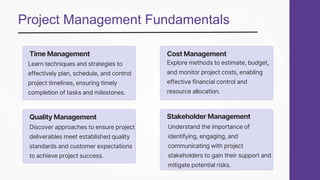
Cost Management
Explore methods to estimate, budget,
and monitor project costs, enabling
effective financial control and
resource allocation.
Time Management
Learn techniques and strategies to
effectively plan, schedule, and control
project timelines, ensuring timely
completion of tasks and milestones.
Quality Management
Discover approaches to ensure project
deliverables meet established quality
standards and customer expectations
to achieve project success.
Stakeholder Management
Understand the importance of
identifying, engaging, and
communicating with project
stakeholders to gain their support and
mitigate potential risks.
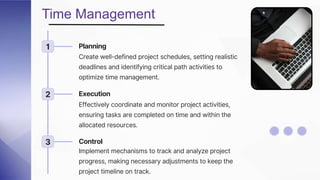
Time Management
1 Planning
Create well-defined project schedules, setting realistic
deadlines and identifying critical path activities to
optimize time management.
2 Execution
Effectively coordinate and monitor project activities,
ensuring tasks are completed on time and within the
allocated resources.
3 Control
Implement mechanisms to track and analyze project
progress, making necessary adjustments to keep the
project timeline on track.
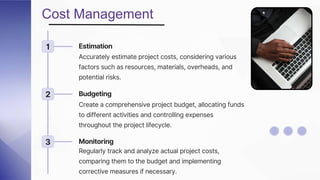
Cost Management
1 Estimation
Accurately estimate project costs, considering various
factors such as resources, materials, overheads, and
potential risks.
2 Budgeting
Create a comprehensive project budget, allocating funds
to different activities and controlling expenses
throughout the project lifecycle.
3 Monitoring
Regularly track and analyze actual project costs,
comparing them to the budget and implementing
corrective measures if necessary.
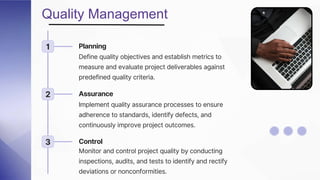
Quality Management
1 Planning
Define quality objectives and establish metrics to
measure and evaluate project deliverables against
predefined quality criteria.
2 Assurance
Implement quality assurance processes to ensure
adherence to standards, identify defects, and
continuously improve project outcomes.
3 Control
Monitor and control project quality by conducting
inspections, audits, and tests to identify and rectify
deviations or nonconformities.
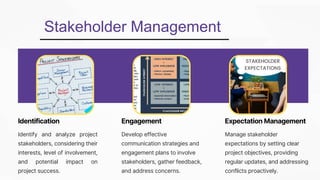
Stakeholder Management
Identification
Identify and analyze project
stakeholders, considering their
interests, level of involvement,
and potential impact on
project success.
Engagement
Develop effective
communication strategies and
engagement plans to involve
stakeholders, gather feedback,
and address concerns.
Expectation Management
Manage stakeholder
expectations by setting clear
project objectives, providing
regular updates, and addressing
conflicts proactively.
Conclusion
It plays a pivotal role in delivering quality results, efficient resource use, and risk
mitigation. With the right methodologies and practices, project management is
the cornerstone of successful ventures.
8287142095

Project Management Fundamentals.pptx

  • 1.
    Project Management Fundamentals Welcome to theworld of project management! we will explore the key fundamentals that form the foundation of successful project management.
  • 2.
    Introduction to Project Management ProjectManagement is a structured approach to achieve specific goals within defined constraints. It involves initiation, planning, execution, monitoring, and closure. Key roles include the Project Manager and stakeholders. Traditional and Agile are common frameworks. It ensures efficient resource use, on-time delivery, risk management, and quality results.
  • 3.
    Defining a Project Defininga project is the initial step in project management. It involves clearly stating the project's objectives, scope, and constraints. A well-defined project outlines what needs to be achieved, the resources required, and the expected outcomes. This clarity sets the foundation for effective project planning and execution.
  • 4.
    Project Management Fundamentals CostManagement Explore methods to estimate, budget, and monitor project costs, enabling effective financial control and resource allocation. Time Management Learn techniques and strategies to effectively plan, schedule, and control project timelines, ensuring timely completion of tasks and milestones. Quality Management Discover approaches to ensure project deliverables meet established quality standards and customer expectations to achieve project success. Stakeholder Management Understand the importance of identifying, engaging, and communicating with project stakeholders to gain their support and mitigate potential risks.
  • 5.
    Time Management 1 Planning Createwell-defined project schedules, setting realistic deadlines and identifying critical path activities to optimize time management. 2 Execution Effectively coordinate and monitor project activities, ensuring tasks are completed on time and within the allocated resources. 3 Control Implement mechanisms to track and analyze project progress, making necessary adjustments to keep the project timeline on track.
  • 6.
    Cost Management 1 Estimation Accuratelyestimate project costs, considering various factors such as resources, materials, overheads, and potential risks. 2 Budgeting Create a comprehensive project budget, allocating funds to different activities and controlling expenses throughout the project lifecycle. 3 Monitoring Regularly track and analyze actual project costs, comparing them to the budget and implementing corrective measures if necessary.
  • 7.
    Quality Management 1 Planning Definequality objectives and establish metrics to measure and evaluate project deliverables against predefined quality criteria. 2 Assurance Implement quality assurance processes to ensure adherence to standards, identify defects, and continuously improve project outcomes. 3 Control Monitor and control project quality by conducting inspections, audits, and tests to identify and rectify deviations or nonconformities.
  • 8.
    Stakeholder Management Identification Identify andanalyze project stakeholders, considering their interests, level of involvement, and potential impact on project success. Engagement Develop effective communication strategies and engagement plans to involve stakeholders, gather feedback, and address concerns. Expectation Management Manage stakeholder expectations by setting clear project objectives, providing regular updates, and addressing conflicts proactively.
  • 9.
    Conclusion It plays apivotal role in delivering quality results, efficient resource use, and risk mitigation. With the right methodologies and practices, project management is the cornerstone of successful ventures.
  • 10.