GOVT.D.B. GIRLS P.G.(AUTONOMUS) COLLAGE RAIPUR (C.G.)
Presentation on - Program writing
DEPARTMENT OF PHYSICS
M.Sc.1st Semester 2022
Guided By Presentation By
Miss. Jharna sahane Sonali Sahu
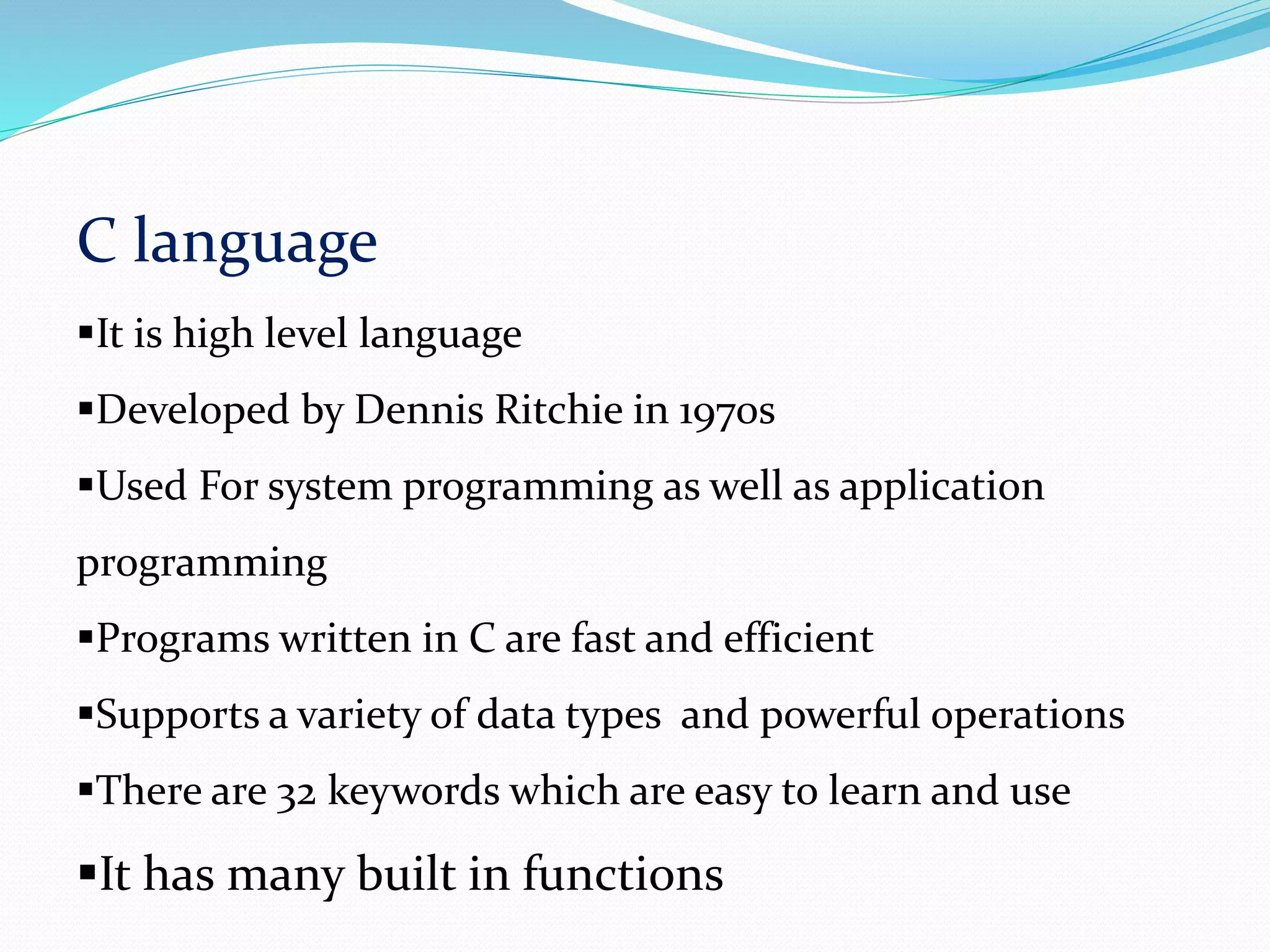
CONTENTS
Introduction
C Program Structure
C program Structure Explained
C Programming – Sytax for writing programs
Sturcture of the programming
C Tokens
C Tokens Example Program
C language
It is high level language
Developed by Dennis Ritchie in 1970s
Used For system programming as well as application
programming
Programs written in C are fast and efficient
Supports a variety of data types and powerful operations
There are 32 keywords which are easy to learn and use
It has many built in functions
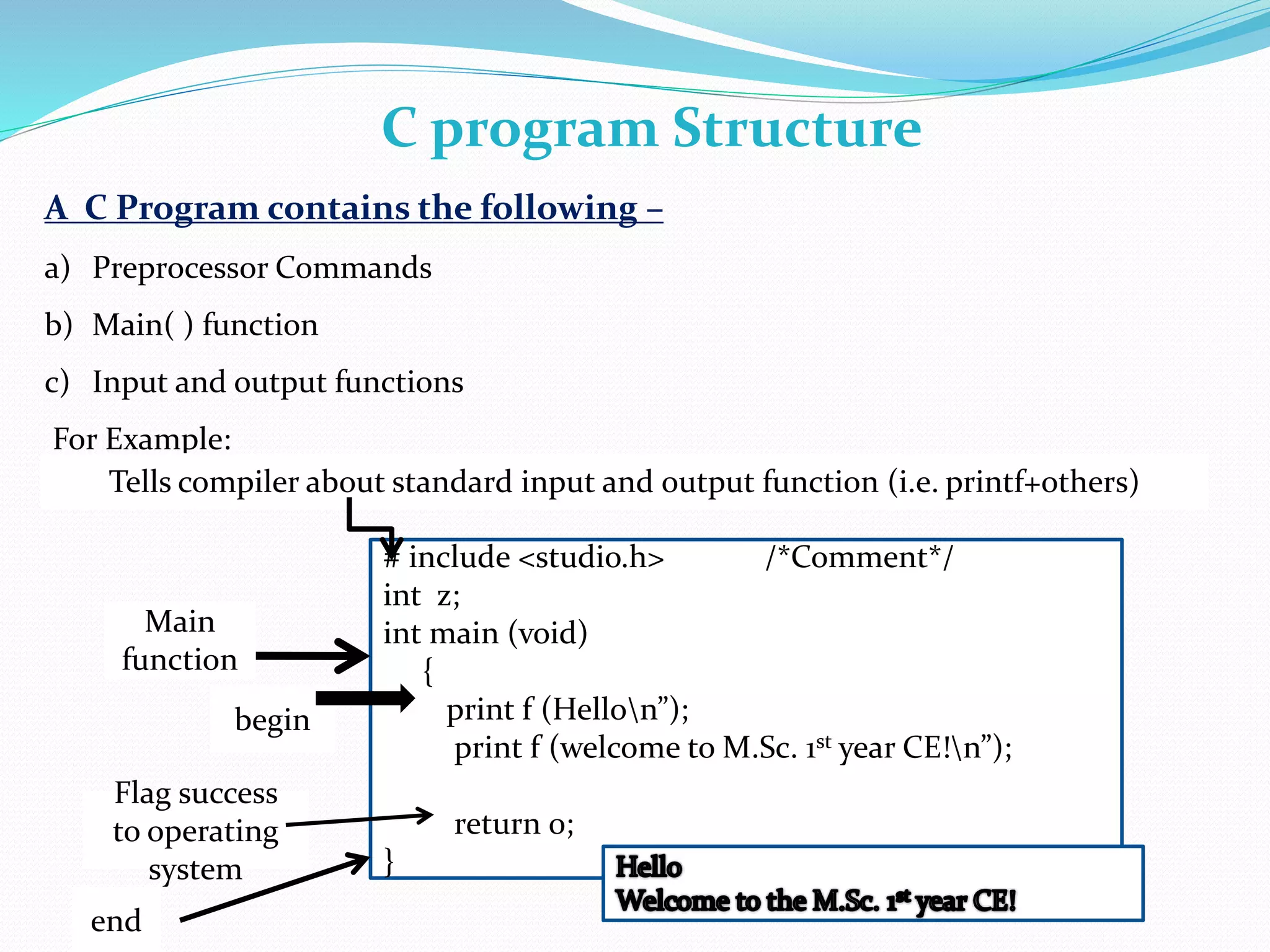
C program Structure
A C Program contains the following –
a) Preprocessor Commands
b) Main( ) function
c) Input and output functions
For Example:
# include <studio.h> /*Comment*/
int z;
int main (void)
{
print f (Hellon”);
print f (welcome to M.Sc. 1st year CE!n”);
return 0;
}
Main
function
begin
Flag success
to operating
system
end
Tells compiler about standard input and output function (i.e. printf+others)
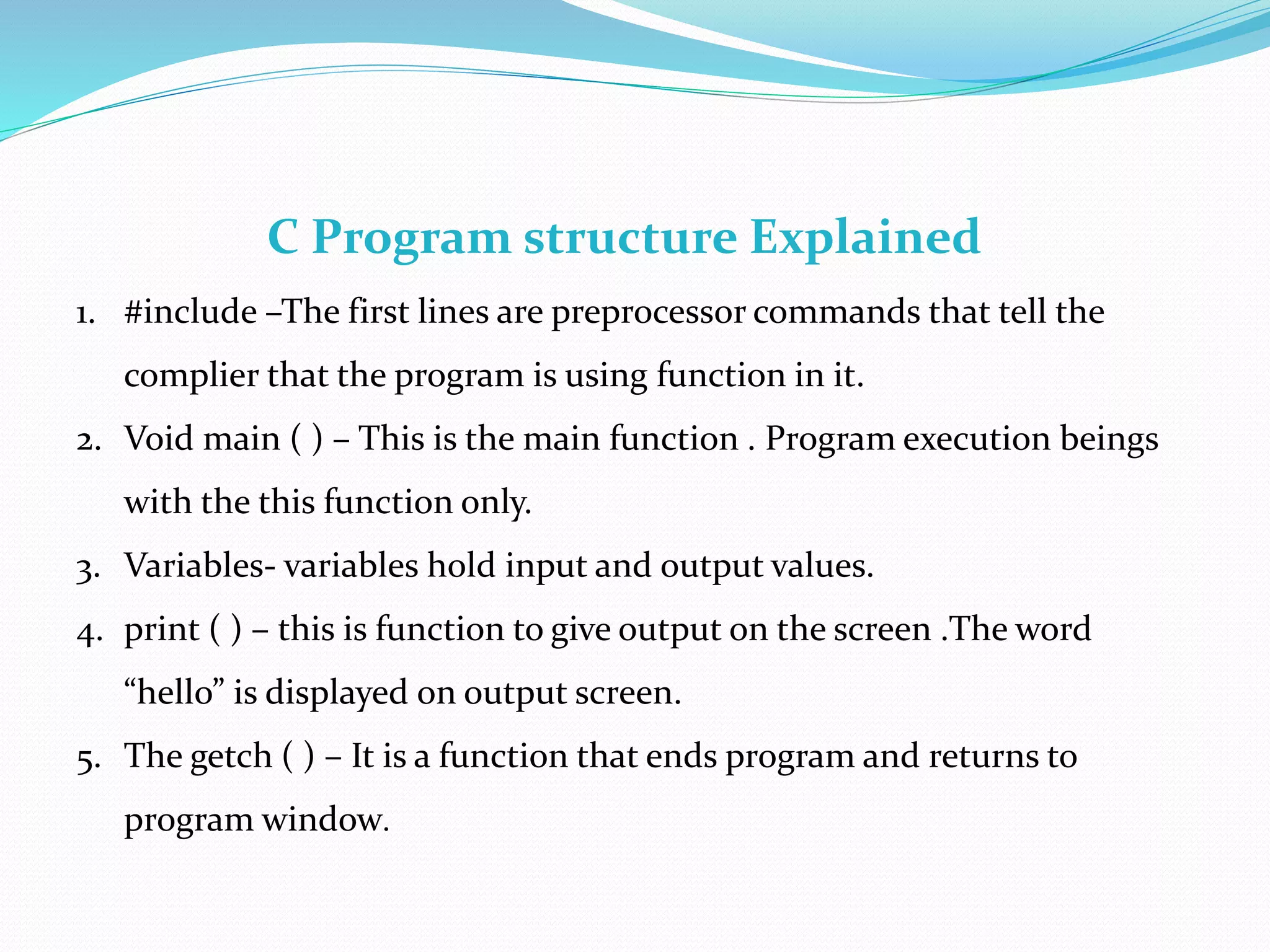
C Program structure Explained
1. #include –The first lines are preprocessor commands that tell the
complier that the program is using function in it.
2. Void main ( ) – This is the main function . Program execution beings
with the this function only.
3. Variables- variables hold input and output values.
4. print ( ) – this is function to give output on the screen .The word
“hello” is displayed on output screen.
5. The getch ( ) – It is a function that ends program and returns to
program window.
C Programming – Syntax for writing programs
1. C language is case sensitive language . Hello and hello are
two different words.
2. Programs are written in small caps only ie.. In small letters.
Capital words are treated differently.
3. Inside the main( ) function,each statement is terminated
with semicolon.
4. Comments are used for explanation ./*……………*/ formate is
used to give comments in program. They are not executed.
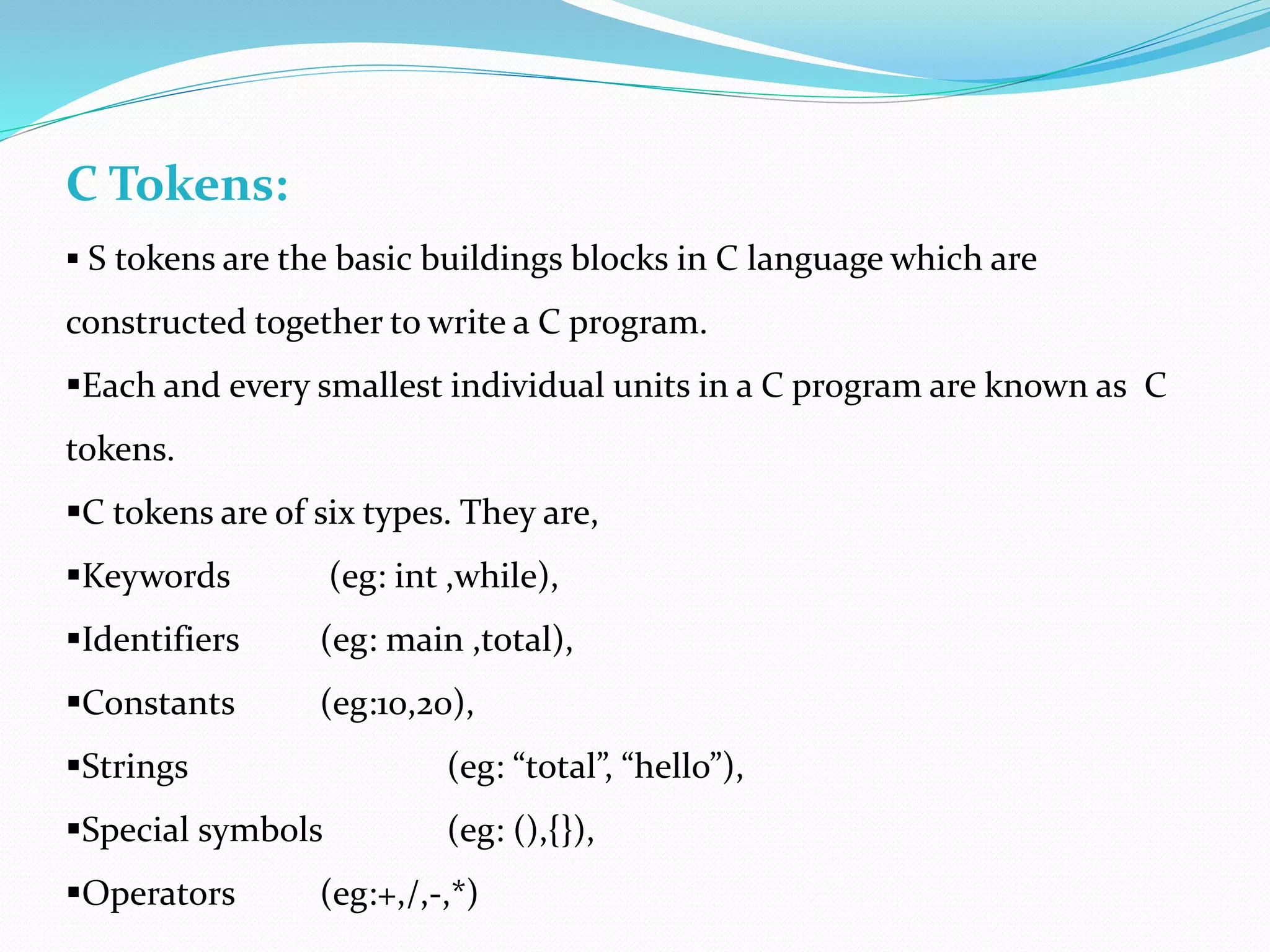
C Tokens:
 S tokens are the basic buildings blocks in C language which are
constructed together to write a C program.
Each and every smallest individual units in a C program are known as C
tokens.
C tokens are of six types. They are,
Keywords (eg: int ,while),
Identifiers (eg: main ,total),
Constants (eg:10,20),
Strings (eg: “total”, “hello”),
Special symbols (eg: (),{}),
Operators (eg:+,/,-,*)
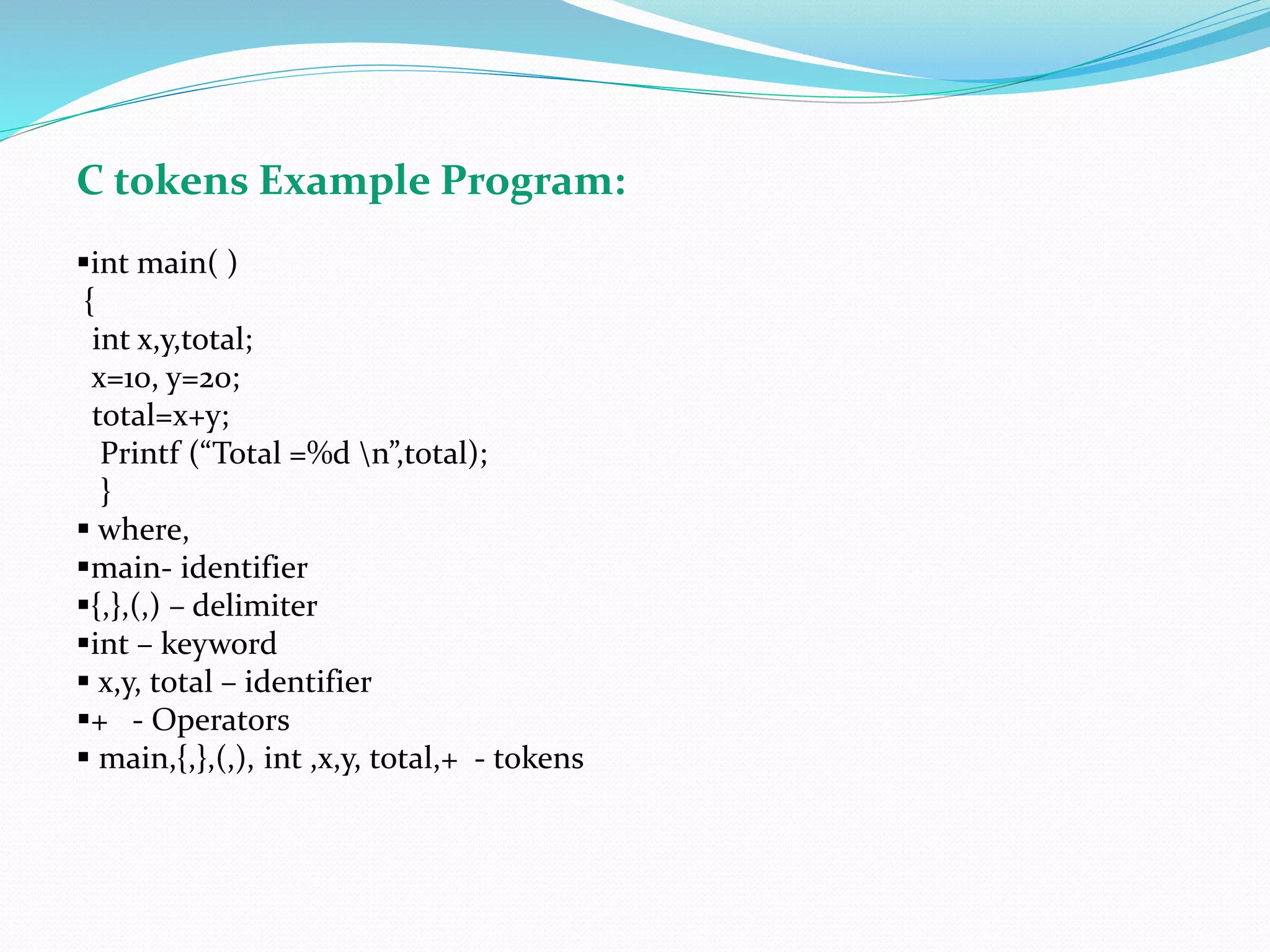
C tokens Example Program:
int main( )
{
int x,y,total;
x=10, y=20;
total=x+y;
Printf (“Total =%d n”,total);
}
 where,
main- identifier
{,},(,) – delimiter
int – keyword
 x,y, total – identifier
+ - Operators
 main,{,},(,), int ,x,y, total,+ - tokens
Programming.pptx

Programming.pptx

  • 1.
    GOVT.D.B. GIRLS P.G.(AUTONOMUS)COLLAGE RAIPUR (C.G.) Presentation on - Program writing DEPARTMENT OF PHYSICS M.Sc.1st Semester 2022 Guided By Presentation By Miss. Jharna sahane Sonali Sahu
  • 2.
    CONTENTS Introduction C Program Structure Cprogram Structure Explained C Programming – Sytax for writing programs Sturcture of the programming C Tokens C Tokens Example Program
  • 3.
    C language It ishigh level language Developed by Dennis Ritchie in 1970s Used For system programming as well as application programming Programs written in C are fast and efficient Supports a variety of data types and powerful operations There are 32 keywords which are easy to learn and use It has many built in functions
  • 4.
    C program Structure AC Program contains the following – a) Preprocessor Commands b) Main( ) function c) Input and output functions For Example: # include <studio.h> /*Comment*/ int z; int main (void) { print f (Hellon”); print f (welcome to M.Sc. 1st year CE!n”); return 0; } Main function begin Flag success to operating system end Tells compiler about standard input and output function (i.e. printf+others)
  • 5.
    C Program structureExplained 1. #include –The first lines are preprocessor commands that tell the complier that the program is using function in it. 2. Void main ( ) – This is the main function . Program execution beings with the this function only. 3. Variables- variables hold input and output values. 4. print ( ) – this is function to give output on the screen .The word “hello” is displayed on output screen. 5. The getch ( ) – It is a function that ends program and returns to program window.
  • 6.
    C Programming –Syntax for writing programs 1. C language is case sensitive language . Hello and hello are two different words. 2. Programs are written in small caps only ie.. In small letters. Capital words are treated differently. 3. Inside the main( ) function,each statement is terminated with semicolon. 4. Comments are used for explanation ./*……………*/ formate is used to give comments in program. They are not executed.
  • 7.
    C Tokens:  Stokens are the basic buildings blocks in C language which are constructed together to write a C program. Each and every smallest individual units in a C program are known as C tokens. C tokens are of six types. They are, Keywords (eg: int ,while), Identifiers (eg: main ,total), Constants (eg:10,20), Strings (eg: “total”, “hello”), Special symbols (eg: (),{}), Operators (eg:+,/,-,*)
  • 8.
    C tokens ExampleProgram: int main( ) { int x,y,total; x=10, y=20; total=x+y; Printf (“Total =%d n”,total); }  where, main- identifier {,},(,) – delimiter int – keyword  x,y, total – identifier + - Operators  main,{,},(,), int ,x,y, total,+ - tokens