SSP	
  
(Publishers)	
  
DSP	
  
(Agency)	
  
Purchase	
  ad	
  inventory	
  
(display,	
  video,	
  search,	
  
mobile)	
  in	
  an	
  automated	
  
fashion	
  from	
  mul=ple	
  
publisher	
  sites	
  and	
  AD	
  
networks	
  and	
  exchanges	
  
Open	
  Network	
  
Closed	
  Network	
  
Ad	
  
Network	


SSPs	
  pool	
  inventory	
  from	
  Publisher	
  owned	
  web	
  sites	
  
(and	
  partners),	
  then	
  op=mizes	
  yield	
  based	
  on	
  defined	
  
CPMs	
  and	
  preferred	
  buying	
  arrangements	


AKA:	
  Yield	
  Op=miza=on	
  plaJorms	
  
•  Protect	
  yield	
  
•  Aggregate	
  and	
  manages	
  rela=onships	
  with	
  mul=ple	
  
networks	
  
•  Dictate	
  who	
  can	
  buy	
  and	
  at	
  what	
  rate:	
  closed	
  
networks	
  offer	
  preferen=al	
  rates	
  to	
  individual	
  
Agencies	
  and	
  adver=sers,	
  based	
  on	
  annual	
  buying	
  
agreements.	
  Open	
  network:	
  
•  Can	
  be	
  used	
  to	
  traffic	
  campaigns:	
  serve	
  and	
  track	
  
delivery	
  
•  SSP	
  partnerships	
  include:	
  Pangaea	
  Alliance:	
  
Guardian,	
  FT,	
  Reuters,	
  Economist	
  pooling	
  inventory	
  
using	
  the	
  Rubicon	
  Project	
  plaJorm	
  
Supplies	
  
inventory	
  to	
  
•  Allows	
  buyers	
  to	
  manage	
  
mul=ple	
  ad	
  exchange	
  and	
  data	
  
exchange	
  accounts	
  in	
  one	
  place	
  
•  Allows	
  buying	
  of	
  narrow	
  
audience	
  segments	
  at	
  scale	
  
•  Analyze	
  and	
  purchase	
  
impressions	
  based	
  on	
  aTributes:	
  
cost,	
  where	
  served,	
  specific	
  
users,	
  behaviour…	
  
Key	
  supply	
  side	
  plaJorms	
  SSPs:	
  
•  Google	
  
•  OpenX	
  
•  Pubma=c	
  
•  Rubicon	
  Project	
  
•  AppNexus	
  
•  Right	
  Media	
  
•  AOL	
  
•  Prices	
  oXen	
  determined	
  by	
  Real	
  
Time	
  Biddng	
  (RTB)	


DSP	
  Benefits	
  over	
  ad	
  network:	
  
•  Ad	
  Networks	
  include	
  a	
  markup,	
  
DSPs	
  charge	
  a	
  simple	
  fee	
  for	
  
facilita=ng	
  transac=on	
  
•  Ability	
  to	
  buy,	
  serve,	
  track	
  and	
  
op=mize	
  ads	
  using	
  one	
  central	
  
tool	
  
Ad	
  Networks,	
  originally	
  created	
  to	
  
collect	
  mass	
  inventory	
  to	
  simplify	
  
buying	
  process	
  and	
  support	
  
publishers	
  with	
  limited	
  display	
  
sales	
  capability	
  
•  Closed	
  group	
  of	
  privately	
  
traded	
  ads	
  
•  Aggregate	
  and	
  sell	
  adver=sing	
  
on	
  behalf	
  of	
  publishers.	
  Some	
  
focus	
  on	
  quan=ty	
  (sell	
  cheap)	
  
others	
  quality	
  (premium)	
  
•  threatened	
  by	
  rise	
  of	
  DSPs,	
  so	
  
most	
  offer	
  some	
  sort	
  of	
  DSP:	
  
buy	
  up	
  inventory	
  repackage	
  
and	
  resell	
  at	
  premium	
  	
  
•  line	
  is	
  increasingly	
  blurred	
  
between	
  ad	
  networks	
  and	
  
DSPs)	
  .	
  DSPs	
  the	
  next	
  gen	
  of	
  
Ad	
  networks	
  
Example	
  DSPs	
  
•  Vendors:	
  Google	
  Invite	
  media,	
  
MediaMath,	
  Turn,	
  DataXu	
  
•  Agency	
  trading	
  desks	
  using	
  the	
  
above	
  
Example	
  agency	
  trading	
  desks:	
  
•  Havas	
  –	
  Adne=k	
  
•  IPG	
  -­‐	
  Mediabrands	
  Audience	
  
PlaJorm	
  
•  Omnicon	
  –	
  Accuen	
  
•  Publicis	
  –	
  Audience	
  on	
  Demand	
  
•  WPP	
  -­‐	
  Xaxis	
  
Data	
  Management	
  PlaJorm	
  (DMP	
  or	
  Data	
  
Aggregator)	
  
Collect	
  on	
  and	
  offline	
  data	
  to	
  enrich	
  targe=ng	
  
•  Manage	
  cookie	
  IDs	
  and	
  audience	
  segments	
  
•  DMP	
  work	
  with	
  DSPs	
  and	
  SSPs	
  to	
  inform	
  
and	
  segment	
  buying/selling	
  op=ons	
  
•  DSP	
  providers	
  oXen	
  include	
  DMPs	
  
•  Example	
  DMPs	
  Adobe,	
  Krux,	
  BlueKai,	
  
Coreaudience,	
  Kno=ce,	
  X+1	
  
	
  Ad	
  Exchanges	
  
(adver=sing	
  
automa=on	
  
plaJorms)	
  
DMP	
  
Data	
  
Mangt.	
  
PlaJorm	
  
Web	
  
site	
  1	
  
Web	
  
site	
  3…	
  
Web	
  
site	
  2	
  
Web	
  
site	
  1	
  
Web	
  
site	
  3…	
  
Web	
  
site	
  2	
  
Evolving	
  and	
  increasingly	
  blurred	
  line	
  
between	
  Ad	
  Exchanges	
  and	
  SSPs,	
  in	
  broad	
  
terms	
  both	
  offer	
  an	
  automated	
  adver=sing	
  
plaJorm	
  for	
  buyers	
  and	
  sellers	
  
•  Compared	
  to	
  Ad	
  Networks,	
  Ad	
  Exchanges	
  
collect	
  inventory	
  from	
  mul=ple	
  publishers	
  
and	
  networks	
  providing	
  open	
  bidding	
  /	
  
RTB	
  op=ons	
  with	
  variable	
  pricing	
  to	
  aid	
  
transparency	
  
•  Variety	
  of	
  trading	
  op=ons:	
  real	
  =me	
  spot;	
  
yield	
  op=misa=on;	
  forward	
  and	
  futures;	
  
behavioural	
  /	
  retarge=ng	
  and	
  contextual	
  
•  Examples:	
  AdECN,	
  Rubicon	
  Project,	
  
RockeJuel,	
  Google	
  Display	
  Network	
  /	
  
Doubleclick	
  Bid	
  Manager,	
  Facebook	
  Ad	
  
Exchange	
  (Live	
  Rail	
  acquisi=on),	
  TapAd	
  
(cross	
  device	
  DSP),	
  AdMob	
  (ad	
  network	
  
for	
  mobile/tablet	
  Apps)	
  
Owned	
  /	
  proprietary	
  sites	
  
Supplies	
  
inventory	
  to	
  
Supplies	
  
inventory	
  to	
  
Retarge=ng	
  specialist	
  
plaJorms	
  
•  Buy	
  inventory	
  and	
  offer	
  
retarge=ng	
  based	
  on	
  audience	
  
behavior	
  (products	
  viewed	
  etc)	
  
•  Examples:	
  Criteo,	
  AdRoll,	
  
Retargeter	
  and	
  search	
  to	
  display	
  
retargeters	
  like	
  Simplifi,	
  Chango,	
  
Magne=c	
  
Supplies	
  
inventory	
  to	
  

Programmatic advertising - overview

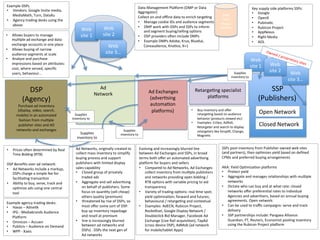
  • 1.
    SSP   (Publishers)   DSP   (Agency)   Purchase  ad  inventory   (display,  video,  search,   mobile)  in  an  automated   fashion  from  mul=ple   publisher  sites  and  AD   networks  and  exchanges   Open  Network   Closed  Network   Ad   Network     SSPs  pool  inventory  from  Publisher  owned  web  sites   (and  partners),  then  op=mizes  yield  based  on  defined   CPMs  and  preferred  buying  arrangements     AKA:  Yield  Op=miza=on  plaJorms   •  Protect  yield   •  Aggregate  and  manages  rela=onships  with  mul=ple   networks   •  Dictate  who  can  buy  and  at  what  rate:  closed   networks  offer  preferen=al  rates  to  individual   Agencies  and  adver=sers,  based  on  annual  buying   agreements.  Open  network:   •  Can  be  used  to  traffic  campaigns:  serve  and  track   delivery   •  SSP  partnerships  include:  Pangaea  Alliance:   Guardian,  FT,  Reuters,  Economist  pooling  inventory   using  the  Rubicon  Project  plaJorm   Supplies   inventory  to   •  Allows  buyers  to  manage   mul=ple  ad  exchange  and  data   exchange  accounts  in  one  place   •  Allows  buying  of  narrow   audience  segments  at  scale   •  Analyze  and  purchase   impressions  based  on  aTributes:   cost,  where  served,  specific   users,  behaviour…   Key  supply  side  plaJorms  SSPs:   •  Google   •  OpenX   •  Pubma=c   •  Rubicon  Project   •  AppNexus   •  Right  Media   •  AOL   •  Prices  oXen  determined  by  Real   Time  Biddng  (RTB)     DSP  Benefits  over  ad  network:   •  Ad  Networks  include  a  markup,   DSPs  charge  a  simple  fee  for   facilita=ng  transac=on   •  Ability  to  buy,  serve,  track  and   op=mize  ads  using  one  central   tool   Ad  Networks,  originally  created  to   collect  mass  inventory  to  simplify   buying  process  and  support   publishers  with  limited  display   sales  capability   •  Closed  group  of  privately   traded  ads   •  Aggregate  and  sell  adver=sing   on  behalf  of  publishers.  Some   focus  on  quan=ty  (sell  cheap)   others  quality  (premium)   •  threatened  by  rise  of  DSPs,  so   most  offer  some  sort  of  DSP:   buy  up  inventory  repackage   and  resell  at  premium     •  line  is  increasingly  blurred   between  ad  networks  and   DSPs)  .  DSPs  the  next  gen  of   Ad  networks   Example  DSPs   •  Vendors:  Google  Invite  media,   MediaMath,  Turn,  DataXu   •  Agency  trading  desks  using  the   above   Example  agency  trading  desks:   •  Havas  –  Adne=k   •  IPG  -­‐  Mediabrands  Audience   PlaJorm   •  Omnicon  –  Accuen   •  Publicis  –  Audience  on  Demand   •  WPP  -­‐  Xaxis   Data  Management  PlaJorm  (DMP  or  Data   Aggregator)   Collect  on  and  offline  data  to  enrich  targe=ng   •  Manage  cookie  IDs  and  audience  segments   •  DMP  work  with  DSPs  and  SSPs  to  inform   and  segment  buying/selling  op=ons   •  DSP  providers  oXen  include  DMPs   •  Example  DMPs  Adobe,  Krux,  BlueKai,   Coreaudience,  Kno=ce,  X+1    Ad  Exchanges   (adver=sing   automa=on   plaJorms)   DMP   Data   Mangt.   PlaJorm   Web   site  1   Web   site  3…   Web   site  2   Web   site  1   Web   site  3…   Web   site  2   Evolving  and  increasingly  blurred  line   between  Ad  Exchanges  and  SSPs,  in  broad   terms  both  offer  an  automated  adver=sing   plaJorm  for  buyers  and  sellers   •  Compared  to  Ad  Networks,  Ad  Exchanges   collect  inventory  from  mul=ple  publishers   and  networks  providing  open  bidding  /   RTB  op=ons  with  variable  pricing  to  aid   transparency   •  Variety  of  trading  op=ons:  real  =me  spot;   yield  op=misa=on;  forward  and  futures;   behavioural  /  retarge=ng  and  contextual   •  Examples:  AdECN,  Rubicon  Project,   RockeJuel,  Google  Display  Network  /   Doubleclick  Bid  Manager,  Facebook  Ad   Exchange  (Live  Rail  acquisi=on),  TapAd   (cross  device  DSP),  AdMob  (ad  network   for  mobile/tablet  Apps)   Owned  /  proprietary  sites   Supplies   inventory  to   Supplies   inventory  to   Retarge=ng  specialist   plaJorms   •  Buy  inventory  and  offer   retarge=ng  based  on  audience   behavior  (products  viewed  etc)   •  Examples:  Criteo,  AdRoll,   Retargeter  and  search  to  display   retargeters  like  Simplifi,  Chango,   Magne=c   Supplies   inventory  to