A U G U S T   2 5,   2 0 1 1Buying Display Ad InventorySponsored by:David HallermanPrincipal Analyst
What we’ll look at today…Display ad market trends: spending and attitudes
Targeting tactics: audience vs. content (context)
Range of inventory sources: benefits and caveats
Publisher direct: finding brand value with premium inventory
Ad networks: ways to use inventory aggregation
Ad exchanges: including influx of private exchanges
DSPs: including growth of agency trading desks
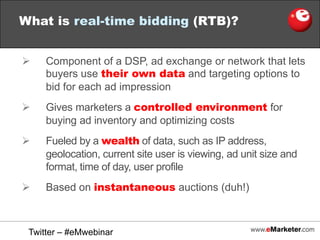
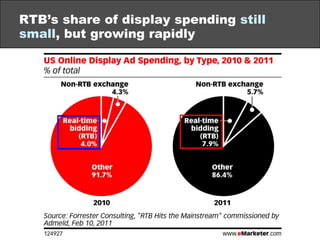
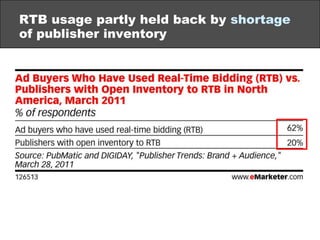
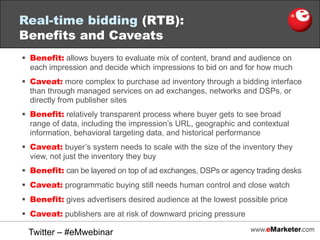
Real-time bidding: how it fits into several inventory channels
Integrating ad inventory: blending sources and dataTwitter – #eMwebinar
Display Ad Overview(Spending and Attitudes)
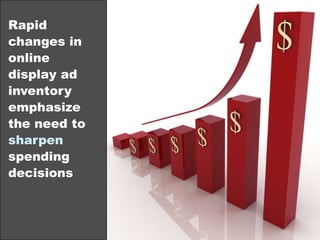
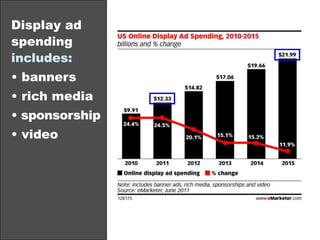
Rapid changes in online display ad inventory emphasize the need to sharpen spending decisions
Display ad spending includes:• banners• rich media• sponsorship• video
How marketers would hope their target audience views their display ads
How most audience members actually view online display advertising
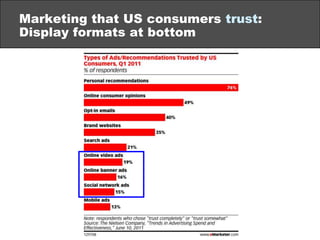
Marketing that US consumers trust: Display formats at bottom
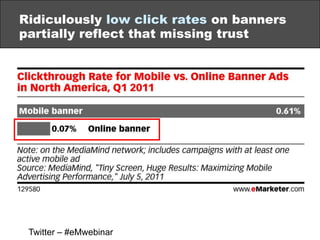
Ridiculously low click rates on banners partially reflect that missing trustTwitter – #eMwebinar
Audience vs. Content Targeting(New vs. Traditional)
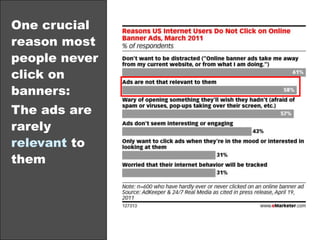
One crucial reason most people never click on banners:The ads are rarely relevant to them
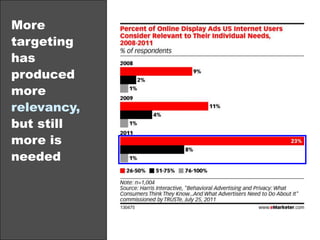
More targeting has produced more relevancy,but stillmore is needed
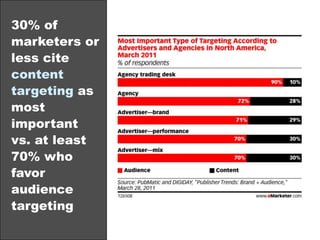
30% of marketers or less cite content targeting as most important vs. at least 70% who favor audience targeting
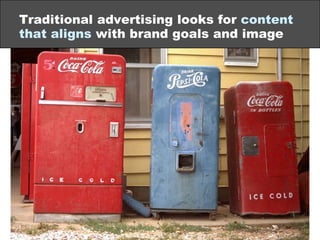
Traditional advertising looks for content that aligns with brand goals and image
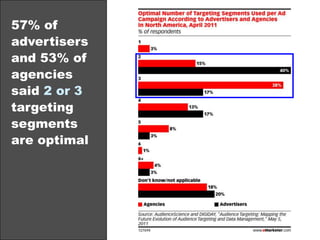
57% of advertisers and 53% of agencies said 2 or 3 targeting segments are optimal
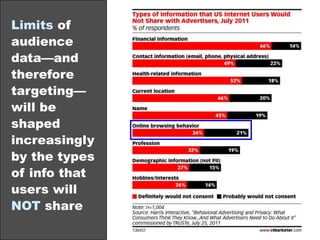
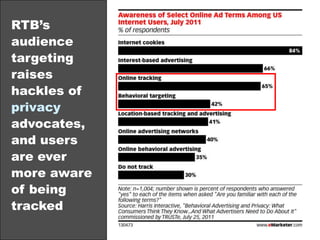
Limits of audience data—and therefore targeting—will be shaped increasingly by the types of info that users will NOT share
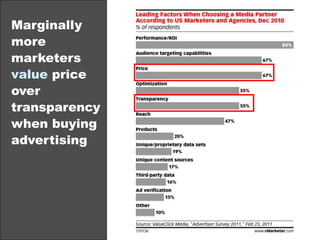
Audience targeting tends to diminish transparency for media buyers
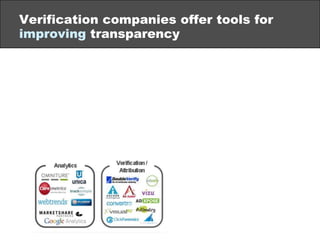
Online advertising transparency can be defined in several waysDetails about inventory and data sources
Recency or frequency of audience intent data (aka “freshness”)
Where an advertiser’s message ran
Basic understanding of the algorithms used used to identify targets
Identification of any behavioral data usedTwitter – #eMwebinar
Ad Inventory Sources and Methods(Reach vs. Overlap)
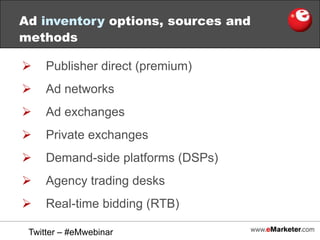
Ad inventory options, sources and methodsPublisher direct (premium)
Ad networks
Ad exchanges
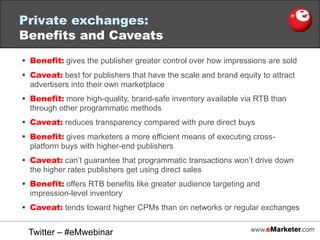
Private exchanges
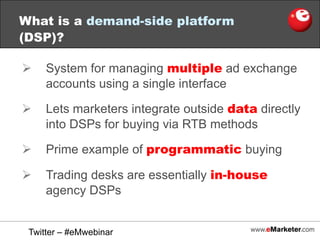
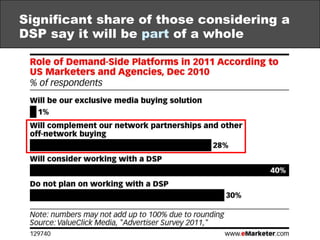
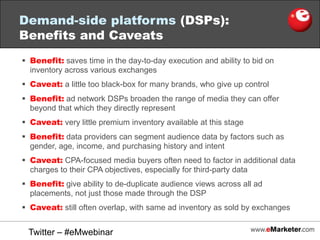
Demand-side platforms (DSPs)
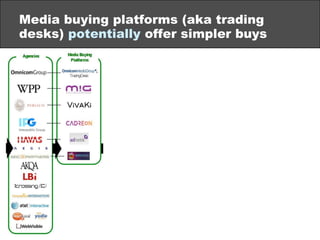
Agency trading desks
Real-time bidding (RTB)Twitter – #eMwebinar
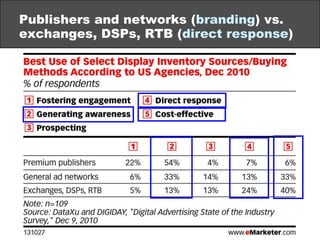
Publishers and networks (branding) vs. exchanges, DSPs, RTB (direct response)
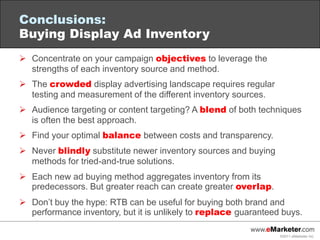
The thing about ad inventory sources: Each has its place, depending on goals
Onil Gunawardana, executive director, AT&T Interactive“Buying ad inventory is a lot like flying a plane.”
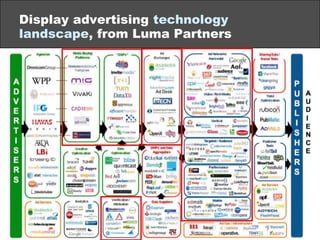
Display advertising technologylandscape, from Luma Partners
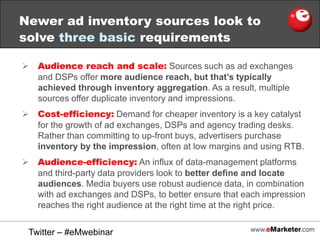
Newer ad inventory sources look to solve three basic requirementsAudience reach and scale: Sources such as ad exchanges and DSPs offer more audience reach, but that’s typically achieved through inventory aggregation. As a result, multiple sources offer duplicate inventory and impressions.
Cost-efficiency: Demand for cheaper inventory is a key catalyst for the growth of ad exchanges, DSPs and agency trading desks. Rather than committing to up-front buys, advertisers purchase inventory by the impression, often at low margins and using RTB.
Audience-efficiency: An influx of data-management platforms and third-party data providers look to better define and locate audiences. Media buyers use robust audience data, in combination with ad exchanges and DSPs, to better ensure that each impression reaches the right audience at the right time at the right price.Twitter – #eMwebinar
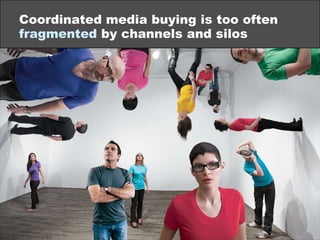
Multiple ad sources too often result in duplicateinventory,which is inefficient and wastes money
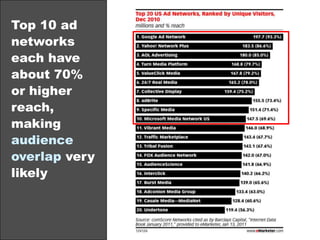
Top 10 ad networks each have about 70% or higher reach,makingaudience overlap very likely
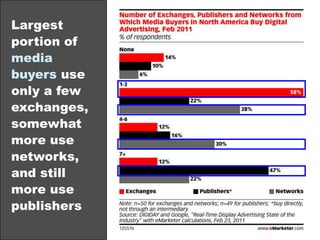
Largest portion of media buyers use only a few exchanges,somewhat more use networks, and still more use publishers
Publisher Direct(Premium Inventory)
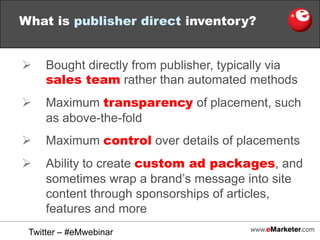
What is publisher direct inventory?Bought directly from publisher, typically via sales team rather than automated methods
Maximum transparency of placement, such as above-the-fold
Maximum control over details of placements
Ability to create custom ad packages, and sometimes wrap a brand’s message into site content through sponsorships of articles, features and moreTwitter – #eMwebinar
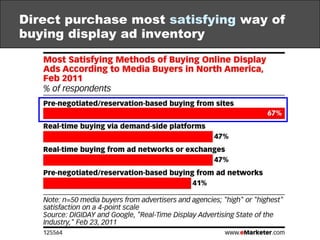
Direct purchase most satisfying way of buying display ad inventory
Brand marketers appreciate how high-quality content helps them stand out
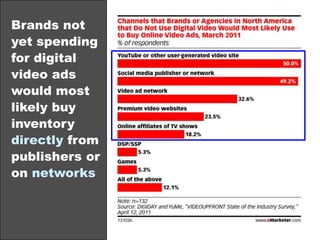
Brands not yet spending for digital video ads would most likely buy inventory directly from publishers or on networks
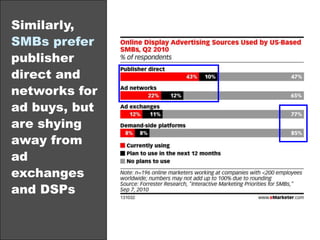
Similarly, SMBs prefer publisher direct and networks for ad buys, but are shying away from ad exchanges and DSPs
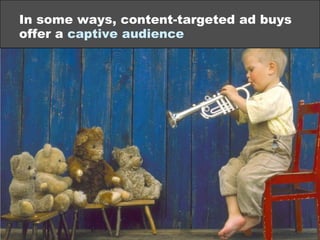
In some ways, content-targeted ad buys offer a captive audience
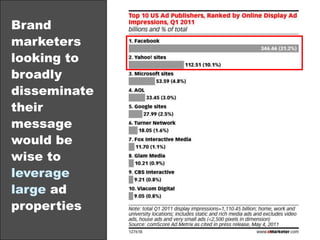
Brand marketers looking to broadly disseminate their message would be wise to leverage large ad properties
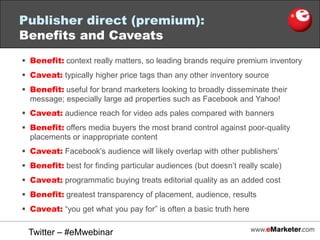
Publisher direct (premium):Benefits and CaveatsBenefit:context really matters, so leading brands require premium inventory
Caveat: typically higher price tags than any other inventory source
Benefit: useful for brand marketers looking to broadly disseminate their message; especially large ad properties such as Facebook and Yahoo!
Caveat: audience reach for video ads pales compared with banners
Benefit: offers media buyers the most brand control against poor-quality placements or inappropriate content
Caveat: Facebook’s audience will likely overlap with other publishers’
Benefit: best for finding particular audiences (but doesn’t really scale)
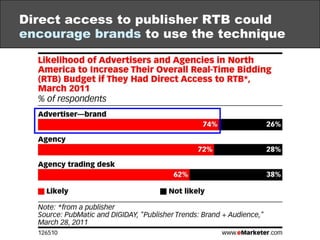
Caveat: programmatic buying treats editorial quality as an added cost
Benefit: greatest transparency of placement, audience, results
Caveat: “you get what you pay for” is often a basic truth hereTwitter – #eMwebinar
Ad Networks(Inventory Aggregators)
What is an ad network?Aggregates ad inventory from multiple publishers and matches it with advertiser demand
Typically groups ad inventory by categories or demographics
Often sells remnant inventory or from small publishers
Comes in both horizontal and vertical varietiesTwitter – #eMwebinar
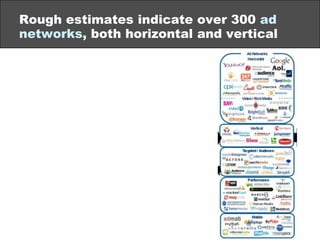
Rough estimates indicate over 300 ad networks, both horizontal and vertical
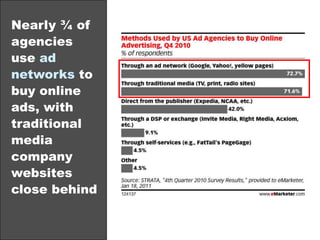
Nearly ¾ of agencies use ad networks to buy online ads, with traditional media company websites close behind
Onil Gunawardana, executive director, AT&T Interactive“Ad networks provide a service layer that allows advertisers to buy everything from one place and takes the hassle out of needing to have relationships with multiple publishers.”
Far more marketers put greater share of ad budgets on ad networks and publisher direct (but beware rear-view mirror effect)
Dave Marsey, SVP and group media director, Digitas“Some ad networks will purchase additional inventory through other, smaller ad networks. It’shard to protect the integrity of where your ad appears when the network is essentially ‘outsourcing’ part of the buy.”
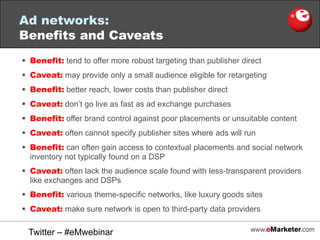
Ad networks:Benefits and CaveatsBenefit: tend to offer more robust targeting than publisher direct
Caveat: may provide only a small audience eligible for retargeting
Benefit: better reach, lower costs than publisher direct
Caveat: don’t go live as fast as ad exchange purchases
Benefit: offer brand control against poor placements or unsuitable content
Caveat: often cannot specify publisher sites where ads will run
Benefit: can often gain access to contextual placements and social network inventory not typically found on a DSP
Caveat: often lack the audience scale found with less-transparent providers like exchanges and DSPs
Benefit: various theme-specific networks, like luxury goods sites
Caveat: make sure network is open to third-party data providersTwitter – #eMwebinar
Ad Exchanges(Bidding for Inventory)
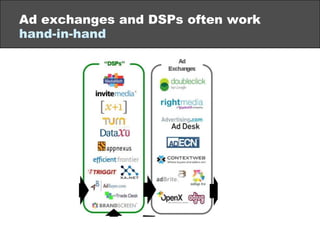
What is an ad exchange?A hub through which ad networks, and some large advertisers or agencies, can trade inventory within a single central marketplace

eMarketer Webinar: Buying Display Ad Inventory

Editor's Notes

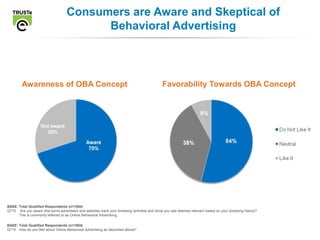
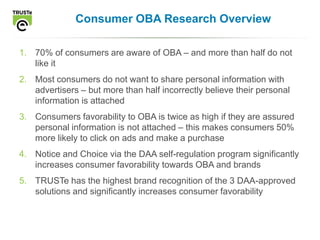
  • #87 1,004 total interviews were conducted from the Harris Interactive Online Consumer PanelInterviews conducted May 26 – June 2, 2011Respondents were qualified as:US residentsAge 18 and overNot employed in advertising, marketing research, PRWeighted to match the US adult population of computer users# of Consumers that feel ads have become increasingly relevant over time has almost tripled – suggesting OBA works
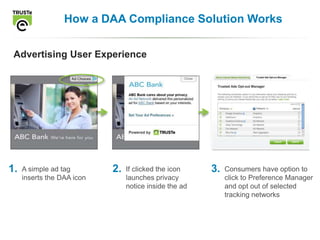
  • #88 Consumer Example->>>>>Focus on simple / easy for the consumer’ !!!!!3 StepsServe icon – ability to customizeShow notice – ability to customizeOffer opt-out mechanismAll TRUSTe hosted and managedCan get a trial up and running in a few daysCan have you fully operational in a few weeks or less
  • #91 Add you client’s logo if a customerNot all of these are TRUSTed Ads clients – yetBut in active discussions with many of these and dozens more