Production Technology of Bael
•Genus – Aegle (Greek name)
•Species – marmelos
(Portuguese name)
• Family- Rutaceae
• Chromosome no. : 2n=18
•Origin – India
•Other names -
Bengal Quince,
Sirphal, Golden
apple, Stone apple
•Deciduous, 6–8 meters in height
tree.
•Older branches are more spiny.
•Leaves – alternate, trifoliate,
petiole, 2-4cm long.
•Inflorescence – auxiliary raceme
•Fruits - 5–7.5 cm in diameter,
globose, oblong pyriform,
•Flower – bisexual, cluster
borne, greenish white & sweet
scented
•Seeds - numerous ,
surrounded by a slimy
Uses
•A therapeutic boon of human
health.
•Rich source of- Riboflavin
(Vitamin B2)
•Leaves (content Aegeline) &
bark – to overcome intermittent
fever.
•Roots - check heart palpitation,
bowel inflammation & indigestion.
•Fruits – used as fresh or syrup,
nectar, sharbat, marmalade etc.
•Unripe fruit rind – yellow dye
and employed in tanning
purpose.
•Fruit (dried & sliced) –
diarrhoea, constipation and
dysentery.
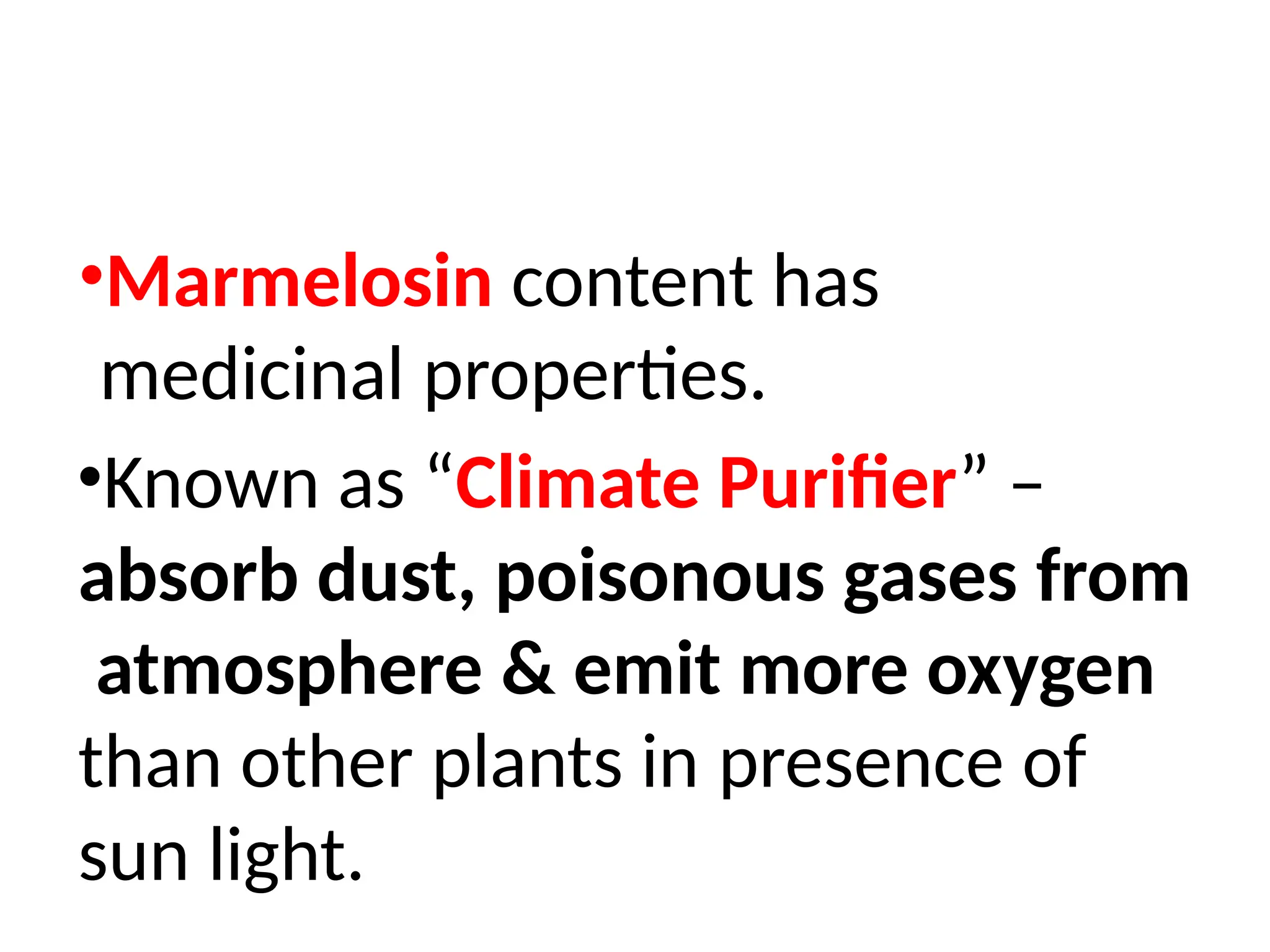
•Marmelosin content has
medicinal properties.
•Known as “Climate Purifier” –
absorb dust, poisonous gases from
atmosphere & emit more oxygen
than other plants in presence of
sun light.
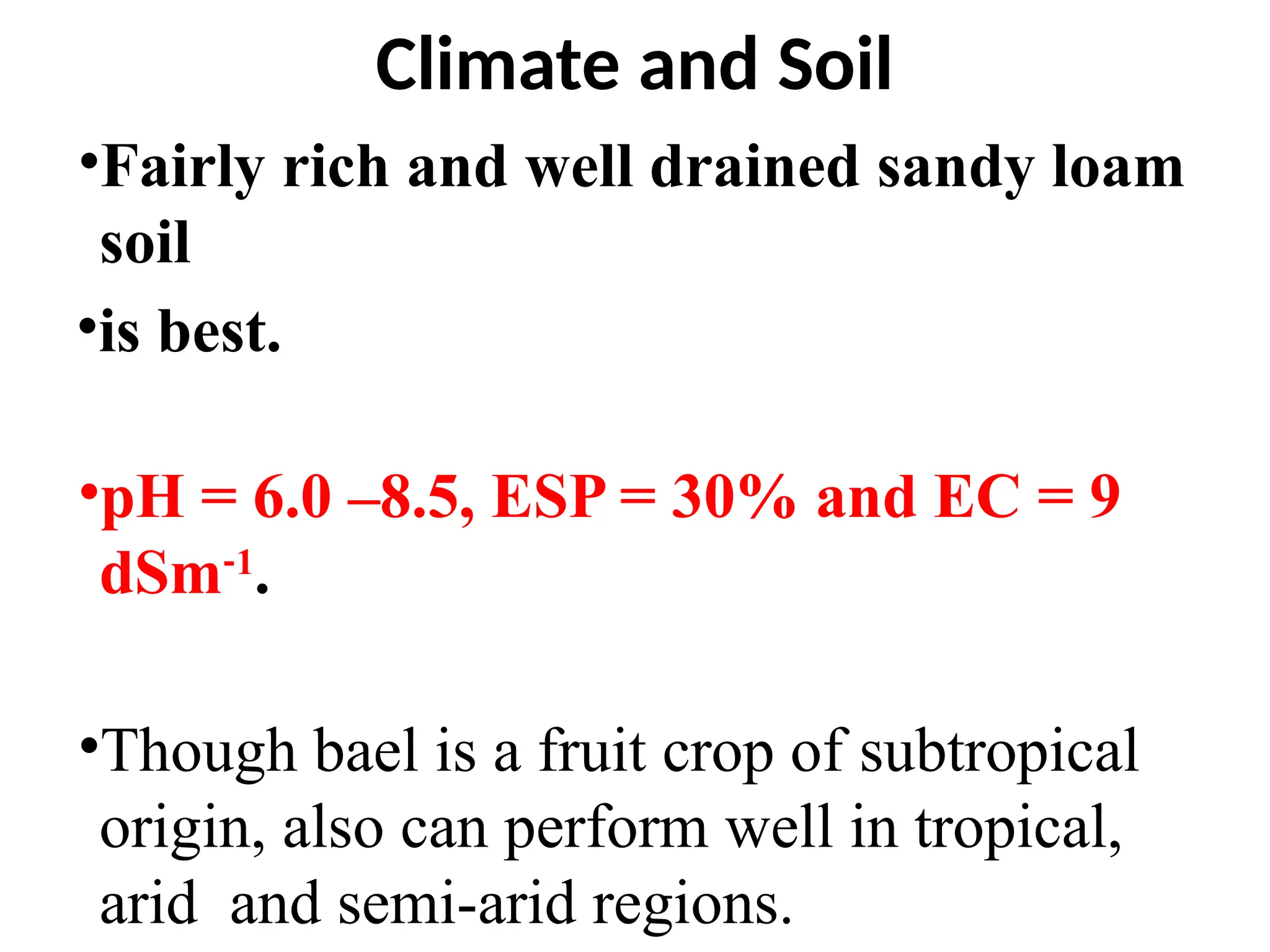
Climate and Soil
•Fairly rich and well drained sandy loam
soil
•is best.
•pH = 6.0 –8.5, ESP = 30% and EC = 9
dSm‐1
.
•Though bael is a fruit crop of subtropical
origin, also can perform well in tropical,
arid and semi-arid regions.
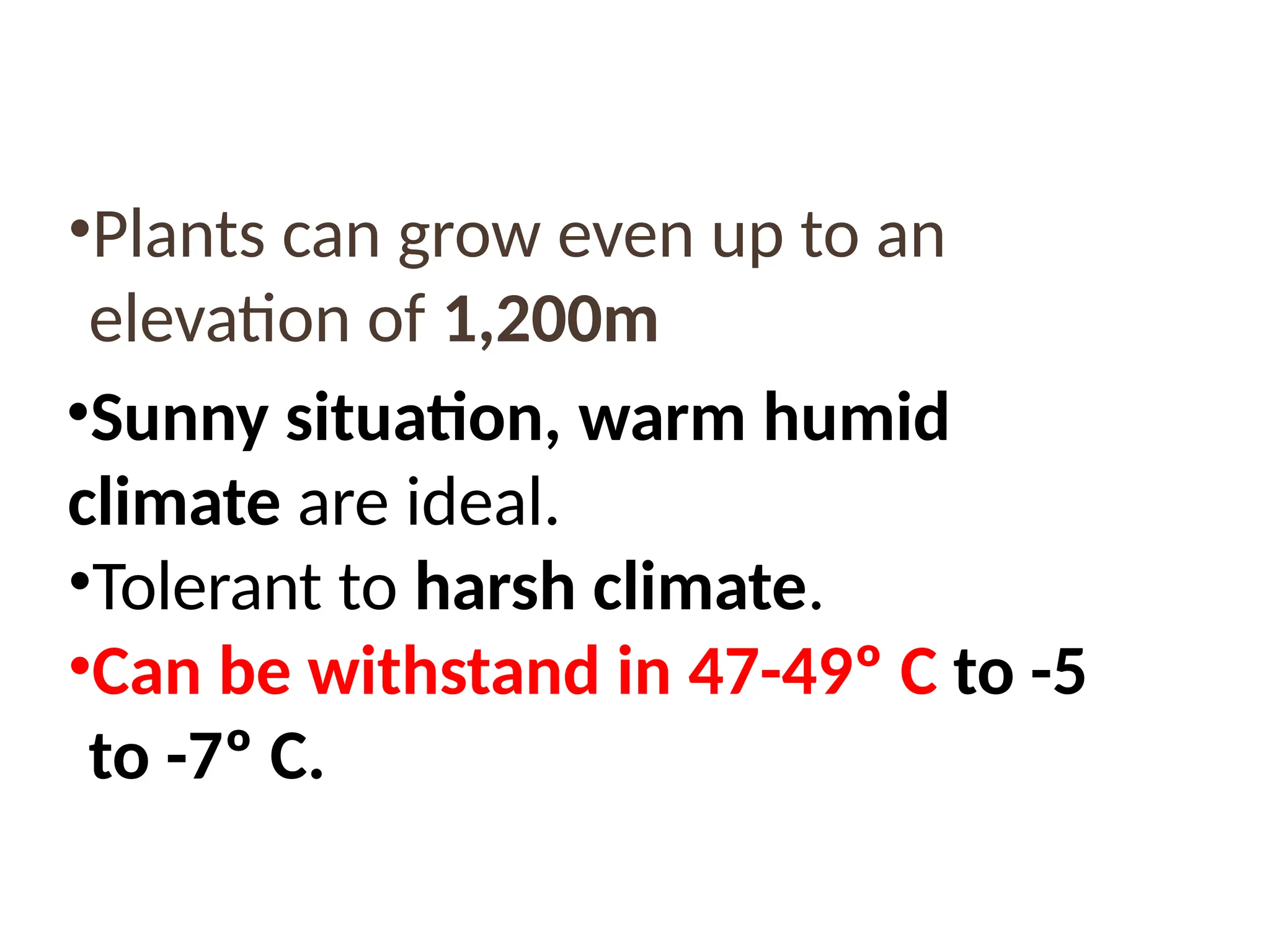
•Plants can grow even up to an
elevation of 1,200m
•Sunny situation, warm humid
climate are ideal.
•Tolerant to harsh climate.
•Can be withstand in 47-49º C to -5
to -7º C.
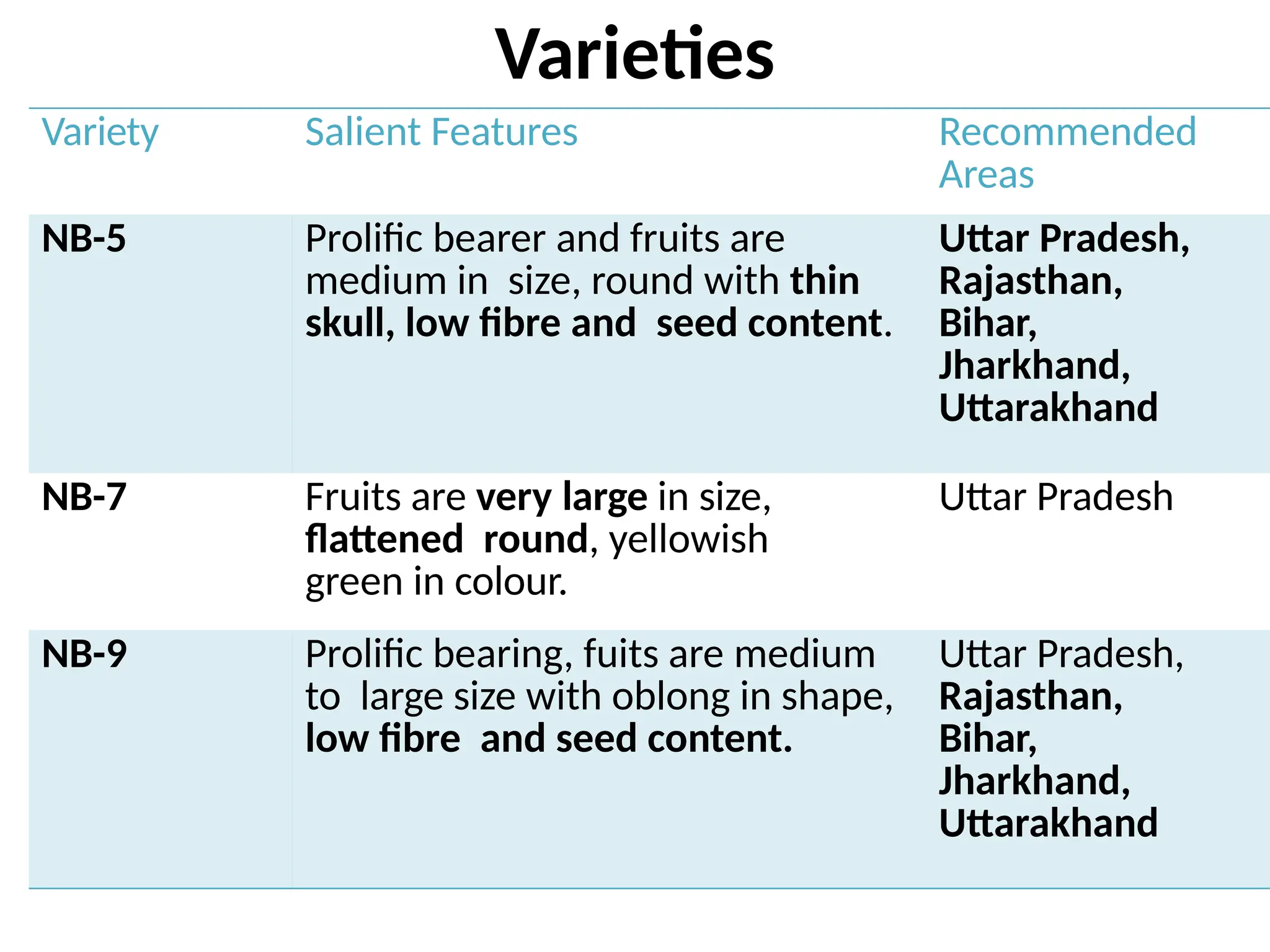
Varieties
Variety Salient Features Recommended
Areas
NB-5 Prolific bearer and fruits are
medium in size, round with thin
skull, low fibre and seed content.
Uttar Pradesh,
Rajasthan,
Bihar,
Jharkhand,
Uttarakhand
NB-7 Fruits are very large in size,
flattened round, yellowish
green in colour.
Uttar Pradesh
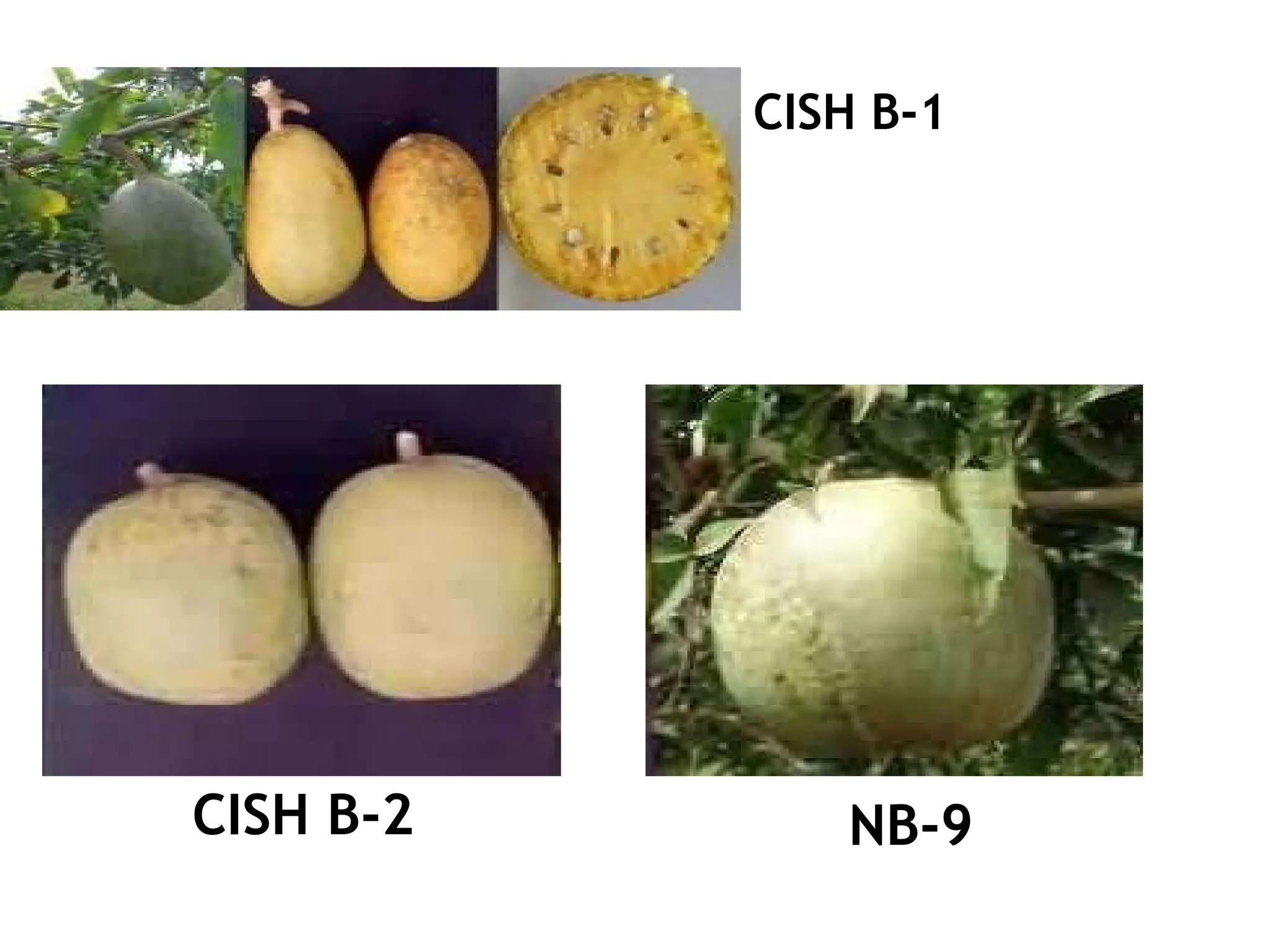
NB-9 Prolific bearing, fuits are medium
to large size with oblong in shape,
low fibre and seed content.
Uttar Pradesh,
Rajasthan,
Bihar,
Jharkhand,
Uttarakhand
NB-16 Fruits are elliptical
round, pulp yellow,
average weight 1.3
kg, T.S.S. 31%, and
low fibre content.
Uttar
Pradesh
NB-17 Fruits are attractive,
average weight 1.75
kg, fibre content
low.
Uttar
Pradesh
Narendra bael-1 & Narendra bael-2 are
most useful for processing
CISH B-1 It is a mid season variety
which matures during April-
May. Precocious and heavy
bearer. Average fruit wt =1.0
kg. Suitable for canning and
slices preparation.
Uttar Pradesh,
Uttarakhand,
Bihar, Jharkhand,
Rajasthan
CISH B-2 Trees are dwarf with medium
spreading habit. Suitable for
processing with pleasantly
aromatic pulp.
Uttar Pradesh,
Uttarakhand,
Bihar, Jharkhand,
Rajasthan
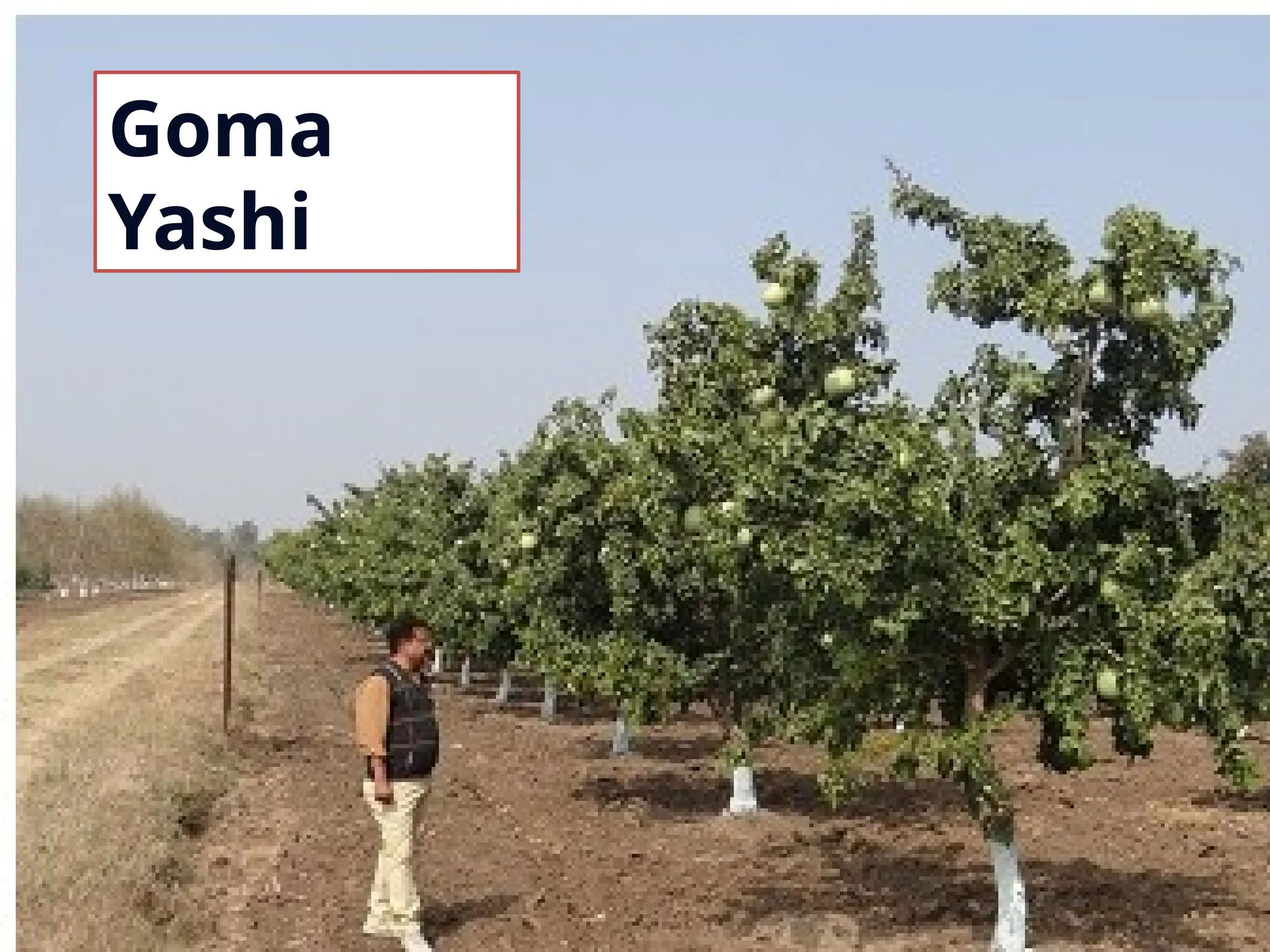
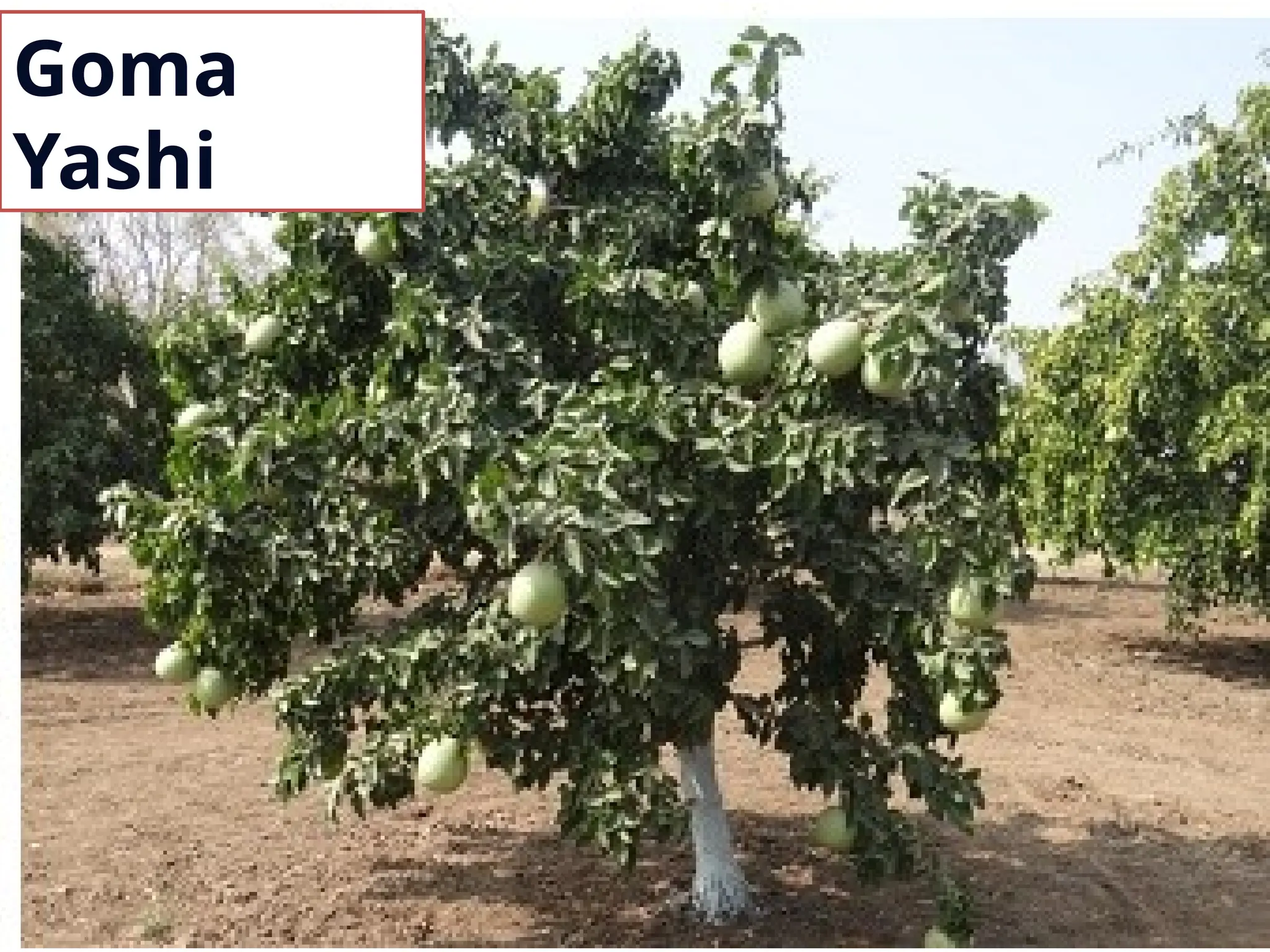
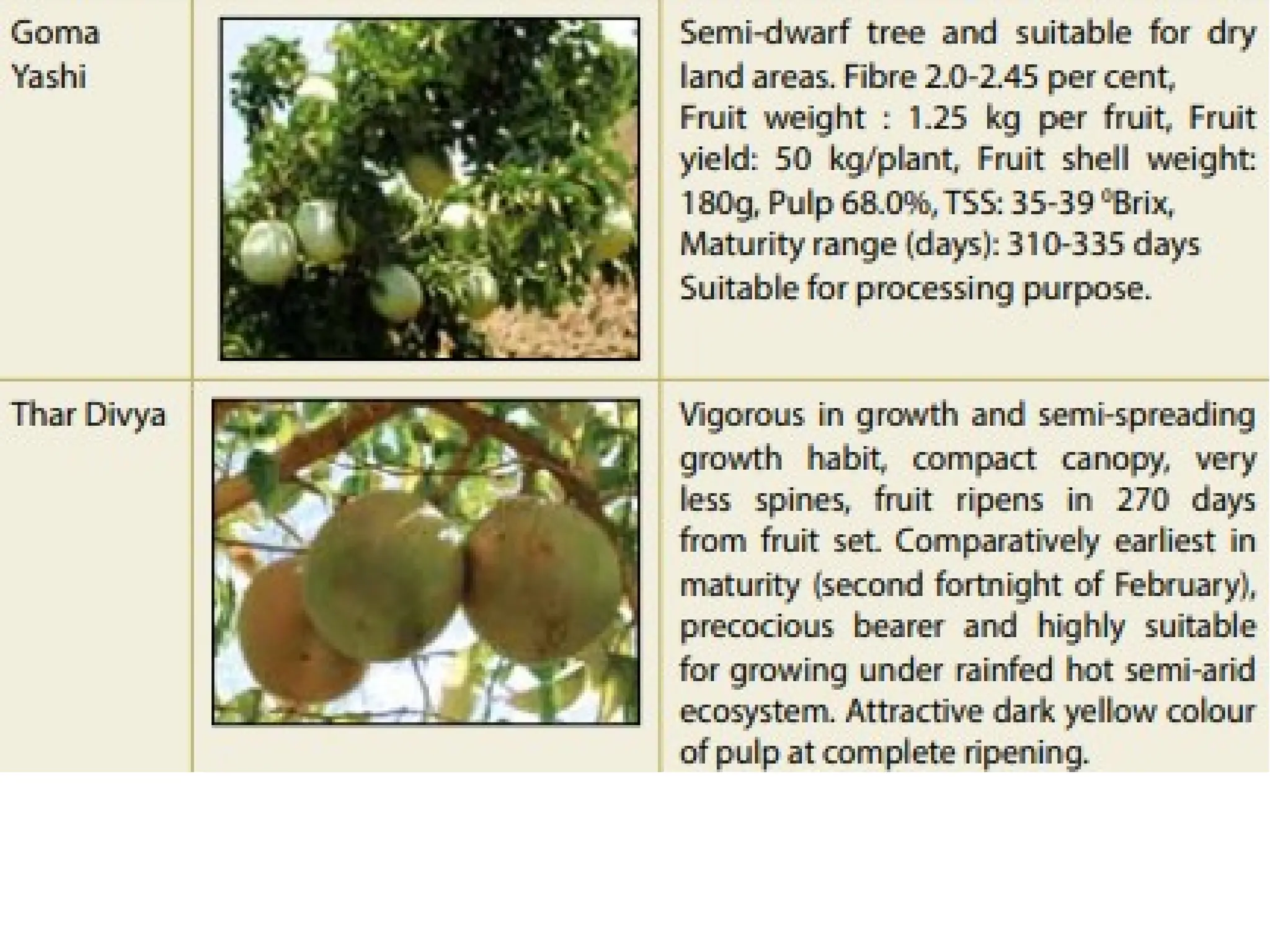
Goma
Yashi
Good quality fruits with large
in size. Ovate in shape,
greenish yellow in colour.
Flesh colour is straw.
Rajasthan
Pant
Aparna
Dwarf tree with drooping
foliage, almost thornless,
heavy bearer. Fruits average
weight 1.0 kg.
Uttar Pradesh,
Uttarakhand
Pant
Shivani
It is an early mid season
variety. Fruit weight range
from 2 to 2.5 kg.
Uttar Pradesh,
Uttarakhand
Pant
Sujata
Trees are medium dwarf ,
heavy bearer. Fruit weight
varied from 1 to 1.5 kg.
Uttar Pradesh,
Uttarakhand
Pusa
Urvashi
It is mid season variety. Fruits
are ovoid, oblong. The fruit
weight range from 1.5 to
2.5 kg.
Uttar Pradesh,
Uttarakhand
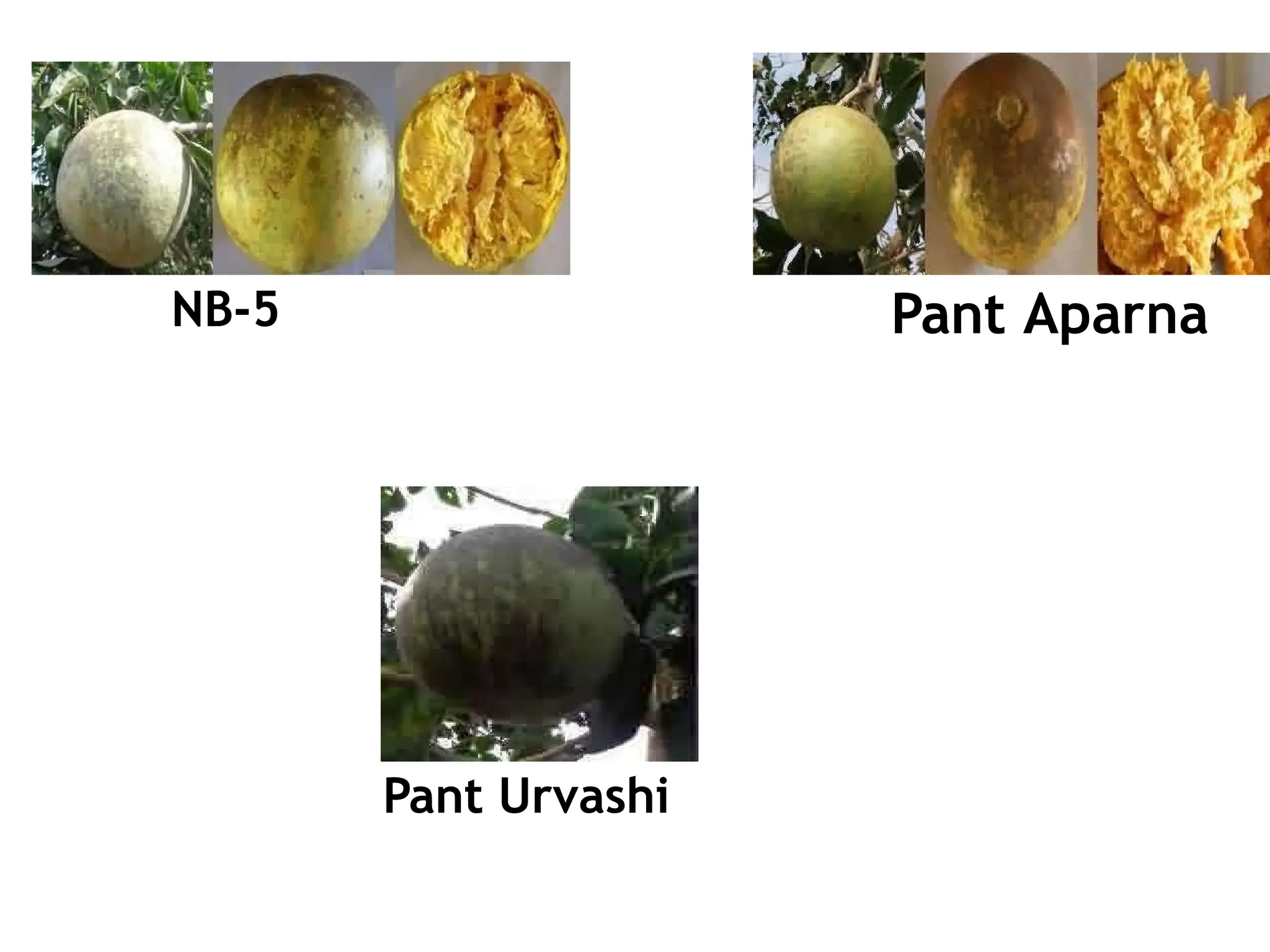
NB-5 Pant Aparna
Pant Urvashi
CISH B-1
CISH B-2 NB-9
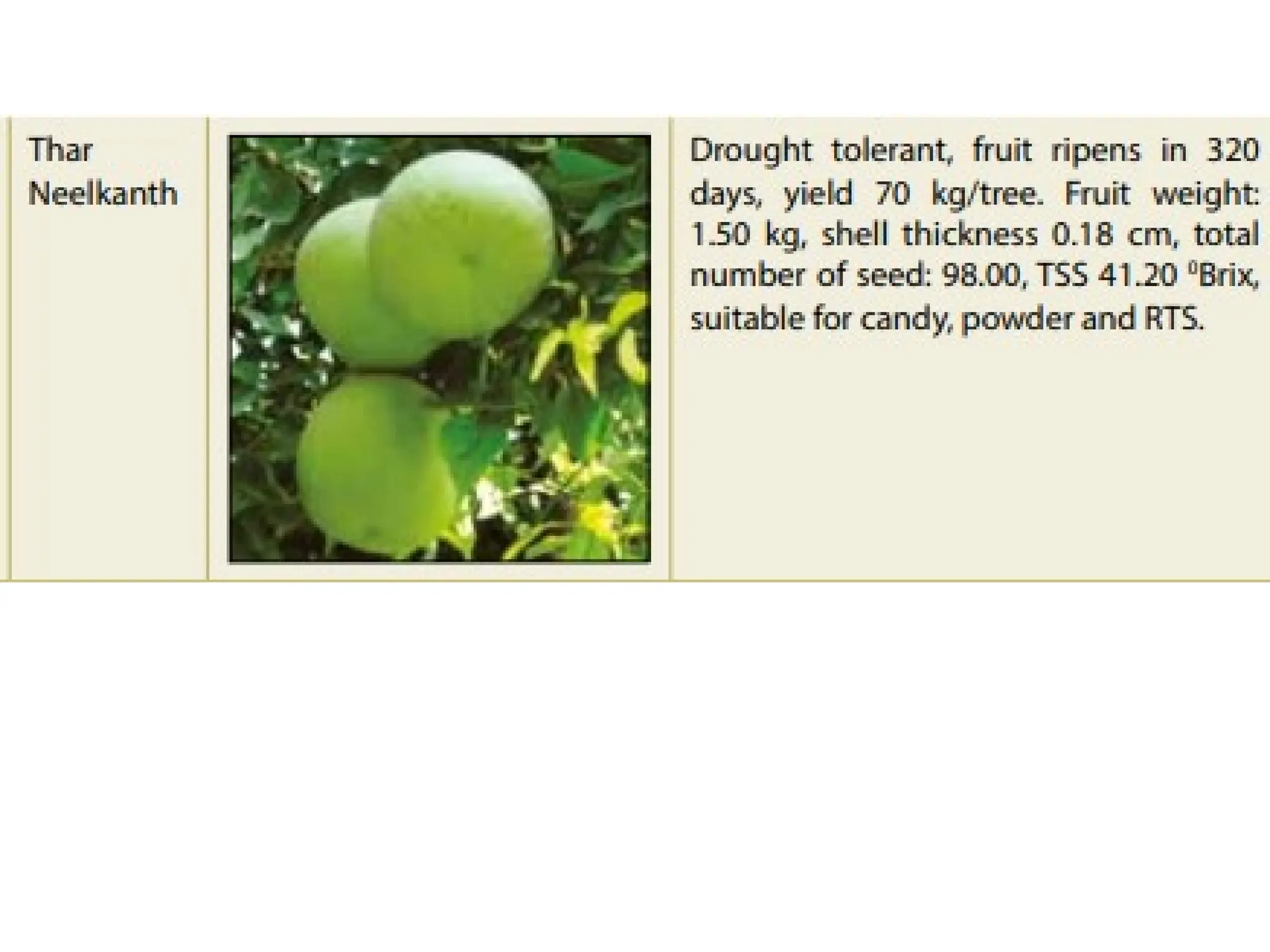
Newly released varieties
•Goma Yashi,
• Thar Divya,
•Thar Neelkanth and
•Thar Srishti
Goma
Yashi
Goma
Yashi
Propagation
•Usually propagated by seed (no
dormancy)
•Showing time =June . Seeds germinate
within 3 weeks, ready for transplanting 7
weeks after sowing.
•Patch budding is ideal method with a
90% success rate. June –July is ideal time
for budding.
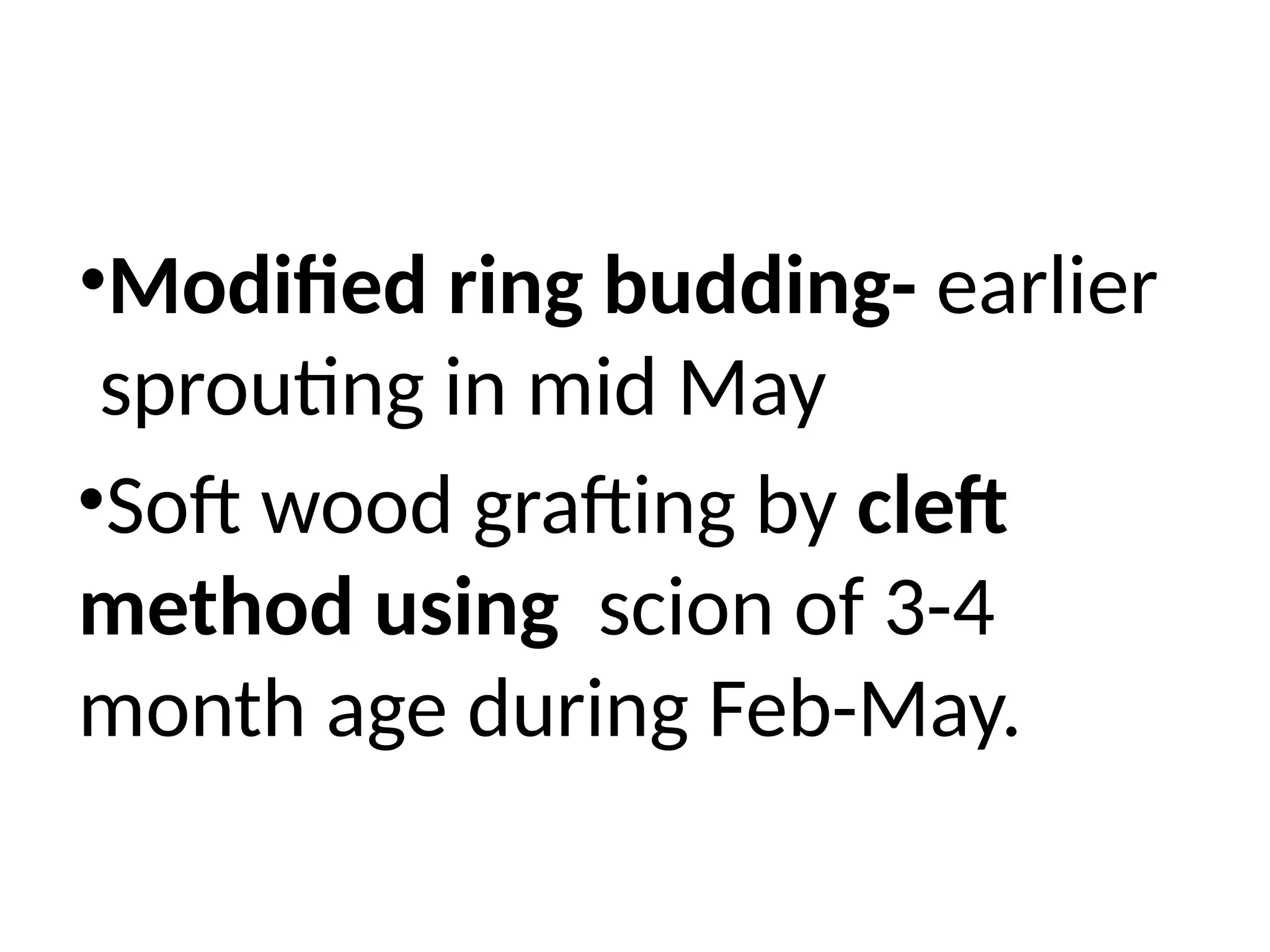
•Modified ring budding- earlier
sprouting in mid May
•Soft wood grafting by cleft
method using scion of 3-4
month age during Feb-May.
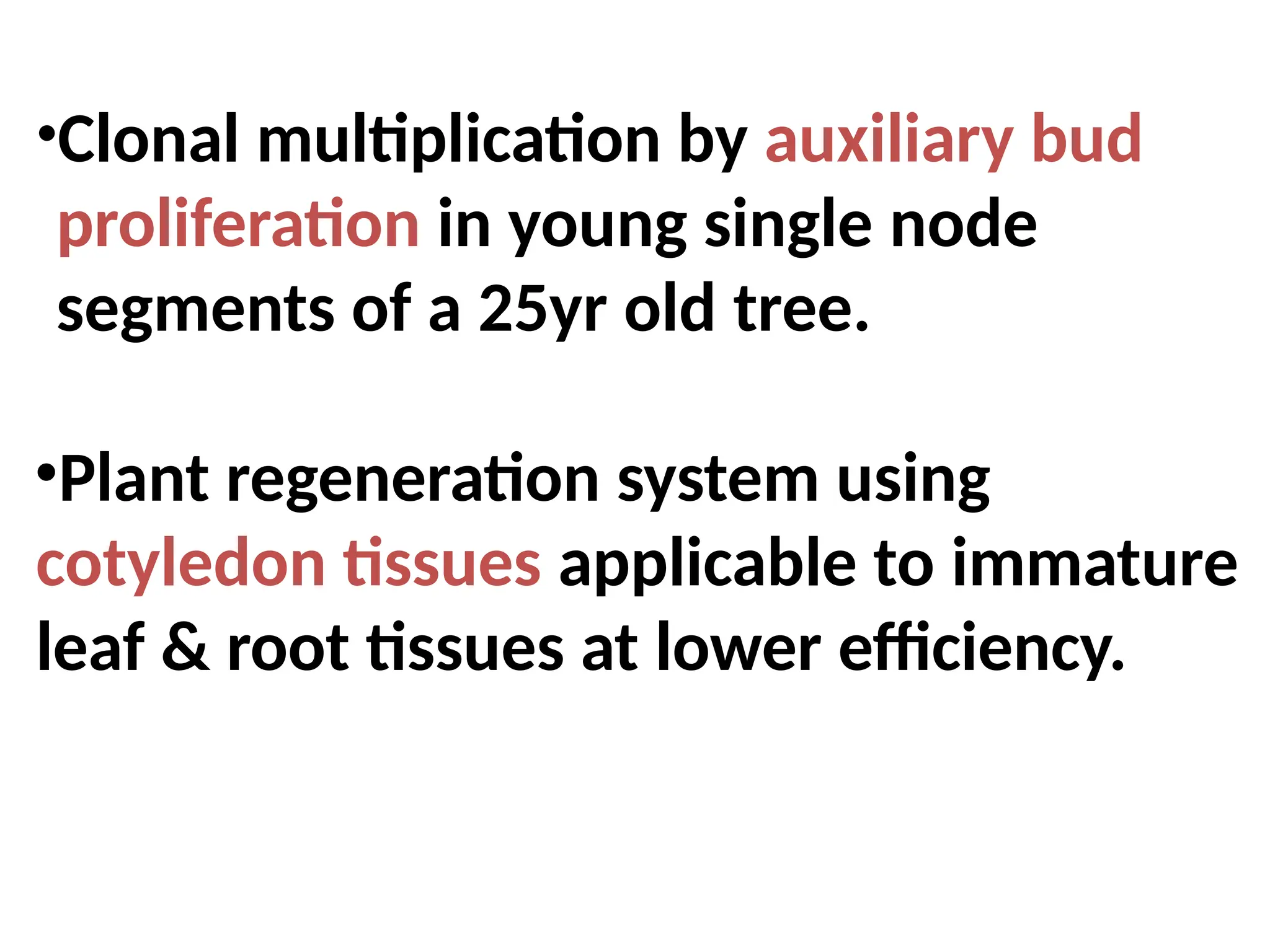
•Clonal multiplication by auxiliary bud
proliferation in young single node
segments of a 25yr old tree.
•Plant regeneration system using
cotyledon tissues applicable to immature
leaf & root tissues at lower efficiency.
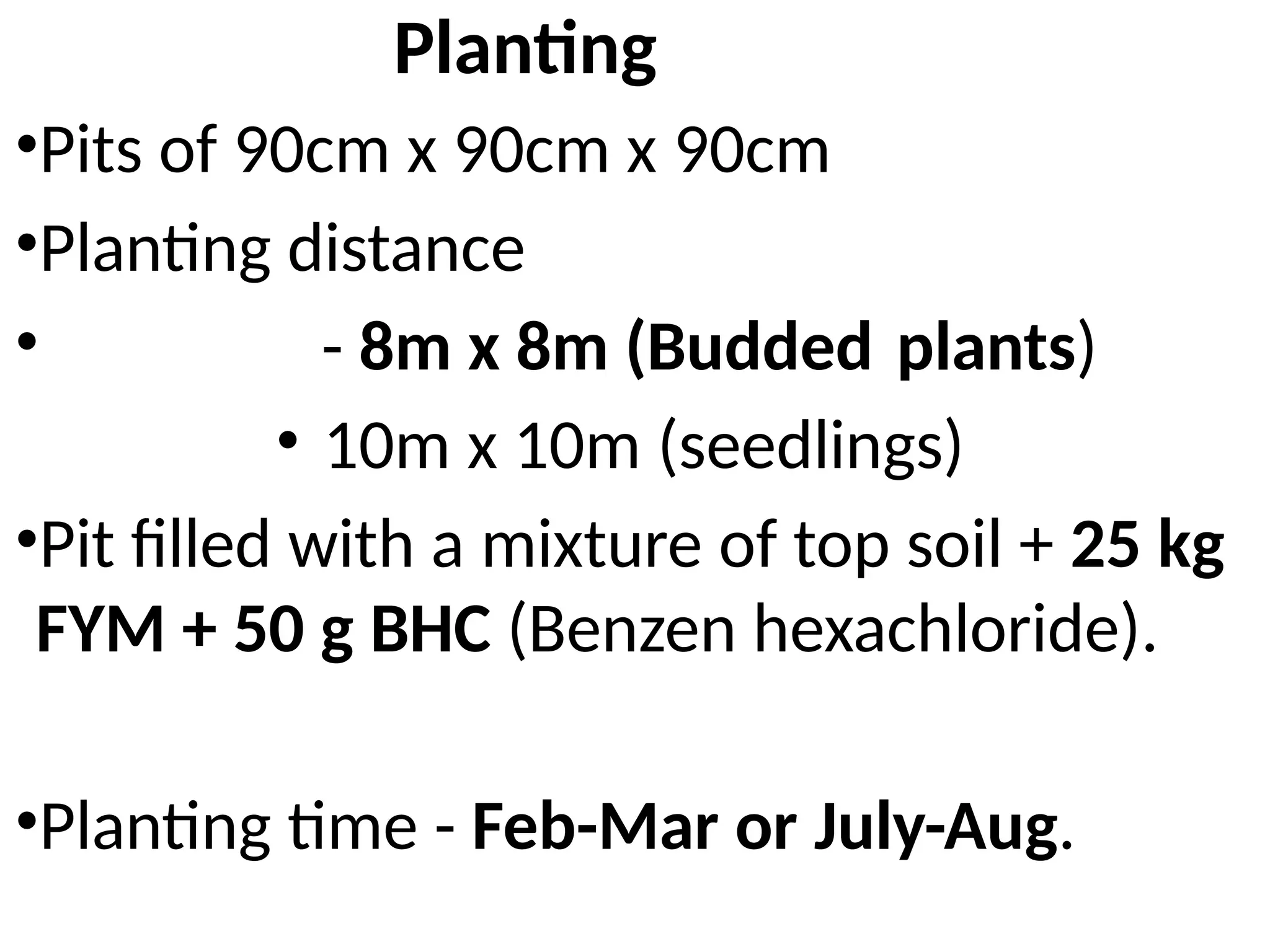
•Pits of 90cm x 90cm x 90cm
•Planting distance
• - 8m x 8m (Budded plants)
• 10m x 10m (seedlings)
•Pit filled with a mixture of top soil + 25 kg
FYM + 50 g BHC (Benzen hexachloride).
•Planting time - Feb-Mar or July-Aug.
Planting
Training & Pruning
•Training done by removing the tip
of main stem at a height of about
1m.
•Only 4-6 well- spaced branches
are selected around the main
stem.
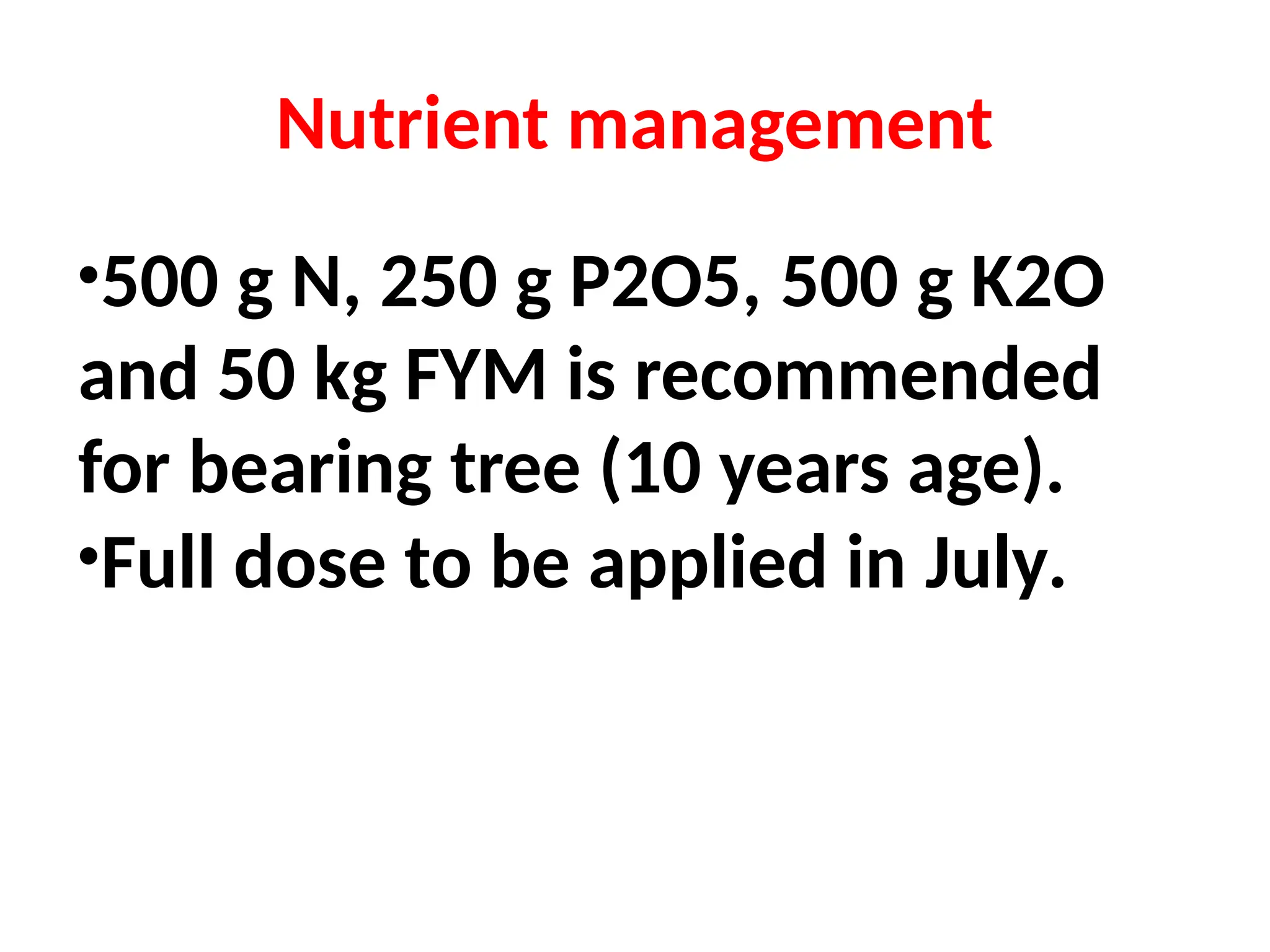
Nutrient management
•500 g N, 250 g P2O5, 500 g K2O
and 50 kg FYM is recommended
for bearing tree (10 years age).
•Full dose to be applied in July.
Water Management
•Basin system of irrigation mainly
followed.
•Irrigation at monthly intervals should
be given after the rainy season
(October –April).
•Drip irrigation also can be followed.
Aftercare
•Suckers appearing from rootstock should
be removed periodically.
•Keep the plantation weed –free.
•Legume crops can be taken as intercrops
in bael plantation during the rainy
season.
•Bael is climacteric fruit
•Plants start fruiting after planting = After
4-5 years (budded & grafted plants) after
8-10 years(seedlings)
•Fruit takes around 8-10 months to mature
and 10-12 months for ripening after fruit
set.
•Maturity index - Change in skull colour from dark
green to yellowish green.
•Mature fruit is harvested individually with 5 cm
fruit stalk.
•Yield – 300-400 fruits/tree/yr
•Storage life – 15 days for fully matured fruit
• 1 week for ripe fruit
•At 10o C, it can be kept up to three months.
Monday,
March
23,
2015
14
•Products- Bael pulp, juice, nectar, dried & sliced bael, bael wine, candy,
preserves (murabba), bael slab, jam, bael powder etc.
Juice Nectar Dried bael
Murabba Powder Burfii
Sun dried jelly
Processed Product
15
•Fruit drop and cracking: Main problems before
ripening.
•Growth regulators like 2, 4-D, GA and 2, 4, 5-T with
various concentration check fruit drop.
•Cracking can be minimized by maintaining proper
moisture up to full growth or maturity of fruit.
•Chilling injury: Appearance of brown spots on
the fruit surface develop during storage of fruits
below 9º C.
Disease
Fruit canker - Xanthomonas bilvae
Water soaked spot on leaves, fruits and other
parts of tree.
Prune gummy twigs, branches & burn them.
Spray Streptomycine sulphate (20g/100l water)
+ Cu oxychloride (0.3%)
•at 10-15 days interval
 Lemon butterfly – Papilio demoleus
management
Neem seed kernel extract (0.5%) spray
at
8 days interval in nursery seedlings.
 Bael fruit fly – Bactrocera zonata
Lemon butterfly
Bael fruit fly

Production Technology of Bael.pptx yeahb

  • 1.
  • 2.
    •Genus – Aegle(Greek name) •Species – marmelos (Portuguese name)
  • 3.
    • Family- Rutaceae •Chromosome no. : 2n=18
  • 4.
    •Origin – India •Othernames - Bengal Quince, Sirphal, Golden apple, Stone apple
  • 5.
    •Deciduous, 6–8 metersin height tree. •Older branches are more spiny. •Leaves – alternate, trifoliate, petiole, 2-4cm long. •Inflorescence – auxiliary raceme
  • 6.
    •Fruits - 5–7.5cm in diameter, globose, oblong pyriform, •Flower – bisexual, cluster borne, greenish white & sweet scented •Seeds - numerous , surrounded by a slimy
  • 7.
    Uses •A therapeutic boonof human health. •Rich source of- Riboflavin (Vitamin B2) •Leaves (content Aegeline) & bark – to overcome intermittent fever.
  • 8.
    •Roots - checkheart palpitation, bowel inflammation & indigestion. •Fruits – used as fresh or syrup, nectar, sharbat, marmalade etc.
  • 9.
    •Unripe fruit rind– yellow dye and employed in tanning purpose. •Fruit (dried & sliced) – diarrhoea, constipation and dysentery.
  • 10.
    •Marmelosin content has medicinalproperties. •Known as “Climate Purifier” – absorb dust, poisonous gases from atmosphere & emit more oxygen than other plants in presence of sun light.
  • 11.
    Climate and Soil •Fairlyrich and well drained sandy loam soil •is best. •pH = 6.0 –8.5, ESP = 30% and EC = 9 dSm‐1 . •Though bael is a fruit crop of subtropical origin, also can perform well in tropical, arid and semi-arid regions.
  • 12.
    •Plants can groweven up to an elevation of 1,200m •Sunny situation, warm humid climate are ideal. •Tolerant to harsh climate. •Can be withstand in 47-49º C to -5 to -7º C.
  • 13.
    Varieties Variety Salient FeaturesRecommended Areas NB-5 Prolific bearer and fruits are medium in size, round with thin skull, low fibre and seed content. Uttar Pradesh, Rajasthan, Bihar, Jharkhand, Uttarakhand NB-7 Fruits are very large in size, flattened round, yellowish green in colour. Uttar Pradesh NB-9 Prolific bearing, fuits are medium to large size with oblong in shape, low fibre and seed content. Uttar Pradesh, Rajasthan, Bihar, Jharkhand, Uttarakhand
  • 14.
    NB-16 Fruits areelliptical round, pulp yellow, average weight 1.3 kg, T.S.S. 31%, and low fibre content. Uttar Pradesh NB-17 Fruits are attractive, average weight 1.75 kg, fibre content low. Uttar Pradesh Narendra bael-1 & Narendra bael-2 are most useful for processing
  • 15.
    CISH B-1 Itis a mid season variety which matures during April- May. Precocious and heavy bearer. Average fruit wt =1.0 kg. Suitable for canning and slices preparation. Uttar Pradesh, Uttarakhand, Bihar, Jharkhand, Rajasthan CISH B-2 Trees are dwarf with medium spreading habit. Suitable for processing with pleasantly aromatic pulp. Uttar Pradesh, Uttarakhand, Bihar, Jharkhand, Rajasthan Goma Yashi Good quality fruits with large in size. Ovate in shape, greenish yellow in colour. Flesh colour is straw. Rajasthan
  • 16.
    Pant Aparna Dwarf tree withdrooping foliage, almost thornless, heavy bearer. Fruits average weight 1.0 kg. Uttar Pradesh, Uttarakhand Pant Shivani It is an early mid season variety. Fruit weight range from 2 to 2.5 kg. Uttar Pradesh, Uttarakhand Pant Sujata Trees are medium dwarf , heavy bearer. Fruit weight varied from 1 to 1.5 kg. Uttar Pradesh, Uttarakhand Pusa Urvashi It is mid season variety. Fruits are ovoid, oblong. The fruit weight range from 1.5 to 2.5 kg. Uttar Pradesh, Uttarakhand
  • 17.
  • 18.
  • 19.
    Newly released varieties •GomaYashi, • Thar Divya, •Thar Neelkanth and •Thar Srishti
  • 20.
  • 21.
  • 24.
  • 25.
    •Usually propagated byseed (no dormancy) •Showing time =June . Seeds germinate within 3 weeks, ready for transplanting 7 weeks after sowing. •Patch budding is ideal method with a 90% success rate. June –July is ideal time for budding.
  • 26.
    •Modified ring budding-earlier sprouting in mid May •Soft wood grafting by cleft method using scion of 3-4 month age during Feb-May.
  • 27.
    •Clonal multiplication byauxiliary bud proliferation in young single node segments of a 25yr old tree. •Plant regeneration system using cotyledon tissues applicable to immature leaf & root tissues at lower efficiency.
  • 28.
    •Pits of 90cmx 90cm x 90cm •Planting distance • - 8m x 8m (Budded plants) • 10m x 10m (seedlings) •Pit filled with a mixture of top soil + 25 kg FYM + 50 g BHC (Benzen hexachloride). •Planting time - Feb-Mar or July-Aug. Planting
  • 29.
    Training & Pruning •Trainingdone by removing the tip of main stem at a height of about 1m. •Only 4-6 well- spaced branches are selected around the main stem.
  • 30.
    Nutrient management •500 gN, 250 g P2O5, 500 g K2O and 50 kg FYM is recommended for bearing tree (10 years age). •Full dose to be applied in July.
  • 31.
    Water Management •Basin systemof irrigation mainly followed. •Irrigation at monthly intervals should be given after the rainy season (October –April). •Drip irrigation also can be followed.
  • 32.
    Aftercare •Suckers appearing fromrootstock should be removed periodically. •Keep the plantation weed –free. •Legume crops can be taken as intercrops in bael plantation during the rainy season.
  • 33.
    •Bael is climactericfruit •Plants start fruiting after planting = After 4-5 years (budded & grafted plants) after 8-10 years(seedlings) •Fruit takes around 8-10 months to mature and 10-12 months for ripening after fruit set.
  • 34.
    •Maturity index -Change in skull colour from dark green to yellowish green. •Mature fruit is harvested individually with 5 cm fruit stalk. •Yield – 300-400 fruits/tree/yr •Storage life – 15 days for fully matured fruit • 1 week for ripe fruit •At 10o C, it can be kept up to three months.
  • 35.
    Monday, March 23, 2015 14 •Products- Bael pulp,juice, nectar, dried & sliced bael, bael wine, candy, preserves (murabba), bael slab, jam, bael powder etc. Juice Nectar Dried bael Murabba Powder Burfii Sun dried jelly Processed Product
  • 36.
    15 •Fruit drop andcracking: Main problems before ripening. •Growth regulators like 2, 4-D, GA and 2, 4, 5-T with various concentration check fruit drop. •Cracking can be minimized by maintaining proper moisture up to full growth or maturity of fruit. •Chilling injury: Appearance of brown spots on the fruit surface develop during storage of fruits below 9º C.
  • 37.
    Disease Fruit canker -Xanthomonas bilvae Water soaked spot on leaves, fruits and other parts of tree. Prune gummy twigs, branches & burn them. Spray Streptomycine sulphate (20g/100l water) + Cu oxychloride (0.3%) •at 10-15 days interval
  • 38.
     Lemon butterfly– Papilio demoleus management Neem seed kernel extract (0.5%) spray at 8 days interval in nursery seedlings.  Bael fruit fly – Bactrocera zonata Lemon butterfly Bael fruit fly