 Product classification can be done in a variety
of perspectives
1. Consumer-Goods Classification
Classified on the basis of shopping habits
2. Durability and Tangibility
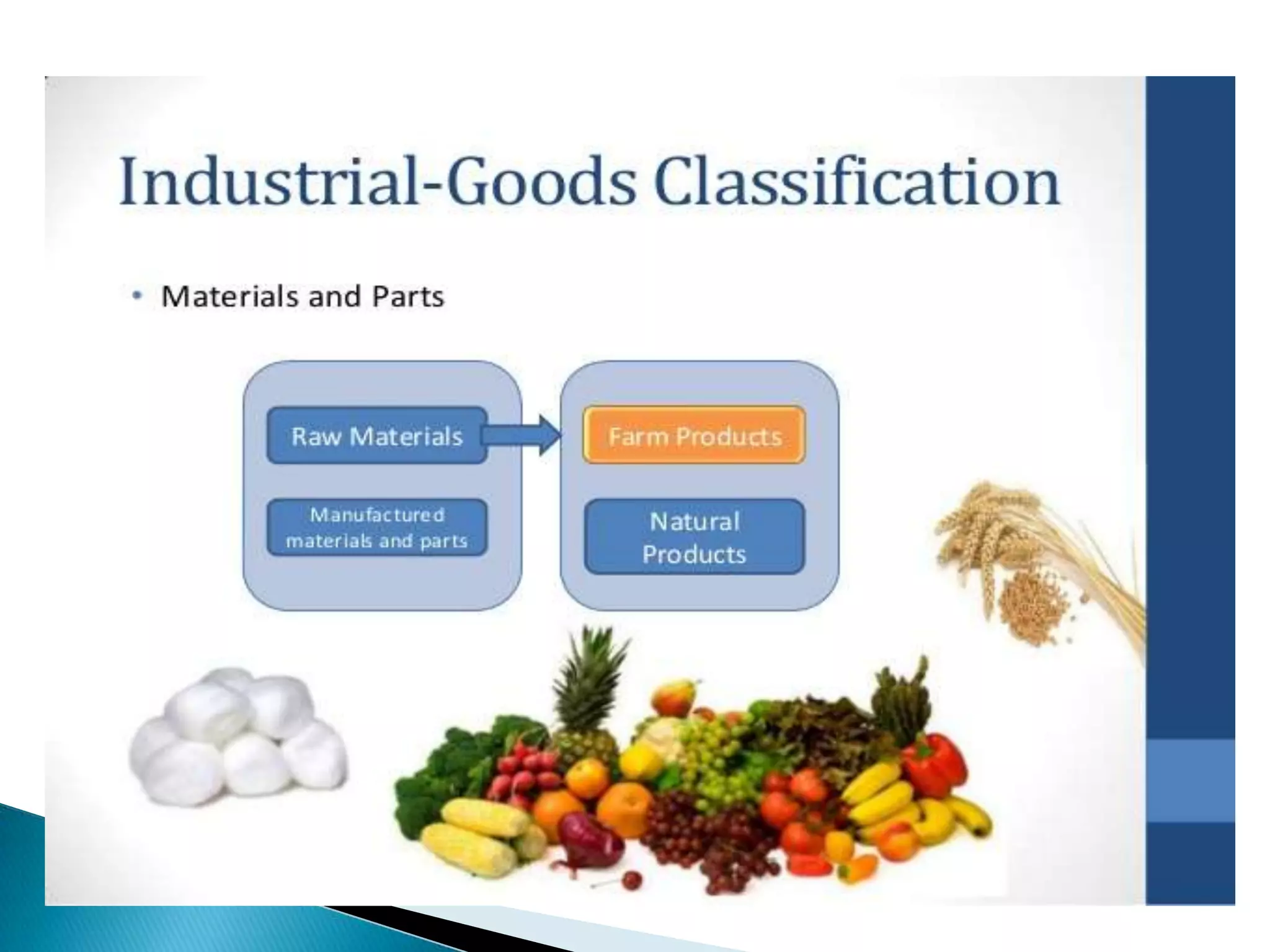
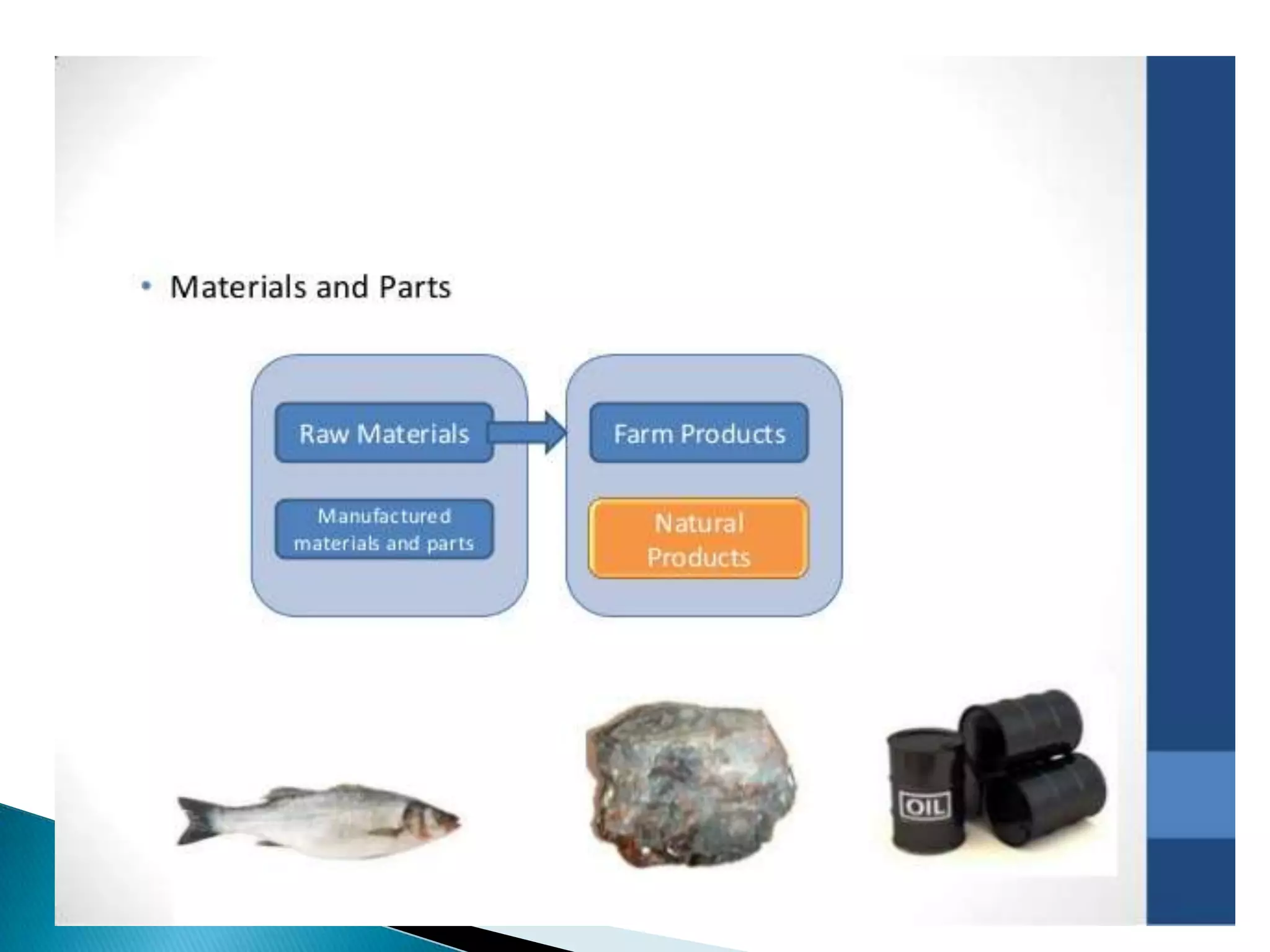
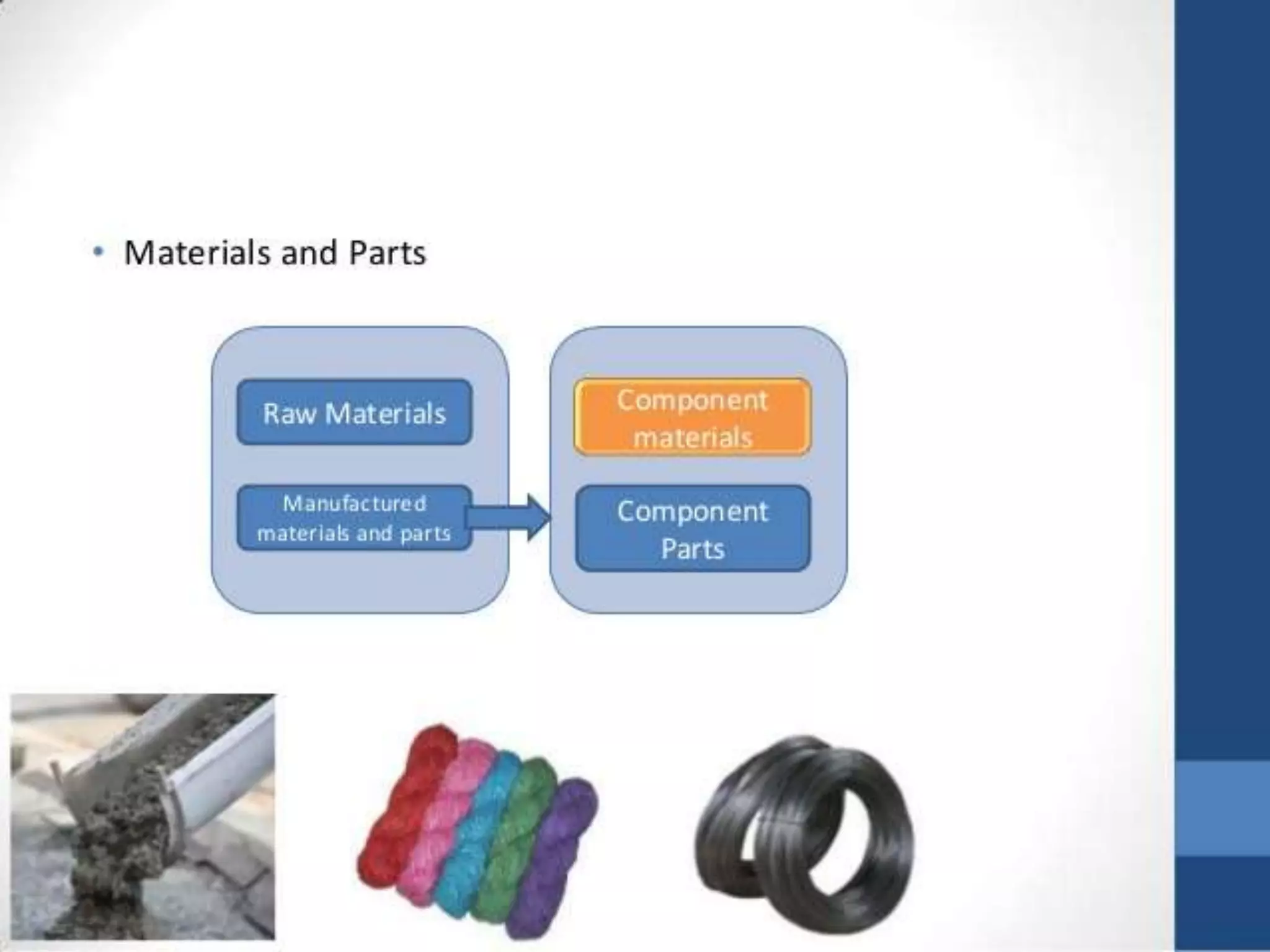
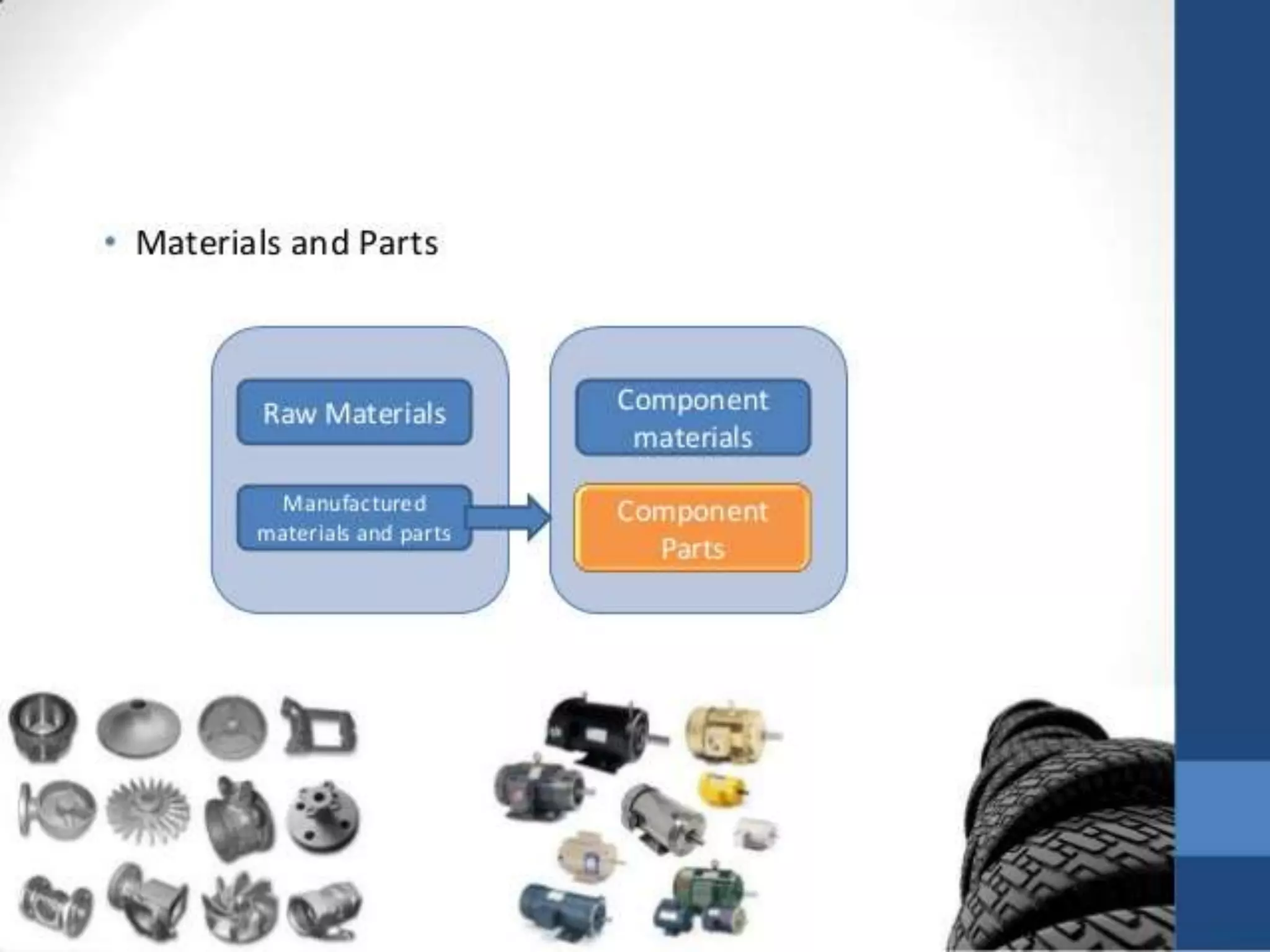
3. Industrial-Goods Classification
Classified in terms of their relative cost and how
they enter the production process
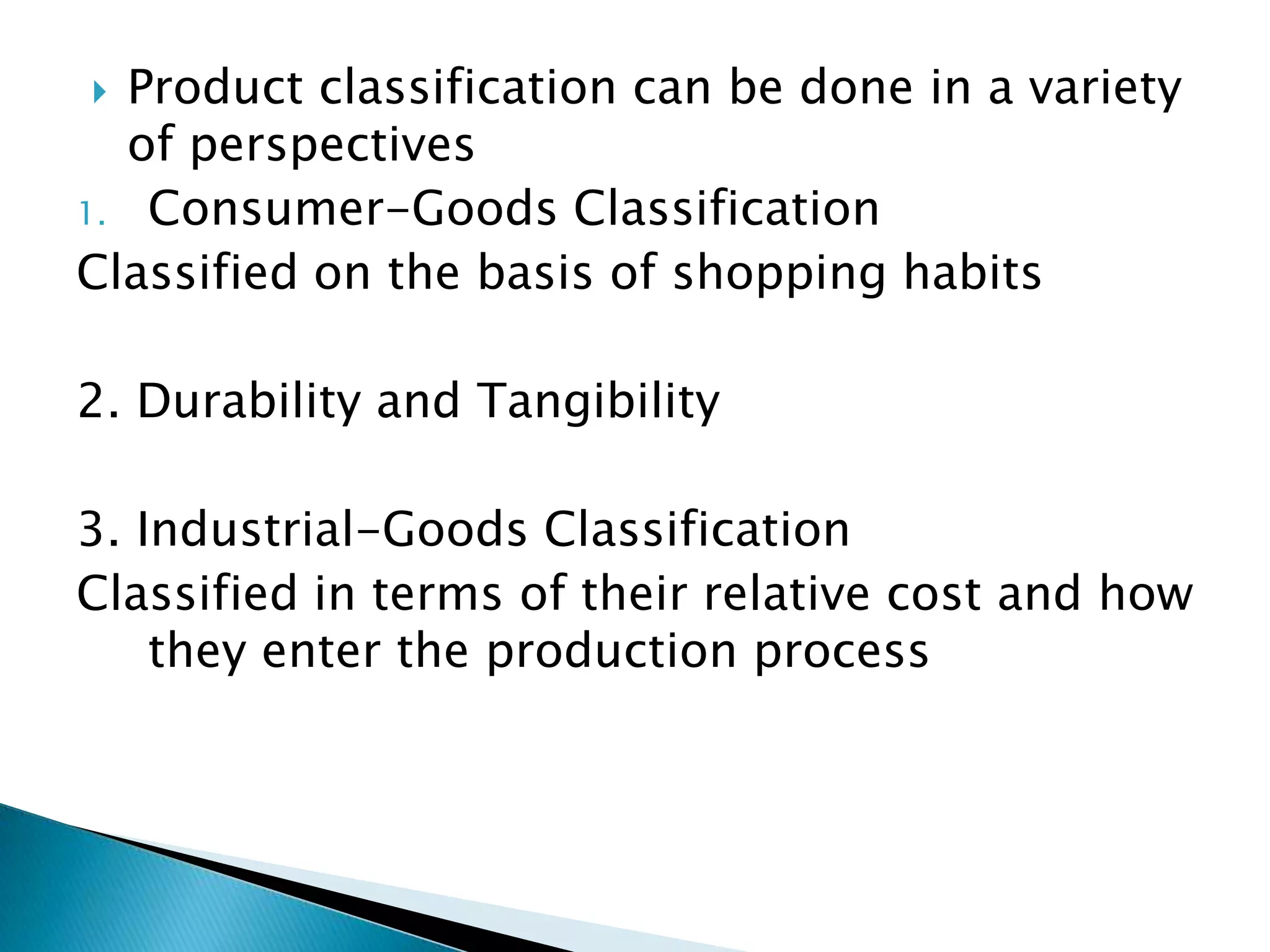
 Inexpensive, frequently purchased.
 Little effort needed to purchase them.
 Staples, impulse and emergency goods.
 Ex. Milk, Bread, Eggs, Umbrella, Sweaters,
Jackets etc.
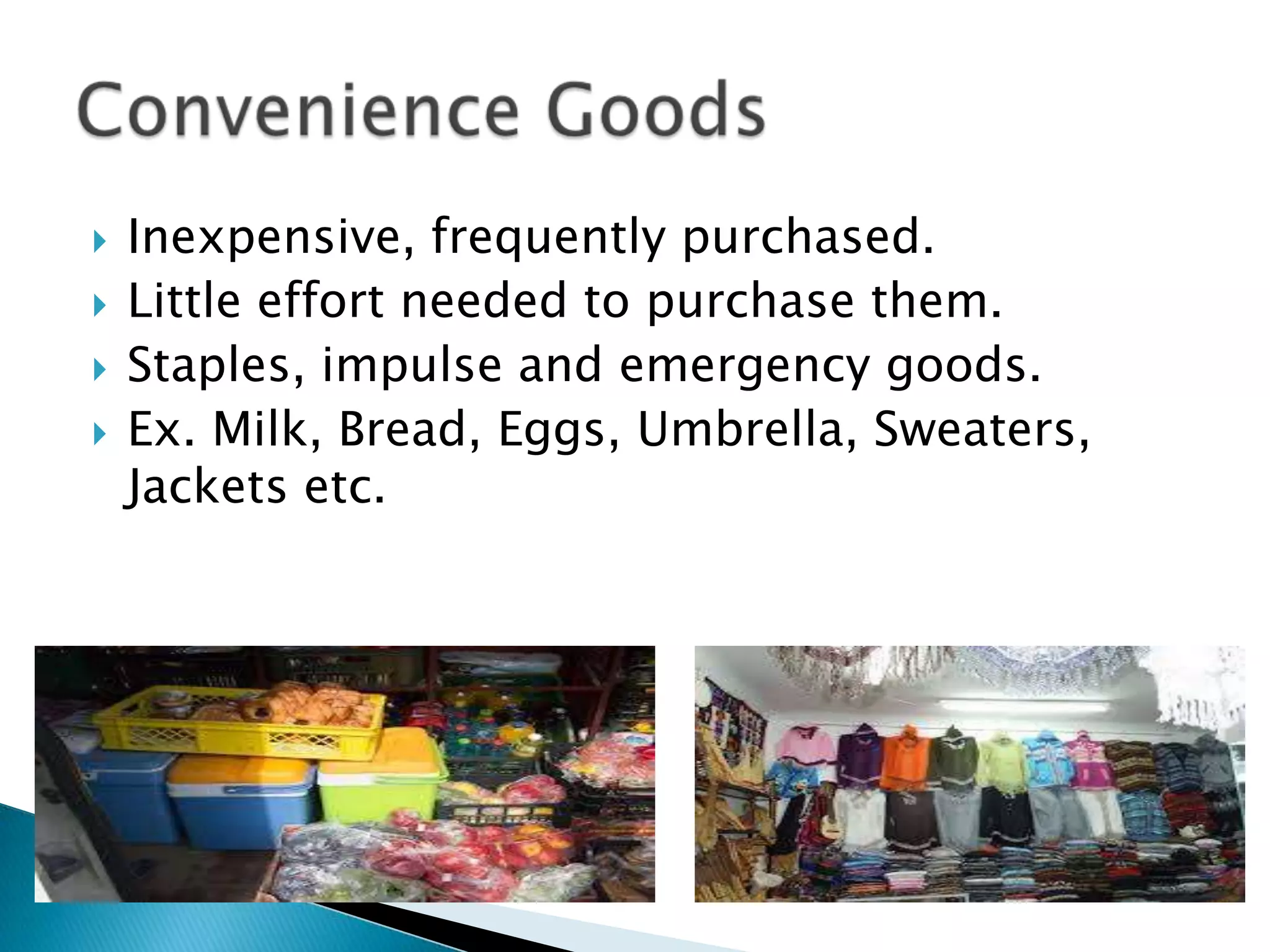
 Not as frequently as convenience products.
 Costly
 Consumer does research before purchase
 Eg. Washing Machine, Fridge, Interiors (Wood,
Steel, Modular Kitchens)
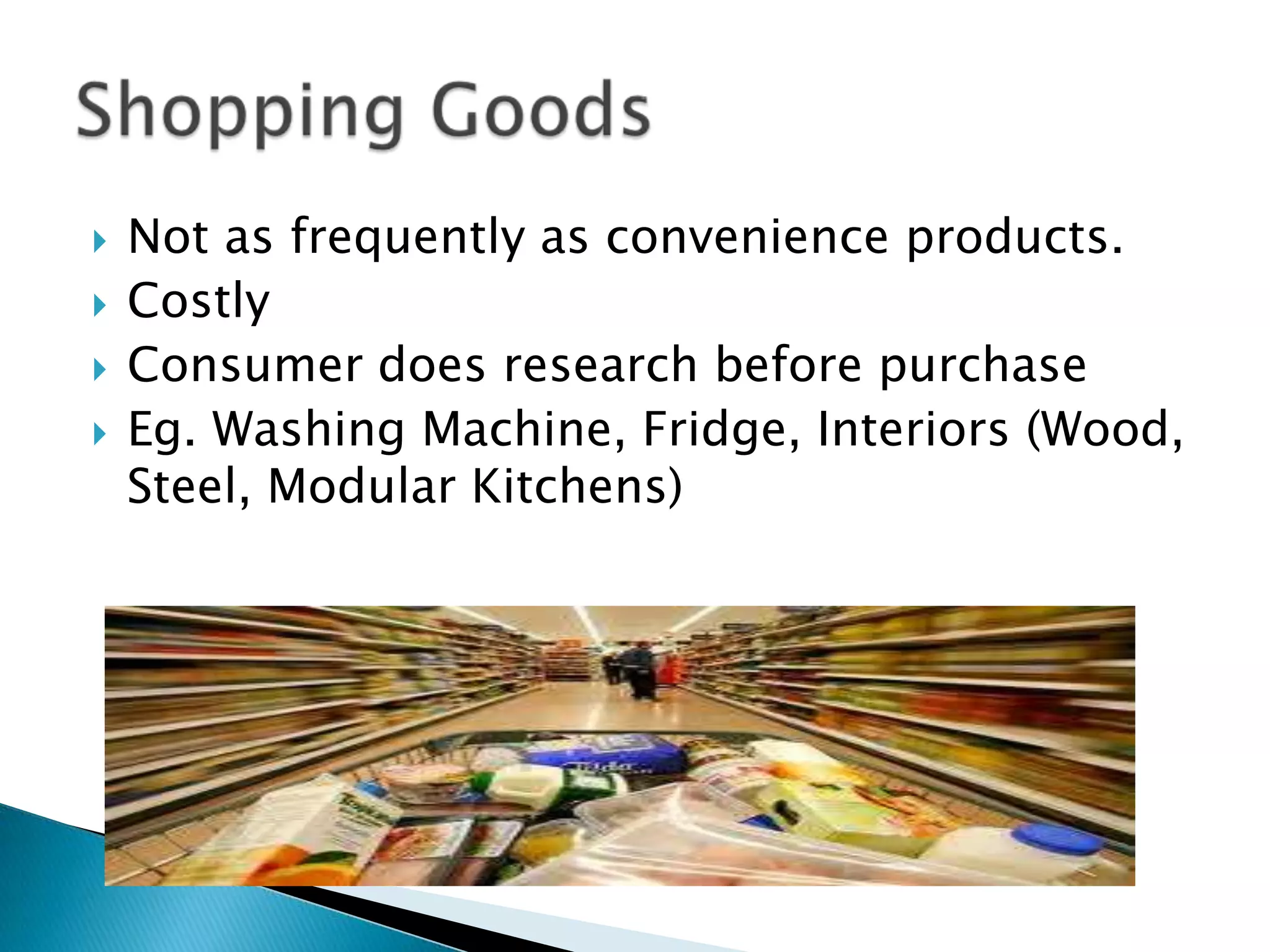
 Unique features
 Consumer is prepared to pay a premium price
Ex. Luxury cars, Expensive paintings etc.
 Goods that the consumer does not know
about or does not normally think of buying,
and the purchase of which arises due to
danger or the fear of danger and lack of
desire.
 The classic examples of known but unsought
goods are funeral
services, encyclopaedias, fire
extinguishers and reference books.
 In some cases even an airplane/helicopters
can be cited as examples of unsought goods.
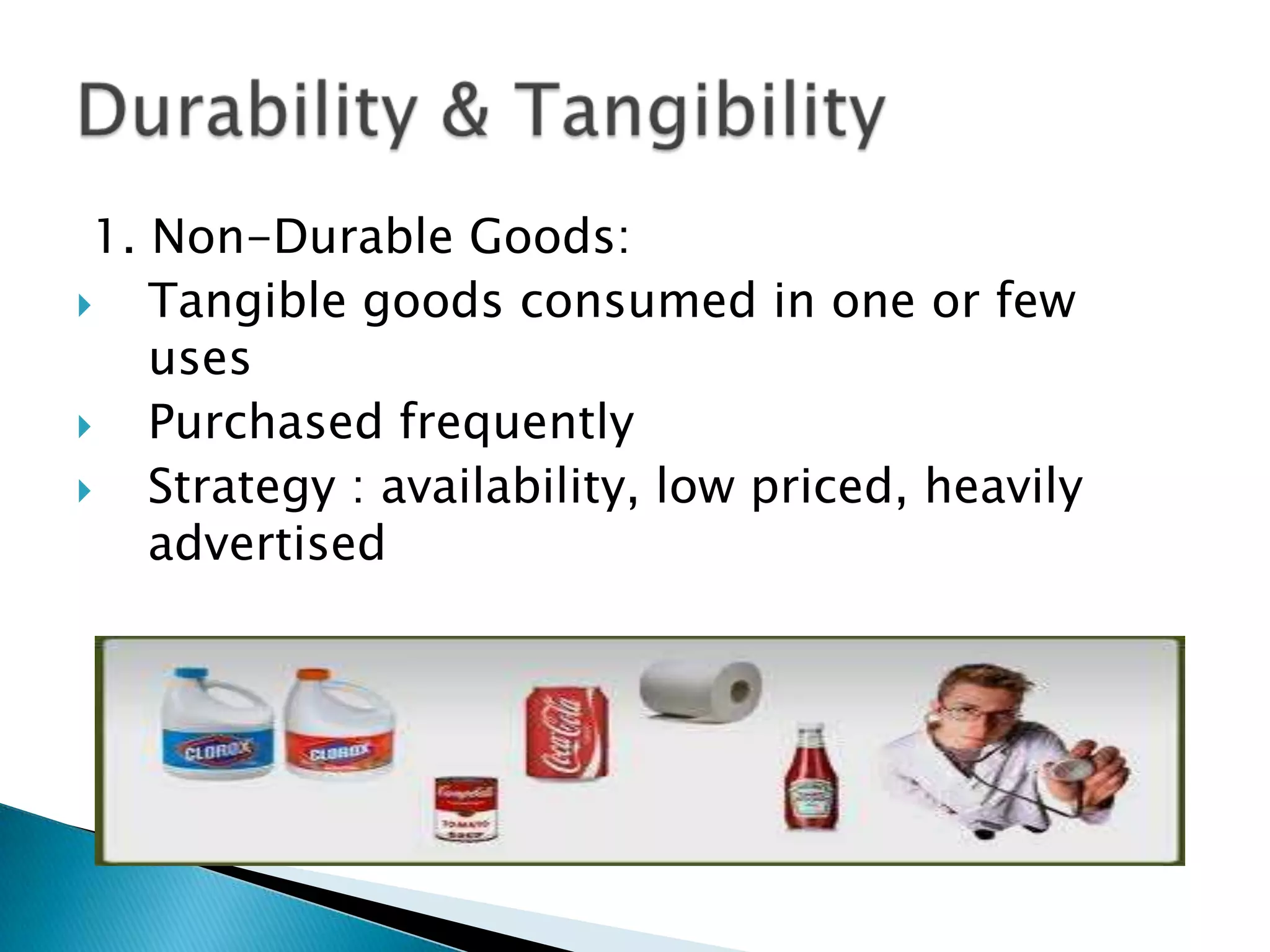
1. Non-Durable Goods:
 Tangible goods consumed in one or few
uses
 Purchased frequently
 Strategy : availability, low priced, heavily
advertised
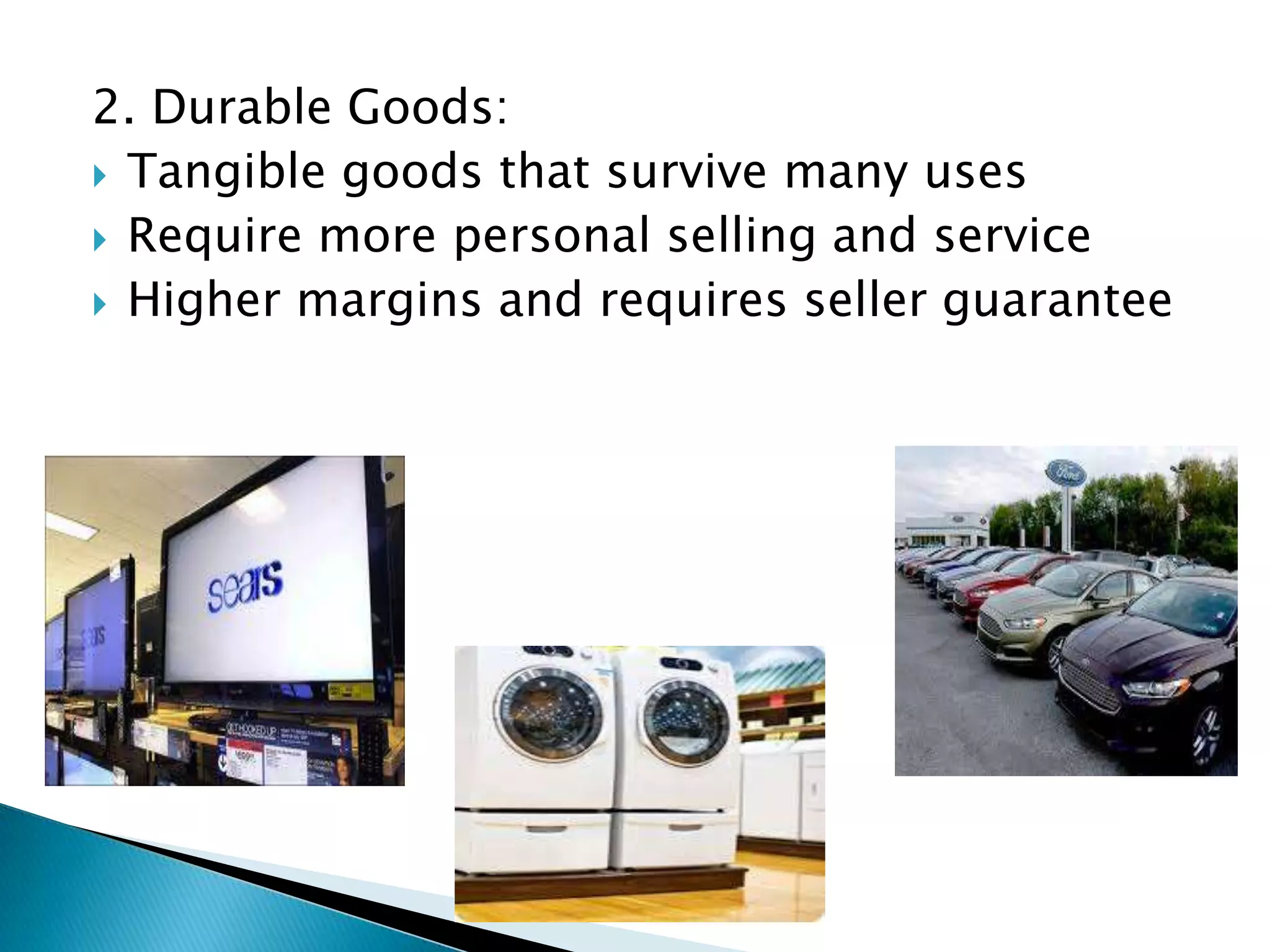
2. Durable Goods:
 Tangible goods that survive many uses
 Require more personal selling and service
 Higher margins and requires seller guarantee
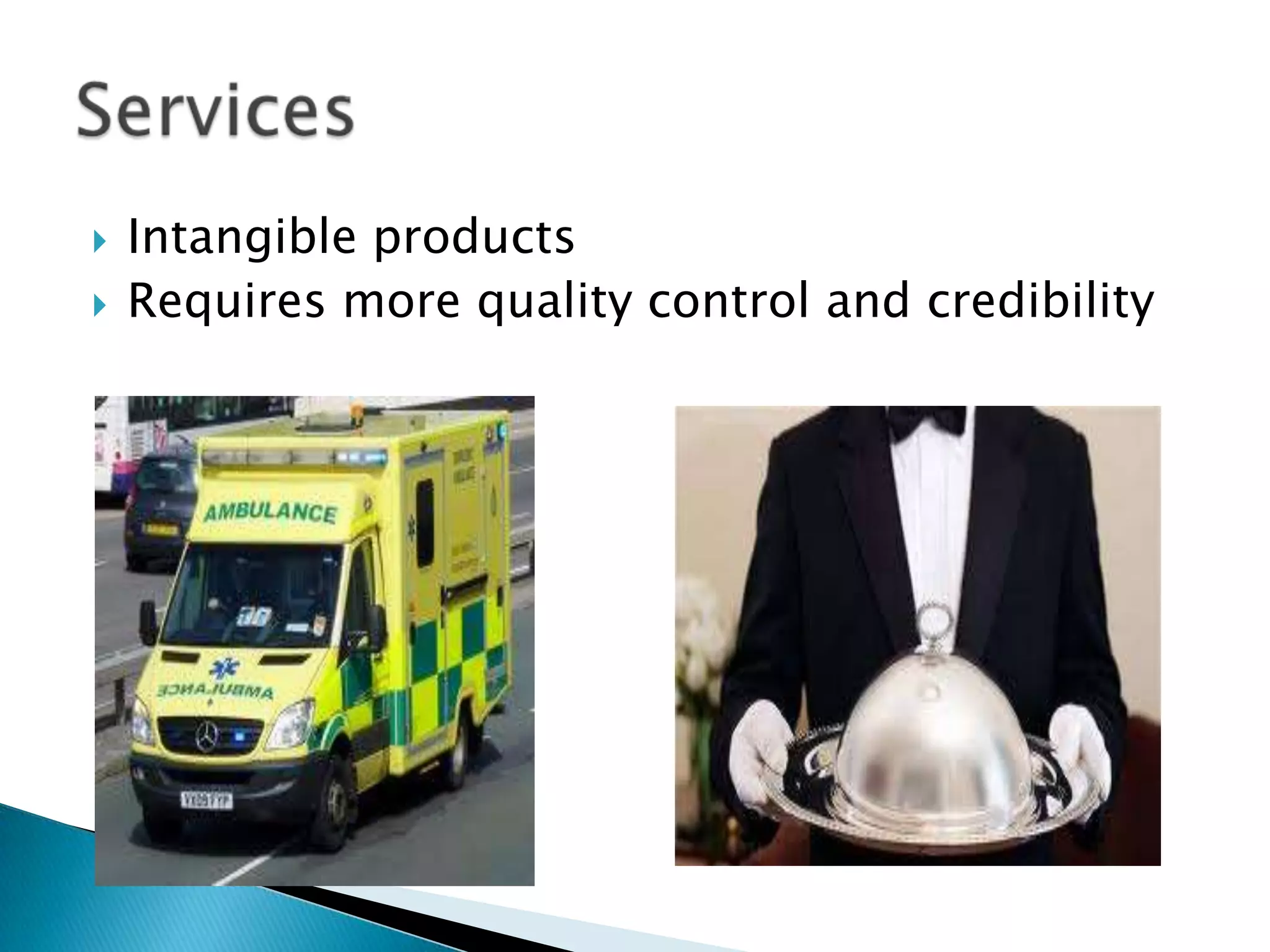
 Intangible products
 Requires more quality control and credibility
Product classification, by Neeraj Bhandari ( Surkhet.Nepal )

Product classification, by Neeraj Bhandari ( Surkhet.Nepal )

  • 2.
     Product classificationcan be done in a variety of perspectives 1. Consumer-Goods Classification Classified on the basis of shopping habits 2. Durability and Tangibility 3. Industrial-Goods Classification Classified in terms of their relative cost and how they enter the production process
  • 3.
     Inexpensive, frequentlypurchased.  Little effort needed to purchase them.  Staples, impulse and emergency goods.  Ex. Milk, Bread, Eggs, Umbrella, Sweaters, Jackets etc.
  • 4.
     Not asfrequently as convenience products.  Costly  Consumer does research before purchase  Eg. Washing Machine, Fridge, Interiors (Wood, Steel, Modular Kitchens)
  • 5.
     Unique features Consumer is prepared to pay a premium price Ex. Luxury cars, Expensive paintings etc.
  • 6.
     Goods thatthe consumer does not know about or does not normally think of buying, and the purchase of which arises due to danger or the fear of danger and lack of desire.  The classic examples of known but unsought goods are funeral services, encyclopaedias, fire extinguishers and reference books.  In some cases even an airplane/helicopters can be cited as examples of unsought goods.
  • 7.
    1. Non-Durable Goods: Tangible goods consumed in one or few uses  Purchased frequently  Strategy : availability, low priced, heavily advertised
  • 8.
    2. Durable Goods: Tangible goods that survive many uses  Require more personal selling and service  Higher margins and requires seller guarantee
  • 9.
     Intangible products Requires more quality control and credibility