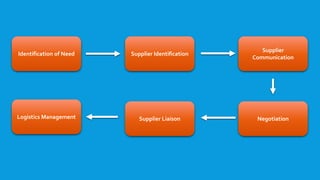
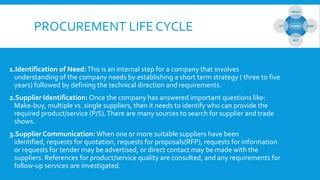
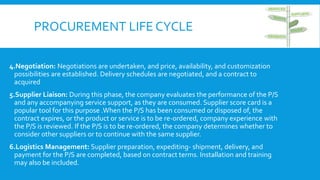
Procurement involves acquiring goods, services, or works from an external source in a way that meets needs at the best possible cost. The procurement life cycle includes identifying needs, finding suppliers, communicating with them, negotiating contracts, managing supplier relationships, and handling logistics. E-procurement automates this process electronically to reduce costs, increase transparency and productivity, eliminate paperwork, and speed up transactions. While e-procurement provides benefits, risks include over-investing in tools that don't deliver value or that users reject, as well as suppliers who don't cooperate.