Processes
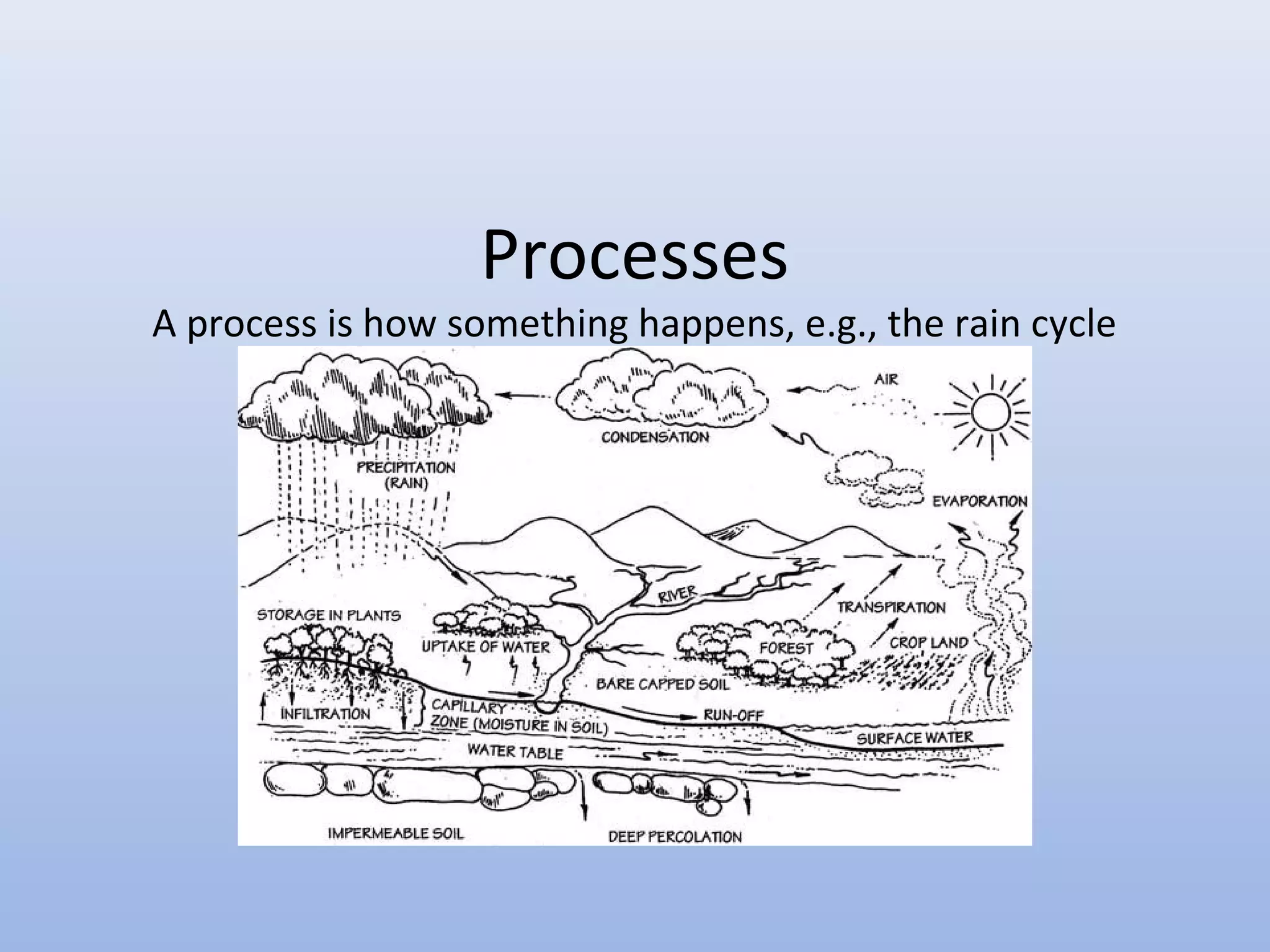
A process is how something happens, e.g., the rain cycle
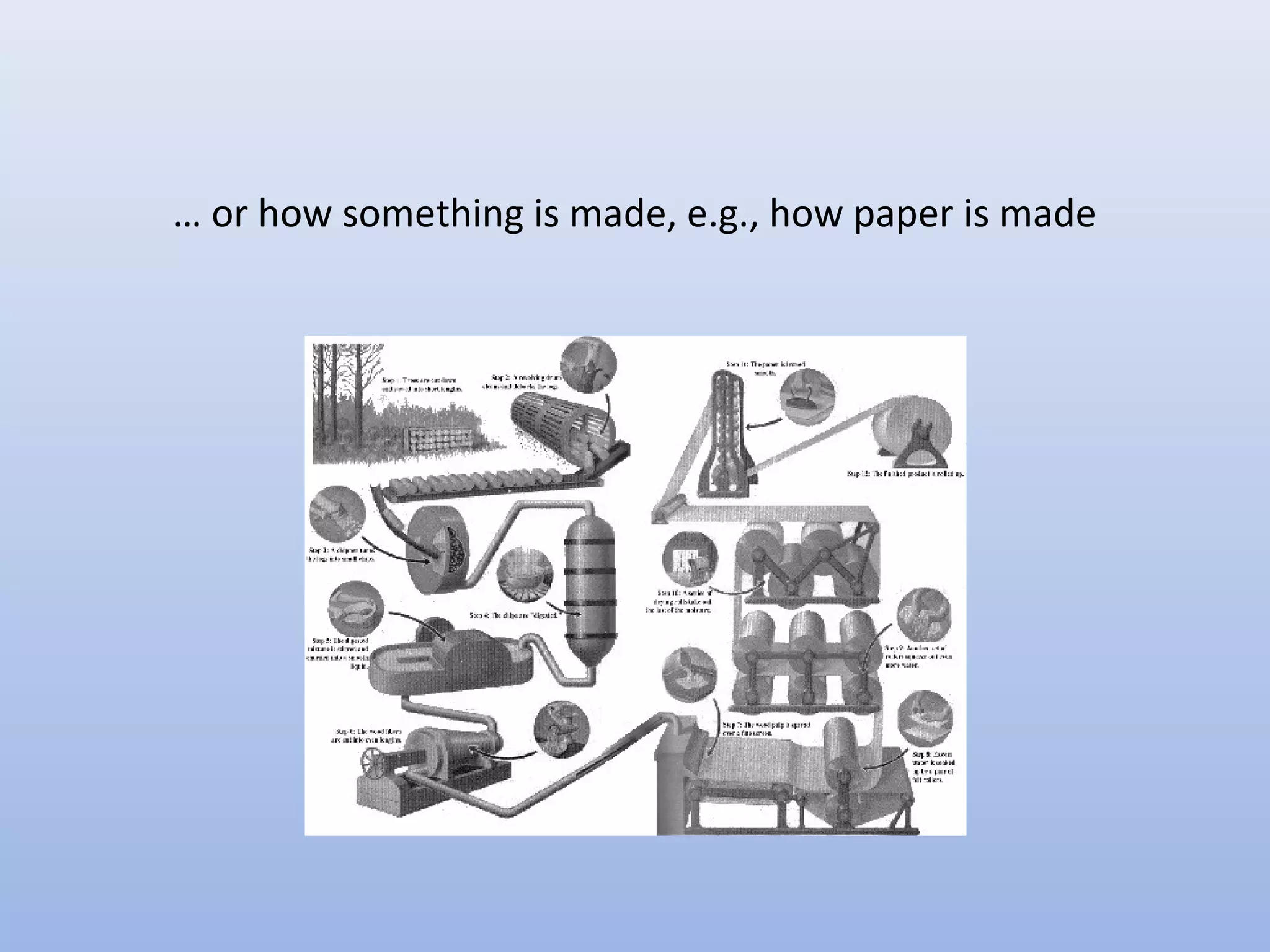
… or how something is made, e.g., how paper is made
In English, to describe a process we usually use the PRESENT SIMPLE

of the PASSIVE VOICE and words that express the steps in the process
called SEQUENCE MARKERS.

Formation of the PRESENT SIMPLE PASSIVE:

         Verb to be in the Present Simple + Past Participle of a verb

Examples:
The symbol for an AND gate is shaped like the letter ‘D’.

If you choose soldering or wire-wrapping for greater permanence, first, the
components and wires are fastened to some structure.
Time sequence markers
Ordering sequence markers:
First(ly), first of all, second(ly), Third(ly), next, then, finally, last, subsequently

Example:
First, a carbon track is wrapped around a ceramic core.

Prepositions of time as sequence connectors:
After, before, during (the process), at (this stage) , when, until, as soon as,
since, eventually, earlier, soon, later.

Example:
After the carbon track is wound around the ceramic core by a machine or
etched into the core with a laser device, two copper metal leads are inserted
in the ends of the resistor.
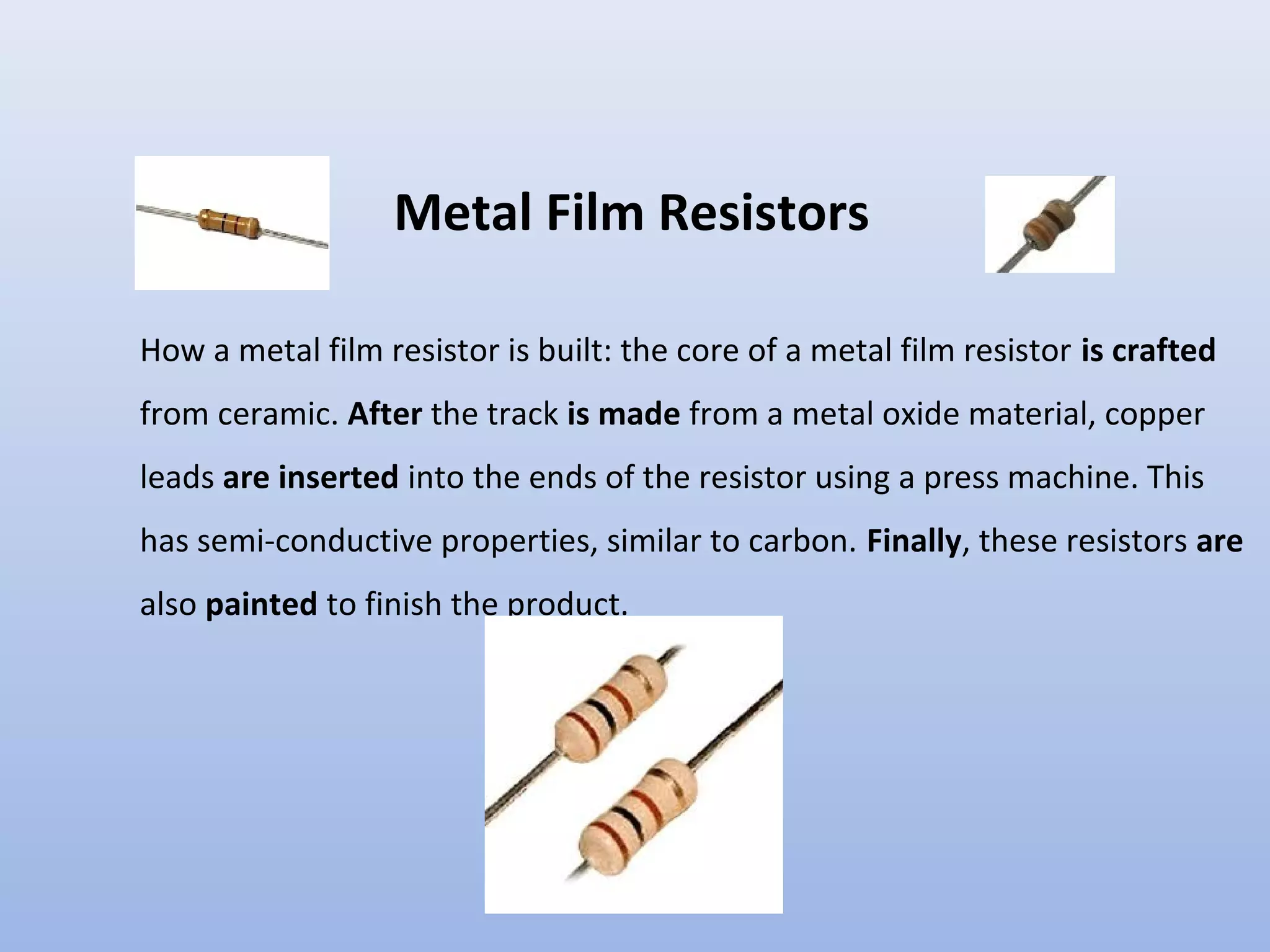
Metal Film Resistors

How a metal film resistor is built: the core of a metal film resistor is crafted
from ceramic. After the track is made from a metal oxide material, copper
leads are inserted into the ends of the resistor using a press machine. This
has semi-conductive properties, similar to carbon. Finally, these resistors are
also painted to finish the product.
Remember:
Regular Verbs: Simple Past and Past Participle end in –ED
clean – cleaned – cleaned

Irregular Verbs:
a) no change: hit – hit – hit
b) two forms: tell – told – told
c) three forms: break – broke – broken

Note:
check the list of irregular verbs at:
http://www.englishpage.com/irregular verbs/irregularverbs.html

Processes

  • 1.
    Processes A process ishow something happens, e.g., the rain cycle
  • 2.
    … or howsomething is made, e.g., how paper is made
  • 3.
    In English, todescribe a process we usually use the PRESENT SIMPLE of the PASSIVE VOICE and words that express the steps in the process called SEQUENCE MARKERS. Formation of the PRESENT SIMPLE PASSIVE: Verb to be in the Present Simple + Past Participle of a verb Examples: The symbol for an AND gate is shaped like the letter ‘D’. If you choose soldering or wire-wrapping for greater permanence, first, the components and wires are fastened to some structure.
  • 4.
    Time sequence markers Orderingsequence markers: First(ly), first of all, second(ly), Third(ly), next, then, finally, last, subsequently Example: First, a carbon track is wrapped around a ceramic core. Prepositions of time as sequence connectors: After, before, during (the process), at (this stage) , when, until, as soon as, since, eventually, earlier, soon, later. Example: After the carbon track is wound around the ceramic core by a machine or etched into the core with a laser device, two copper metal leads are inserted in the ends of the resistor.
  • 5.
    Metal Film Resistors Howa metal film resistor is built: the core of a metal film resistor is crafted from ceramic. After the track is made from a metal oxide material, copper leads are inserted into the ends of the resistor using a press machine. This has semi-conductive properties, similar to carbon. Finally, these resistors are also painted to finish the product.
  • 6.
    Remember: Regular Verbs: SimplePast and Past Participle end in –ED clean – cleaned – cleaned Irregular Verbs: a) no change: hit – hit – hit b) two forms: tell – told – told c) three forms: break – broke – broken Note: check the list of irregular verbs at: http://www.englishpage.com/irregular verbs/irregularverbs.html