Process Design
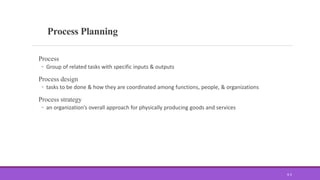
Process Planning
Process
◦ Group of related tasks with specific inputs & outputs
Process design
◦ tasks to be done & how they are coordinated among functions, people, & organizations
Process strategy
◦ an organization’s overall approach for physically producing goods and services
6-2
4-3
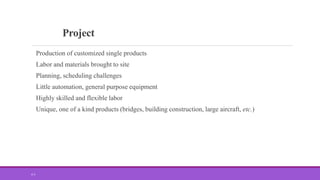
Project
Production of customized single products
Labor and materials brought to site
Planning, scheduling challenges
Little automation, general purpose equipment
Highly skilled and flexible labor
Unique, one of a kind products (bridges, building construction, large aircraft, etc.)
4-4
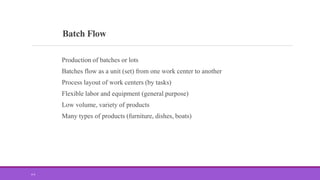
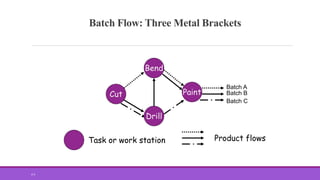
Batch Flow
Production of batches or lots
Batches flow as a unit (set) from one work center to another
Process layout of work centers (by tasks)
Flexible labor and equipment (general purpose)
Low volume, variety of products
Many types of products (furniture, dishes, boats)
4-5
Batch Flow: Three Metal Brackets
Cut Paint
Task or work station Product flows
Bend
Drill
Batch A
Batch B
Batch C
4-6
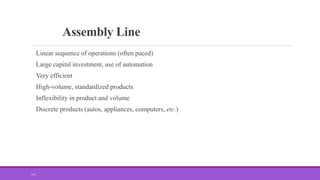
Assembly Line
Linear sequence of operations (often paced)
Large capital investment, use of automation
Very efficient
High-volume, standardized products
Inflexibility in product and volume
Discrete products (autos, appliances, computers, etc.)
4-7
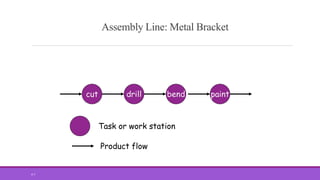
Assembly Line: Metal Bracket
paintdrill bend
Task or work station
Product flow
cut
4-8
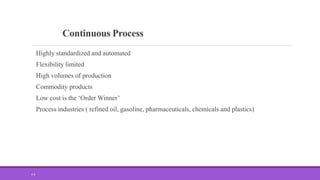
Continuous Process
Highly standardized and automated
Flexibility limited
High volumes of production
Commodity products
Low cost is the ‘Order Winner’
Process industries ( refined oil, gasoline, pharmaceuticals, chemicals and plastics)
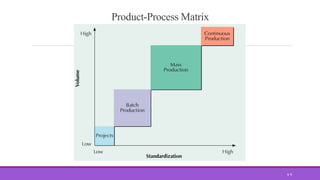
Product-Process Matrix
6-9
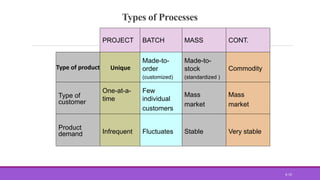
Types of Processes
Type of product Unique
6-10
PROJECT BATCH
Made-to-
order
(customized)
Type of
customer
One-at-a-
time
Few
individual
customers
MASS
Made-to-
stock
(standardized )
Mass
market
CONT.
Commodity
Mass
market
Product
demand Infrequent Fluctuates Stable Very stable
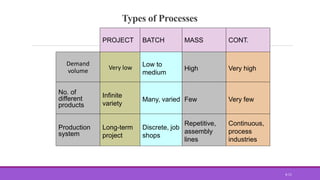
Types of Processes
Demand
volume Very low
6-11
PROJECT BATCH
Low to
medium
No. of
different
products
Infinite
variety
Many, varied
MASS
High
Few
CONT.
Very high
Very few
Production
system
Long-term
project
Discrete, job
shops
Repetitive,
assembly
lines
Continuous,
process
industries
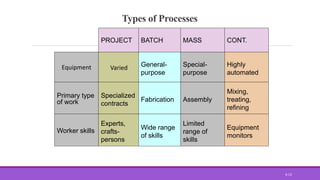
Types of Processes
Equipment Varied
6-12
PROJECT BATCH
General-
purpose
Primary type
of work
Specialized
contracts
Fabrication
MASS
Special-
purpose
Assembly
CONT.
Highly
automated
Mixing,
treating,
refining
Worker skills
Experts,
crafts-
persons
Wide range
of skills
Limited
range of
skills
Equipment
monitors
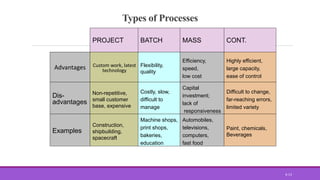
Types of Processes
Advantages Custom work, latest
technology
6-13
PROJECT BATCH
Flexibility,
quality
Dis-
advantages
Non-repetitive,
small customer
base, expensive
Costly, slow,
difficult to
manage
MASS
Efficiency,
speed,
low cost
Capital
investment;
lack of
responsiveness
CONT.
Highly efficient,
large capacity,
ease of control
Difficult to change,
far-reaching errors,
limited variety
Examples
Construction,
shipbuilding,
spacecraft
Machine shops,
print shops,
bakeries,
education
Automobiles,
televisions,
computers,
fast food
Paint, chemicals,
Beverages

Process design

  • 1.
  • 2.
    Process Planning Process ◦ Groupof related tasks with specific inputs & outputs Process design ◦ tasks to be done & how they are coordinated among functions, people, & organizations Process strategy ◦ an organization’s overall approach for physically producing goods and services 6-2
  • 3.
    4-3 Project Production of customizedsingle products Labor and materials brought to site Planning, scheduling challenges Little automation, general purpose equipment Highly skilled and flexible labor Unique, one of a kind products (bridges, building construction, large aircraft, etc.)
  • 4.
    4-4 Batch Flow Production ofbatches or lots Batches flow as a unit (set) from one work center to another Process layout of work centers (by tasks) Flexible labor and equipment (general purpose) Low volume, variety of products Many types of products (furniture, dishes, boats)
  • 5.
    4-5 Batch Flow: ThreeMetal Brackets Cut Paint Task or work station Product flows Bend Drill Batch A Batch B Batch C
  • 6.
    4-6 Assembly Line Linear sequenceof operations (often paced) Large capital investment, use of automation Very efficient High-volume, standardized products Inflexibility in product and volume Discrete products (autos, appliances, computers, etc.)
  • 7.
    4-7 Assembly Line: MetalBracket paintdrill bend Task or work station Product flow cut
  • 8.
    4-8 Continuous Process Highly standardizedand automated Flexibility limited High volumes of production Commodity products Low cost is the ‘Order Winner’ Process industries ( refined oil, gasoline, pharmaceuticals, chemicals and plastics)
  • 9.
  • 10.
    Types of Processes Typeof product Unique 6-10 PROJECT BATCH Made-to- order (customized) Type of customer One-at-a- time Few individual customers MASS Made-to- stock (standardized ) Mass market CONT. Commodity Mass market Product demand Infrequent Fluctuates Stable Very stable
  • 11.
    Types of Processes Demand volumeVery low 6-11 PROJECT BATCH Low to medium No. of different products Infinite variety Many, varied MASS High Few CONT. Very high Very few Production system Long-term project Discrete, job shops Repetitive, assembly lines Continuous, process industries
  • 12.
    Types of Processes EquipmentVaried 6-12 PROJECT BATCH General- purpose Primary type of work Specialized contracts Fabrication MASS Special- purpose Assembly CONT. Highly automated Mixing, treating, refining Worker skills Experts, crafts- persons Wide range of skills Limited range of skills Equipment monitors
  • 13.
    Types of Processes AdvantagesCustom work, latest technology 6-13 PROJECT BATCH Flexibility, quality Dis- advantages Non-repetitive, small customer base, expensive Costly, slow, difficult to manage MASS Efficiency, speed, low cost Capital investment; lack of responsiveness CONT. Highly efficient, large capacity, ease of control Difficult to change, far-reaching errors, limited variety Examples Construction, shipbuilding, spacecraft Machine shops, print shops, bakeries, education Automobiles, televisions, computers, fast food Paint, chemicals, Beverages