WELCOM
ET O O U R P R E S E N T A T I O N O N
P R O B L E M S O L V I N G
T H E O R Y
PROBLEM SOLVING INTRO
Problem solving is vital in life
personally and professionally.
It involves recognizing and
overcoming challenges using
logical thinking and creativity.
Improving problem-solving
skills helps address complex
issuesefficiently.
Understanding the Problem
Understanding the problem is the first
step. Problem-solving process is a
structured approach to resolving issues
and achieving desired outcomes.
Problem-solving theory is a structured
approach to resolving issues or
challenges by employing systematic
steps. It typically involves several stages
which is in next slides
Identifying The
Problem
Clearly defining the issue
or challenge that needs
to be addressed.
Gathering Relevant
Information, Understanding
The Root Cause Of The
Problem, And Considering
Different Perspectives.
Analyzing The
Situation
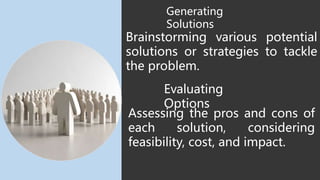
Brainstorming various potential
solutions or strategies to tackle
the problem.
Assessing the pros and cons of
each solution, considering
feasibility, cost, and impact.
Generating
Solutions
Evaluating
Options
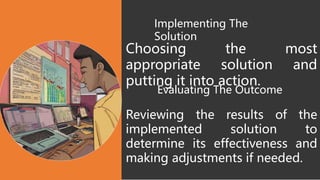
Implementing The
Solution
Choosing the most
appropriate solution and
putting it into action.
Evaluating The Outcome
Reviewing the results of the
implemented solution to
determine its effectiveness and
making adjustments if needed.
Problem-solving Theories Can
Differ Based On Various
Disciplines And Methodologies,
But They Generally Follow A
Similar Framework To Guide
Individuals Or Teams Through The
Process Of Addressing Challenges
Effectively. Several Techniques Are
Employed Within Problem-solving
Theory To Facilitate The Process
Of Finding Solutions. Some
Widely Used Techniques Include
C o m m o n P r o b l e m S o l v i n g
T e c h n i q u e s
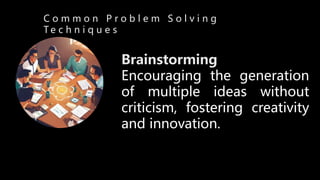
Brainstorming
Encouraging the generation
of multiple ideas without
criticism, fostering creativity
and innovation.
C o m m o n P r o b l e m S o l v i n g
T e c h n i q u e s
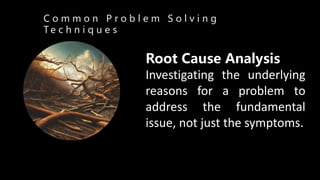
Root Cause Analysis
Investigating the underlying
reasons for a problem to
address the fundamental
issue, not just the symptoms.
C o m m o n P r o b l e m S o l v i n g
T e c h n i q u e s
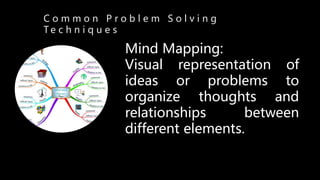
Mind Mapping:
Visual representation of
ideas or problems to
organize thoughts and
relationships between
different elements.
C o m m o n P r o b l e m S o l v i n g
T e c h n i q u e s
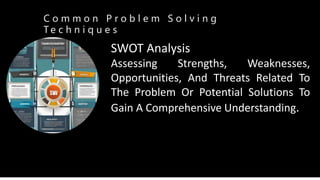
SWOT Analysis
Assessing Strengths, Weaknesses,
Opportunities, And Threats Related To
The Problem Or Potential Solutions To
Gain A Comprehensive Understanding.
C o m m o n P r o b l e m S o l v i n g
T e c h n i q u e s
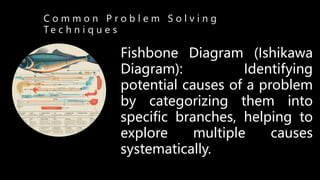
Fishbone Diagram (Ishikawa
Diagram): Identifying
potential causes of a problem
by categorizing them into
specific branches, helping to
explore multiple causes
systematically.
C o m m o n P r o b l e m S o l v i n g
T e c h n i q u e s
Decision Matrix
A Tool For Evaluating
Various Options Against
Specific Criteria To
Objectively Determine
The Best Solution.
C o m m o n P r o b l e m S o l v i n g
T e c h n i q u e s
TRIZ (Theory Of Inventive
Problem Solving)
A Systematic Approach To
Problem-solving That Relies
On Principles And Patterns
Used In Successful Inventions.
C o m m o n P r o b l e m S o l v i n g
T e c h n i q u e s
Pareto Analysis
Focusing On The Most
Significant Factors
Contributing To A Problem
(The 80/20 Rule), Prioritizing
Efforts Based On Impact.
S i x T h i n k i n g
H a t s
The Six Thinking Hats is a
problem-solving
technique that
encourages individuals to
explore different
perspectives and
approaches to a problem.
It involves wearing
different 'hats' that
represent different
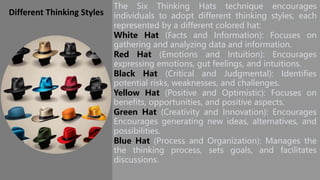
Different Thinking Styles
The Six Thinking Hats technique encourages
individuals to adopt different thinking styles, each
represented by a different colored hat:
White Hat (Facts and Information): Focuses on
gathering and analyzing data and information.
Red Hat (Emotions and Intuition): Encourages
expressing emotions, gut feelings, and intuitions.
Black Hat (Critical and Judgmental): Identifies
potential risks, weaknesses, and challenges.
Yellow Hat (Positive and Optimistic): Focuses on
benefits, opportunities, and positive aspects.
Green Hat (Creativity and Innovation): Encourages
Encourages generating new ideas, alternatives, and
possibilities.
Blue Hat (Process and Organization): Manages the
the thinking process, sets goals, and facilitates
discussions.
Problem solving theory .pptx12334444444456

Problem solving theory .pptx12334444444456

  • 1.
    WELCOM ET O OU R P R E S E N T A T I O N O N P R O B L E M S O L V I N G T H E O R Y
  • 2.
    PROBLEM SOLVING INTRO Problemsolving is vital in life personally and professionally. It involves recognizing and overcoming challenges using logical thinking and creativity. Improving problem-solving skills helps address complex issuesefficiently.
  • 3.
    Understanding the Problem Understandingthe problem is the first step. Problem-solving process is a structured approach to resolving issues and achieving desired outcomes. Problem-solving theory is a structured approach to resolving issues or challenges by employing systematic steps. It typically involves several stages which is in next slides
  • 4.
    Identifying The Problem Clearly definingthe issue or challenge that needs to be addressed. Gathering Relevant Information, Understanding The Root Cause Of The Problem, And Considering Different Perspectives. Analyzing The Situation
  • 5.
    Brainstorming various potential solutionsor strategies to tackle the problem. Assessing the pros and cons of each solution, considering feasibility, cost, and impact. Generating Solutions Evaluating Options
  • 6.
    Implementing The Solution Choosing themost appropriate solution and putting it into action. Evaluating The Outcome Reviewing the results of the implemented solution to determine its effectiveness and making adjustments if needed.
  • 7.
    Problem-solving Theories Can DifferBased On Various Disciplines And Methodologies, But They Generally Follow A Similar Framework To Guide Individuals Or Teams Through The Process Of Addressing Challenges Effectively. Several Techniques Are Employed Within Problem-solving Theory To Facilitate The Process Of Finding Solutions. Some Widely Used Techniques Include
  • 8.
    C o mm o n P r o b l e m S o l v i n g T e c h n i q u e s Brainstorming Encouraging the generation of multiple ideas without criticism, fostering creativity and innovation.
  • 9.
    C o mm o n P r o b l e m S o l v i n g T e c h n i q u e s Root Cause Analysis Investigating the underlying reasons for a problem to address the fundamental issue, not just the symptoms.
  • 10.
    C o mm o n P r o b l e m S o l v i n g T e c h n i q u e s Mind Mapping: Visual representation of ideas or problems to organize thoughts and relationships between different elements.
  • 11.
    C o mm o n P r o b l e m S o l v i n g T e c h n i q u e s SWOT Analysis Assessing Strengths, Weaknesses, Opportunities, And Threats Related To The Problem Or Potential Solutions To Gain A Comprehensive Understanding.
  • 12.
    C o mm o n P r o b l e m S o l v i n g T e c h n i q u e s Fishbone Diagram (Ishikawa Diagram): Identifying potential causes of a problem by categorizing them into specific branches, helping to explore multiple causes systematically.
  • 13.
    C o mm o n P r o b l e m S o l v i n g T e c h n i q u e s Decision Matrix A Tool For Evaluating Various Options Against Specific Criteria To Objectively Determine The Best Solution.
  • 14.
    C o mm o n P r o b l e m S o l v i n g T e c h n i q u e s TRIZ (Theory Of Inventive Problem Solving) A Systematic Approach To Problem-solving That Relies On Principles And Patterns Used In Successful Inventions.
  • 15.
    C o mm o n P r o b l e m S o l v i n g T e c h n i q u e s Pareto Analysis Focusing On The Most Significant Factors Contributing To A Problem (The 80/20 Rule), Prioritizing Efforts Based On Impact.
  • 16.
    S i xT h i n k i n g H a t s The Six Thinking Hats is a problem-solving technique that encourages individuals to explore different perspectives and approaches to a problem. It involves wearing different 'hats' that represent different
  • 17.
    Different Thinking Styles TheSix Thinking Hats technique encourages individuals to adopt different thinking styles, each represented by a different colored hat: White Hat (Facts and Information): Focuses on gathering and analyzing data and information. Red Hat (Emotions and Intuition): Encourages expressing emotions, gut feelings, and intuitions. Black Hat (Critical and Judgmental): Identifies potential risks, weaknesses, and challenges. Yellow Hat (Positive and Optimistic): Focuses on benefits, opportunities, and positive aspects. Green Hat (Creativity and Innovation): Encourages Encourages generating new ideas, alternatives, and possibilities. Blue Hat (Process and Organization): Manages the the thinking process, sets goals, and facilitates discussions.