Marathwada Mitramandal’s
COLLEGE OF ENGINEERING
Karvenagar, Pune
Accredited with ‘A’ Grade by
NAAC
Presentation
On
Subject: Programming And Problem
Solving
Department of Engineering Sciences
By
Ms. N. D. Kolambe
Unit-1:Problem Solving, Programming
and Python Programming
Session-2/44
problem solving with computers, difficulties with problem solving,problem
solving aspects, top down design.
session Plan
Outline:
A. Attendance
B. Review of the previous session
C. Learning Outcomes of the session
D. Content
E. Student’s evaluation
F. Preparation for next session
G. Wrap up
B Review of the previous session:
○ Problem Solving and Problem Solving Concepts
problem solving steps:
1. Identify The problem
2. Understand the Problem
3. Identify alternative ways to solve the problem
4. Select the best way to solve the problem from the list of alternative solutions
5. List instructions that enable you to solve the problem using the selected solution
6. Evaluate the solution
C. Learning Outcomes of the session:
○ Knowledge of problem aspects and difficulties associated with problem solving
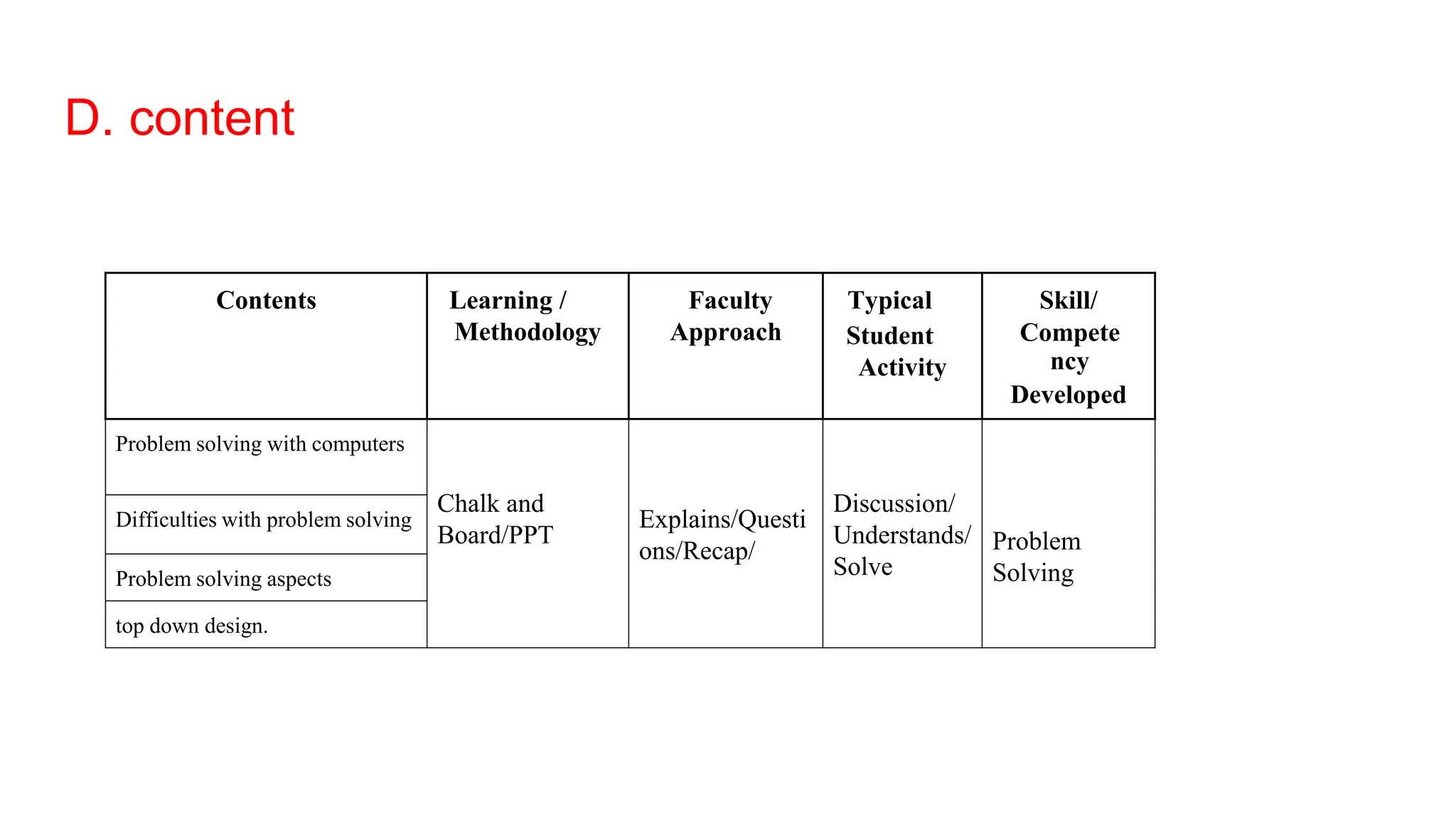
D. content
Contents Learning /
Methodology
Faculty
Approach
Typical
Student
Activity
Skill/
Compete
ncy
Developed
Problem solving with computers
Chalk and
Board/PPT
Explains/Questi
ons/Recap/
Discussion/
Understands/
Solve
Problem
Solving
Difficulties with problem solving
Problem solving aspects
top down design.
Problem Solving With Computers
• Computers are built to deal with algorithmic solutions, which are often
difficult or very time consuming for humans
• People are better than computer at developing heuristic solutions
• Computer can perform 10k of computations easily, but problem of how to
speak cant
• The field of study deals with heuristic types of solutions is called artificial
intelligence
• For this heuristic must be transformed into an algorithmic format
Difficulties in problem solving
• Some faces problem while solving the problem because they don’t know
how to solve it
• Afraid to make decision for fear it will be the wrong one
• Skipping one of the steps in Solving a problem or not choosing the best
alternative
• You must assume the computer knows nothing except what you will tell it.
(Understanding of the problem)
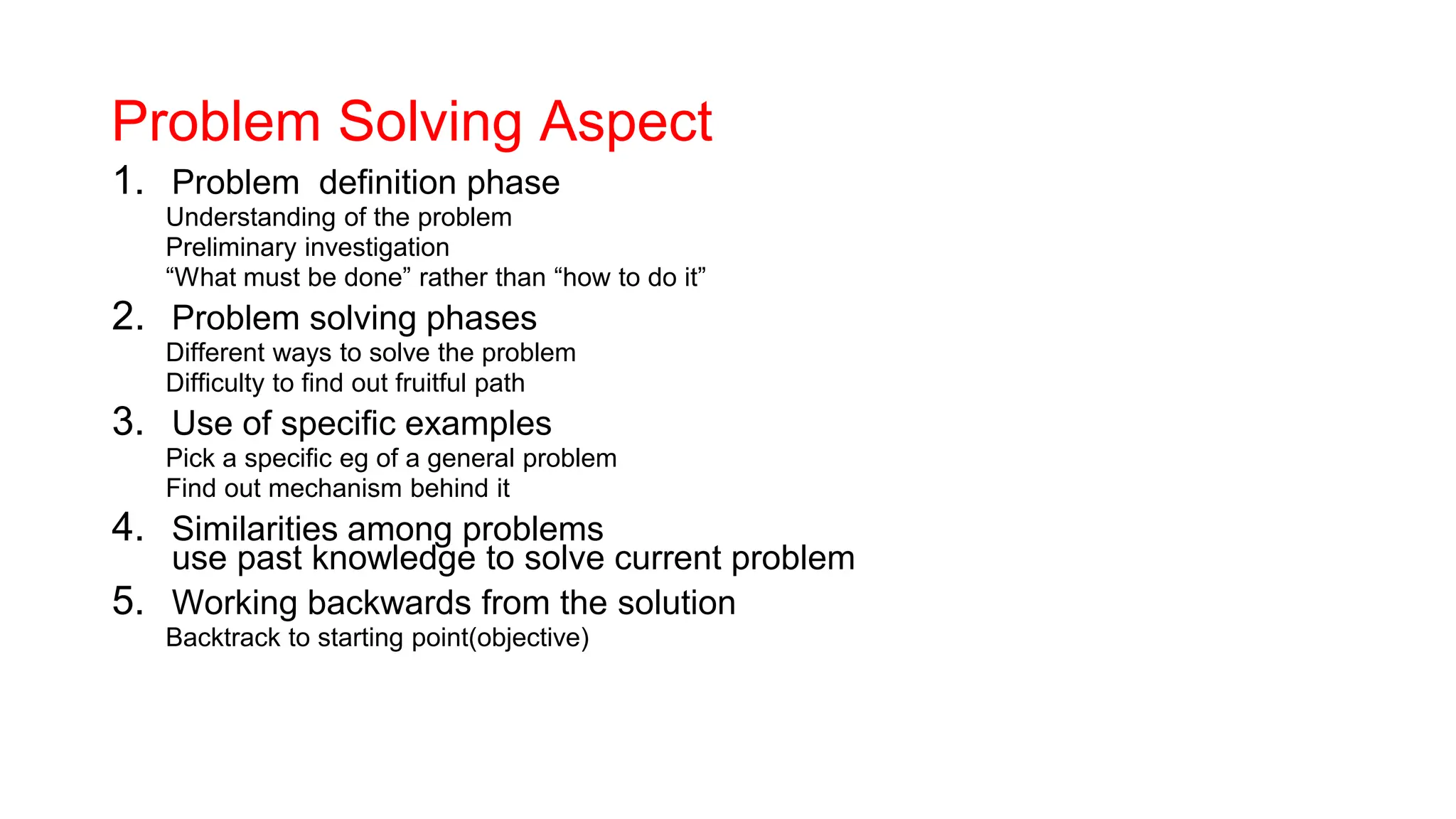
Problem Solving Aspect
1. Problem definition phase
Understanding of the problem
Preliminary investigation
“What must be done” rather than “how to do it”
2. Problem solving phases
Different ways to solve the problem
Difficulty to find out fruitful path
3. Use of specific examples
Pick a specific eg of a general problem
Find out mechanism behind it
4. Similarities among problems
use past knowledge to solve current problem
5. Working backwards from the solution
Backtrack to starting point(objective)
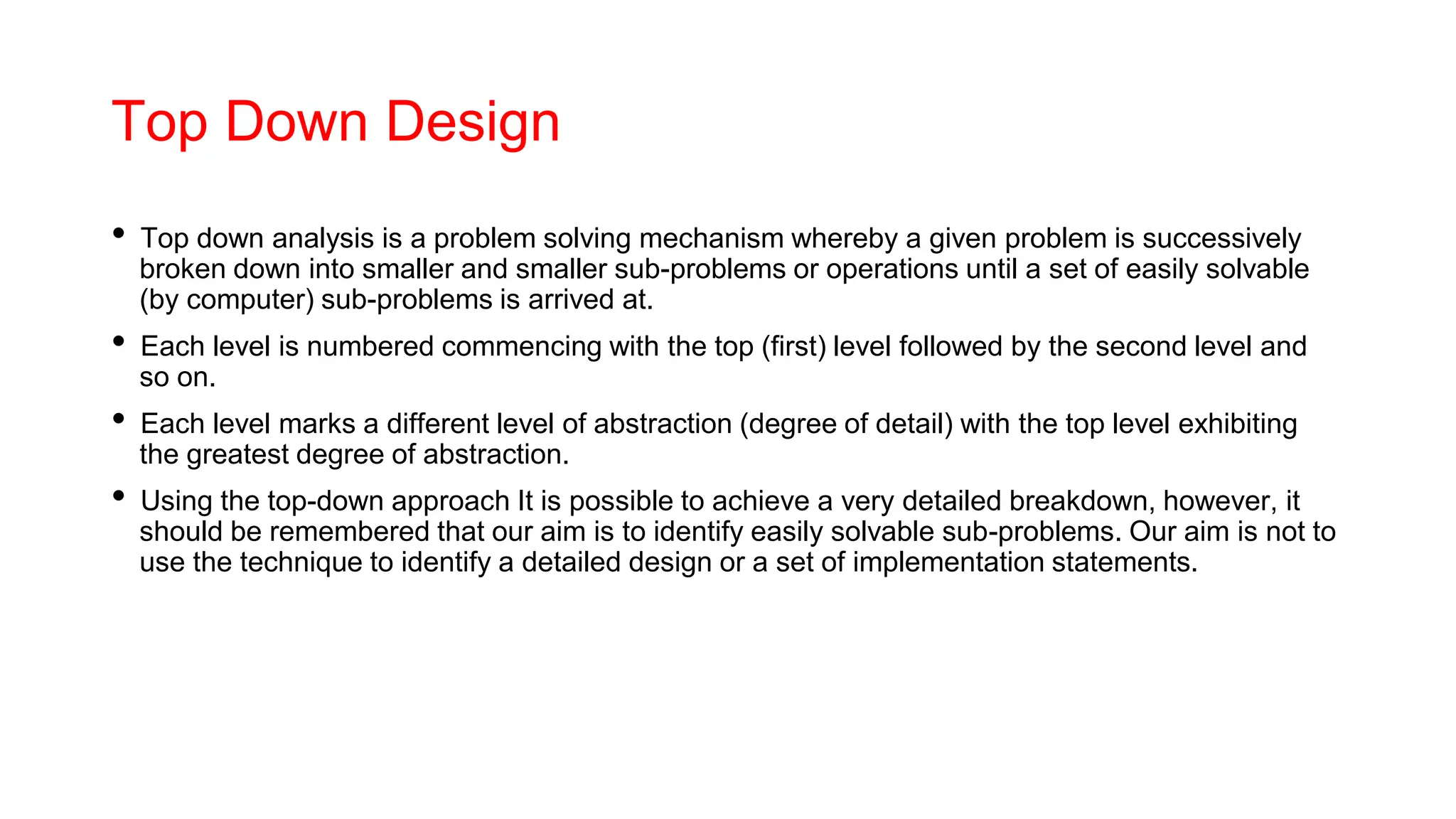
Top Down Design
• Top down analysis is a problem solving mechanism whereby a given problem is successively
broken down into smaller and smaller sub-problems or operations until a set of easily solvable
(by computer) sub-problems is arrived at.
• Each level is numbered commencing with the top (first) level followed by the second level and
so on.
• Each level marks a different level of abstraction (degree of detail) with the top level exhibiting
the greatest degree of abstraction.
• Using the top-down approach It is possible to achieve a very detailed breakdown, however, it
should be remembered that our aim is to identify easily solvable sub-problems. Our aim is not to
use the technique to identify a detailed design or a set of implementation statements.
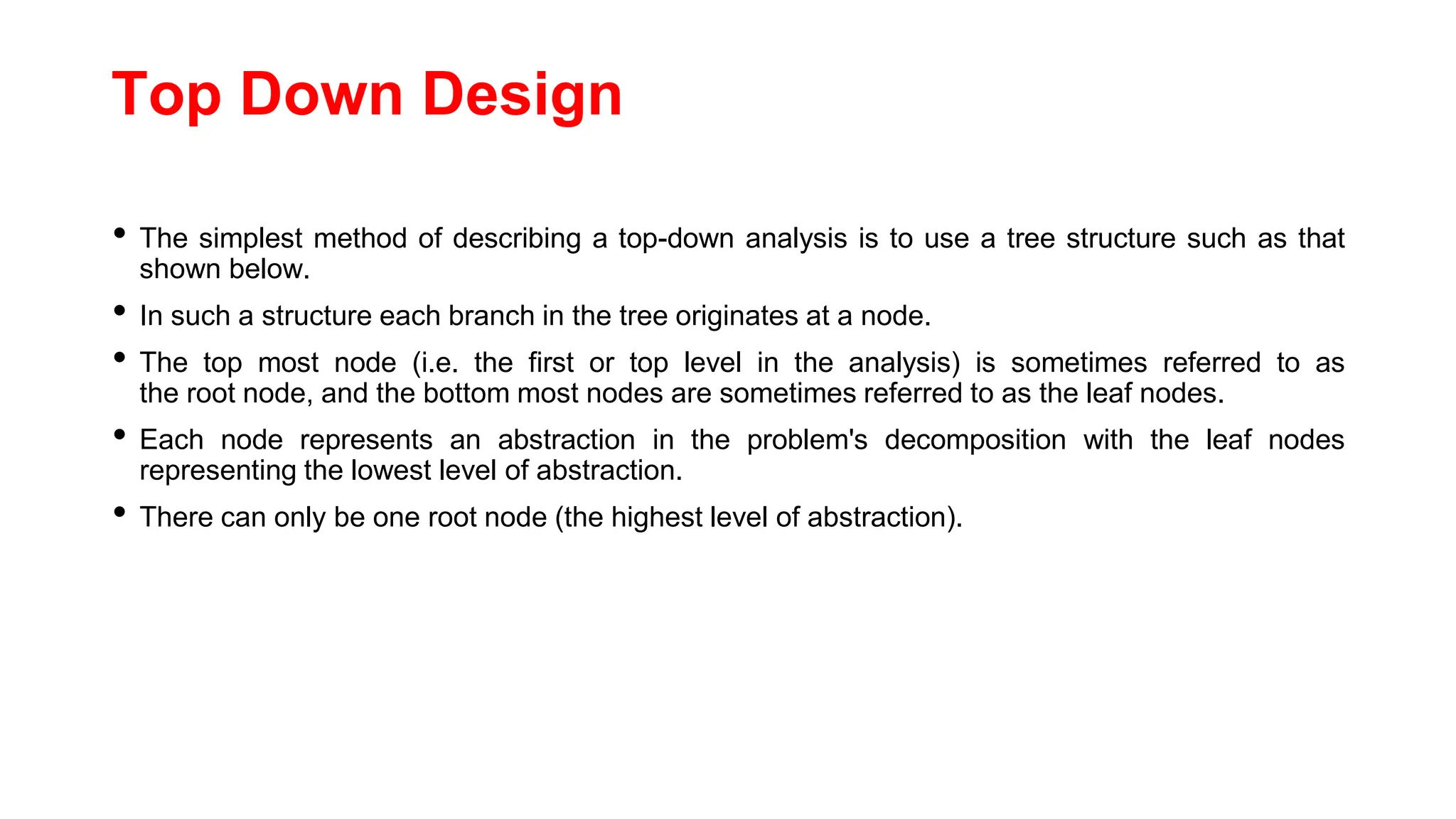
Top Down Design
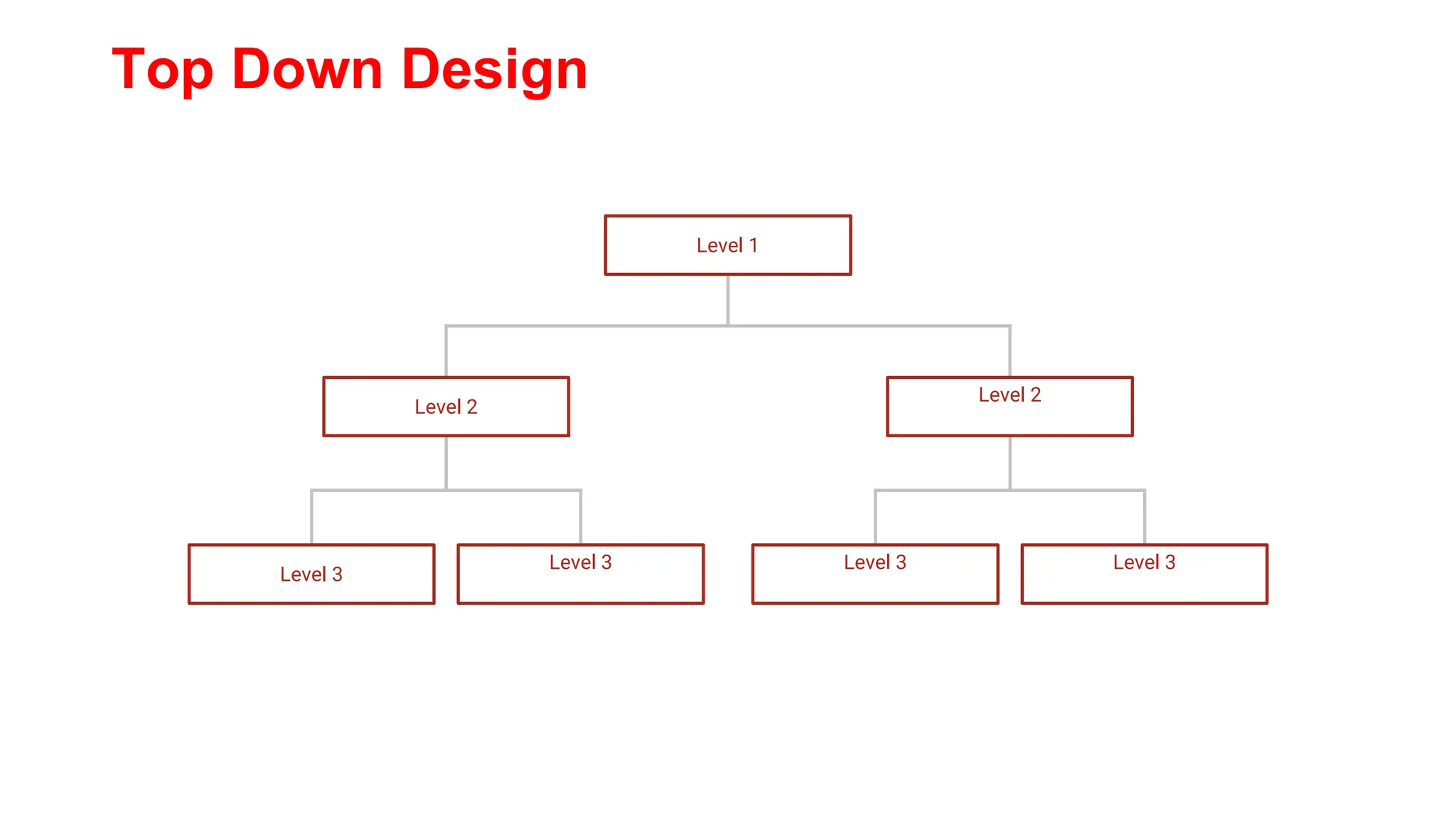
• The simplest method of describing a top-down analysis is to use a tree structure such as that
shown below.
• In such a structure each branch in the tree originates at a node.
• The top most node (i.e. the first or top level in the analysis) is sometimes referred to as
the root node, and the bottom most nodes are sometimes referred to as the leaf nodes.
• Each node represents an abstraction in the problem's decomposition with the leaf nodes
representing the lowest level of abstraction.
• There can only be one root node (the highest level of abstraction).
Top Down Design
Level 1
Level 2
Level 2
Level 3
Level 3
Level 3
Level 3
E Student’s evaluation of main body:
○ Which difficulties do we face during problem solving?
○ List problem solving aspects.
F Assignment for next session:
○ Draw and explain top down design approach.
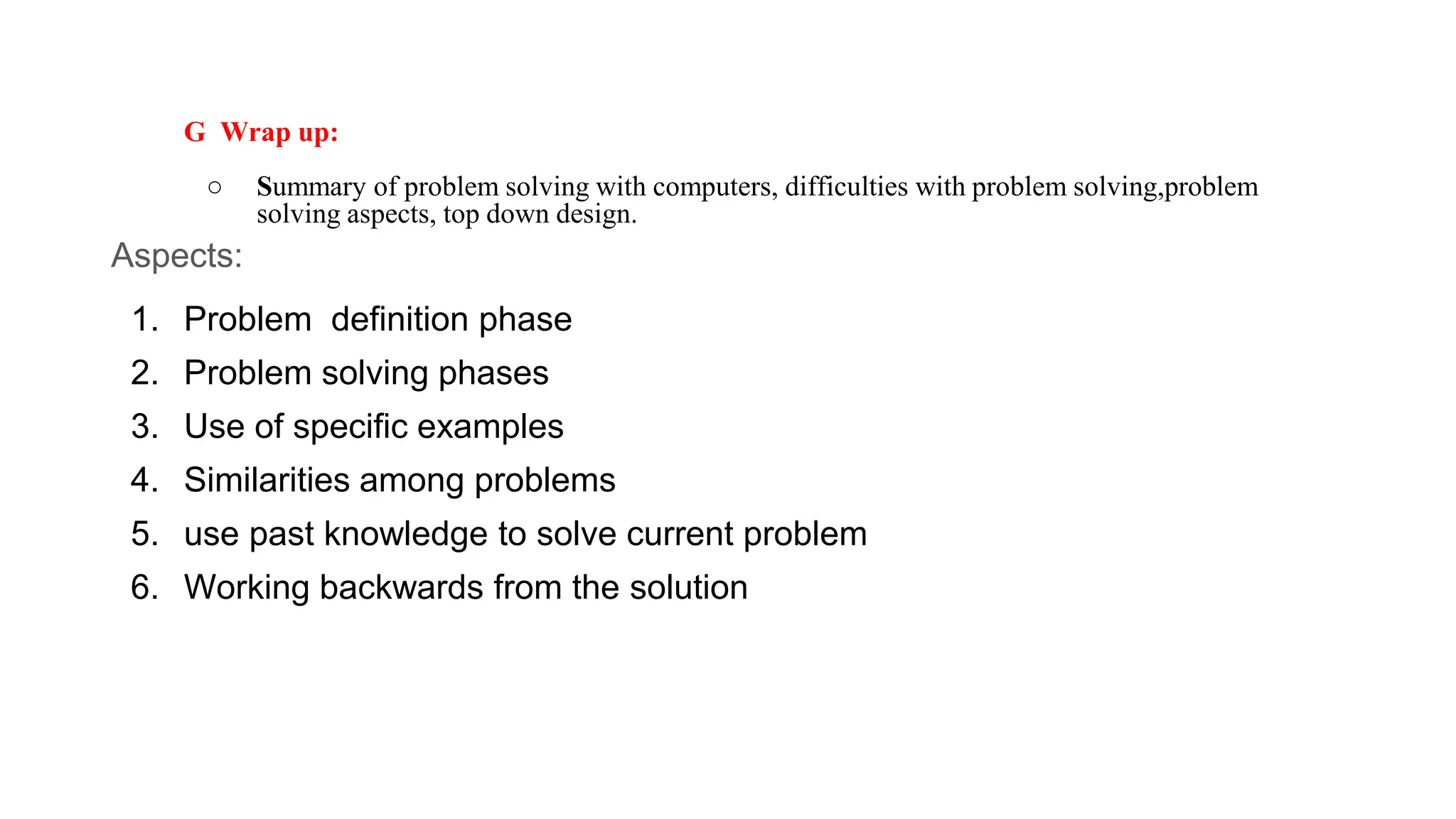
G Wrap up:
○ Summary of problem solving with computers, difficulties with problem solving,problem
solving aspects, top down design.
Aspects:
1. Problem definition phase
2. Problem solving phases
3. Use of specific examples
4. Similarities among problems
5. use past knowledge to solve current problem
6. Working backwards from the solution

Problem Solving Aspects.pptx

  • 1.
    Marathwada Mitramandal’s COLLEGE OFENGINEERING Karvenagar, Pune Accredited with ‘A’ Grade by NAAC Presentation On Subject: Programming And Problem Solving Department of Engineering Sciences By Ms. N. D. Kolambe
  • 2.
    Unit-1:Problem Solving, Programming andPython Programming Session-2/44 problem solving with computers, difficulties with problem solving,problem solving aspects, top down design. session Plan
  • 3.
    Outline: A. Attendance B. Reviewof the previous session C. Learning Outcomes of the session D. Content E. Student’s evaluation F. Preparation for next session G. Wrap up
  • 4.
    B Review ofthe previous session: ○ Problem Solving and Problem Solving Concepts problem solving steps: 1. Identify The problem 2. Understand the Problem 3. Identify alternative ways to solve the problem 4. Select the best way to solve the problem from the list of alternative solutions 5. List instructions that enable you to solve the problem using the selected solution 6. Evaluate the solution
  • 5.
    C. Learning Outcomesof the session: ○ Knowledge of problem aspects and difficulties associated with problem solving
  • 6.
    D. content Contents Learning/ Methodology Faculty Approach Typical Student Activity Skill/ Compete ncy Developed Problem solving with computers Chalk and Board/PPT Explains/Questi ons/Recap/ Discussion/ Understands/ Solve Problem Solving Difficulties with problem solving Problem solving aspects top down design.
  • 7.
    Problem Solving WithComputers • Computers are built to deal with algorithmic solutions, which are often difficult or very time consuming for humans • People are better than computer at developing heuristic solutions • Computer can perform 10k of computations easily, but problem of how to speak cant • The field of study deals with heuristic types of solutions is called artificial intelligence • For this heuristic must be transformed into an algorithmic format
  • 8.
    Difficulties in problemsolving • Some faces problem while solving the problem because they don’t know how to solve it • Afraid to make decision for fear it will be the wrong one • Skipping one of the steps in Solving a problem or not choosing the best alternative • You must assume the computer knows nothing except what you will tell it. (Understanding of the problem)
  • 9.
    Problem Solving Aspect 1.Problem definition phase Understanding of the problem Preliminary investigation “What must be done” rather than “how to do it” 2. Problem solving phases Different ways to solve the problem Difficulty to find out fruitful path 3. Use of specific examples Pick a specific eg of a general problem Find out mechanism behind it 4. Similarities among problems use past knowledge to solve current problem 5. Working backwards from the solution Backtrack to starting point(objective)
  • 10.
    Top Down Design •Top down analysis is a problem solving mechanism whereby a given problem is successively broken down into smaller and smaller sub-problems or operations until a set of easily solvable (by computer) sub-problems is arrived at. • Each level is numbered commencing with the top (first) level followed by the second level and so on. • Each level marks a different level of abstraction (degree of detail) with the top level exhibiting the greatest degree of abstraction. • Using the top-down approach It is possible to achieve a very detailed breakdown, however, it should be remembered that our aim is to identify easily solvable sub-problems. Our aim is not to use the technique to identify a detailed design or a set of implementation statements.
  • 11.
    Top Down Design •The simplest method of describing a top-down analysis is to use a tree structure such as that shown below. • In such a structure each branch in the tree originates at a node. • The top most node (i.e. the first or top level in the analysis) is sometimes referred to as the root node, and the bottom most nodes are sometimes referred to as the leaf nodes. • Each node represents an abstraction in the problem's decomposition with the leaf nodes representing the lowest level of abstraction. • There can only be one root node (the highest level of abstraction).
  • 12.
    Top Down Design Level1 Level 2 Level 2 Level 3 Level 3 Level 3 Level 3
  • 13.
    E Student’s evaluationof main body: ○ Which difficulties do we face during problem solving? ○ List problem solving aspects.
  • 14.
    F Assignment fornext session: ○ Draw and explain top down design approach.
  • 15.
    G Wrap up: ○Summary of problem solving with computers, difficulties with problem solving,problem solving aspects, top down design. Aspects: 1. Problem definition phase 2. Problem solving phases 3. Use of specific examples 4. Similarities among problems 5. use past knowledge to solve current problem 6. Working backwards from the solution