





GROUP 7
1922110028
1922110046
1922110043
1922110025
1922110048
1922110032
Reporter: Time:
contents
01 UNCERTAINITY
CAUSE OF UNCERTENTAINTY
02
03
PROBABILITY REASONING
NEED OF PROBABLITY
REASONING
04 CONDITIONAL PROBABILITY
05 RULE BASED IN AI AND
MACHINE LEARNING
RULES OF PROBABILITY
REASONING
06 REASONING TYPES
01
 UNCERTAINITY
 CAUSES OF UNCERTAINITY
Uncertainty:
• Till now, we have learned knowledge representation using
first-order logic and propositional logic with certainty, which
means we were sure about the predicates. With this
knowledge representation, we might write A→B, which means
if A is true then B is true, but consider a situation where we
are not sure about whether A is true or not then we cannot
express this statement, this situation is called uncertainty.
• So to represent uncertain knowledge, where we are not sure
about the predicates, we need uncertain reasoning or
probabilistic reasoning.
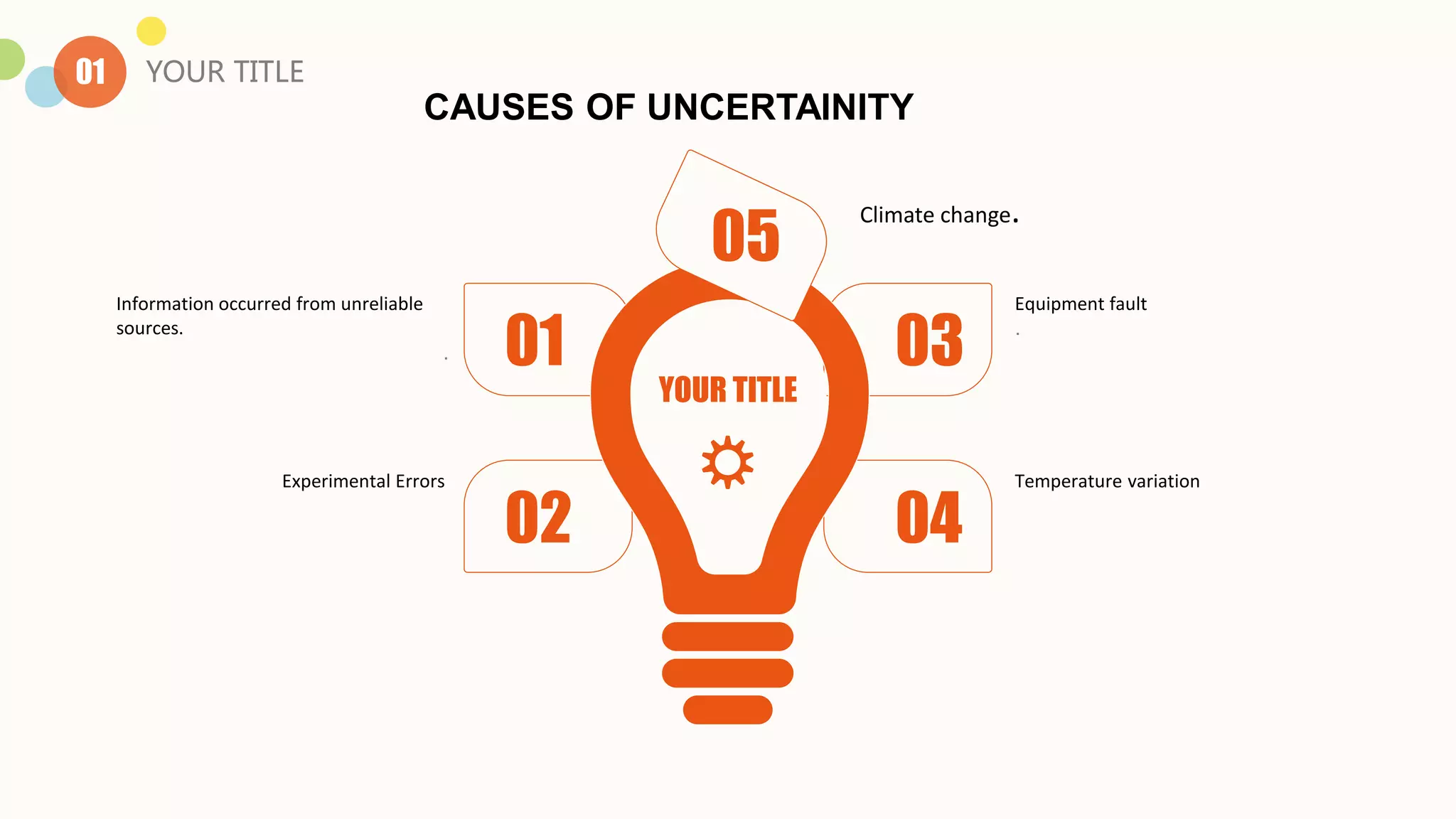
03
Equipment fault
.
04
Temperature variation
01
02
Information occurred from unreliable
sources.
.
Experimental Errors
YOUR TITLE
01 YOUR TITLE
05
Climate change.
CAUSES OF UNCERTAINITY
02
 PROBABILITY REASONING
Probability reasoning
In many problem domains it is not possible to
create complete, consistent models of the
world.Therefore agents and people must act in
uncertain worlds (which the real world is).
Reasons for reasoning probability
• TRUE UNCERTAINITY:flipping a coin.
• THEORATICAL IGNORANCE:There is no complete
theory which is known about the problem E.g. some
peculiar ( ‫)عجیب‬medical diagnosis.
• LAZINESS:The space of relevant factors is very
large,and would require too much work to list the
complete set of antecedents(‫)سابقہ‬.
• Logic deals with certainities while probability deals
with uncertainities.
03
 BAYES’RULE
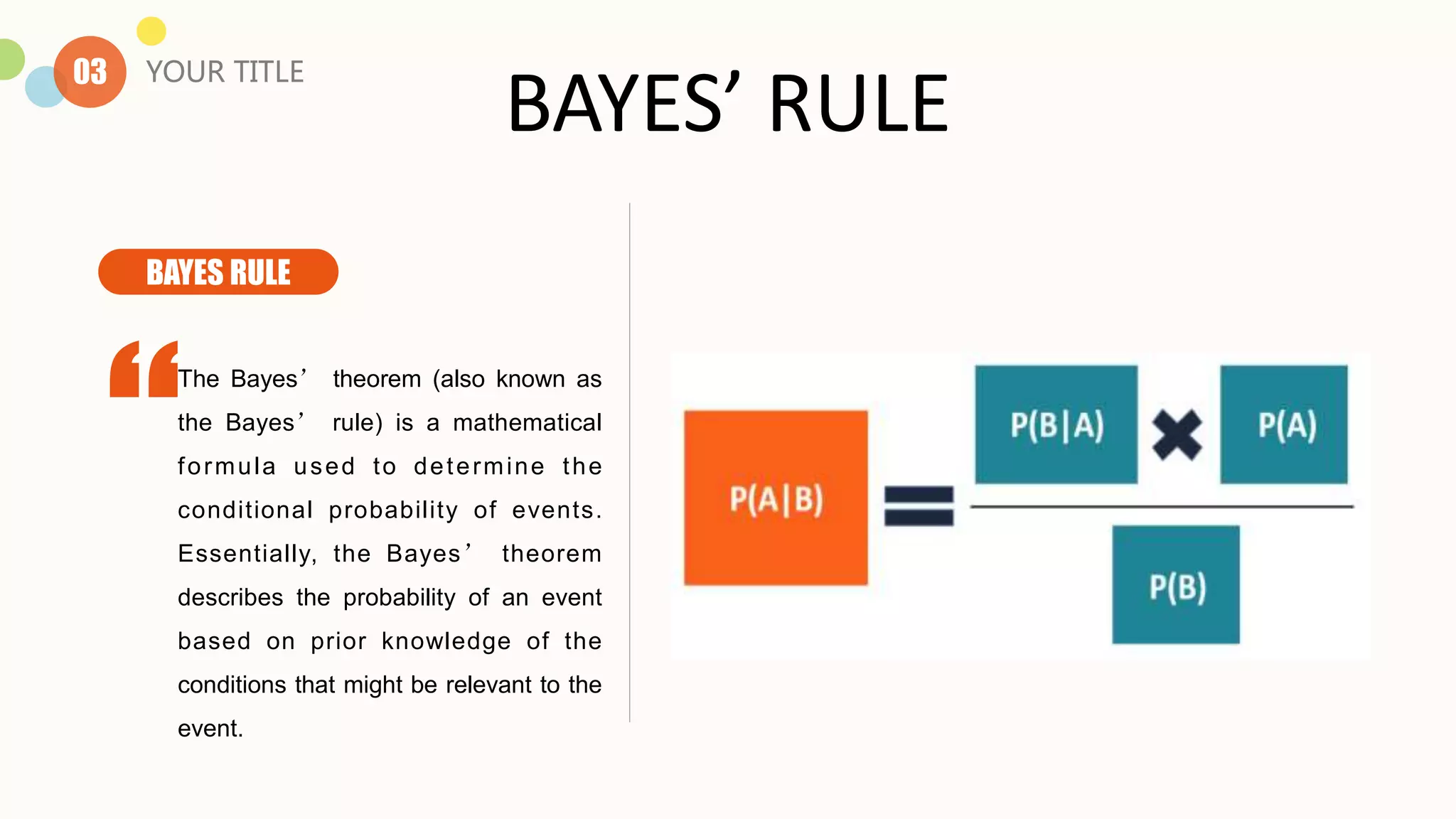
BAYES’ RULE
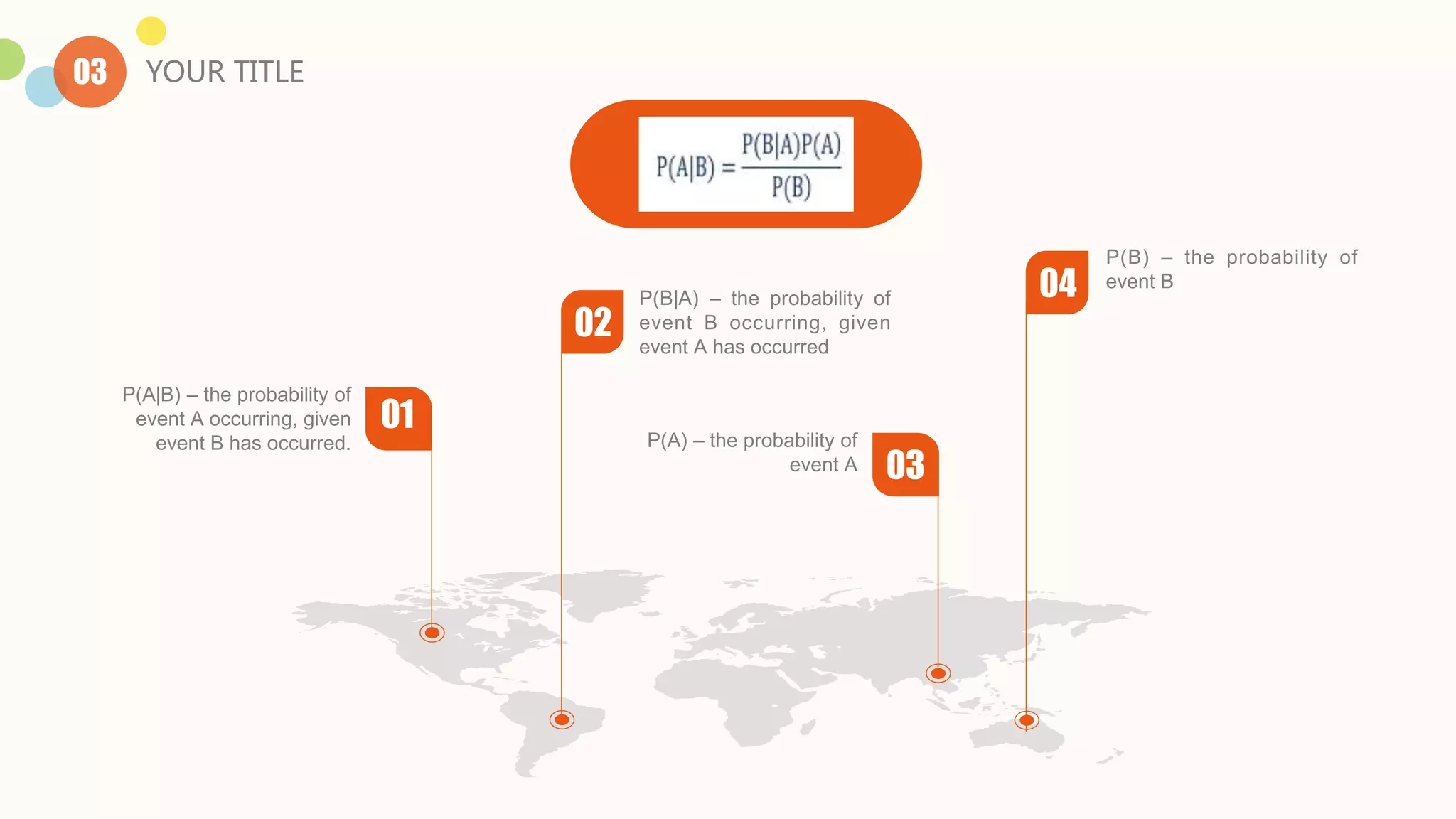
The Bayes’ theorem (also known as
the Bayes’ rule) is a mathematical
formula used to determine the
conditional probability of events.
Essentially, the Bayes’ theorem
describes the probability of an event
based on prior knowledge of the
conditions that might be relevant to the
event.
03 YOUR TITLE
BAYES RULE
03 YOUR TITLE
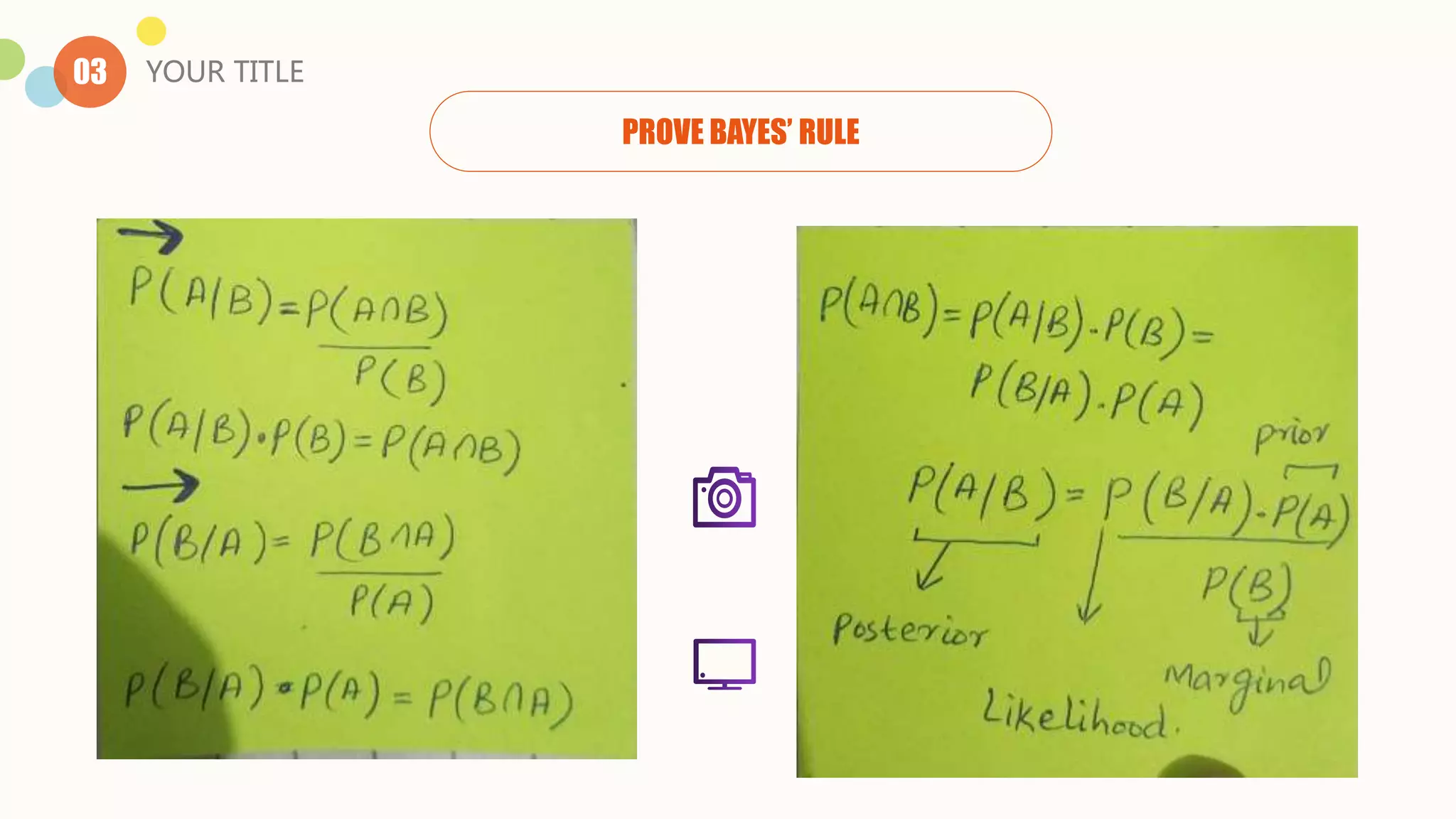
PROVE BAYES’ RULE
01
P(A|B) – the probability of
event A occurring, given
event B has occurred.
02
P(B|A) – the probability of
event B occurring, given
event A has occurred
04
P(B) – the probability of
event B
03
P(A) – the probability of
event A
03 YOUR TITLE
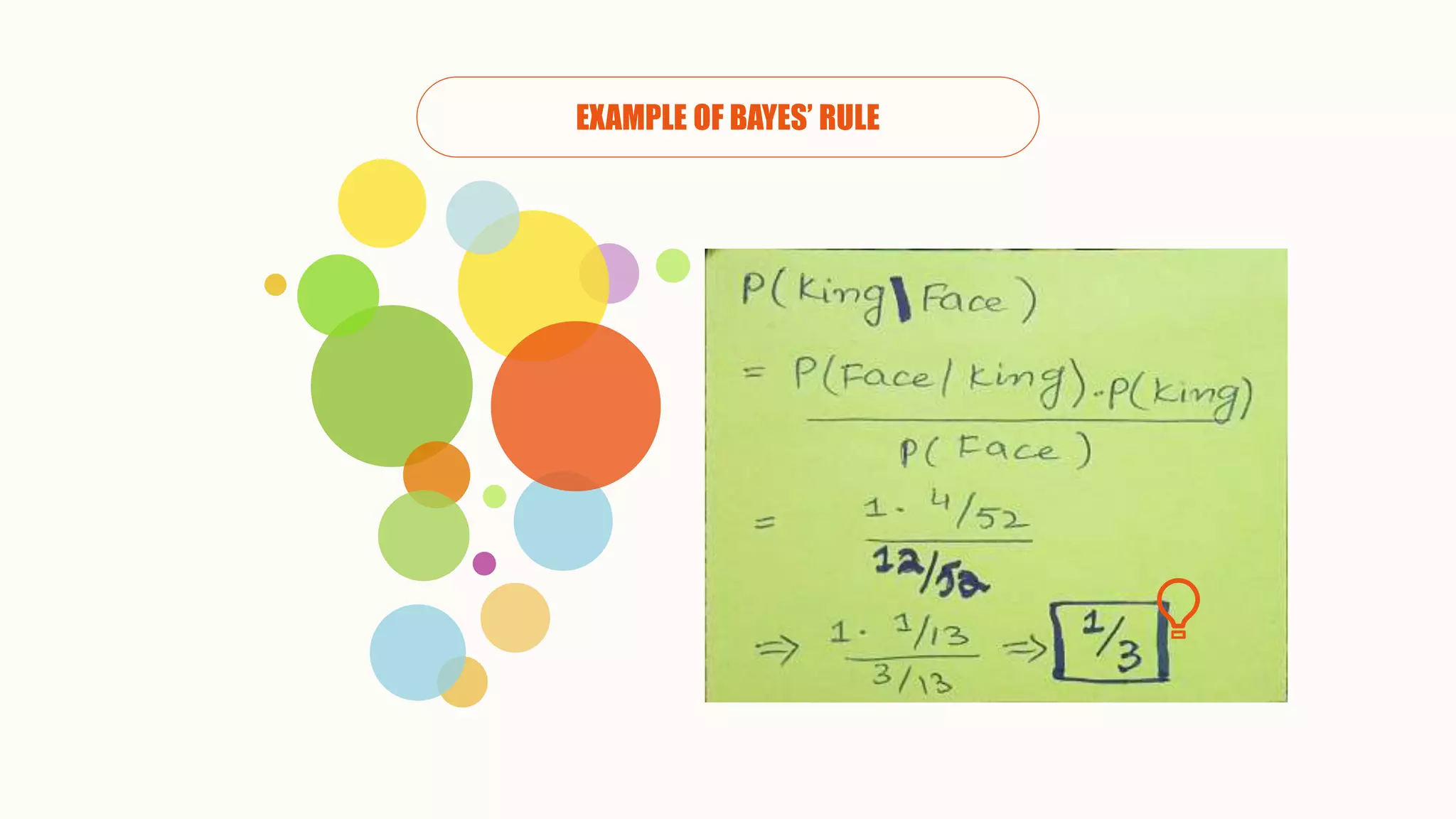
EXAMPLE OF BAYES’ RULE
04
 PROBABILITY
Probability:-
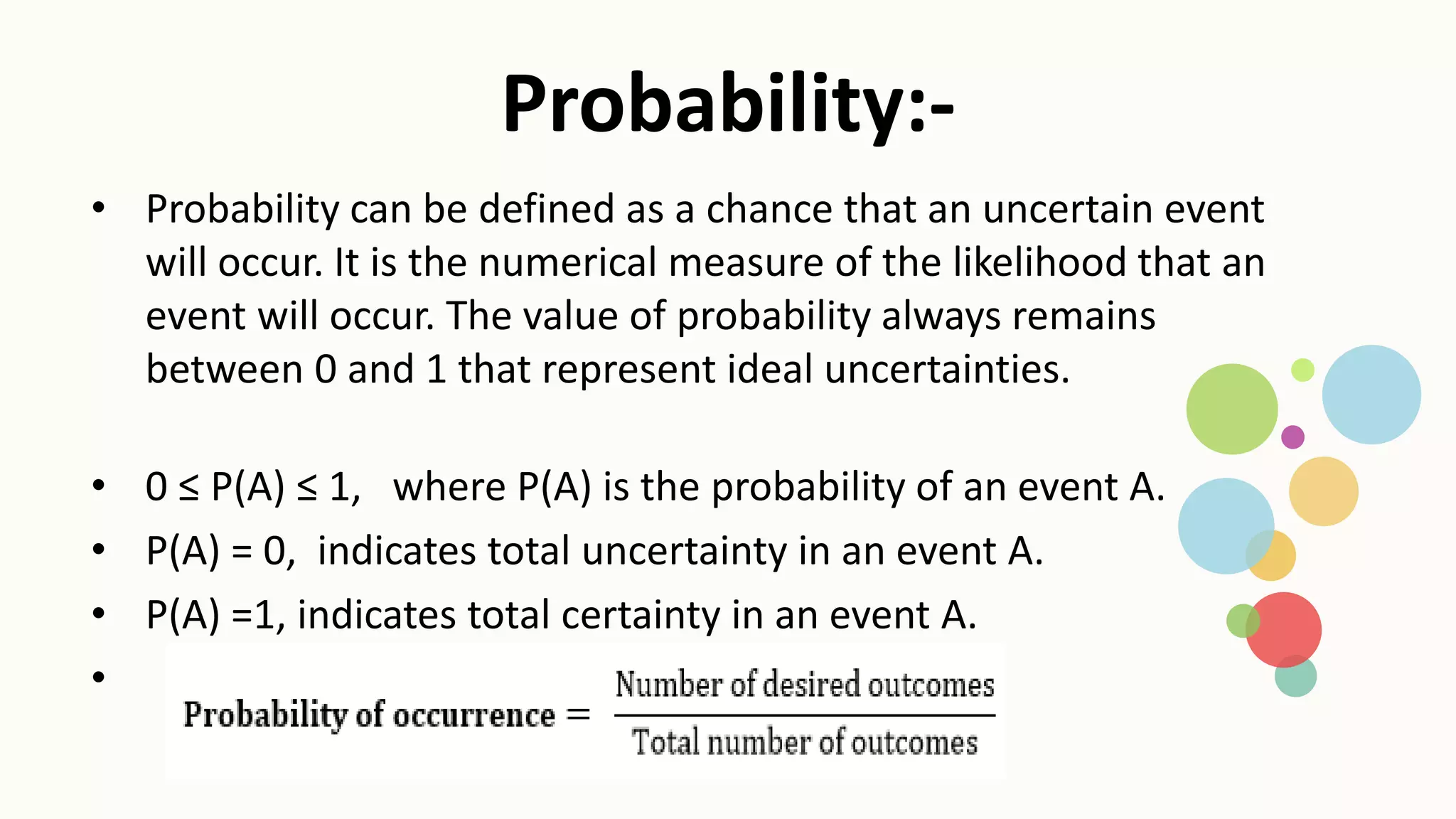
• Probability can be defined as a chance that an uncertain event
will occur. It is the numerical measure of the likelihood that an
event will occur. The value of probability always remains
between 0 and 1 that represent ideal uncertainties.
• 0 ≤ P(A) ≤ 1, where P(A) is the probability of an event A.
• P(A) = 0, indicates total uncertainty in an event A.
• P(A) =1, indicates total certainty in an event A.
•
• Event: Each possible outcome of a variable is called an event.
• Sample space: The collection of all possible events is called sample space.
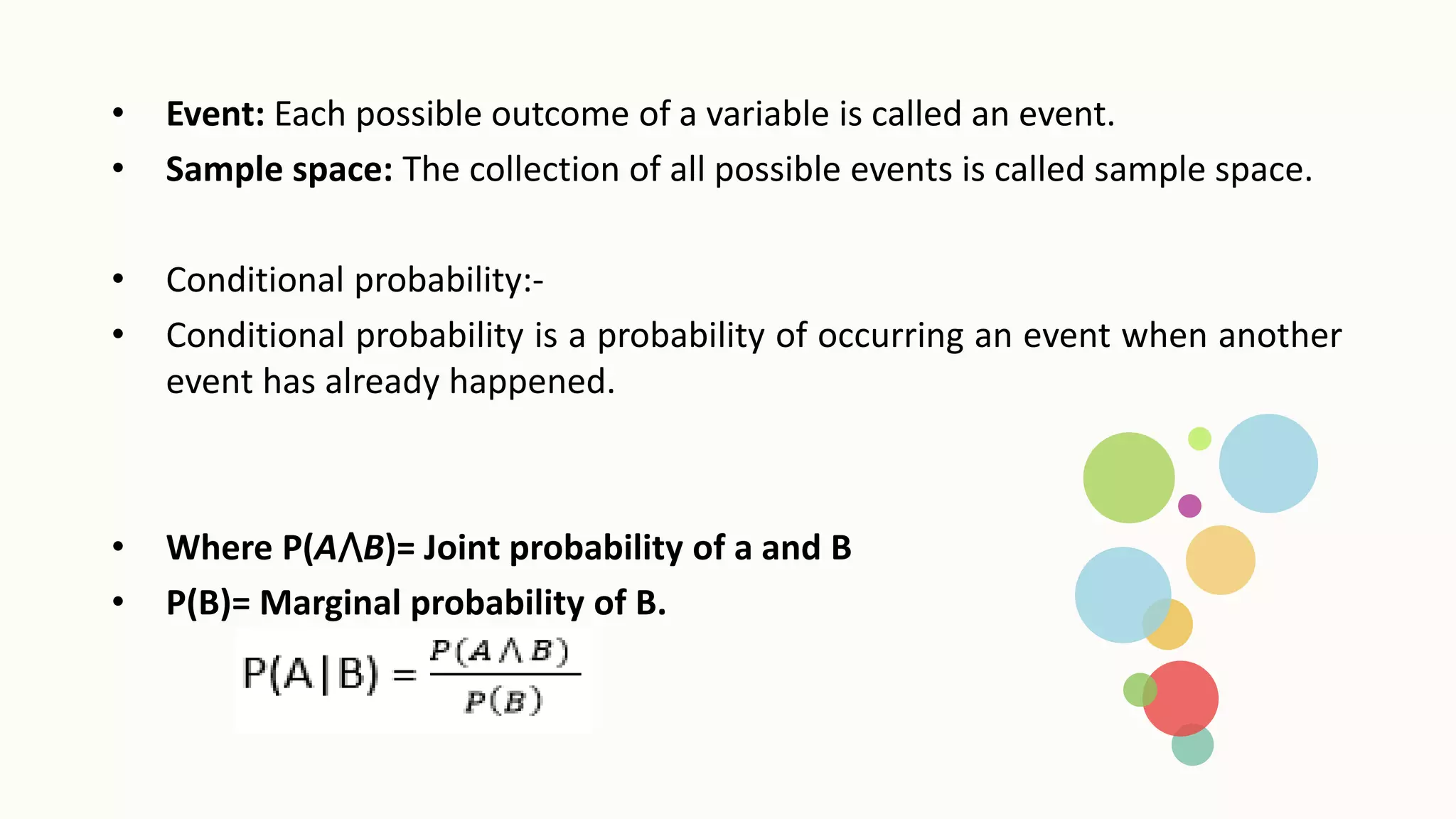
• Conditional probability:-
• Conditional probability is a probability of occurring an event when another
event has already happened.
• Where P(A⋀B)= Joint probability of a and B
• P(B)= Marginal probability of B.
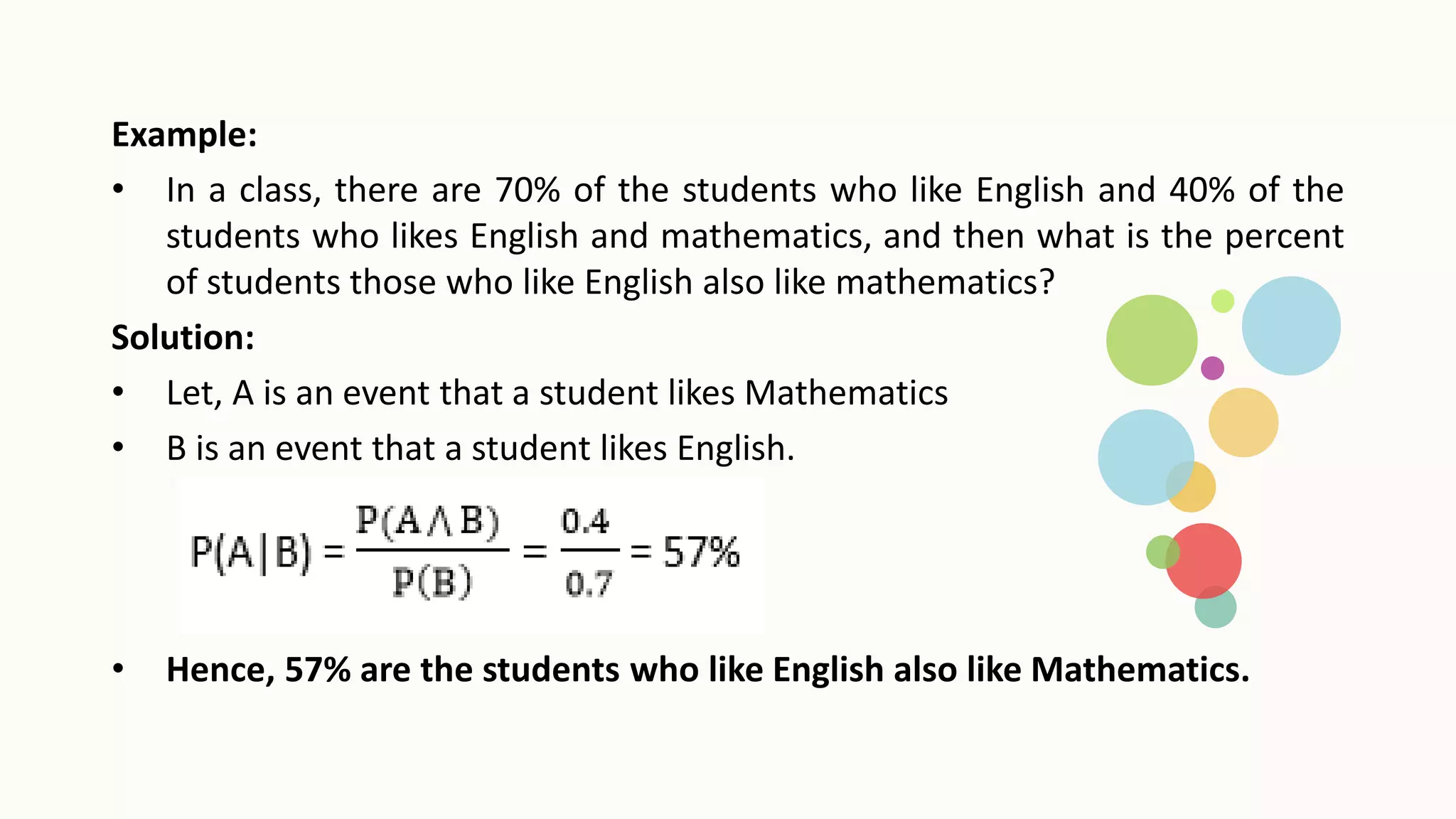
Example:
• In a class, there are 70% of the students who like English and 40% of the
students who likes English and mathematics, and then what is the percent
of students those who like English also like mathematics?
Solution:
• Let, A is an event that a student likes Mathematics
• B is an event that a student likes English.
• Hence, 57% are the students who like English also like Mathematics.
05
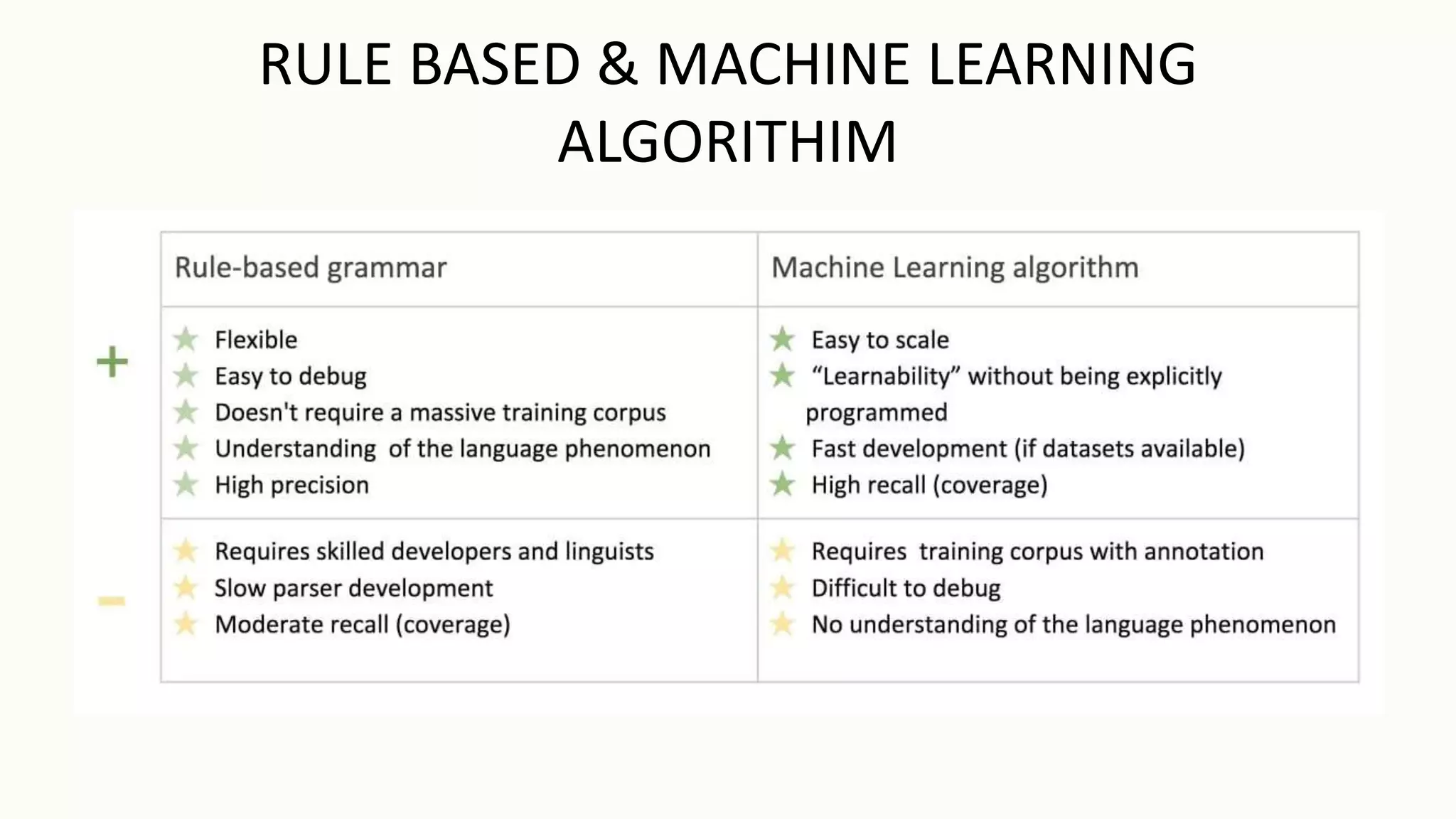
 RULE BASED AND MACHINE LEARNING
RULE BASED & MACHINE LEARNING
ALGORITHIM
06
 FARWORD PROBABILITY
 BACKWARD PROBABILITY
THANK YOU!
T H A N K Y O U F O R W A T C H I N G

probability reasoning

  • 1.
  • 2.
    contents 01 UNCERTAINITY CAUSE OFUNCERTENTAINTY 02 03 PROBABILITY REASONING NEED OF PROBABLITY REASONING 04 CONDITIONAL PROBABILITY 05 RULE BASED IN AI AND MACHINE LEARNING RULES OF PROBABILITY REASONING 06 REASONING TYPES
  • 3.
  • 4.
    Uncertainty: • Till now,we have learned knowledge representation using first-order logic and propositional logic with certainty, which means we were sure about the predicates. With this knowledge representation, we might write A→B, which means if A is true then B is true, but consider a situation where we are not sure about whether A is true or not then we cannot express this statement, this situation is called uncertainty. • So to represent uncertain knowledge, where we are not sure about the predicates, we need uncertain reasoning or probabilistic reasoning.
  • 5.
    03 Equipment fault . 04 Temperature variation 01 02 Informationoccurred from unreliable sources. . Experimental Errors YOUR TITLE 01 YOUR TITLE 05 Climate change. CAUSES OF UNCERTAINITY
  • 6.
  • 7.
    Probability reasoning In manyproblem domains it is not possible to create complete, consistent models of the world.Therefore agents and people must act in uncertain worlds (which the real world is).
  • 8.
    Reasons for reasoningprobability • TRUE UNCERTAINITY:flipping a coin. • THEORATICAL IGNORANCE:There is no complete theory which is known about the problem E.g. some peculiar ( ‫)عجیب‬medical diagnosis. • LAZINESS:The space of relevant factors is very large,and would require too much work to list the complete set of antecedents(‫)سابقہ‬. • Logic deals with certainities while probability deals with uncertainities.
  • 9.
  • 10.
    BAYES’ RULE The Bayes’theorem (also known as the Bayes’ rule) is a mathematical formula used to determine the conditional probability of events. Essentially, the Bayes’ theorem describes the probability of an event based on prior knowledge of the conditions that might be relevant to the event. 03 YOUR TITLE BAYES RULE
  • 11.
    03 YOUR TITLE PROVEBAYES’ RULE
  • 12.
    01 P(A|B) – theprobability of event A occurring, given event B has occurred. 02 P(B|A) – the probability of event B occurring, given event A has occurred 04 P(B) – the probability of event B 03 P(A) – the probability of event A 03 YOUR TITLE
  • 13.
  • 14.
  • 15.
    Probability:- • Probability canbe defined as a chance that an uncertain event will occur. It is the numerical measure of the likelihood that an event will occur. The value of probability always remains between 0 and 1 that represent ideal uncertainties. • 0 ≤ P(A) ≤ 1, where P(A) is the probability of an event A. • P(A) = 0, indicates total uncertainty in an event A. • P(A) =1, indicates total certainty in an event A. •
  • 16.
    • Event: Eachpossible outcome of a variable is called an event. • Sample space: The collection of all possible events is called sample space. • Conditional probability:- • Conditional probability is a probability of occurring an event when another event has already happened. • Where P(A⋀B)= Joint probability of a and B • P(B)= Marginal probability of B.
  • 17.
    Example: • In aclass, there are 70% of the students who like English and 40% of the students who likes English and mathematics, and then what is the percent of students those who like English also like mathematics? Solution: • Let, A is an event that a student likes Mathematics • B is an event that a student likes English. • Hence, 57% are the students who like English also like Mathematics.
  • 18.
    05  RULE BASEDAND MACHINE LEARNING
  • 19.
    RULE BASED &MACHINE LEARNING ALGORITHIM
  • 20.
    06  FARWORD PROBABILITY BACKWARD PROBABILITY
  • 23.
    THANK YOU! T HA N K Y O U F O R W A T C H I N G