Public Relations
Management and
Leadership-Power
Dr. Mary Ann Pearson
PRL 560
Public Relations
Management and
Leadership
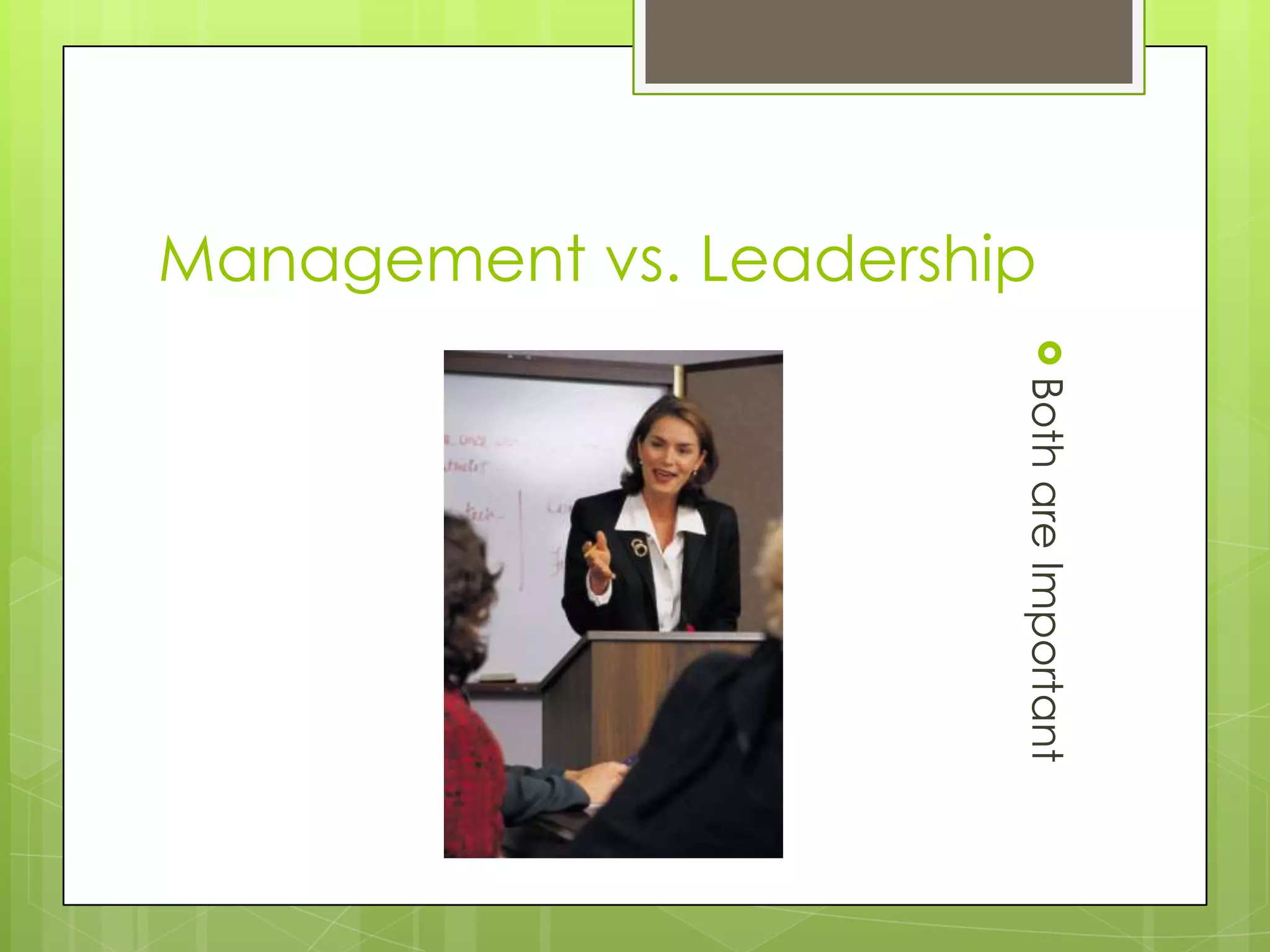
Management vs. Leadership
BothareImportant
Peter Northouse
Box 1.1 In Northouse book explains the evolution of
leadership.
Leadership is a process whereby an individual
influences a group of individuals to achieve a
common goal.
Assigned vs. emergent leadership- some people are
leaders because they are assigned the job of
leading. Others are leaders because of the way
members respond to them.
Formal Power
Coercive
Coercive power is conveyed through fear of losing one’s job, being demoted,
receiving a poor performance review, having prime projects taken away, etc.
This power is gotten through threatening others. For example, the VP of Sales
who threatens sales folks to meet their goals or get replaced.
Reward
Reward power is conveyed through rewarding individuals for
compliance with one’s wishes. This may be done through
giving bonuses, raises, a promotion, extra time off from work,
etc. For example, the supervisor who provides employees
comp time when they meet an objective she sets for a
project.
Legitimate
Legitimate power comes from having a position of power in
an organization, such as being the boss or a key member of a
leadership team. This power comes when employees in the
organization recognize the authority of the individual. For
example, the CEO who determines the overall direction of
the company and the resource needs of the company.
Personal Power
Expert
Expert power comes from one’s experiences, skills or knowledge. As
we gain experience in particular areas, and become thought leaders
in those areas, we begin to gather expert power that can be utilized
to get others to help us meet our goals. For example, the Project
Manager who is an expert at solving particularly challenging
problems to ensure a project stays on track.
Referent
Referent power comes from being trusted and
respected. We can gain referent power when others trust
what we do and respect us for how we handle situations. For
example, the Human Resource Associate who is known for
ensuring employees are treated fairly and coming to the
rescue of those who are not.
References:Northouse, P. (2013). Leadership. (Sixth
ed.). Los Angeles, Ca.: Sage.

Prl 560 leadership

  • 1.
    Public Relations Management and Leadership-Power Dr.Mary Ann Pearson PRL 560 Public Relations Management and Leadership
  • 2.
  • 3.
    Peter Northouse Box 1.1In Northouse book explains the evolution of leadership. Leadership is a process whereby an individual influences a group of individuals to achieve a common goal. Assigned vs. emergent leadership- some people are leaders because they are assigned the job of leading. Others are leaders because of the way members respond to them.
  • 4.
    Formal Power Coercive Coercive poweris conveyed through fear of losing one’s job, being demoted, receiving a poor performance review, having prime projects taken away, etc. This power is gotten through threatening others. For example, the VP of Sales who threatens sales folks to meet their goals or get replaced.
  • 5.
    Reward Reward power isconveyed through rewarding individuals for compliance with one’s wishes. This may be done through giving bonuses, raises, a promotion, extra time off from work, etc. For example, the supervisor who provides employees comp time when they meet an objective she sets for a project.
  • 6.
    Legitimate Legitimate power comesfrom having a position of power in an organization, such as being the boss or a key member of a leadership team. This power comes when employees in the organization recognize the authority of the individual. For example, the CEO who determines the overall direction of the company and the resource needs of the company.
  • 7.
    Personal Power Expert Expert powercomes from one’s experiences, skills or knowledge. As we gain experience in particular areas, and become thought leaders in those areas, we begin to gather expert power that can be utilized to get others to help us meet our goals. For example, the Project Manager who is an expert at solving particularly challenging problems to ensure a project stays on track.
  • 8.
    Referent Referent power comesfrom being trusted and respected. We can gain referent power when others trust what we do and respect us for how we handle situations. For example, the Human Resource Associate who is known for ensuring employees are treated fairly and coming to the rescue of those who are not.
  • 9.
    References:Northouse, P. (2013).Leadership. (Sixth ed.). Los Angeles, Ca.: Sage.