Principles of Secure System Design
John Scrimsher
CISO / Head of IT @ Damballa
jps@damballa.com
This is a unique presentation of non-unique ideas
›Information gathered from multiple sources, including speakers own experiences
›Todd Merritt: https://dzone.com/articles/9-software-security-design
›Gary McGraw: http://searchsecurity.techtarget.com/opinion/Thirteen-principles-to-ensure-
enterprise-system-security
›Google: Principles of Secure System Design
The Buzz
Initial Considerations
› Start with the weakest link
› Do not trust by default
› Assume secrets are not safe
› Assume network is dirty
› Ask for help / borrow others ideas
9 Primary Principles of Secure System Design
1. Principle of Least Authority
2. Fail Securely
3. Economy of mechanism (KISS Principle)
4. Mediate Completely
5. Open Design (vs. security by obscurity)
6. Separation of Duties / Privileges
7. Least Common Mechanism
8. Psychological Acceptability
9. Defense in Depth
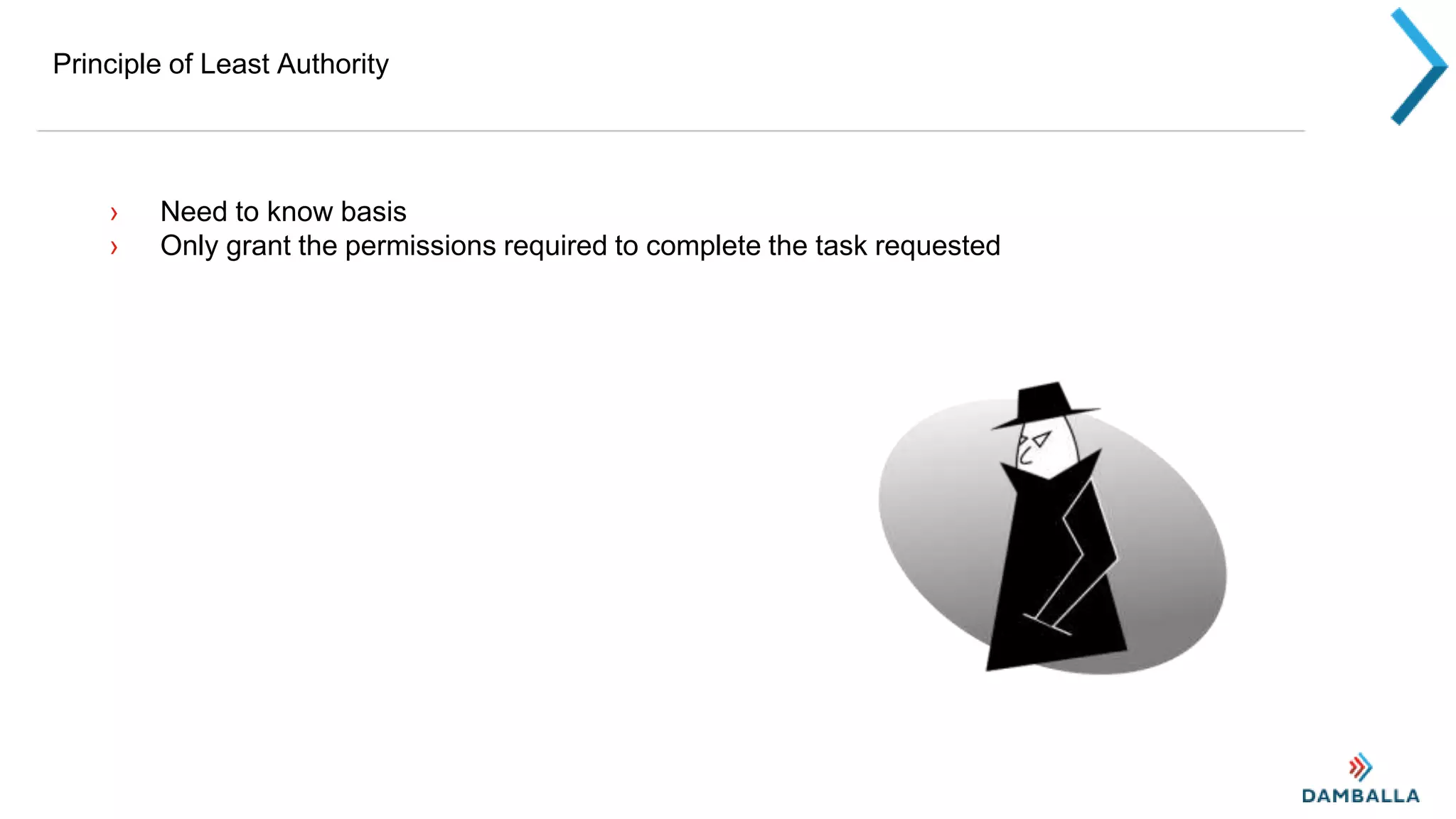
Principle of Least Authority
› Need to know basis
› Only grant the permissions required to complete the task requested
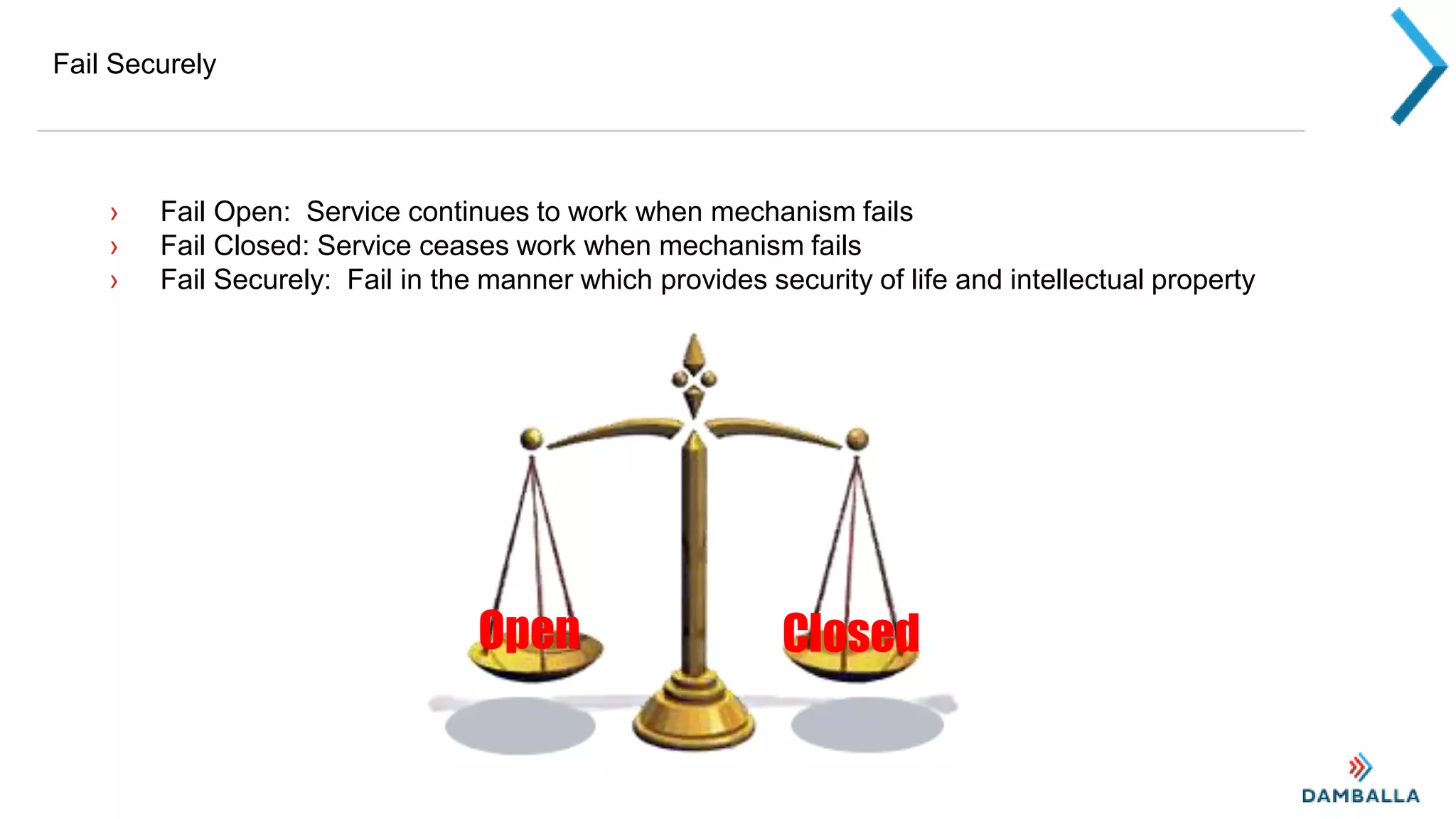
Fail Securely
› Fail Open: Service continues to work when mechanism fails
› Fail Closed: Service ceases work when mechanism fails
› Fail Securely: Fail in the manner which provides security of life and intellectual property
Open Closed
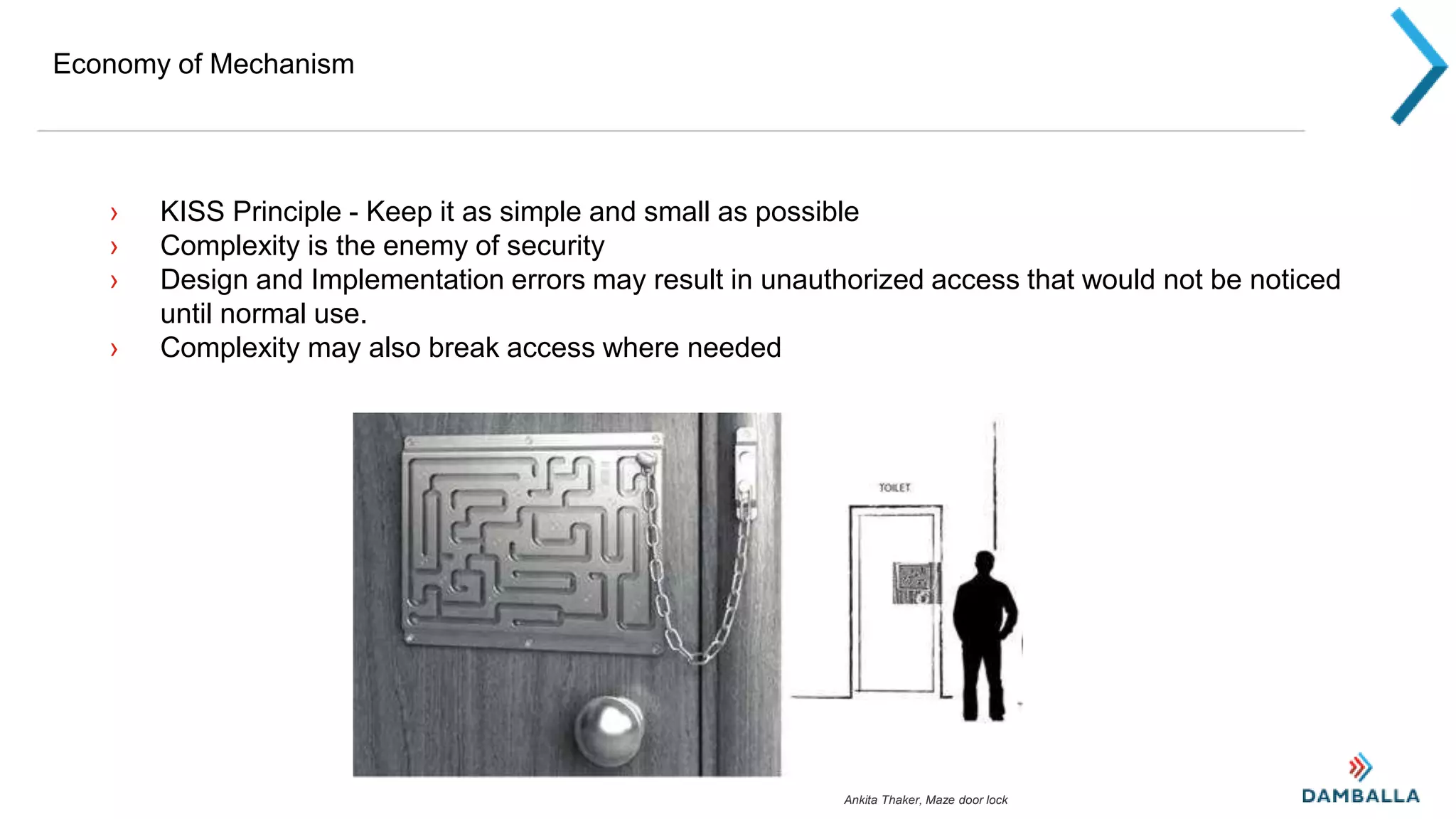
Economy of Mechanism
› KISS Principle - Keep it as simple and small as possible
› Complexity is the enemy of security
› Design and Implementation errors may result in unauthorized access that would not be noticed
until normal use.
› Complexity may also break access where needed
Ankita Thaker, Maze door lock
Mediate Completely
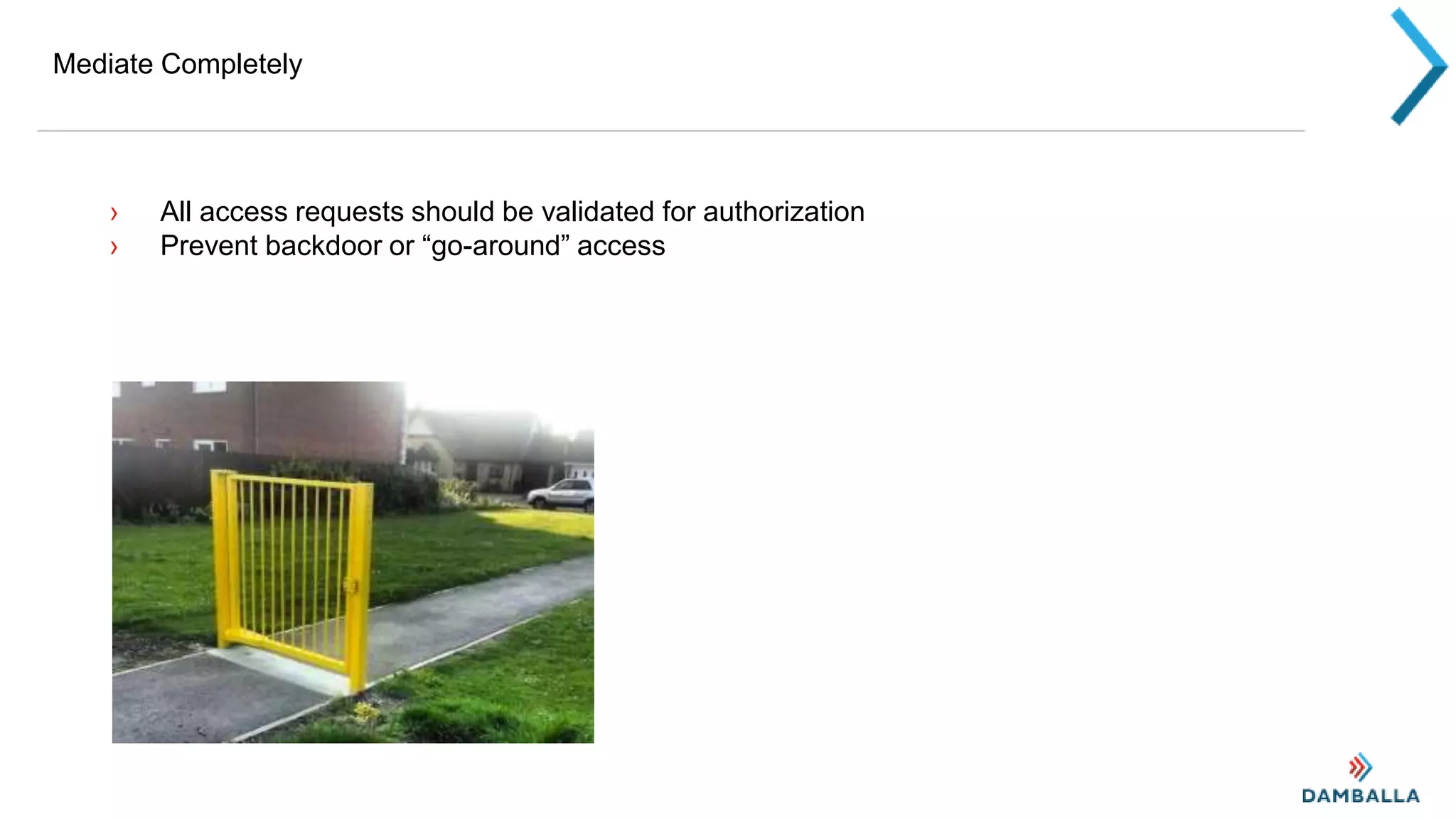
› All access requests should be validated for authorization
› Prevent backdoor or “go-around” access
Psychological Acceptability
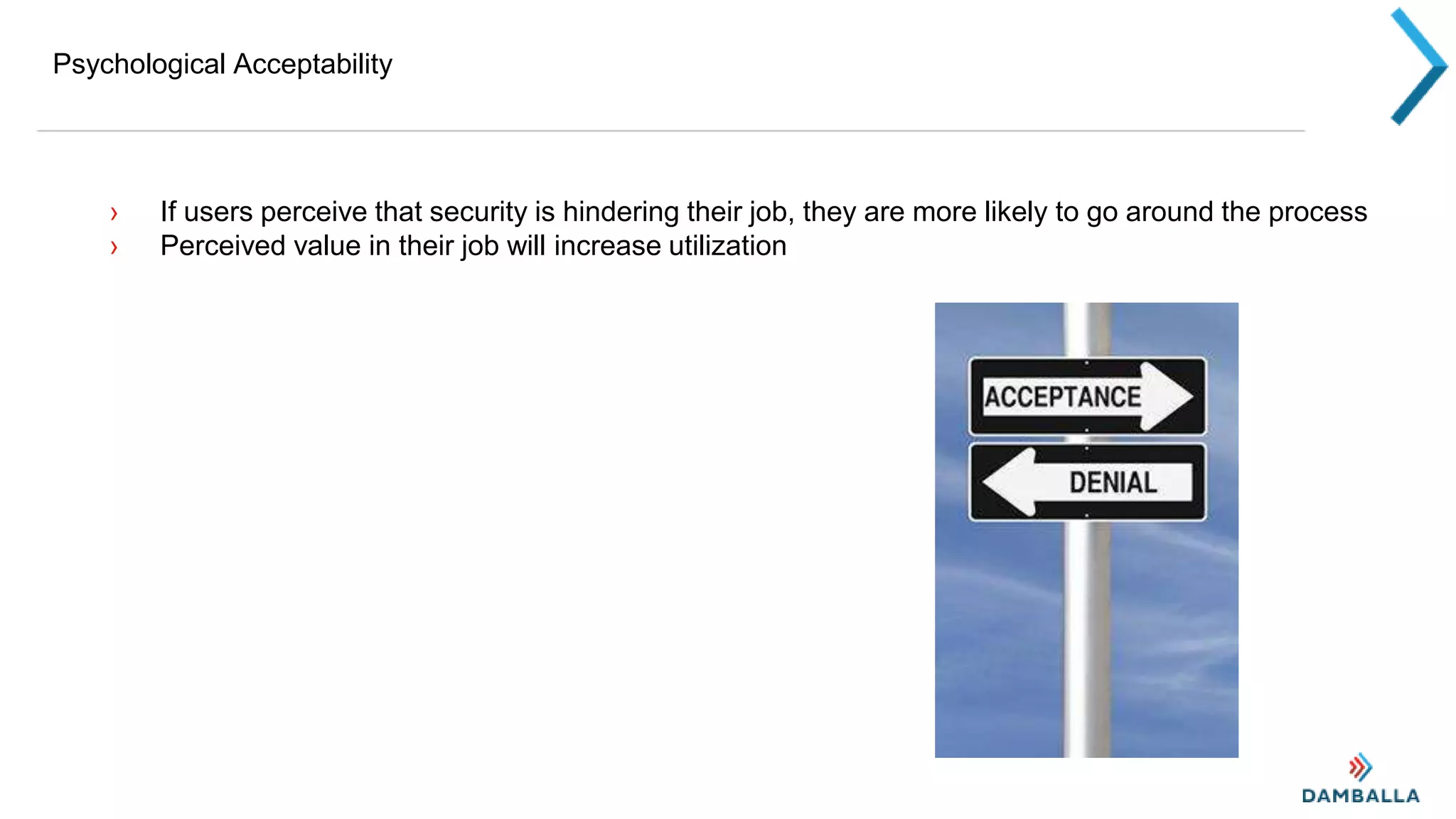
› If users perceive that security is hindering their job, they are more likely to go around the process
› Perceived value in their job will increase utilization
Open Design
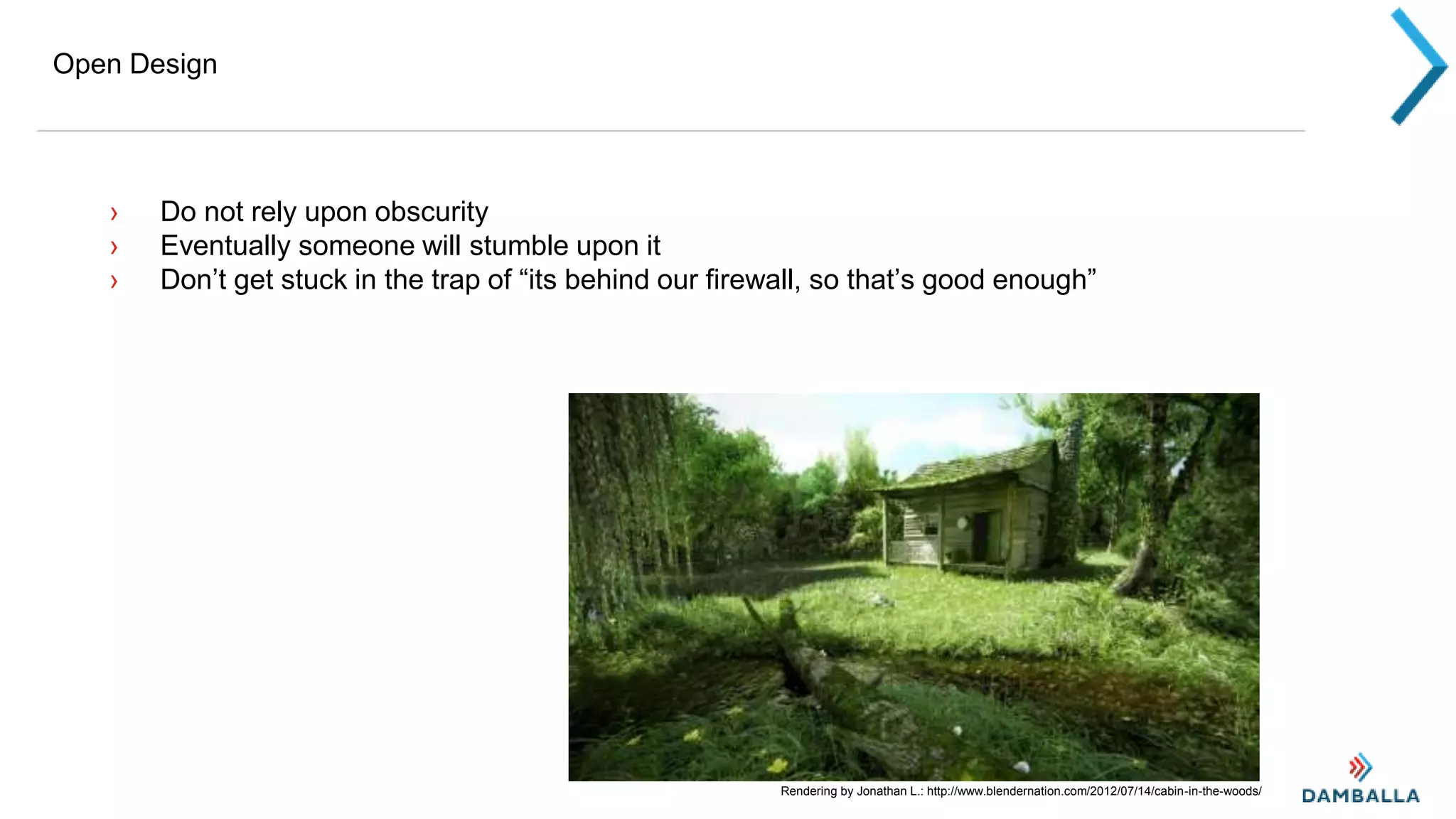
› Do not rely upon obscurity
› Eventually someone will stumble upon it
› Don’t get stuck in the trap of “its behind our firewall, so that’s good enough”
Rendering by Jonathan L.: http://www.blendernation.com/2012/07/14/cabin-in-the-woods/
Separation of Duties / Privileges
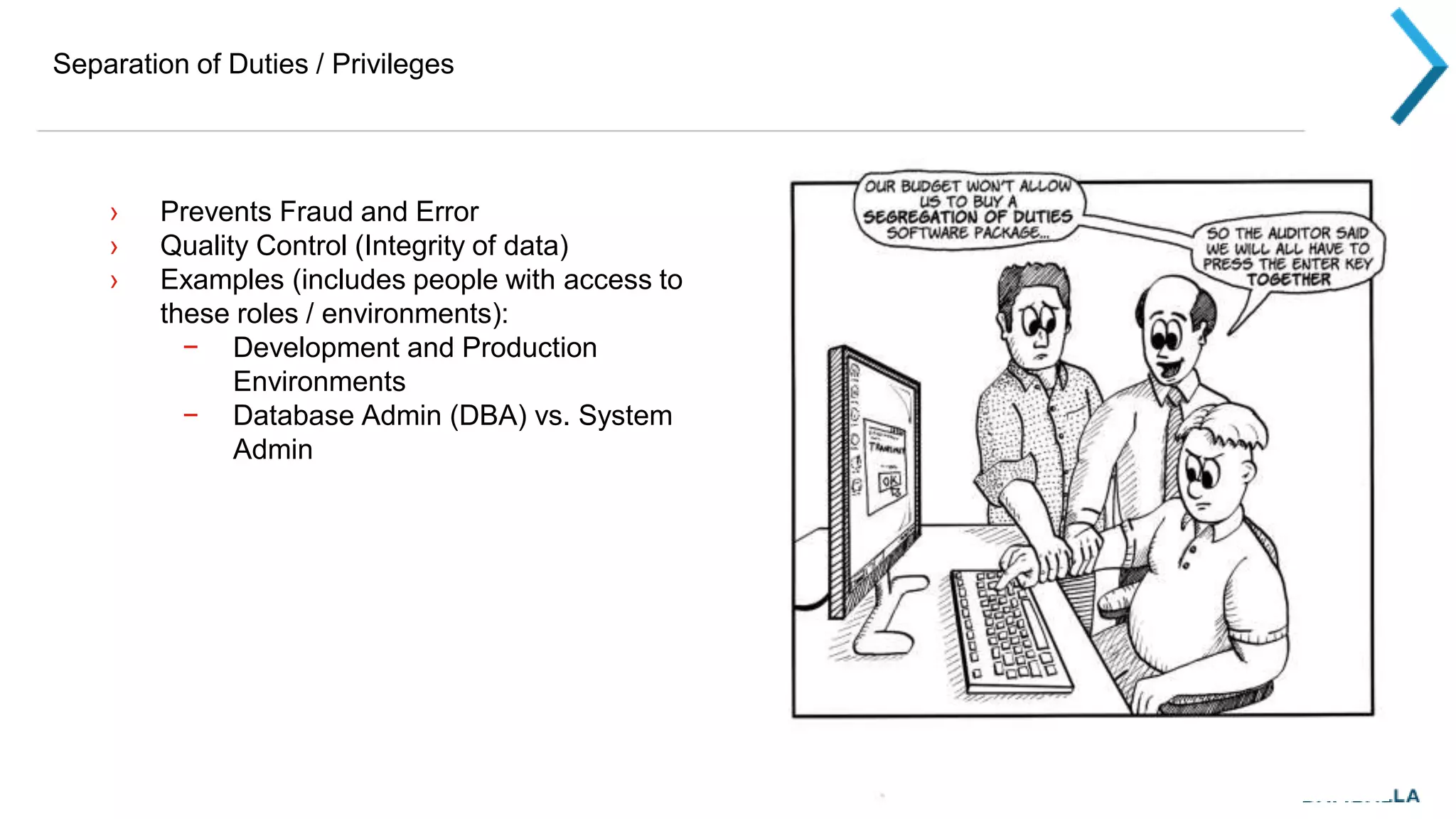
› Prevents Fraud and Error
› Quality Control (Integrity of data)
› Examples (includes people with access to
these roles / environments):
− Development and Production
Environments
− Database Admin (DBA) vs. System
Admin
Least Common Mechanism
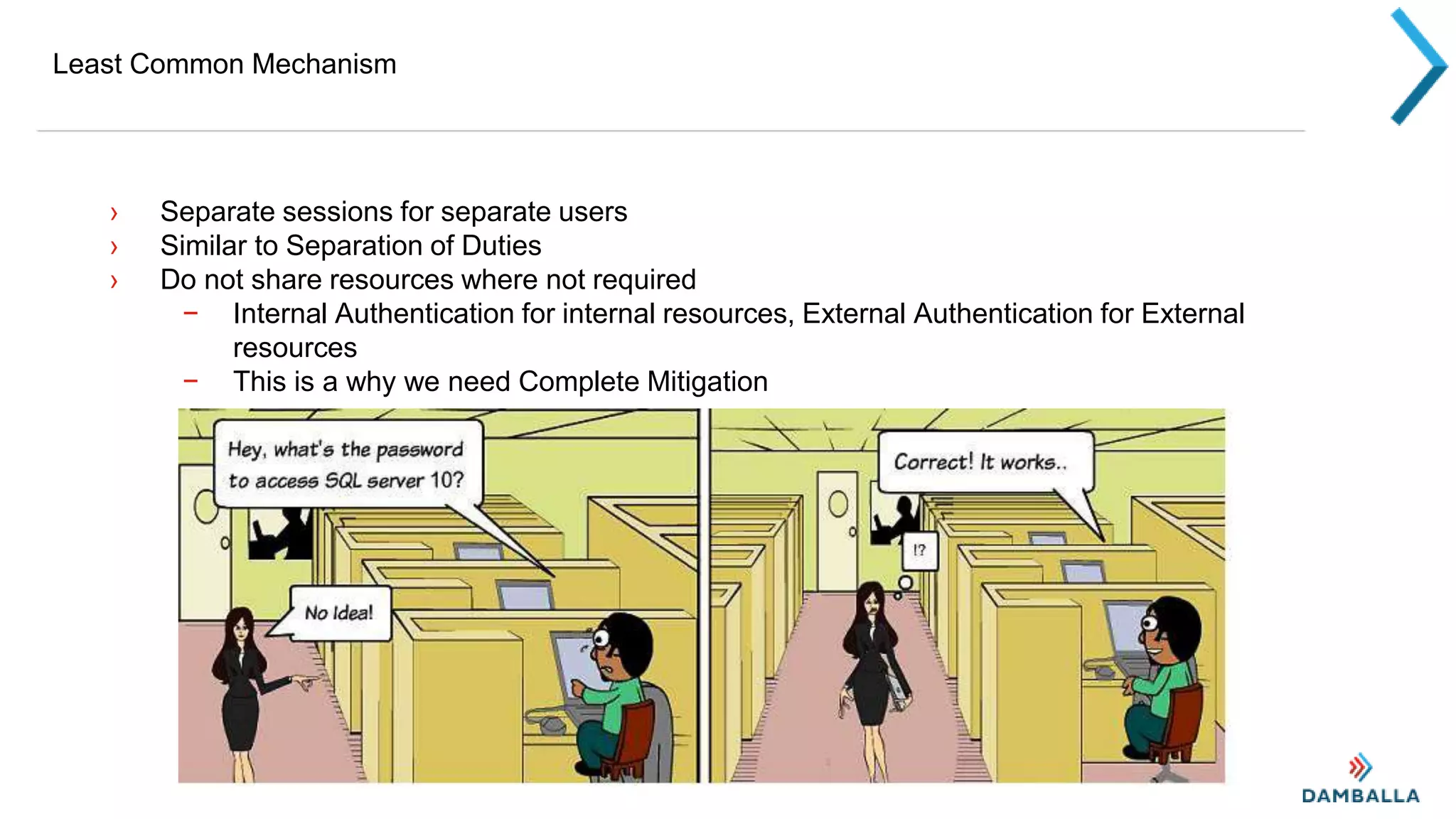
› Separate sessions for separate users
› Similar to Separation of Duties
› Do not share resources where not required
− Internal Authentication for internal resources, External Authentication for External
resources
− This is a why we need Complete Mitigation
Defense In Depth
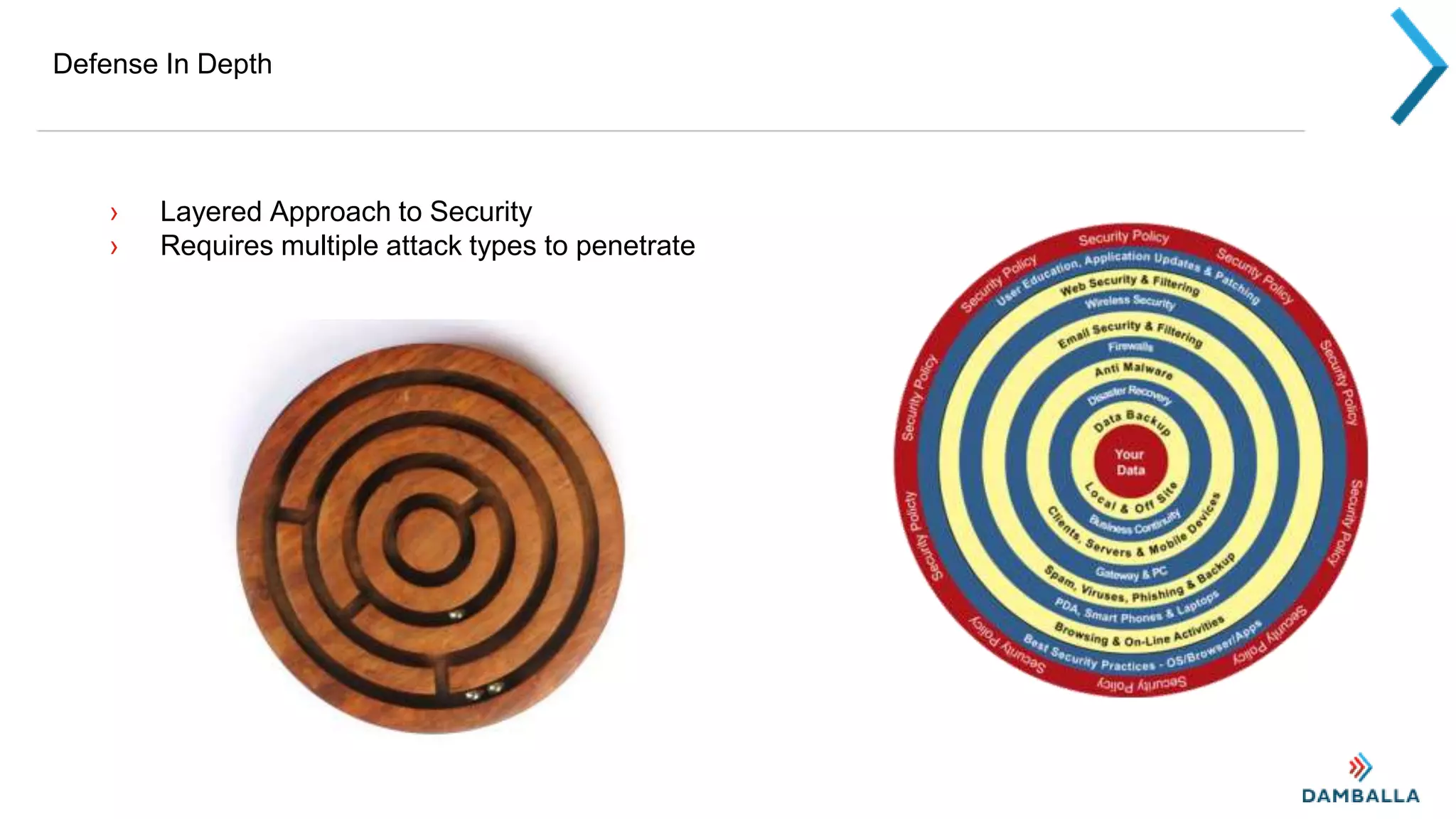
› Layered Approach to Security
› Requires multiple attack types to penetrate
9 Primary Principles of Secure System Design
1. Principle of Least Authority
2. Fail Securely
3. Economy of mechanism (KISS Principle)
4. Mediate Completely
5. Open Design (vs. security by obscurity)
6. Separation of Duties / Privileges
7. Least Common Mechanism
8. Psychological Acceptability
9. Defense in Depth
Whats Missing?
›Password Management
›Two Factor Authentication
›Encryption
›Data In Motion vs. At Rest
›I am sure you can think of more….
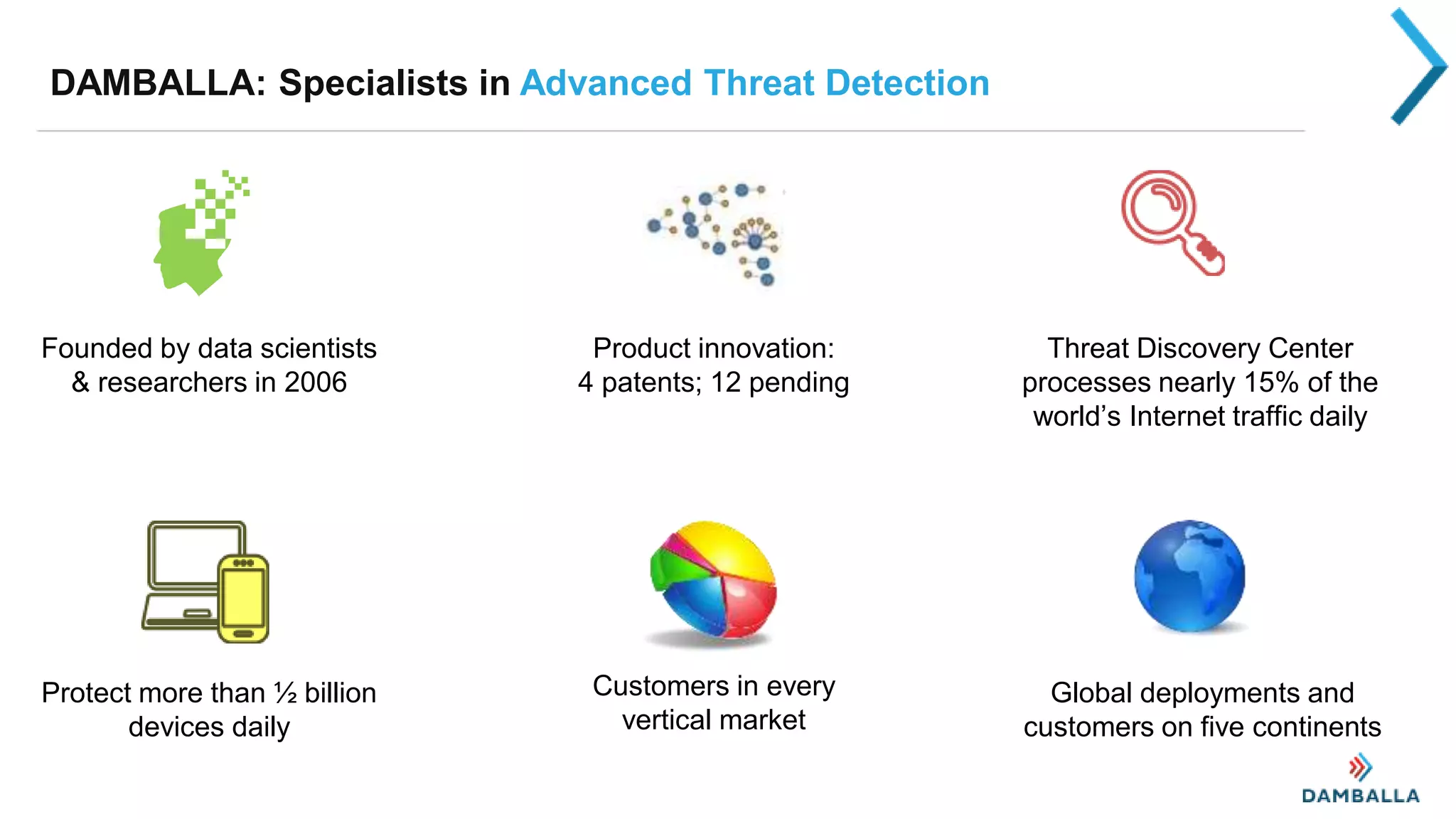
Threat Discovery Center
processes nearly 15% of the
world’s Internet traffic daily
Protect more than ½ billion
devices daily
Founded by data scientists
& researchers in 2006
DAMBALLA: Specialists in Advanced Threat Detection
Product innovation:
4 patents; 12 pending
Global deployments and
customers on five continents
Customers in every
vertical market
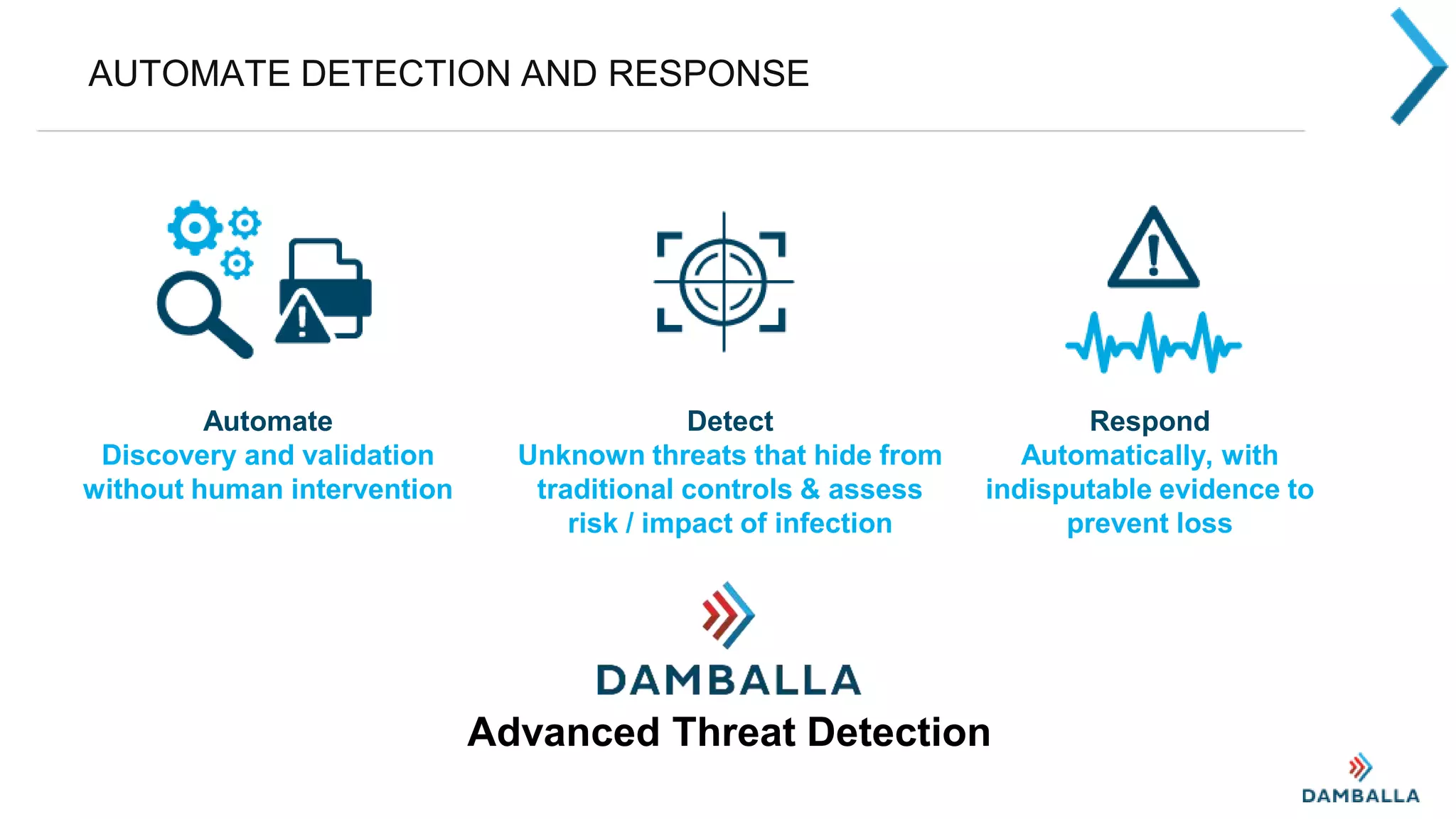
AUTOMATE DETECTION AND RESPONSE
Advanced Threat Detection
Automate
Discovery and validation
without human intervention
Detect
Unknown threats that hide from
traditional controls & assess
risk / impact of infection
Respond
Automatically, with
indisputable evidence to
prevent loss

Principles of secure system design

  • 1.
    Principles of SecureSystem Design John Scrimsher CISO / Head of IT @ Damballa jps@damballa.com
  • 2.
    This is aunique presentation of non-unique ideas ›Information gathered from multiple sources, including speakers own experiences ›Todd Merritt: https://dzone.com/articles/9-software-security-design ›Gary McGraw: http://searchsecurity.techtarget.com/opinion/Thirteen-principles-to-ensure- enterprise-system-security ›Google: Principles of Secure System Design
  • 3.
  • 4.
    Initial Considerations › Startwith the weakest link › Do not trust by default › Assume secrets are not safe › Assume network is dirty › Ask for help / borrow others ideas
  • 5.
    9 Primary Principlesof Secure System Design 1. Principle of Least Authority 2. Fail Securely 3. Economy of mechanism (KISS Principle) 4. Mediate Completely 5. Open Design (vs. security by obscurity) 6. Separation of Duties / Privileges 7. Least Common Mechanism 8. Psychological Acceptability 9. Defense in Depth
  • 6.
    Principle of LeastAuthority › Need to know basis › Only grant the permissions required to complete the task requested
  • 7.
    Fail Securely › FailOpen: Service continues to work when mechanism fails › Fail Closed: Service ceases work when mechanism fails › Fail Securely: Fail in the manner which provides security of life and intellectual property Open Closed
  • 8.
    Economy of Mechanism ›KISS Principle - Keep it as simple and small as possible › Complexity is the enemy of security › Design and Implementation errors may result in unauthorized access that would not be noticed until normal use. › Complexity may also break access where needed Ankita Thaker, Maze door lock
  • 9.
    Mediate Completely › Allaccess requests should be validated for authorization › Prevent backdoor or “go-around” access
  • 10.
    Psychological Acceptability › Ifusers perceive that security is hindering their job, they are more likely to go around the process › Perceived value in their job will increase utilization
  • 11.
    Open Design › Donot rely upon obscurity › Eventually someone will stumble upon it › Don’t get stuck in the trap of “its behind our firewall, so that’s good enough” Rendering by Jonathan L.: http://www.blendernation.com/2012/07/14/cabin-in-the-woods/
  • 12.
    Separation of Duties/ Privileges › Prevents Fraud and Error › Quality Control (Integrity of data) › Examples (includes people with access to these roles / environments): − Development and Production Environments − Database Admin (DBA) vs. System Admin
  • 13.
    Least Common Mechanism ›Separate sessions for separate users › Similar to Separation of Duties › Do not share resources where not required − Internal Authentication for internal resources, External Authentication for External resources − This is a why we need Complete Mitigation
  • 14.
    Defense In Depth ›Layered Approach to Security › Requires multiple attack types to penetrate
  • 15.
    9 Primary Principlesof Secure System Design 1. Principle of Least Authority 2. Fail Securely 3. Economy of mechanism (KISS Principle) 4. Mediate Completely 5. Open Design (vs. security by obscurity) 6. Separation of Duties / Privileges 7. Least Common Mechanism 8. Psychological Acceptability 9. Defense in Depth
  • 16.
    Whats Missing? ›Password Management ›TwoFactor Authentication ›Encryption ›Data In Motion vs. At Rest ›I am sure you can think of more….
  • 17.
    Threat Discovery Center processesnearly 15% of the world’s Internet traffic daily Protect more than ½ billion devices daily Founded by data scientists & researchers in 2006 DAMBALLA: Specialists in Advanced Threat Detection Product innovation: 4 patents; 12 pending Global deployments and customers on five continents Customers in every vertical market
  • 18.
    AUTOMATE DETECTION ANDRESPONSE Advanced Threat Detection Automate Discovery and validation without human intervention Detect Unknown threats that hide from traditional controls & assess risk / impact of infection Respond Automatically, with indisputable evidence to prevent loss

Editor's Notes

  • #18 First, just a couple of slide about Damballa. We have been in the advanced threat detection business for nearly a decade. THIS SLIDE BUILDS. CLICK TO ADVANCE THE ANIMATION. Damballa was founded by data scientists and researchers in 2006 We have a long history of product innovation; current 4 patents and 12 patents pending Our systems protect more than ½ billion connected devices daily We have customers in every vertical market, including the top Global and FORTUNE 500 in financial services, energy, media and retail Our systems are globally deployed on customer locations on five continents