Downloaded 52 times

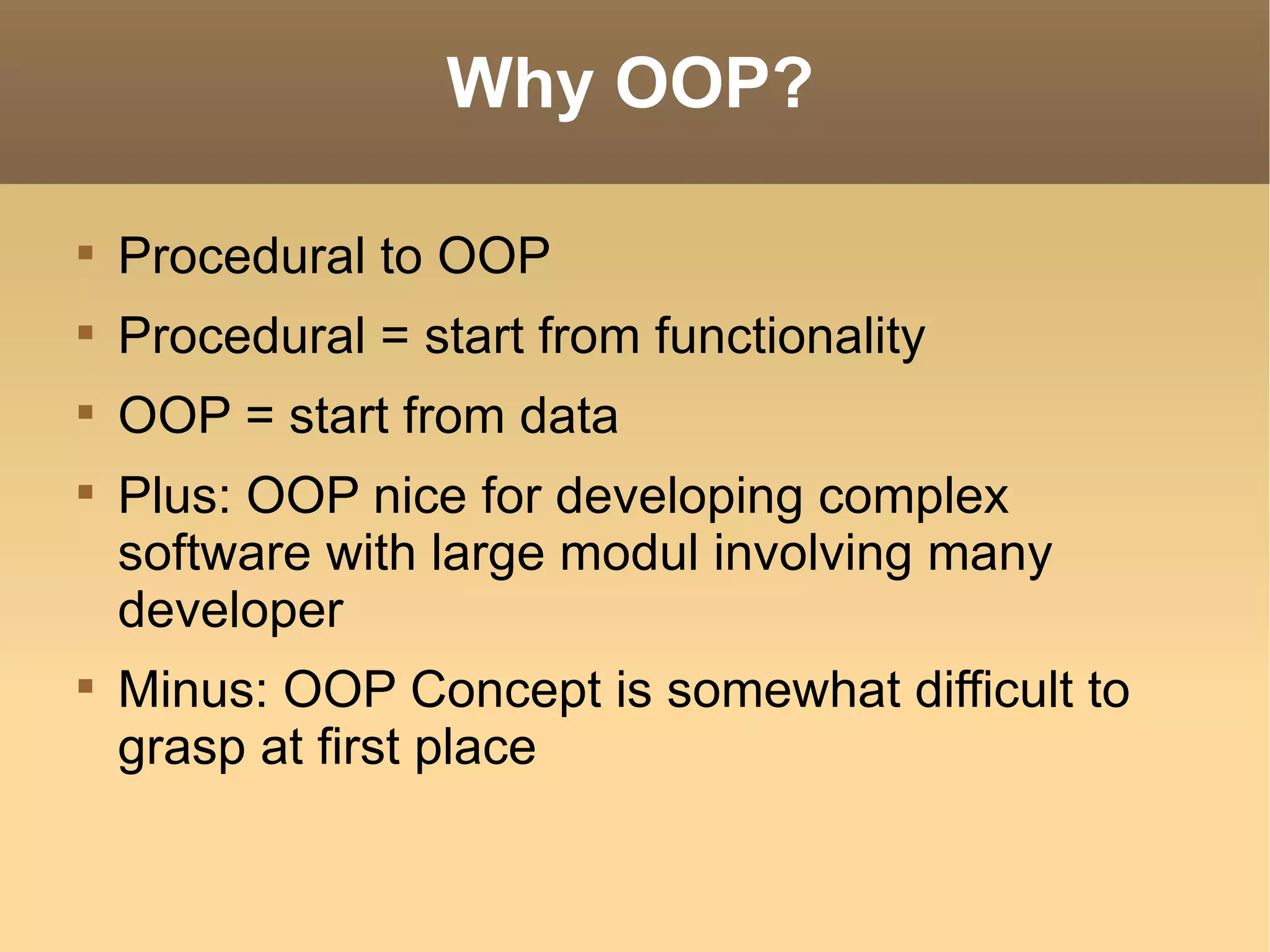
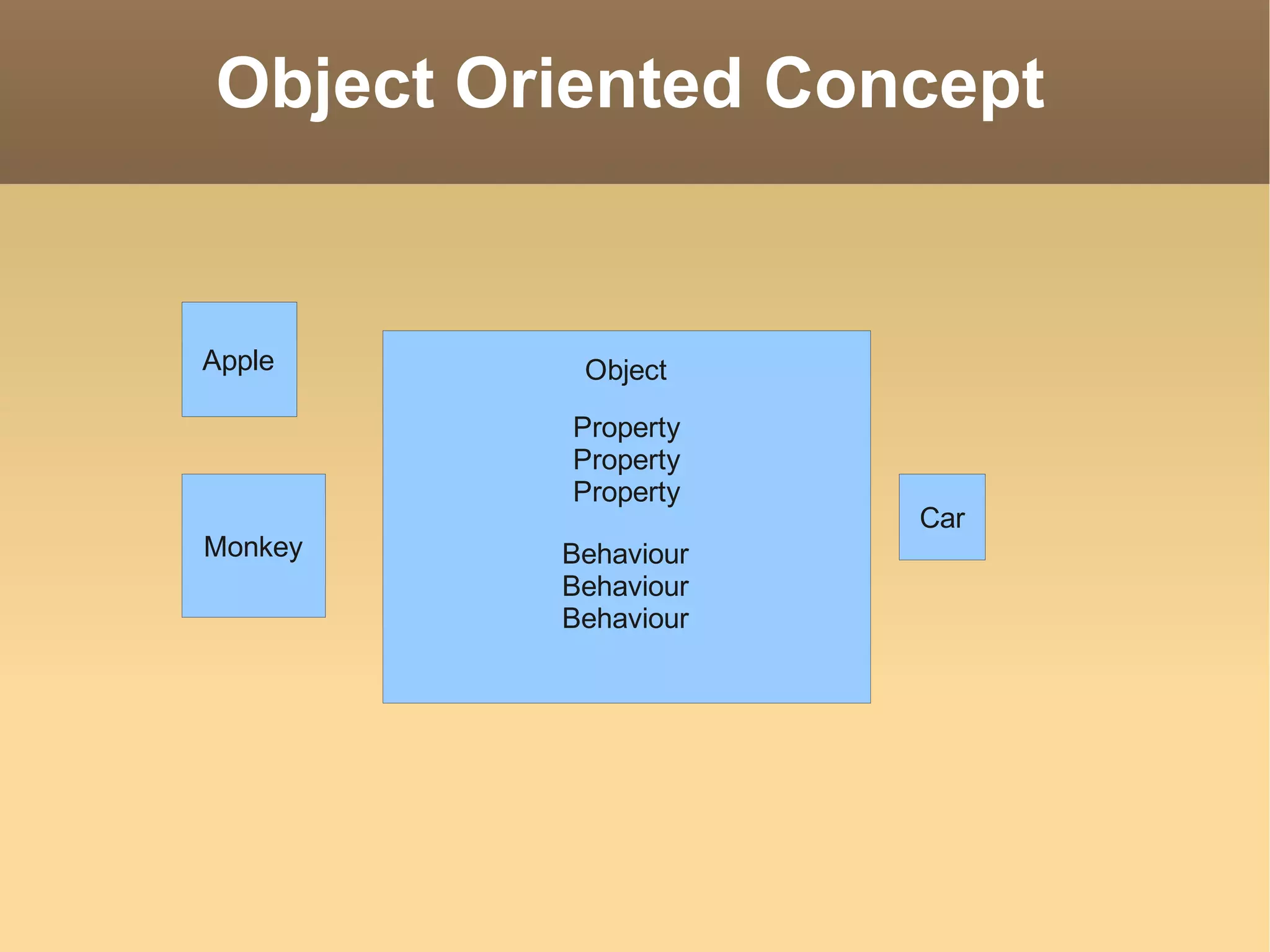
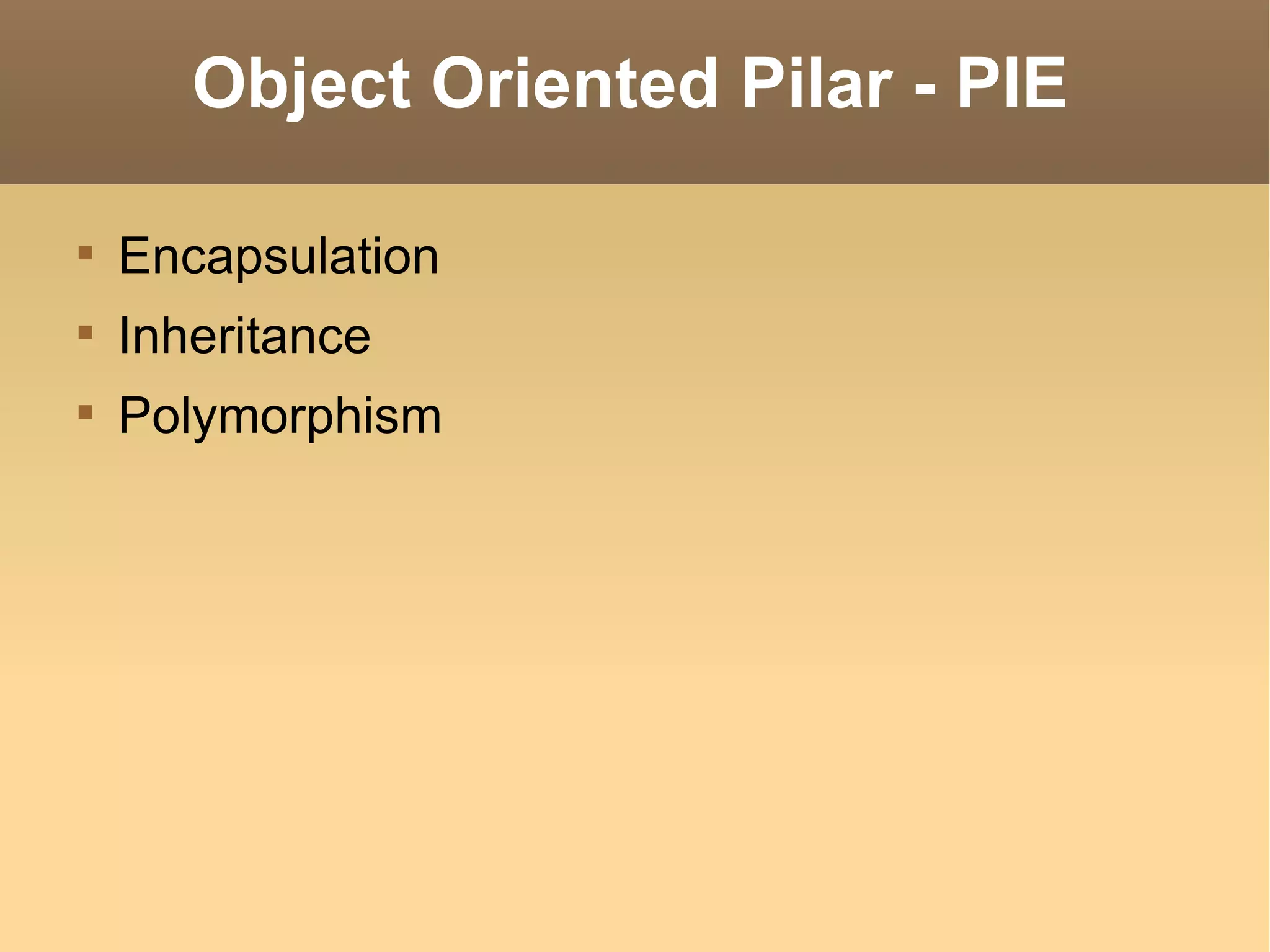











The document discusses the principles of object-oriented design (OOD) and object-oriented programming (OOP), highlighting essential concepts like encapsulation, inheritance, and polymorphism. It outlines key principles such as the Single Responsibility Principle, Open/Closed Principle, Liskov Substitution Principle, Dependency Inversion Principle, and Interface Segregation Principle, emphasizing their importance in software design. The document also mentions the transition from procedural to object-oriented programming and the challenges associated with grasping OOP concepts.


![Coded Agents – with UiPath SDK + LangGraph [Virtual Hands-on Workshop]](https://cdn.slidesharecdn.com/ss_thumbnails/codedagentsdeck-251215155422-5497c599-thumbnail.jpg?width=640&height=640&fit=bounds)


