

Subhanjan Das
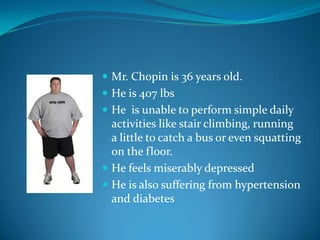
 Mr. Chopin is 36 years old.
 He is 407 lbs
 He is unable to perform simple daily
  activities like stair climbing, running
  a little to catch a bus or even squatting
  on the floor.
 He feels miserably depressed
 He is also suffering from hypertension
  and diabetes
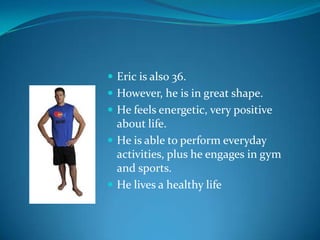
 Eric is also 36.
 However, he is in great shape.
 He feels energetic, very positive
  about life.
 He is able to perform everyday
  activities, plus he engages in gym
  and sports.
 He lives a healthy life
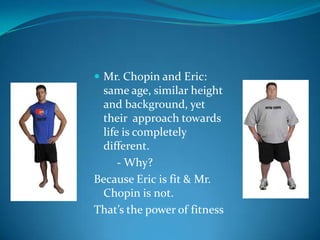
 Mr. Chopin and Eric:
 same age, similar height
 and background, yet
 their approach towards
 life is completely
 different.
     - Why?
Because Eric is fit & Mr.
 Chopin is not.
That’s the power of fitness
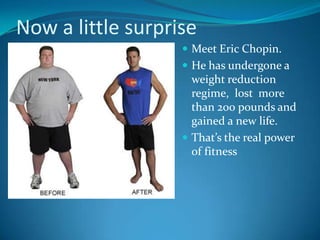
Now a little surprise
                    Meet Eric Chopin.
                    He has undergone a
                     weight reduction
                     regime, lost more
                     than 200 pounds and
                     gained a new life.
                    That’s the real power
                     of fitness
Fitness
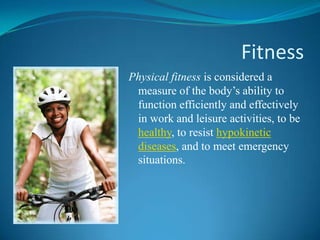
Physical fitness is considered a
 measure of the body’s ability to
 function efficiently and effectively
 in work and leisure activities, to be
 healthy, to resist hypokinetic
 diseases, and to meet emergency
 situations.
Physical Fitness
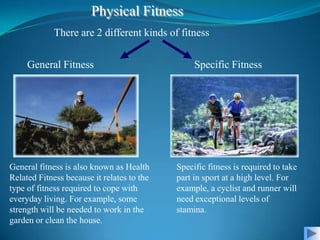
             There are 2 different kinds of fitness


     General Fitness                             Specific Fitness


General fitness is also known as Health     Specific fitness is required to take
Related Fitness because it relates to the   part in sport at a high level. For
type of fitness required to cope with       example, a cyclist and runner will
everyday living. For example, some          need exceptional levels of
strength will be needed to work in the      stamina.
garden or clean the house.
The Components of General Physical Fitness

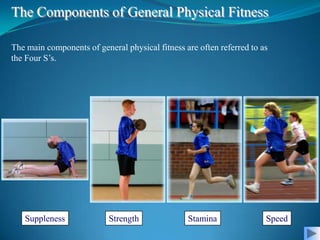
The main components of general physical fitness are often referred to as
the Four S’s.


   Suppleness              Strength              Stamina               Speed
Minimum Levels of Physical Fitness
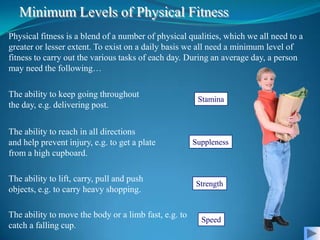
Physical fitness is a blend of a number of physical qualities, which we all need to a
greater or lesser extent. To exist on a daily basis we all need a minimum level of
fitness to carry out the various tasks of each day. During an average day, a person
may need the following…

The ability to keep going throughout
                                                        Stamina
the day, e.g. delivering post.


The ability to reach in all directions
and help prevent injury, e.g. to get a plate           Suppleness
from a high cupboard.

The ability to lift, carry, pull and push
                                                       Strength
objects, e.g. to carry heavy shopping.

The ability to move the body or a limb fast, e.g. to
                                                         Speed
catch a falling cup.
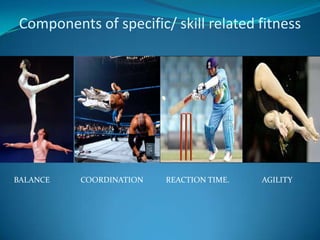
Components of specific/ skill related fitness


BALANCE   COORDINATION   REACTION TIME.   AGILITY
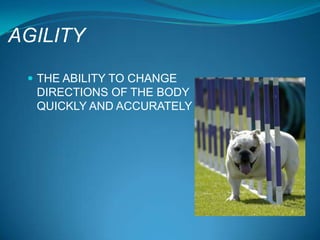
AGILITY

  THE ABILITY TO CHANGE
  DIRECTIONS OF THE BODY
  QUICKLY AND ACCURATELY
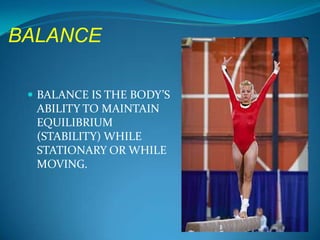
BALANCE

  BALANCE IS THE BODY’S
  ABILITY TO MAINTAIN
  EQUILIBRIUM
  (STABILITY) WHILE
  STATIONARY OR WHILE
  MOVING.
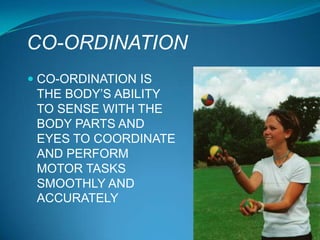
CO-ORDINATION
 CO-ORDINATION IS
  THE BODY’S ABILITY
  TO SENSE WITH THE
  BODY PARTS AND
  EYES TO COORDINATE
  AND PERFORM
  MOTOR TASKS
  SMOOTHLY AND
  ACCURATELY
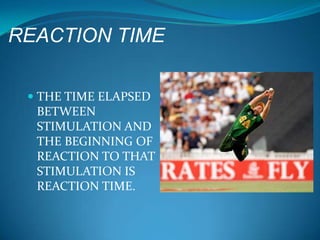
REACTION TIME

  THE TIME ELAPSED
   BETWEEN
   STIMULATION AND
  THE BEGINNING OF
  REACTION TO THAT
  STIMULATION IS
  REACTION TIME.
What are the benefits of
fitness?
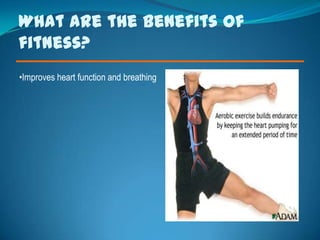
•Improves heart function and breathing
What are the benefits of
fitness?
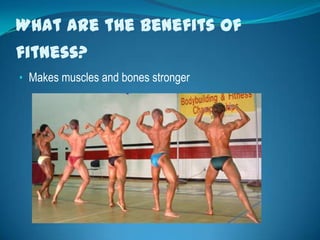
• Makes muscles and bones stronger
What are the benefits of
fitness?
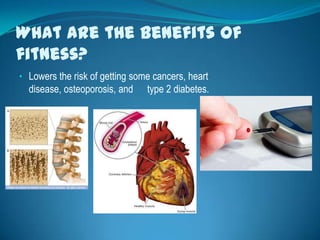
• Lowers the risk of getting some cancers, heart
  disease, osteoporosis, and    type 2 diabetes.
What are the benefits of
fitness?
• Lowers cholesterol
• Helps keep blood pressure under control
What are the benefits of
fitness?
• Helps control weight
• Relieves stress and lowers risk of depression and anxiety
• Improves energy levels


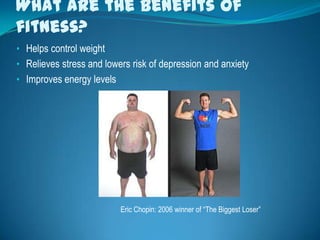
                           Eric Chopin: 2006 winner of “The Biggest Loser”

Prevention of illness

  • 1.
  • 2.
     Mr. Chopinis 36 years old.  He is 407 lbs  He is unable to perform simple daily activities like stair climbing, running a little to catch a bus or even squatting on the floor.  He feels miserably depressed  He is also suffering from hypertension and diabetes
  • 3.
     Eric isalso 36.  However, he is in great shape.  He feels energetic, very positive about life.  He is able to perform everyday activities, plus he engages in gym and sports.  He lives a healthy life
  • 4.
     Mr. Chopinand Eric: same age, similar height and background, yet their approach towards life is completely different. - Why? Because Eric is fit & Mr. Chopin is not. That’s the power of fitness
  • 5.
    Now a littlesurprise  Meet Eric Chopin.  He has undergone a weight reduction regime, lost more than 200 pounds and gained a new life.  That’s the real power of fitness
  • 6.
    Fitness Physical fitness isconsidered a measure of the body’s ability to function efficiently and effectively in work and leisure activities, to be healthy, to resist hypokinetic diseases, and to meet emergency situations.
  • 7.
    Physical Fitness There are 2 different kinds of fitness General Fitness Specific Fitness General fitness is also known as Health Specific fitness is required to take Related Fitness because it relates to the part in sport at a high level. For type of fitness required to cope with example, a cyclist and runner will everyday living. For example, some need exceptional levels of strength will be needed to work in the stamina. garden or clean the house.
  • 8.
    The Components ofGeneral Physical Fitness The main components of general physical fitness are often referred to as the Four S’s. Suppleness Strength Stamina Speed
  • 9.
    Minimum Levels ofPhysical Fitness Physical fitness is a blend of a number of physical qualities, which we all need to a greater or lesser extent. To exist on a daily basis we all need a minimum level of fitness to carry out the various tasks of each day. During an average day, a person may need the following… The ability to keep going throughout Stamina the day, e.g. delivering post. The ability to reach in all directions and help prevent injury, e.g. to get a plate Suppleness from a high cupboard. The ability to lift, carry, pull and push Strength objects, e.g. to carry heavy shopping. The ability to move the body or a limb fast, e.g. to Speed catch a falling cup.
  • 10.
    Components of specific/skill related fitness BALANCE COORDINATION REACTION TIME. AGILITY
  • 11.
    AGILITY  THEABILITY TO CHANGE DIRECTIONS OF THE BODY QUICKLY AND ACCURATELY
  • 12.
    BALANCE  BALANCEIS THE BODY’S ABILITY TO MAINTAIN EQUILIBRIUM (STABILITY) WHILE STATIONARY OR WHILE MOVING.
  • 13.
    CO-ORDINATION  CO-ORDINATION IS THE BODY’S ABILITY TO SENSE WITH THE BODY PARTS AND EYES TO COORDINATE AND PERFORM MOTOR TASKS SMOOTHLY AND ACCURATELY
  • 14.
    REACTION TIME THE TIME ELAPSED BETWEEN STIMULATION AND THE BEGINNING OF REACTION TO THAT STIMULATION IS REACTION TIME.
  • 15.
    What are thebenefits of fitness? •Improves heart function and breathing
  • 16.
    What are thebenefits of fitness? • Makes muscles and bones stronger
  • 17.
    What are thebenefits of fitness? • Lowers the risk of getting some cancers, heart disease, osteoporosis, and type 2 diabetes.
  • 18.
    What are thebenefits of fitness? • Lowers cholesterol • Helps keep blood pressure under control
  • 19.
    What are thebenefits of fitness? • Helps control weight • Relieves stress and lowers risk of depression and anxiety • Improves energy levels Eric Chopin: 2006 winner of “The Biggest Loser”