Prevention and Recycling of
   Clean Drywall Waste
             Shouhai Yu
        Project Manager, EWMCE
   Postdoc Fellow, University of Alberta
                                            Banff, Canada
                                           April 20th , 2010
Acknowledgement
• This project was financially supported by:
   –   Alberta Advanced Education &Technology
   –   Alberta Environment
   –   Alberta Agriculture Food and Rural Development
   –   City of Edmonton
   –   Alberta Research Council
   –   University of Alberta
   –   Clark Builders
   –   Kasian Architecture Interior Design and Planning Ltd.
   –   A&L Canada Laboratories Inc.
   –   Edmonton Waste Management Centre of Excellence
Management options
• Landfill
  – Consume space
  – H2S gas generation
• Incineration
  – SO2 gas generation
• Reuse
  – ½ sheet or larger
• Recycle
Objectives
• To develop a systematic lifecycle
  approach for Alberta’s construction
  industry to reduce the amount of drywall
  waste generated and land‐filled
Outline
• Phase I
  – Drywall Waste Prevention
• Phase II
  – Drywall Recycling through Composting
• Phase III
  – Use of Composted Drywall as a Soil
    Amendment to Reclaim Disturbed Sites
• Summary
Phase I (March 2007 – March 2008)

     Drywall Waste Prevention

         Dr. Mohamed Al-Hussein
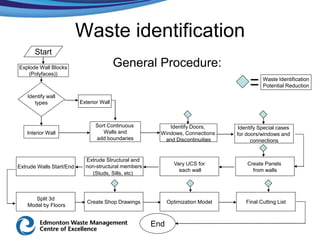
Waste identification
       Start
Explode Wall Blocks                       General Procedure:
    (Polyfaces))
                                                                                           Waste Identification
                                                                                           Potential Reduction

    Identify wall
       types              Exterior Wall


                                Sort Continuous           Identify Doors,        Identify Special cases
   Interior Wall                   Walls and           Windows, Connections     for doors/windows and
                                add boundaries          and Discontinuities           connections


                            Extrude Structural and
                                                             Vary UCS for           Create Panels
Extrude Walls Start/End     non-structural members
                                                               each wall              from walls
                              (Studs, Sills, etc)


       Split 3d
                             Create Shop Drawings          Optimization Model       Final Cutting List
    Model by Floors


                                                     End
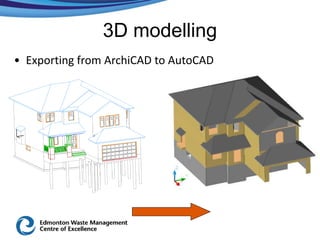
3D modelling
• Exporting from ArchiCAD to AutoCAD
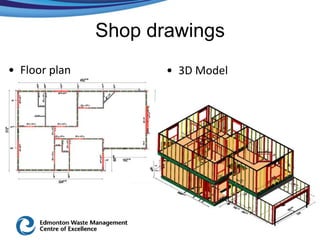
Shop drawings
• Floor plan          • 3D Model
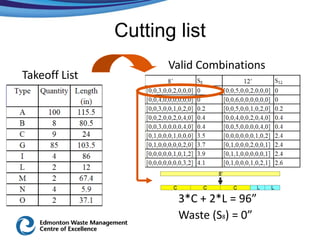
Cutting list
                      Valid Combinations
Takeoff List


                       3*C + 2*L = 96”
                       Waste (S8) = 0”
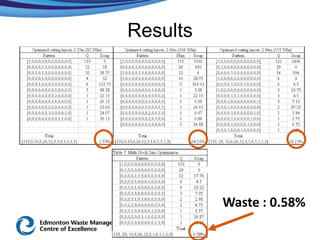
Mathematical optimization

• Analysis Method: Linear Programming
                                                           waste

                                               N
• Objective function F(x):              min         xpsp
                                              p 1

• Constraint equations:
  [ x1 , x2 , x3 ,, x N ] LN   9   [100,8,9,85,4,2,2,4,2]T
Results


          Waste : 0.58%
Results of phase I
• Best Management & Practices (BMP)
  Guide
• Current results showed that up front
  design innovations could affect use of
  material in the construction phase
• Software developed is being used by a
  local construction company
Phase II (March 2007 – July 2008)

     Drywall Recycling through
           Composting
Drywall recycling
     •   Gypsum wallboard manufacture
     •   Fertilizer Manufacture
     •   On Site Land Application
     •   Off Site Land Application (farmer’s field)


Feb 26, 2008              COMPOSTING MATTERS!         16
Apply to soil directly
• Benefits:
  – Increases available calcium & sulfur
  – Reduces sodium uptake
  – Loosens clay soils and allows water & air to
    circulate
• Concerns: long term effect
  – Exchangeable soil K , Mg
  – Chemical compounds
Benefits of composting
• Help to keep nitrogen
• Absorb odor compounds
• Increases Cation Exchange Capacity
  – Binds Contaminants
  – Degrades Compounds
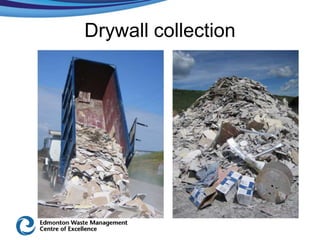
Drywall collection
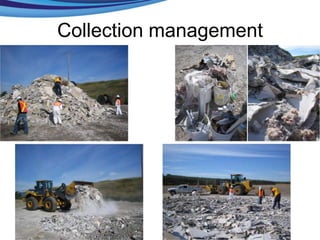
Collection management
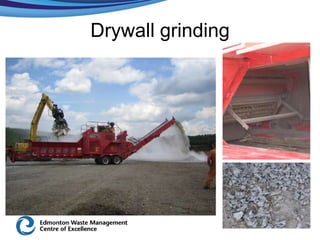
Drywall grinding
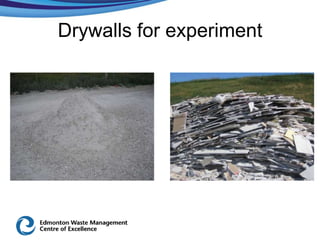
Drywalls for experiment
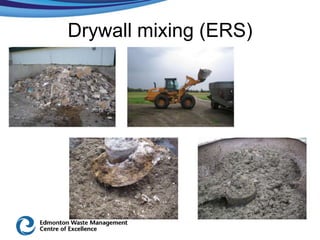
Drywall mixing (ERS)
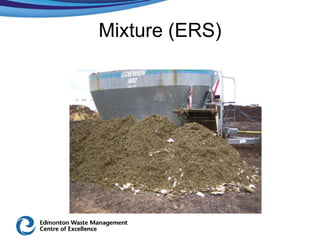
Mixture (ERS)
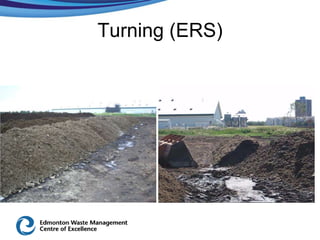
Turning (ERS)
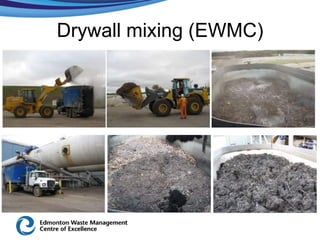
Drywall mixing (EWMC)
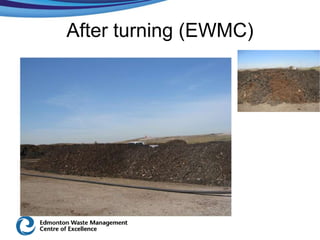
After turning (EWMC)
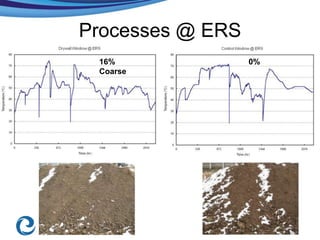
Processes @ ERS
 16%              0%
 Coarse
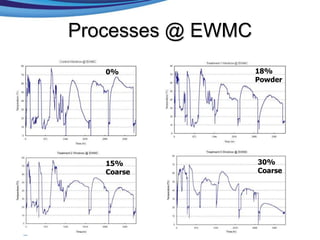
Processes @ EWMC
   0%              18%
                   Powder


   15%             30%
   Coarse          Coarse
Phase III (July – December 2008)

 Use of Composted Drywall as a Soil
Amendment to Reclaim Disturbed Sites
             Dr. Anne Naeth
Experiment design
• Three soil types
  – Agricultural Soil
  – Reclamation of Urban Soil
  – Reclamation of Mine Tailings
• Three revegetation species
  – Vivar barley
  – Adanac slender wheatgrass
  – rocky mountain fescue
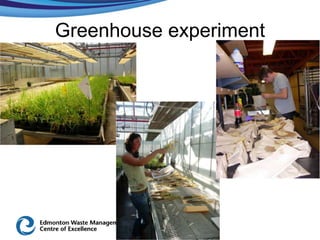
Greenhouse experiment
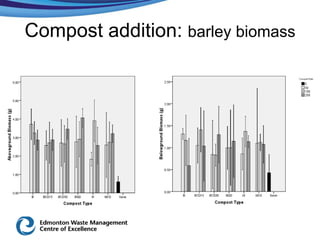
Compost addition: barley biomass
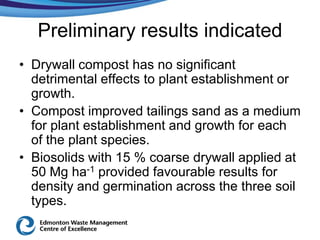
Preliminary results indicated
• Drywall compost has no significant
  detrimental effects to plant establishment or
  growth.
• Compost improved tailings sand as a medium
  for plant establishment and growth for each
  of the plant species.
• Biosolids with 15 % coarse drywall applied at
  50 Mg ha-1 provided favourable results for
  density and germination across the three soil
  types.
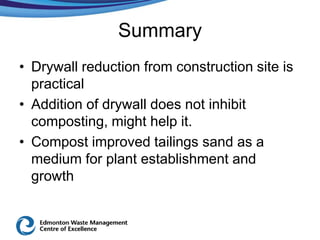
Summary
• Drywall reduction from construction site is
  practical
• Addition of drywall does not inhibit
  composting, might help it.
• Compost improved tailings sand as a
  medium for plant establishment and
  growth

Prevention and recycling_of_clean_drywall_waste

  • 1.
    Prevention and Recyclingof Clean Drywall Waste Shouhai Yu Project Manager, EWMCE Postdoc Fellow, University of Alberta Banff, Canada April 20th , 2010
  • 2.
    Acknowledgement • This projectwas financially supported by: – Alberta Advanced Education &Technology – Alberta Environment – Alberta Agriculture Food and Rural Development – City of Edmonton – Alberta Research Council – University of Alberta – Clark Builders – Kasian Architecture Interior Design and Planning Ltd. – A&L Canada Laboratories Inc. – Edmonton Waste Management Centre of Excellence
  • 3.
    Management options • Landfill – Consume space – H2S gas generation • Incineration – SO2 gas generation • Reuse – ½ sheet or larger • Recycle
  • 4.
    Objectives • To developa systematic lifecycle approach for Alberta’s construction industry to reduce the amount of drywall waste generated and land‐filled
  • 5.
    Outline • Phase I – Drywall Waste Prevention • Phase II – Drywall Recycling through Composting • Phase III – Use of Composted Drywall as a Soil Amendment to Reclaim Disturbed Sites • Summary
  • 6.
    Phase I (March2007 – March 2008) Drywall Waste Prevention Dr. Mohamed Al-Hussein
  • 7.
    Waste identification Start Explode Wall Blocks General Procedure: (Polyfaces)) Waste Identification Potential Reduction Identify wall types Exterior Wall Sort Continuous Identify Doors, Identify Special cases Interior Wall Walls and Windows, Connections for doors/windows and add boundaries and Discontinuities connections Extrude Structural and Vary UCS for Create Panels Extrude Walls Start/End non-structural members each wall from walls (Studs, Sills, etc) Split 3d Create Shop Drawings Optimization Model Final Cutting List Model by Floors End
  • 8.
    3D modelling • Exportingfrom ArchiCAD to AutoCAD
  • 9.
    Shop drawings • Floorplan • 3D Model
  • 11.
    Cutting list Valid Combinations Takeoff List 3*C + 2*L = 96” Waste (S8) = 0”
  • 12.
    Mathematical optimization • AnalysisMethod: Linear Programming waste N • Objective function F(x): min xpsp p 1 • Constraint equations: [ x1 , x2 , x3 ,, x N ] LN 9 [100,8,9,85,4,2,2,4,2]T
  • 13.
    Results Waste : 0.58%
  • 14.
    Results of phaseI • Best Management & Practices (BMP) Guide • Current results showed that up front design innovations could affect use of material in the construction phase • Software developed is being used by a local construction company
  • 15.
    Phase II (March2007 – July 2008) Drywall Recycling through Composting
  • 16.
    Drywall recycling • Gypsum wallboard manufacture • Fertilizer Manufacture • On Site Land Application • Off Site Land Application (farmer’s field) Feb 26, 2008 COMPOSTING MATTERS! 16
  • 17.
    Apply to soildirectly • Benefits: – Increases available calcium & sulfur – Reduces sodium uptake – Loosens clay soils and allows water & air to circulate • Concerns: long term effect – Exchangeable soil K , Mg – Chemical compounds
  • 18.
    Benefits of composting •Help to keep nitrogen • Absorb odor compounds • Increases Cation Exchange Capacity – Binds Contaminants – Degrades Compounds
  • 19.
  • 20.
  • 21.
  • 22.
  • 23.
  • 24.
  • 25.
  • 26.
  • 27.
  • 28.
    Processes @ ERS 16% 0% Coarse
  • 29.
    Processes @ EWMC 0% 18% Powder 15% 30% Coarse Coarse
  • 30.
    Phase III (July– December 2008) Use of Composted Drywall as a Soil Amendment to Reclaim Disturbed Sites Dr. Anne Naeth
  • 31.
    Experiment design • Threesoil types – Agricultural Soil – Reclamation of Urban Soil – Reclamation of Mine Tailings • Three revegetation species – Vivar barley – Adanac slender wheatgrass – rocky mountain fescue
  • 32.
  • 33.
  • 34.
    Preliminary results indicated •Drywall compost has no significant detrimental effects to plant establishment or growth. • Compost improved tailings sand as a medium for plant establishment and growth for each of the plant species. • Biosolids with 15 % coarse drywall applied at 50 Mg ha-1 provided favourable results for density and germination across the three soil types.
  • 35.
    Summary • Drywall reductionfrom construction site is practical • Addition of drywall does not inhibit composting, might help it. • Compost improved tailings sand as a medium for plant establishment and growth