Preservation Needs
Assessment
Tamara Lavrencic
Museum Programs and Collections Manager
M&G NSW
CHG 2015
This session looks at:
•How to choose a conservator ?
•What to do to prepare for the
assessment?
•What’s involved in the assessment
process?
•Summary of factors in conservation
decision making.
•Prioritising preservation activities.
Preservation refers to…
“the protection of cultural
property by minimising chemical
and physical deterioration.
Improved storage conditions and
environmental control plays a big
part in this.”
AICCM website http://aiccm.org.au/conservation
Preservation needs
assessment
• Evaluates the policies, practices and
conditions that affect the preservation
of an organisation’s collections
• Identifies specific preservation needs
and actions to meet those needs
• Prioritises actions matched to resources
Goals
•to enable your organisation to
identify risks to, and develop a
long-term preservation strategy
for, the collection
•to prolong the existence of
cultural material
Choosing a conservator
•Qualified conservator with 3-5 years
experience
•Get lists of names from Community
Heritage Grant Office, AICCM
www.aiccm.org.au or your state
museum, art gallery, library or
archives
•Ask for references and a PNA report
•Check they carry insurance
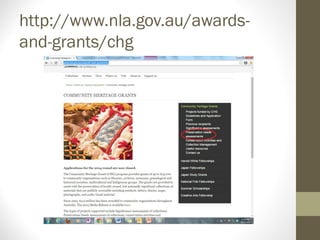
http://www.nla.gov.au/awards-
and-grants/chg
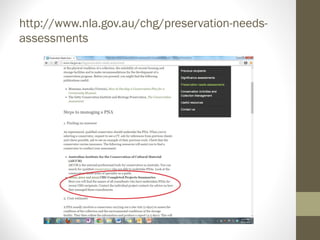
http://www.nla.gov.au/chg/preservation-needs-
assessments
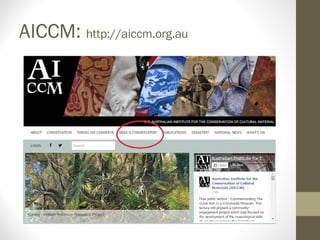
AICCM: http://aiccm.org.au
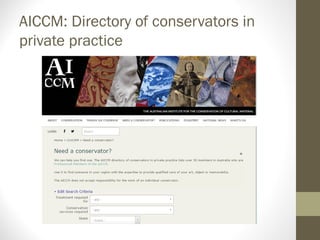
AICCM: Directory of conservators in
private practice
What to do to prepare for the
assessment?
• Organisational history
• Description of building – location, number of
buildings, a plan of the layout if possible
• Description of the collection/s
• Details of staff, paid and volunteers and roles
• Opening hours
• Number of visitors p.a.
• Copies of policies and procedures
• Copy of significance assessment report
• Disaster plan
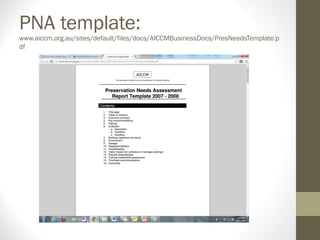
PNA template:
www.aiccm.org.au/sites/default/files/docs/AICCMBusinessDocs/PresNeedsTemplate.p
df
Assessing preservation needs
• Building location, construction and condition
• Local environmental conditions
• Internal environmental conditions
• Display methods
• Storage furniture and methods
• Housekeeping
• Visitor impact
• Overall condition of collection sub-types e.g.
books, paintings, textiles, machinery etc.
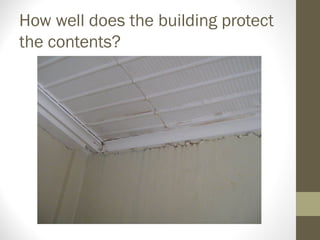
How well does the building protect
the contents?
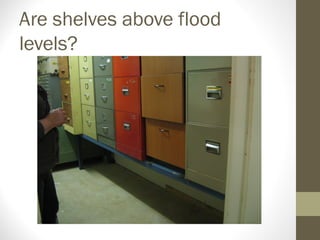
Are shelves above flood
levels?
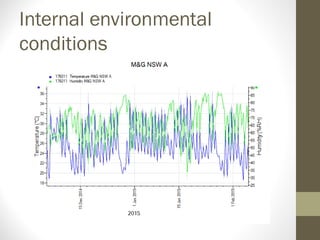
Internal environmental
conditions
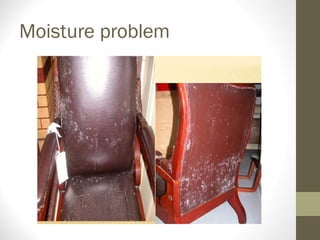
Moisture problem
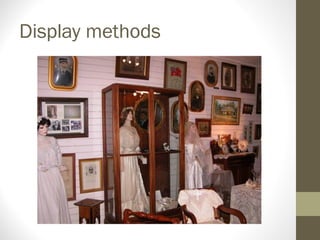
Display methods
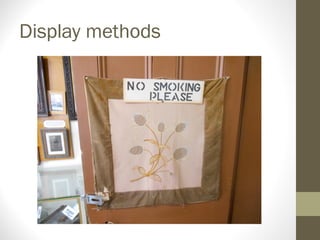
Display methods
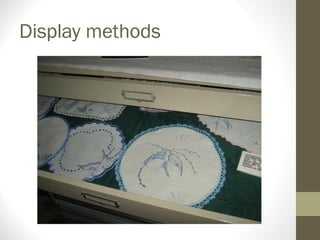
Display methods
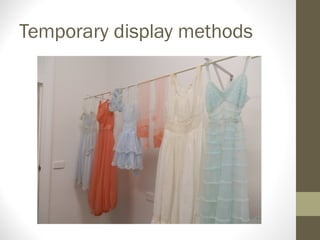
Temporary display methods
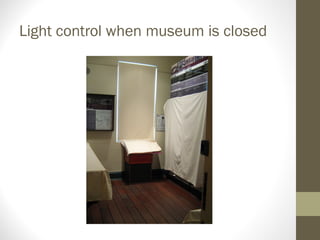
Light control when museum is closed
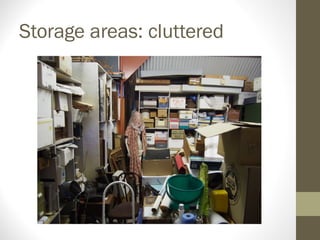
Storage areas: cluttered
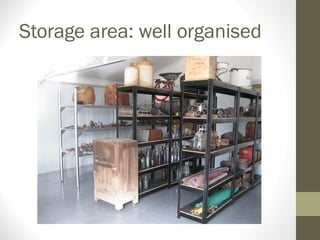
Storage area: well organised
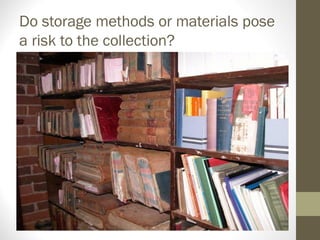
Do storage methods or materials pose
a risk to the collection?
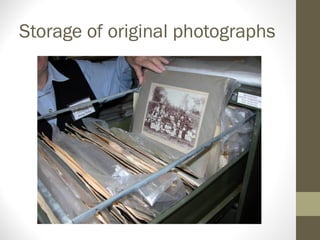
Storage of original photographs
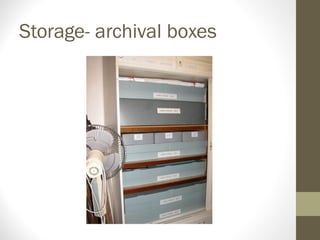
Storage- archival boxes
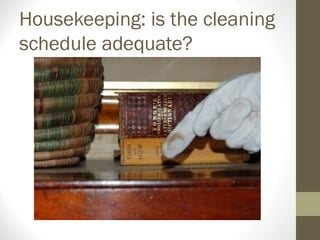
Housekeeping: is the cleaning
schedule adequate?
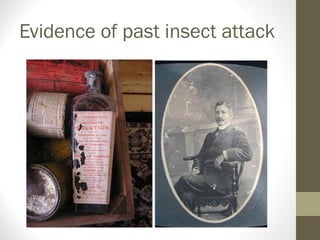
Evidence of past insect attack
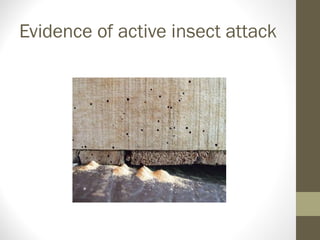
Evidence of active insect attack
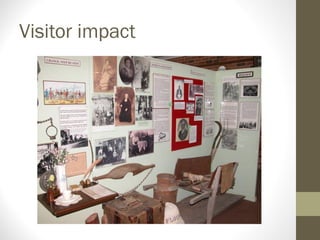
Visitor impact
Recommendations
• Development of policies and/or procedures
• Building repairs/modifications
• Reducing light levels and UV
• Relocating parts of the collection
• Resting fragile objects
• Allocating appropriate storage space
• Purchasing shelving, plan drawers or display cases
• Rehousing objects in archival quality materials
• Reformatting – making duplicates for display, digitisation
• Conservation treatment for individual objects
• Training
End result
•A preservation plan with
prioritised actions
•An independent report to support
future grant/funding applications
•Document to support future
grant applications
Conservation decision
making- factors
• Significance underpins conservation decisions and priorities
• Signs of wear and tear can be integral to the significance of
an object
• Benefits and risks of treatment
• Reversibility of treatment
• Storage conditions that the object will be returning to
• Fragile documents, photographs and books may need to be
stabilised before they can be digitized
• Potential use and possible limitations
• Alternatives to treatment e.g. reformatting or duplication
• Will the treatment effect future research potential?
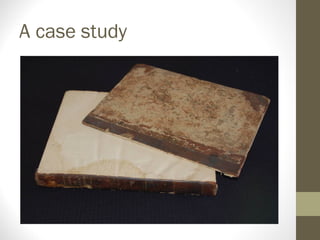
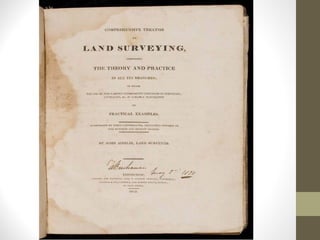
A case study
Treatment options
•Digitise and house in box
•Reattach the covers
•Rebind the book
•Leave it as is (covers tied on)

Preservation needs assessment - Tamara Lavrencic - 2015

Editor's Notes

  • #10  The AICCM directory of conservators in private practice lists over 50 members in Australia who are Professional Members of the AICCM.
  • #18 Image by Tamara Lavrencic, chairs in storage area ( Historic Houses Trust of NSW)
  • #19 DISPLAY/EXHIBITIONS What are the risks? I.e. what harm will occur if no changes are made? Image: Canowindra Historical Society.
  • #20 DISPLAY/EXHIBITIONS What are the risks? I.e. what harm will occur if no changes are made? Image: Canowindra Historical Society.
  • #21 DISPLAY/EXHIBITIONS What are the risks? I.e. what harm will occur if no changes are made? Image: Canowindra Historical Society.
  • #26 STORAGE - continued Are the storage methods appropriate (e.g. not overcrowded, not stacked on floor)? Are the enclosures of appropriate quality for preservation of the collection? Is there good air circulation around the collections? What are the key risks associated with the above? Image: Canowindra Historical Society.
  • #28 STORAGE CONTINUED What kinds of enclosures are used (eg boxes, sleeves)? Image: Berrima Historical Society
  • #29 Dust – table at RHH&F following the red dust storms of October 2009. Image by Matthew Scott
  • #30 Insects damage objects and art works in a variety of ways - through staining, soiling and consuming surfaces and components. Image from AICCM Visual glossary, Alice Cannon
  • #36 This book, titled “A Comprehensive Treatise on Land Surveying”, is from the Rouse Hill House and Farm collection, a collection reflecting the tastes and interests of 6 generations of the one family. The book is significant in that it bears the dated inscription of William Buchanan,  Bessie Rouse’s father.  William immigrated to Australia just after the inscription date (1820) and worked as a surveyor on a number of important colonial projects.  As can be seen by the condition of the book, it was heavily used and indeed, this text was considered the primary reference for surveyors in this period
  • #37 For many years the book stood on a book shelf with covers tied to text with a piece of cotton tape. It is rarely used. In 2008 it was decided to prepare it for an exhibition, opened to one of the illustrations.  
  • #38 If we decided to have the covers reattached, the book would require a total rebind because of the existing binding style. Retaining the existing binding style makes opening and use of the book problematic. If the book was a research copy rather than evidence of family occupation in a historic house, we might consider rebinding in a more accessible binding style or we might make a copy available for use. In this case, we’ve opted to do nothing, and display it as is.