Download to read offline
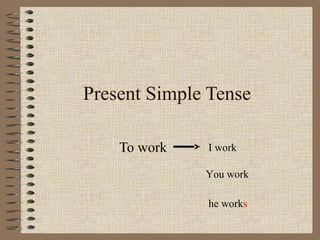
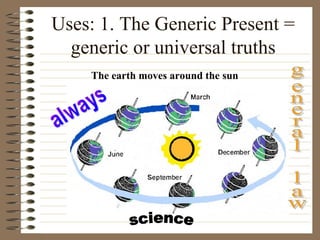
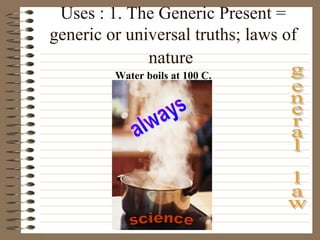
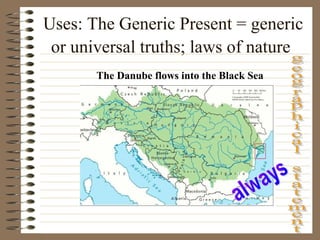

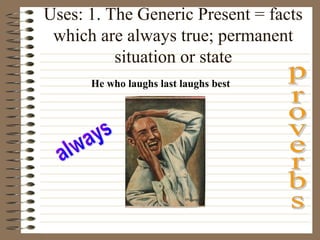

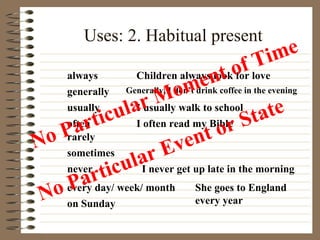
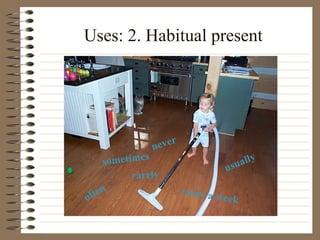
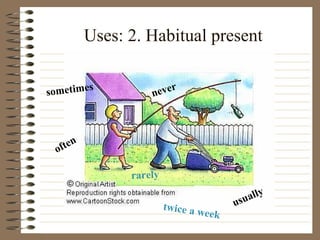

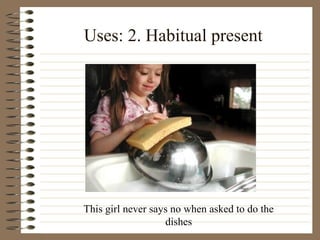
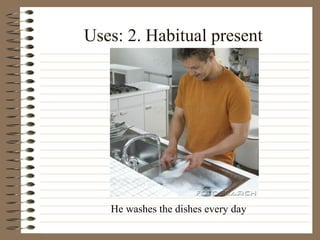
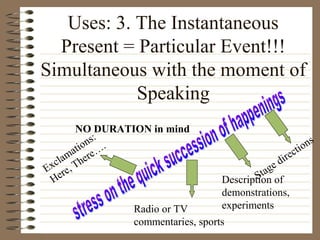

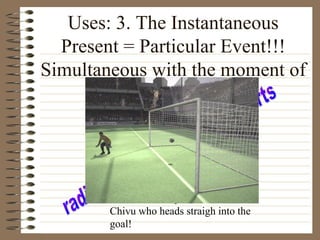


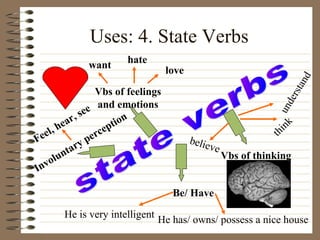
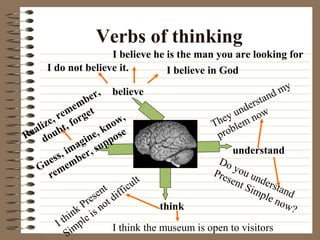
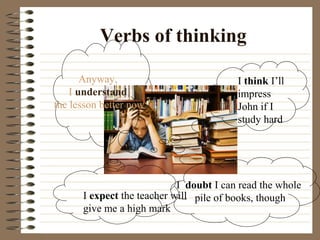

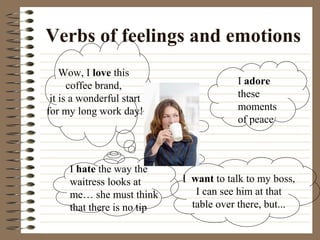
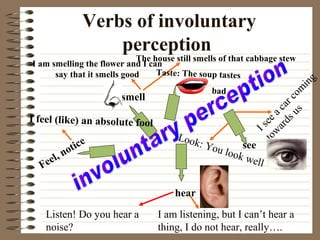
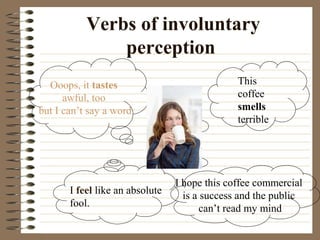

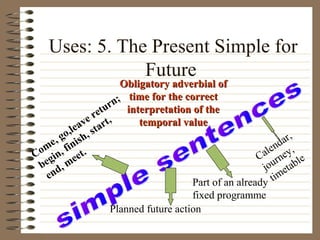




This document provides information about the present simple tense in English. It discusses five main uses of the present simple: 1) for generic or habitual truths, 2) for habitual actions, 3) for instantaneous present actions simultaneous with speaking, 4) with state verbs like "be" and "have", and 5) for planned future actions as part of a fixed schedule. Examples are given for each use, including common adverbials that indicate habitualness or futurity. Verbs of thinking, feelings, and involuntary perception are also discussed. The document concludes with examples of if clauses and time clauses used with the present simple tense.


