QUEST TO BE THE BEST: TOWARD PRODUCING QUALITY
TEACHERS THROUGH BEED PROGRAMS OF STATE
UNIVERSITIES AND COLLEGES IN THE PROVINCE OF LA UNION
Saint Louis College
City of San Fernando, La Union
Beacon of Wisdom in the North
Graduate School
JHOEMAR F. DUMLAO & LEANNA MAE TAPANGCO
Background of the Study
The Initial education and the training provided by the Higher
Education Institution plays a key role for the quality of teaching
staff (The Cornell Law School, nd).
Despite the training students got from universities, results from
the World Bank’s Philippines Public Education Expenditure
Tracking and Quantitative Service Delivery Study (PETS-QSDS)
revealed that elementary teachers lack sufficient knowledge of
subject matter in most subjects.
from 2010 to 2019, only 28% of elementary education LET takers
passed the examination (Gatchalian 2021).
Background of the Study
In Region 1, there are 44 Higher Education Institutions from
State Universities and Private Institutions continuously offering
teacher education programs specifically in Elementary
Education. Ten of which are from the Province of La Union.
According to PRC, non of which have reached the top performing
schools in elementary education based on the result of the
Licensure Examination. Despite this, these schools continue to
produce quality and effective teachers based on the number of
students who successfully passed the licensure examination for
teachers
The Problem
The study aimed to explore and understand the lived
experiences of BEED administrators of State Universities and
Colleges in the Province of La Union in their mission to produce
quality teachers.
Research Questions:
What are the lived experiences of BEED administrators in terms
of their mission to produce quality teachers?
Methodology
Qualitative Research
Qualitative research, according to Crossman (2020) is a type of
social science research that collects and works with non-numerical data
and that seeks to interpret meaning from these data that help
understand social life through the study of targeted populations or
places.
Hermeneutic Phenomenology Approach. It focuses on the lived
experiences of participants. It emphasizes the personalized
interpretations of individuals in a particular context.
CHAPTER II
METHODS AND PROCEDURES
Study Site
The study was conducted in State Universities and Colleges in the
province of La Union.
A purposive sampling technique was used in selecting the
participants of the study. Eight (8) administrators were selected
because this number of participants could already represent the
majority.
CHAPTER II
METHODS AND PROCEDURES
Selection of Participants
Data Measure
researcher-made semi-structured guide for an interview
Data Collection Procedure
1. The researchers secured permission from the school heads of the participating
schools
2. Gain the consent of the participants through steps developed by Groenewald
(2004).
3. Gathering of relevant data through the interview guide
4. The researchers, with the help of an expert in an interview, used video and audio
recorders and field notes to document the answers of the key informants.
5. The informants were given a copy of the researcher-made semi-structured guide
for the interview.
CHAPTER II
METHODS AND PROCEDURES
Thematic Model Towards Producing Quality Teachers
CHAPTER III
FINDINGS and DISCUSSION
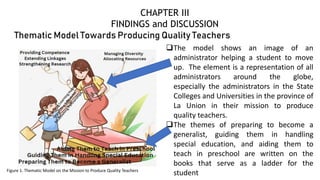
Figure 1. Thematic Model on the Mission to Produce Quality Teachers
The model shows an image of an
administrator helping a student to move
up. The element is a representation of all
administrators around the globe,
especially the administrators in the State
Colleges and Universities in the province of
La Union in their mission to produce
quality teachers.
The themes of preparing to become a
generalist, guiding them in handling
special education, and aiding them to
teach in preschool are written on the
books that serve as a ladder for the
student
Thematic Model Towards Producing Quality Teachers
Figure 1. Thematic Model on the Mission to Produce Quality Teachers
the theme Commendable Achievements
and Noticeable Set of Challenges are
written in the book held by the
administrator representing her
experiences.
CHAPTER III
FINDINGS and DISCUSSION
Thematic Model Towards Producing Quality Teachers
Figure 1. Thematic Model on the Mission to Produce Quality Teachers
the theme of intensifying learning habits,
organizing schedules, and establishing
partnerships are seen being handed by
the administrator to the students. It
symbolizes the strategies adopted by the
administrator in handling her experiences
while fulfilling the mission to produce
quality teachers. Since those are
strategies, the administrator wants to
share them with the student wishing her
to become a quality teacher someday.
CHAPTER III
FINDINGS and DISCUSSION
My Passion, My Mission
(How do you develop future elementary teachers to become a quality teacher?)
• Preparing Them to Become a Generalist
Administrator Saiyah shared his insight saying that he “provides these
aspiring teachers a solid foundation in the core subjects they will be teaching.” Also,
Administrator Nadare had a similar insight when she said, “I help our future
elementary teachers to complete foundational coursework. Teachers should also
complete coursework in specific subject areas.” Administrator Homura also approved
this stating, “I give them tips specifically in lesson planning, delivering the lesson,
strategies, and techniques as well as reminding them to be knowledgeable in
different subjects.”
CHAPTER III
FINDINGS and DISCUSSION
My Passion, My Mission
(How do you develop future elementary teachers to become a quality teacher?)
• Guiding Them in Handling Special Education
Administrator Homura, Administrator Rouie, and Administrator
Koku shared similar insights saying, “I emphasize the importance to recall
the subject inclusive education that explains how we can include the
person with disabilities or what we also call the person with different
abilities in our class.” Administrator Setsuna and Administrator Koku
also added, “I motivate them to continue education opportunities.”
CHAPTER III
FINDINGS and DISCUSSION
My Passion, My Mission
(How do you develop future elementary teachers to become a quality teacher?)
• Aiding Them to Teach in Preschool
Administrator Homura “advise them that in dealing with little kids
must be joyful, cheerful, and optimistic surrounding.” Administrator
Obeshi added and said, “I guide them to be creative in a way that he or
she can create a better and fun learning for preschool.”
CHAPTER III
FINDINGS and DISCUSSION
My Experiences as an Administrator
(What are your experiences as an administrator of your venerable institution?
• Commendable Achievements
 Providing Competence
Administrator Nadare made clear that “their institution offers a
variety of specialized programs and courses for aspiring teachers.” Administrator
Madoka supported the statement saying, “Our institution provides ongoing
professional development opportunities for practicing teachers.” The claims were
immediately followed by Administrator Homura exclaiming, “I experienced involving
myself in attending seminars and training!”
CHAPTER III
FINDINGS and DISCUSSION
My Experiences as an Administrator
(What are your experiences as an administrator of your venerable institution?
• Commendable Achievements
 Extending Linkages
Administrator Saiyah shared his insights saying, “We also
extend our linkages in school.” The testament was maintained by
Administrator Homura who said, “I also experienced leading and
facilitate students in joining competitions or any programs that will take
place outside the school to establish community connections and
partnerships.”
CHAPTER III
FINDINGS and DISCUSSION
My Experiences as an Administrator
(What are your experiences as an administrator of your venerable institution?
• Commendable Achievements
 Strengthening Research
Administrator Nadare positively shared her stories. She
said, “Research is very visible in our institution.” Administrator Setsuna
agreed and added, “Our institution provides opportunities for future
teachers to participate in research projects or internships.”
CHAPTER III
FINDINGS and DISCUSSION
My Experiences as an Administrator
(What are your experiences as an administrator of your venerable institution?
• Noticeable Set of Challenges
Managing Diversity
Administrator Saiyah shared, “As an educator, I experienced
challenges which I encountered in managing a diverse range of students with
varying needs, abilities, and backgrounds.” The claim was reinforced by
Administrator Homura when he uttered, “I have also encountered a lot of
challenges that make me embrace the attitude of being patient with them. Multiple
diversities that led to miscommunications and petty quarrels.”
CHAPTER III
FINDINGS and DISCUSSION
My Experiences as an Administrator
(What are your experiences as an administrator of your venerable institution?
• Noticeable Set of Challenges
Allocating Resources
The seeming questions on allocating resources prompted
Administrator Rouie to share this as a challenge saying that “the resources to where
our student teachers are located have limited access to the resources necessary to
receive quality training.” Also, Administrator Koku had a similar insight when he
said, “One challenge facing many teacher education programs is the limited
budget/supplies for student teachers.” Administrator Saiyah and Administrator
Obeshi both agreed and added, “Providing practical experiences for future teachers,
such as student teaching placements, due to limited resources and a shortage of
available mentor teachers serves as a challenge.”
CHAPTER III
FINDINGS and DISCUSSION
My Way, Executed Strategies Toward Producing Quality
Teachers(How do you handle such experiences while fulfilling the mission to
produce quality teachers?
• Intensifying Learning Habits
Administrator Saiyah shared his insight and made mention about
“fostering a supported learning environment with opportunities for mentorship,
collaboration, and ongoing feedback.” Administrator Nadare also approved,
“Provide specialized training and support for future teachers in areas such as special
education or early childhood education.” Administrator Madoka included, “Offer
ongoing professional development opportunities for practicing teachers.”
CHAPTER III
FINDINGS and DISCUSSION
My Way, Executed Strategies Toward Producing Quality
Teachers(How do you handle such experiences while
fulfilling the mission to produce quality teachers?
• Organizing Schedules
Administrator Homura, Administrator Koku, and Administrator
Obeshi shared similar sentiments and said, “Time management in these times is a
must.”
CHAPTER III
FINDINGS and DISCUSSION
My Way, Executed Strategies Toward Producing Quality
Teachers(How do you handle such experiences while
fulfilling the mission to produce quality teachers?
• Establishing Partnerships
Administrator Setsua shared his opinions saying, “Establish
partnerships with local schools and organizations to provide hands-on, practical
experiences for future teachers.” On the other hand, Administrator Rouie said,
“Encourage collaboration and peer learning among teachers, including those in
different areas of specialization.”
CHAPTER III
FINDINGS and DISCUSSION
CHAPTER III
QUESTIONS THEMES SUB-THEMES
Q#1: How do you develop future
elementary teachers to become a
quality teacher?
Preparing Them to Become a
Generalist
Guiding Them in Handling Special
Education
Aiding Them to Teach in Preschool
Q#2: What are your experiences as an
administrator of your venerable
institution?
Commendable Achievements Providing Competence
Extending Linkages
Strengthening Research
Noticeable Set of Challenges Managing Diversity
Allocating Resources
Q#3: How do you handle such
experiences while fulfilling the
mission to produce quality teachers?
Intensifying Learning Habits
Organizing Schedules
Establishing Partnerships
Findings:
CHAPTER IV
SUMMARY, CONCLUSIONS, AND RECOMMENDATIONS
1. The administrators of State University and Colleges in the province of La Union
helps in developing future elementary teachers to become a quality teacher by
preparing them to become a generalist, guiding them in handling special
education, and aiding them to teach in preschool.
2. The administrators of State Universities and Colleges in the province of La
Union highlighted the commendable achievements and noticeable set of
challenges as part of their experiences in their mission to produce quality
teachers.
3. The administrators of State Universities and Colleges in the province of La
Union adopted intensifying learning habits, organizing schedules, and
establishing partnerships as strategies for handling their experiences in their
mission to produce quality teachers.
Conclusions
1. There are administrators of State Universities and Colleges in the province of La
Union who are helping in the development of future elementary teachers to
become quality teachers.
2. There are commendable achievements and a noticeable set of challenges in the
mission to produce quality teachers that are needed to be addressed.
3. Strategies are needed in handling the experiences while fulfilling the mission to
produce quality teachers.
CHAPTER IV
SUMMARY, CONCLUSIONS, AND RECOMMENDATIONS
Recommendations
1. The thematic model for producing quality teachers should be used as a guide for
State Universities and Colleges.
2. The school administrators should adopt and be guided by the thematic model in
their mission to produce quality teachers.
3. The school should continuously provide training to all administrators in their
mission to produce quality teachers.
4. Orientation of administrators in their mission to produce quality teachers should
be given priority before the start of every academic year.
CHAPTER IV
SUMMARY, CONCLUSIONS, AND RECOMMENDATIONS
Recommendations
5. State Universities and Colleges should endeavor to strengthen the mission to
produce quality teachers through the active collaboration of teachers, students,
parents, and other stakeholders.
6. The Commission of Higher Education should continue to provide training to
schools to strengthen their abilities in their mission to produce quality teachers.
7. A parallel study considering other variables should be conducted to test the
effective implementation of the thematic model for producing quality teachers.
8. The Commission on Higher Education should provide workshops for
administrators to reinforce their capabilities in coping with and addressing the
challenges brought by their mission to produce quality teachers.
CHAPTER IV
SUMMARY, CONCLUSIONS, AND RECOMMENDATIONS
Recommendations
9. Further research should be needed to explore what can be done to overcome
the challenges encountered in the mission to produce quality teachers and evaluation
which can be a basis for the compilation of the best curriculum for State Universities
and Colleges.
10. The Commission on Higher Education should provide seminars for
administrators in their capacities in assisting future teachers in their mission to
produce quality teachers.
11. Further research should be needed to explore other vital strategies to improve
the curriculum for the effective implementation of a thematic model for producing
quality teachers.
12. Further research should be undertaken to understand the views and
experiences of teachers, students, and parents towards other the mission to produce
quality teachers.
CHAPTER IV
SUMMARY, CONCLUSIONS, AND RECOMMENDATIONS

Presentation.pptx

  • 1.
    QUEST TO BETHE BEST: TOWARD PRODUCING QUALITY TEACHERS THROUGH BEED PROGRAMS OF STATE UNIVERSITIES AND COLLEGES IN THE PROVINCE OF LA UNION Saint Louis College City of San Fernando, La Union Beacon of Wisdom in the North Graduate School JHOEMAR F. DUMLAO & LEANNA MAE TAPANGCO
  • 2.
    Background of theStudy The Initial education and the training provided by the Higher Education Institution plays a key role for the quality of teaching staff (The Cornell Law School, nd). Despite the training students got from universities, results from the World Bank’s Philippines Public Education Expenditure Tracking and Quantitative Service Delivery Study (PETS-QSDS) revealed that elementary teachers lack sufficient knowledge of subject matter in most subjects. from 2010 to 2019, only 28% of elementary education LET takers passed the examination (Gatchalian 2021).
  • 3.
    Background of theStudy In Region 1, there are 44 Higher Education Institutions from State Universities and Private Institutions continuously offering teacher education programs specifically in Elementary Education. Ten of which are from the Province of La Union. According to PRC, non of which have reached the top performing schools in elementary education based on the result of the Licensure Examination. Despite this, these schools continue to produce quality and effective teachers based on the number of students who successfully passed the licensure examination for teachers
  • 4.
    The Problem The studyaimed to explore and understand the lived experiences of BEED administrators of State Universities and Colleges in the Province of La Union in their mission to produce quality teachers. Research Questions: What are the lived experiences of BEED administrators in terms of their mission to produce quality teachers?
  • 5.
    Methodology Qualitative Research Qualitative research,according to Crossman (2020) is a type of social science research that collects and works with non-numerical data and that seeks to interpret meaning from these data that help understand social life through the study of targeted populations or places. Hermeneutic Phenomenology Approach. It focuses on the lived experiences of participants. It emphasizes the personalized interpretations of individuals in a particular context. CHAPTER II METHODS AND PROCEDURES
  • 6.
    Study Site The studywas conducted in State Universities and Colleges in the province of La Union. A purposive sampling technique was used in selecting the participants of the study. Eight (8) administrators were selected because this number of participants could already represent the majority. CHAPTER II METHODS AND PROCEDURES Selection of Participants
  • 7.
    Data Measure researcher-made semi-structuredguide for an interview Data Collection Procedure 1. The researchers secured permission from the school heads of the participating schools 2. Gain the consent of the participants through steps developed by Groenewald (2004). 3. Gathering of relevant data through the interview guide 4. The researchers, with the help of an expert in an interview, used video and audio recorders and field notes to document the answers of the key informants. 5. The informants were given a copy of the researcher-made semi-structured guide for the interview. CHAPTER II METHODS AND PROCEDURES
  • 8.
    Thematic Model TowardsProducing Quality Teachers CHAPTER III FINDINGS and DISCUSSION Figure 1. Thematic Model on the Mission to Produce Quality Teachers The model shows an image of an administrator helping a student to move up. The element is a representation of all administrators around the globe, especially the administrators in the State Colleges and Universities in the province of La Union in their mission to produce quality teachers. The themes of preparing to become a generalist, guiding them in handling special education, and aiding them to teach in preschool are written on the books that serve as a ladder for the student
  • 9.
    Thematic Model TowardsProducing Quality Teachers Figure 1. Thematic Model on the Mission to Produce Quality Teachers the theme Commendable Achievements and Noticeable Set of Challenges are written in the book held by the administrator representing her experiences. CHAPTER III FINDINGS and DISCUSSION
  • 10.
    Thematic Model TowardsProducing Quality Teachers Figure 1. Thematic Model on the Mission to Produce Quality Teachers the theme of intensifying learning habits, organizing schedules, and establishing partnerships are seen being handed by the administrator to the students. It symbolizes the strategies adopted by the administrator in handling her experiences while fulfilling the mission to produce quality teachers. Since those are strategies, the administrator wants to share them with the student wishing her to become a quality teacher someday. CHAPTER III FINDINGS and DISCUSSION
  • 11.
    My Passion, MyMission (How do you develop future elementary teachers to become a quality teacher?) • Preparing Them to Become a Generalist Administrator Saiyah shared his insight saying that he “provides these aspiring teachers a solid foundation in the core subjects they will be teaching.” Also, Administrator Nadare had a similar insight when she said, “I help our future elementary teachers to complete foundational coursework. Teachers should also complete coursework in specific subject areas.” Administrator Homura also approved this stating, “I give them tips specifically in lesson planning, delivering the lesson, strategies, and techniques as well as reminding them to be knowledgeable in different subjects.” CHAPTER III FINDINGS and DISCUSSION
  • 12.
    My Passion, MyMission (How do you develop future elementary teachers to become a quality teacher?) • Guiding Them in Handling Special Education Administrator Homura, Administrator Rouie, and Administrator Koku shared similar insights saying, “I emphasize the importance to recall the subject inclusive education that explains how we can include the person with disabilities or what we also call the person with different abilities in our class.” Administrator Setsuna and Administrator Koku also added, “I motivate them to continue education opportunities.” CHAPTER III FINDINGS and DISCUSSION
  • 13.
    My Passion, MyMission (How do you develop future elementary teachers to become a quality teacher?) • Aiding Them to Teach in Preschool Administrator Homura “advise them that in dealing with little kids must be joyful, cheerful, and optimistic surrounding.” Administrator Obeshi added and said, “I guide them to be creative in a way that he or she can create a better and fun learning for preschool.” CHAPTER III FINDINGS and DISCUSSION
  • 14.
    My Experiences asan Administrator (What are your experiences as an administrator of your venerable institution? • Commendable Achievements  Providing Competence Administrator Nadare made clear that “their institution offers a variety of specialized programs and courses for aspiring teachers.” Administrator Madoka supported the statement saying, “Our institution provides ongoing professional development opportunities for practicing teachers.” The claims were immediately followed by Administrator Homura exclaiming, “I experienced involving myself in attending seminars and training!” CHAPTER III FINDINGS and DISCUSSION
  • 15.
    My Experiences asan Administrator (What are your experiences as an administrator of your venerable institution? • Commendable Achievements  Extending Linkages Administrator Saiyah shared his insights saying, “We also extend our linkages in school.” The testament was maintained by Administrator Homura who said, “I also experienced leading and facilitate students in joining competitions or any programs that will take place outside the school to establish community connections and partnerships.” CHAPTER III FINDINGS and DISCUSSION
  • 16.
    My Experiences asan Administrator (What are your experiences as an administrator of your venerable institution? • Commendable Achievements  Strengthening Research Administrator Nadare positively shared her stories. She said, “Research is very visible in our institution.” Administrator Setsuna agreed and added, “Our institution provides opportunities for future teachers to participate in research projects or internships.” CHAPTER III FINDINGS and DISCUSSION
  • 17.
    My Experiences asan Administrator (What are your experiences as an administrator of your venerable institution? • Noticeable Set of Challenges Managing Diversity Administrator Saiyah shared, “As an educator, I experienced challenges which I encountered in managing a diverse range of students with varying needs, abilities, and backgrounds.” The claim was reinforced by Administrator Homura when he uttered, “I have also encountered a lot of challenges that make me embrace the attitude of being patient with them. Multiple diversities that led to miscommunications and petty quarrels.” CHAPTER III FINDINGS and DISCUSSION
  • 18.
    My Experiences asan Administrator (What are your experiences as an administrator of your venerable institution? • Noticeable Set of Challenges Allocating Resources The seeming questions on allocating resources prompted Administrator Rouie to share this as a challenge saying that “the resources to where our student teachers are located have limited access to the resources necessary to receive quality training.” Also, Administrator Koku had a similar insight when he said, “One challenge facing many teacher education programs is the limited budget/supplies for student teachers.” Administrator Saiyah and Administrator Obeshi both agreed and added, “Providing practical experiences for future teachers, such as student teaching placements, due to limited resources and a shortage of available mentor teachers serves as a challenge.” CHAPTER III FINDINGS and DISCUSSION
  • 19.
    My Way, ExecutedStrategies Toward Producing Quality Teachers(How do you handle such experiences while fulfilling the mission to produce quality teachers? • Intensifying Learning Habits Administrator Saiyah shared his insight and made mention about “fostering a supported learning environment with opportunities for mentorship, collaboration, and ongoing feedback.” Administrator Nadare also approved, “Provide specialized training and support for future teachers in areas such as special education or early childhood education.” Administrator Madoka included, “Offer ongoing professional development opportunities for practicing teachers.” CHAPTER III FINDINGS and DISCUSSION
  • 20.
    My Way, ExecutedStrategies Toward Producing Quality Teachers(How do you handle such experiences while fulfilling the mission to produce quality teachers? • Organizing Schedules Administrator Homura, Administrator Koku, and Administrator Obeshi shared similar sentiments and said, “Time management in these times is a must.” CHAPTER III FINDINGS and DISCUSSION
  • 21.
    My Way, ExecutedStrategies Toward Producing Quality Teachers(How do you handle such experiences while fulfilling the mission to produce quality teachers? • Establishing Partnerships Administrator Setsua shared his opinions saying, “Establish partnerships with local schools and organizations to provide hands-on, practical experiences for future teachers.” On the other hand, Administrator Rouie said, “Encourage collaboration and peer learning among teachers, including those in different areas of specialization.” CHAPTER III FINDINGS and DISCUSSION
  • 22.
    CHAPTER III QUESTIONS THEMESSUB-THEMES Q#1: How do you develop future elementary teachers to become a quality teacher? Preparing Them to Become a Generalist Guiding Them in Handling Special Education Aiding Them to Teach in Preschool Q#2: What are your experiences as an administrator of your venerable institution? Commendable Achievements Providing Competence Extending Linkages Strengthening Research Noticeable Set of Challenges Managing Diversity Allocating Resources Q#3: How do you handle such experiences while fulfilling the mission to produce quality teachers? Intensifying Learning Habits Organizing Schedules Establishing Partnerships
  • 23.
    Findings: CHAPTER IV SUMMARY, CONCLUSIONS,AND RECOMMENDATIONS 1. The administrators of State University and Colleges in the province of La Union helps in developing future elementary teachers to become a quality teacher by preparing them to become a generalist, guiding them in handling special education, and aiding them to teach in preschool. 2. The administrators of State Universities and Colleges in the province of La Union highlighted the commendable achievements and noticeable set of challenges as part of their experiences in their mission to produce quality teachers. 3. The administrators of State Universities and Colleges in the province of La Union adopted intensifying learning habits, organizing schedules, and establishing partnerships as strategies for handling their experiences in their mission to produce quality teachers.
  • 24.
    Conclusions 1. There areadministrators of State Universities and Colleges in the province of La Union who are helping in the development of future elementary teachers to become quality teachers. 2. There are commendable achievements and a noticeable set of challenges in the mission to produce quality teachers that are needed to be addressed. 3. Strategies are needed in handling the experiences while fulfilling the mission to produce quality teachers. CHAPTER IV SUMMARY, CONCLUSIONS, AND RECOMMENDATIONS
  • 25.
    Recommendations 1. The thematicmodel for producing quality teachers should be used as a guide for State Universities and Colleges. 2. The school administrators should adopt and be guided by the thematic model in their mission to produce quality teachers. 3. The school should continuously provide training to all administrators in their mission to produce quality teachers. 4. Orientation of administrators in their mission to produce quality teachers should be given priority before the start of every academic year. CHAPTER IV SUMMARY, CONCLUSIONS, AND RECOMMENDATIONS
  • 26.
    Recommendations 5. State Universitiesand Colleges should endeavor to strengthen the mission to produce quality teachers through the active collaboration of teachers, students, parents, and other stakeholders. 6. The Commission of Higher Education should continue to provide training to schools to strengthen their abilities in their mission to produce quality teachers. 7. A parallel study considering other variables should be conducted to test the effective implementation of the thematic model for producing quality teachers. 8. The Commission on Higher Education should provide workshops for administrators to reinforce their capabilities in coping with and addressing the challenges brought by their mission to produce quality teachers. CHAPTER IV SUMMARY, CONCLUSIONS, AND RECOMMENDATIONS
  • 27.
    Recommendations 9. Further researchshould be needed to explore what can be done to overcome the challenges encountered in the mission to produce quality teachers and evaluation which can be a basis for the compilation of the best curriculum for State Universities and Colleges. 10. The Commission on Higher Education should provide seminars for administrators in their capacities in assisting future teachers in their mission to produce quality teachers. 11. Further research should be needed to explore other vital strategies to improve the curriculum for the effective implementation of a thematic model for producing quality teachers. 12. Further research should be undertaken to understand the views and experiences of teachers, students, and parents towards other the mission to produce quality teachers. CHAPTER IV SUMMARY, CONCLUSIONS, AND RECOMMENDATIONS