W E L C O M E
P.NISHAN
3rd BA ENGLISH LITERATURE
T S U N A M I S
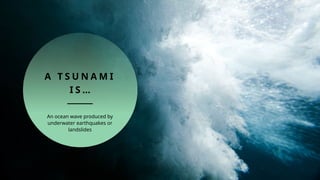
A T S U N A M I
I S …
An ocean wave produced by
underwater earthquakes or
landslides
T S U N A M I
R I S K S
Flooding
Contamination of drinking water
Fires from ruptured tanks or gas
lines
Loss of vital community
infrastructure
Complete devastation of coastal
areas
Death
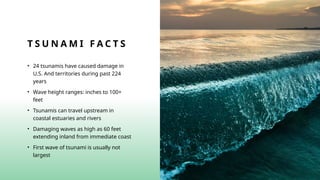
T S U N A M I F A C T S
• 24 tsunamis have caused damage in
U.S. And territories during past 224
years
• Wave height ranges: inches to 100+
feet
• Tsunamis can travel upstream in
coastal estuaries and rivers
• Damaging waves as high as 60 feet
extending inland from immediate coast
• First wave of tsunami is usually not
largest
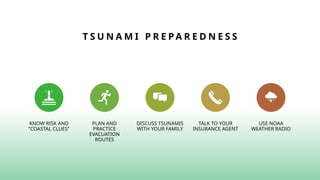
T S U N A M I P R E P A R E D N E S S
KNOW RISK AND
“COASTAL CLUES”
PLAN AND
PRACTICE
EVACUATION
ROUTES
DISCUSS TSUNAMIS
WITH YOUR FAMILY
TALK TO YOUR
INSURANCE AGENT
USE NOAA
WEATHER RADIO
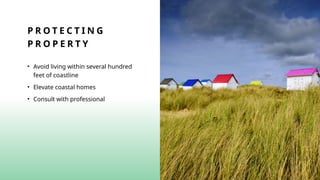
P R O T E C T I N G
P R O P E R T Y
• Avoid living within several hundred
feet of coastline
• Elevate coastal homes
• Consult with professional
T S U N A M I
P R E P A R E D N E S S
• If strong, coastal earthquake occurs:
• Drop, cover, and hold
• When shaking stops, evacuate
quickly to higher ground away from
coast, up to two miles inland
• Gather your family
• Leave everything else behind
• Avoid downed power lines,
buildings, and bridges
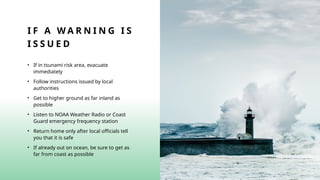
I F A W A R N I N G I S
I S S U E D
• If in tsunami risk area, evacuate
immediately
• Follow instructions issued by local
authorities
• Get to higher ground as far inland as
possible
• Listen to NOAA Weather Radio or Coast
Guard emergency frequency station
• Return home only after local officials tell
you that it is safe
• If already out on ocean, be sure to get as
far from coast as possible
A N Y Q U E R I E S
T H A N K Y O U

Presentationhjsjsjsjjsjsjhsjsjsjsjshhshshsjsj.pptx

  • 1.
    W E LC O M E P.NISHAN 3rd BA ENGLISH LITERATURE
  • 2.
    T S UN A M I S
  • 3.
    A T SU N A M I I S … An ocean wave produced by underwater earthquakes or landslides
  • 4.
    T S UN A M I R I S K S Flooding Contamination of drinking water Fires from ruptured tanks or gas lines Loss of vital community infrastructure Complete devastation of coastal areas Death
  • 5.
    T S UN A M I F A C T S • 24 tsunamis have caused damage in U.S. And territories during past 224 years • Wave height ranges: inches to 100+ feet • Tsunamis can travel upstream in coastal estuaries and rivers • Damaging waves as high as 60 feet extending inland from immediate coast • First wave of tsunami is usually not largest
  • 6.
    T S UN A M I P R E P A R E D N E S S KNOW RISK AND “COASTAL CLUES” PLAN AND PRACTICE EVACUATION ROUTES DISCUSS TSUNAMIS WITH YOUR FAMILY TALK TO YOUR INSURANCE AGENT USE NOAA WEATHER RADIO
  • 7.
    P R OT E C T I N G P R O P E R T Y • Avoid living within several hundred feet of coastline • Elevate coastal homes • Consult with professional
  • 8.
    T S UN A M I P R E P A R E D N E S S • If strong, coastal earthquake occurs: • Drop, cover, and hold • When shaking stops, evacuate quickly to higher ground away from coast, up to two miles inland • Gather your family • Leave everything else behind • Avoid downed power lines, buildings, and bridges
  • 9.
    I F AW A R N I N G I S I S S U E D • If in tsunami risk area, evacuate immediately • Follow instructions issued by local authorities • Get to higher ground as far inland as possible • Listen to NOAA Weather Radio or Coast Guard emergency frequency station • Return home only after local officials tell you that it is safe • If already out on ocean, be sure to get as far from coast as possible
  • 10.
    A N YQ U E R I E S
  • 11.
    T H AN K Y O U