1
Importance of Sustainable harvesting
• To ensure conservation of species through sustainable harvest
• Long term availability of various product in natural ecosystem, making balance between
different biodiversity component.
• To enhance earning of local people in a sustainable manner.
• To eliminate work to women and children mostly engaged in collection of NTFPs.
• Capacity building among the local people towards conservation of natural resources and
organizing themselves for better marketing access and to eliminate the possibility of
distress selling of NTFP.
Harvesting Tools and Techniques
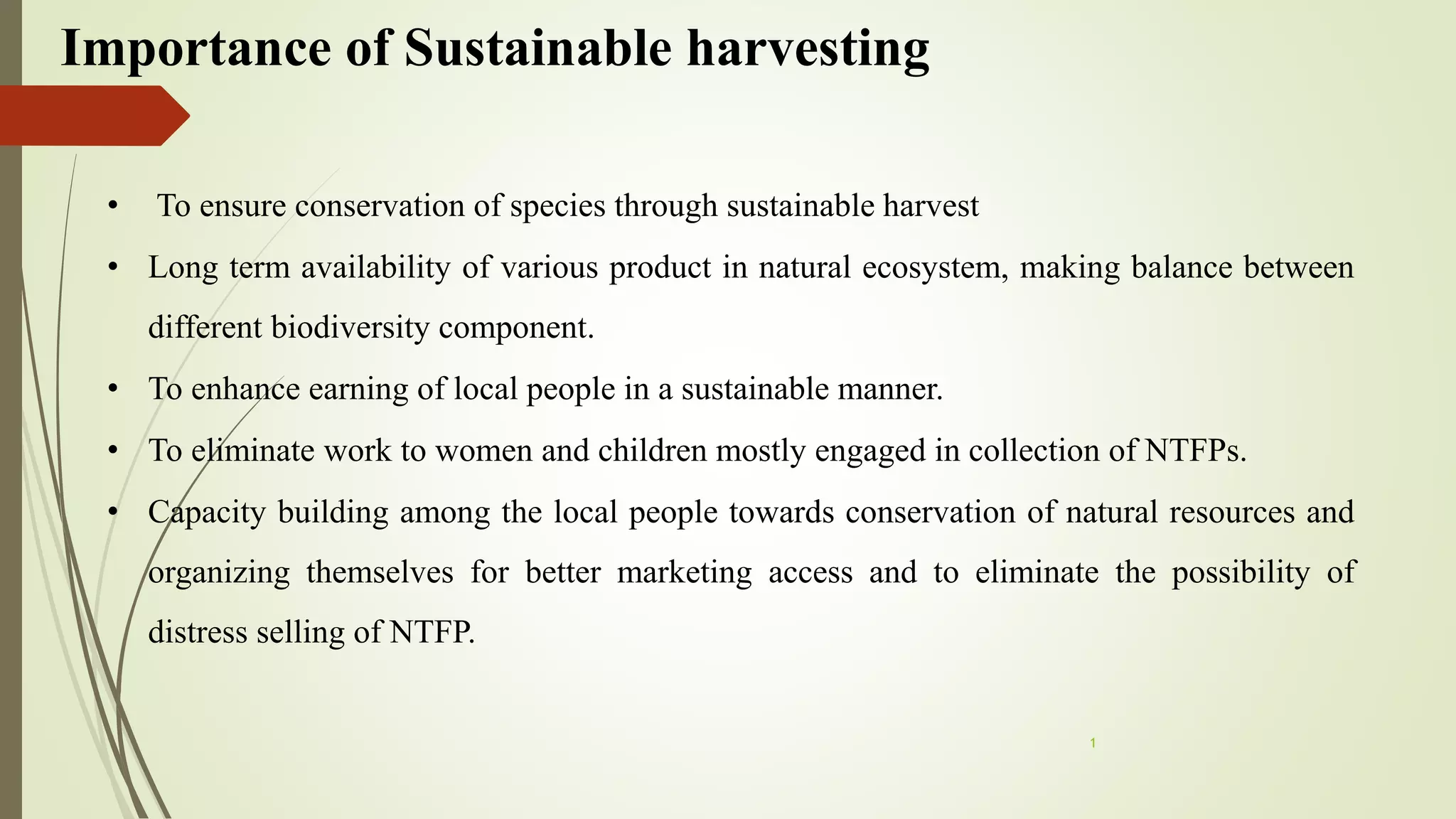
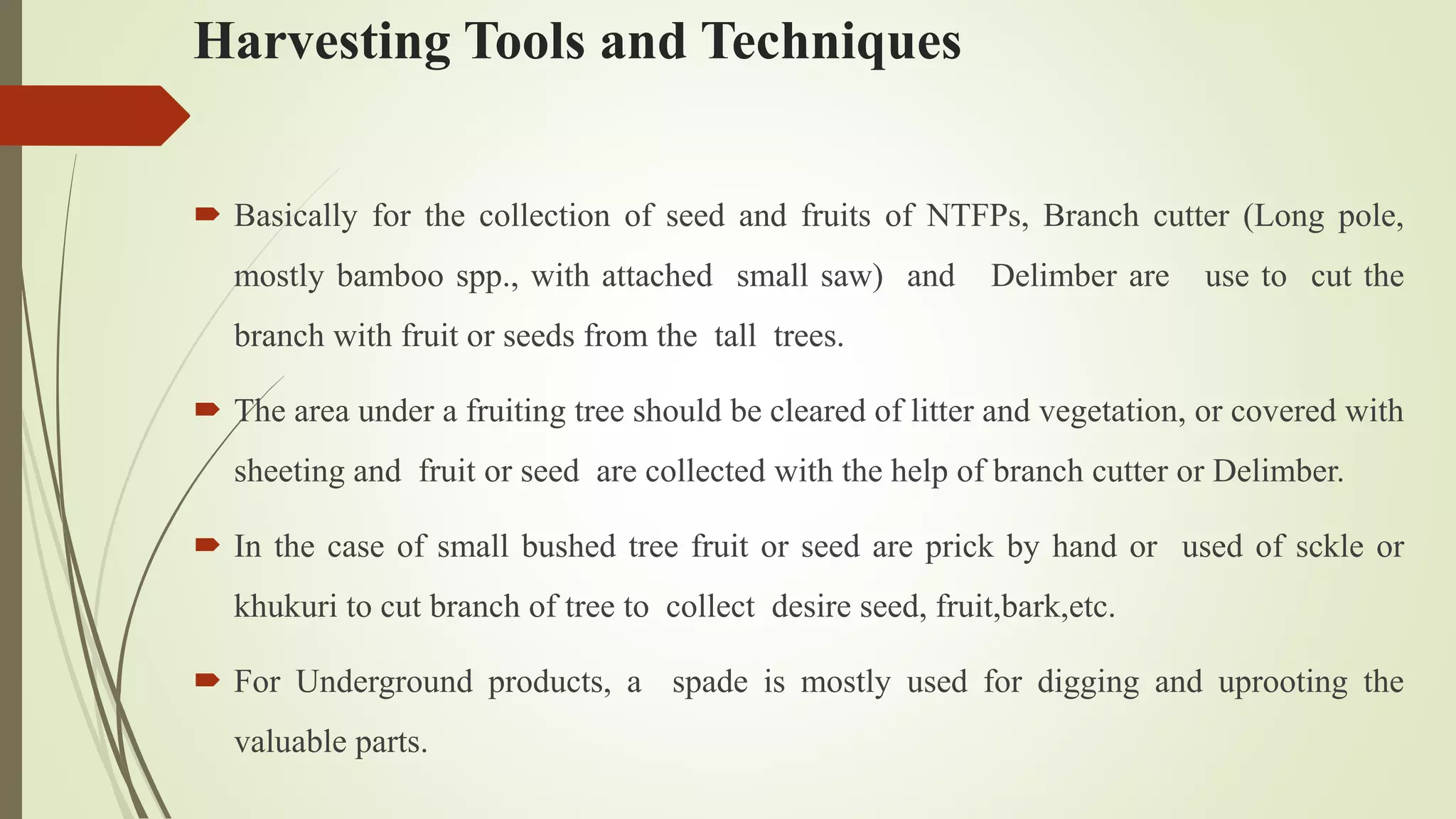
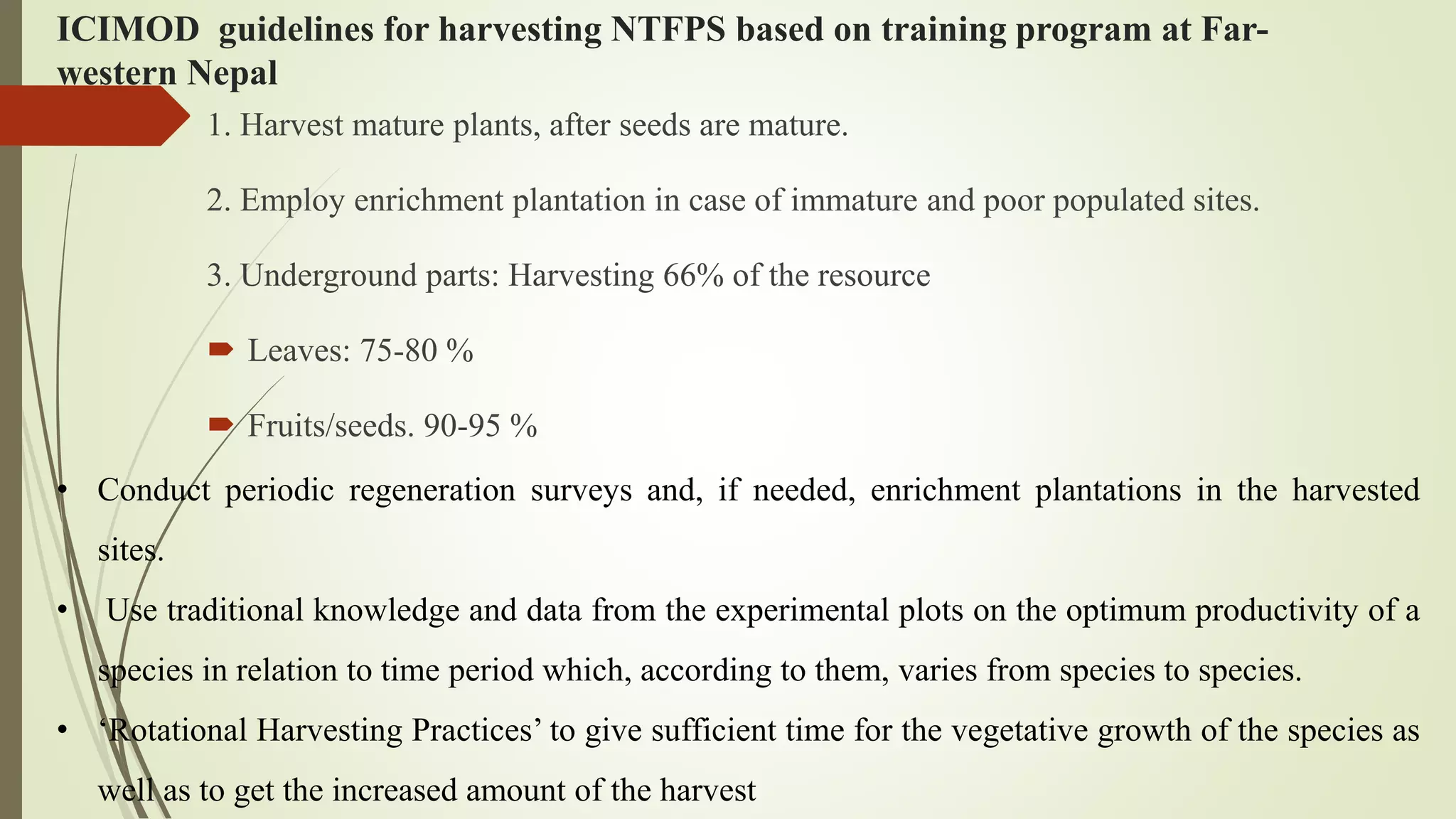
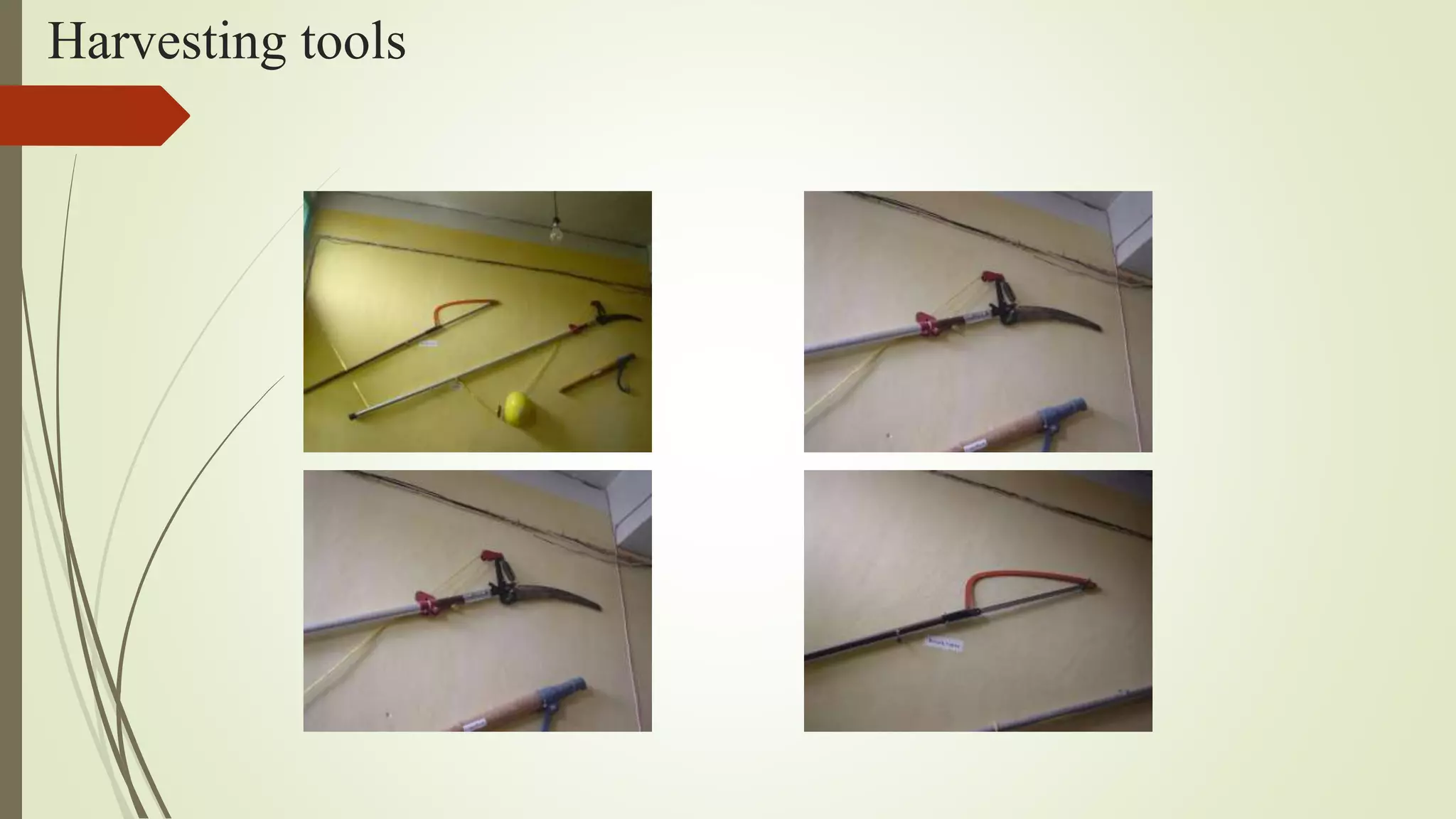
 Basically for the collection of seed and fruits of NTFPs, Branch cutter (Long pole,
mostly bamboo spp., with attached small saw) and Delimber are use to cut the
branch with fruit or seeds from the tall trees.
 The area under a fruiting tree should be cleared of litter and vegetation, or covered with
sheeting and fruit or seed are collected with the help of branch cutter or Delimber.
 In the case of small bushed tree fruit or seed are prick by hand or used of sckle or
khukuri to cut branch of tree to collect desire seed, fruit,bark,etc.
 For Underground products, a spade is mostly used for digging and uprooting the
valuable parts.
ICIMOD guidelines for harvesting NTFPS based on training program at Far-
western Nepal
1. Harvest mature plants, after seeds are mature.
2. Employ enrichment plantation in case of immature and poor populated sites.
3. Underground parts: Harvesting 66% of the resource
 Leaves: 75-80 %
 Fruits/seeds. 90-95 %
• Conduct periodic regeneration surveys and, if needed, enrichment plantations in the harvested
sites.
• Use traditional knowledge and data from the experimental plots on the optimum productivity of a
species in relation to time period which, according to them, varies from species to species.
• ‘Rotational Harvesting Practices’ to give sufficient time for the vegetative growth of the species as
well as to get the increased amount of the harvest
Harvesting tools

Presentation1.pptx

  • 1.
    1 Importance of Sustainableharvesting • To ensure conservation of species through sustainable harvest • Long term availability of various product in natural ecosystem, making balance between different biodiversity component. • To enhance earning of local people in a sustainable manner. • To eliminate work to women and children mostly engaged in collection of NTFPs. • Capacity building among the local people towards conservation of natural resources and organizing themselves for better marketing access and to eliminate the possibility of distress selling of NTFP.
  • 2.
    Harvesting Tools andTechniques  Basically for the collection of seed and fruits of NTFPs, Branch cutter (Long pole, mostly bamboo spp., with attached small saw) and Delimber are use to cut the branch with fruit or seeds from the tall trees.  The area under a fruiting tree should be cleared of litter and vegetation, or covered with sheeting and fruit or seed are collected with the help of branch cutter or Delimber.  In the case of small bushed tree fruit or seed are prick by hand or used of sckle or khukuri to cut branch of tree to collect desire seed, fruit,bark,etc.  For Underground products, a spade is mostly used for digging and uprooting the valuable parts.
  • 3.
    ICIMOD guidelines forharvesting NTFPS based on training program at Far- western Nepal 1. Harvest mature plants, after seeds are mature. 2. Employ enrichment plantation in case of immature and poor populated sites. 3. Underground parts: Harvesting 66% of the resource  Leaves: 75-80 %  Fruits/seeds. 90-95 % • Conduct periodic regeneration surveys and, if needed, enrichment plantations in the harvested sites. • Use traditional knowledge and data from the experimental plots on the optimum productivity of a species in relation to time period which, according to them, varies from species to species. • ‘Rotational Harvesting Practices’ to give sufficient time for the vegetative growth of the species as well as to get the increased amount of the harvest
  • 4.