Introduction to
neuromuscular
facilitation
• Definition and uses of neuromuscular
facilitation
• Demand of activity
• Response of neuromuscular mechanism
• Integrity of motor unit
• Excitability of anterior horn cells
Neuromuscular related to brain
and muscles
Facilitation to make easy
or easier
NF is a set of stretching techniques
commonly used in clinical environments
to enhance both active and passive range
of motion with the ultimate goal being to
optimize motor performance and
rehabilitation
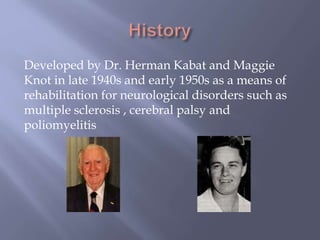
Developed by Dr. Herman Kabat and Maggie
Knot in late 1940s and early 1950s as a means of
rehabilitation for neurological disorders such as
multiple sclerosis , cerebral palsy and
poliomyelitis
• The demands of voluntary effort are normally
capable of producing efficient and purposeful
movement
• These demands are weakened by the factors
which reduces
a) Patient’s ability to exert voluntary action
b) The conductivity of nervous pathways used by
impulses initiated by voluntary effort
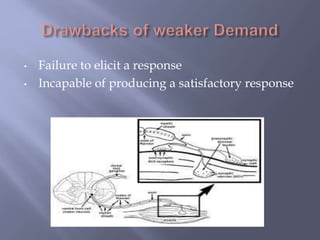
• Failure to elicit a response
• Incapable of producing a satisfactory response
• Makes response easier
• Make weakened demands effective
• Produce efficient and purposeful movement
• Elicit a satisfactory response
• Improve the conductivity of nervous pathways
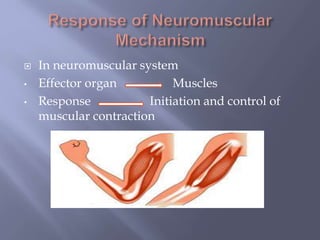
 In neuromuscular system
• Effector organ Muscles
• Response Initiation and control of
muscular contraction
• Integrity of motor unit
• Excitability of anterior horn cells
• Factors which influence the A.H.C
• The conductivity of the pathways of impulses
influencing the A.H.Cs
• Nature of the demand
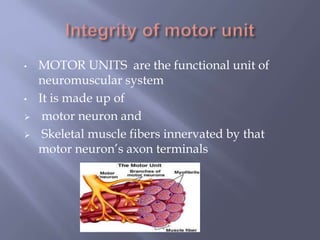
• MOTOR UNITS are the functional unit of
neuromuscular system
• It is made up of
 motor neuron and
 Skeletal muscle fibers innervated by that
motor neuron’s axon terminals
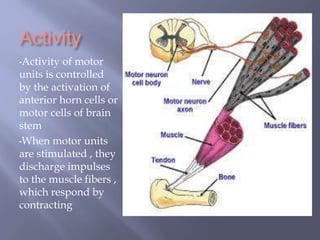
Activity
•Activity of motor
units is controlled
by the activation of
anterior horn cells or
motor cells of brain
stem
•When motor units
are stimulated , they
discharge impulses
to the muscle fibers ,
which respond by
contracting
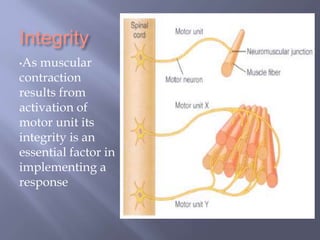
Integrity
•As muscular
contraction
results from
activation of
motor unit its
integrity is an
essential factor in
implementing a
response
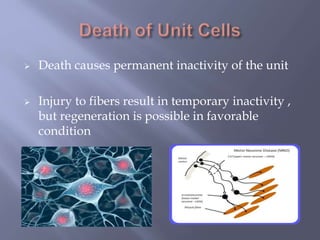
 Death causes permanent inactivity of the unit
 Injury to fibers result in temporary inactivity ,
but regeneration is possible in favorable
condition
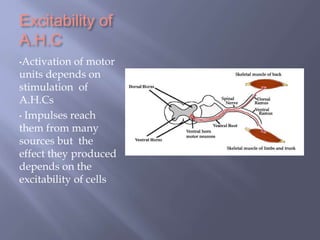
Excitability of
A.H.C
•Activation of motor
units depends on
stimulation of
A.H.Cs
• Impulses reach
them from many
sources but the
effect they produced
depends on the
excitability of cells
• The point at which stimulus is of sufficient
intensity is called threshold
•
• A strong stimulus is required to stimulate cells
with a high threshold of excitability
• Low threshold respond to a relatively weak
stimulus
Threshold of a cell is reduced by
 Repeated stimulation
 Sub-threshold stimuli
Threshold is increased by
 Lack of stimulation
 Trauma caused by some disease process
Such type of cells which are
incapable of responding to
a normal stimulus due to
greater increase in the
threshold
• Repeated bombardment of a strong stimuli
• On the dormant cells
• Reduce their threshold sufficiently
• Make them capable of responding to
stimulation
• And reactivation of motor units is achieved
• Stimuli reaching the A.H.Cs influence large
groups or pools of cells
• Some of which respond by
 Firing
 Others by reduction in their threshold
excitability
 Stronger stimulus
 Greater the effect produced
 Wider sphere of influence
• An increase in the excitability of cells in an area
of C.N.S is referred to an increase in central
excitation and is a means of
 Facilitating the response of neuromuscular
mechanism
 Stimulating A.H.C which have remained
dormant
Presentation1
Presentation1

Presentation1

  • 3.
  • 4.
    • Definition anduses of neuromuscular facilitation • Demand of activity • Response of neuromuscular mechanism • Integrity of motor unit • Excitability of anterior horn cells
  • 5.
    Neuromuscular related tobrain and muscles Facilitation to make easy or easier NF is a set of stretching techniques commonly used in clinical environments to enhance both active and passive range of motion with the ultimate goal being to optimize motor performance and rehabilitation
  • 6.
    Developed by Dr.Herman Kabat and Maggie Knot in late 1940s and early 1950s as a means of rehabilitation for neurological disorders such as multiple sclerosis , cerebral palsy and poliomyelitis
  • 8.
    • The demandsof voluntary effort are normally capable of producing efficient and purposeful movement • These demands are weakened by the factors which reduces a) Patient’s ability to exert voluntary action b) The conductivity of nervous pathways used by impulses initiated by voluntary effort
  • 9.
    • Failure toelicit a response • Incapable of producing a satisfactory response
  • 10.
    • Makes responseeasier • Make weakened demands effective • Produce efficient and purposeful movement • Elicit a satisfactory response • Improve the conductivity of nervous pathways
  • 11.
     In neuromuscularsystem • Effector organ Muscles • Response Initiation and control of muscular contraction
  • 12.
    • Integrity ofmotor unit • Excitability of anterior horn cells • Factors which influence the A.H.C • The conductivity of the pathways of impulses influencing the A.H.Cs • Nature of the demand
  • 13.
    • MOTOR UNITSare the functional unit of neuromuscular system • It is made up of  motor neuron and  Skeletal muscle fibers innervated by that motor neuron’s axon terminals
  • 14.
    Activity •Activity of motor unitsis controlled by the activation of anterior horn cells or motor cells of brain stem •When motor units are stimulated , they discharge impulses to the muscle fibers , which respond by contracting
  • 15.
    Integrity •As muscular contraction results from activationof motor unit its integrity is an essential factor in implementing a response
  • 16.
     Death causespermanent inactivity of the unit  Injury to fibers result in temporary inactivity , but regeneration is possible in favorable condition
  • 17.
    Excitability of A.H.C •Activation ofmotor units depends on stimulation of A.H.Cs • Impulses reach them from many sources but the effect they produced depends on the excitability of cells
  • 18.
    • The pointat which stimulus is of sufficient intensity is called threshold • • A strong stimulus is required to stimulate cells with a high threshold of excitability • Low threshold respond to a relatively weak stimulus
  • 19.
    Threshold of acell is reduced by  Repeated stimulation  Sub-threshold stimuli Threshold is increased by  Lack of stimulation  Trauma caused by some disease process
  • 20.
    Such type ofcells which are incapable of responding to a normal stimulus due to greater increase in the threshold
  • 21.
    • Repeated bombardmentof a strong stimuli • On the dormant cells • Reduce their threshold sufficiently • Make them capable of responding to stimulation • And reactivation of motor units is achieved
  • 22.
    • Stimuli reachingthe A.H.Cs influence large groups or pools of cells • Some of which respond by  Firing  Others by reduction in their threshold excitability
  • 23.
     Stronger stimulus Greater the effect produced  Wider sphere of influence
  • 24.
    • An increasein the excitability of cells in an area of C.N.S is referred to an increase in central excitation and is a means of  Facilitating the response of neuromuscular mechanism  Stimulating A.H.C which have remained dormant