ISLAMIC REPUBLIC OF AFGHANISTAN
MINISTRY OF FOREIGN AFFAIRS
THIRD REGIONAL ECONOMIC COOPERATION
CONFERENCE ON AFGHANISTAN ( RECCA III )
ISLAMABAD, 13 – 14 MAY 2009 (23 – 24 SAUR 1388)
PROGRESS REPORT SINCE THE SECOND REGIONAL ECONOMIC
COOPERATION CONFERENCE ON AFGHANISTAN – NEW DELHI
Regional Economic
Cooperation Conference on
Afghanistan
• Background:
• Objectives,
• Kabul Conference,
• Delhi Conference
• Recommendations
The importance
of regional economic cooperation
• It is increasingly recognized that regional
cooperation can improve country’s
competitiveness.
• It is widely accepted that regional cooperation
is becoming an important tool for achieving
sustainable growth and poverty reduction,
• Integral part of the globalization strategies of
almost all neighboring countries of Afghanistan
Afghanistan
and regional economic cooperation
• The unique position of Afghanistan as a land
bridge,
• Connecting four RECOs to each other,
• Shortest distance between Central and South
Asia,
• Disadvantages, advantages and responsibilities
Afghanistan’s policy towards
regional cooperation
• RC is the corner stone of foreign economic
policy,
• One of the chapters of ANDS is devoted to RC,
• National economic policies and the regional
economic strategies and policies,
• Joining major regional organizations, and
measures taken (legal, administrative and
institutional)
• Afghanistan’s vision of regional cooperation
Afghanistan intends to:
• a) improve trade and transit
opportunities;
• b) integrate itself with the regional rail
and road networks;
• c) be an important partner in regional
energy markets;
• d) eliminate narcotics trade; and
• e) achieve Millennium Development Goals
Afghanistan’s Achievements
Trade and Transit
• Trade facilitation,
• Border infrastructure, border control and management;,
• Plan to build transit facilities, 15 land ports / crossing
points
• Transit,
1)Reactivation of Afghanistan’s contracting party status to the
Customs Convention on the International Transport of goods under
Cover of TIR Carnets (Geneva 14 November 1975),
2) Extensive training of freight forwarders, in coordination with
AFFCO
• 47 bilateral, regional and multilateral trade agreements,
10 agreement under negotiation
Trade and Transit
• Regulatory improvements,
• Private sector development strategy in support
of trade, 10 commercial laws benchmarked till
end of 2009
• Afghanistan Central Business Registry (ACBR)
launched on September 27, 2008, is a “one-stop
shop” for registering businesses in Afghanistan
• Simplified procedure at MoFA and AISA to
expedite registering process
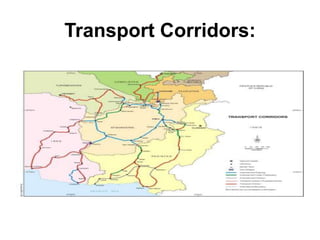
Transport Corridors:
Transportation
• Mountainous landlocked country with an area of
652225 sq km,
• Improving road network,
• National Highways – 3363 km,
• Regional Highways- 4884 km,
• Provincial Roads - 9656 km,
• Rural Roads - 17000 km,
• Ring road
• Rail road
Labor Migration
• Prospects
• Importance of providing vocational training
1) National Development Skill Program
2) AKDN program,
3) Other vocational training programs
• Challenges
• Complexities of concluding agreement with
recipient countries,
• Plight of migrant workers and realities on the
ground
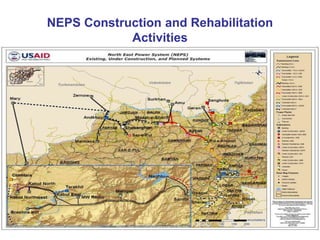
NEPS Construction and Rehabilitation
Activities
Energy
• Afghanistan’s Energy Vision for the Future
• Current Status of Cross Border Energy Trade,
• NEPS,
• Our plans, 10 medium size and large hydro power projects over the
next 10 - 20 years which will generate over11,000 MW,
• Planning responsibly,
• Coal and greenhouse
• Central Asia-South Asia Regional Electricity Market (CASAREM)
• A main route for energy trading between Central and
South Asia.
Recommendations by previous conferences
and our expectations
• Advancing practical aspects of RC,
• Centre for Regional Cooperation,
• Public-Private partnership
• Existing regional groupings should consider integrating
their efforts into a larger single entity,
• Capacity development,
• Credibility and confidence building measures,
• Focus on practical win-win projects, notably in the
fields of energy, transport and trade, agriculture and
mining.
• Better information sharing on key issue, and aviation
liberalization,
• Accelerating the work on TAPI,
Suggestions to participants of RECCA III /
expectations
• The regional countries need to further synchronize the
idea of “centrality of Afghanistan” while formulating their
national foreign economic policies.
• Funding should be provided for the projects identified,
• Public private partnership should be encouraged,
• A mechanism to facilitate and expand labor migration
should be identified at the earliest,
• To endorse and provide funds for the establishment of Regional
Cooperation Center in Afghanistan,
• Funds for the renovation of the airports mentioned in the PR should
be provided,
• Building railway infrastructure in Afghanistan should be given
serious consideration, most countries in the region can not reap the
full benefit of trade in the absence of railway connecting
neighboring countries of Afghanistan to each other.
Note: There is a number of other issues mainly of
technical nature. Distinguished participants can find the
details in the Progress Report distributed by the
Secretariat of the Conference.
Thank you for your attention

Presentation to RECCA 3h MOFA-Afghan.ppt

  • 1.
    ISLAMIC REPUBLIC OFAFGHANISTAN MINISTRY OF FOREIGN AFFAIRS THIRD REGIONAL ECONOMIC COOPERATION CONFERENCE ON AFGHANISTAN ( RECCA III ) ISLAMABAD, 13 – 14 MAY 2009 (23 – 24 SAUR 1388) PROGRESS REPORT SINCE THE SECOND REGIONAL ECONOMIC COOPERATION CONFERENCE ON AFGHANISTAN – NEW DELHI
  • 2.
    Regional Economic Cooperation Conferenceon Afghanistan • Background: • Objectives, • Kabul Conference, • Delhi Conference • Recommendations
  • 3.
    The importance of regionaleconomic cooperation • It is increasingly recognized that regional cooperation can improve country’s competitiveness. • It is widely accepted that regional cooperation is becoming an important tool for achieving sustainable growth and poverty reduction, • Integral part of the globalization strategies of almost all neighboring countries of Afghanistan
  • 4.
    Afghanistan and regional economiccooperation • The unique position of Afghanistan as a land bridge, • Connecting four RECOs to each other, • Shortest distance between Central and South Asia, • Disadvantages, advantages and responsibilities
  • 5.
    Afghanistan’s policy towards regionalcooperation • RC is the corner stone of foreign economic policy, • One of the chapters of ANDS is devoted to RC, • National economic policies and the regional economic strategies and policies, • Joining major regional organizations, and measures taken (legal, administrative and institutional) • Afghanistan’s vision of regional cooperation
  • 6.
    Afghanistan intends to: •a) improve trade and transit opportunities; • b) integrate itself with the regional rail and road networks; • c) be an important partner in regional energy markets; • d) eliminate narcotics trade; and • e) achieve Millennium Development Goals
  • 7.
    Afghanistan’s Achievements Trade andTransit • Trade facilitation, • Border infrastructure, border control and management;, • Plan to build transit facilities, 15 land ports / crossing points • Transit, 1)Reactivation of Afghanistan’s contracting party status to the Customs Convention on the International Transport of goods under Cover of TIR Carnets (Geneva 14 November 1975), 2) Extensive training of freight forwarders, in coordination with AFFCO • 47 bilateral, regional and multilateral trade agreements, 10 agreement under negotiation
  • 8.
    Trade and Transit •Regulatory improvements, • Private sector development strategy in support of trade, 10 commercial laws benchmarked till end of 2009 • Afghanistan Central Business Registry (ACBR) launched on September 27, 2008, is a “one-stop shop” for registering businesses in Afghanistan • Simplified procedure at MoFA and AISA to expedite registering process
  • 9.
  • 10.
    Transportation • Mountainous landlockedcountry with an area of 652225 sq km, • Improving road network, • National Highways – 3363 km, • Regional Highways- 4884 km, • Provincial Roads - 9656 km, • Rural Roads - 17000 km, • Ring road • Rail road
  • 11.
    Labor Migration • Prospects •Importance of providing vocational training 1) National Development Skill Program 2) AKDN program, 3) Other vocational training programs • Challenges • Complexities of concluding agreement with recipient countries, • Plight of migrant workers and realities on the ground
  • 12.
    NEPS Construction andRehabilitation Activities
  • 13.
    Energy • Afghanistan’s EnergyVision for the Future • Current Status of Cross Border Energy Trade, • NEPS, • Our plans, 10 medium size and large hydro power projects over the next 10 - 20 years which will generate over11,000 MW, • Planning responsibly, • Coal and greenhouse • Central Asia-South Asia Regional Electricity Market (CASAREM) • A main route for energy trading between Central and South Asia.
  • 14.
    Recommendations by previousconferences and our expectations • Advancing practical aspects of RC, • Centre for Regional Cooperation, • Public-Private partnership • Existing regional groupings should consider integrating their efforts into a larger single entity, • Capacity development, • Credibility and confidence building measures, • Focus on practical win-win projects, notably in the fields of energy, transport and trade, agriculture and mining.
  • 15.
    • Better informationsharing on key issue, and aviation liberalization, • Accelerating the work on TAPI, Suggestions to participants of RECCA III / expectations • The regional countries need to further synchronize the idea of “centrality of Afghanistan” while formulating their national foreign economic policies. • Funding should be provided for the projects identified, • Public private partnership should be encouraged, • A mechanism to facilitate and expand labor migration should be identified at the earliest,
  • 16.
    • To endorseand provide funds for the establishment of Regional Cooperation Center in Afghanistan, • Funds for the renovation of the airports mentioned in the PR should be provided, • Building railway infrastructure in Afghanistan should be given serious consideration, most countries in the region can not reap the full benefit of trade in the absence of railway connecting neighboring countries of Afghanistan to each other. Note: There is a number of other issues mainly of technical nature. Distinguished participants can find the details in the Progress Report distributed by the Secretariat of the Conference.
  • 17.
    Thank you foryour attention