PRESENTED BY:
Vidhi modi,
7th
Sem B.Pharm.
GUIDED BY.-
Mr. Bhavik patel
Assistant professor,
Dept. of pharmacology,
KJCP, Vadasma,Gujrat
PHARMACOLOGY OF
NITRIC OXIDE
1
INTRODUCTION
 First described in 1979 as a potent relaxant of
peripheral vascular smooth muscle.
 Used by the body as a signaling molecule.
 Serves different functions depending on body system.
i.e. neurotransmitter, vasodilator, bactericide.
 Environmental Pollutant
 First gas known to act as a biological messenger
2
 Nitric oxide is a diatomic free radical
consisting of one atom of nitrogen and one
atom of oxygen
 Lipid soluble and very small for easy passage
between cell membranes
 Short lived, usually degraded or reacted
within a few seconds
 The natural form is a gas
3
Activation of NOS
 Glutamate neurotransmitter binds to NMDA receptors
 Ca++ channels open causing Ca influx into cell
 Activation of calmodulin, which activates NOS
 Mechanism for start of synthesis dependent on body
system
 NO synthesis takes place in endothelial cells, lung
cells, and neuronal cells
4
5
Types of NOS
 nNOS; type I
 Central and peripheral neuronal cells
 Ca+2 dependent, used for neuronal communication
 iNOS; type II
 Most nucleated cells, particularly macrophages
 Independent of intracellular Ca+2
 Inducible in presence of inflammatory cytokines
 cNOS; type III
 Vascular endothelial cells
 Ca+2 dependent
 Vascular regulation
6
BIOSYNTHESIS OF NITRIC OXIDE
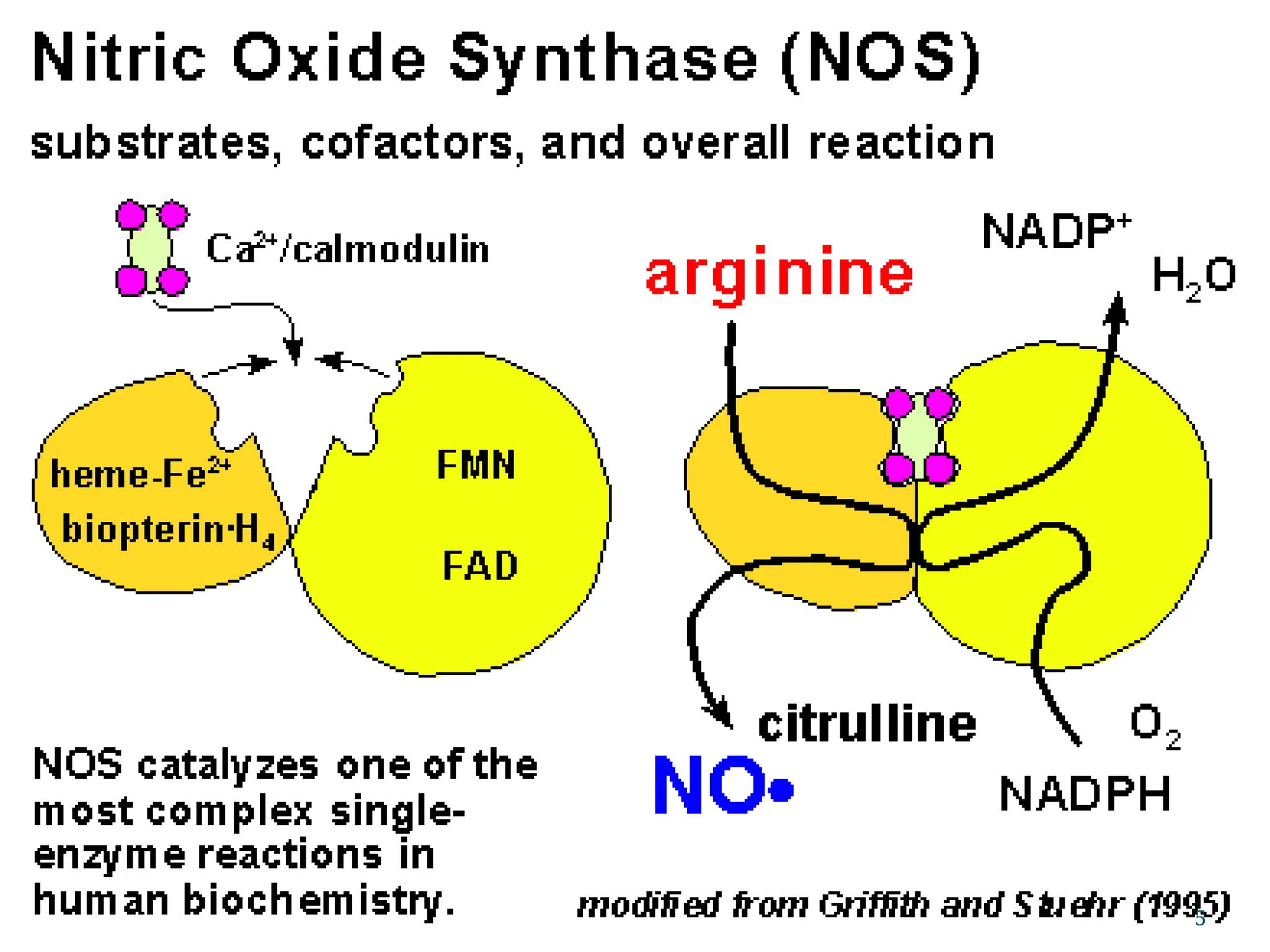
 NO is produced from the amino acid L-arginine by the
enzymatic action of nitric oxide synthase (NOS).
 There are two endothelial forms of NOS:
 constitutive NOS (cNOS; type III)
 inducible NOS (iNOS; type II).
 Co-factors for NOS include oxygen, NADPH,
tetrahydrobiopterin and flavin adenine nucleotides.
 There is a neural NOS (nnos; type I)
7
Ca2+
Ca2+
8
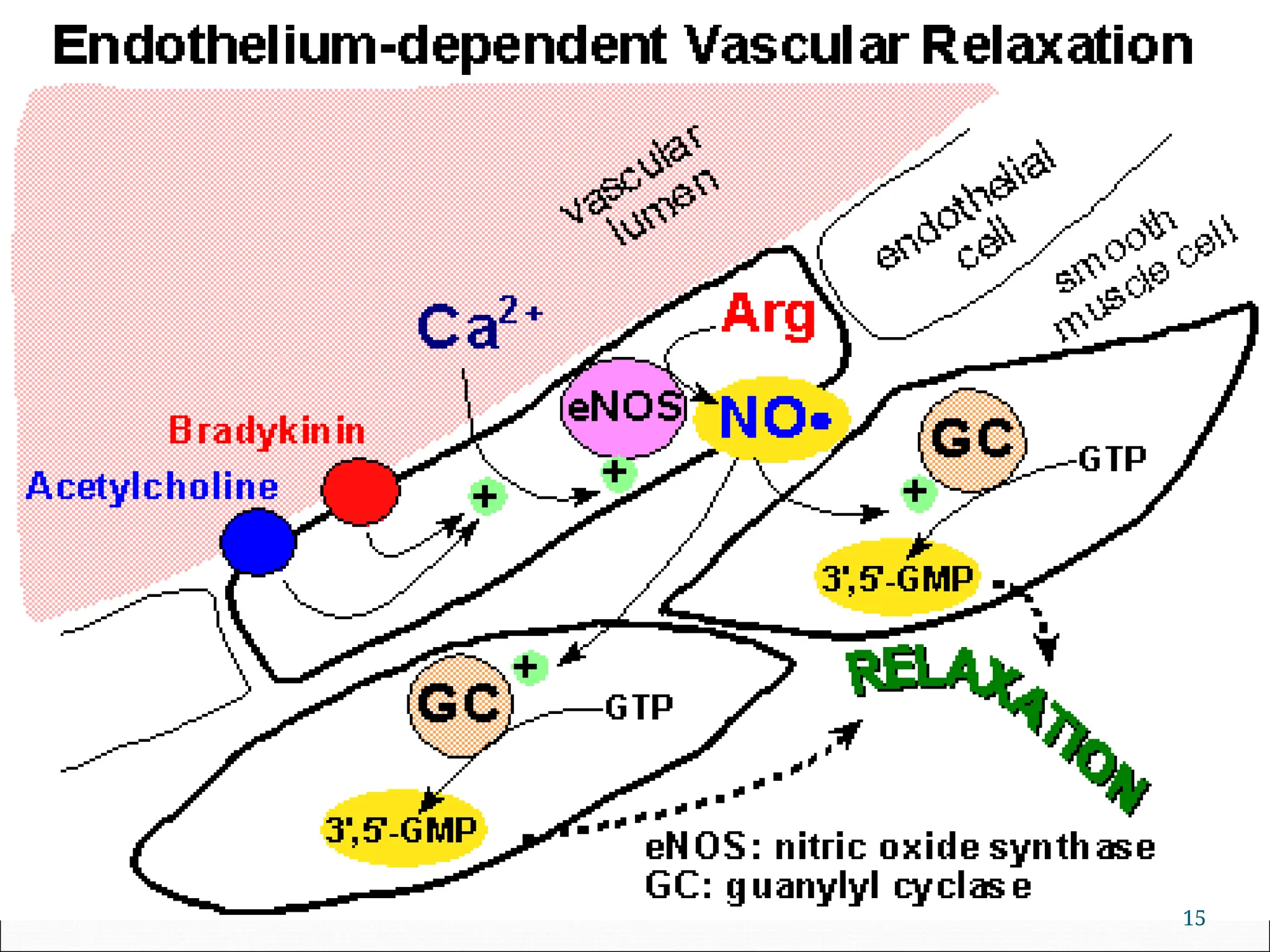
 Under normal, basal conditions in blood vessels, NO is
continually being produced by cNOS. The activity of cNOS
is calcium and calmodulin dependent.
 There are two basic pathways for the stimulation of cNOS,
both of which involve release of calcium ions from
subsarcolemmal storage sites.
 First, shearing forces acting on the vascular endothelium
generated by blood flow causes a release of calcium and
subsequent cNOS activation.

9
 Therefore, increases in blood flow stimulate
NO formation (flow-dependent NO
formation).
 Second, endothelial receptors for a variety of
ligands stimulate calcium release and
subsequent NO production (receptor-
stimulated NO formation).
 Included are receptors for acetylcholine,
bradykinin, substance-P, adenosine, and
many others vasoactive substances.
10
O2
-
O2
-
-----------------------------------
Cu2+
proteins
Fe2+
proteins
O2
O2
11
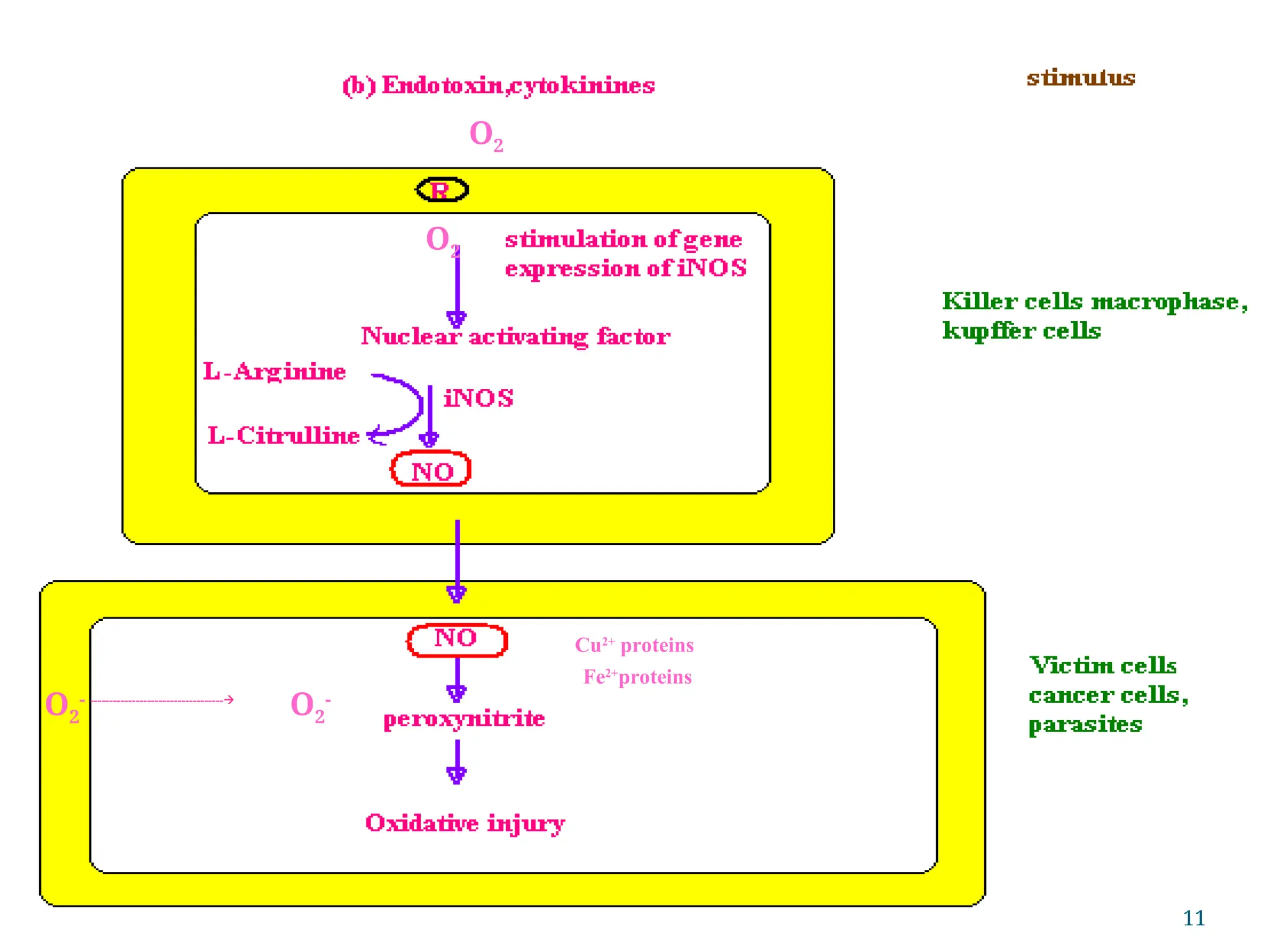
 The other isoform of endothelial NOS is iNOS.
 It differs, in part, from cNOS in that its activation is
calcium independent.
 Under normal, basal conditions, the activity of iNOS
is very low.
 The activity of iNOS is stimulated during
inflammation by bacterial endotoxins (e.g.,
lipopolysaccharide) and cytokines such as tumor
necrosis factor (TNF) and interleukins.
 During inflammation, the amount of NO produced by
iNOS may be a 1,000-fold greater than that produced
by cNOS.
12
 In addition to endothelial NOS, there is a neural NOS
(nNOS; type I) that serves as a transmitter in the brain
and in different nerves of the peripheral nervous
system, such as non-adrenergic, non-cholinergic
(NANC) autonomic nerves that innervate penile
erectile tissues and other specialized tissues in the
body to produce vasodilation.
13
Intracellular Mechanisms
 When NO forms, it has a half-life of only a few
seconds, in large part because superoxide anion has a
high affinity for NO
 Therefore, superoxide anion reduces NO
bioavailability. NO also avidly binds to the heme
moiety of hemoglobin (in red blood cells) and the heme
moiety of the enzyme guanylyl cyclase, which is found
in vascular smooth muscle cells and most other cells of
the body.
 Therefore, when NO is formed by vascular
endothelium, it rapidly diffuses into the blood where it
binds to hemoglobin and subsequently broken down.
14
15
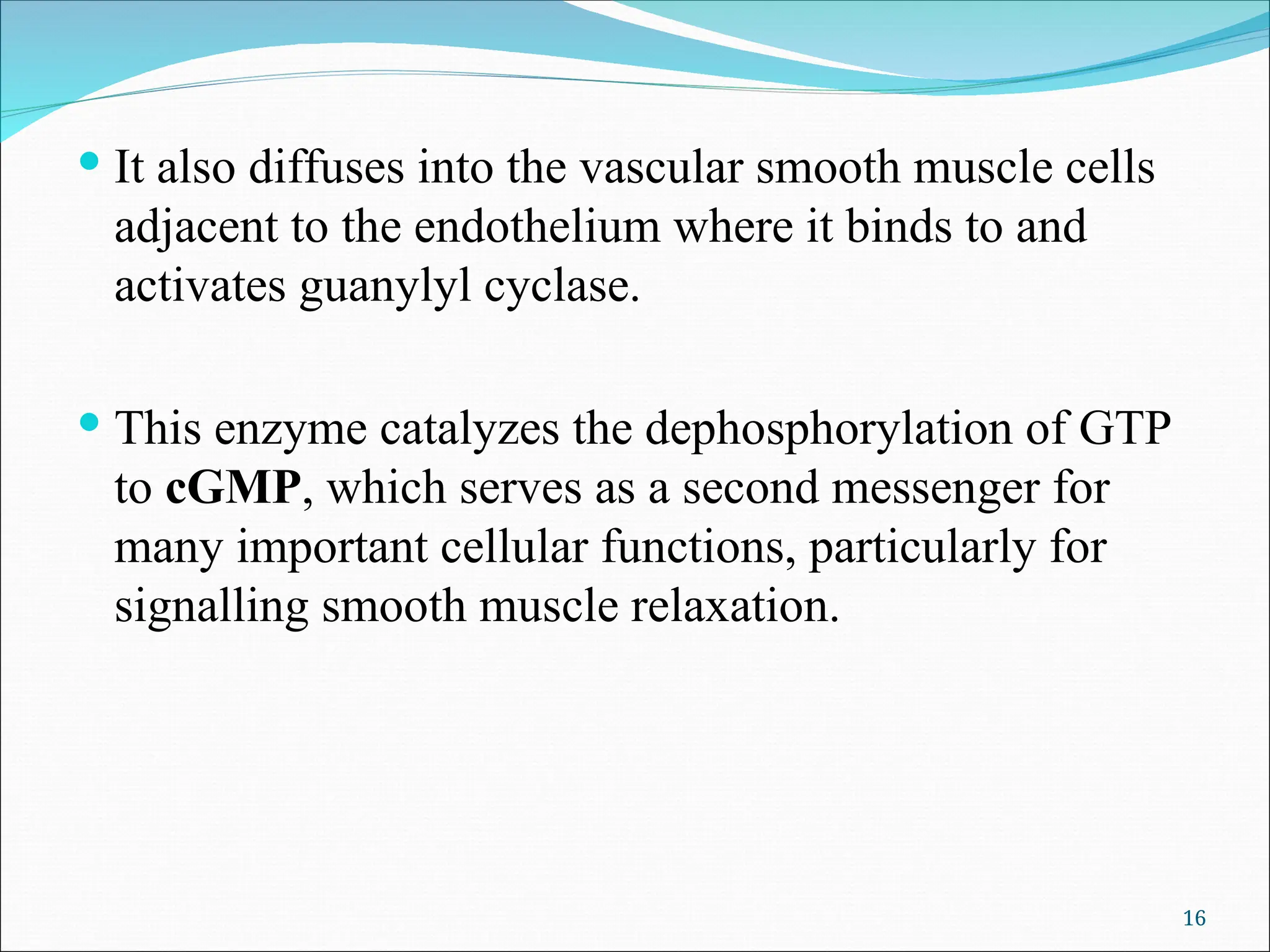
 It also diffuses into the vascular smooth muscle cells
adjacent to the endothelium where it binds to and
activates guanylyl cyclase.
 This enzyme catalyzes the dephosphorylation of GTP
to cGMP, which serves as a second messenger for
many important cellular functions, particularly for
signalling smooth muscle relaxation.
16
What is the role of Nitric Oxide in the
human body?
human body?
 Nitric Oxide in the human body has many uses which
are best summarized under five categories.
 NO in the nervous system
 NO in the circulatory system
 NO in the muscular system
 NO in the immune system
 NO in the digestive system
17
Nitric Oxide in the Nervous System
 Nitric oxide as a neurotransmitter
 NO is a signaling molecule, but not necessarily a
neurotransmitter
 NO signals inhibition of smooth muscle contraction, adaptive
relaxation, and localized vasodilation
 Nitric oxide believed to play a role in long term memory
 Synthesis mechanism involving Ca/Calmodulin activates NOS-I
 NO travels from postsynaptic neuron back to presynaptic neuron
which activates guanylyl cyclase, the enzyme that catalyzes
cGMP production
 This starts a cycle of nerve action potentials driven by
NO
18
Is Nitric Oxide “neurotransmitter?”
 NO serves in the body as a neurotransmitter, but there are
definite differences between other neurotransmitters used
commonly in the body
 NO is synthesized on demand vs. constant synthesis
 NO diffuses out of the cells making it vs. storage in vesicles
and release by exocytosis
 NO does not bind to surface receptors, but instead exits
cytoplasm, enters the target cell, and binds with intracellular
guanylyl cyclase
 Similarities to normal NTs
 Present in presynaptic terminal
 Natural removal from synaptic junction
19
Nitric Oxide in the Circulatory System
 NO serves as a vasodilator
 Released in response to high blood flow rate and
signaling molecules (Ach and bradykinin)
 NO aids in gas exchange between hemoglobin and cells
 Hemoglobin is a vasoconstrictor, Fe scavenges NO
 NO is protected by cysteine group when O2 binds to
hemoglobin
 During O2 delivery, NO locally dilates blood vessels to
aid in gas exchange
 Excess NO is picked up by HGB with CO2
20
Nitric Oxide in the Muscular System
 NO was orginally called EDRF (endothelium derived
relaxation factor)
 NO signals inhibition of smooth muscle contraction
 Ca+2 is released from the vascular lumen activating
NOS
 NO is synthesized from NOS III in vascular
endothelial cells
 This causes guanylyl cyclase to produce cGMP
 A rise in cGMP causes Ca+2 pumps to be activated,
thus reducing Ca+2 concentration in the cell
 This causes muscle relaxation
21
Nitric Oxide in the Immune System
 NOS II catalyzes synthesis of NO used in host defense
reactions
 Activation of NOS II is independent of Ca+2 in the cell.
 Synthesis of NO happens in most nucleated cells,
particularly macrophages.
 NO is a potent inhibitor of viral replication.
 NO is a bactericidal agent
 NO is created from the nitrates extracted from food near
the gums.
 This kills bacteria in the mouth that may be harmful to
the body .
22
Nitric Oxide in the Digestive Syste
Nitric Oxide in the Digestive System
m
 NO is used in adaptive relaxation
 NO promotes the stretching of the stomach in
response to filling.
 When the stomach gets full, stretch receptors
trigger smooth muscle relaxation through NO
releasing neurons
23
THERAPEUTIC USES OF NITRIC
OXIDE MODULATORS
 Nitric oxide:
 Inhalation of high concentration of NO causes acute
pulmonary oedema and methaemoglobinaemia, but
concentrations below 50 ppm do not appear to be
toxic.
 NO at 5- 300 ppm inhibits bronchoconstriction in
guinea pigs,but the main action of inhalaled NO is
pulmonary vasodilation.
24
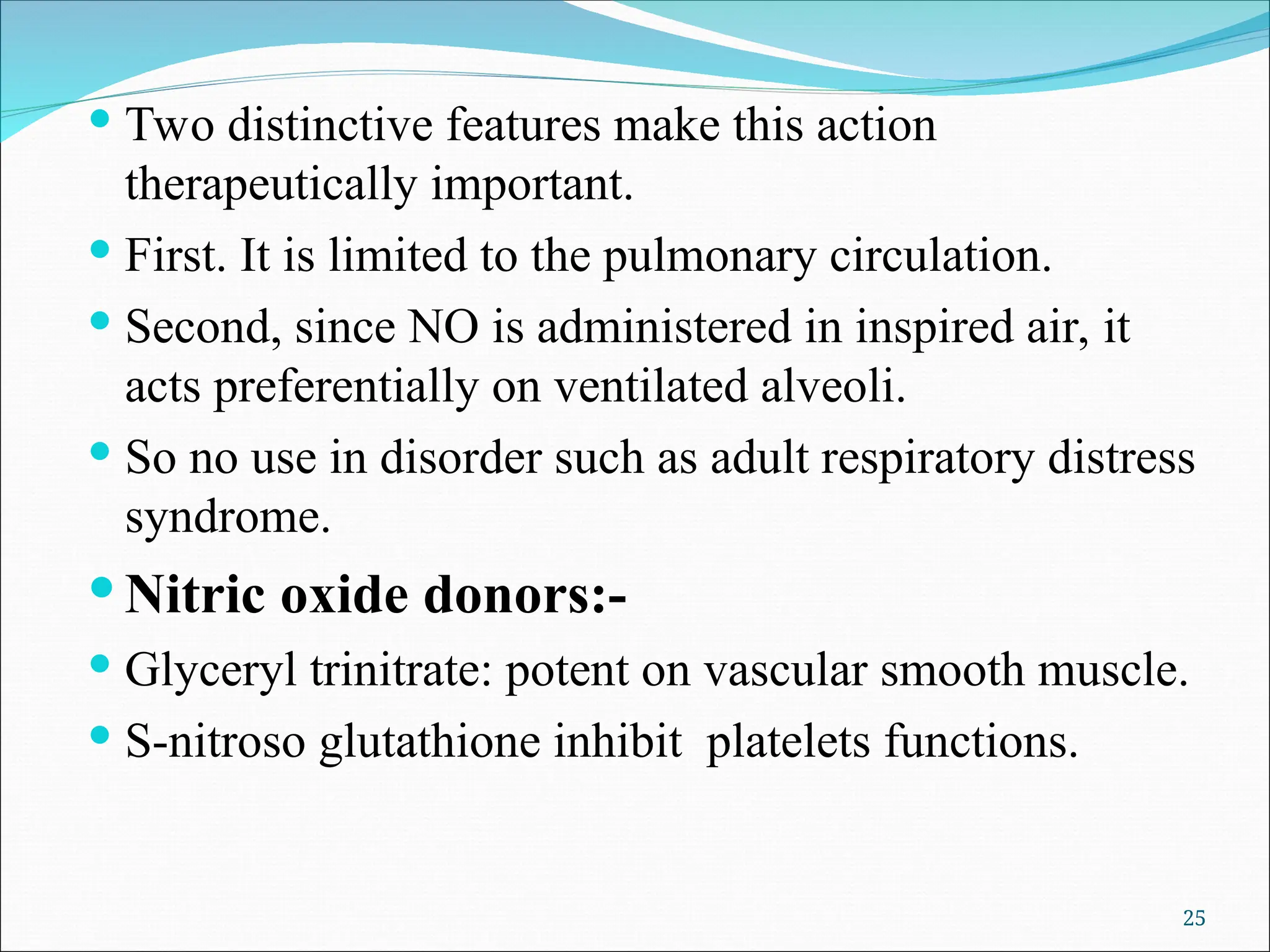
 Two distinctive features make this action
therapeutically important.
 First. It is limited to the pulmonary circulation.
 Second, since NO is administered in inspired air, it
acts preferentially on ventilated alveoli.
 So no use in disorder such as adult respiratory distress
syndrome.
 Nitric oxide donors:-
 Glyceryl trinitrate: potent on vascular smooth muscle.
 S-nitroso glutathione inhibit platelets functions.
25
Nitric oxide inhibitors:-
Ex..
N –monomethyl L-arg inine (L-NMMA)
N-nitro- l-arginine methyl ester (L-NAME)
Both may be beneficial in in patients with
hypotension from multiple organ failure.
26
New research ideas involving Nitric
Oxide
Oxide
 The role NO might play in neuronal development
 The mechanism of NO inhibiting the different forms
of NOS.
 Diazeniumdiolates as NO releasing drugs
 Excessive NO release as the cause of most brain
damage after stroke.
27
THANK YOU
28

presentation on nitric oxide COLOGY.ppt

  • 1.
    PRESENTED BY: Vidhi modi, 7th SemB.Pharm. GUIDED BY.- Mr. Bhavik patel Assistant professor, Dept. of pharmacology, KJCP, Vadasma,Gujrat PHARMACOLOGY OF NITRIC OXIDE 1
  • 2.
    INTRODUCTION  First describedin 1979 as a potent relaxant of peripheral vascular smooth muscle.  Used by the body as a signaling molecule.  Serves different functions depending on body system. i.e. neurotransmitter, vasodilator, bactericide.  Environmental Pollutant  First gas known to act as a biological messenger 2
  • 3.
     Nitric oxideis a diatomic free radical consisting of one atom of nitrogen and one atom of oxygen  Lipid soluble and very small for easy passage between cell membranes  Short lived, usually degraded or reacted within a few seconds  The natural form is a gas 3
  • 4.
    Activation of NOS Glutamate neurotransmitter binds to NMDA receptors  Ca++ channels open causing Ca influx into cell  Activation of calmodulin, which activates NOS  Mechanism for start of synthesis dependent on body system  NO synthesis takes place in endothelial cells, lung cells, and neuronal cells 4
  • 5.
  • 6.
    Types of NOS nNOS; type I  Central and peripheral neuronal cells  Ca+2 dependent, used for neuronal communication  iNOS; type II  Most nucleated cells, particularly macrophages  Independent of intracellular Ca+2  Inducible in presence of inflammatory cytokines  cNOS; type III  Vascular endothelial cells  Ca+2 dependent  Vascular regulation 6
  • 7.
    BIOSYNTHESIS OF NITRICOXIDE  NO is produced from the amino acid L-arginine by the enzymatic action of nitric oxide synthase (NOS).  There are two endothelial forms of NOS:  constitutive NOS (cNOS; type III)  inducible NOS (iNOS; type II).  Co-factors for NOS include oxygen, NADPH, tetrahydrobiopterin and flavin adenine nucleotides.  There is a neural NOS (nnos; type I) 7
  • 8.
  • 9.
     Under normal,basal conditions in blood vessels, NO is continually being produced by cNOS. The activity of cNOS is calcium and calmodulin dependent.  There are two basic pathways for the stimulation of cNOS, both of which involve release of calcium ions from subsarcolemmal storage sites.  First, shearing forces acting on the vascular endothelium generated by blood flow causes a release of calcium and subsequent cNOS activation.  9
  • 10.
     Therefore, increasesin blood flow stimulate NO formation (flow-dependent NO formation).  Second, endothelial receptors for a variety of ligands stimulate calcium release and subsequent NO production (receptor- stimulated NO formation).  Included are receptors for acetylcholine, bradykinin, substance-P, adenosine, and many others vasoactive substances. 10
  • 11.
  • 12.
     The otherisoform of endothelial NOS is iNOS.  It differs, in part, from cNOS in that its activation is calcium independent.  Under normal, basal conditions, the activity of iNOS is very low.  The activity of iNOS is stimulated during inflammation by bacterial endotoxins (e.g., lipopolysaccharide) and cytokines such as tumor necrosis factor (TNF) and interleukins.  During inflammation, the amount of NO produced by iNOS may be a 1,000-fold greater than that produced by cNOS. 12
  • 13.
     In additionto endothelial NOS, there is a neural NOS (nNOS; type I) that serves as a transmitter in the brain and in different nerves of the peripheral nervous system, such as non-adrenergic, non-cholinergic (NANC) autonomic nerves that innervate penile erectile tissues and other specialized tissues in the body to produce vasodilation. 13
  • 14.
    Intracellular Mechanisms  WhenNO forms, it has a half-life of only a few seconds, in large part because superoxide anion has a high affinity for NO  Therefore, superoxide anion reduces NO bioavailability. NO also avidly binds to the heme moiety of hemoglobin (in red blood cells) and the heme moiety of the enzyme guanylyl cyclase, which is found in vascular smooth muscle cells and most other cells of the body.  Therefore, when NO is formed by vascular endothelium, it rapidly diffuses into the blood where it binds to hemoglobin and subsequently broken down. 14
  • 15.
  • 16.
     It alsodiffuses into the vascular smooth muscle cells adjacent to the endothelium where it binds to and activates guanylyl cyclase.  This enzyme catalyzes the dephosphorylation of GTP to cGMP, which serves as a second messenger for many important cellular functions, particularly for signalling smooth muscle relaxation. 16
  • 17.
    What is therole of Nitric Oxide in the What is the role of Nitric Oxide in the human body? human body?  Nitric Oxide in the human body has many uses which are best summarized under five categories.  NO in the nervous system  NO in the circulatory system  NO in the muscular system  NO in the immune system  NO in the digestive system 17
  • 18.
    Nitric Oxide inthe Nervous System Nitric Oxide in the Nervous System  Nitric oxide as a neurotransmitter  NO is a signaling molecule, but not necessarily a neurotransmitter  NO signals inhibition of smooth muscle contraction, adaptive relaxation, and localized vasodilation  Nitric oxide believed to play a role in long term memory  Synthesis mechanism involving Ca/Calmodulin activates NOS-I  NO travels from postsynaptic neuron back to presynaptic neuron which activates guanylyl cyclase, the enzyme that catalyzes cGMP production  This starts a cycle of nerve action potentials driven by NO 18
  • 19.
    Is Nitric Oxide“neurotransmitter?”  NO serves in the body as a neurotransmitter, but there are definite differences between other neurotransmitters used commonly in the body  NO is synthesized on demand vs. constant synthesis  NO diffuses out of the cells making it vs. storage in vesicles and release by exocytosis  NO does not bind to surface receptors, but instead exits cytoplasm, enters the target cell, and binds with intracellular guanylyl cyclase  Similarities to normal NTs  Present in presynaptic terminal  Natural removal from synaptic junction 19
  • 20.
    Nitric Oxide inthe Circulatory System Nitric Oxide in the Circulatory System  NO serves as a vasodilator  Released in response to high blood flow rate and signaling molecules (Ach and bradykinin)  NO aids in gas exchange between hemoglobin and cells  Hemoglobin is a vasoconstrictor, Fe scavenges NO  NO is protected by cysteine group when O2 binds to hemoglobin  During O2 delivery, NO locally dilates blood vessels to aid in gas exchange  Excess NO is picked up by HGB with CO2 20
  • 21.
    Nitric Oxide inthe Muscular System Nitric Oxide in the Muscular System  NO was orginally called EDRF (endothelium derived relaxation factor)  NO signals inhibition of smooth muscle contraction  Ca+2 is released from the vascular lumen activating NOS  NO is synthesized from NOS III in vascular endothelial cells  This causes guanylyl cyclase to produce cGMP  A rise in cGMP causes Ca+2 pumps to be activated, thus reducing Ca+2 concentration in the cell  This causes muscle relaxation 21
  • 22.
    Nitric Oxide inthe Immune System Nitric Oxide in the Immune System  NOS II catalyzes synthesis of NO used in host defense reactions  Activation of NOS II is independent of Ca+2 in the cell.  Synthesis of NO happens in most nucleated cells, particularly macrophages.  NO is a potent inhibitor of viral replication.  NO is a bactericidal agent  NO is created from the nitrates extracted from food near the gums.  This kills bacteria in the mouth that may be harmful to the body . 22
  • 23.
    Nitric Oxide inthe Digestive Syste Nitric Oxide in the Digestive System m  NO is used in adaptive relaxation  NO promotes the stretching of the stomach in response to filling.  When the stomach gets full, stretch receptors trigger smooth muscle relaxation through NO releasing neurons 23
  • 24.
    THERAPEUTIC USES OFNITRIC OXIDE MODULATORS  Nitric oxide:  Inhalation of high concentration of NO causes acute pulmonary oedema and methaemoglobinaemia, but concentrations below 50 ppm do not appear to be toxic.  NO at 5- 300 ppm inhibits bronchoconstriction in guinea pigs,but the main action of inhalaled NO is pulmonary vasodilation. 24
  • 25.
     Two distinctivefeatures make this action therapeutically important.  First. It is limited to the pulmonary circulation.  Second, since NO is administered in inspired air, it acts preferentially on ventilated alveoli.  So no use in disorder such as adult respiratory distress syndrome.  Nitric oxide donors:-  Glyceryl trinitrate: potent on vascular smooth muscle.  S-nitroso glutathione inhibit platelets functions. 25
  • 26.
    Nitric oxide inhibitors:- Ex.. N–monomethyl L-arg inine (L-NMMA) N-nitro- l-arginine methyl ester (L-NAME) Both may be beneficial in in patients with hypotension from multiple organ failure. 26
  • 27.
    New research ideasinvolving Nitric New research ideas involving Nitric Oxide Oxide  The role NO might play in neuronal development  The mechanism of NO inhibiting the different forms of NOS.  Diazeniumdiolates as NO releasing drugs  Excessive NO release as the cause of most brain damage after stroke. 27
  • 28.