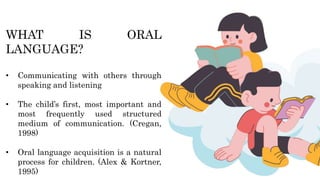
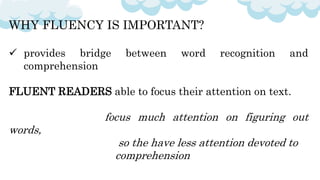
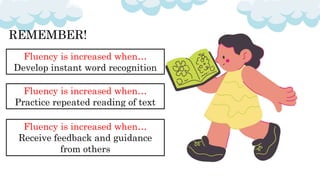
This document discusses the importance of oral language development for building literacy. It defines oral language as communicating through speaking and listening, which is children's primary means of communication. The objectives are to explain how oral language development supports literacy, identify factors that help develop learners' oral skills, determine activities to promote oral language, and provide sample activities. It also discusses the concepts of automaticity, fluency, and their importance for reading comprehension. Fluency bridges word recognition and comprehension by freeing cognitive resources to focus on meaning.





![[Appendix 1 a] rpms tool for proficient teachers sy 2021 2022 in the time of ...](https://cdn.slidesharecdn.com/ss_thumbnails/appendix1arpmstoolforproficientteacherssy2021-2022inthetimeofcovid-19-220227032321-thumbnail.jpg?width=640&height=640&fit=bounds)


