Ontology as Knowledge Base
             for Spatial Data Harmonization


                Otakar Cerba, Karel Charvat

    University of West Bohemia, Plzen, Czech Republic
  Help Service Remote Sensing, Benesov, Czech Republic


26.06.2012                INSPIRE 2012                   1
Objectives

 
     Spatial data harmonization – basics
 
     Domain ontology – theory & essential principles
 
     Harmonization ontology – components
 
     Example of harmonization based on ontology
 
     Conclusion


26.06.2012                 INSPIRE 2012                2
Spatial data harmonization

 
     Activity for elimination or reduction of
     heterogeneities of various properties of spatial
     data to support interoperability
 
     The elimination of the aspects of spatial data
     heterogeneity cannot be based on a creation of some
     uniform rules and data models, because, there are
     too many subjects with individual requirements –
     formats, precision, reference systems, terminology...
 
     The harmonization processes should be divided into
     small and simple substeps

26.06.2012                 INSPIRE 2012                      3
Conditions of successful harmonization

 
     Theoretical knowledge (domain, geomatic, IT...)
 
     Understandable user requirements
 
     Cooperation of experts
 
     Sequence of harmonization substeps
 
     Multi-level data description


26.06.2012                   INSPIRE 2012              4
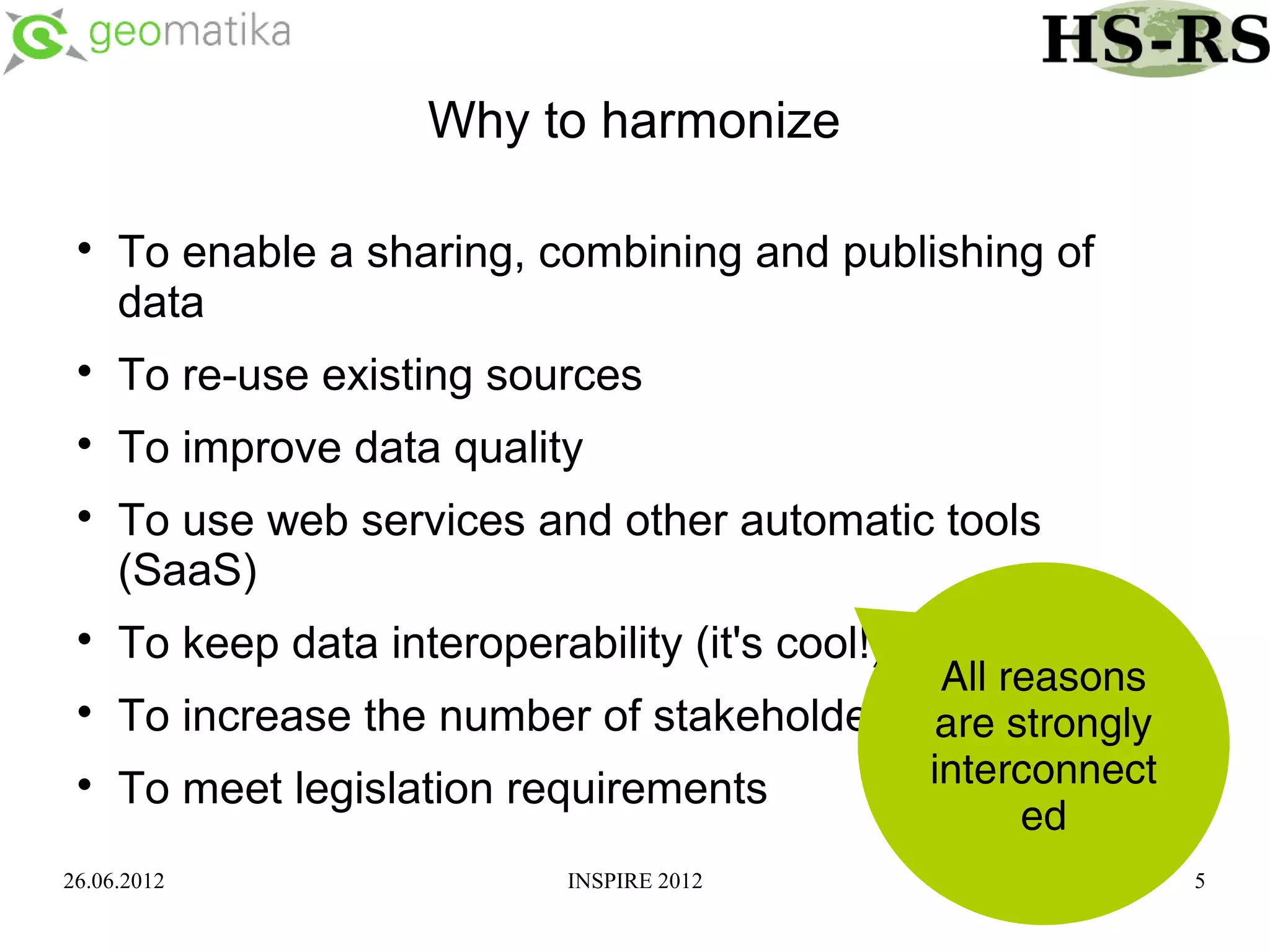
Why to harmonize

 
     To enable a sharing, combining and publishing of
     data
 
     To re-use existing sources
 
     To improve data quality
 
     To use web services and other automatic tools
     (SaaS)
 
     To keep data interoperability (it's cool!)
                                             All reasons
 
     To increase the number of stakeholders are strongly
 
     To meet legislation requirements       interconnect
                                                  ed
26.06.2012                   INSPIRE 2012                  5
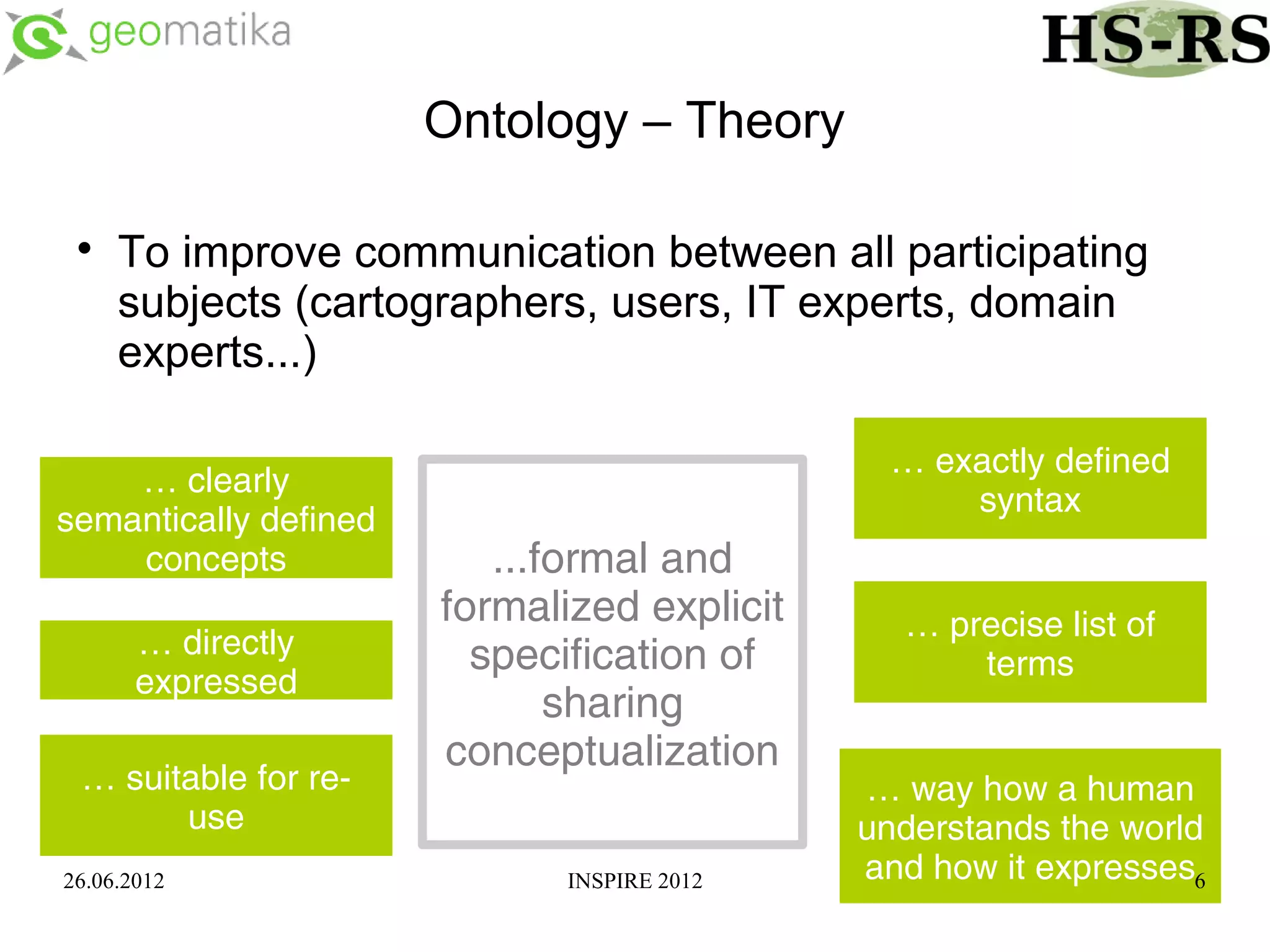
Ontology – Theory

 
     To improve communication between all participating
     subjects (cartographers, users, IT experts, domain
     experts...)

                                              … exactly defined
    … clearly
                                                  syntax
semantically defined
    concepts              ...formal and
                       formalized explicit     … precise list of
       … directly        specification of          terms
       expressed
                              sharing
                       conceptualization
 … suitable for re-                          … way how a human
       use                                   understands the world
26.06.2012                    INSPIRE 2012   and how it expresses6
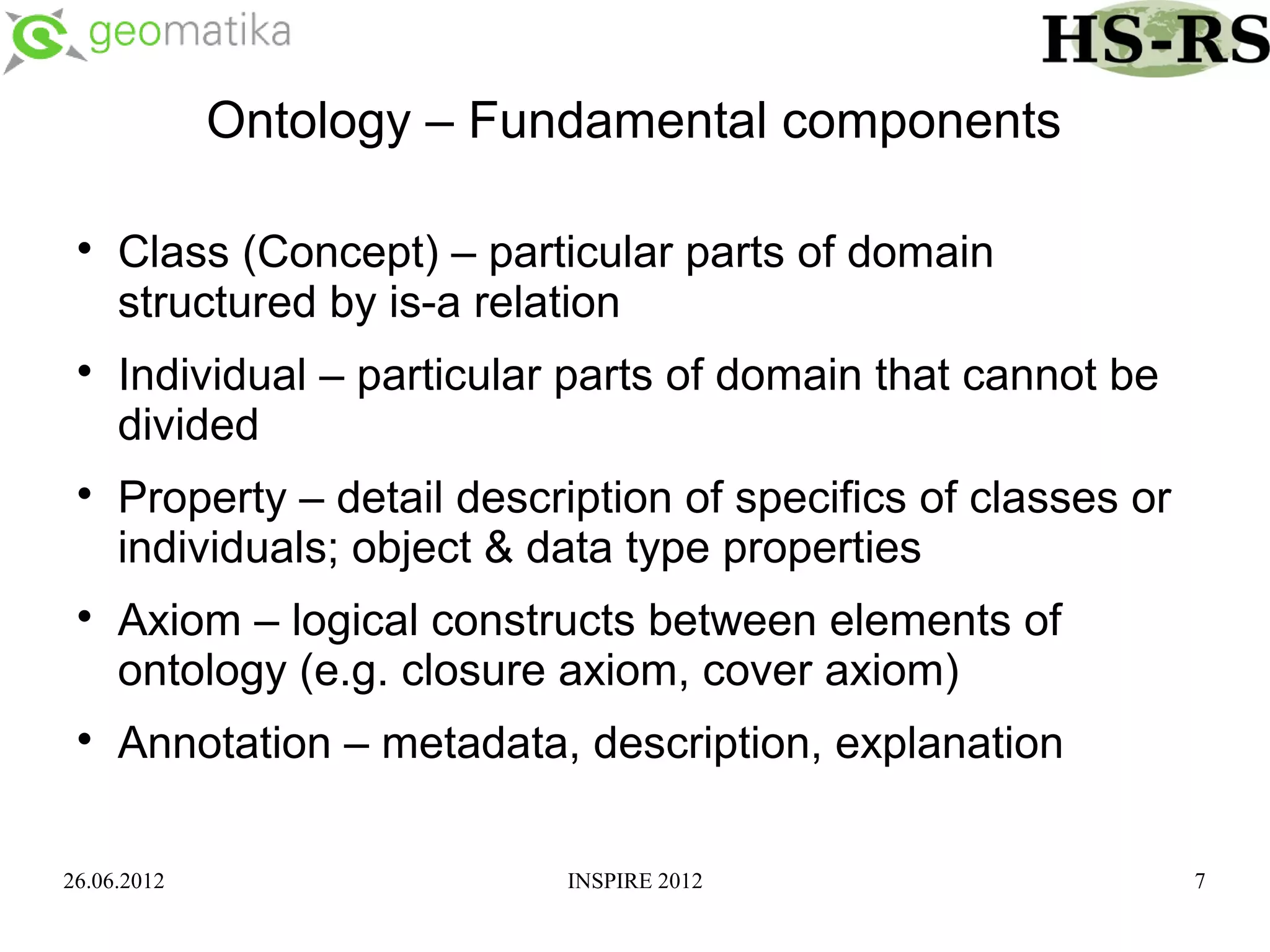
Ontology – Fundamental components

 
     Class (Concept) – particular parts of domain
     structured by is-a relation
 
     Individual – particular parts of domain that cannot be
     divided
 
     Property – detail description of specifics of classes or
     individuals; object & data type properties
 
     Axiom – logical constructs between elements of
     ontology (e.g. closure axiom, cover axiom)
 
     Annotation – metadata, description, explanation

26.06.2012                  INSPIRE 2012                        7
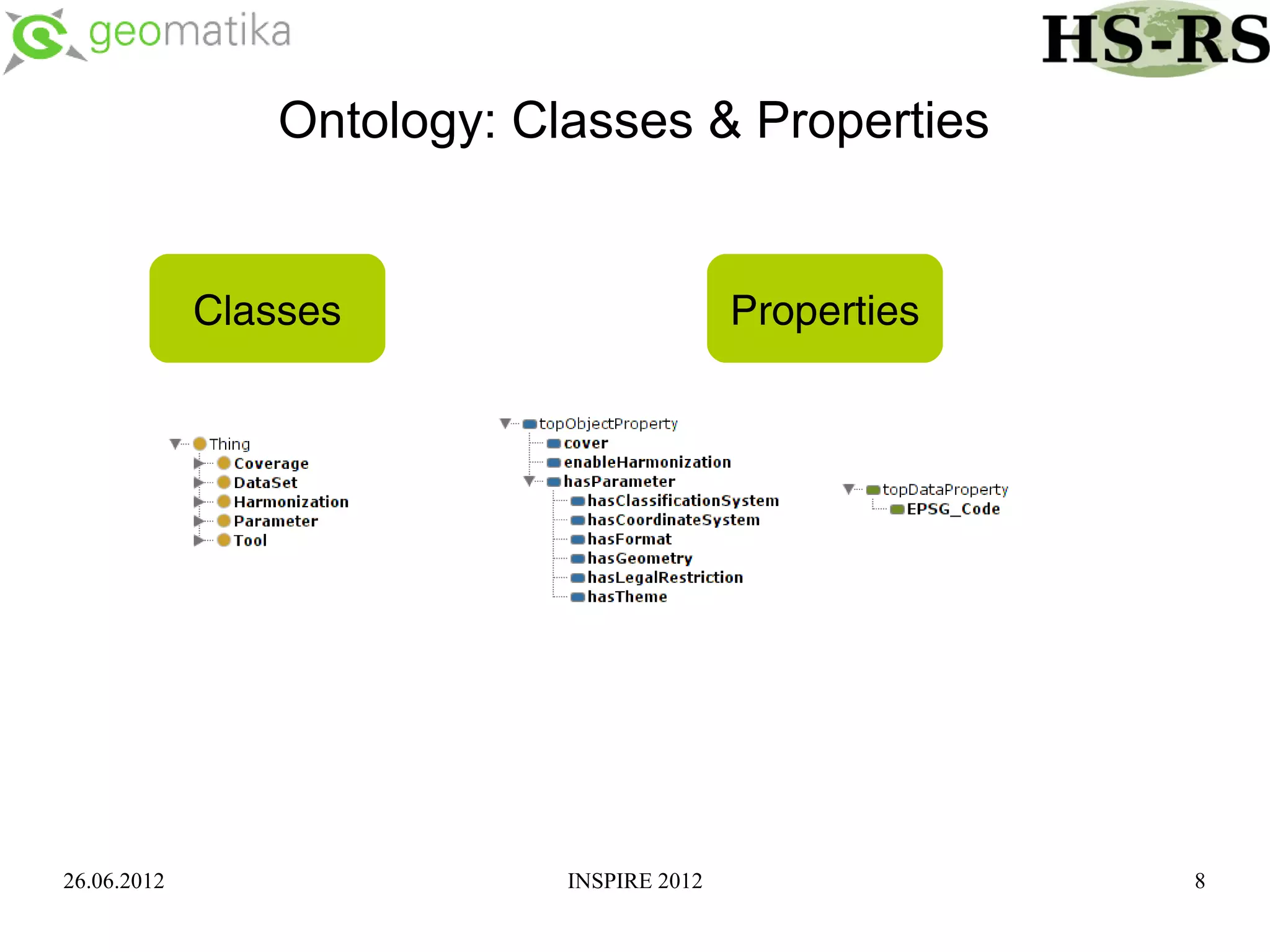
Ontology: Classes & Properties


             Classes                        Properties


26.06.2012                   INSPIRE 2012                8
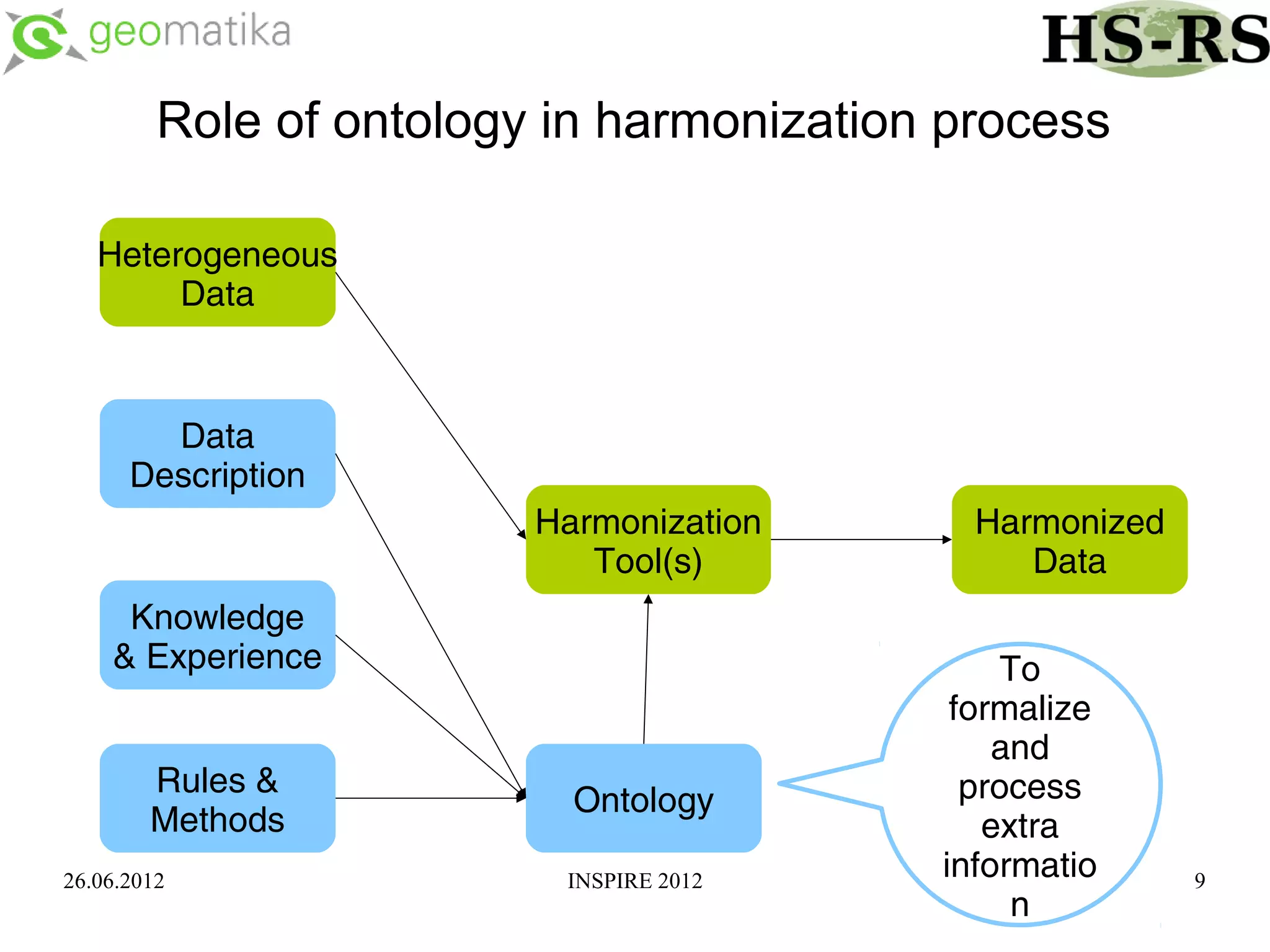
Role of ontology in harmonization process

   Heterogeneous
        Data


        Data
      Description
                         Harmonization      Harmonized
                            Tool(s)            Data
     Knowledge
    & Experience                               To
                                           formalize
                                              and
        Rules &                             process
                           Ontology
        Methods                              extra
26.06.2012                INSPIRE 2012    informatio     9
                                                n
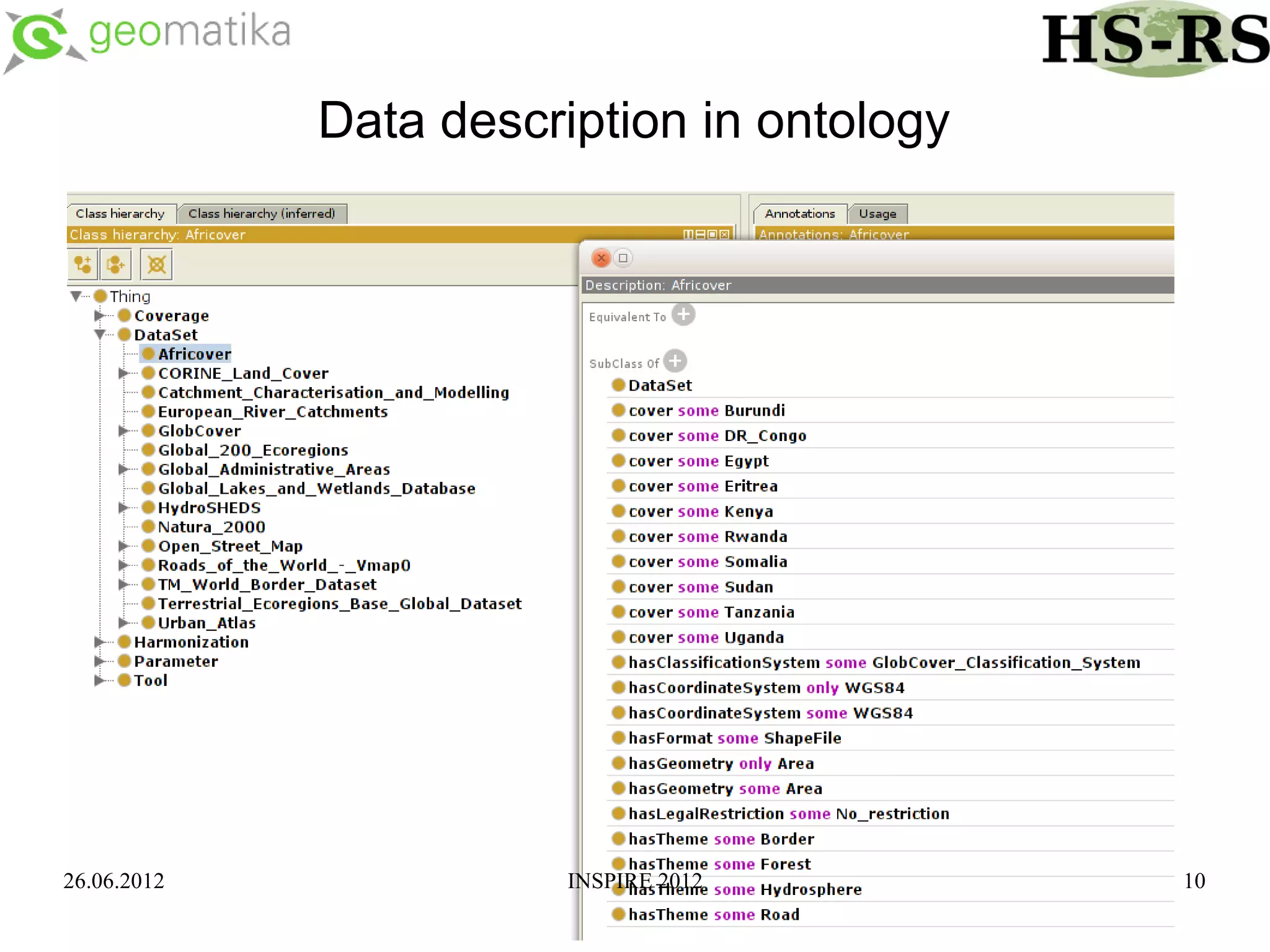
Data description in ontology


26.06.2012              INSPIRE 2012        10
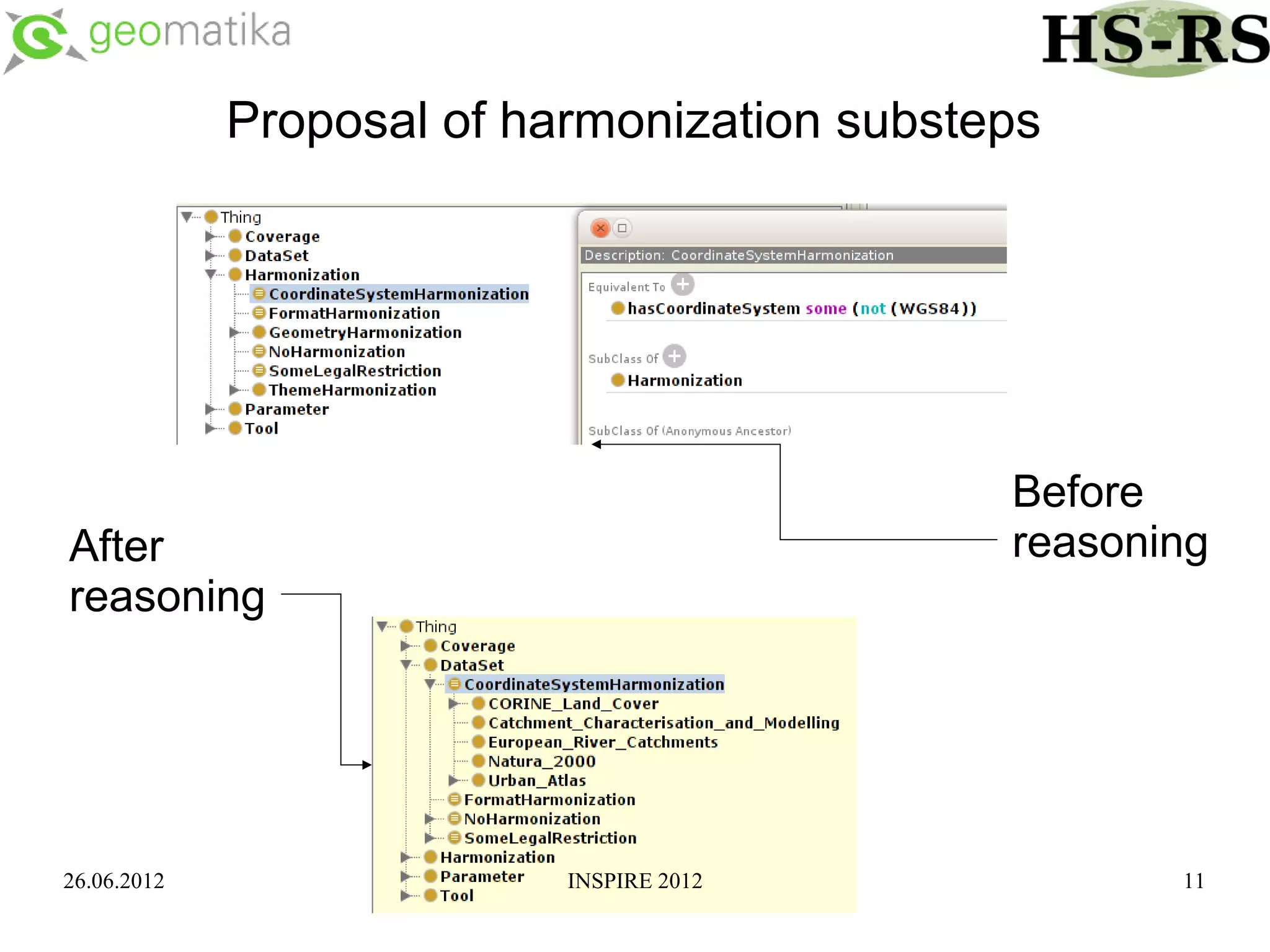
Proposal of harmonization substeps


                                             Before
After                                        reasoning
reasoning


26.06.2012                 INSPIRE 2012             11
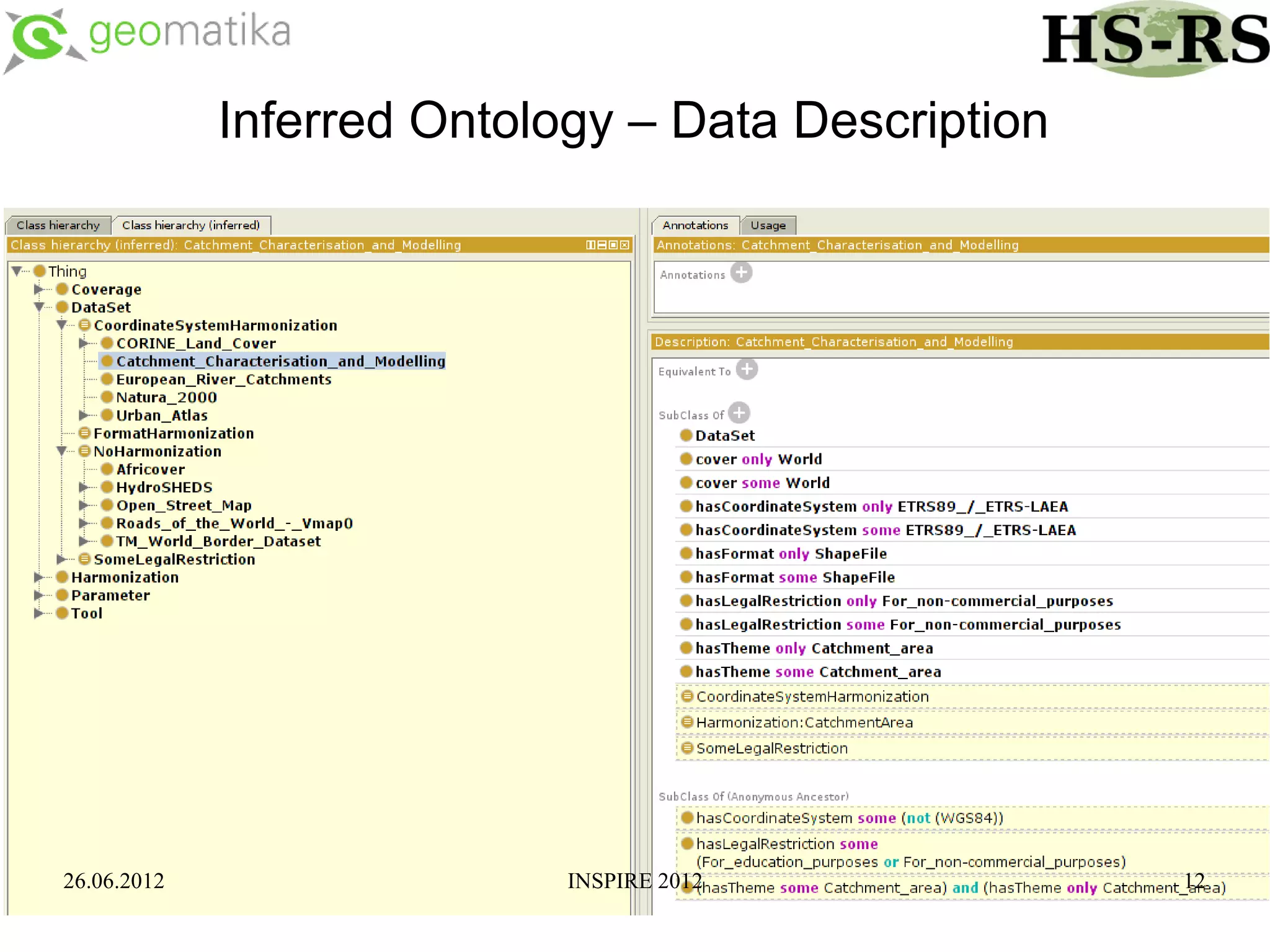
Inferred Ontology – Data Description


26.06.2012                  INSPIRE 2012            12
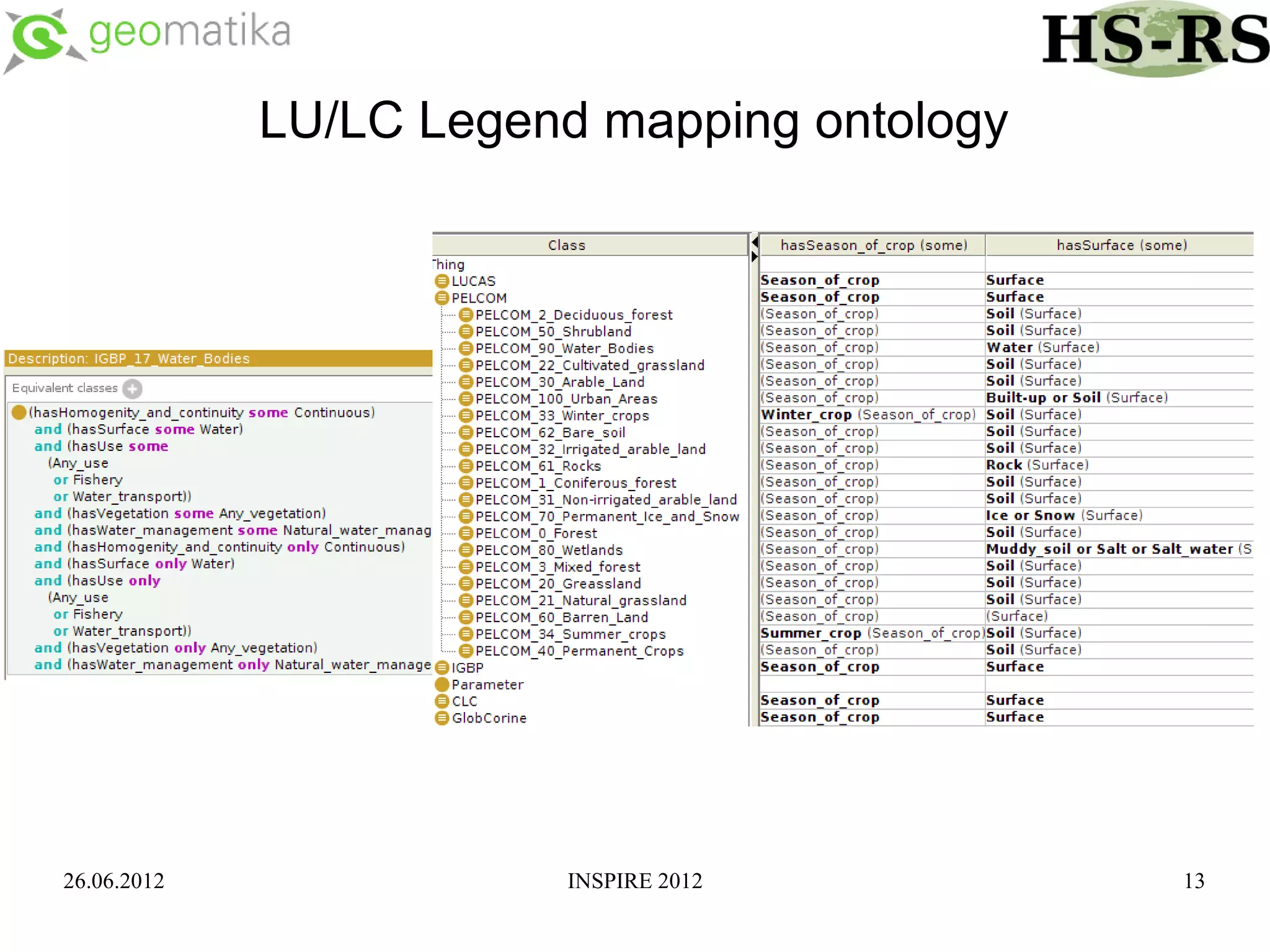
LU/LC Legend mapping ontology


26.06.2012              INSPIRE 2012         13
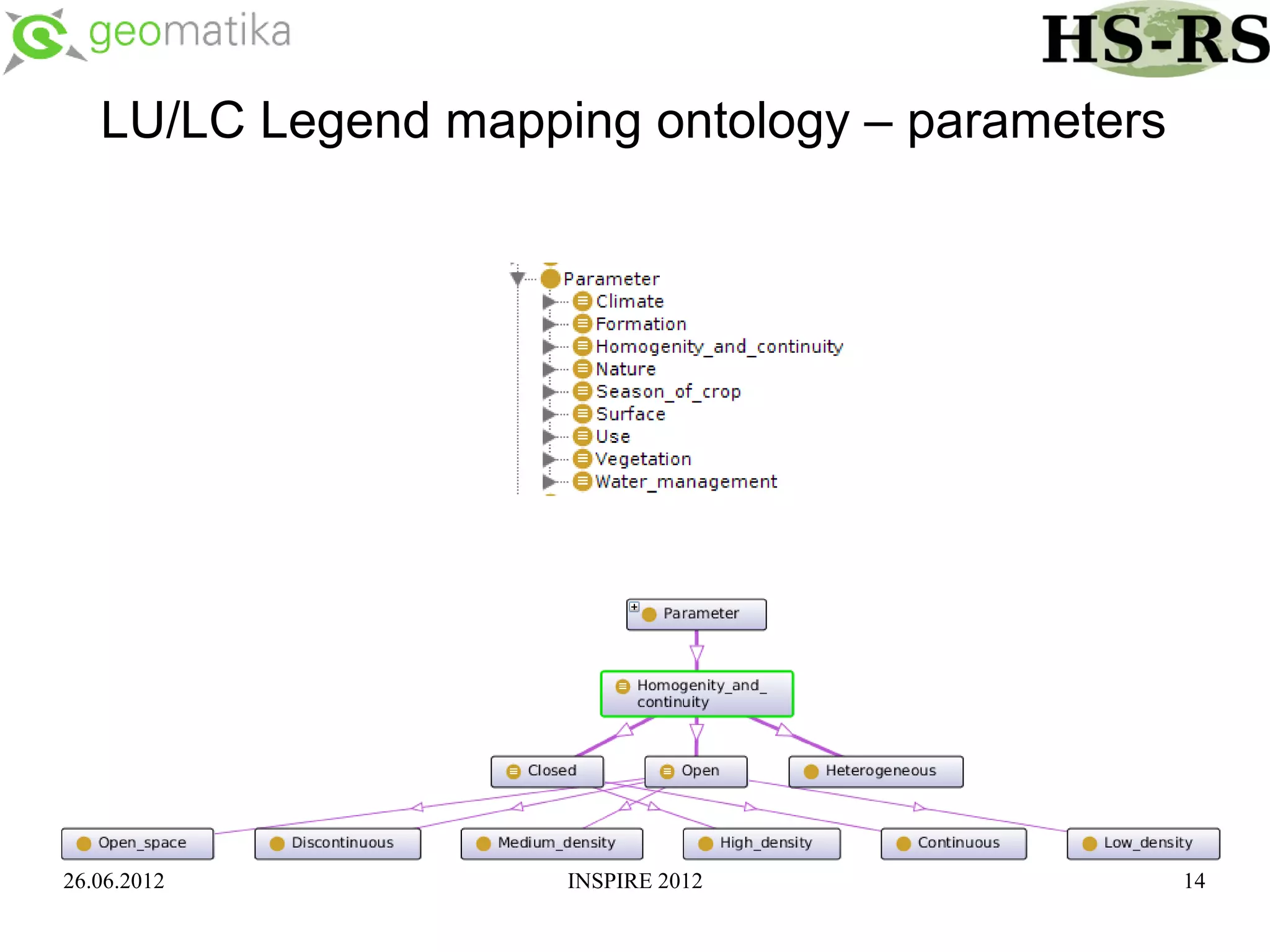
LU/LC Legend mapping ontology – parameters


26.06.2012           INSPIRE 2012               14
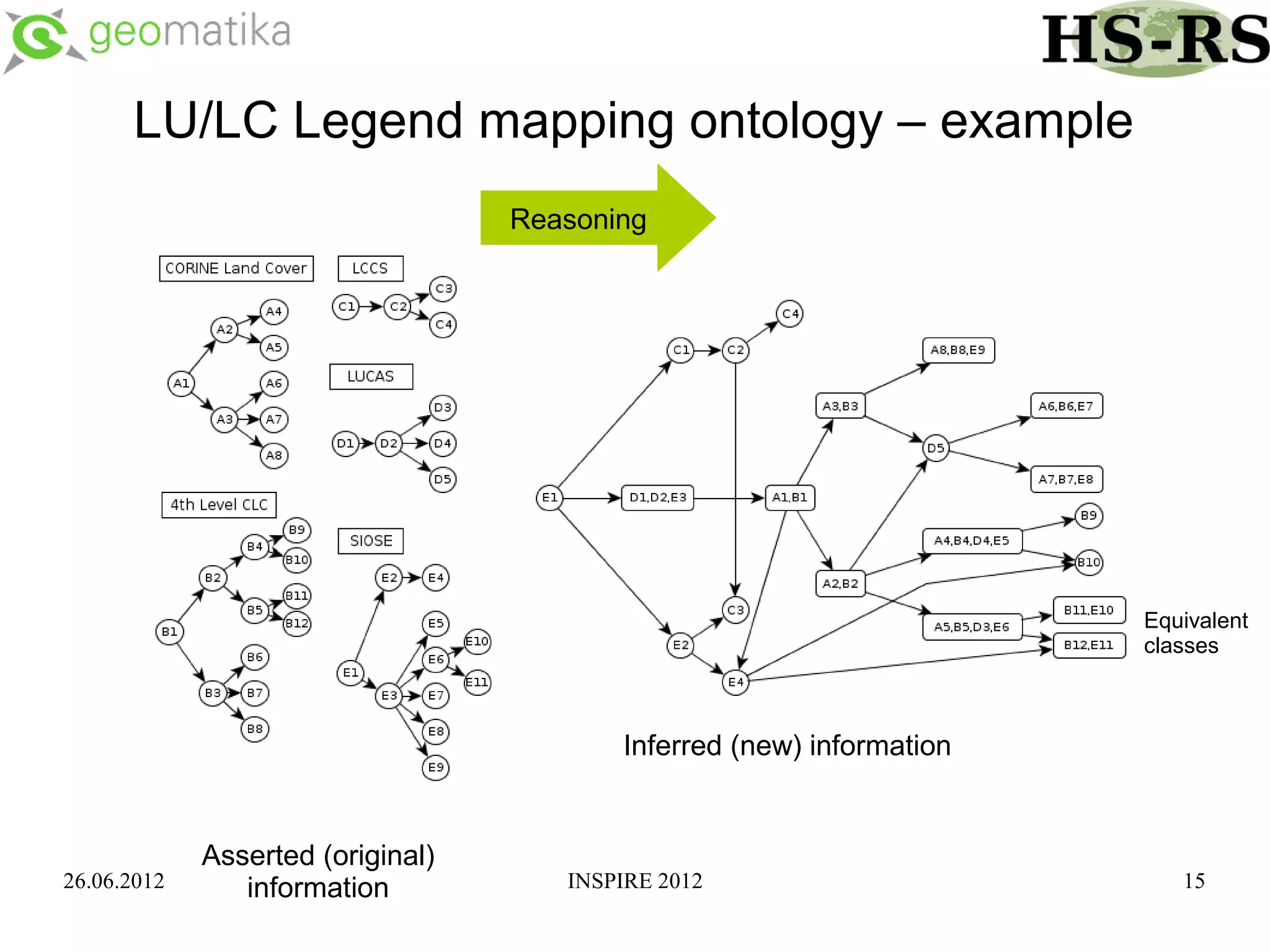
LU/LC Legend mapping ontology – example
                                   Reasoning


                                                                       Equivalent
                                                                       classes


                                          Inferred (new) information


             Asserted (original)
26.06.2012      information           INSPIRE 2012                        15
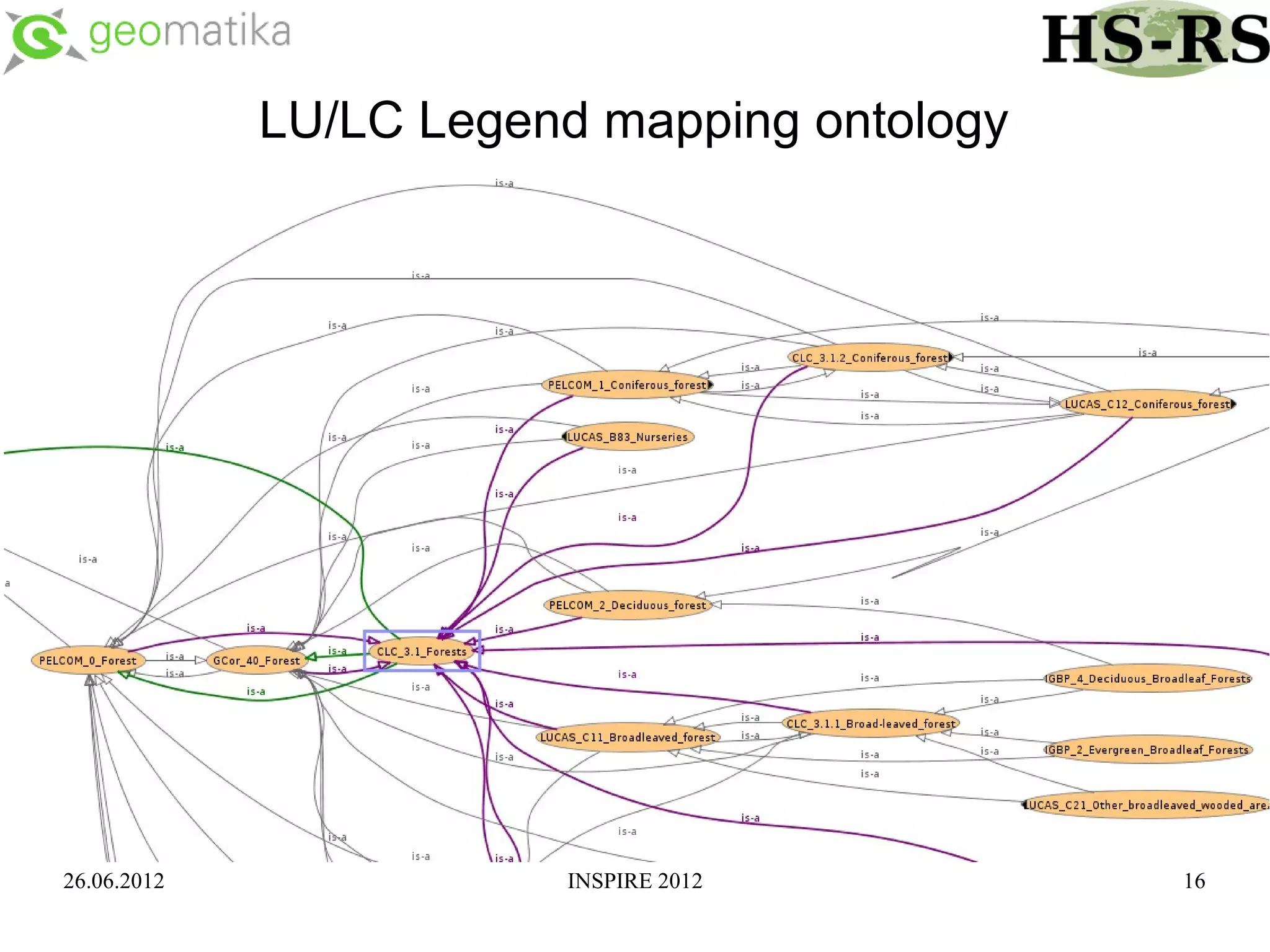
LU/LC Legend mapping ontology


26.06.2012              INSPIRE 2012         16
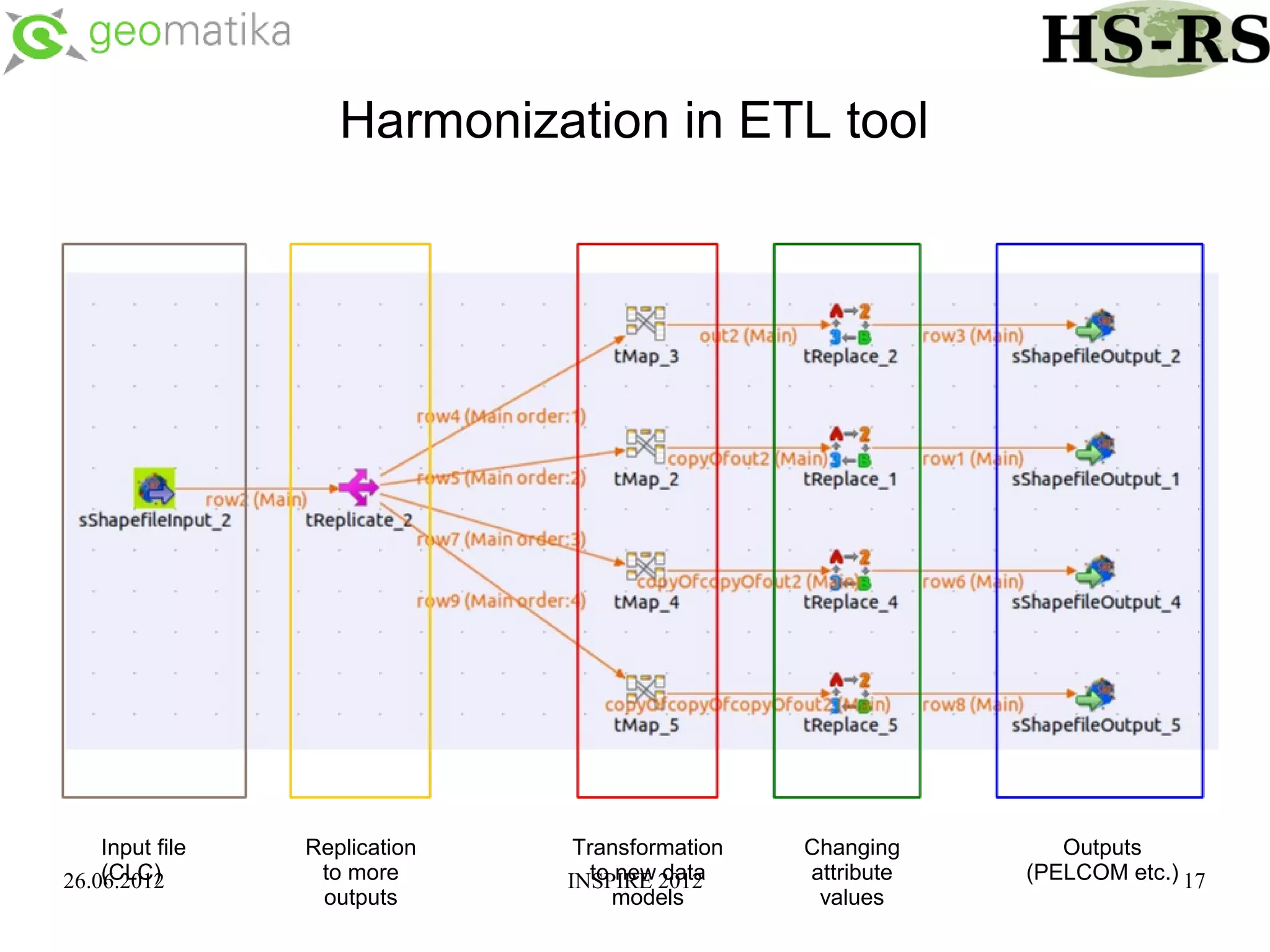
Harmonization in ETL tool


    Input file   Replication    Transformation   Changing       Outputs
    (CLC)
26.06.2012        to more         to new data
                               INSPIRE 2012      attribute   (PELCOM etc.) 17
                  outputs           models        values
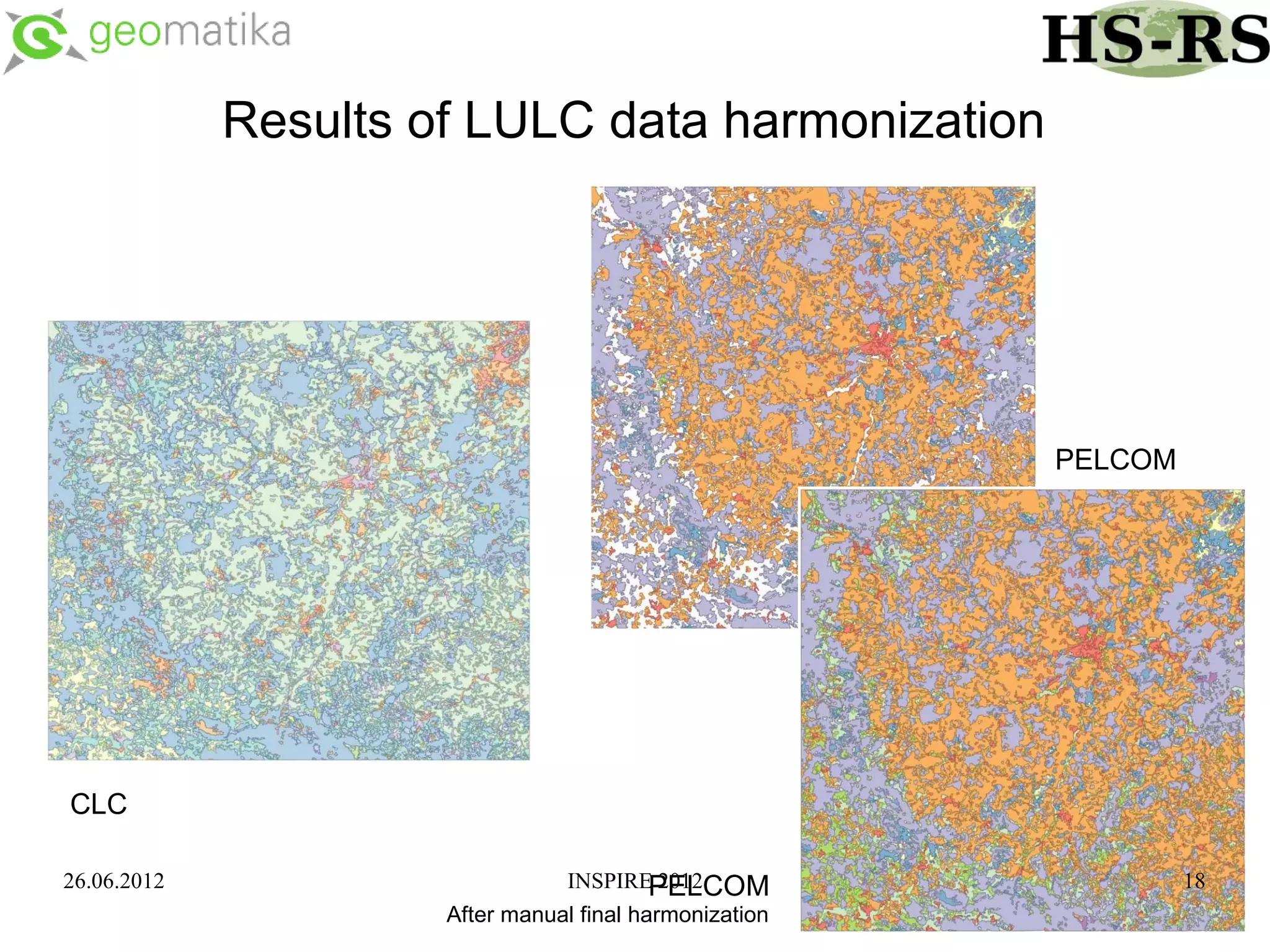
Results of LULC data harmonization


                                                         PELCOM


CLC

26.06.2012                        INSPIREPELCOM
                                          2012                    18
                      After manual final harmonization
Conclusion

 
     Harmonization is not only technical process but also
     semantic...
 
     It is necessary to consider a suitability of data sets
     from the view of
      −      Data completeness
      −      Data quality (depend for purposes of result)
      −      Semantics of the data sets and classification
             systems
 
     Ontologies enable knowledge transfer and better
     communication (including information sharing)
26.06.2012                       INSPIRE 2012                 19
Thank you for your attention
                   and questions

                     cerba@kma.zcu.cz
                      charvat@ccss.cz


26.06.2012              INSPIRE 2012        20

Presentation charvat cerba

  • 1.
    Ontology as KnowledgeBase for Spatial Data Harmonization Otakar Cerba, Karel Charvat University of West Bohemia, Plzen, Czech Republic Help Service Remote Sensing, Benesov, Czech Republic 26.06.2012 INSPIRE 2012 1
  • 2.
    Objectives  Spatial data harmonization – basics  Domain ontology – theory & essential principles  Harmonization ontology – components  Example of harmonization based on ontology  Conclusion 26.06.2012 INSPIRE 2012 2
  • 3.
    Spatial data harmonization  Activity for elimination or reduction of heterogeneities of various properties of spatial data to support interoperability  The elimination of the aspects of spatial data heterogeneity cannot be based on a creation of some uniform rules and data models, because, there are too many subjects with individual requirements – formats, precision, reference systems, terminology...  The harmonization processes should be divided into small and simple substeps 26.06.2012 INSPIRE 2012 3
  • 4.
    Conditions of successfulharmonization  Theoretical knowledge (domain, geomatic, IT...)  Understandable user requirements  Cooperation of experts  Sequence of harmonization substeps  Multi-level data description 26.06.2012 INSPIRE 2012 4
  • 5.
    Why to harmonize  To enable a sharing, combining and publishing of data  To re-use existing sources  To improve data quality  To use web services and other automatic tools (SaaS)  To keep data interoperability (it's cool!) All reasons  To increase the number of stakeholders are strongly  To meet legislation requirements interconnect ed 26.06.2012 INSPIRE 2012 5
  • 6.
    Ontology – Theory  To improve communication between all participating subjects (cartographers, users, IT experts, domain experts...) … exactly defined … clearly syntax semantically defined concepts ...formal and formalized explicit … precise list of … directly specification of terms expressed sharing conceptualization … suitable for re- … way how a human use understands the world 26.06.2012 INSPIRE 2012 and how it expresses6
  • 7.
    Ontology – Fundamentalcomponents  Class (Concept) – particular parts of domain structured by is-a relation  Individual – particular parts of domain that cannot be divided  Property – detail description of specifics of classes or individuals; object & data type properties  Axiom – logical constructs between elements of ontology (e.g. closure axiom, cover axiom)  Annotation – metadata, description, explanation 26.06.2012 INSPIRE 2012 7
  • 8.
    Ontology: Classes &Properties Classes Properties 26.06.2012 INSPIRE 2012 8
  • 9.
    Role of ontologyin harmonization process Heterogeneous Data Data Description Harmonization Harmonized Tool(s) Data Knowledge & Experience To formalize and Rules & process Ontology Methods extra 26.06.2012 INSPIRE 2012 informatio 9 n
  • 10.
    Data description inontology 26.06.2012 INSPIRE 2012 10
  • 11.
    Proposal of harmonizationsubsteps Before After reasoning reasoning 26.06.2012 INSPIRE 2012 11
  • 12.
    Inferred Ontology –Data Description 26.06.2012 INSPIRE 2012 12
  • 13.
    LU/LC Legend mappingontology 26.06.2012 INSPIRE 2012 13
  • 14.
    LU/LC Legend mappingontology – parameters 26.06.2012 INSPIRE 2012 14
  • 15.
    LU/LC Legend mappingontology – example Reasoning Equivalent classes Inferred (new) information Asserted (original) 26.06.2012 information INSPIRE 2012 15
  • 16.
    LU/LC Legend mappingontology 26.06.2012 INSPIRE 2012 16
  • 17.
    Harmonization in ETLtool Input file Replication Transformation Changing Outputs (CLC) 26.06.2012 to more to new data INSPIRE 2012 attribute (PELCOM etc.) 17 outputs models values
  • 18.
    Results of LULCdata harmonization PELCOM CLC 26.06.2012 INSPIREPELCOM 2012 18 After manual final harmonization
  • 19.
    Conclusion  Harmonization is not only technical process but also semantic...  It is necessary to consider a suitability of data sets from the view of − Data completeness − Data quality (depend for purposes of result) − Semantics of the data sets and classification systems  Ontologies enable knowledge transfer and better communication (including information sharing) 26.06.2012 INSPIRE 2012 19
  • 20.
    Thank you foryour attention and questions cerba@kma.zcu.cz charvat@ccss.cz 26.06.2012 INSPIRE 2012 20