Presentation
A presentation is a communication process where
information is shared with an audience using visual and
verbal elements.
Definition:
Purpose:
Conveys a message, educates, persuades, or informs
the audience about a specific topic or idea
Typically includes slides, speech, visuals, and
sometimes interactive elements.
Components:
Engages the audience through questions, discussions,
or activities.
Audience Interaction:
Can be delivered in various formats, such as in-person,
virtual, or recorded presentations
Media:
Stages in Presentations
1. Planning:
• Define the objective.
• Identify the target audience.
• Structure the content logically.
2. Research:
• Gather relevant information.
• Validate facts and statistics.
• Ensure accuracy and credibility
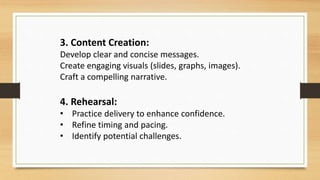
3. Content Creation:
Develop clear and concise messages.
Create engaging visuals (slides, graphs, images).
Craft a compelling narrative.
4. Rehearsal:
• Practice delivery to enhance confidence.
• Refine timing and pacing.
• Identify potential challenges.
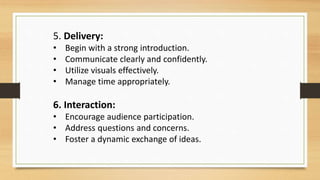
5. Delivery:
• Begin with a strong introduction.
• Communicate clearly and confidently.
• Utilize visuals effectively.
• Manage time appropriately.
6. Interaction:
• Encourage audience participation.
• Address questions and concerns.
• Foster a dynamic exchange of ideas.
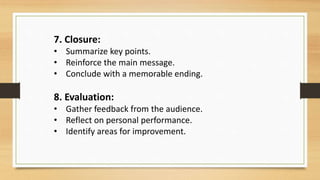
7. Closure:
• Summarize key points.
• Reinforce the main message.
• Conclude with a memorable ending.
8. Evaluation:
• Gather feedback from the audience.
• Reflect on personal performance.
• Identify areas for improvement.
Remember, effective presentations involve careful
planning, engaging content, and a polished delivery
to leave a lasting impact on the audience.

Presentation and Its Stages .pptx

  • 1.
  • 2.
    A presentation isa communication process where information is shared with an audience using visual and verbal elements. Definition: Purpose: Conveys a message, educates, persuades, or informs the audience about a specific topic or idea
  • 3.
    Typically includes slides,speech, visuals, and sometimes interactive elements. Components: Engages the audience through questions, discussions, or activities. Audience Interaction: Can be delivered in various formats, such as in-person, virtual, or recorded presentations Media:
  • 4.
  • 5.
    1. Planning: • Definethe objective. • Identify the target audience. • Structure the content logically. 2. Research: • Gather relevant information. • Validate facts and statistics. • Ensure accuracy and credibility
  • 6.
    3. Content Creation: Developclear and concise messages. Create engaging visuals (slides, graphs, images). Craft a compelling narrative. 4. Rehearsal: • Practice delivery to enhance confidence. • Refine timing and pacing. • Identify potential challenges.
  • 7.
    5. Delivery: • Beginwith a strong introduction. • Communicate clearly and confidently. • Utilize visuals effectively. • Manage time appropriately. 6. Interaction: • Encourage audience participation. • Address questions and concerns. • Foster a dynamic exchange of ideas.
  • 8.
    7. Closure: • Summarizekey points. • Reinforce the main message. • Conclude with a memorable ending. 8. Evaluation: • Gather feedback from the audience. • Reflect on personal performance. • Identify areas for improvement.
  • 9.
    Remember, effective presentationsinvolve careful planning, engaging content, and a polished delivery to leave a lasting impact on the audience.