THE M GIC OF LITERATURE
« Teaching fICTION Literature » Prepared and presented by:
• BENZOUINE Ikram
• LAAZIZ Fatima Zohra
• SAYFALLAH Kaoutar
• ZALLAG Doha
INTRODUCTION
Teaching
Literature
Canon Techniques and
Methods of
Teaching
Literature
Multicultural
Literature
Teaching Critical
Thinking
Students’
Motivation
& Interest
Moroccan
Context
Outline
Introduction
 Why Fiction Is Good For You ? 1
 The Benefits of Using Fiction Literature &Young Adult (YA) Literature in Classrooms
 The Magic of Literature : Harry Potter Series
 Harry Potter and teaching creativity
 Harry Potter Canonical WORK ?
 Criticism
 harry potter and ICT ( Fati )
 Recommendations for Teachers and Implementations
 RESOURCES FOR FUTURE TEACHERS
Outline
Introduction
 Why Fiction Is Good ForYou ?
 The Benefits of Using Fiction Literature &YoungAdult (YA) Literature in
Classrooms
 The Magic of Literature : Harry Potter Series
Harry Potter is
Magic & Beyond
Teachers reviews.
Outline
Introduction
 Why Fiction Is Good ForYou? (doha)
 The Benefits of Using Fiction Literature &Young Adult (YA) Literature in Classrooms (doha)
 The Magic of Literature : Harry Potter Series ( doha )
 Harry Potter Canonical WORK ? (sayf )
 Criticism (sayf )
 harry potter and ICT ( Fati )
 Lesson Plan ( ikram )
 Harry Potter and teaching creativity
RESSOURCES FOR FUTURE TEACHERS (li 3ndu shi ressources iktbha hna )
Why Fiction Is Good For You ?
o Psychologist Raymond Mar
writes, “Researchers have
repeatedly found that reader
attitudes shift to become more
congruent with the ideas
expressed in a [fictional]
narrative.”
e.g. nonjudgmental
o It has the power to modify the
principles of individuals and whole
societies. #Fiction_is_dangerous
Does fiction build the morality of individuals and societies, or does it
break it down?
Jonathan Gottschall APRIL 29, 2012
o Johnson writes, “it appears that ‘curling up with
a good book’ may do more than provide
relaxation and entertainment. Reading narrative
fiction allows one to learn about our social world
and as a result fosters empathic growth and
prosocial behavior.”
@ literary scholar Joseph Carroll and the
psychologists John Johnson and Dan Kruger
o While fiction often dwells on lewdness,
depravity, and simple selfishness, storytellers
virtually always put us in a position to judge
wrongdoing, and we do so with gusto.
#… goodness _is_ endorsed_and_ rewarded_
and _badness_ is_ condemned_ and _punished.
But the emerging science of story suggests that
fiction is good ... By enhancing empathy, fiction
reduces social friction ... In other words, most
fiction, even the trashy stuff, appears to be in the
public interest after all.
Why fiction is good for you, How fiction changes your world. - Jonathan Gottschall APRIL 29, 2012
@The BostonGlobe
The Benefits of Using Fiction Literature or Young
Adult (YA) Literature in Classrooms
Young adult fiction or young adult
literature (YA)[1] is fiction published for
readers from 12 to 18.[2] However,
authors and readers of "young teen
novels" often define it as written for those
aged 15 to the early 20s.[3]
Research suggests young adult literature
can be advantageous to reluctant student
readers by addressing their needs.
Authors who write young adult literature
have an adolescent's age and interests in
mind.
The language and plots of young adult
literature are similar to what students are
accustomed to finding in reality,
television, movies, and popular culture.
@WIKIPEDIA NY best sellers list for young adult fiction 2015.
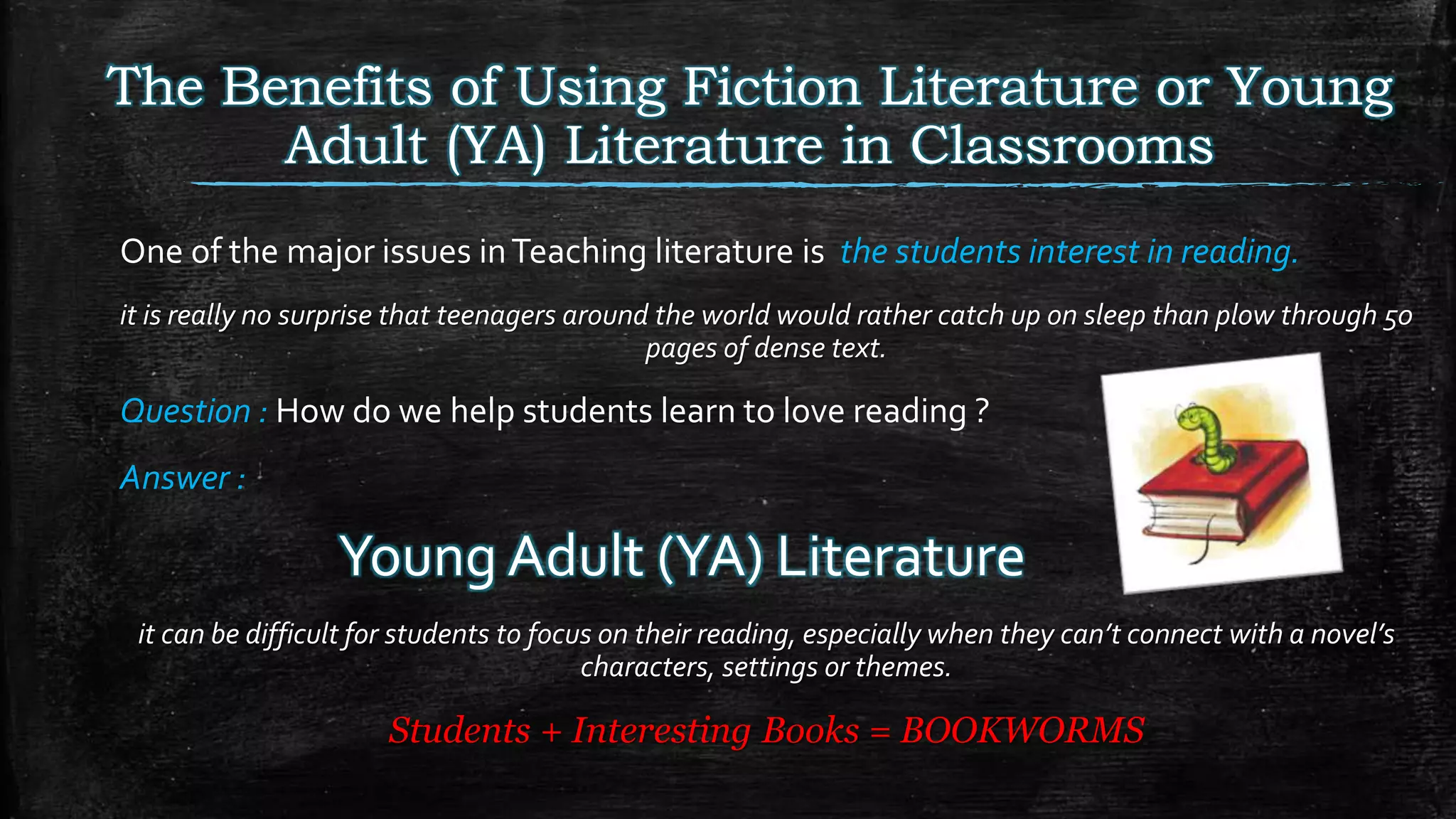
One of the major issues inTeaching literature is the students interest in reading.
it is really no surprise that teenagers around the world would rather catch up on sleep than plow through 50
pages of dense text.
Question : How do we help students learn to love reading ?
Answer :
Young Adult (YA) Literature
it can be difficult for students to focus on their reading, especially when they can’t connect with a novel’s
characters, settings or themes.
Students + Interesting Books = BOOKWORMS
The Benefits of Using Fiction Literature or Young
Adult (YA) Literature in Classrooms
... Knowing that there are tools out there to assist in the
transition from purely classic and general fiction to at least
some of the novels students really want to read leaves few
excuses to refuse this call...It seems only fitting that the
local curriculums shift to include these titles; doing so is
likely to achieve and improve teen literacy, both in the
classroom and out.
Smith, D. (2012). Bringing Fantasy and Science Fiction into the Classroom. The ALAN Review, 39(2)
@ The ALAN Review
Social studiesTeacher & FantasyWriter
Let’s inspire our students by helping them discover the joy that reading can bring.
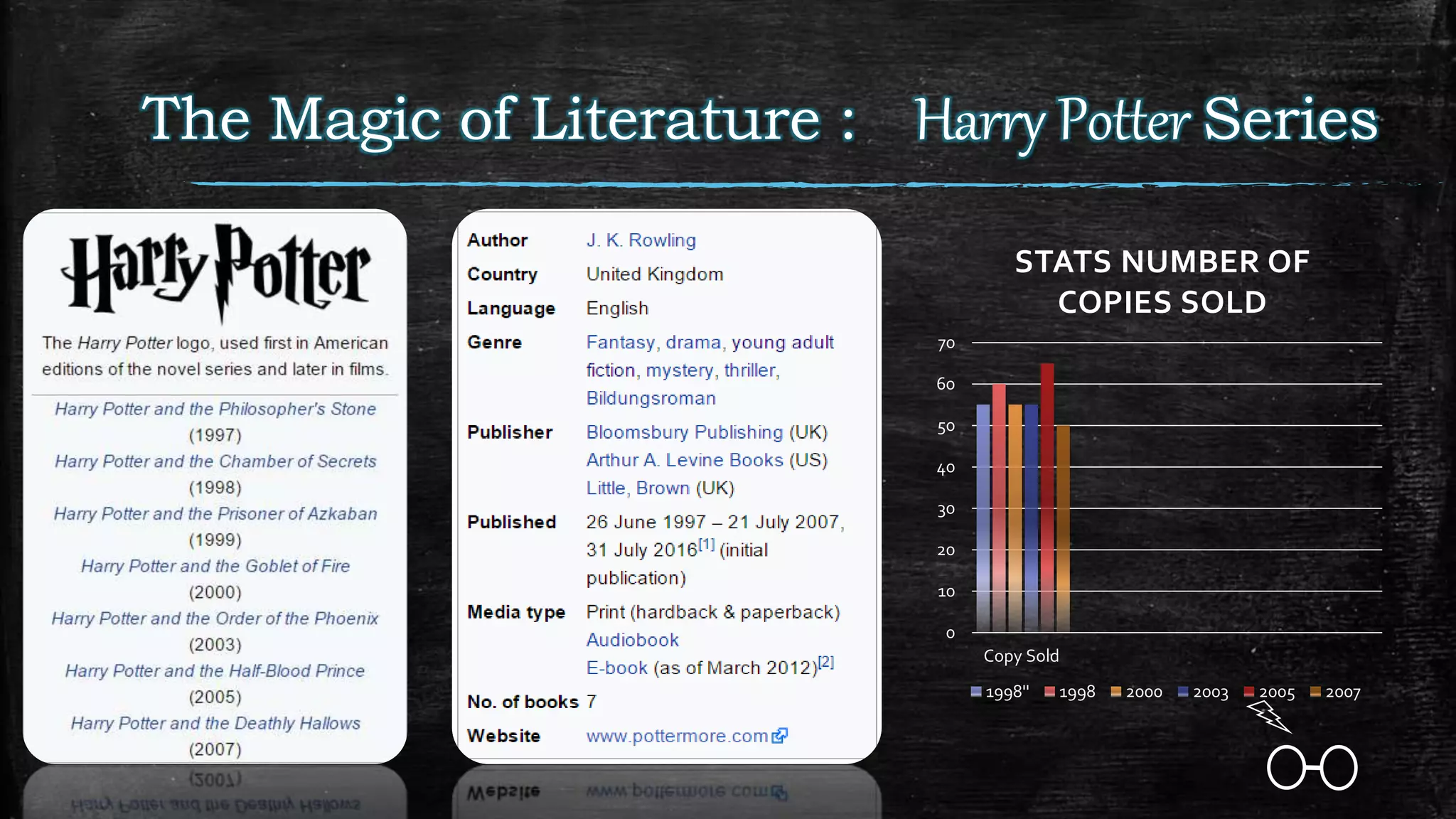
The Magic of Literature : Harry Potter Series
0
10
20
30
40
50
60
70
Copy Sold
STATS NUMBER OF
COPIES SOLD
1998'' 1998 2000 2003 2005 2007
... Some lessons identified in the series include diversity, acceptance, political
tolerance, and equality. Surveys of over 1,000 college students in the United States
show that those who read the books were significantly different than those who had
not.
Readers of the series were found to be more tolerant, more opposed to violence and
torture, less authoritarian, and less cynical. Although it is not known if this is a
cause-and-effect relationship, there is a clear correlation, and it seems that Harry
Potter's cultural impact may be stronger than just a fandom* bond.
@ Wikipedia
@ Hanna Kozlowska. "Can 'Harry Potter' Change theWorld?".The NewYorkTimes. Retrieved 13 April 2016.
* Fandom : Fandom is a term used to refer to a subculture composed of fans characterized by a feeling of empathy and camaraderie with others who
share a common interest.
Cultural Impact of Harry Potter
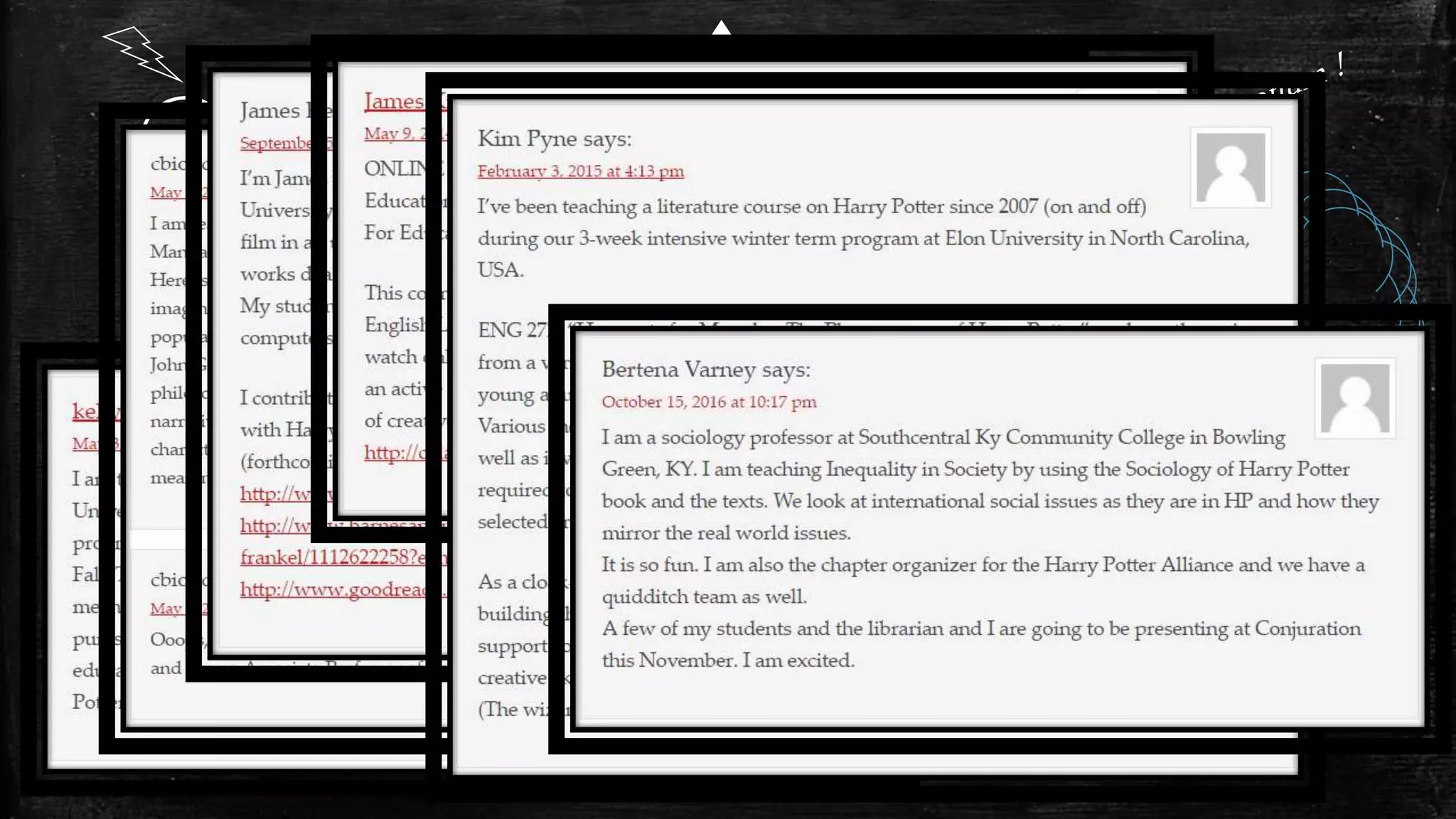
PROFESSORS THOUGHTS
THE NEGATIVE EFFECTS OF HARRY POTTER’S
SERIES ON STUDENTS’ PERSONALITIES
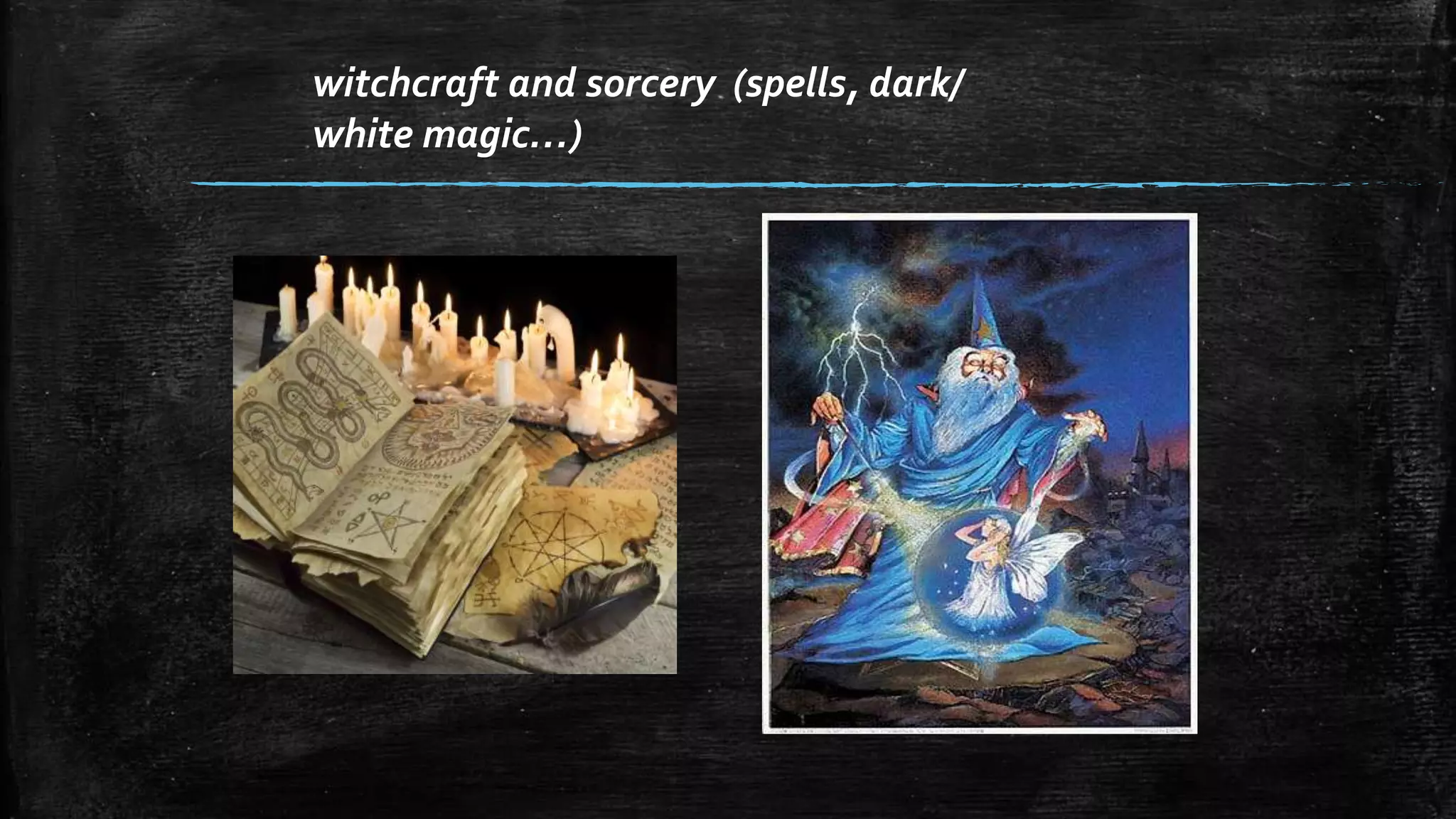
witchcraft and sorcery (spells, dark/
white magic…)
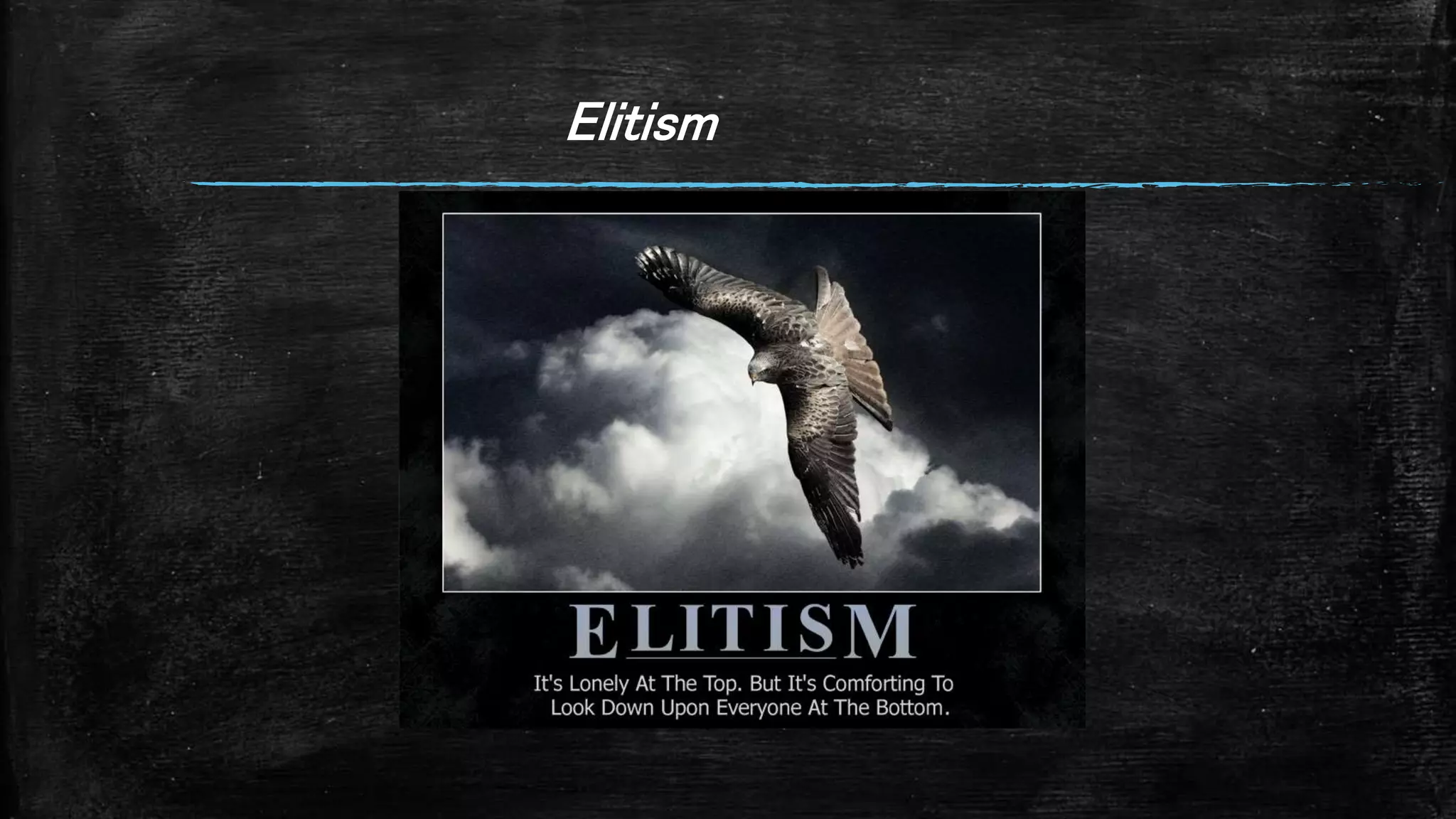
Elitism
Violence
Self -Abuse
Satanism
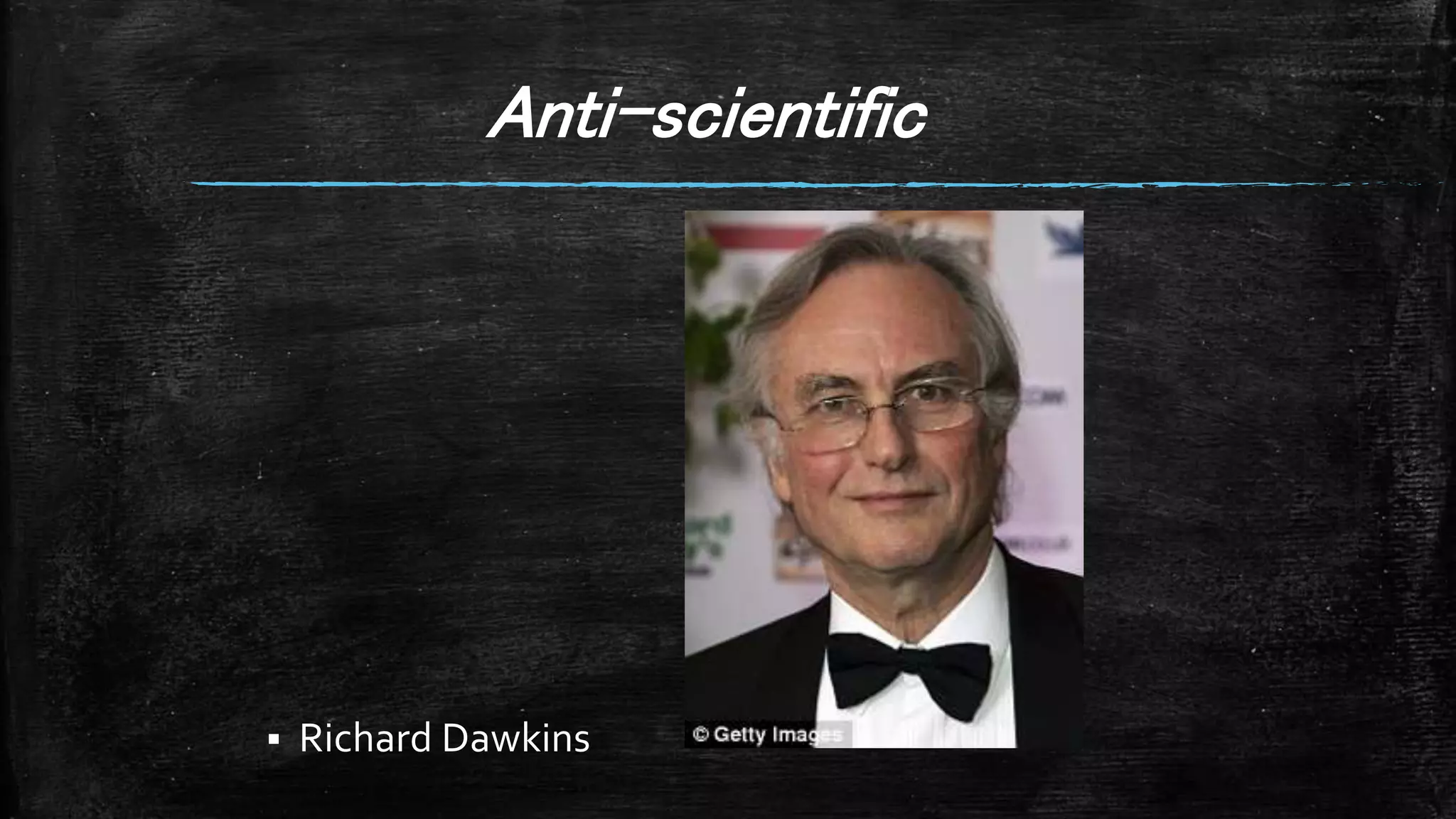
Anti-scientific
 Richard Dawkins
Harry Potter: A canonical Work or Not!!
 Teaching Literature doesn’t have to be the conventional, traditional
way.
 21st century is opening, in fact, the door for myriad possibilities
which remain and need to be explored.
 ICT (information and communication technology) has the ability to
rejuvenate and revolutionize the teaching of any subject, much so,
the teaching of literature.
Faty ‘s part : Revolutionizing the teaching of Fiction
the example of Harry Potter series
 Literature encompasses a number of areas:
Poetry, drama, fiction, literary theory literary criticism
In the case of fiction (harry potter):
 Movies based on novels can be shown in full or some important
scenes can be presented and discussed.
 The themes, characterization, historical context, narration can be
discussed through slide shows and presentations.
 Youtube can be integrated to introduce certain memorable scenes.
 Through this students can be introduced to the works of great
directors.
The use of apps
 BOOKTRACK / BELFRY sounds effects player (interesting
background music)
 BOOKCRAWLER / GOODREADS (bookworm communities)
 SCRIBDE /WATTPAD /GERTY (Ebooks library)
benefits
 Using ICT when teaching fiction will bring the fun element into the
scene, which can only help the learning process.
 Motivates and catches the attention of students.
 Bridges the gap between the outside world of the students which
revolves around their hobbies, their likes and dislikes, and the
classroom.
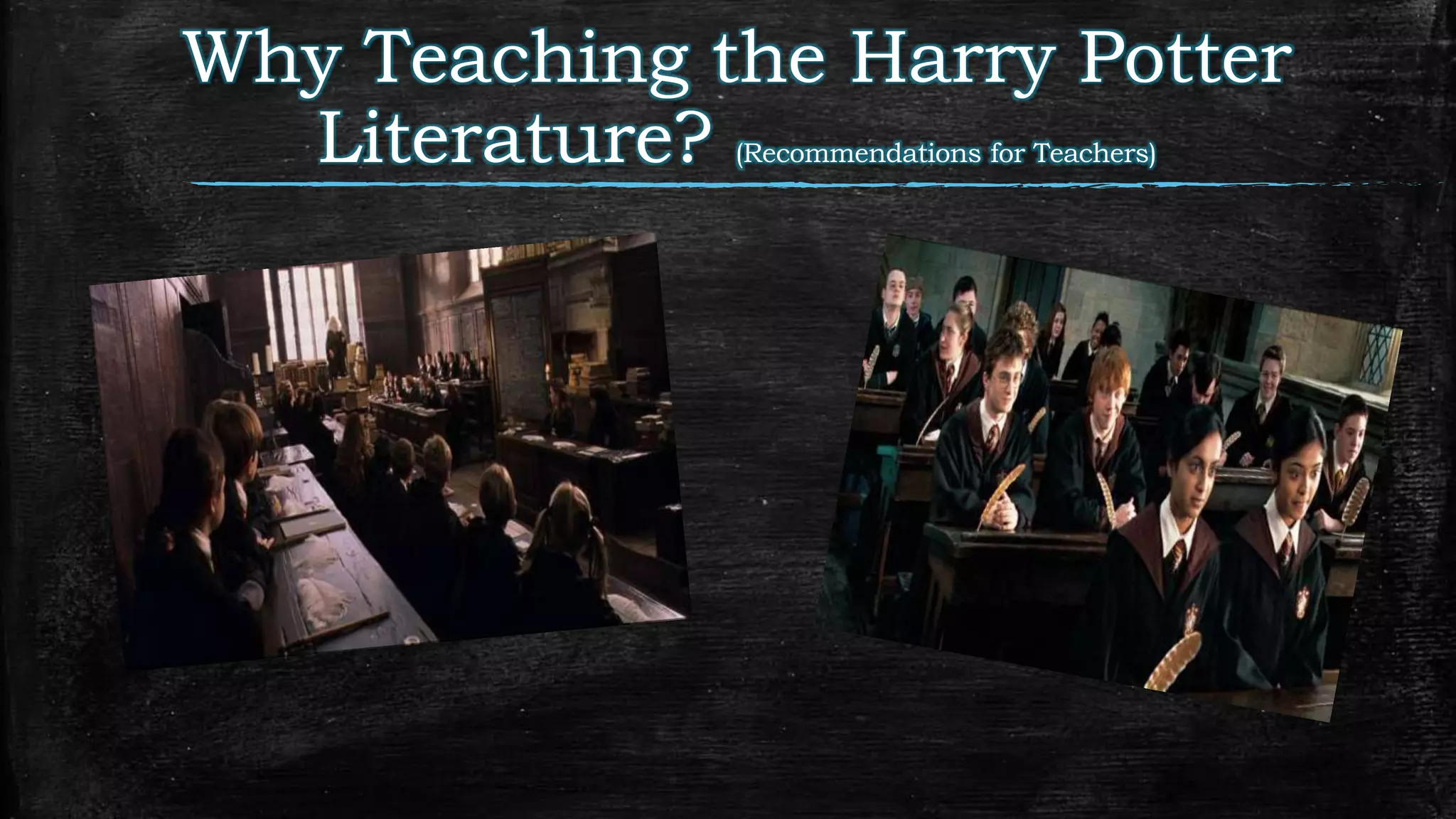
Why Teaching the Harry Potter
Literature? (Recommendations for Teachers)
1. Harry Potter is not a “Déjà Vu”
Rowling’s high-quality
prose and her unique use
of magical jargon enhance
readers’ artistic creativity,
imagination and literary
drive alike!
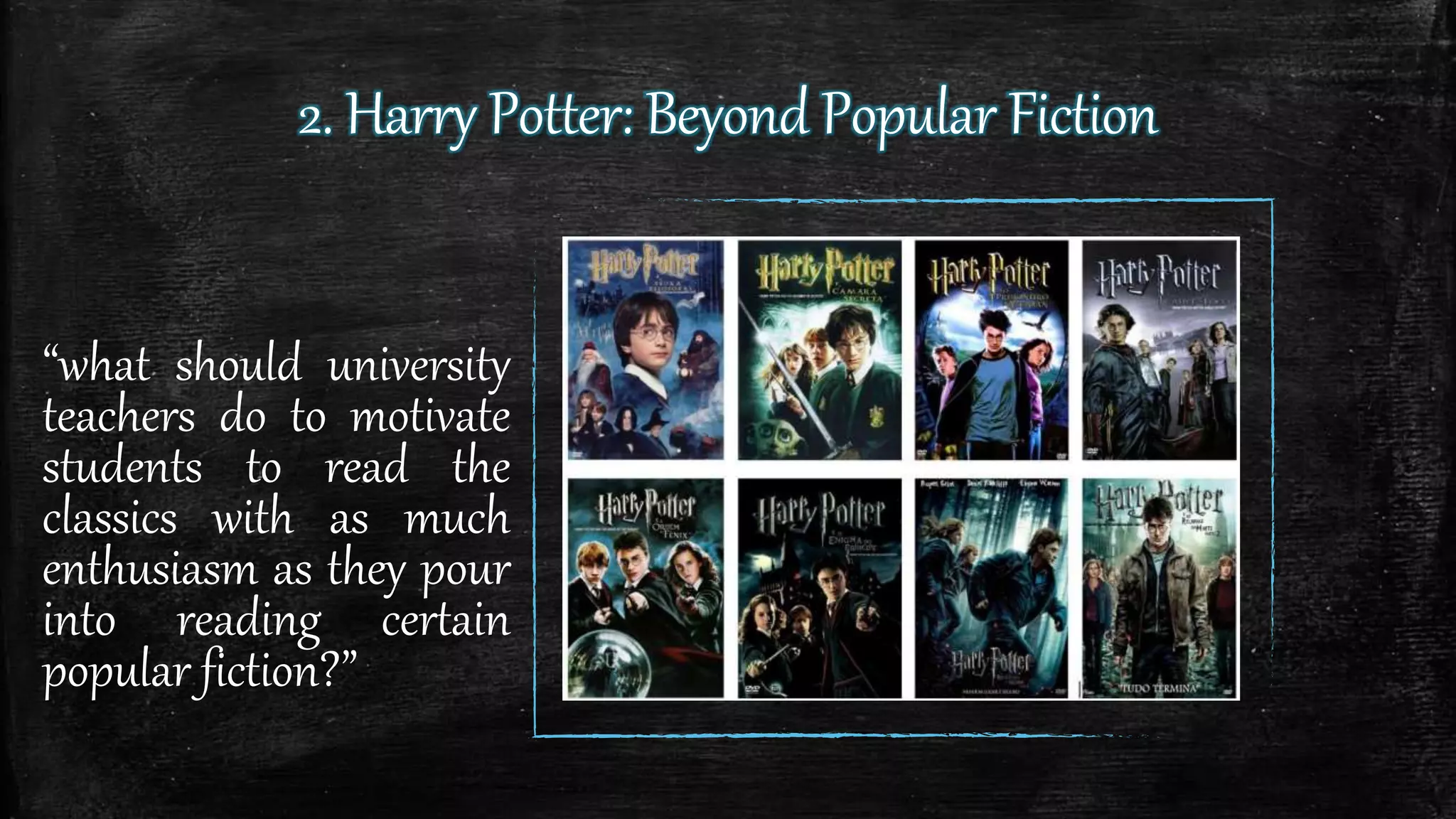
2. Harry Potter: Beyond Popular Fiction
“what should university
teachers do to motivate
students to read the
classics with as much
enthusiasm as they pour
into reading certain
popular fiction?”
Harry Potter Course Vs Popular Fiction Course?
“what made the difference in my Harry Potter Course
was not the content but the fact that all the students
registered in it had read the books (in many cases,
more than once; in some, many times). I am, like all
my Literature colleagues all over the world, tired of
forcing LITERATURE students to read… Literature. I
don’t even demand enthusiasm but simply that
students who have FREELY CHOSEN to take a
degree in Language and Literature come to class
having read the books we discuss (ideally having
underlined key passages and made notes).”
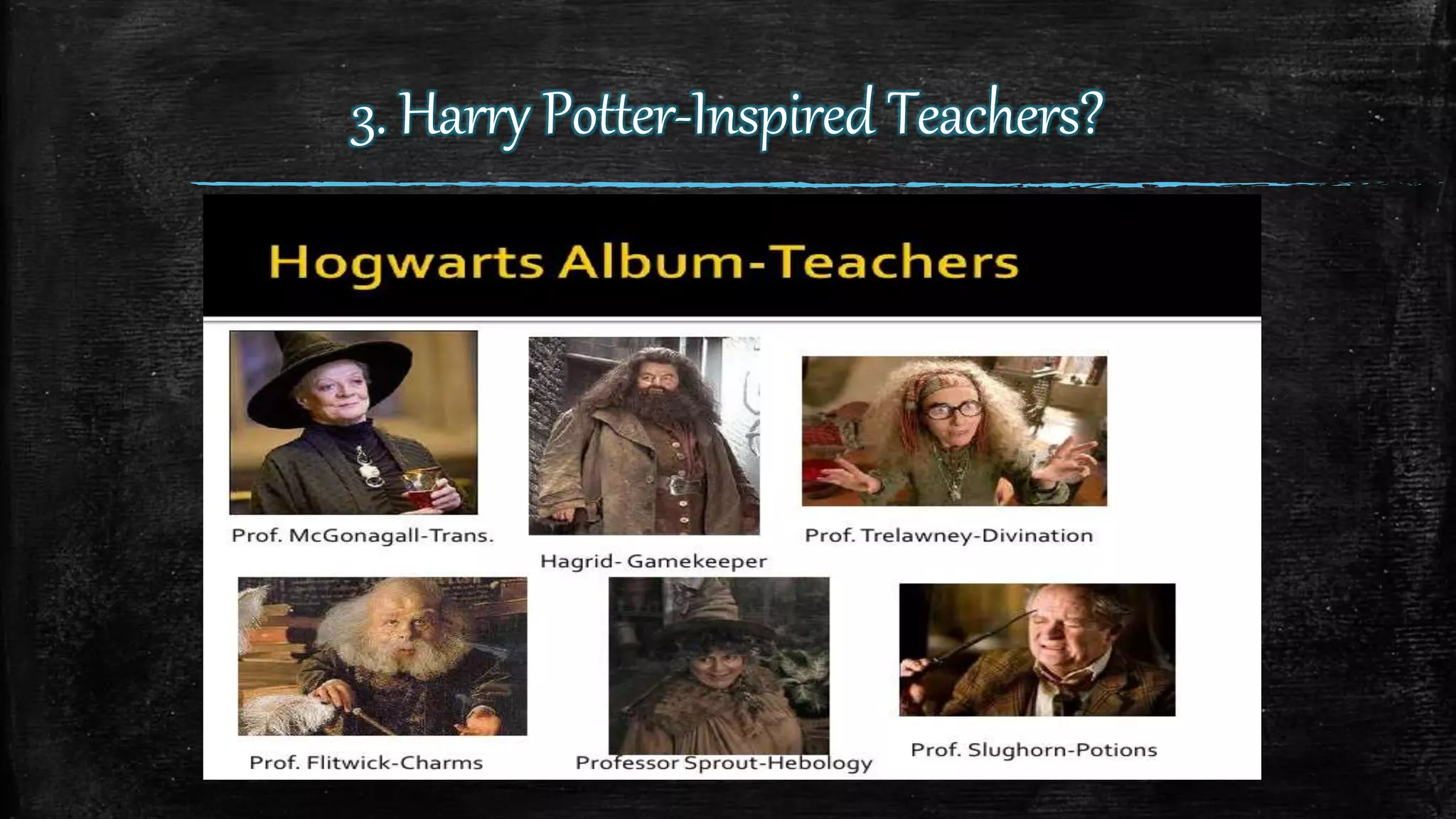
3. Harry Potter-Inspired Teachers?
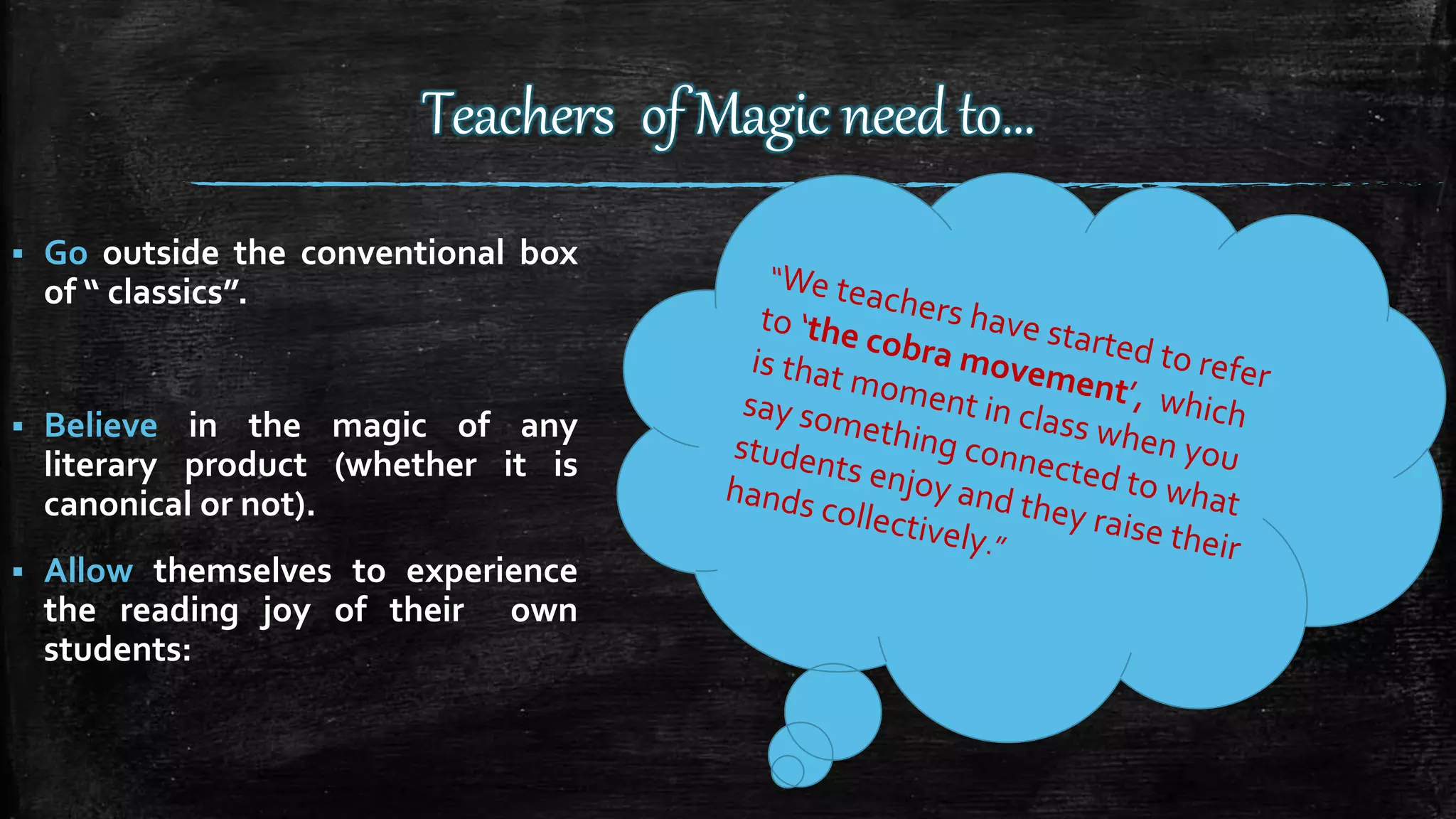
Teachers of Magic need to…
 Go outside the conventional box
of “ classics”.
 Believe in the magic of any
literary product (whether it is
canonical or not).
 Allow themselves to experience
the reading joy of their own
students:
How toImplementHarryPotterinClass?
HarryPotterasa UniversityLiteratureCourse:
Critical Approaches
 From a feminist literary
theory, students are
“positively” provoked to use
feminist principles and
ideology to critique the
female characters in the
novel.
FeministApproachtoHarryPotter
 “Discuss how Hermione depicts
an unconventional view of a
female hero/ character?”
 “Discuss why you believe
Hermione should be the novel’s
protagonist and not Harry
Potter? How would you name
the novel?”
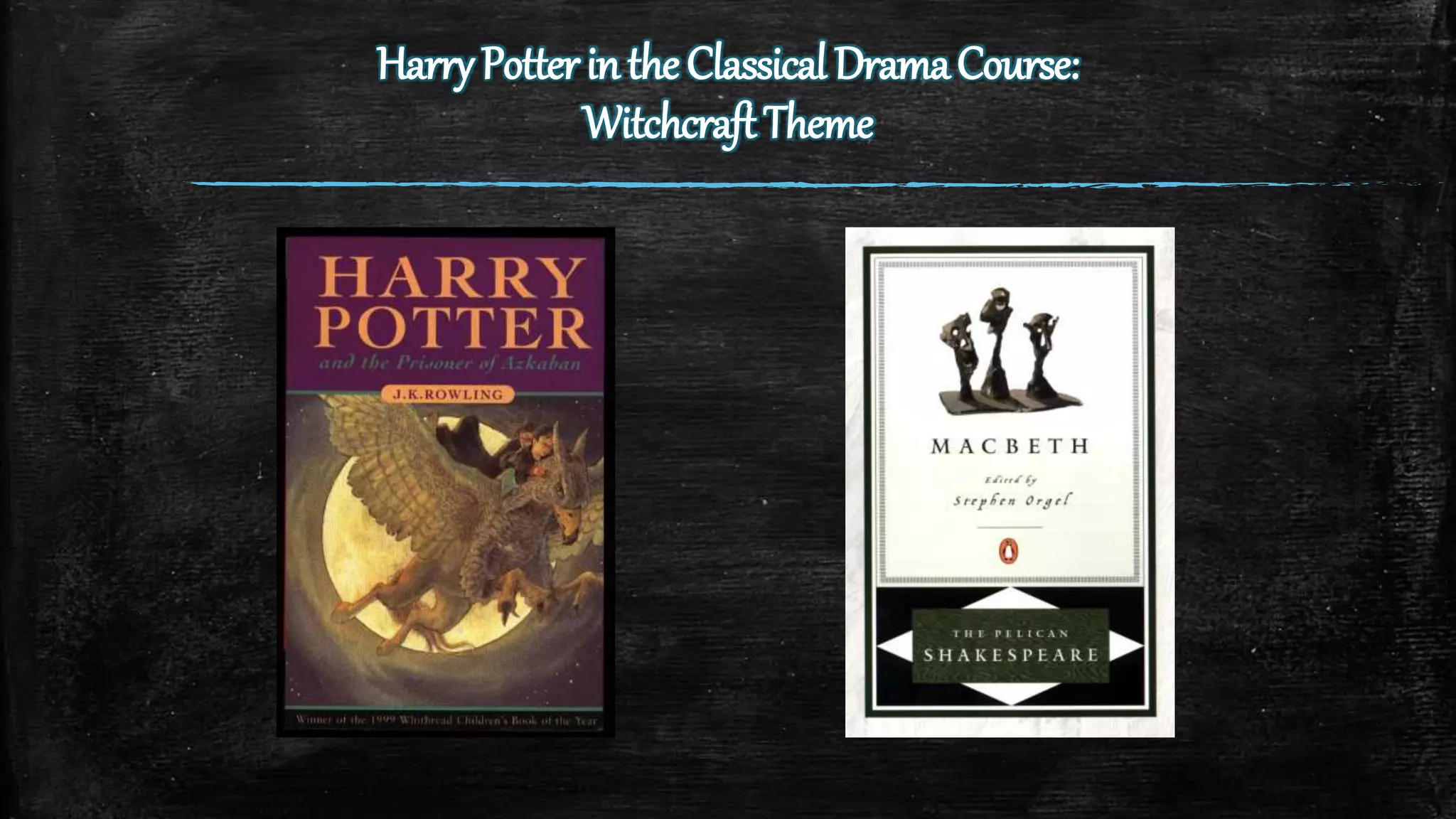
HarryPotterintheClassicalDramaCourse:
WitchcraftTheme
MediaCourse:HarryPotterasaCaseStudytoProvetheEfficacyof
FilmsVis-à-VisLiterature
It can be argued that
the Harry Potter film
series are undeniable
proof of the legitimate
rapport between Media
and Literature
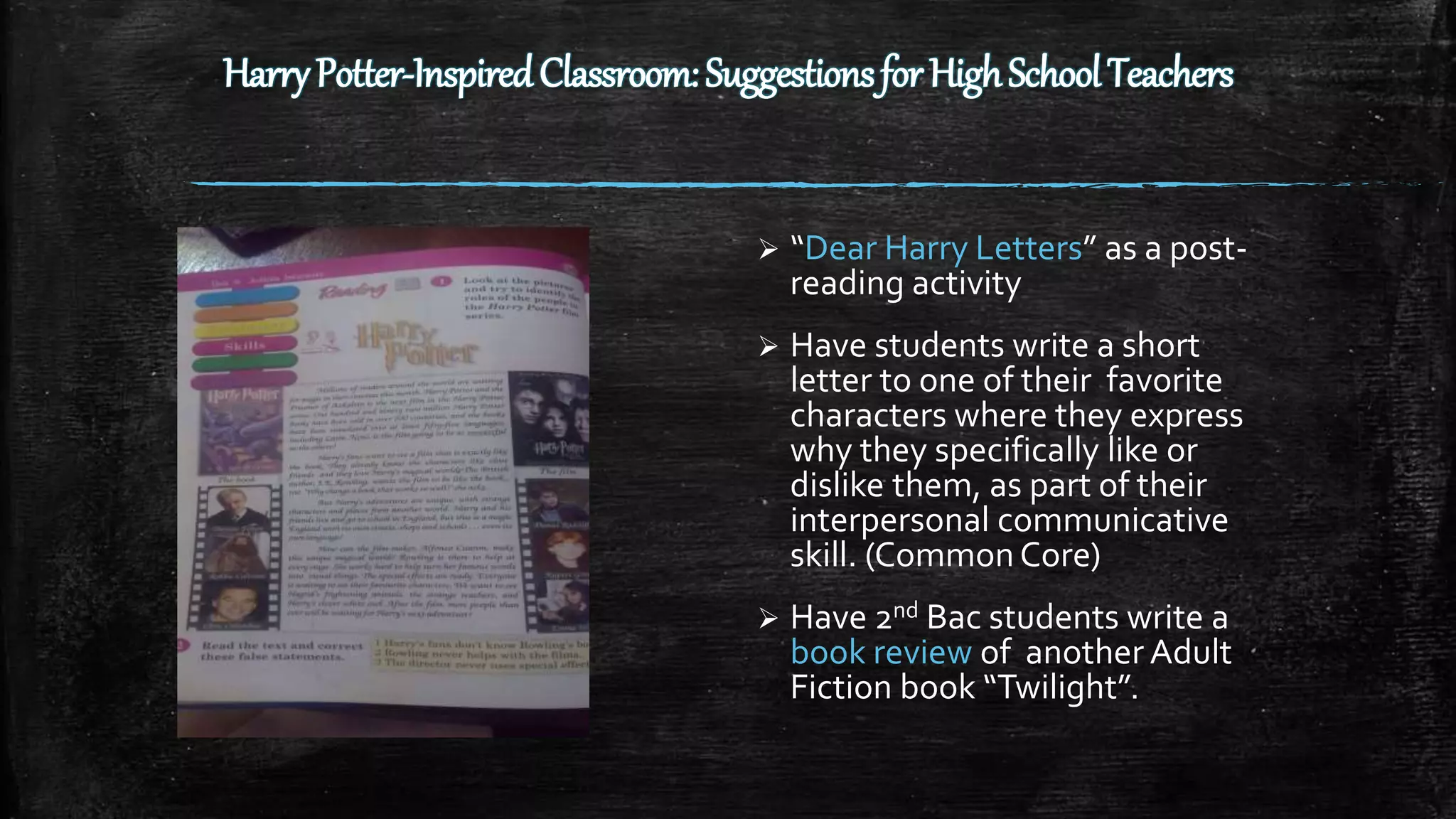
HarryPotter-InspiredClassroom:SuggestionsforHighSchoolTeachers
 “Dear Harry Letters” as a post-
reading activity
 Have students write a short
letter to one of their favorite
characters where they express
why they specifically like or
dislike them, as part of their
interpersonal communicative
skill. (CommonCore)
 Have 2nd Bac students write a
book review of another Adult
Fiction book “Twilight”.
A Video on Teaching English through Harry
Potter. 56.244 views
RESOURCES FOR FUTURE Magic TEACHERS
1. Why fiction is good for you How fiction changes your world -The Boston Globe
American daily newspaper
2. Smith, D. (2012). Bringing Fantasy and Science Fiction into the Classroom. The
ALAN Review, 39(2)
3. Anon, (2016). [Blog] Available at: https://www.ebsco.com/blog/article/the-
benefits-of-using-young-adult-ya-literature-in-classrooms [Accessed 28 Dec.
2016].
4. Hanna Kozlowska. "Can 'Harry Potter' Change theWorld?".The NewYorkTimes.
Retrieved 13 April 2016
5. http://bcjms.bhattercollege.ac.in/ict-as-an-aid-in-the-teaching-of-english-
literature-and-bridging-the-digital-divide/
6. https://blogs.uab.cat/saramartinalegre/category/harry-potter/
7. http://www.scholastic.com/teachers/unit/harry-potter-everything-you-need
Presentation about The Magic of Literature

Presentation about The Magic of Literature

  • 1.
    THE M GICOF LITERATURE « Teaching fICTION Literature » Prepared and presented by: • BENZOUINE Ikram • LAAZIZ Fatima Zohra • SAYFALLAH Kaoutar • ZALLAG Doha
  • 2.
    INTRODUCTION Teaching Literature Canon Techniques and Methodsof Teaching Literature Multicultural Literature Teaching Critical Thinking Students’ Motivation & Interest Moroccan Context
  • 3.
    Outline Introduction  Why FictionIs Good For You ? 1  The Benefits of Using Fiction Literature &Young Adult (YA) Literature in Classrooms  The Magic of Literature : Harry Potter Series  Harry Potter and teaching creativity  Harry Potter Canonical WORK ?  Criticism  harry potter and ICT ( Fati )  Recommendations for Teachers and Implementations  RESOURCES FOR FUTURE TEACHERS
  • 4.
    Outline Introduction  Why FictionIs Good ForYou ?  The Benefits of Using Fiction Literature &YoungAdult (YA) Literature in Classrooms  The Magic of Literature : Harry Potter Series Harry Potter is Magic & Beyond Teachers reviews.
  • 5.
    Outline Introduction  Why FictionIs Good ForYou? (doha)  The Benefits of Using Fiction Literature &Young Adult (YA) Literature in Classrooms (doha)  The Magic of Literature : Harry Potter Series ( doha )  Harry Potter Canonical WORK ? (sayf )  Criticism (sayf )  harry potter and ICT ( Fati )  Lesson Plan ( ikram )  Harry Potter and teaching creativity RESSOURCES FOR FUTURE TEACHERS (li 3ndu shi ressources iktbha hna )
  • 6.
    Why Fiction IsGood For You ? o Psychologist Raymond Mar writes, “Researchers have repeatedly found that reader attitudes shift to become more congruent with the ideas expressed in a [fictional] narrative.” e.g. nonjudgmental o It has the power to modify the principles of individuals and whole societies. #Fiction_is_dangerous Does fiction build the morality of individuals and societies, or does it break it down? Jonathan Gottschall APRIL 29, 2012 o Johnson writes, “it appears that ‘curling up with a good book’ may do more than provide relaxation and entertainment. Reading narrative fiction allows one to learn about our social world and as a result fosters empathic growth and prosocial behavior.” @ literary scholar Joseph Carroll and the psychologists John Johnson and Dan Kruger o While fiction often dwells on lewdness, depravity, and simple selfishness, storytellers virtually always put us in a position to judge wrongdoing, and we do so with gusto. #… goodness _is_ endorsed_and_ rewarded_ and _badness_ is_ condemned_ and _punished.
  • 7.
    But the emergingscience of story suggests that fiction is good ... By enhancing empathy, fiction reduces social friction ... In other words, most fiction, even the trashy stuff, appears to be in the public interest after all. Why fiction is good for you, How fiction changes your world. - Jonathan Gottschall APRIL 29, 2012 @The BostonGlobe
  • 8.
    The Benefits ofUsing Fiction Literature or Young Adult (YA) Literature in Classrooms Young adult fiction or young adult literature (YA)[1] is fiction published for readers from 12 to 18.[2] However, authors and readers of "young teen novels" often define it as written for those aged 15 to the early 20s.[3] Research suggests young adult literature can be advantageous to reluctant student readers by addressing their needs. Authors who write young adult literature have an adolescent's age and interests in mind. The language and plots of young adult literature are similar to what students are accustomed to finding in reality, television, movies, and popular culture. @WIKIPEDIA NY best sellers list for young adult fiction 2015.
  • 9.
    One of themajor issues inTeaching literature is the students interest in reading. it is really no surprise that teenagers around the world would rather catch up on sleep than plow through 50 pages of dense text. Question : How do we help students learn to love reading ? Answer : Young Adult (YA) Literature it can be difficult for students to focus on their reading, especially when they can’t connect with a novel’s characters, settings or themes. Students + Interesting Books = BOOKWORMS The Benefits of Using Fiction Literature or Young Adult (YA) Literature in Classrooms
  • 10.
    ... Knowing thatthere are tools out there to assist in the transition from purely classic and general fiction to at least some of the novels students really want to read leaves few excuses to refuse this call...It seems only fitting that the local curriculums shift to include these titles; doing so is likely to achieve and improve teen literacy, both in the classroom and out. Smith, D. (2012). Bringing Fantasy and Science Fiction into the Classroom. The ALAN Review, 39(2) @ The ALAN Review Social studiesTeacher & FantasyWriter Let’s inspire our students by helping them discover the joy that reading can bring.
  • 11.
    The Magic ofLiterature : Harry Potter Series 0 10 20 30 40 50 60 70 Copy Sold STATS NUMBER OF COPIES SOLD 1998'' 1998 2000 2003 2005 2007
  • 12.
    ... Some lessonsidentified in the series include diversity, acceptance, political tolerance, and equality. Surveys of over 1,000 college students in the United States show that those who read the books were significantly different than those who had not. Readers of the series were found to be more tolerant, more opposed to violence and torture, less authoritarian, and less cynical. Although it is not known if this is a cause-and-effect relationship, there is a clear correlation, and it seems that Harry Potter's cultural impact may be stronger than just a fandom* bond. @ Wikipedia @ Hanna Kozlowska. "Can 'Harry Potter' Change theWorld?".The NewYorkTimes. Retrieved 13 April 2016. * Fandom : Fandom is a term used to refer to a subculture composed of fans characterized by a feeling of empathy and camaraderie with others who share a common interest. Cultural Impact of Harry Potter
  • 13.
  • 14.
    THE NEGATIVE EFFECTSOF HARRY POTTER’S SERIES ON STUDENTS’ PERSONALITIES
  • 15.
    witchcraft and sorcery(spells, dark/ white magic…)
  • 16.
  • 18.
  • 20.
  • 22.
  • 23.
  • 24.
    Harry Potter: Acanonical Work or Not!!
  • 25.
     Teaching Literaturedoesn’t have to be the conventional, traditional way.  21st century is opening, in fact, the door for myriad possibilities which remain and need to be explored.  ICT (information and communication technology) has the ability to rejuvenate and revolutionize the teaching of any subject, much so, the teaching of literature. Faty ‘s part : Revolutionizing the teaching of Fiction the example of Harry Potter series
  • 26.
     Literature encompassesa number of areas: Poetry, drama, fiction, literary theory literary criticism
  • 27.
    In the caseof fiction (harry potter):  Movies based on novels can be shown in full or some important scenes can be presented and discussed.  The themes, characterization, historical context, narration can be discussed through slide shows and presentations.  Youtube can be integrated to introduce certain memorable scenes.  Through this students can be introduced to the works of great directors.
  • 28.
    The use ofapps  BOOKTRACK / BELFRY sounds effects player (interesting background music)  BOOKCRAWLER / GOODREADS (bookworm communities)  SCRIBDE /WATTPAD /GERTY (Ebooks library)
  • 29.
    benefits  Using ICTwhen teaching fiction will bring the fun element into the scene, which can only help the learning process.  Motivates and catches the attention of students.  Bridges the gap between the outside world of the students which revolves around their hobbies, their likes and dislikes, and the classroom.
  • 30.
    Why Teaching theHarry Potter Literature? (Recommendations for Teachers)
  • 31.
    1. Harry Potteris not a “Déjà Vu” Rowling’s high-quality prose and her unique use of magical jargon enhance readers’ artistic creativity, imagination and literary drive alike!
  • 32.
    2. Harry Potter:Beyond Popular Fiction “what should university teachers do to motivate students to read the classics with as much enthusiasm as they pour into reading certain popular fiction?”
  • 33.
    Harry Potter CourseVs Popular Fiction Course? “what made the difference in my Harry Potter Course was not the content but the fact that all the students registered in it had read the books (in many cases, more than once; in some, many times). I am, like all my Literature colleagues all over the world, tired of forcing LITERATURE students to read… Literature. I don’t even demand enthusiasm but simply that students who have FREELY CHOSEN to take a degree in Language and Literature come to class having read the books we discuss (ideally having underlined key passages and made notes).”
  • 34.
  • 35.
    Teachers of Magicneed to…  Go outside the conventional box of “ classics”.  Believe in the magic of any literary product (whether it is canonical or not).  Allow themselves to experience the reading joy of their own students:
  • 36.
  • 37.
    HarryPotterasa UniversityLiteratureCourse: Critical Approaches From a feminist literary theory, students are “positively” provoked to use feminist principles and ideology to critique the female characters in the novel.
  • 38.
    FeministApproachtoHarryPotter  “Discuss howHermione depicts an unconventional view of a female hero/ character?”  “Discuss why you believe Hermione should be the novel’s protagonist and not Harry Potter? How would you name the novel?”
  • 39.
  • 40.
    MediaCourse:HarryPotterasaCaseStudytoProvetheEfficacyof FilmsVis-à-VisLiterature It can beargued that the Harry Potter film series are undeniable proof of the legitimate rapport between Media and Literature
  • 41.
    HarryPotter-InspiredClassroom:SuggestionsforHighSchoolTeachers  “Dear HarryLetters” as a post- reading activity  Have students write a short letter to one of their favorite characters where they express why they specifically like or dislike them, as part of their interpersonal communicative skill. (CommonCore)  Have 2nd Bac students write a book review of another Adult Fiction book “Twilight”.
  • 42.
    A Video onTeaching English through Harry Potter. 56.244 views
  • 44.
    RESOURCES FOR FUTUREMagic TEACHERS 1. Why fiction is good for you How fiction changes your world -The Boston Globe American daily newspaper 2. Smith, D. (2012). Bringing Fantasy and Science Fiction into the Classroom. The ALAN Review, 39(2) 3. Anon, (2016). [Blog] Available at: https://www.ebsco.com/blog/article/the- benefits-of-using-young-adult-ya-literature-in-classrooms [Accessed 28 Dec. 2016]. 4. Hanna Kozlowska. "Can 'Harry Potter' Change theWorld?".The NewYorkTimes. Retrieved 13 April 2016 5. http://bcjms.bhattercollege.ac.in/ict-as-an-aid-in-the-teaching-of-english- literature-and-bridging-the-digital-divide/ 6. https://blogs.uab.cat/saramartinalegre/category/harry-potter/ 7. http://www.scholastic.com/teachers/unit/harry-potter-everything-you-need

Editor's Notes

  • #5 / Fantasy / Mystery/ Realistic / Science