By: C. Schubert, L. Bergman, A. Shulipa and A. Gng  Group 5
Outline of the presentation  Purpose with our presentaion What is New Media Activism? Gender and Online Activism – new opportunities for women? Online vs. Public Activism  Intellectual property perspectives  Surveillance – there are two sides  Hacktivism  Summary of our literature review
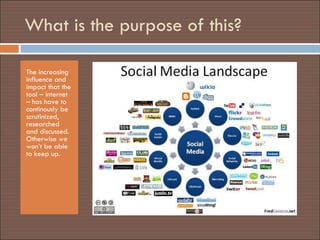
What is the purpose of this?  The increasing influence and impact that the tool – internet – has have to continously be scrutinized, researched and discussed. Otherwise we won’t be able to keep up.
New Media Activism - Definition New media activism differs from traditional activism since being more reliant on technological competence and mobile devices and being more geographically dispersed. Media is:  Medium to communicate  Interact and execute Create meaning Activism is:  - The intent  to change or make history.
Gender in the context of new media activism
Gender and New Media Activism The percentage of women included as news subjects only increased from 17 percent to 24 percent between the years of 1995 and 2010. Only 4 percent of the news stories published online challenges gender stereotypes while 42 percent reinforce them
Online vs. Public Sphere Activism Can this type of activism lead to social/political change?  Or is it only public sphere activism that can create an impact?
What really makes a difference?  New opportunities Risk of ’Slacktivism’ Extract the strengths from both sides  Steps forward
Perspectives of Intellectual Property in Media Activism  Three key issues being examined here;  firstly, the  commodification  of that process;  secondly, the issues of  propriety  and  finally, the  diffusion of the private vs. public delineation  raising issues of privacy.
Perspectives of Intellectual Property in Media Activism  in particular copyright, increasing creeping  commodification of knowledge  and the  corporatization of its structure  (Scholz, 2008:362).  Assertion of ownership  over uploads on blogs and social networks, often in the form of an  implied license .  E.g., on Facebook, the  copyright ownership  of that picture is then  transferred onto Facebook  until it is deleted or the account is closed (http://www.facebook.com/terms.php).
Perspectives of Intellectual Property in Media Activism  We live in a society that creates IP Revolutionary changes in the growth and use of information technologies   IP protection organizations and movements appear  The global Access to Knowledge  Movement (A2K)
Surveillance  New tools and technology have opened the door of opportunity for sharing,  creating, and distributing content.  BUT also - to STEAL content.   Today a ll the information about the person  is in provider’s hands.  People start to worry about their private life.  People’s awareness causes deviance and social activity. As a result different social movements appear.  Many  organizations and foundations reacted to problems of communication privacy online .   T hey develop toolset s and software that help to protect information.
Hacktivism – What is that?  Form of Digital Activism Hacking + activism Hacking for a cause Raise awareness Hacktivism – new term used to describe a type of computer hacking for political or social change. Question: Is hacktivism a truly civil disobedience of the computer age or just a group of bored computer geniuses with too much time on their hands? Hackers join forces with activists – hacking for a cause. Hacktivism could be understood as the writing of code to promote political ideology: promoting expressive politics,  free speech, human rights, and  information ethics through software development.
Summary of our presentation  Public sphere activism has a real competitor  Are those still my pictures? Rights after uploading property How to protest online but staying inside the law – Hacktivism  How to engage people in both spheres – the future challenge!

Presentation

  • 1.
    By: C. Schubert,L. Bergman, A. Shulipa and A. Gng Group 5
  • 2.
    Outline of thepresentation Purpose with our presentaion What is New Media Activism? Gender and Online Activism – new opportunities for women? Online vs. Public Activism Intellectual property perspectives Surveillance – there are two sides Hacktivism Summary of our literature review
  • 3.
    What is thepurpose of this? The increasing influence and impact that the tool – internet – has have to continously be scrutinized, researched and discussed. Otherwise we won’t be able to keep up.
  • 4.
    New Media Activism- Definition New media activism differs from traditional activism since being more reliant on technological competence and mobile devices and being more geographically dispersed. Media is: Medium to communicate Interact and execute Create meaning Activism is: - The intent to change or make history.
  • 5.
    Gender in thecontext of new media activism
  • 6.
    Gender and NewMedia Activism The percentage of women included as news subjects only increased from 17 percent to 24 percent between the years of 1995 and 2010. Only 4 percent of the news stories published online challenges gender stereotypes while 42 percent reinforce them
  • 7.
    Online vs. PublicSphere Activism Can this type of activism lead to social/political change? Or is it only public sphere activism that can create an impact?
  • 8.
    What really makesa difference? New opportunities Risk of ’Slacktivism’ Extract the strengths from both sides Steps forward
  • 9.
    Perspectives of IntellectualProperty in Media Activism Three key issues being examined here; firstly, the commodification of that process; secondly, the issues of propriety and finally, the diffusion of the private vs. public delineation raising issues of privacy.
  • 10.
    Perspectives of IntellectualProperty in Media Activism in particular copyright, increasing creeping commodification of knowledge and the corporatization of its structure (Scholz, 2008:362). Assertion of ownership over uploads on blogs and social networks, often in the form of an implied license . E.g., on Facebook, the copyright ownership of that picture is then transferred onto Facebook until it is deleted or the account is closed (http://www.facebook.com/terms.php).
  • 11.
    Perspectives of IntellectualProperty in Media Activism We live in a society that creates IP Revolutionary changes in the growth and use of information technologies IP protection organizations and movements appear The global Access to Knowledge Movement (A2K)
  • 12.
    Surveillance Newtools and technology have opened the door of opportunity for sharing, creating, and distributing content. BUT also - to STEAL content. Today a ll the information about the person is in provider’s hands. People start to worry about their private life. People’s awareness causes deviance and social activity. As a result different social movements appear. Many organizations and foundations reacted to problems of communication privacy online . T hey develop toolset s and software that help to protect information.
  • 13.
    Hacktivism – Whatis that? Form of Digital Activism Hacking + activism Hacking for a cause Raise awareness Hacktivism – new term used to describe a type of computer hacking for political or social change. Question: Is hacktivism a truly civil disobedience of the computer age or just a group of bored computer geniuses with too much time on their hands? Hackers join forces with activists – hacking for a cause. Hacktivism could be understood as the writing of code to promote political ideology: promoting expressive politics, free speech, human rights, and information ethics through software development.
  • 14.
    Summary of ourpresentation Public sphere activism has a real competitor Are those still my pictures? Rights after uploading property How to protest online but staying inside the law – Hacktivism How to engage people in both spheres – the future challenge!

Editor's Notes

  • #5 Media can be defined both as a medium to communication, interact and promulgate as well as to create meaning. Activism on the other hand is the ability to change or make history. It represents the practice of striving for change from reactionary as well as progressive aims and ambitions. Different forms of media activism are e.g. electronic promotion, culture jamming, and hacktivism. New media activism differs from the traditional activism since being more reliant on technological competence and mobile devices and being more geographically dispersed.
  • #7 Men get more space in the media, and are less often stereotyped in the same way as women are. It is said that instead of giving attention to issues of representation it is argued that more attention should be given to strategies for change. Some approaches normally used are the political approach which highlights conflict and power relations and the countercultural approach which challenges values and norms in a patriarchic society. The women’s alternative media have been existing since the 1970s and in recent year’s internet has allowed this to develop even further. Unfortunately this media is often read or noticed by an already committed audience but nevertheless, many of these media have given voices to women who would never been heard in the mainstream media. In short, internet has had a positive effect on the women’s debate and has increased the information spread. However, as pointed out, a lot of the information circulating internet is only read by those already engaged in the matter.