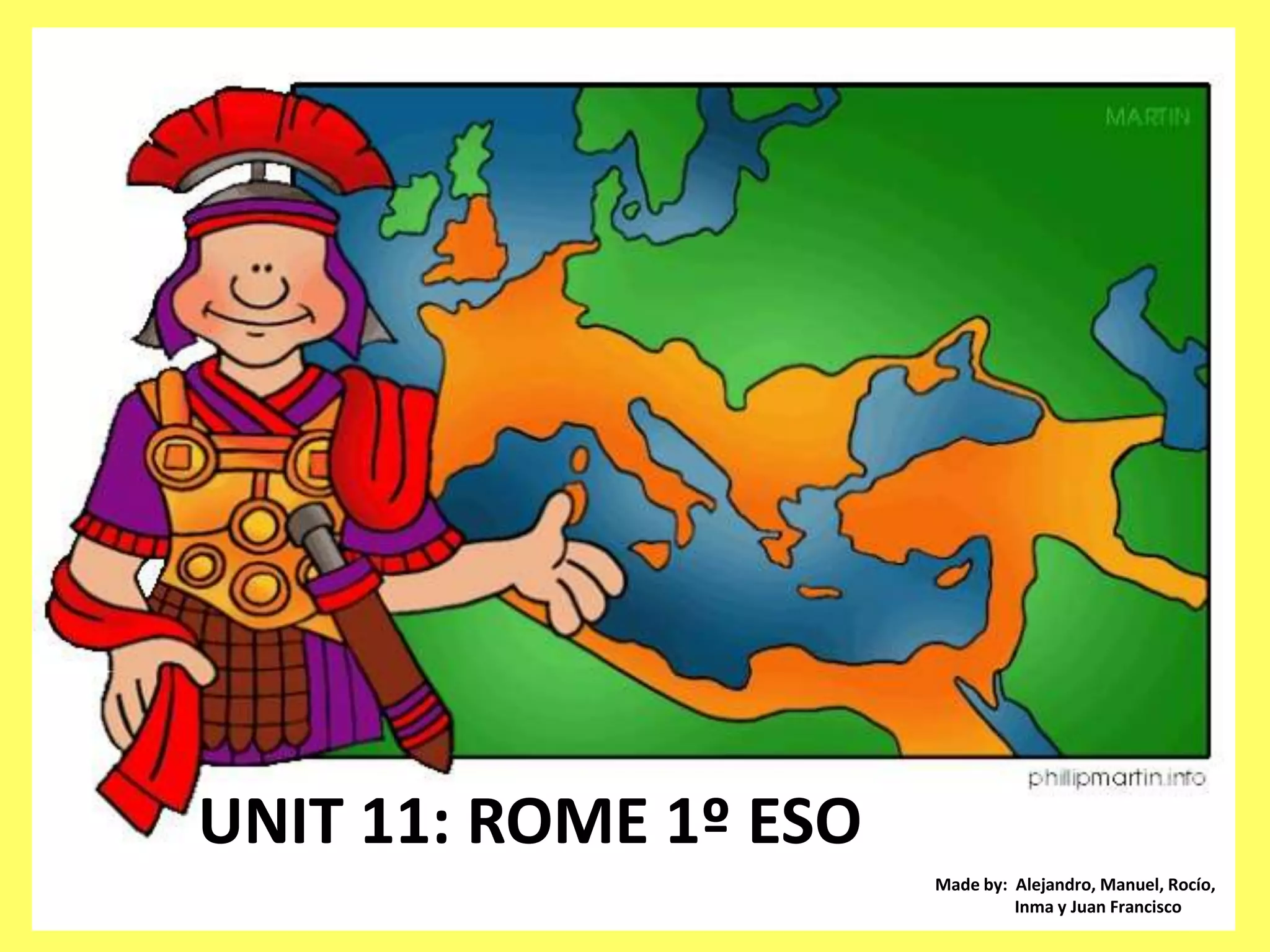
UNIT 11: ROME 1º ESO
Made by: Alejandro, Manuel, Rocío,
Inma y Juan Francisco
Political Organisation
• Monarchy (753-509 BC)
 King had absolute power
 The Senate was made up of rich and powerful families
 In 509 there was a revolt against the Etruscan king Tarquin the Proud
and he was expelled
• Republic (509-27 BC)
 Big Expansion (Mediterranean) Good Army
 Goberment had 3 main institutions
 Voting Assemblies (laws and magistrates)
 Senate (Take important decisions)
 Magistrates (group of elective positions)
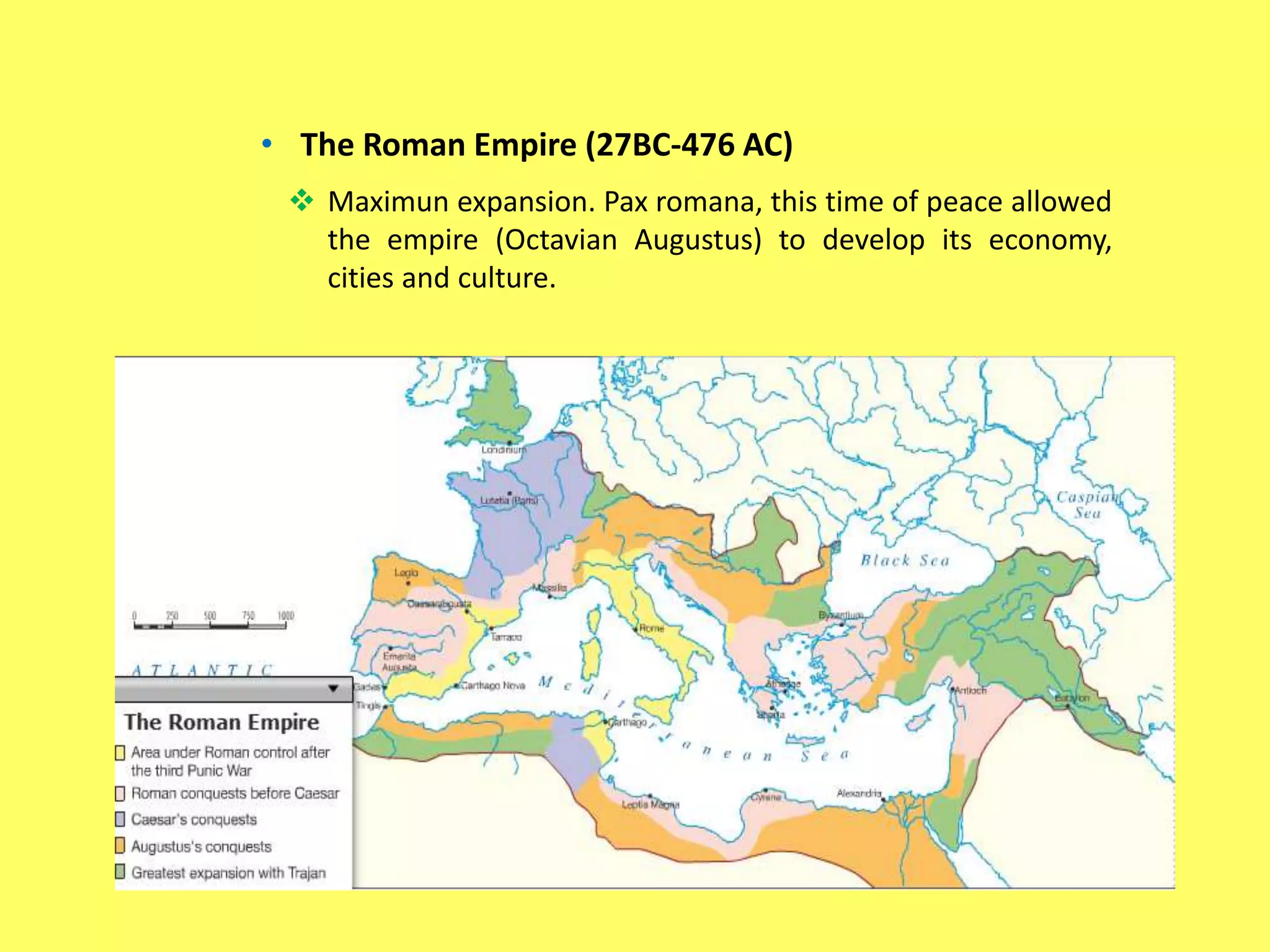
• The Roman Empire (27BC-476 AC)
 Maximun expansion. Pax romana, this time of peace allowed
the empire (Octavian Augustus) to develop its economy,
cities and culture.
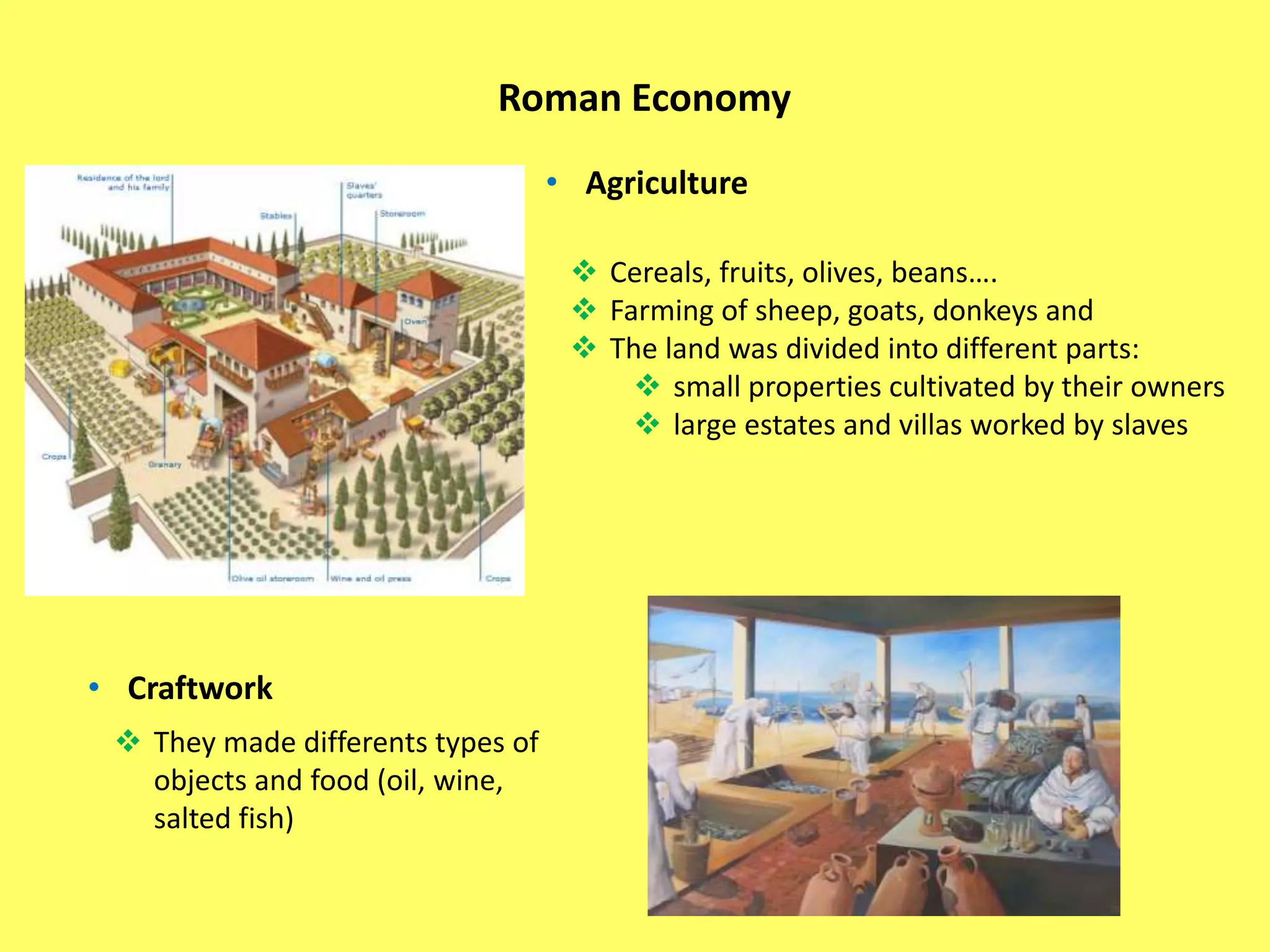
Roman Economy
• Agriculture
 Cereals, fruits, olives, beans….
 Farming of sheep, goats, donkeys and
 The land was divided into different parts:
 small properties cultivated by their owners
 large estates and villas worked by slaves
• Craftwork
 They made differents types of
objects and food (oil, wine,
salted fish)
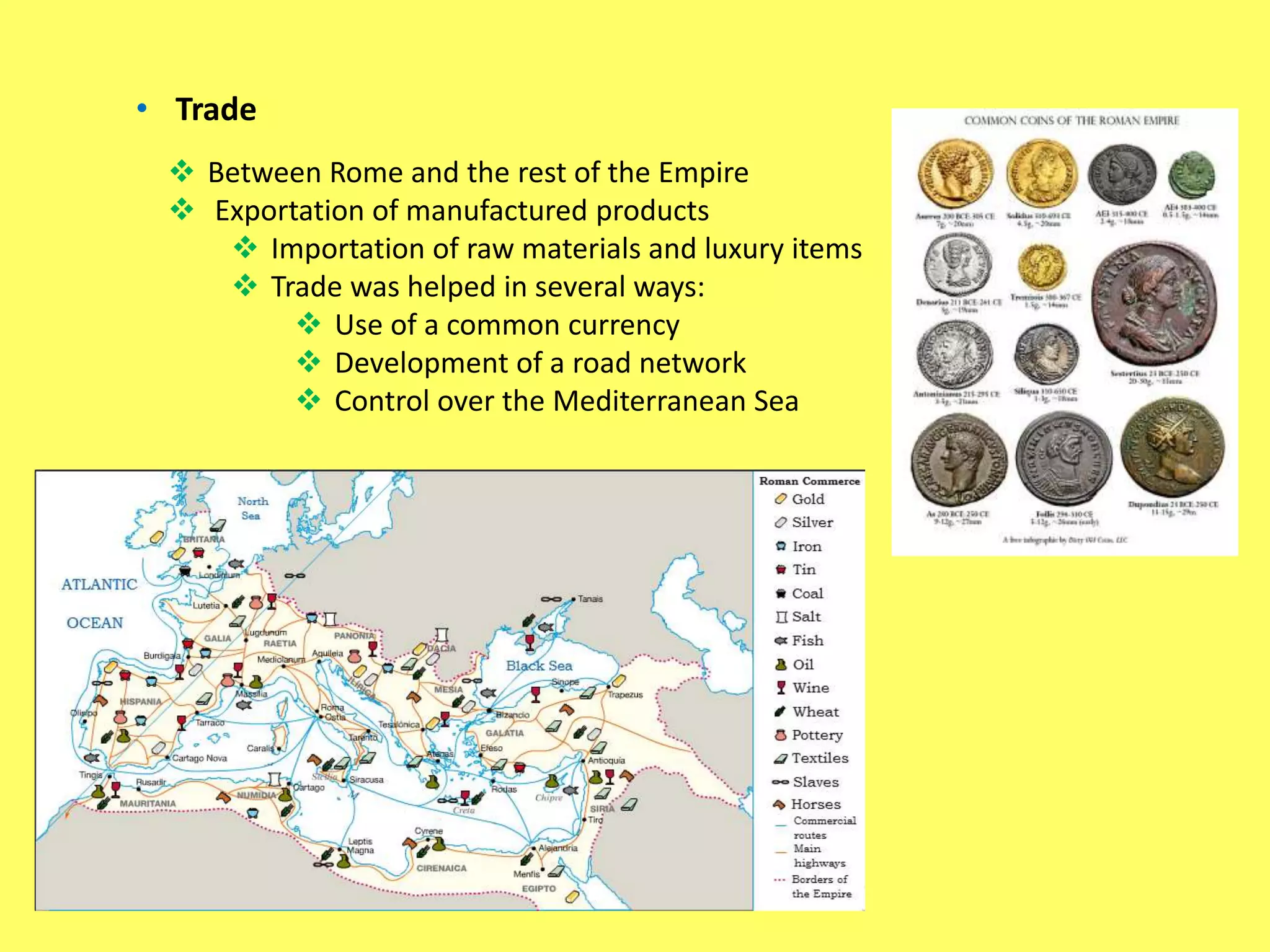
• Trade
 Between Rome and the rest of the Empire
 Exportation of manufactured products
 Importation of raw materials and luxury items
 Trade was helped in several ways:
 Use of a common currency
 Development of a road network
 Control over the Mediterranean Sea
Roman Society
• Free People:
 Patricians(nobles). Political power and rich
 Plebeians (most people). With no political power at the start, they demand rights.
During Republic they created the Tribune. Later, they achieved equal rights.
• Slaves (no rights at all)
 Liberti are slaves liberated by their owners or that buy it themselves).
• Roman Women
 Belonged to their fathers or husbands
 They could own properties
 Fathers arranged marriages
 Cared for the home and the children
Roman Religion
• Romans were polytheistic, and they adopted gods from the provinces they
conquered
• Romans gods were assimilated with Greek gods.
• Christianity
 First century in Palestine
 It was a new religion preached by Jesus ( his message was of equality and love.
 Monotheism: only a God.
 Roman authorities considered this religion dangerous and Jesus was crucified
and Christians were persecuted by the Romans
 In 313, the Emperor Constantine allowed Christians to practice their religion
freely with the Edict of Milan.
 In 380, the Emperor Theodosius declared Christianity to be the official religion
of the Empire with the Edict of Thessalonica.
• Roman architecture was practical and functional
• buildings were designed to satisfy the
needs of the population
• The Romans adopted architectural elements
from the lands that the conquered
• Materials used in construction:
• - stone
• - brick
• - concrete (a mix of lime,rock and sand)
• Architectural elements:
• - flat ceilings
• - columns
• - arches
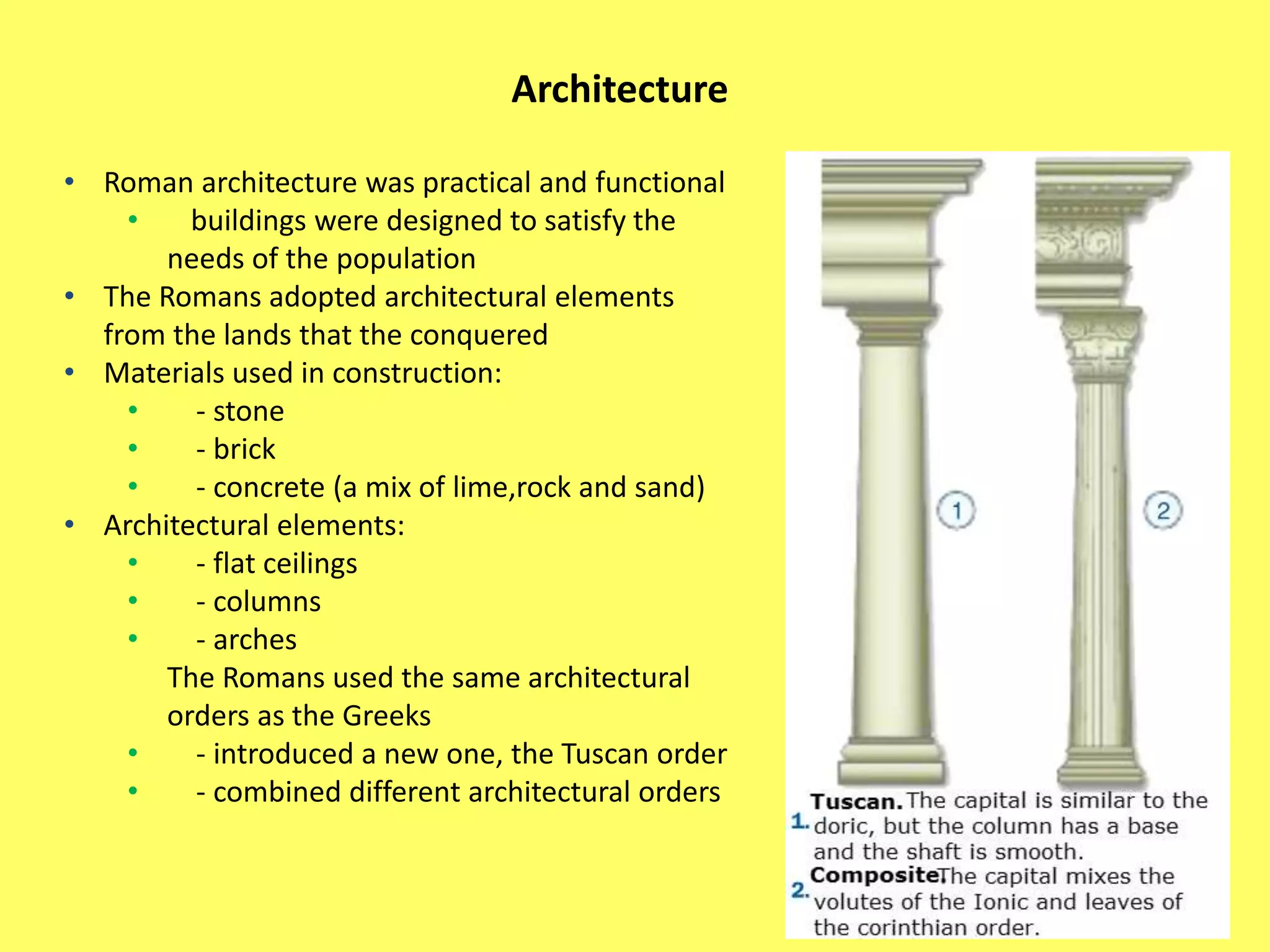
The Romans used the same architectural
orders as the Greeks
• - introduced a new one, the Tuscan order
• - combined different architectural orders
Architecture
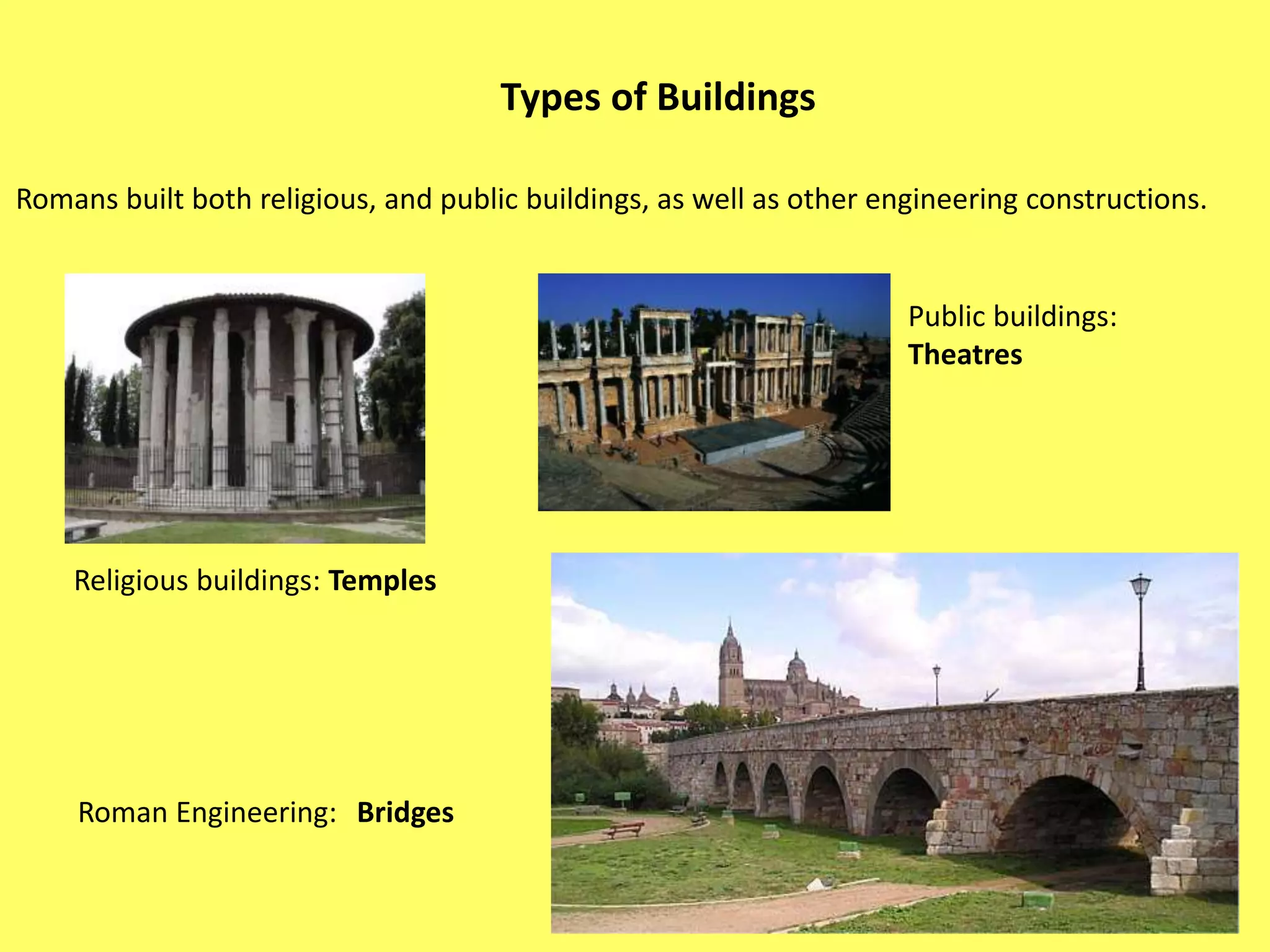
Romans built both religious, and public buildings, as well as other engineering constructions.
Types of Buildings
Public buildings:
Theatres
Religious buildings: Temples
BridgesRoman Engineering:
INFORMATION OF:
IMAGES :GOOGLE IMAGES
Book of CCSS 1º eso Andalucía Oxford Educacion
Exemples of presentation :Geography 1º eso. unit 1. jaraberzosa 483 - SlideShare
http://es.slideshare.net/jaraberzosa/ancient-rome-39137728?related=1

presentation of rome

  • 1.
    UNIT 11: ROME1º ESO Made by: Alejandro, Manuel, Rocío, Inma y Juan Francisco
  • 2.
    Political Organisation • Monarchy(753-509 BC)  King had absolute power  The Senate was made up of rich and powerful families  In 509 there was a revolt against the Etruscan king Tarquin the Proud and he was expelled • Republic (509-27 BC)  Big Expansion (Mediterranean) Good Army  Goberment had 3 main institutions  Voting Assemblies (laws and magistrates)  Senate (Take important decisions)  Magistrates (group of elective positions)
  • 3.
    • The RomanEmpire (27BC-476 AC)  Maximun expansion. Pax romana, this time of peace allowed the empire (Octavian Augustus) to develop its economy, cities and culture.
  • 4.
    Roman Economy • Agriculture Cereals, fruits, olives, beans….  Farming of sheep, goats, donkeys and  The land was divided into different parts:  small properties cultivated by their owners  large estates and villas worked by slaves • Craftwork  They made differents types of objects and food (oil, wine, salted fish)
  • 5.
    • Trade  BetweenRome and the rest of the Empire  Exportation of manufactured products  Importation of raw materials and luxury items  Trade was helped in several ways:  Use of a common currency  Development of a road network  Control over the Mediterranean Sea
  • 6.
    Roman Society • FreePeople:  Patricians(nobles). Political power and rich  Plebeians (most people). With no political power at the start, they demand rights. During Republic they created the Tribune. Later, they achieved equal rights. • Slaves (no rights at all)  Liberti are slaves liberated by their owners or that buy it themselves). • Roman Women  Belonged to their fathers or husbands  They could own properties  Fathers arranged marriages  Cared for the home and the children
  • 7.
    Roman Religion • Romanswere polytheistic, and they adopted gods from the provinces they conquered • Romans gods were assimilated with Greek gods. • Christianity  First century in Palestine  It was a new religion preached by Jesus ( his message was of equality and love.  Monotheism: only a God.  Roman authorities considered this religion dangerous and Jesus was crucified and Christians were persecuted by the Romans  In 313, the Emperor Constantine allowed Christians to practice their religion freely with the Edict of Milan.  In 380, the Emperor Theodosius declared Christianity to be the official religion of the Empire with the Edict of Thessalonica.
  • 8.
    • Roman architecturewas practical and functional • buildings were designed to satisfy the needs of the population • The Romans adopted architectural elements from the lands that the conquered • Materials used in construction: • - stone • - brick • - concrete (a mix of lime,rock and sand) • Architectural elements: • - flat ceilings • - columns • - arches The Romans used the same architectural orders as the Greeks • - introduced a new one, the Tuscan order • - combined different architectural orders Architecture
  • 9.
    Romans built bothreligious, and public buildings, as well as other engineering constructions. Types of Buildings Public buildings: Theatres Religious buildings: Temples BridgesRoman Engineering:
  • 10.
    INFORMATION OF: IMAGES :GOOGLEIMAGES Book of CCSS 1º eso Andalucía Oxford Educacion Exemples of presentation :Geography 1º eso. unit 1. jaraberzosa 483 - SlideShare http://es.slideshare.net/jaraberzosa/ancient-rome-39137728?related=1