Present perfect simple
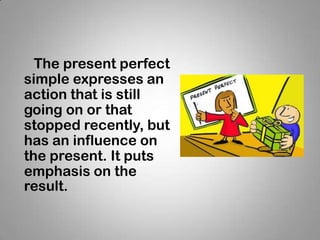
The present perfect
simple expresses an
action that is still
going on or that
stopped recently, but
has an influence on
the present. It puts
emphasis on the
result.
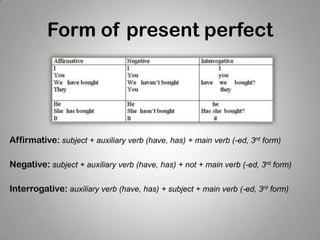
Form of present perfect


Affirmative: subject + auxiliary verb (have, has) + main verb (-ed, 3rd form)

Negative: subject + auxiliary verb (have, has) + not + main verb (-ed, 3rd form)

Interrogative: auxiliary verb (have, has) + subject + main verb (-ed, 3rd form)
Use of present perfect
puts emphasis on the result.

action that is still going on.

action that stopped recently.

finished action that has an influence on the present.

action that has taken place once, never or several times
 before the moment of speaking.
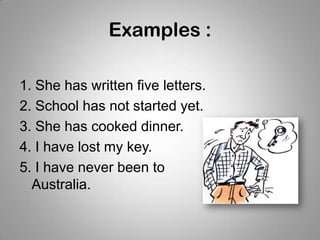
Examples :

1. She has written five letters.
2. School has not started yet.
3. She has cooked dinner.
4. I have lost my key.
5. I have never been to
  Australia.
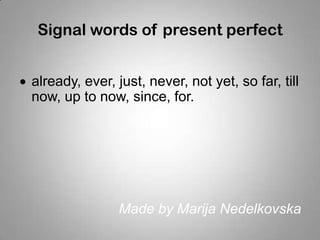
Signal words of present perfect


already, ever, just, never, not yet, so far, till
now, up to now, since, for.


               Made by Marija Nedelkovska

Present perfect simple

  • 1.
  • 2.
    The present perfect simpleexpresses an action that is still going on or that stopped recently, but has an influence on the present. It puts emphasis on the result.
  • 3.
    Form of presentperfect Affirmative: subject + auxiliary verb (have, has) + main verb (-ed, 3rd form) Negative: subject + auxiliary verb (have, has) + not + main verb (-ed, 3rd form) Interrogative: auxiliary verb (have, has) + subject + main verb (-ed, 3rd form)
  • 4.
    Use of presentperfect puts emphasis on the result. action that is still going on. action that stopped recently. finished action that has an influence on the present. action that has taken place once, never or several times before the moment of speaking.
  • 5.
    Examples : 1. Shehas written five letters. 2. School has not started yet. 3. She has cooked dinner. 4. I have lost my key. 5. I have never been to Australia.
  • 6.
    Signal words ofpresent perfect already, ever, just, never, not yet, so far, till now, up to now, since, for. Made by Marija Nedelkovska