Mrs. Anabel Montes - English teacher
inin
onon
atat
inin
onon
atat
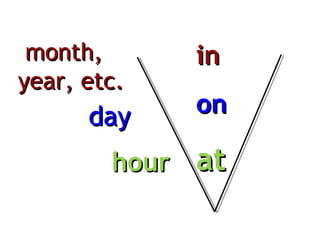
month,month,
year, etc.year, etc.
dayday
hourhour
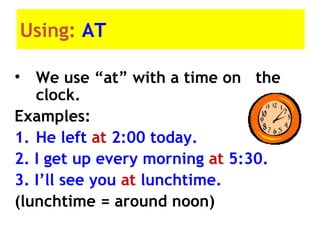
Using: AT
• We use “at” with a time on the
clock.
Examples:
1. He left at 2:00 today.
2. I get up every morning at 5:30.
3. I’ll see you at lunchtime.
(lunchtime = around noon)
• We also use “at” in these
expressions (memorize them!)
• at night
• at the moment
• at the same time
Example:
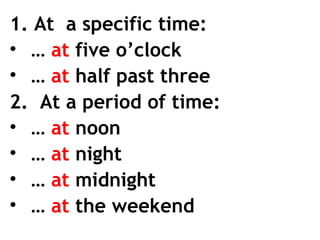
1. At a specific time:
• … at five o’clock
• … at half past three
2. At a period of time:
• … at noon
• … at night
• … at midnight
• … at the weekend
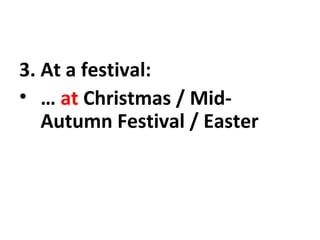
3. At a festival:
• … at Christmas / Mid-
Autumn Festival / Easter
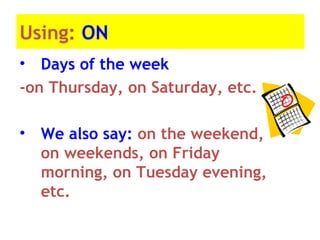
Using: ON
• Days of the week
-on Thursday, on Saturday, etc.
• We also say: on the weekend,
on weekends, on Friday
morning, on Tuesday evening,
etc.
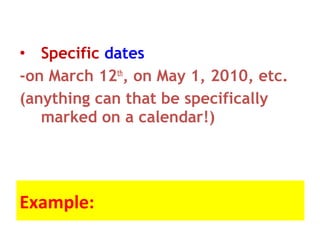
• Specific dates
-on March 12th
, on May 1, 2010, etc.
(anything can that be specifically
marked on a calendar!)
Example:
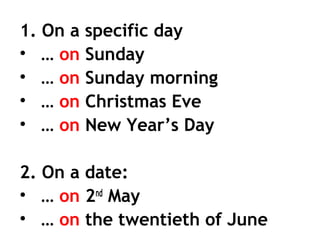
1. On a specific day
• … on Sunday
• … on Sunday morning
• … on Christmas Eve
• … on New Year’s Day
2. On a date:
• … on 2nd
May
• … on the twentieth of June
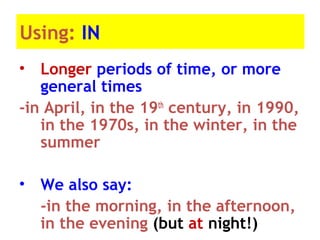
Using: IN
• Longer periods of time, or more
general times
-in April, in the 19th
century, in 1990,
in the 1970s, in the winter, in the
summer
• We also say:
-in the morning, in the afternoon,
in the evening (but at night!)
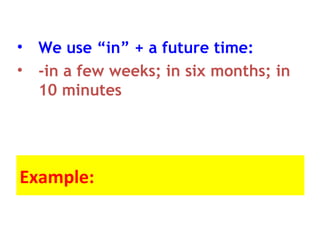
• We use “in” + a future time:
• -in a few weeks; in six months; in
10 minutes
Example:
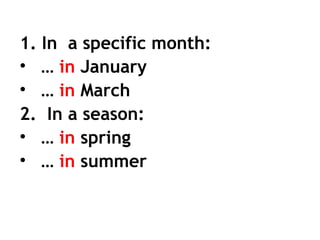
1. In a specific month:
• … in January
• … in March
2. In a season:
• … in spring
• … in summer
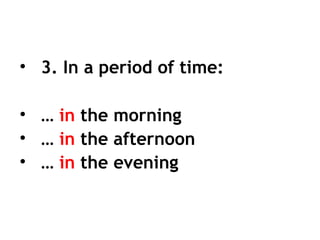
• 3. In a period of time:
• … in the morning
• … in the afternoon
• … in the evening
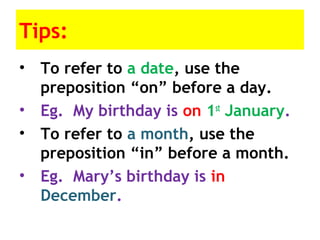
Tips:
• To refer to a date, use the
preposition “on” before a day.
• Eg. My birthday is on 1st
January.
• To refer to a month, use the
preposition “in” before a month.
• Eg. Mary’s birthday is in
December.

Prepositions oftime

  • 1.
    Mrs. Anabel Montes- English teacher inin onon atat
  • 2.
  • 3.
    Using: AT • Weuse “at” with a time on the clock. Examples: 1. He left at 2:00 today. 2. I get up every morning at 5:30. 3. I’ll see you at lunchtime. (lunchtime = around noon)
  • 4.
    • We alsouse “at” in these expressions (memorize them!) • at night • at the moment • at the same time Example:
  • 5.
    1. At aspecific time: • … at five o’clock • … at half past three 2. At a period of time: • … at noon • … at night • … at midnight • … at the weekend
  • 6.
    3. At afestival: • … at Christmas / Mid- Autumn Festival / Easter
  • 7.
    Using: ON • Daysof the week -on Thursday, on Saturday, etc. • We also say: on the weekend, on weekends, on Friday morning, on Tuesday evening, etc.
  • 8.
    • Specific dates -onMarch 12th , on May 1, 2010, etc. (anything can that be specifically marked on a calendar!) Example:
  • 9.
    1. On aspecific day • … on Sunday • … on Sunday morning • … on Christmas Eve • … on New Year’s Day 2. On a date: • … on 2nd May • … on the twentieth of June
  • 10.
    Using: IN • Longerperiods of time, or more general times -in April, in the 19th century, in 1990, in the 1970s, in the winter, in the summer • We also say: -in the morning, in the afternoon, in the evening (but at night!)
  • 11.
    • We use“in” + a future time: • -in a few weeks; in six months; in 10 minutes Example:
  • 12.
    1. In aspecific month: • … in January • … in March 2. In a season: • … in spring • … in summer
  • 13.
    • 3. Ina period of time: • … in the morning • … in the afternoon • … in the evening
  • 14.
    Tips: • To referto a date, use the preposition “on” before a day. • Eg. My birthday is on 1st January. • To refer to a month, use the preposition “in” before a month. • Eg. Mary’s birthday is in December.

Editor's Notes

  • #3 Units of time such as week and larger units use “in.” Parts of the day can use “in” ([the] afternoon, [the] morning) or “at” (night)(noon, daybreak, sunset, midnight, etc.).