Preparing for Transportation
Electrification:
The Electric Coop Perspective
May 14, 2024
Forth Mobility Rural EV Charging Webinar
Stephanie Crawford
Regulatory Affairs Director
Cooperatives Focused on their Consumer-Members
| Pg. 1
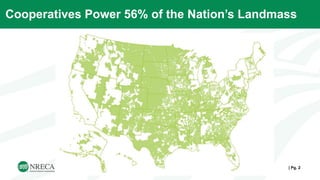
Cooperatives Power 56% of the Nation’s Landmass
| Pg. 2
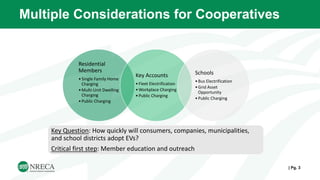
Multiple Considerations for Cooperatives
| Pg. 3
Residential
Members
•Single Family Home
Charging
•Multi-Unit Dwelling
Charging
•Public Charging
Key Accounts
•Fleet Electrification
•Workplace Charging
•Public Charging
Schools
•Bus Electrification
•Grid Asset
Opportunity
•Public Charging
Key Question: How quickly will consumers, companies, municipalities,
and school districts adopt EVs?
Critical first step: Member education and outreach
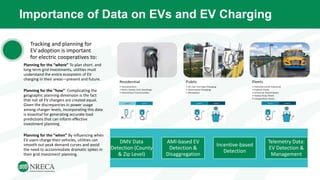
Importance of Data on EVs and EV Charging
Planning for the “where” To plan short- and
long-term grid investments, utilities must
understand the entire ecosystem of EV
charging in their areas—present and future.
Planning for the “how” Complicating the
geographic planning dimension is the fact
that not all EV chargers are created equal.
Given the discrepancies in power usage
among charger levels, incorporating this data
is essential for generating accurate load
predictions that can inform effective
investment planning.
Planning for the “when” By influencing when
EV users charge their vehicles, utilities can
smooth out peak demand curves and avoid
the need to accommodate dramatic spikes in
their grid investment planning.
Tracking and planning for
EV adoption is important
for electric cooperatives to:
DMV Data
Detection (County
& Zip Level)
AMI-based EV
Detection &
Disaggregation
Incentive-based
Detection
Telemetry Data:
EV Detection &
Management
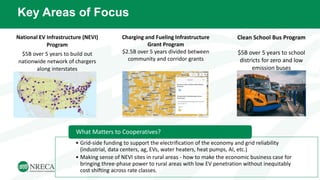
National EV Infrastructure (NEVI)
Program
$5B over 5 years to build out
nationwide network of chargers
along interstates
Key Areas of Focus
Charging and Fueling Infrastructure
Grant Program
$2.5B over 5 years divided between
community and corridor grants
Clean School Bus Program
$5B over 5 years to school
districts for zero and low
emission buses
• Grid-side funding to support the electrification of the economy and grid reliability
(industrial, data centers, ag, EVs, water heaters, heat pumps, AI, etc.)
• Making sense of NEVI sites in rural areas - how to make the economic business case for
bringing three-phase power to rural areas with low EV penetration without inequitably
cost shifting across rate classes.
What Matters to Cooperatives?
Cooperative Approach to Vehicle Electrification
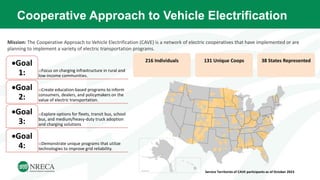
Service Territories of CAVE participants as of October 2023
Mission: The Cooperative Approach to Vehicle Electrification (CAVE) is a network of electric cooperatives that have implemented or are
planning to implement a variety of electric transportation programs.
216 Individuals 131 Unique Coops 38 States Represented
oFocus on charging infrastructure in rural and
low-income communities.
Goal
1:
oCreate education-based programs to inform
consumers, dealers, and policymakers on the
value of electric transportation.
Goal
2:
oExplore options for fleets, transit bus, school
bus, and medium/heavy-duty truck adoption
and charging solutions
Goal
3:
oDemonstrate unique programs that utilize
technologies to improve grid reliability.
Goal
4:
Cultivating Partnerships
to Prepare for Transportation Electrification
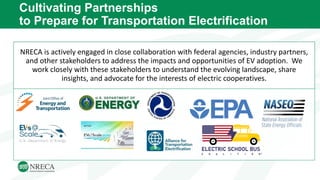
NRECA is actively engaged in close collaboration with federal agencies, industry partners,
and other stakeholders to address the impacts and opportunities of EV adoption. We
work closely with these stakeholders to understand the evolving landscape, share
insights, and advocate for the interests of electric cooperatives.
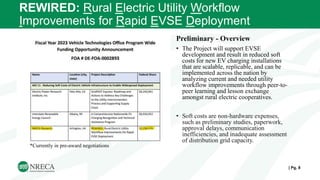
REWIRED: Rural Electric Utility Workflow
Improvements for Rapid EVSE Deployment
| Pg. 8
Preliminary - Overview
• The Project will support EVSE
development and result in reduced soft
costs for new EV charging installations
that are scalable, replicable, and can be
implemented across the nation by
analyzing current and needed utility
workflow improvements through peer-to-
peer learning and lesson exchange
amongst rural electric cooperatives.
• Soft costs are non-hardware expenses,
such as preliminary studies, paperwork,
approval delays, communication
inefficiencies, and inadequate assessment
of distribution grid capacity.
*Currently in pre-award negotiations
Questions?
May 14, 2024 | Pg. 9

Preparing for Transportation Electrification: The Electric Coop Perspective

  • 1.
    Preparing for Transportation Electrification: TheElectric Coop Perspective May 14, 2024 Forth Mobility Rural EV Charging Webinar Stephanie Crawford Regulatory Affairs Director
  • 2.
    Cooperatives Focused ontheir Consumer-Members | Pg. 1
  • 3.
    Cooperatives Power 56%of the Nation’s Landmass | Pg. 2
  • 4.
    Multiple Considerations forCooperatives | Pg. 3 Residential Members •Single Family Home Charging •Multi-Unit Dwelling Charging •Public Charging Key Accounts •Fleet Electrification •Workplace Charging •Public Charging Schools •Bus Electrification •Grid Asset Opportunity •Public Charging Key Question: How quickly will consumers, companies, municipalities, and school districts adopt EVs? Critical first step: Member education and outreach
  • 5.
    Importance of Dataon EVs and EV Charging Planning for the “where” To plan short- and long-term grid investments, utilities must understand the entire ecosystem of EV charging in their areas—present and future. Planning for the “how” Complicating the geographic planning dimension is the fact that not all EV chargers are created equal. Given the discrepancies in power usage among charger levels, incorporating this data is essential for generating accurate load predictions that can inform effective investment planning. Planning for the “when” By influencing when EV users charge their vehicles, utilities can smooth out peak demand curves and avoid the need to accommodate dramatic spikes in their grid investment planning. Tracking and planning for EV adoption is important for electric cooperatives to: DMV Data Detection (County & Zip Level) AMI-based EV Detection & Disaggregation Incentive-based Detection Telemetry Data: EV Detection & Management
  • 6.
    National EV Infrastructure(NEVI) Program $5B over 5 years to build out nationwide network of chargers along interstates Key Areas of Focus Charging and Fueling Infrastructure Grant Program $2.5B over 5 years divided between community and corridor grants Clean School Bus Program $5B over 5 years to school districts for zero and low emission buses • Grid-side funding to support the electrification of the economy and grid reliability (industrial, data centers, ag, EVs, water heaters, heat pumps, AI, etc.) • Making sense of NEVI sites in rural areas - how to make the economic business case for bringing three-phase power to rural areas with low EV penetration without inequitably cost shifting across rate classes. What Matters to Cooperatives?
  • 7.
    Cooperative Approach toVehicle Electrification Service Territories of CAVE participants as of October 2023 Mission: The Cooperative Approach to Vehicle Electrification (CAVE) is a network of electric cooperatives that have implemented or are planning to implement a variety of electric transportation programs. 216 Individuals 131 Unique Coops 38 States Represented oFocus on charging infrastructure in rural and low-income communities. Goal 1: oCreate education-based programs to inform consumers, dealers, and policymakers on the value of electric transportation. Goal 2: oExplore options for fleets, transit bus, school bus, and medium/heavy-duty truck adoption and charging solutions Goal 3: oDemonstrate unique programs that utilize technologies to improve grid reliability. Goal 4:
  • 8.
    Cultivating Partnerships to Preparefor Transportation Electrification NRECA is actively engaged in close collaboration with federal agencies, industry partners, and other stakeholders to address the impacts and opportunities of EV adoption. We work closely with these stakeholders to understand the evolving landscape, share insights, and advocate for the interests of electric cooperatives.
  • 9.
    REWIRED: Rural ElectricUtility Workflow Improvements for Rapid EVSE Deployment | Pg. 8 Preliminary - Overview • The Project will support EVSE development and result in reduced soft costs for new EV charging installations that are scalable, replicable, and can be implemented across the nation by analyzing current and needed utility workflow improvements through peer-to- peer learning and lesson exchange amongst rural electric cooperatives. • Soft costs are non-hardware expenses, such as preliminary studies, paperwork, approval delays, communication inefficiencies, and inadequate assessment of distribution grid capacity. *Currently in pre-award negotiations
  • 10.

Editor's Notes