
Preparing for the EMA 
Hastings, 23 August 2014
Your EMA essay must, above all else, answer the question, 
so make answering the question your top priority. Most 
importantly, make sure you know what the question is asking 
you.
The answer to the question forms the basis of your 
argument. Your argument will solve the problem posed by 
the question, by assembling, synthesising and re-arranging 
the module material into a new pattern.
Arguments can be simple or complex, but they need to be 
carefully constructed or they will fall down.
You are being assessed on how well you 
demonstrate knowledge of the module materials. 
Use them.
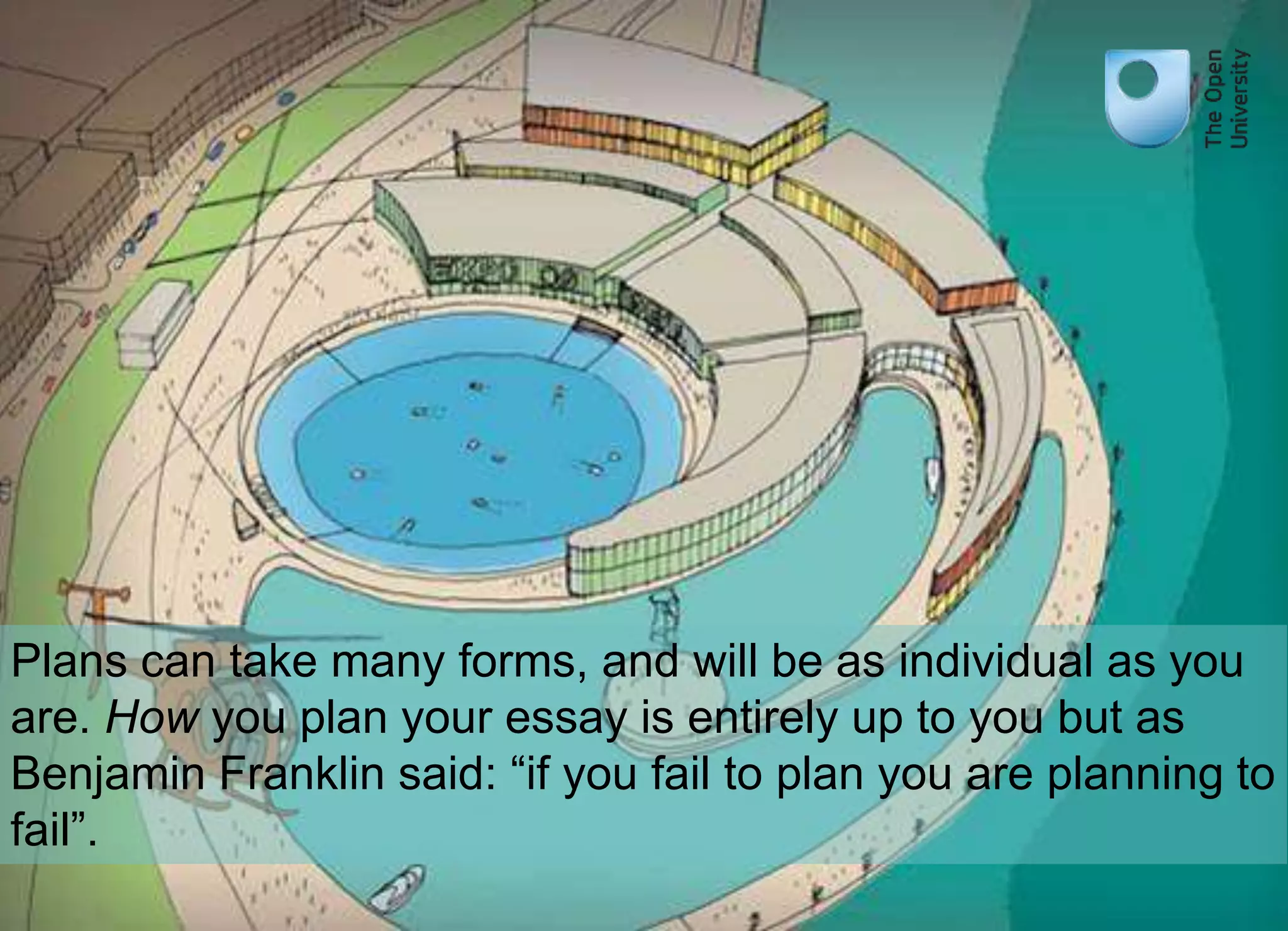
Plans can take many forms, and will be as individual as you 
are. How you plan your essay is entirely up to you but as 
Benjamin Franklin said: “if you fail to plan you are planning to 
fail”.
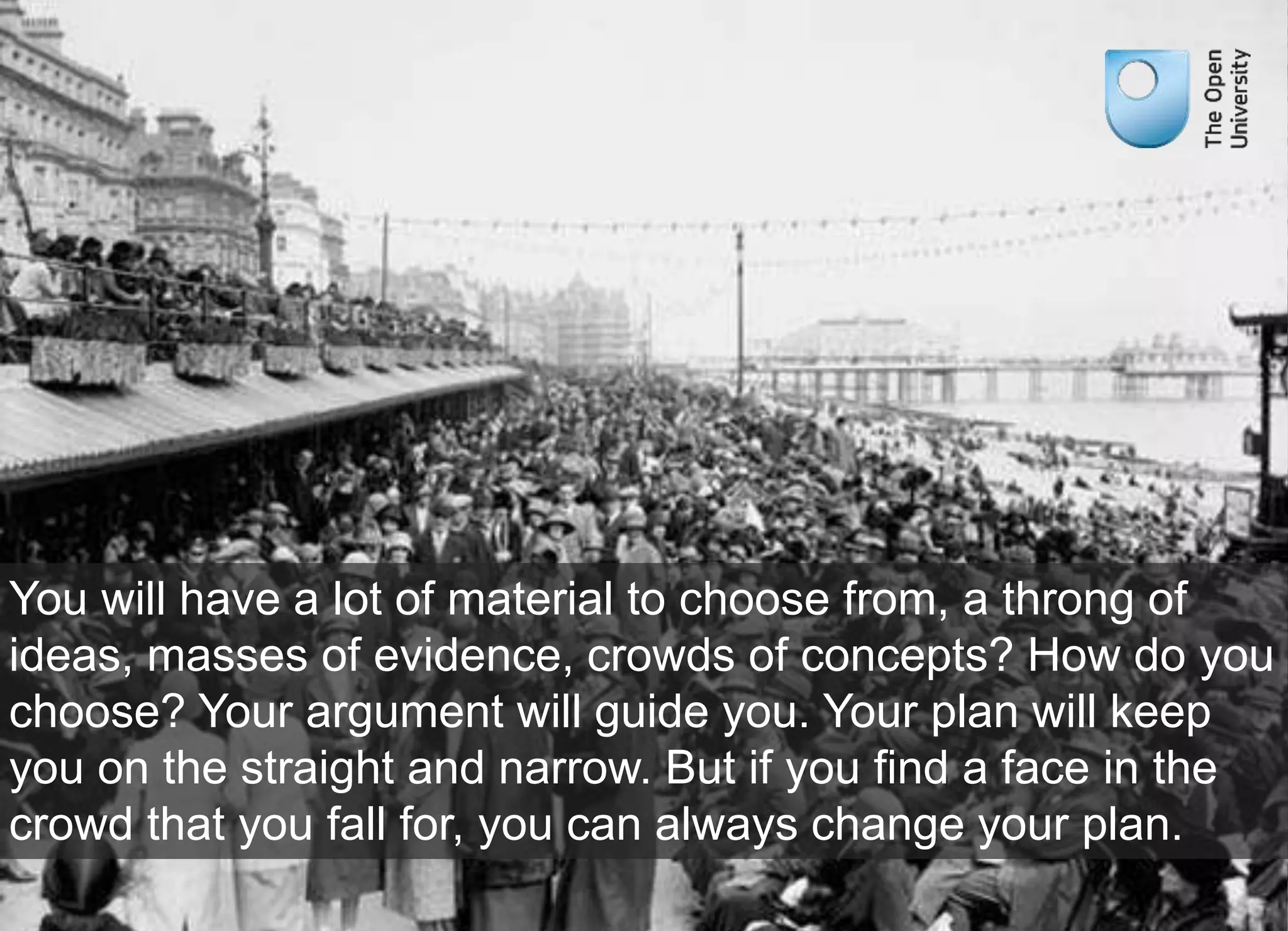
You will have a lot of material to choose from, a throng of 
ideas, masses of evidence, crowds of concepts? How do you 
choose? Your argument will guide you. Your plan will keep 
you on the straight and narrow. But if you find a face in the 
crowd that you fall for, you can always change your plan.
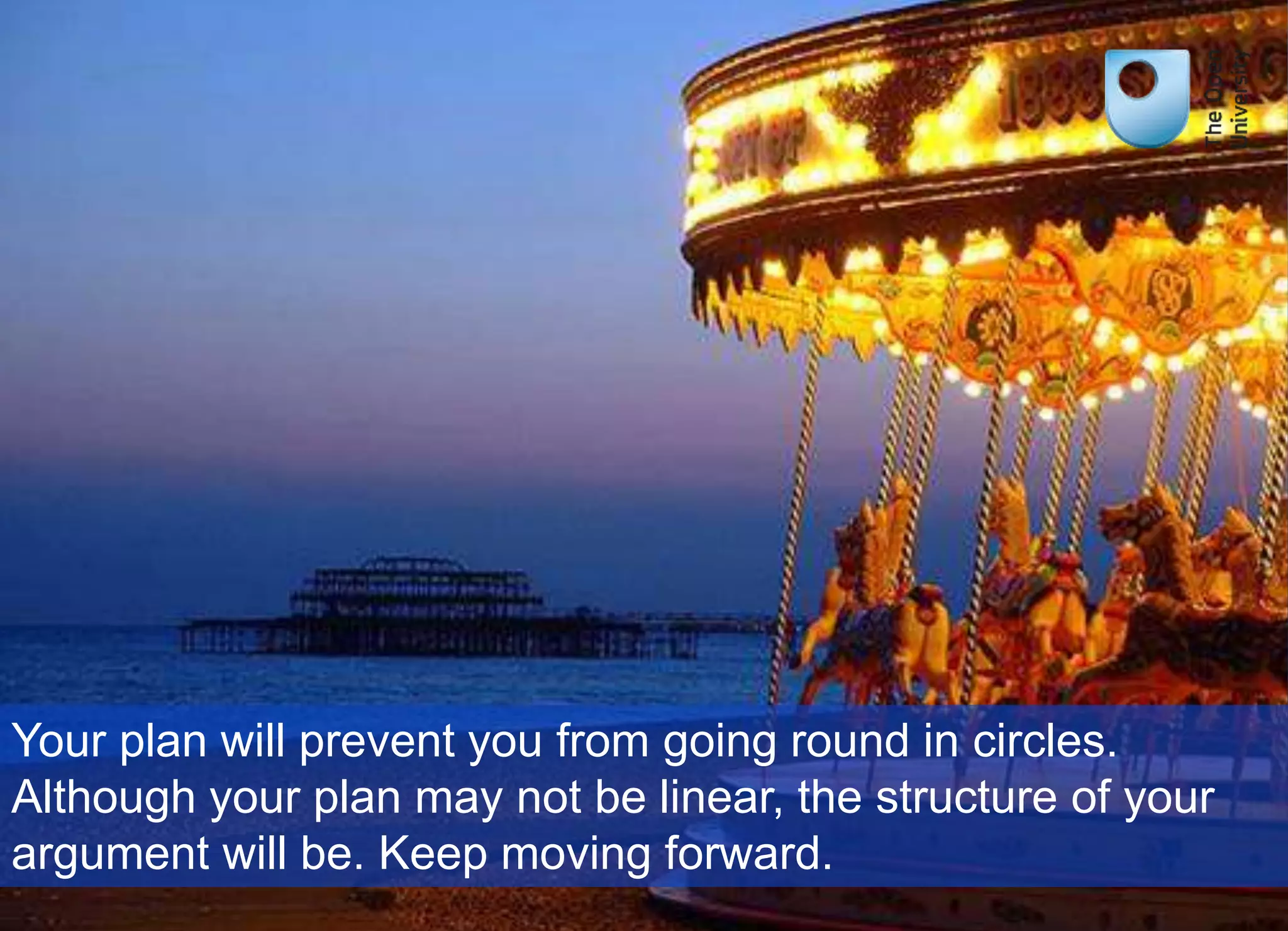
Your plan will prevent you from going round in circles. 
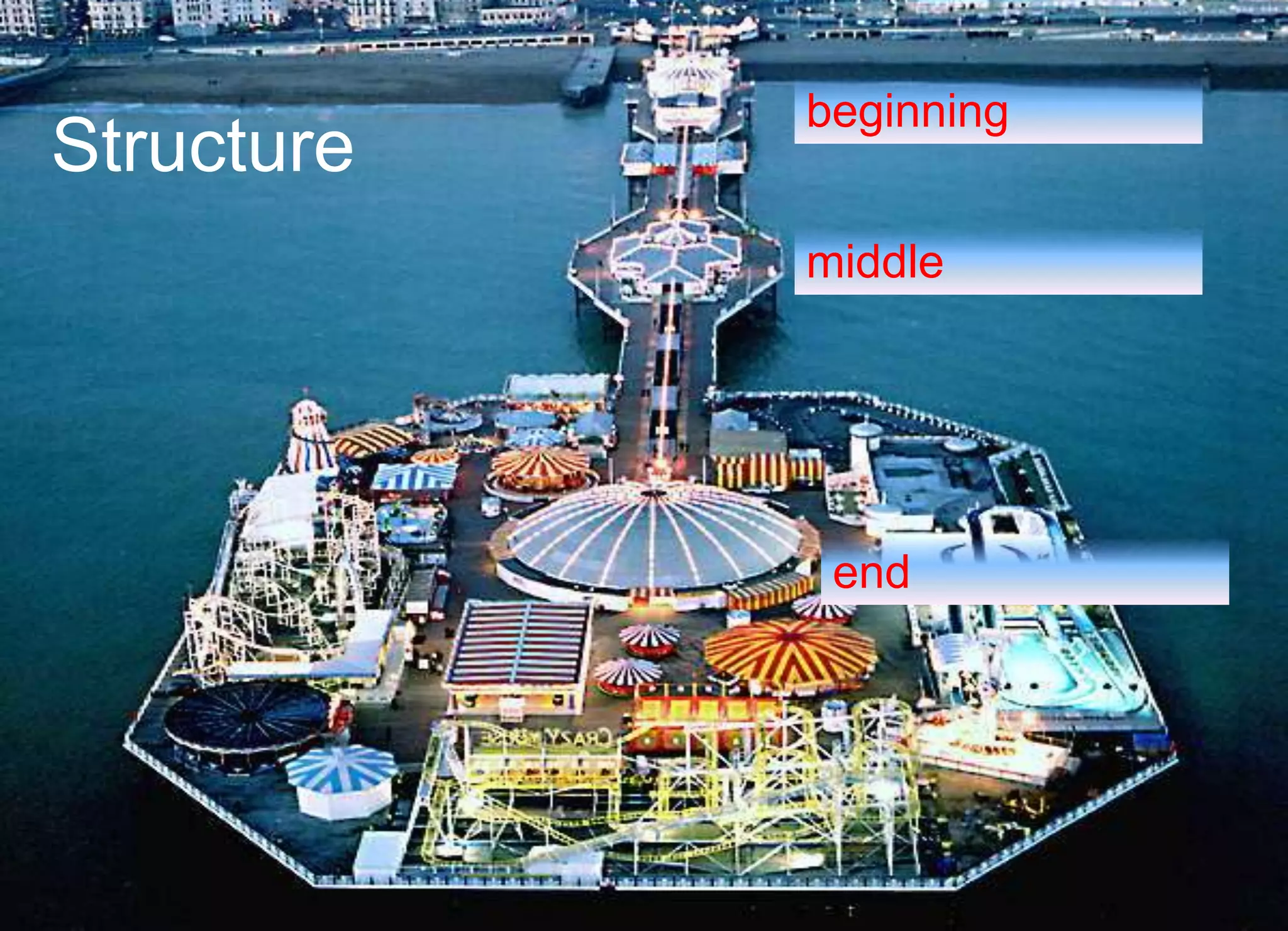
Although your plan may not be linear, the structure of your 
argument will be. Keep moving forward.
Structure 
beginning 
middle 
end
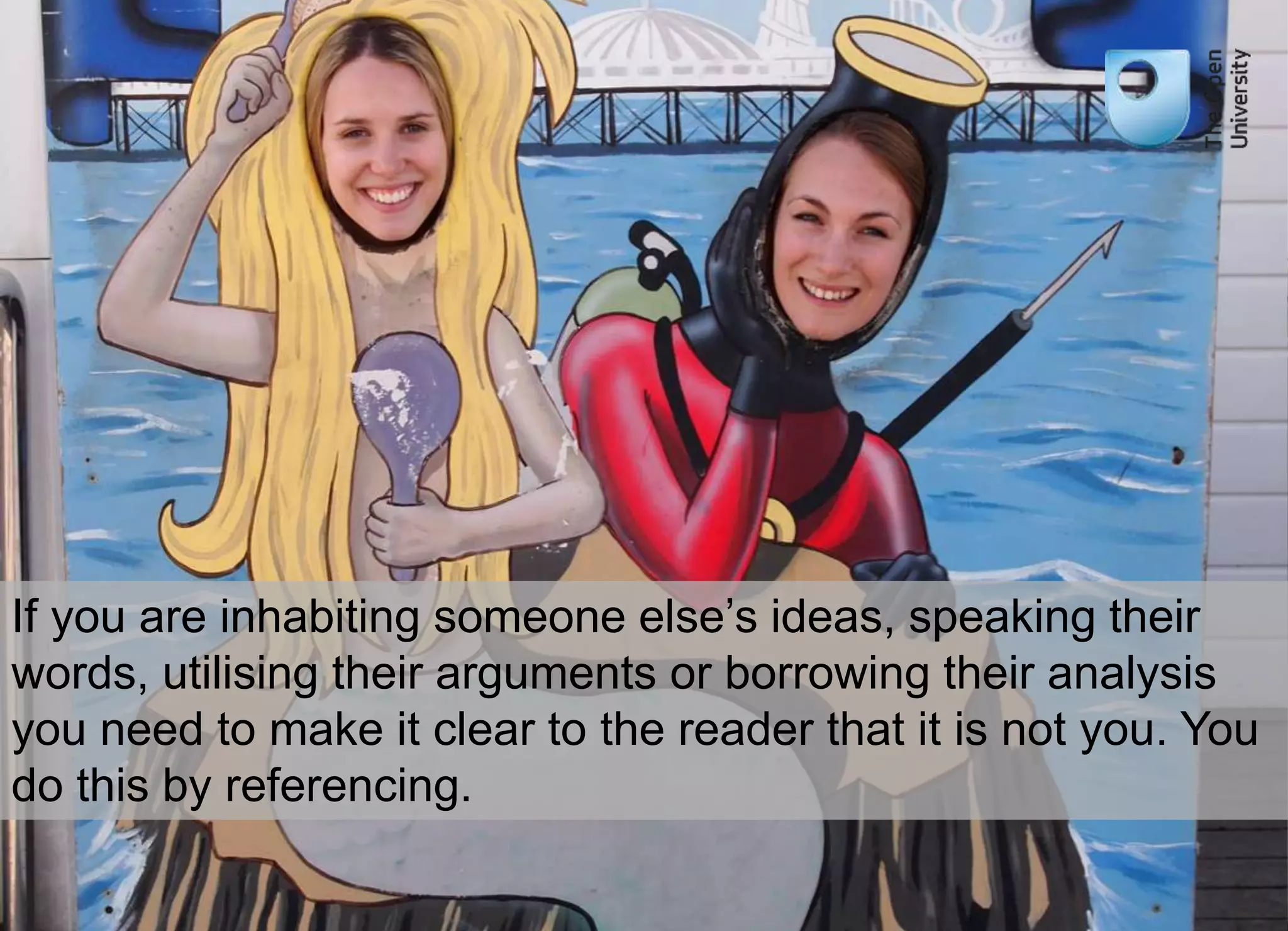
If you are inhabiting someone else’s ideas, speaking their 
words, utilising their arguments or borrowing their analysis 
you need to make it clear to the reader that it is not you. You 
do this by referencing.
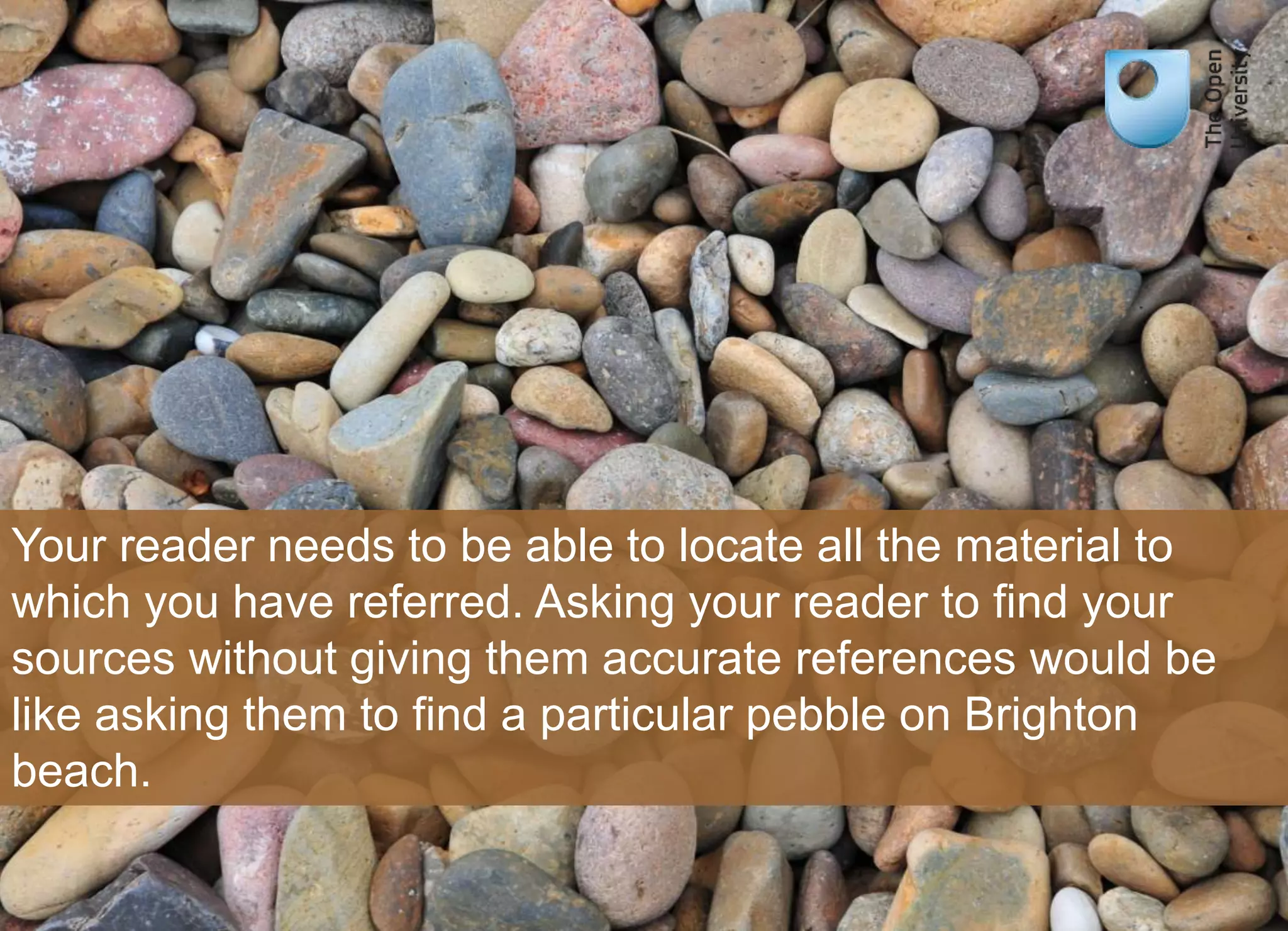
Your reader needs to be able to locate all the material to 
which you have referred. Asking your reader to find your 
sources without giving them accurate references would be 
like asking them to find a particular pebble on Brighton 
beach.
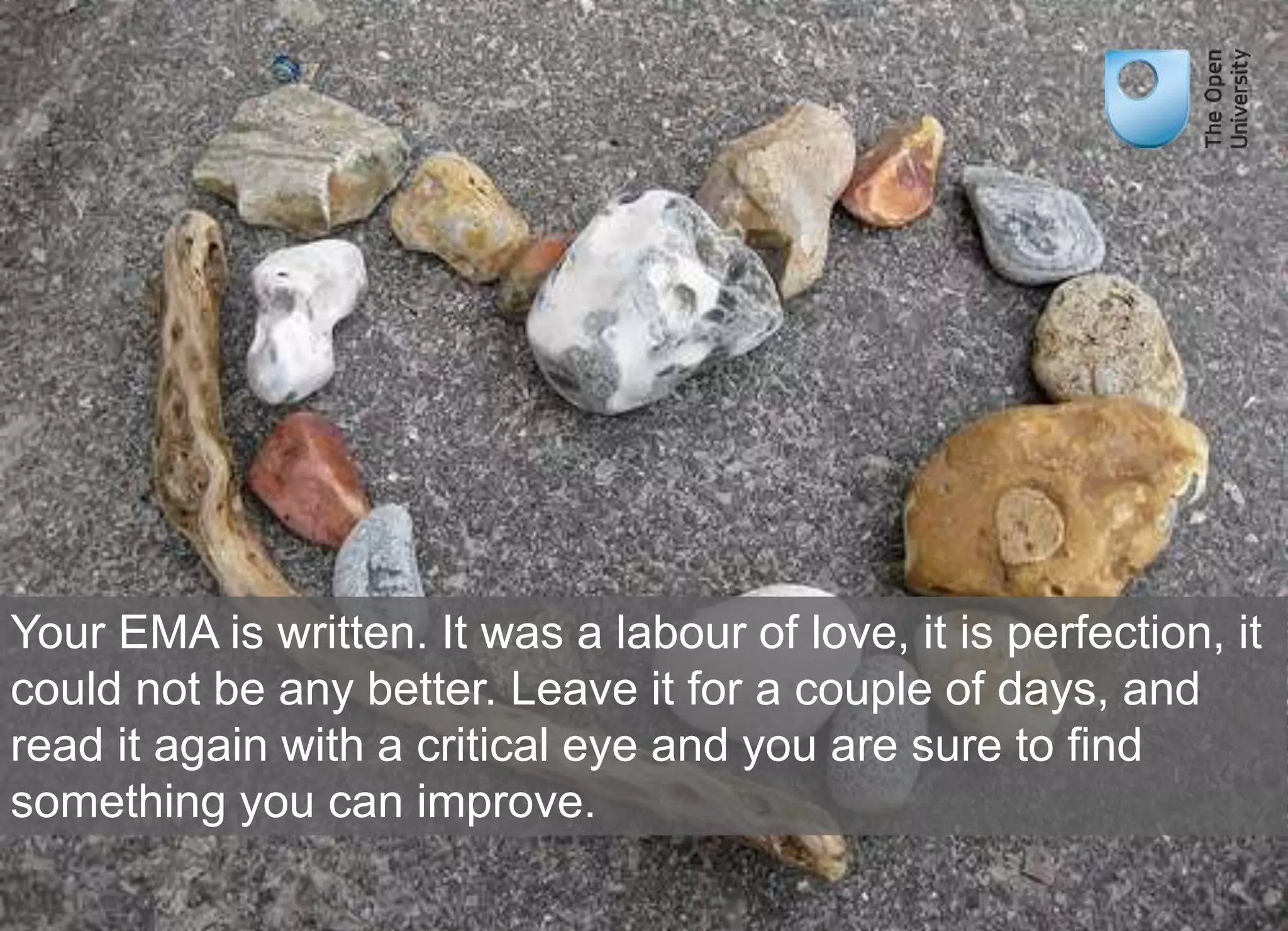
Your EMA is written. It was a labour of love, it is perfection, it 
could not be any better. Leave it for a couple of days, and 
read it again with a critical eye and you are sure to find 
something you can improve.
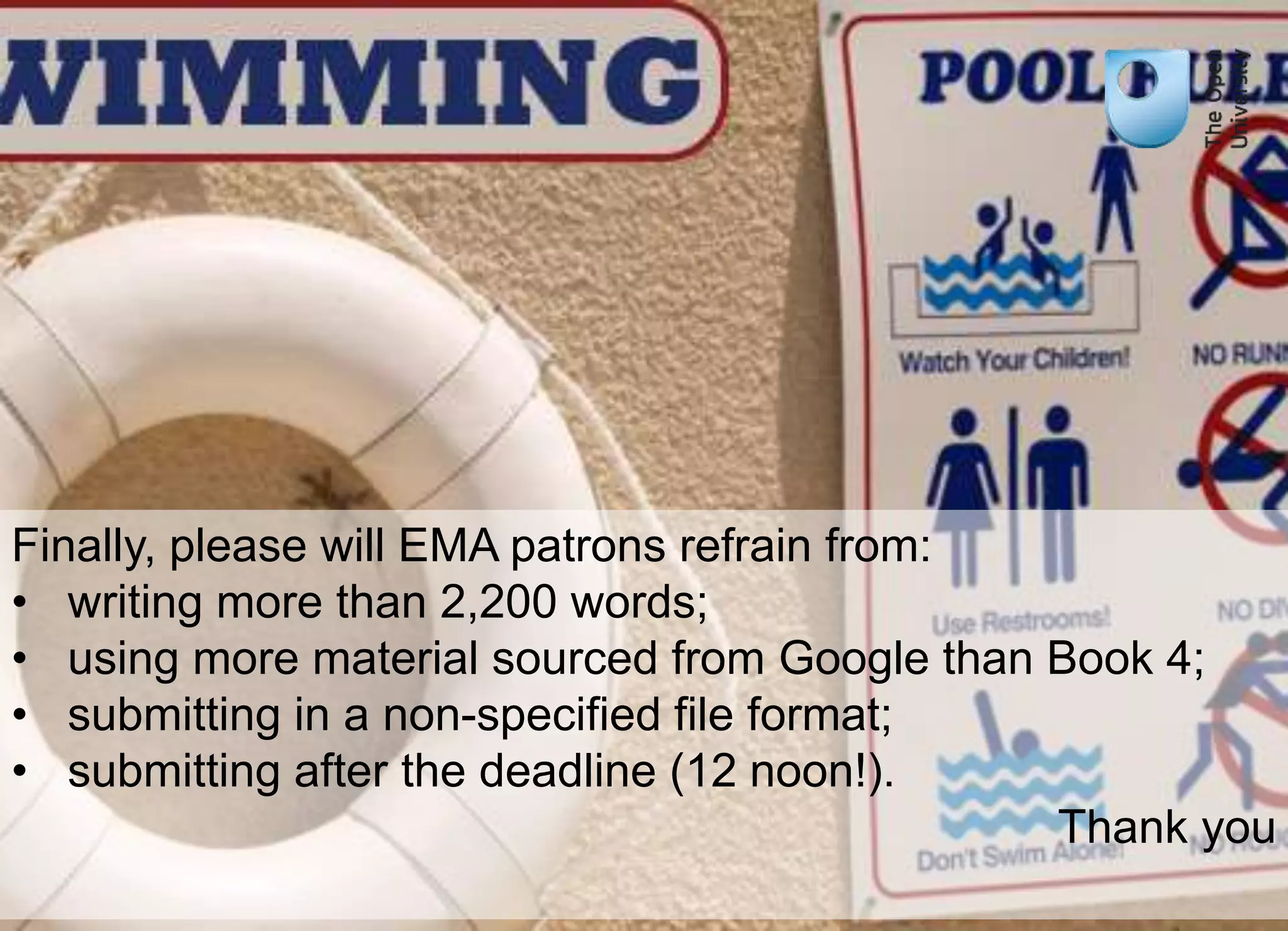
Finally, please will EMA patrons refrain from: 
• writing more than 2,200 words; 
• using more material sourced from Google than Book 4; 
• submitting in a non-specified file format; 
• submitting after the deadline (12 noon!). 
Thank you
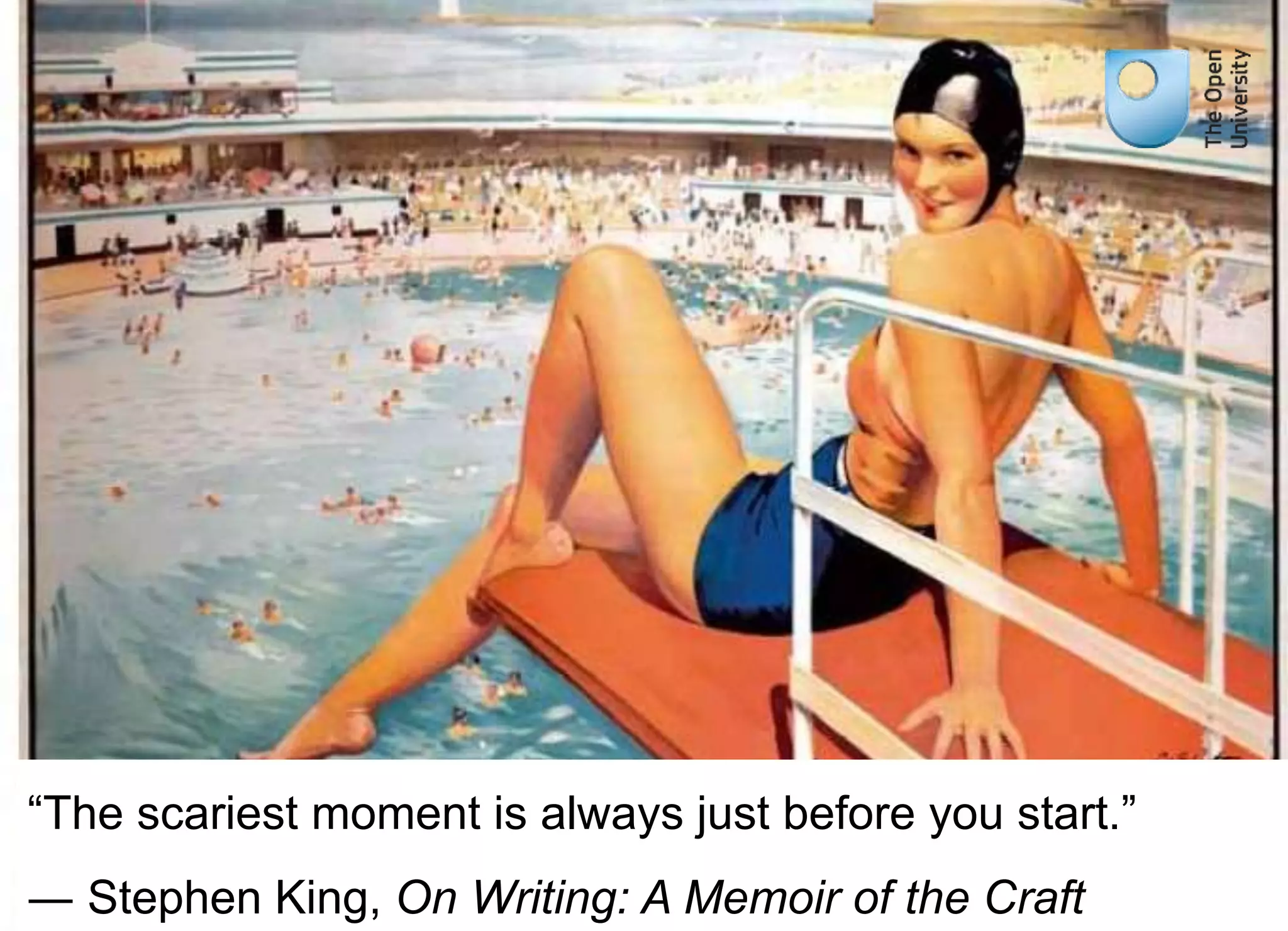
“The scariest moment is always just before you start.” 
― Stephen King, On Writing: A Memoir of the Craft
Jennie Osborn 
jennie.osborn@open.ac.uk 
www.open.ac.uk

Preparing for the EMA, 'The Arts: Past and Present' (AA100), Open University

  • 1.
    Preparing for theEMA Hastings, 23 August 2014
  • 2.
    Your EMA essaymust, above all else, answer the question, so make answering the question your top priority. Most importantly, make sure you know what the question is asking you.
  • 3.
    The answer tothe question forms the basis of your argument. Your argument will solve the problem posed by the question, by assembling, synthesising and re-arranging the module material into a new pattern.
  • 4.
    Arguments can besimple or complex, but they need to be carefully constructed or they will fall down.
  • 5.
    You are beingassessed on how well you demonstrate knowledge of the module materials. Use them.
  • 6.
    Plans can takemany forms, and will be as individual as you are. How you plan your essay is entirely up to you but as Benjamin Franklin said: “if you fail to plan you are planning to fail”.
  • 7.
    You will havea lot of material to choose from, a throng of ideas, masses of evidence, crowds of concepts? How do you choose? Your argument will guide you. Your plan will keep you on the straight and narrow. But if you find a face in the crowd that you fall for, you can always change your plan.
  • 8.
    Your plan willprevent you from going round in circles. Although your plan may not be linear, the structure of your argument will be. Keep moving forward.
  • 9.
  • 10.
    If you areinhabiting someone else’s ideas, speaking their words, utilising their arguments or borrowing their analysis you need to make it clear to the reader that it is not you. You do this by referencing.
  • 12.
    Your reader needsto be able to locate all the material to which you have referred. Asking your reader to find your sources without giving them accurate references would be like asking them to find a particular pebble on Brighton beach.
  • 13.
    Your EMA iswritten. It was a labour of love, it is perfection, it could not be any better. Leave it for a couple of days, and read it again with a critical eye and you are sure to find something you can improve.
  • 14.
    Finally, please willEMA patrons refrain from: • writing more than 2,200 words; • using more material sourced from Google than Book 4; • submitting in a non-specified file format; • submitting after the deadline (12 noon!). Thank you
  • 15.
    “The scariest momentis always just before you start.” ― Stephen King, On Writing: A Memoir of the Craft
  • 16.