Preparing for Exit
Daniel Bernstein
Vice President
Corum Group
About Me
• 20+ years in the games industry
• Computer Science and Music Mash Up
• Founded Sandlot Games, sold it in 2011
• Advisor to tech companies, from drone
startups to public companies
• VP at Corum Group
• Sell-side advisory to private high
technology companies
About Corum Group
• M&A Investment bank
focused on selling
companies
• Sold over 300 companies in
30 years
• Created ~$7B of transaction
value
• Largest tech M&A educator
in the world
8 Stages of an Optimal Outcome
• Prepare, prepare, prepare!
IntegrationClosing
Due
DiligenceNegotiationDiscoveryContactResearchPreparation
Preparation and Planning
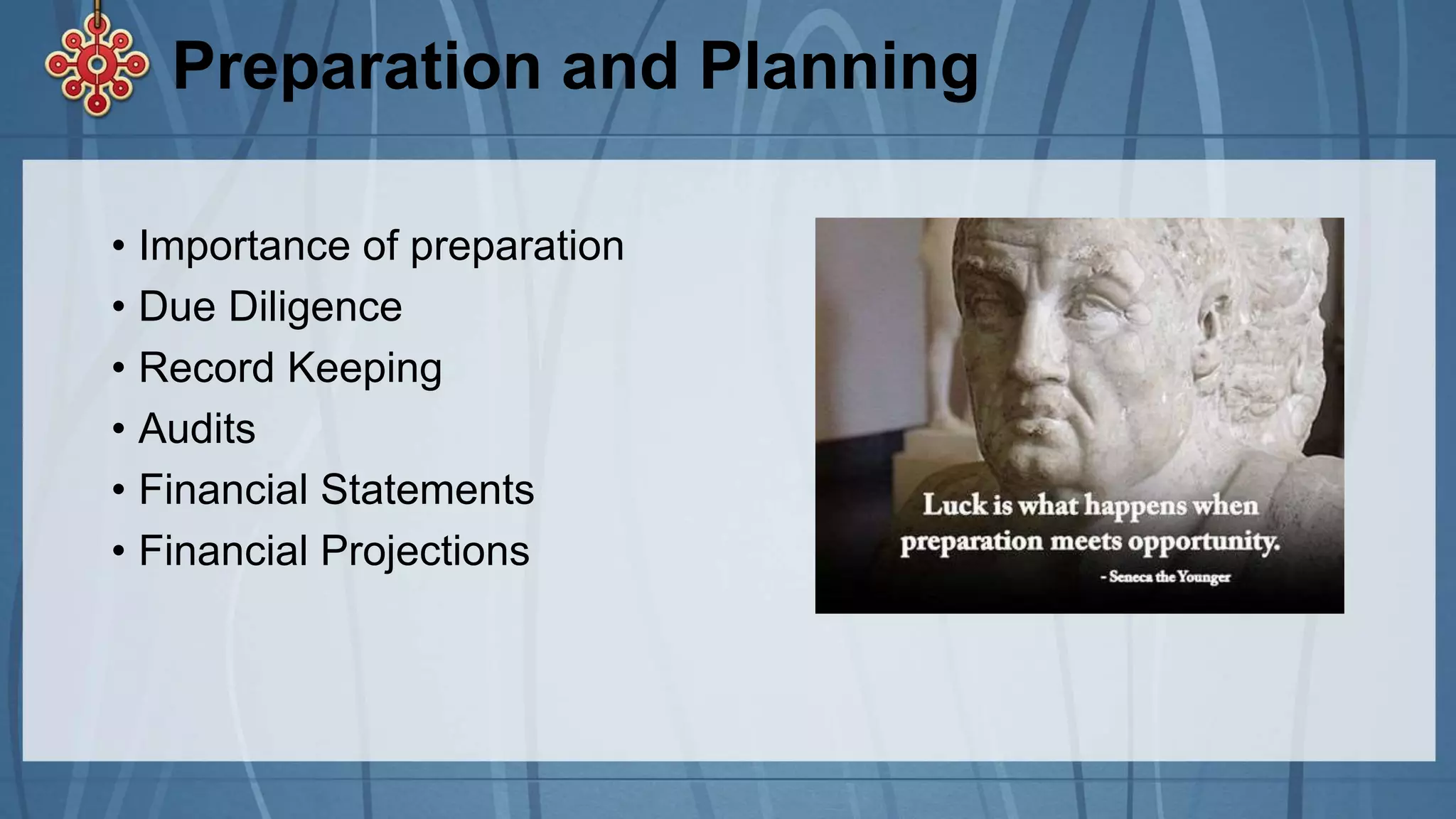
• Importance of preparation
• Due Diligence
• Record Keeping
• Audits
• Financial Statements
• Financial Projections
Being prepared means
• Preparing your company
• Preparing for sale – due
diligence
• Preparing to pay your
taxes
• Preparing to live with the
deal after closing
How to get more of what you ask
Preparation begins before the
decision to sell
Frame company agreements and
contracts with M&A in mind
Planning is key to higher valuations
Understanding the Buyer’s Checklist
• All buyers use a “due diligence checklist”
• Often overly comprehensive
• May contain irrelevant requests
• Varies depending on the nature of the
transaction (Stock or Asset Purchase)
• May ask for information that could be
damaging if the deal doesn’t happen
• Timing of production of potentially damaging
information is often negotiated
Corporate and Legal Structure
Articles of incorporation
By-laws
Minutes – board, committee, shareholder
meetings
Recent changes in corporate structure
Parent, subsidiaries and affiliates
Shareholder list/cap table
Financial Data
Audited financial statement since
inception
Most recent 3-year projections
Monthly sales projections taking
seasonality into account
Changes in accounting
methods/principles – last 3 years
Outside consultants’ or accountants’
reports
Tax Status and Contracts
Federal/state income tax returns – last 3
years
Detail of any audit
List of bank and non-bank lenders
Agreements: credit, debt, leases, etc.
Guarantees: mortgage, financial, liens
Contracts: suppliers, vendors and
customers
Regulatory/Insurance/Litigation
Copies of any permits and licenses
Reports of government agency
Applicable federal/state/local
regulations
Copies of insurance documents
Decrees, judgments or Settlement
documentation
Description of any current or
potential litigation
Employee Relations/Property
Management organization chart and key staff bios
Compensation plans: including pension, options,
profit sharing, deferred compensation, and
retirement
Correspondence, memoranda or notes concerning
pending or threatened labor stoppage, labor
disputes
Confidentiality agreements with employees
Personal property owned/leased by company
Titles, mortgages, deeds of trust and security
agreements
Intellectual Property/Products
IP documentations, copyright or patent filings
Details of product line offering, market share
List of all major suppliers – amounts
purchased
Inventory analysis – turnover and
obsolescence
Backlog analysis by product line, seasonal
analysis
Markets and Competition
List of major clients
List of competitors and detail of market share
Any pertinent marketing studies
Sales database size
Analysis of pricing strategy
Sales projections, lead analysis
Due Diligence = Full Disclosure
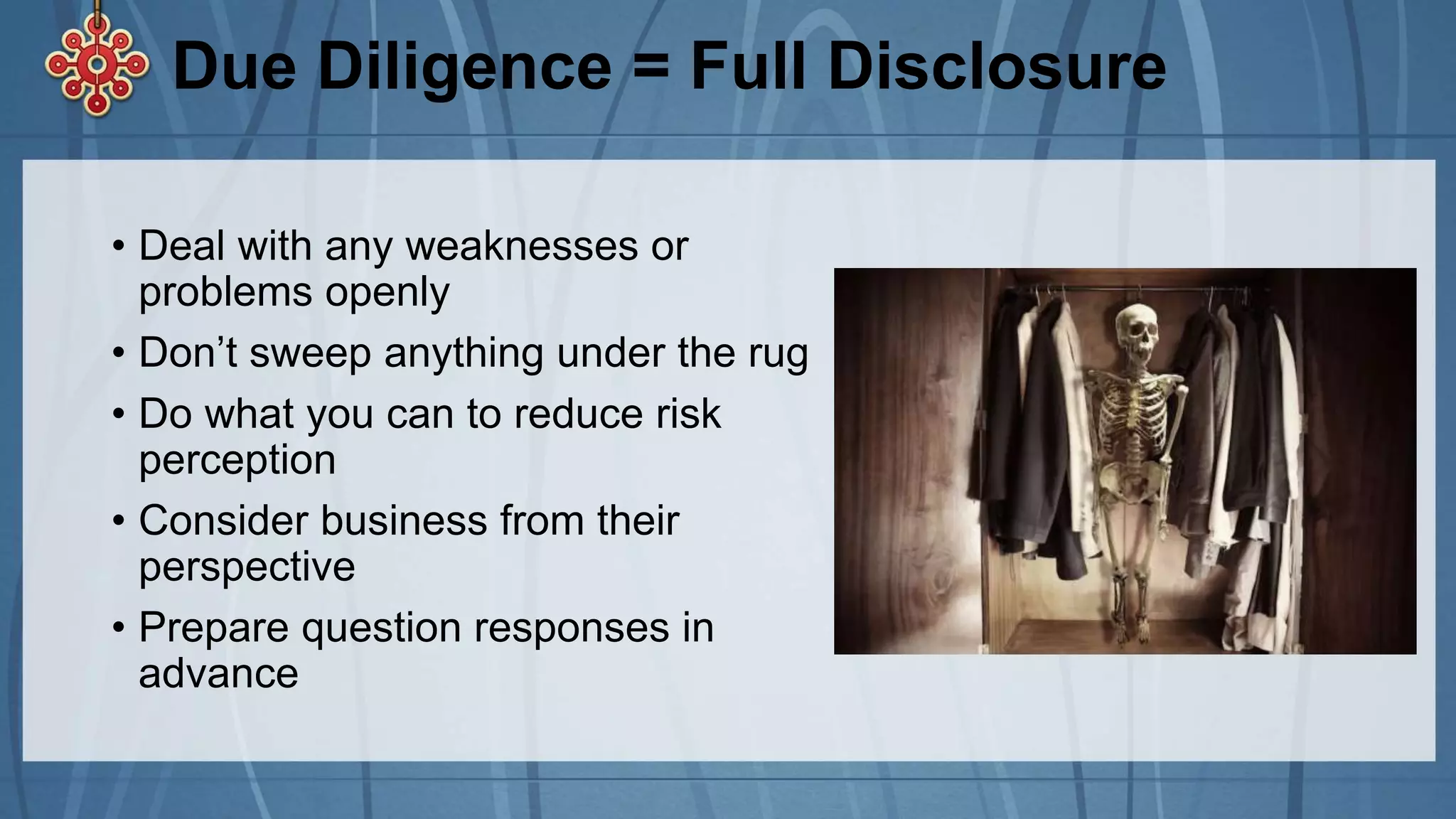
• Deal with any weaknesses or
problems openly
• Don’t sweep anything under the rug
• Do what you can to reduce risk
perception
• Consider business from their
perspective
• Prepare question responses in
advance
Control the timing
Financial Statements
Past Financial
Statements
Future
Projections
Historical Statement Requirements
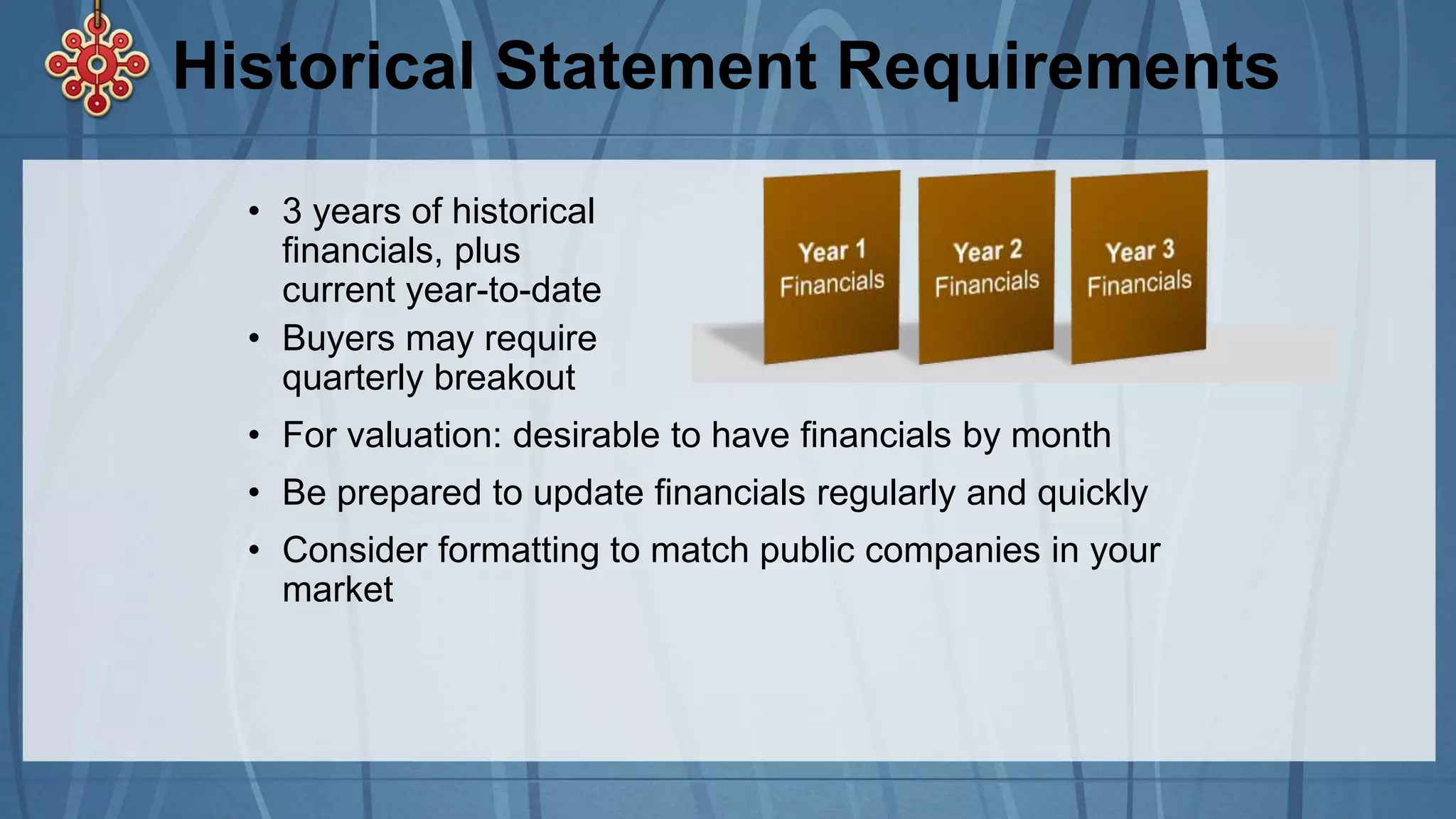
• 3 years of historical
financials, plus
current year-to-date
• Buyers may require
quarterly breakout
• For valuation: desirable to have financials by month
• Be prepared to update financials regularly and quickly
• Consider formatting to match public companies in your
market
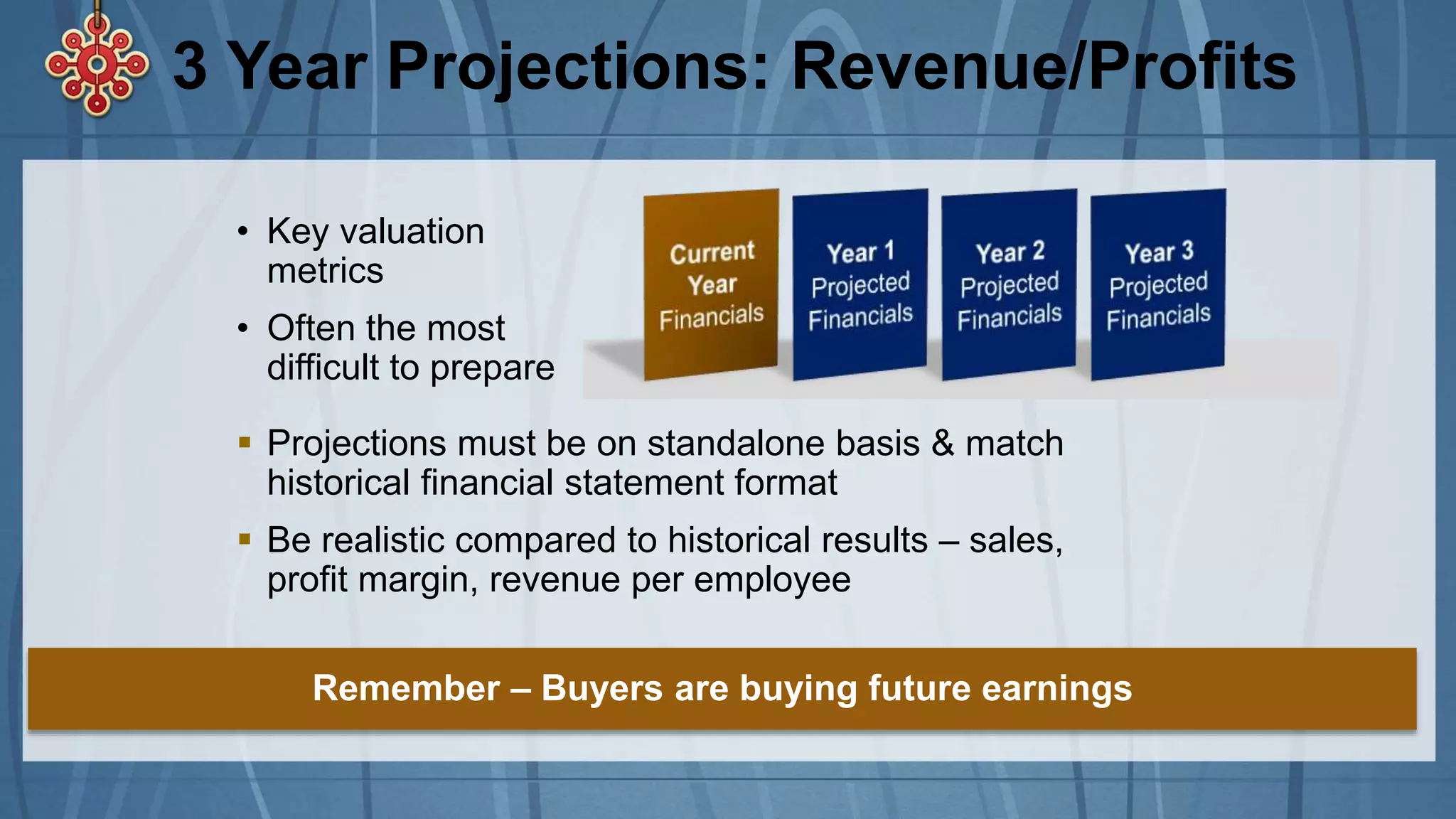
3 Year Projections: Revenue/Profits
• Key valuation
metrics
• Often the most
difficult to prepare
 Projections must be on standalone basis & match
historical financial statement format
 Be realistic compared to historical results – sales,
profit margin, revenue per employee
Remember – Buyers are buying future earnings
Projections
• Understand and document your assumptions
• Do not be too conservative
• Do not be overly optimistic
• Do not miss your targets while negotiating
• Be clear if projections require additional funding
Be Careful: Earn-outs may be tied to your projections
0.5 1
1.5
3.5
0
4
8
12
16
Last Year Year 1 Year 2 Year 3
0.5
2
7
15
0
4
8
12
16
Last Year Year 1 Year 2 Year 3
0.5 0.6 0.7 0.8
0
4
8
12
16
Last Year Year 1 Year 2 Year 3
Too
Aggressive
Defensible
Too
Conservative
All amounts
in USD
$Millions
Projections, a case study
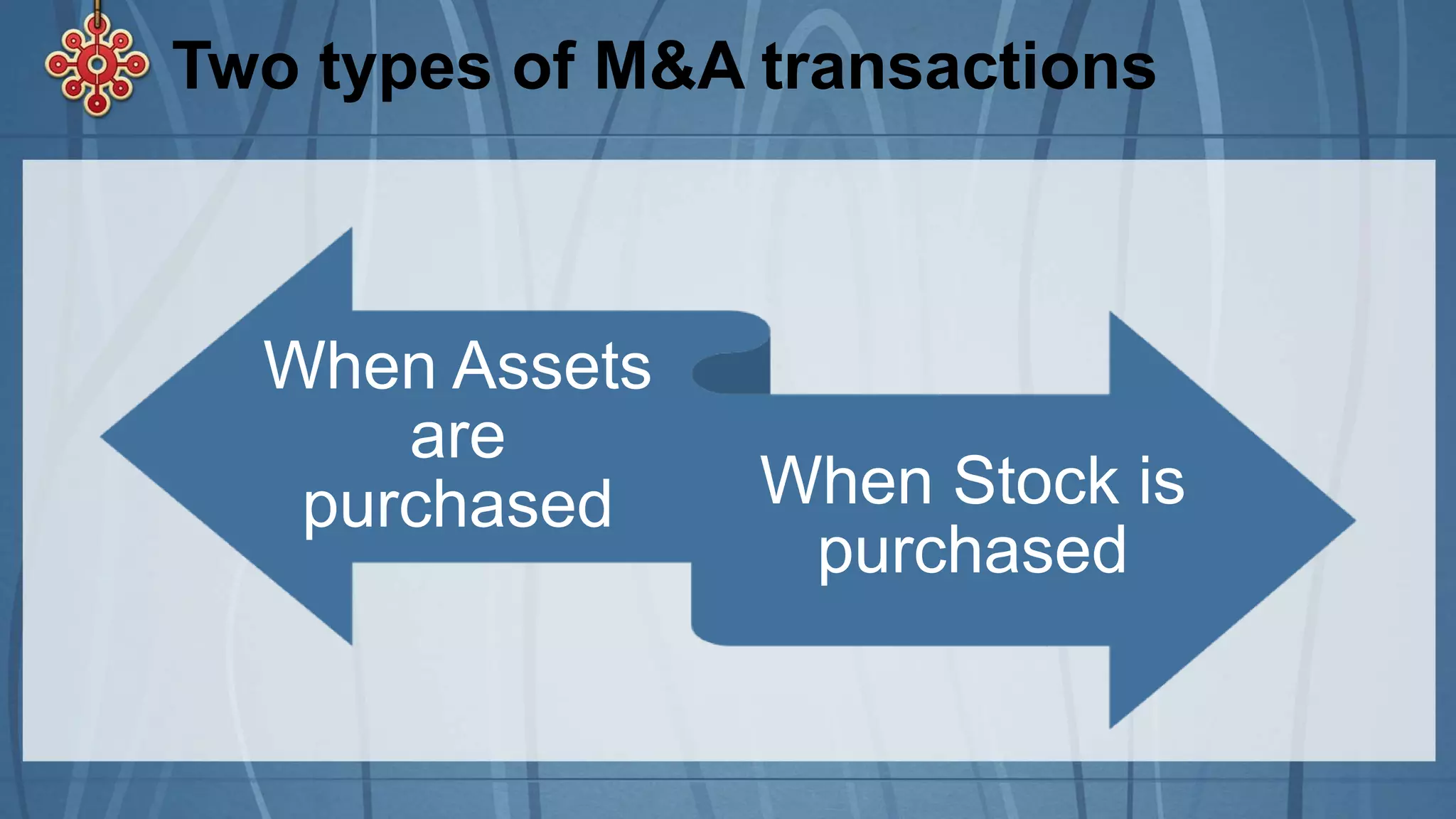
Two types of M&A transactions
When Assets
are
purchased When Stock is
purchased
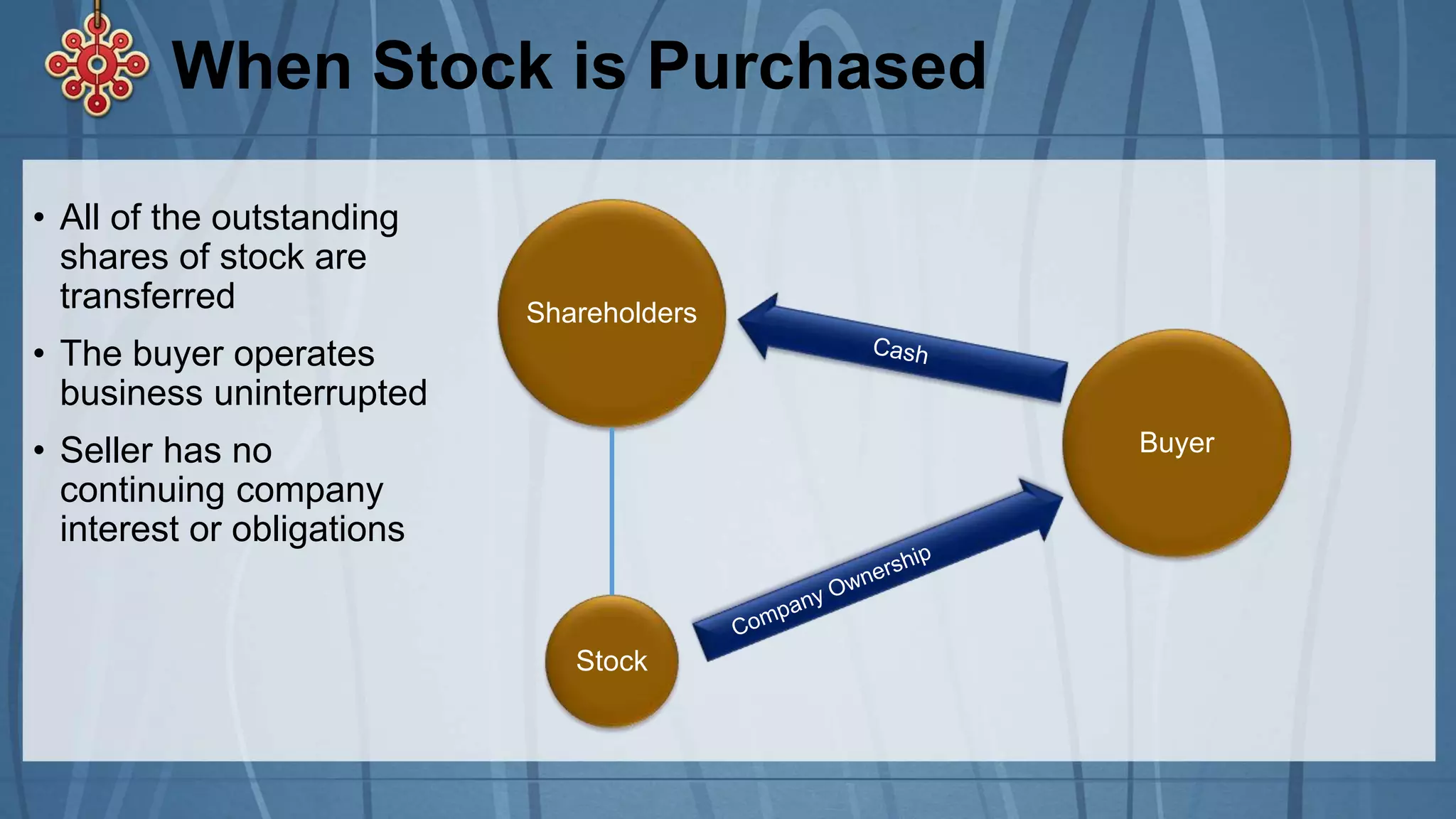
When Stock is Purchased
• All of the outstanding
shares of stock are
transferred
• The buyer operates
business uninterrupted
• Seller has no
continuing company
interest or obligations
Shareholders
Buyer
Stock
When Assets are Purchased
Shareholders
Buyer
Company
• No shares of
stock are
transferred
• Liabilities and
taxes remain
• Company shell
remains Dividend
Questions?

Preparing for Exit | Daniel Bernstein

  • 1.
    Preparing for Exit DanielBernstein Vice President Corum Group
  • 2.
    About Me • 20+years in the games industry • Computer Science and Music Mash Up • Founded Sandlot Games, sold it in 2011 • Advisor to tech companies, from drone startups to public companies • VP at Corum Group • Sell-side advisory to private high technology companies
  • 3.
    About Corum Group •M&A Investment bank focused on selling companies • Sold over 300 companies in 30 years • Created ~$7B of transaction value • Largest tech M&A educator in the world
  • 4.
    8 Stages ofan Optimal Outcome • Prepare, prepare, prepare! IntegrationClosing Due DiligenceNegotiationDiscoveryContactResearchPreparation
  • 5.
    Preparation and Planning •Importance of preparation • Due Diligence • Record Keeping • Audits • Financial Statements • Financial Projections
  • 6.
    Being prepared means •Preparing your company • Preparing for sale – due diligence • Preparing to pay your taxes • Preparing to live with the deal after closing
  • 7.
    How to getmore of what you ask Preparation begins before the decision to sell Frame company agreements and contracts with M&A in mind Planning is key to higher valuations
  • 8.
    Understanding the Buyer’sChecklist • All buyers use a “due diligence checklist” • Often overly comprehensive • May contain irrelevant requests • Varies depending on the nature of the transaction (Stock or Asset Purchase) • May ask for information that could be damaging if the deal doesn’t happen • Timing of production of potentially damaging information is often negotiated
  • 9.
    Corporate and LegalStructure Articles of incorporation By-laws Minutes – board, committee, shareholder meetings Recent changes in corporate structure Parent, subsidiaries and affiliates Shareholder list/cap table
  • 10.
    Financial Data Audited financialstatement since inception Most recent 3-year projections Monthly sales projections taking seasonality into account Changes in accounting methods/principles – last 3 years Outside consultants’ or accountants’ reports
  • 11.
    Tax Status andContracts Federal/state income tax returns – last 3 years Detail of any audit List of bank and non-bank lenders Agreements: credit, debt, leases, etc. Guarantees: mortgage, financial, liens Contracts: suppliers, vendors and customers
  • 12.
    Regulatory/Insurance/Litigation Copies of anypermits and licenses Reports of government agency Applicable federal/state/local regulations Copies of insurance documents Decrees, judgments or Settlement documentation Description of any current or potential litigation
  • 13.
    Employee Relations/Property Management organizationchart and key staff bios Compensation plans: including pension, options, profit sharing, deferred compensation, and retirement Correspondence, memoranda or notes concerning pending or threatened labor stoppage, labor disputes Confidentiality agreements with employees Personal property owned/leased by company Titles, mortgages, deeds of trust and security agreements
  • 14.
    Intellectual Property/Products IP documentations,copyright or patent filings Details of product line offering, market share List of all major suppliers – amounts purchased Inventory analysis – turnover and obsolescence Backlog analysis by product line, seasonal analysis
  • 15.
    Markets and Competition Listof major clients List of competitors and detail of market share Any pertinent marketing studies Sales database size Analysis of pricing strategy Sales projections, lead analysis
  • 16.
    Due Diligence =Full Disclosure • Deal with any weaknesses or problems openly • Don’t sweep anything under the rug • Do what you can to reduce risk perception • Consider business from their perspective • Prepare question responses in advance
  • 17.
  • 18.
  • 19.
    Historical Statement Requirements •3 years of historical financials, plus current year-to-date • Buyers may require quarterly breakout • For valuation: desirable to have financials by month • Be prepared to update financials regularly and quickly • Consider formatting to match public companies in your market
  • 20.
    3 Year Projections:Revenue/Profits • Key valuation metrics • Often the most difficult to prepare  Projections must be on standalone basis & match historical financial statement format  Be realistic compared to historical results – sales, profit margin, revenue per employee Remember – Buyers are buying future earnings
  • 21.
    Projections • Understand anddocument your assumptions • Do not be too conservative • Do not be overly optimistic • Do not miss your targets while negotiating • Be clear if projections require additional funding Be Careful: Earn-outs may be tied to your projections
  • 22.
    0.5 1 1.5 3.5 0 4 8 12 16 Last YearYear 1 Year 2 Year 3 0.5 2 7 15 0 4 8 12 16 Last Year Year 1 Year 2 Year 3 0.5 0.6 0.7 0.8 0 4 8 12 16 Last Year Year 1 Year 2 Year 3 Too Aggressive Defensible Too Conservative All amounts in USD $Millions Projections, a case study
  • 23.
    Two types ofM&A transactions When Assets are purchased When Stock is purchased
  • 24.
    When Stock isPurchased • All of the outstanding shares of stock are transferred • The buyer operates business uninterrupted • Seller has no continuing company interest or obligations Shareholders Buyer Stock
  • 25.
    When Assets arePurchased Shareholders Buyer Company • No shares of stock are transferred • Liabilities and taxes remain • Company shell remains Dividend
  • 26.