
History of US
     Government Debt


PREETI GULATI
http://fellowshipofminds.files.wordpress.com/2011/08/liberty-in-tears.gif
Debt in the 19th century
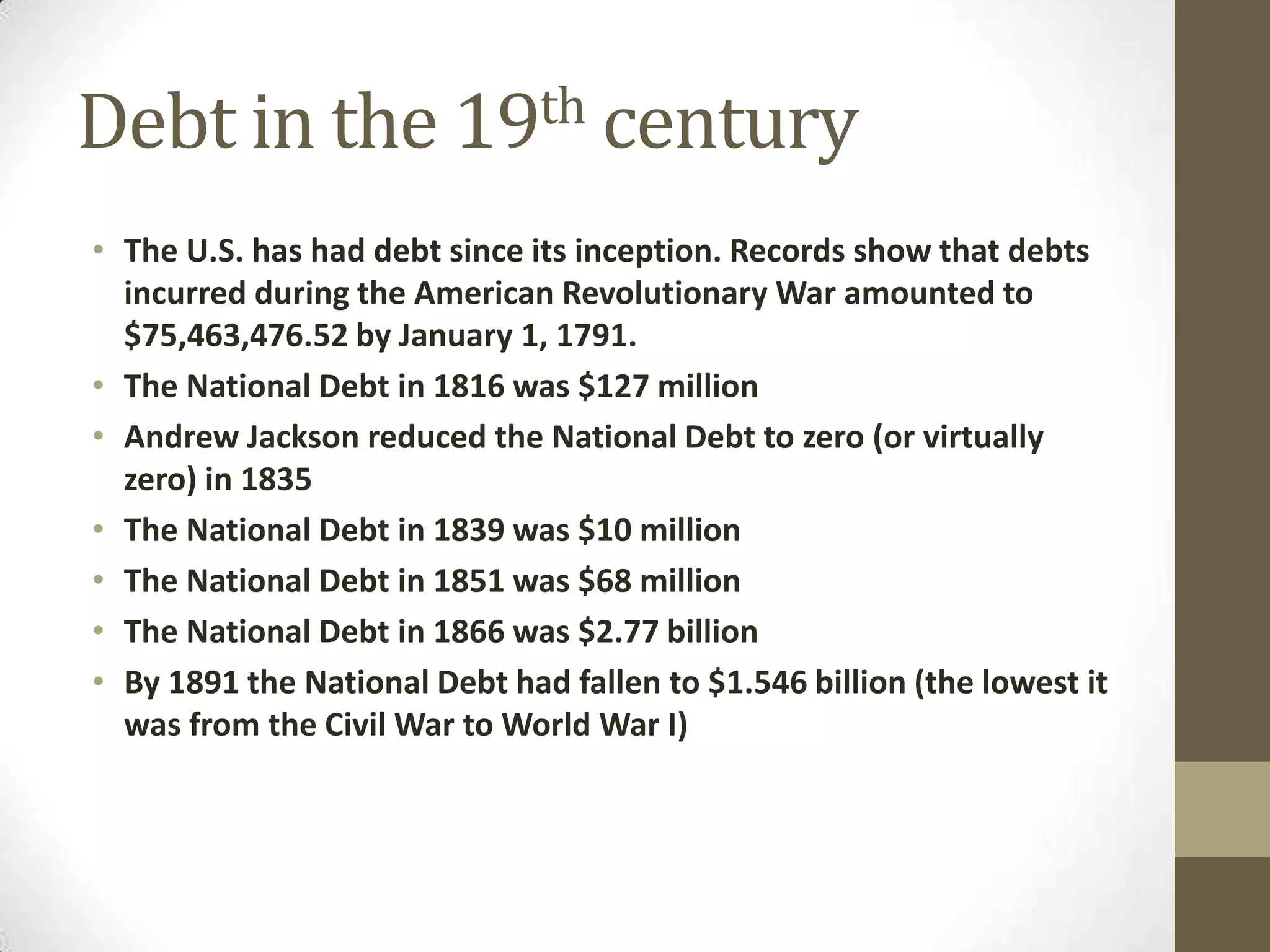
• The U.S. has had debt since its inception. Records show that debts
  incurred during the American Revolutionary War amounted to
  $75,463,476.52 by January 1, 1791.
• The National Debt in 1816 was $127 million
• Andrew Jackson reduced the National Debt to zero (or virtually
  zero) in 1835
• The National Debt in 1839 was $10 million
• The National Debt in 1851 was $68 million
• The National Debt in 1866 was $2.77 billion
• By 1891 the National Debt had fallen to $1.546 billion (the lowest it
  was from the Civil War to World War I)
Debt in the 20th century
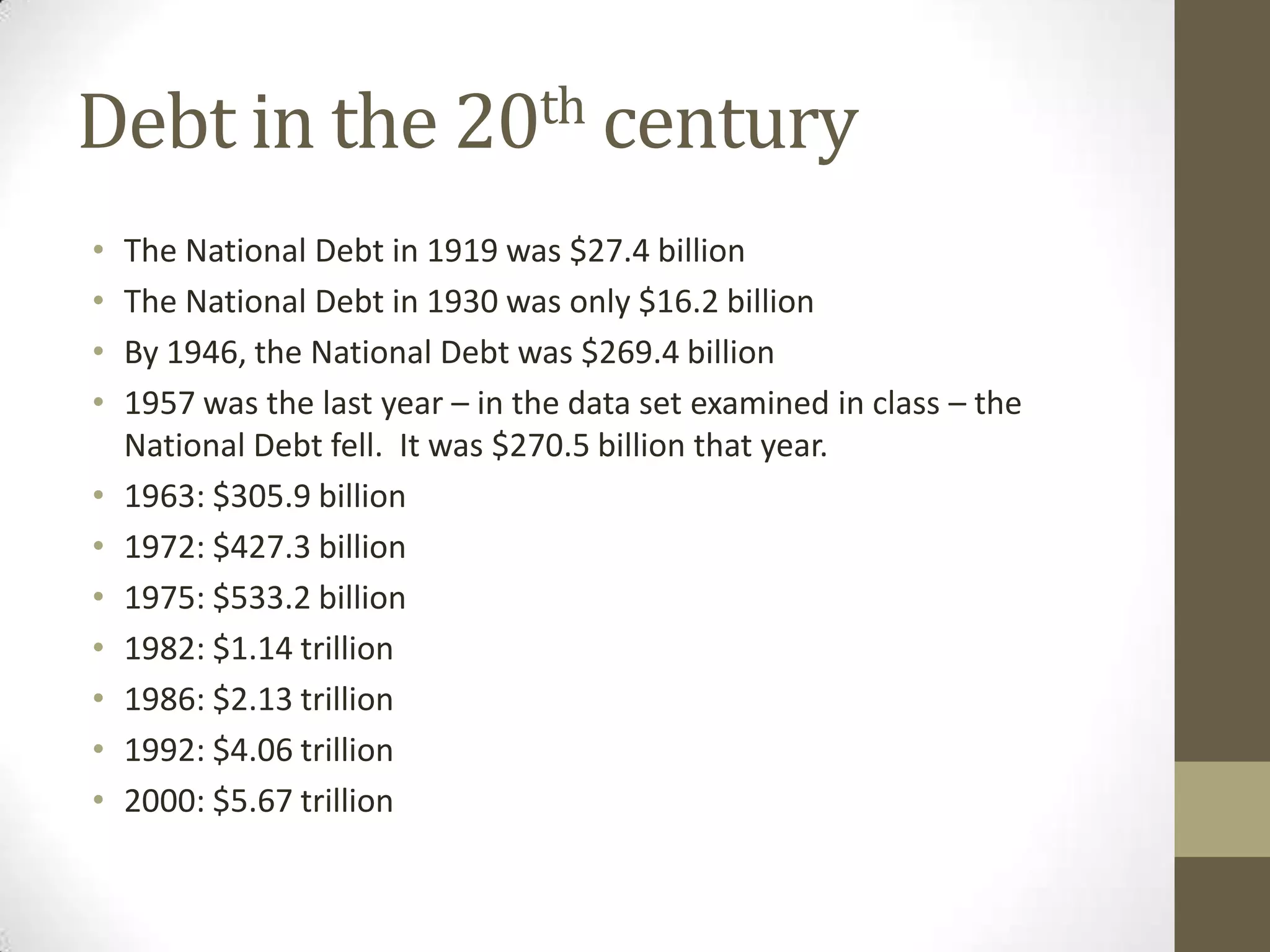
•   The National Debt in 1919 was $27.4 billion
•   The National Debt in 1930 was only $16.2 billion
•   By 1946, the National Debt was $269.4 billion
•   1957 was the last year – in the data set examined in class – the
    National Debt fell. It was $270.5 billion that year.
•   1963: $305.9 billion
•   1972: $427.3 billion
•   1975: $533.2 billion
•   1982: $1.14 trillion
•   1986: $2.13 trillion
•   1992: $4.06 trillion
•   2000: $5.67 trillion
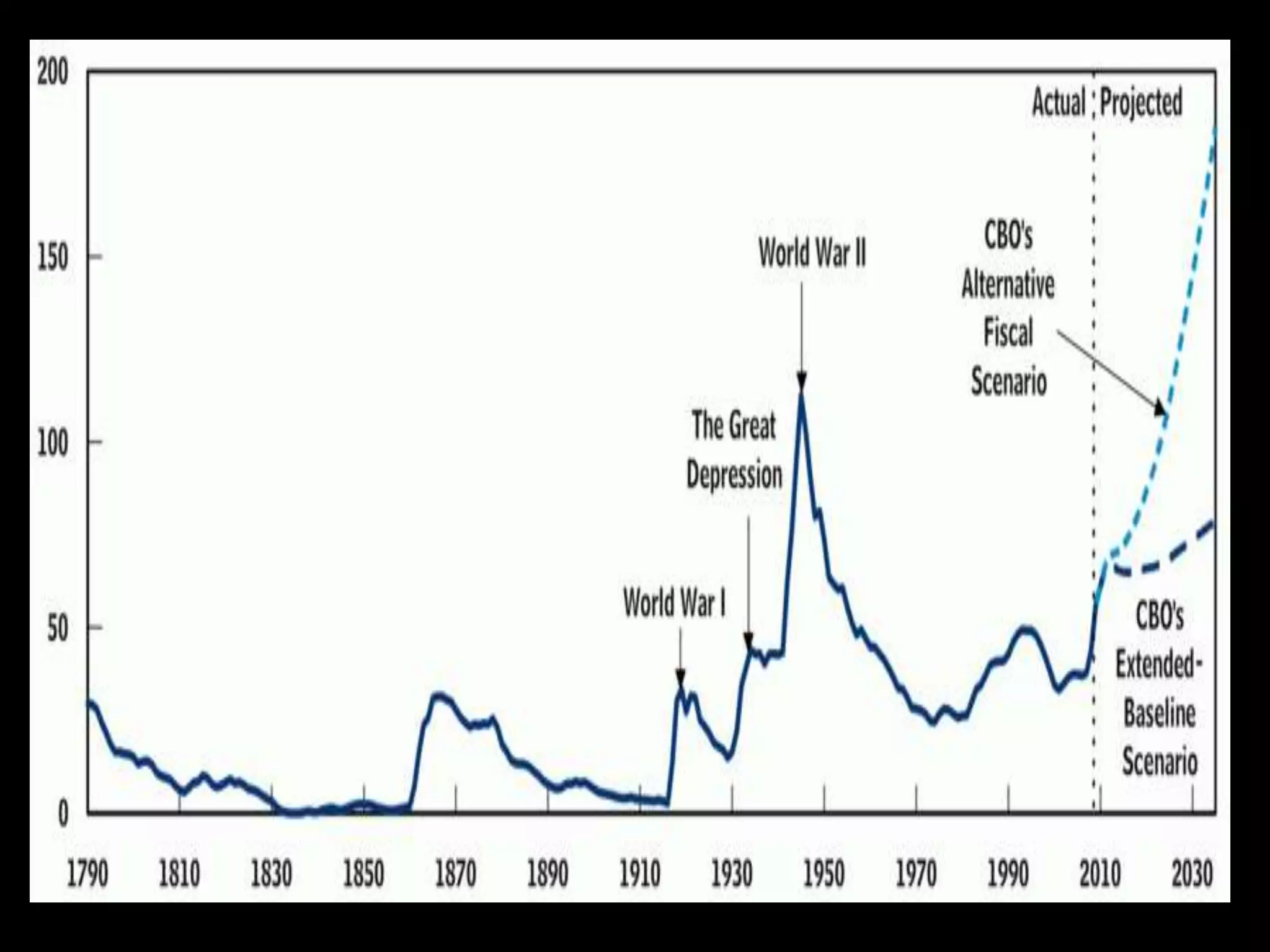
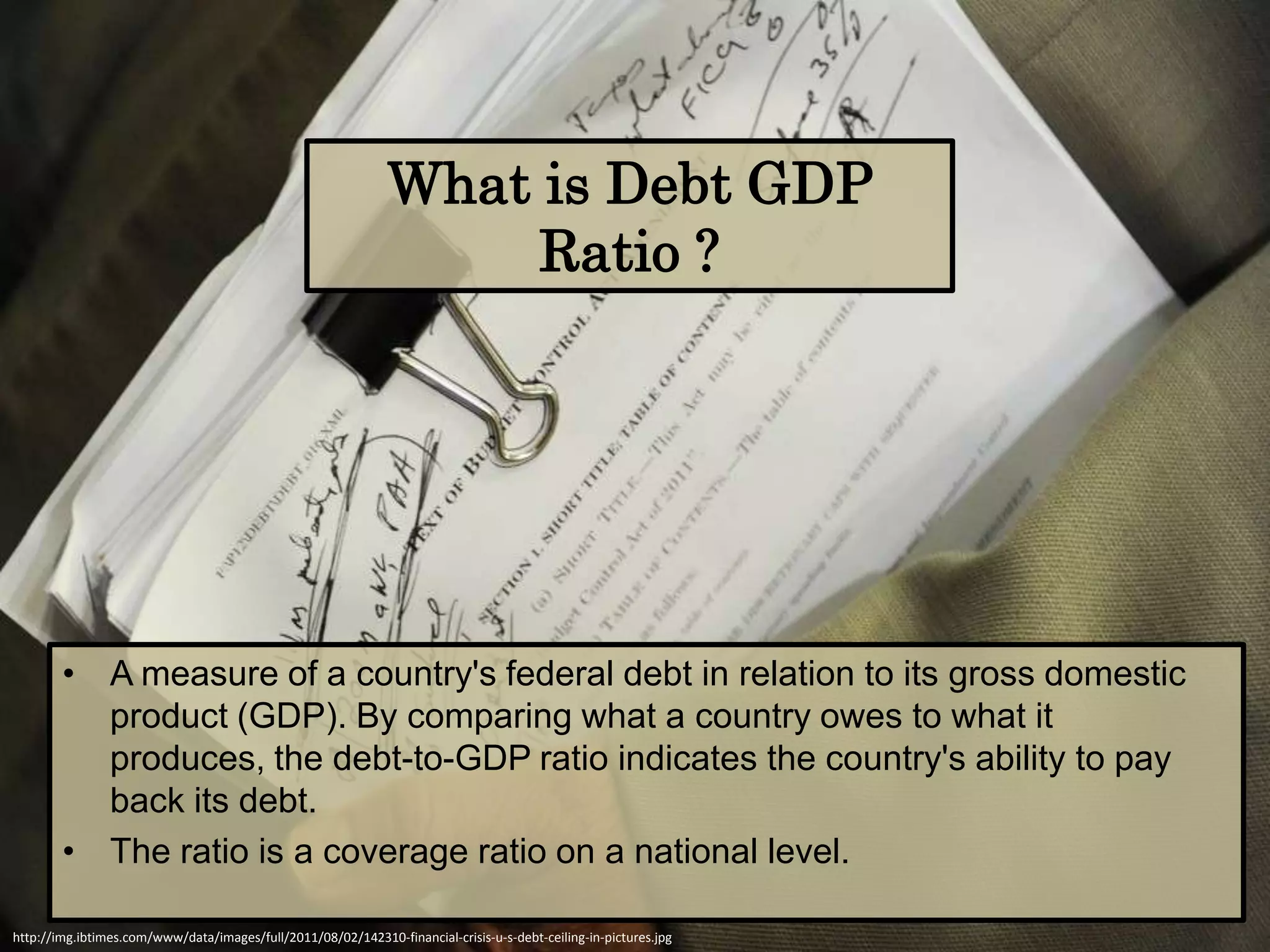
What is Debt GDP
                                                                    Ratio ?


        • A measure of a country's federal debt in relation to its gross domestic
          product (GDP). By comparing what a country owes to what it
          produces, the debt-to-GDP ratio indicates the country's ability to pay
          back its debt.
        • The ratio is a coverage ratio on a national level.

http://img.ibtimes.com/www/data/images/full/2011/08/02/142310-financial-crisis-u-s-debt-ceiling-in-pictures.jpg
What Causes the national debt to rise?
• Debt occurs when government revenue
  (primarily from taxes) is less than
  government spending.
• Therefore debt will rise whenever..
   • revenue falls: this happens when the
     economy goes into recession and when
     we decide to cut taxes
   • spending increases: this can happen
     when we go to war
REASONS BEHIND US DEBT


        WORLD WARS
        MILITARY EXPENSES
        GOVERNMENT SOCIAL SPENDINGS
         DEPRESSION


http://www.hurriyetdailynews.com/images/2011_07_25/us-debt-ceiling-brinkmanship-rattles-investors-around-globe-2011-07-25_l.jpg
What does the federal government spend
 money on?
• National Defense: 26.3%
• Health Care: 24.3%
• Job and Family Security: 21.9%
• Everything Else is less than 30%
  • everything else includes education, veterans benefits, national
    resources, foreign aid, NASA, Immigration, response to natural
    disasters, and interest on the debt.
The biggest expenditures of the federal government are
Social Security, Medicare and Medicaid, and National
Defense
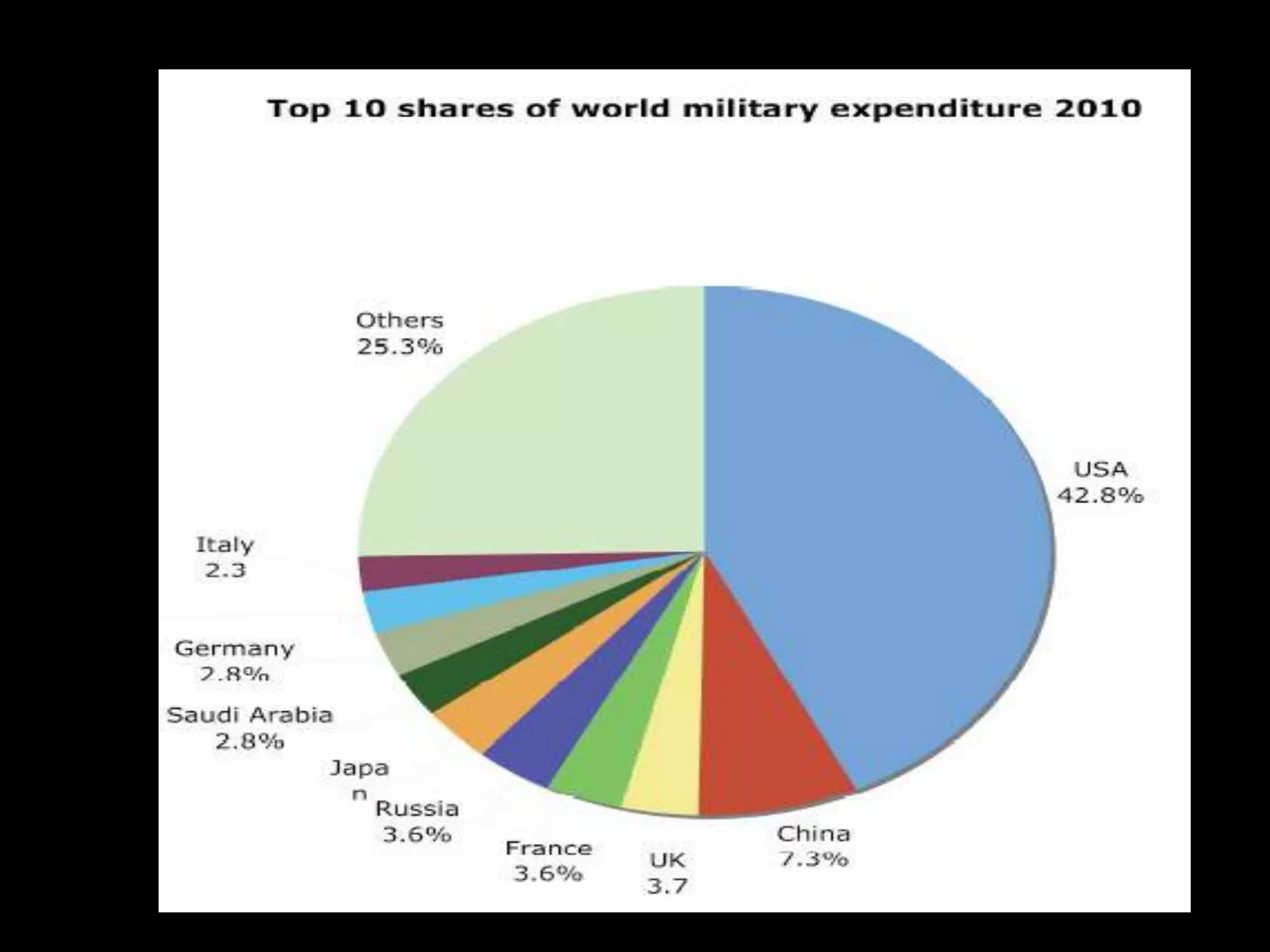
Military spending around the world
         http://www.sipri.org/research/armaments/milex/factsheet2010
Implications


                • HIGH INTEREST RATES
                •MORE AND MORE TAXES
                •AFFECT ECONOMIC GROWTH
                •INFLATION
                •FISCAL DEFICIT
                •DEVALUATION IN DOLLAR
http://markhalperin.files.wordpress.com/2010/12/moneycash.jpg?w=590&h=386&crop=1
SUGGESTIONS TO RECOVER

             •American owned companies have lost their edge
             and, on balance, are not as productive or as protective
             as many other foreign companies. This must be
             corrected.
             • Prevent the sale of strategic companies or institutions
             to foreign ownership
             •Change the tax structure for select industries that are
             vital to strategic American interests –
             steel, transportation, cement and others.
             •Free trade has been a disaster. It must be replaced
             with intelligent trade that prevents foreign predatory
             practices and better serves U.S. interests.


http://nrzresources.com/wp-content/uploads/2011/06/jpg_groupe_doux_finance2-3-2-1.jpg
http://media.ft.com/cms/cda3af94-935d-11df-bb9a-00144feab49a.gif

Preeti

  • 1.
    History of US Government Debt PREETI GULATI http://fellowshipofminds.files.wordpress.com/2011/08/liberty-in-tears.gif
  • 2.
    Debt in the19th century • The U.S. has had debt since its inception. Records show that debts incurred during the American Revolutionary War amounted to $75,463,476.52 by January 1, 1791. • The National Debt in 1816 was $127 million • Andrew Jackson reduced the National Debt to zero (or virtually zero) in 1835 • The National Debt in 1839 was $10 million • The National Debt in 1851 was $68 million • The National Debt in 1866 was $2.77 billion • By 1891 the National Debt had fallen to $1.546 billion (the lowest it was from the Civil War to World War I)
  • 3.
    Debt in the20th century • The National Debt in 1919 was $27.4 billion • The National Debt in 1930 was only $16.2 billion • By 1946, the National Debt was $269.4 billion • 1957 was the last year – in the data set examined in class – the National Debt fell. It was $270.5 billion that year. • 1963: $305.9 billion • 1972: $427.3 billion • 1975: $533.2 billion • 1982: $1.14 trillion • 1986: $2.13 trillion • 1992: $4.06 trillion • 2000: $5.67 trillion
  • 5.
    What is DebtGDP Ratio ? • A measure of a country's federal debt in relation to its gross domestic product (GDP). By comparing what a country owes to what it produces, the debt-to-GDP ratio indicates the country's ability to pay back its debt. • The ratio is a coverage ratio on a national level. http://img.ibtimes.com/www/data/images/full/2011/08/02/142310-financial-crisis-u-s-debt-ceiling-in-pictures.jpg
  • 6.
    What Causes thenational debt to rise? • Debt occurs when government revenue (primarily from taxes) is less than government spending. • Therefore debt will rise whenever.. • revenue falls: this happens when the economy goes into recession and when we decide to cut taxes • spending increases: this can happen when we go to war
  • 7.
    REASONS BEHIND USDEBT WORLD WARS MILITARY EXPENSES GOVERNMENT SOCIAL SPENDINGS  DEPRESSION http://www.hurriyetdailynews.com/images/2011_07_25/us-debt-ceiling-brinkmanship-rattles-investors-around-globe-2011-07-25_l.jpg
  • 8.
    What does thefederal government spend money on? • National Defense: 26.3% • Health Care: 24.3% • Job and Family Security: 21.9% • Everything Else is less than 30% • everything else includes education, veterans benefits, national resources, foreign aid, NASA, Immigration, response to natural disasters, and interest on the debt. The biggest expenditures of the federal government are Social Security, Medicare and Medicaid, and National Defense
  • 9.
    Military spending aroundthe world http://www.sipri.org/research/armaments/milex/factsheet2010
  • 10.
    Implications • HIGH INTEREST RATES •MORE AND MORE TAXES •AFFECT ECONOMIC GROWTH •INFLATION •FISCAL DEFICIT •DEVALUATION IN DOLLAR http://markhalperin.files.wordpress.com/2010/12/moneycash.jpg?w=590&h=386&crop=1
  • 11.
    SUGGESTIONS TO RECOVER •American owned companies have lost their edge and, on balance, are not as productive or as protective as many other foreign companies. This must be corrected. • Prevent the sale of strategic companies or institutions to foreign ownership •Change the tax structure for select industries that are vital to strategic American interests – steel, transportation, cement and others. •Free trade has been a disaster. It must be replaced with intelligent trade that prevents foreign predatory practices and better serves U.S. interests. http://nrzresources.com/wp-content/uploads/2011/06/jpg_groupe_doux_finance2-3-2-1.jpg
  • 12.