Downloaded 14 times


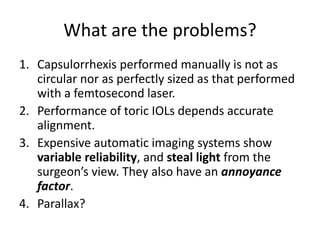
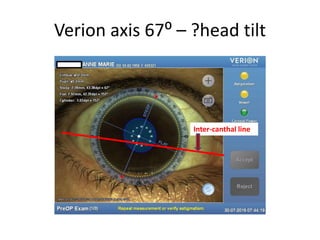
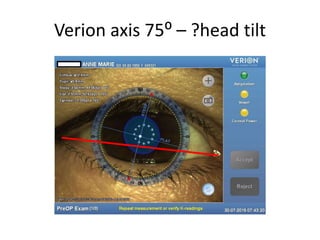
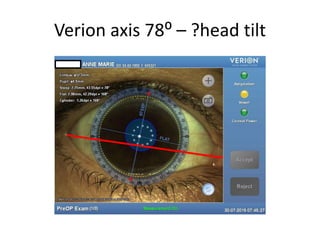

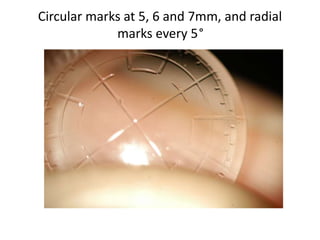
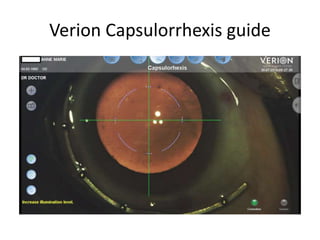
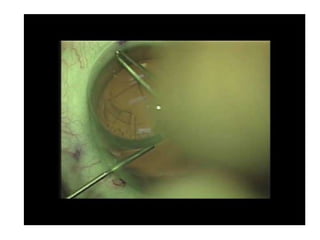
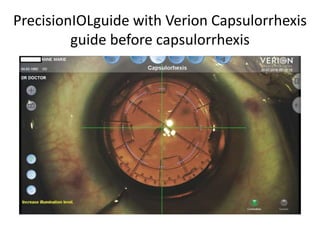
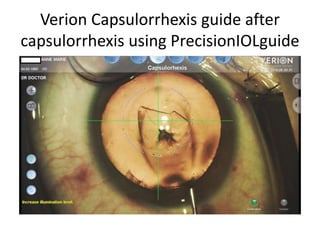
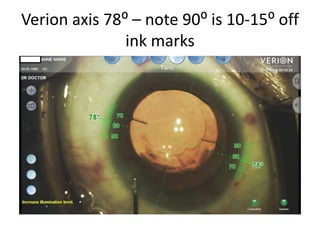
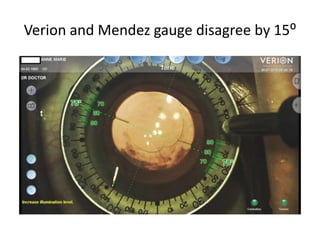
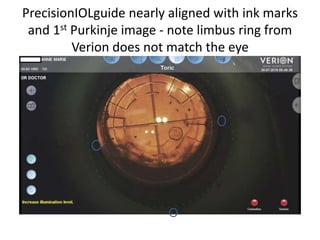


The document discusses challenges in cataract surgery, specifically issues with manual capsulorrhexis and the alignment of toric intraocular lenses (IOLs). It proposes a solution using a laser-etched contact lens with circular and radial marks to guide the surgeon during the procedure. This cost-effective device aims to improve precision for surgeons without advanced imaging systems.


![ONFH[AVN HIP] -TRIPLE REGIME -A NOVAL SURGICAL CONCEPT .pptx](https://cdn.slidesharecdn.com/ss_thumbnails/onfhavnhip2026koaconcalicutdrgokuldevdrmashraf-260210064517-213ec005-thumbnail.jpg?width=640&height=640&fit=bounds)

![CTEV [ clubfoot] DR ARUN LAL ,DR MOHAMED ASHRAF travancore medical college k...](https://cdn.slidesharecdn.com/ss_thumbnails/ctevclubfootdrarunlaldrmohamedashraftravancoremedicalcollegekollamkeralaindia-260208063247-18fc466c-thumbnail.jpg?width=640&height=640&fit=bounds)


