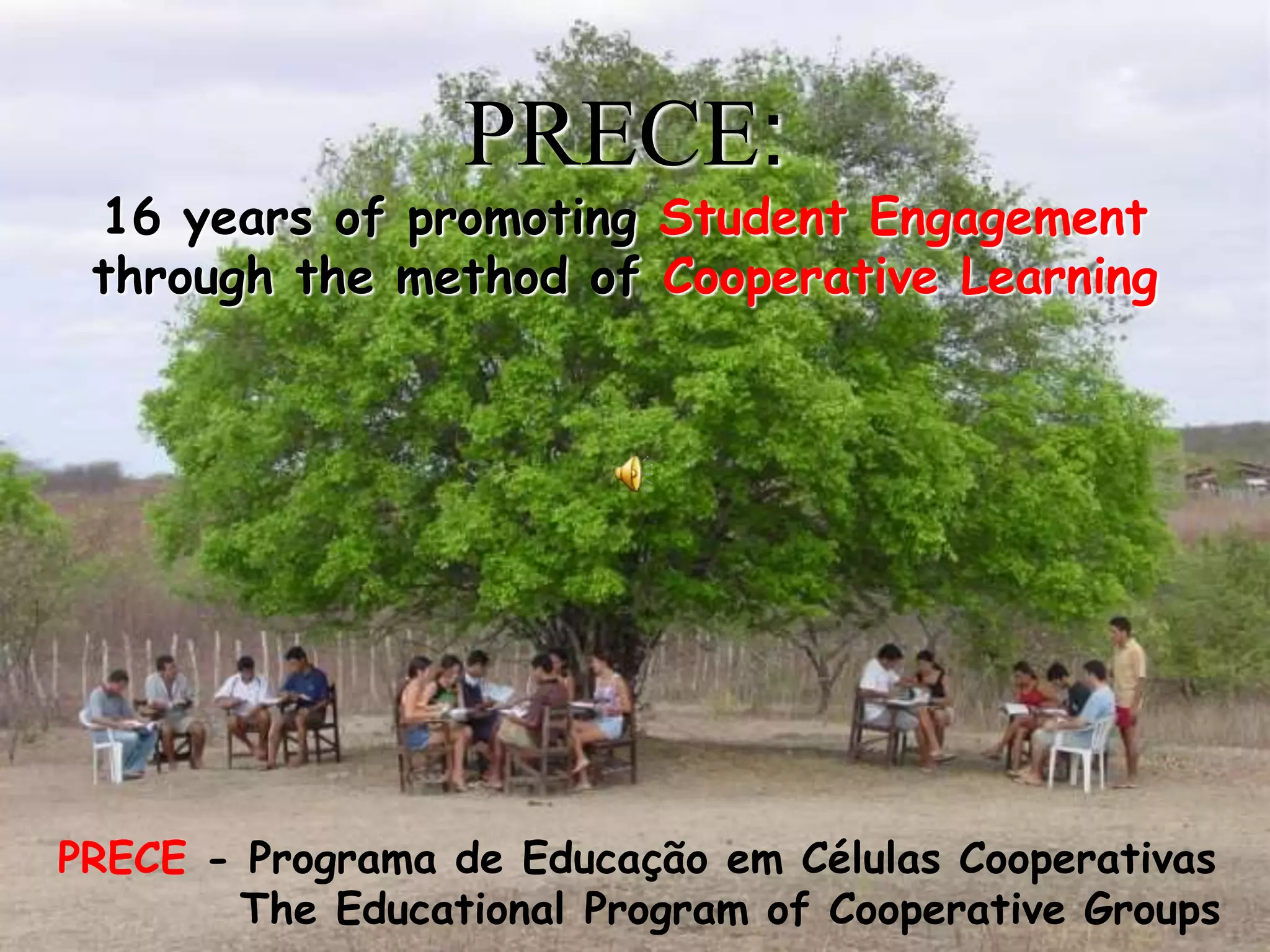
PRECE:
16 years of promoting Student Engagement
through the method of Cooperative Learning
PRECE - Programa de Educação em Células Cooperativas
The Educational Program of Cooperative Groups
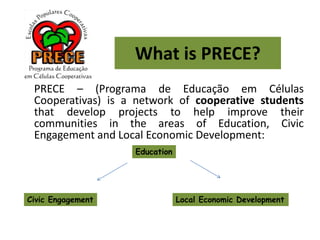
What is PRECE?
PRECE – (Programa de Educação em Células
Cooperativas) is a network of cooperative students
that develop projects to help improve their
communities in the areas of Education, Civic
Engagement and Local Economic Development:
Education
Civic Engagement Local Economic Development
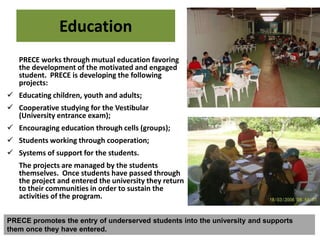
Education
PRECE works through mutual education favoring
the development of the motivated and engaged
student. PRECE is developing the following
projects:
 Educating children, youth and adults;
 Cooperative studying for the Vestibular
(University entrance exam);
 Encouraging education through cells (groups);
 Students working through cooperation;
 Systems of support for the students.
The projects are managed by the students
themselves. Once students have passed through
the project and entered the university they return
to their communities in order to sustain the
activities of the program.
PRECE promotes the entry of underserved students into the university and supports
them once they have entered.
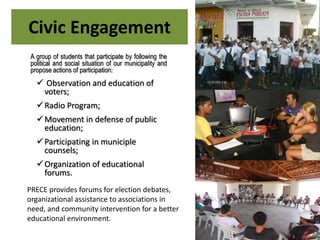
Civic Engagement
A group of students that participate by following the
political and social situation of our municipality and
propose actions of participation:
 Observation and education of
voters;
Radio Program;
Movement in defense of public
education;
Participating in municiple
counsels;
Organization of educational
forums.
PRECE provides forums for election debates,
organizational assistance to associations in
need, and community intervention for a better
educational environment.
Local Economic
Development
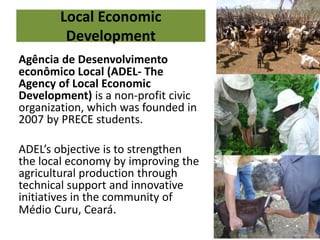
Agência de Desenvolvimento
econômico Local (ADEL- The
Agency of Local Economic
Development) is a non-profit civic
organization, which was founded in
2007 by PRECE students.
ADEL’s objective is to strengthen
the local economy by improving the
agricultural production through
technical support and innovative
initiatives in the community of
Médio Curu, Ceará.
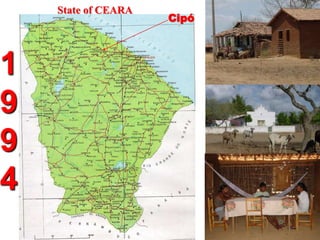
State of CEARA
Cipó
1
9
9
4
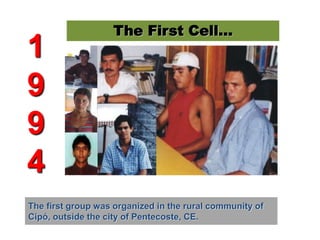
The First Cell…
The first group was organized in the rural community of
Cipó, outside the city of Pentecoste, CE.
1
9
9
4
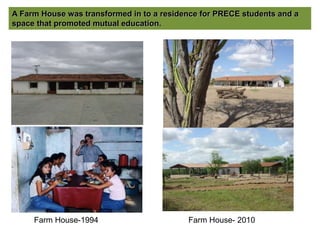
A Farm House was transformed in to a residence for PRECE students and a
space that promoted mutual education.
Farm House-1994 Farm House- 2010
Chronology
1996
The first student was approved in the college of education at UFC (Federal
University of Ceará) and lived in Fortaleza at the university, returning to his
community every weekend to assist other PRECE students.
1998
Four university students created an NGO, Instituto Coração de Estudante,
which helps to organize PRECE efforts.
1996 – 2000
The program had 30 students participating in the rural area of Cipó. At that
time ten students had passed the university entrance exam, entered the
university and were living in Fortaleza. Each weekend they would return to
their communities to continue the PRECE program.
2001
Five of the original seven students from Cipó passed the university entrance
exam and entered the university.
Chronology Cont.
2002
More than 40 students from different locations came to Cipó
every weekend to study in cooperative cells.
2003
PRECE earned notoriety, and the university students from the
city of Pentecoste duplicated the first cell by creating another
PRECE location in their city.
2005
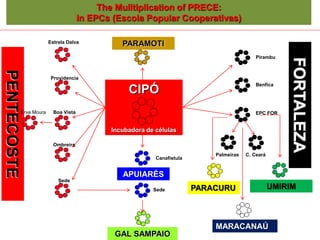
PRECE multiplied and expanded to other municipalities. The
PRECE students organized their sites and named them
Escolas Populares Cooperativas (EPCs- Popular Cooperative
Schools).
The Mulitiplication of PRECE:
In EPCs (Escola Popular Cooperativas)
PENTECOSTE
FORTALEZA
CIPÓ
Incubadora de células
GAL SAMPAIO
PARAMOTI
PARACURU UMIRIM
MARACANAÚ
Estrela Dalva
Providencia
Boa Vista
Ombreira
Sede
Erva Moura
APUIARÉS
Canafistula
Sede
Pirambu
Benfica
EPC FOR
C. CearáPalmeiras
2010
 The actions of PRECE are now present in 8 municipalities
around Ceará;
 The program formula is being used in 14 EPCs that are
providing for students;
 Currently approximately 400 students have entered the
university, 54 have already graduated and 18 have gone on
to masters and doctoral degress.
 The university students continue to return to their
communities every weekend to develop projects and
facilitate courses in their area of study. They continue to be
engaged in developing projects in the areas of Education,
Civic Engagement and Local Economic Development.
Chronology Cont.
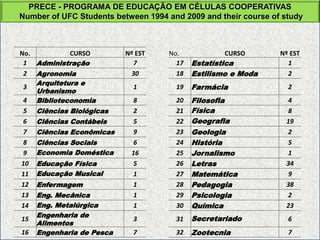
PRECE - PROGRAMA DE EDUCAÇÃO EM CÉLULAS COOPERATIVAS
Number of UFC Students between 1994 and 2009 and their course of study
No. CURSO Nº EST No. CURSO Nº EST
1 Administração 7 17 Estatística 1
2 Agronomia 30 18 Estilismo e Moda 2
3
Arquitetura e
Urbanismo
1 19 Farmácia 2
4 Biblioteconomia 8 20 Filosofia 4
5 Ciências Biológicas 2 21 Física 8
6 Ciências Contábeis 5 22 Geografia 19
7 Ciências Econômicas 9 23 Geologia 2
8 Ciências Sociais 6 24 História 5
9 Economia Doméstica 16 25 Jornalismo 1
10 Educação Física 5 26 Letras 34
11 Educação Musical 1 27 Matemática 9
12 Enfermagem 1 28 Pedagogia 38
13 Eng. Mecânica 1 29 Psicologia 2
14 Eng. Metalúrgica 1 30 Química 23
15
Engenharia de
Alimentos
3 31 Secretariado 6
16 Engenharia de Pesca 7 32 Zootecnia 7
CEFET
PROUNI UECE
UFC
UVA
0
50
100
150
200
250
300
12
39
17
269
13
Series1
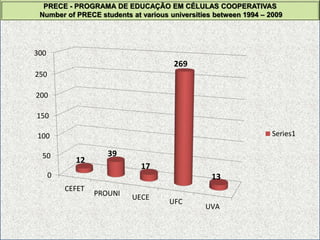
PRECE - PROGRAMA DE EDUCAÇÃO EM CÉLULAS COOPERATIVAS
Number of PRECE students at various universities between 1994 – 2009
Graduados 54
Mestrandos
5
Mestres 6
Doutorandos 5
Especialistas 2
Graduados
Mestrandos
Mestres
Doutorandos
Especialistas
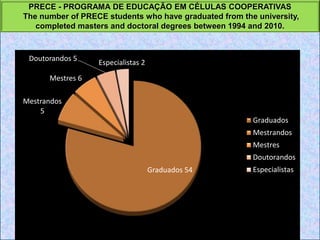
PRECE - PROGRAMA DE EDUCAÇÃO EM CÉLULAS COOPERATIVAS
The number of PRECE students who have graduated from the university,
completed masters and doctoral degrees between 1994 and 2010.
METHODOLOGY
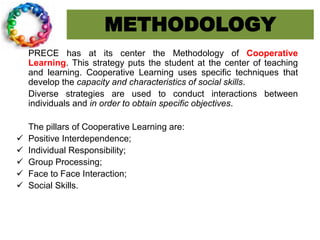
PRECE has at its center the Methodology of Cooperative
Learning. This strategy puts the student at the center of teaching
and learning. Cooperative Learning uses specific techniques that
develop the capacity and characteristics of social skills.
Diverse strategies are used to conduct interactions between
individuals and in order to obtain specific objectives.
The pillars of Cooperative Learning are:
 Positive Interdependence;
 Individual Responsibility;
 Group Processing;
 Face to Face Interaction;
 Social Skills.
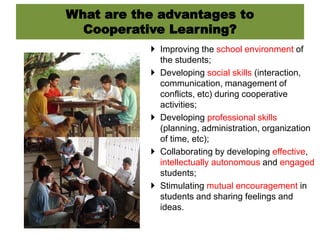
What are the advantages to
Cooperative Learning?
 Improving the school environment of
the students;
 Developing social skills (interaction,
communication, management of
conflicts, etc) during cooperative
activities;
 Developing professional skills
(planning, administration, organization
of time, etc);
 Collaborating by developing effective,
intellectually autonomous and engaged
students;
 Stimulating mutual encouragement in
students and sharing feelings and
ideas.
Recognitions for PRECE
• PRECE was recognized by the Comissão Econômica para a
America Latina (CEPAL) as one of the 42 best social
innovations in Latin America, out of more than 1300 projects
and 33 countries;
• ADEL – Was a finalist in the Empreendedorismo Social da
Folha in São Paulo (Social Entrepreneurism);
• PRECE was awarded an editorial through HSBC;
• PRECE is supported by and has received financial awards
from the Brazil Foundation.
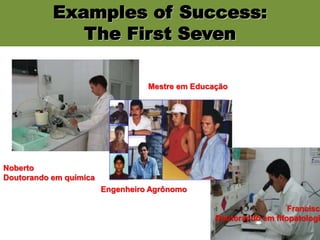
Francisco
Doutorando em fitopatologi
Noberto
Doutorando em química
Mestre em Educação
Engenheiro Agrônomo
Examples of Success:
The First Seven
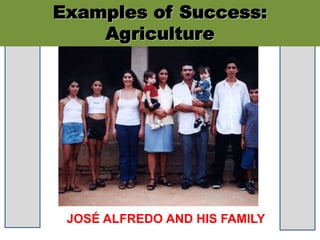
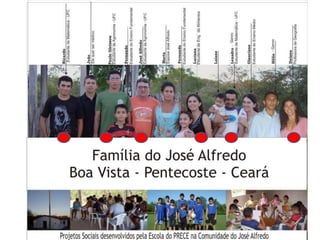
JOSÉ ALFREDO AND HIS FAMILY
Examples of Success:
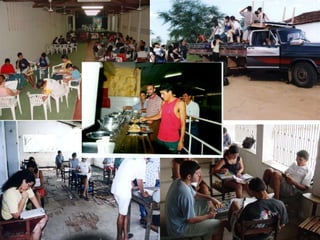
Agriculture
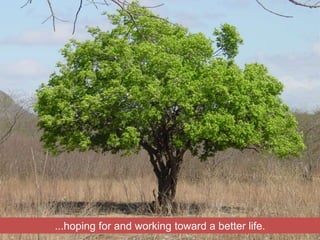
Através da educação, o nosso povo tão sofrido que
aparentemente está morto...
...hoping for and working toward a better life.

PRECE Presentation

  • 1.
    PRECE: 16 years ofpromoting Student Engagement through the method of Cooperative Learning PRECE - Programa de Educação em Células Cooperativas The Educational Program of Cooperative Groups
  • 2.
    What is PRECE? PRECE– (Programa de Educação em Células Cooperativas) is a network of cooperative students that develop projects to help improve their communities in the areas of Education, Civic Engagement and Local Economic Development: Education Civic Engagement Local Economic Development
  • 3.
    Education PRECE works throughmutual education favoring the development of the motivated and engaged student. PRECE is developing the following projects:  Educating children, youth and adults;  Cooperative studying for the Vestibular (University entrance exam);  Encouraging education through cells (groups);  Students working through cooperation;  Systems of support for the students. The projects are managed by the students themselves. Once students have passed through the project and entered the university they return to their communities in order to sustain the activities of the program. PRECE promotes the entry of underserved students into the university and supports them once they have entered.
  • 4.
    Civic Engagement A groupof students that participate by following the political and social situation of our municipality and propose actions of participation:  Observation and education of voters; Radio Program; Movement in defense of public education; Participating in municiple counsels; Organization of educational forums. PRECE provides forums for election debates, organizational assistance to associations in need, and community intervention for a better educational environment.
  • 5.
    Local Economic Development Agência deDesenvolvimento econômico Local (ADEL- The Agency of Local Economic Development) is a non-profit civic organization, which was founded in 2007 by PRECE students. ADEL’s objective is to strengthen the local economy by improving the agricultural production through technical support and innovative initiatives in the community of Médio Curu, Ceará.
  • 6.
  • 7.
    The First Cell… Thefirst group was organized in the rural community of Cipó, outside the city of Pentecoste, CE. 1 9 9 4
  • 8.
    A Farm Housewas transformed in to a residence for PRECE students and a space that promoted mutual education. Farm House-1994 Farm House- 2010
  • 9.
    Chronology 1996 The first studentwas approved in the college of education at UFC (Federal University of Ceará) and lived in Fortaleza at the university, returning to his community every weekend to assist other PRECE students. 1998 Four university students created an NGO, Instituto Coração de Estudante, which helps to organize PRECE efforts. 1996 – 2000 The program had 30 students participating in the rural area of Cipó. At that time ten students had passed the university entrance exam, entered the university and were living in Fortaleza. Each weekend they would return to their communities to continue the PRECE program. 2001 Five of the original seven students from Cipó passed the university entrance exam and entered the university.
  • 10.
    Chronology Cont. 2002 More than40 students from different locations came to Cipó every weekend to study in cooperative cells. 2003 PRECE earned notoriety, and the university students from the city of Pentecoste duplicated the first cell by creating another PRECE location in their city. 2005 PRECE multiplied and expanded to other municipalities. The PRECE students organized their sites and named them Escolas Populares Cooperativas (EPCs- Popular Cooperative Schools).
  • 11.
    The Mulitiplication ofPRECE: In EPCs (Escola Popular Cooperativas) PENTECOSTE FORTALEZA CIPÓ Incubadora de células GAL SAMPAIO PARAMOTI PARACURU UMIRIM MARACANAÚ Estrela Dalva Providencia Boa Vista Ombreira Sede Erva Moura APUIARÉS Canafistula Sede Pirambu Benfica EPC FOR C. CearáPalmeiras
  • 12.
    2010  The actionsof PRECE are now present in 8 municipalities around Ceará;  The program formula is being used in 14 EPCs that are providing for students;  Currently approximately 400 students have entered the university, 54 have already graduated and 18 have gone on to masters and doctoral degress.  The university students continue to return to their communities every weekend to develop projects and facilitate courses in their area of study. They continue to be engaged in developing projects in the areas of Education, Civic Engagement and Local Economic Development. Chronology Cont.
  • 13.
    PRECE - PROGRAMADE EDUCAÇÃO EM CÉLULAS COOPERATIVAS Number of UFC Students between 1994 and 2009 and their course of study No. CURSO Nº EST No. CURSO Nº EST 1 Administração 7 17 Estatística 1 2 Agronomia 30 18 Estilismo e Moda 2 3 Arquitetura e Urbanismo 1 19 Farmácia 2 4 Biblioteconomia 8 20 Filosofia 4 5 Ciências Biológicas 2 21 Física 8 6 Ciências Contábeis 5 22 Geografia 19 7 Ciências Econômicas 9 23 Geologia 2 8 Ciências Sociais 6 24 História 5 9 Economia Doméstica 16 25 Jornalismo 1 10 Educação Física 5 26 Letras 34 11 Educação Musical 1 27 Matemática 9 12 Enfermagem 1 28 Pedagogia 38 13 Eng. Mecânica 1 29 Psicologia 2 14 Eng. Metalúrgica 1 30 Química 23 15 Engenharia de Alimentos 3 31 Secretariado 6 16 Engenharia de Pesca 7 32 Zootecnia 7
  • 14.
    CEFET PROUNI UECE UFC UVA 0 50 100 150 200 250 300 12 39 17 269 13 Series1 PRECE -PROGRAMA DE EDUCAÇÃO EM CÉLULAS COOPERATIVAS Number of PRECE students at various universities between 1994 – 2009
  • 15.
    Graduados 54 Mestrandos 5 Mestres 6 Doutorandos5 Especialistas 2 Graduados Mestrandos Mestres Doutorandos Especialistas PRECE - PROGRAMA DE EDUCAÇÃO EM CÉLULAS COOPERATIVAS The number of PRECE students who have graduated from the university, completed masters and doctoral degrees between 1994 and 2010.
  • 16.
    METHODOLOGY PRECE has atits center the Methodology of Cooperative Learning. This strategy puts the student at the center of teaching and learning. Cooperative Learning uses specific techniques that develop the capacity and characteristics of social skills. Diverse strategies are used to conduct interactions between individuals and in order to obtain specific objectives. The pillars of Cooperative Learning are:  Positive Interdependence;  Individual Responsibility;  Group Processing;  Face to Face Interaction;  Social Skills.
  • 17.
    What are theadvantages to Cooperative Learning?  Improving the school environment of the students;  Developing social skills (interaction, communication, management of conflicts, etc) during cooperative activities;  Developing professional skills (planning, administration, organization of time, etc);  Collaborating by developing effective, intellectually autonomous and engaged students;  Stimulating mutual encouragement in students and sharing feelings and ideas.
  • 18.
    Recognitions for PRECE •PRECE was recognized by the Comissão Econômica para a America Latina (CEPAL) as one of the 42 best social innovations in Latin America, out of more than 1300 projects and 33 countries; • ADEL – Was a finalist in the Empreendedorismo Social da Folha in São Paulo (Social Entrepreneurism); • PRECE was awarded an editorial through HSBC; • PRECE is supported by and has received financial awards from the Brazil Foundation.
  • 19.
    Francisco Doutorando em fitopatologi Noberto Doutorandoem química Mestre em Educação Engenheiro Agrônomo Examples of Success: The First Seven
  • 20.
    JOSÉ ALFREDO ANDHIS FAMILY Examples of Success: Agriculture
  • 23.
    Através da educação,o nosso povo tão sofrido que aparentemente está morto... ...hoping for and working toward a better life.