Download as PDF, PPTX
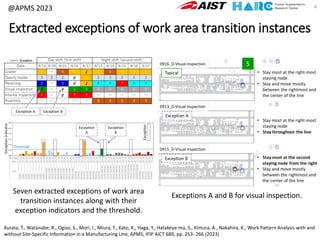
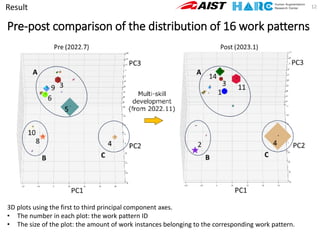
![Summary of pre-post multi-skill development
17
Pre Post Diff. Diff. [%] Stat. diff.
Avg. # of work areas/day (all) 11.1 13.3 2.2 19.8 Up, no test
(participation in both) 11.3 13.2 1.9 16.8 Up, p≒0.01
Walking distance [km/person-day] 4.6 5.0 0.5 10.2 Up, p≒0.036
# of non-routine instance 9.0 21.0 12.0 133.3 Up, no test
# of employees/day [median] 24.3 22.1 -2.2 -9.1 Down, p≒0.036
[SD] 2.8 1.5 -1.3 -46.3 Down, no test
Avg. hourly wage (July as 1) 1.00 1.03 0.03 3.00 Even, no test
Avg. sales/day (July as 1) 1.00 1.02 0.02 2.30 n.s., p≒0.747
Avg. length of work hours/person-day (July as 1) 1.00 1.07 0.07 6.60 Up, no test](https://image.slidesharecdn.com/apms2024-02040910-240911155306-31a48fca/85/Pre-Post-Analysis-on-Multi-Skill-Development-using-Flow-Line-Data-at-Expressway-Service-Area-Facilities-17-320.jpg)
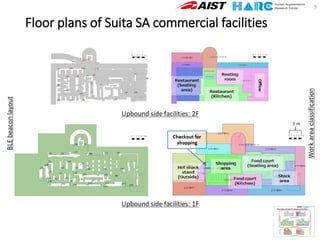
![Comparison of two case studies
18
Auto parts mfg. line Expressway SA Facilities
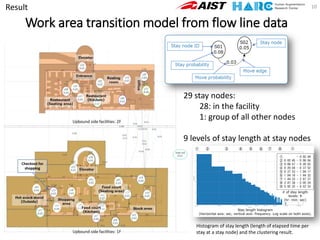
# of all stay nodes 21 29
# of stay nodes for analysis 13 28
# of stay length levels 4 9
Model dimensions 525 1,102
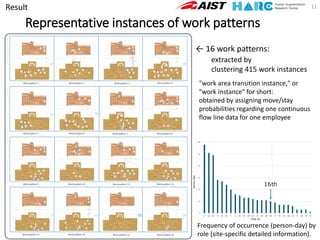
46 415
12 16
7 30
15.2 7.2
Meas. area [m
2
] 1,400 2,200
# of BLE beacons 56 97
Days of meas. 5 20
# of subjects 10 53
Etc.
# of roles 6 24
# of work areas for analysis 10 25
Etc.
Floor plans, BLE beacon layout
site-specific
detailed
information
Work area classification, Shift , Attendance records,
Outputs (# of productions, sales)
Work
area
transition
model
# of work instarnces
# of work patterns
# of non-routine instances
non-routine ratio [%]
Information
for
measurement/
prepapration
non-routine ratio: the ratio of the number of non-routine work instances to the total number of work instances
• manufacturing site to service site
• Larger site
APMS 2023 APMS 2024](https://image.slidesharecdn.com/apms2024-02040910-240911155306-31a48fca/85/Pre-Post-Analysis-on-Multi-Skill-Development-using-Flow-Line-Data-at-Expressway-Service-Area-Facilities-18-320.jpg)
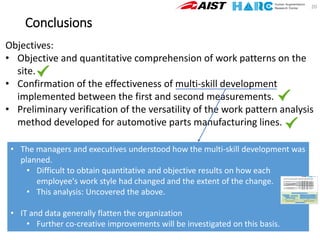
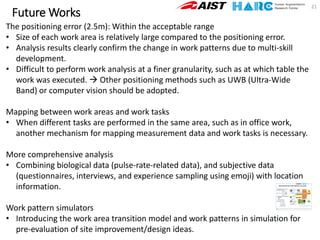

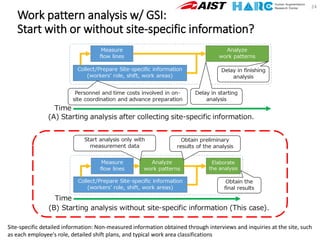
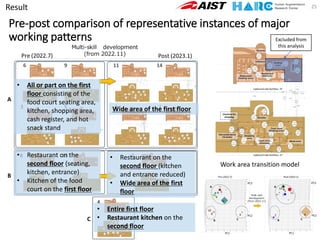

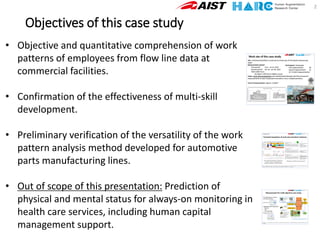
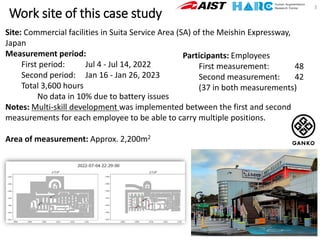
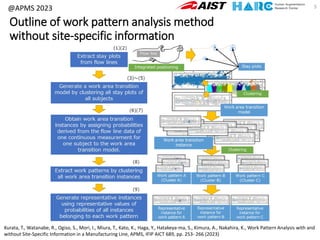
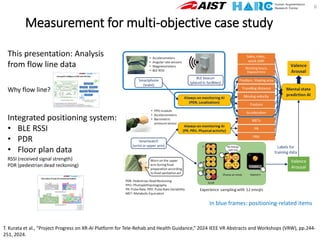
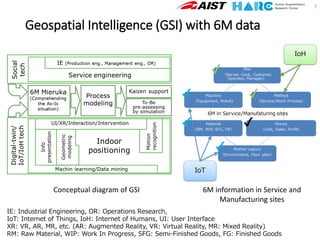
The document presents a case study analyzing work patterns and the effectiveness of multi-skill development using flow line data from employees at expressway service area facilities in Japan. It compares pre- and post-implementation metrics, revealing an increase in daily work areas and non-routine instances, although there was a slight decrease in the number of employees. The findings highlight the versatility of the work pattern analysis method traditionally used in automotive parts manufacturing in a service context, with suggestions for further comprehensive analysis methods and improvements.


![[DSC Europe 25] Paula Garcia Esteban -Building the Future: The Role of Data S...](https://cdn.slidesharecdn.com/ss_thumbnails/9ld1r1bsqpwve8qfvphy-paula-garcia-esteban-building-the-future-260122103838-4171f5cb-thumbnail.jpg?width=640&height=640&fit=bounds)


![[DSC Europe 25] Tali Fulman - Guild Meetings, Then What? Building Data Commun...](https://cdn.slidesharecdn.com/ss_thumbnails/fgohhi33rwmhqdowdj5k-tali-fulman-guild-meetings-then-what-building-data-communities-that-actually-ch-260120105855-528492c3-thumbnail.jpg?width=640&height=640&fit=bounds)


![[DSC Europe 25] Bojan Banjac - AI is always right when it comes to the matter...](https://cdn.slidesharecdn.com/ss_thumbnails/syoxtqierpydwxm5srcb-4-bojan-banjac-ai-is-always-right-when-it-comes-to-the-matters-of-taste-260119101519-694ee7d7-thumbnail.jpg?width=640&height=640&fit=bounds)
![[DSC Europe 25] Gordana Milutinovic Dumbelovic - From Insight to Oversight: A...](https://cdn.slidesharecdn.com/ss_thumbnails/t7dkjsfxqwwzceropjv4-gordana-milutinovicdumbelovic-from-insight-to-oversight-ai-driven-power-bi-moni-260119121559-9e0bf11b-thumbnail.jpg?width=640&height=640&fit=bounds)


![[DSC Europe 25] Laila Kakar - Leveraging AI for Strategic Excellence: Enhanci...](https://cdn.slidesharecdn.com/ss_thumbnails/eykmhrtsqmaaftwkexh7-dsc-lailakakar-1-260119101520-5f3b5616-thumbnail.jpg?width=640&height=640&fit=bounds)

![[DSC Europe 25] Marcos Heidemann - Beyond the Hype: Making AI Coding Assistan...](https://cdn.slidesharecdn.com/ss_thumbnails/eexkhvldrjsopspdjbur-marcos-heidemann-beyond-the-hype-getting-real-value-out-of-ai-assisted-coding-260121115910-7e9d41ec-thumbnail.jpg?width=640&height=640&fit=bounds)

![[DSC Europe 25] Tamas Srancsik - How To Teach Your AI Football? An Argument f...](https://cdn.slidesharecdn.com/ss_thumbnails/bcjh1m9xtbosv20ucftb-tamas-srancsik-how-to-teach-your-ai-football-260121115910-08b53e9e-thumbnail.jpg?width=640&height=640&fit=bounds)


![[DSC Europe 25] Milos Belcevic - Product Professional's Journey to Full-Stack...](https://cdn.slidesharecdn.com/ss_thumbnails/1zovd6fgsycdg4wvgvls-milos-belcevic-product-professionals-journey-to-full-stack-product-developer-260123083019-d993120d-thumbnail.jpg?width=640&height=640&fit=bounds)

