Installing A
Cavity Slider
By Granny Hunter and Shippy
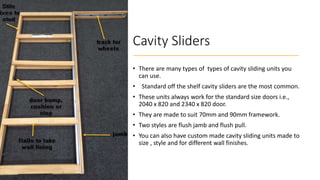
Cavity Sliders
• There are many types of types of cavity sliding units you
can use.
• Standard off the shelf cavity sliders are the most common.
• These units always work for the standard size doors i.e.,
2040 x 820 and 2340 x 820 door.
• They are made to suit 70mm and 90mm framework.
• Two styles are flush jamb and flush pull.
• You can also have custom made cavity sliding units made to
size , style and for different wall finishes.
Styles of Cavity
Slider
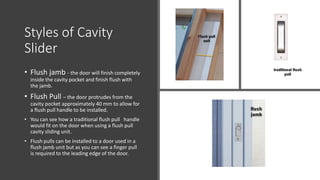
• Flush jamb - the door will finish completely
inside the cavity pocket and finish flush with
the jamb.
• Flush Pull – the door protrudes from the
cavity pocket approximately 40 mm to allow for
a flush pull handle to be installed.
• You can see how a traditional flush pull handle
would fit on the door when using a flush pull
cavity sliding unit.
• Flush pulls can be installed to a door used in a
flush jamb unit but as you can see a finger pull
is required to the leading edge of the door.
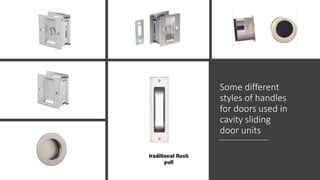
Some different
styles of handles
for doors used in
cavity sliding
door units
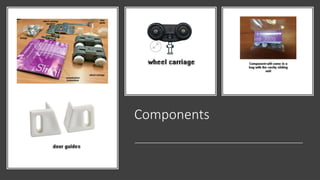
Components
Steps for fitting a
Cavity slider.
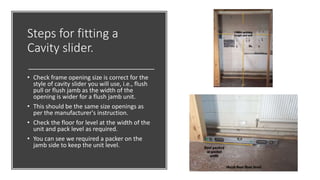
• Check frame opening size is correct for the
style of cavity slider you will use, i.e., flush
pull or flush jamb as the width of the
opening is wider for a flush jamb unit.
• This should be the same size openings as
per the manufacturer's instruction.
• Check the floor for level at the width of the
unit and pack level as required.
• You can see we required a packer on the
jamb side to keep the unit level.
Steps for fitting a cavity
slider, continued
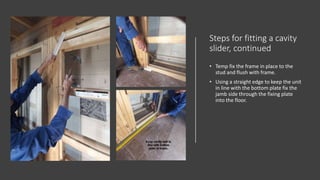
• Temp fix the frame in place to the
stud and flush with frame.
• Using a straight edge to keep the unit
in line with the bottom plate fix the
jamb side through the fixing plate
into the floor.
Steps for fitting a cavity
slider continued
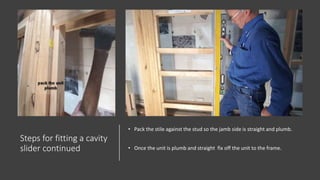
• Pack the stile against the stud so the jamb side is straight and plumb.
• Once the unit is plumb and straight fix off the unit to the frame.
Steps for fitting a cavity
slider continued
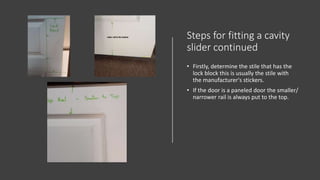
• Firstly, determine the stile that has the
lock block this is usually the stile with
the manufacturer's stickers.
• If the door is a paneled door the smaller/
narrower rail is always put to the top.
Steps for fitting a
cavity slider
continued.
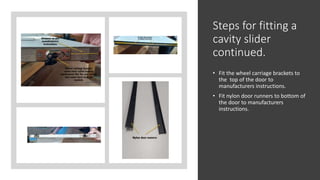
• Fit the wheel carriage brackets to
the top of the door to
manufacturers instructions.
• Fit nylon door runners to bottom of
the door to manufacturers
instructions.
Steps for fitting a
cavity unit continued
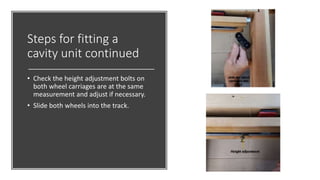
• Check the height adjustment bolts on
both wheel carriages are at the same
measurement and adjust if necessary.
• Slide both wheels into the track.
Steps for installing a
cavity slider continued
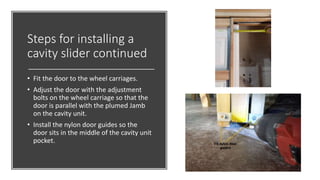
• Fit the door to the wheel carriages.
• Adjust the door with the adjustment
bolts on the wheel carriage so that the
door is parallel with the plumed Jamb
on the cavity unit.
• Install the nylon door guides so the
door sits in the middle of the cavity unit
pocket.
Steps for fitting a cavity
slider continued
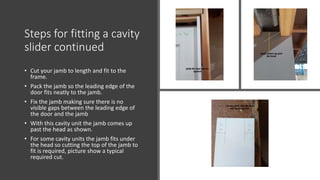
• Cut your jamb to length and fit to the
frame.
• Pack the jamb so the leading edge of the
door fits neatly to the jamb.
• Fix the jamb making sure there is no
visible gaps between the leading edge of
the door and the jamb
• With this cavity unit the jamb comes up
past the head as shown.
• For some cavity units the jamb fits under
the head so cutting the top of the jamb to
fit is required, picture show a typical
required cut.
Steps for fitting a cavity
slider continued
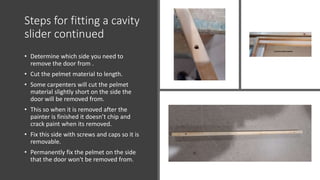
• Determine which side you need to
remove the door from .
• Cut the pelmet material to length.
• Some carpenters will cut the pelmet
material slightly short on the side the
door will be removed from.
• This so when it is removed after the
painter is finished it doesn’t chip and
crack paint when its removed.
• Fix this side with screws and caps so it is
removable.
• Permanently fix the pelmet on the side
that the door won't be removed from.

Practical assessment 2 instructions -Installing A Cavity Slider

  • 1.
    Installing A Cavity Slider ByGranny Hunter and Shippy
  • 2.
    Cavity Sliders • Thereare many types of types of cavity sliding units you can use. • Standard off the shelf cavity sliders are the most common. • These units always work for the standard size doors i.e., 2040 x 820 and 2340 x 820 door. • They are made to suit 70mm and 90mm framework. • Two styles are flush jamb and flush pull. • You can also have custom made cavity sliding units made to size , style and for different wall finishes.
  • 3.
    Styles of Cavity Slider •Flush jamb - the door will finish completely inside the cavity pocket and finish flush with the jamb. • Flush Pull – the door protrudes from the cavity pocket approximately 40 mm to allow for a flush pull handle to be installed. • You can see how a traditional flush pull handle would fit on the door when using a flush pull cavity sliding unit. • Flush pulls can be installed to a door used in a flush jamb unit but as you can see a finger pull is required to the leading edge of the door.
  • 4.
    Some different styles ofhandles for doors used in cavity sliding door units
  • 5.
  • 6.
    Steps for fittinga Cavity slider. • Check frame opening size is correct for the style of cavity slider you will use, i.e., flush pull or flush jamb as the width of the opening is wider for a flush jamb unit. • This should be the same size openings as per the manufacturer's instruction. • Check the floor for level at the width of the unit and pack level as required. • You can see we required a packer on the jamb side to keep the unit level.
  • 7.
    Steps for fittinga cavity slider, continued • Temp fix the frame in place to the stud and flush with frame. • Using a straight edge to keep the unit in line with the bottom plate fix the jamb side through the fixing plate into the floor.
  • 8.
    Steps for fittinga cavity slider continued • Pack the stile against the stud so the jamb side is straight and plumb. • Once the unit is plumb and straight fix off the unit to the frame.
  • 9.
    Steps for fittinga cavity slider continued • Firstly, determine the stile that has the lock block this is usually the stile with the manufacturer's stickers. • If the door is a paneled door the smaller/ narrower rail is always put to the top.
  • 10.
    Steps for fittinga cavity slider continued. • Fit the wheel carriage brackets to the top of the door to manufacturers instructions. • Fit nylon door runners to bottom of the door to manufacturers instructions.
  • 11.
    Steps for fittinga cavity unit continued • Check the height adjustment bolts on both wheel carriages are at the same measurement and adjust if necessary. • Slide both wheels into the track.
  • 12.
    Steps for installinga cavity slider continued • Fit the door to the wheel carriages. • Adjust the door with the adjustment bolts on the wheel carriage so that the door is parallel with the plumed Jamb on the cavity unit. • Install the nylon door guides so the door sits in the middle of the cavity unit pocket.
  • 13.
    Steps for fittinga cavity slider continued • Cut your jamb to length and fit to the frame. • Pack the jamb so the leading edge of the door fits neatly to the jamb. • Fix the jamb making sure there is no visible gaps between the leading edge of the door and the jamb • With this cavity unit the jamb comes up past the head as shown. • For some cavity units the jamb fits under the head so cutting the top of the jamb to fit is required, picture show a typical required cut.
  • 14.
    Steps for fittinga cavity slider continued • Determine which side you need to remove the door from . • Cut the pelmet material to length. • Some carpenters will cut the pelmet material slightly short on the side the door will be removed from. • This so when it is removed after the painter is finished it doesn’t chip and crack paint when its removed. • Fix this side with screws and caps so it is removable. • Permanently fix the pelmet on the side that the door won't be removed from.