PR CRISES
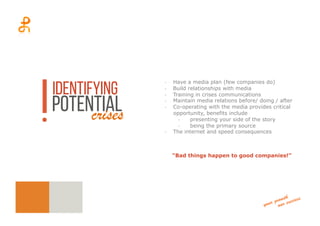
-­‐  Have a media plan (few companies do)
-­‐  Build relationships with media
-­‐  Training in crises communications
-­‐  Maintain media relations before/ doing / after
-­‐  Co-operating with the media provides critical
opportunity, benefits include
-­‐  presenting your side of the story
-­‐  being the primary source
-­‐  The internet and speed consequences
“Bad things happen to good companies!”
identifying
potentialcrises
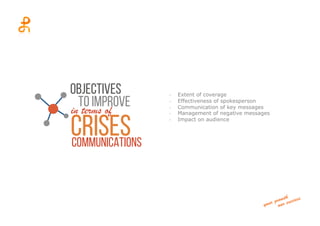
-­‐  Extent of coverage
-­‐  Effectiveness of spokesperson
-­‐  Communication of key messages
-­‐  Management of negative messages
-­‐  Impact on audience
Objectives
communications
in terms of
Crises
To improve
-­‐  Identification of vulnerabilities (Socio,
Economic, Political Environment)
-­‐  Assessment of Fundamental capabilities
-­‐  Assessment of other responding parties
-­‐  Assessment of resources
-­‐  Assessment of maintenance
programme
management
Crises
Assessing your
capability
-­‐  Sudden
-­‐  Perceptional
-­‐  Smouldering
-­‐  Bizarre
crises
types of
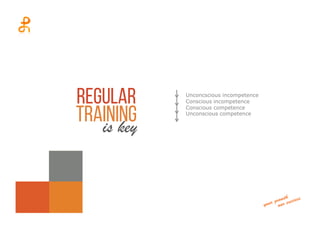
Unconcscious incompetence
Conscious incompetence
Conscious competence
Unconscious competence
Regular
trainingis key
Pr crisesrules
-­‐  Do no more harm
-­‐  Be Prepared
-­‐  Honesty is the best policy
-­‐  Show concern and action
-­‐  Everything said – concern, action &
accountability
communication
-­‐  Make a judgement about the situation
-­‐  Develop talking points / holding statements
-­‐  Centralize incoming calls to appropriate
spokesperson
-­‐  Respond rapidly to media callsprocedures
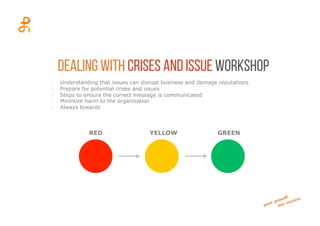
-­‐  Understanding that issues can disrupt business and damage reputations
-­‐  Prepare for potential crises and issues
-­‐  Steps to ensure the correct message is communicated
-­‐  Minimize harm to the organization
-­‐  Always towards
Dealing with crises and issue workshop
RED YELLOW GREEN
CONTENTSinclude...
-­‐  The need for a plan
-­‐  Formulating an executable plan
-­‐  Identifying a crisis
-­‐  The role of spokesperson
-­‐  The role of professional (designated)
communicator
-­‐  Handling the media (practice)
-­‐  Internal and external message
alignment
-­‐  Communications after the crisis has
been resolved.

PR Crises

  • 1.
  • 2.
    -­‐  Have amedia plan (few companies do) -­‐  Build relationships with media -­‐  Training in crises communications -­‐  Maintain media relations before/ doing / after -­‐  Co-operating with the media provides critical opportunity, benefits include -­‐  presenting your side of the story -­‐  being the primary source -­‐  The internet and speed consequences “Bad things happen to good companies!” identifying potentialcrises
  • 3.
    -­‐  Extent ofcoverage -­‐  Effectiveness of spokesperson -­‐  Communication of key messages -­‐  Management of negative messages -­‐  Impact on audience Objectives communications in terms of Crises To improve
  • 4.
    -­‐  Identification ofvulnerabilities (Socio, Economic, Political Environment) -­‐  Assessment of Fundamental capabilities -­‐  Assessment of other responding parties -­‐  Assessment of resources -­‐  Assessment of maintenance programme management Crises Assessing your capability
  • 5.
    -­‐  Sudden -­‐  Perceptional -­‐ Smouldering -­‐  Bizarre crises types of
  • 6.
    Unconcscious incompetence Conscious incompetence Consciouscompetence Unconscious competence Regular trainingis key
  • 7.
    Pr crisesrules -­‐  Dono more harm -­‐  Be Prepared -­‐  Honesty is the best policy -­‐  Show concern and action -­‐  Everything said – concern, action & accountability
  • 8.
    communication -­‐  Make ajudgement about the situation -­‐  Develop talking points / holding statements -­‐  Centralize incoming calls to appropriate spokesperson -­‐  Respond rapidly to media callsprocedures
  • 9.
    -­‐  Understanding thatissues can disrupt business and damage reputations -­‐  Prepare for potential crises and issues -­‐  Steps to ensure the correct message is communicated -­‐  Minimize harm to the organization -­‐  Always towards Dealing with crises and issue workshop RED YELLOW GREEN
  • 10.
    CONTENTSinclude... -­‐  The needfor a plan -­‐  Formulating an executable plan -­‐  Identifying a crisis -­‐  The role of spokesperson -­‐  The role of professional (designated) communicator -­‐  Handling the media (practice) -­‐  Internal and external message alignment -­‐  Communications after the crisis has been resolved.