TITLE
MONITORING OF MELON FRUIT FLY
BACTROCERA CUCURBITAE AND ITS NATURAL
ENEMIES ON MUSK MELON
By
SHAHID HUSSAIN LASHARI
Reg:# 2K13-ET-302
DEPARTMENT OF ENTOMOLOGY
FACULTY OF CROP PROTECTION
SINDH AGRICULTURE UNIVERSITY TANDOJAM
2016
Supervisory Committee
SUPERVISOR MUHAMMAD IBRAHIM KUBAR
Assistant Professor
Department of Entomology
Faculty of Crop Protection
Sindh Agriculture University, Tandojam.
CO-SUPERVISOR-I DR. IMRAN KHATRI
Associate Professor
Department of Entomology
Faculty of Crop Protection
Sindh Agriculture University, Tandojam.
CO-SUPERVISOR-II DR. NIAZ AHMED KHUHRO
Sr. Scientist
Nuclear Institute of Agriculture (NIA)
Tandojam
INTRODUCTION
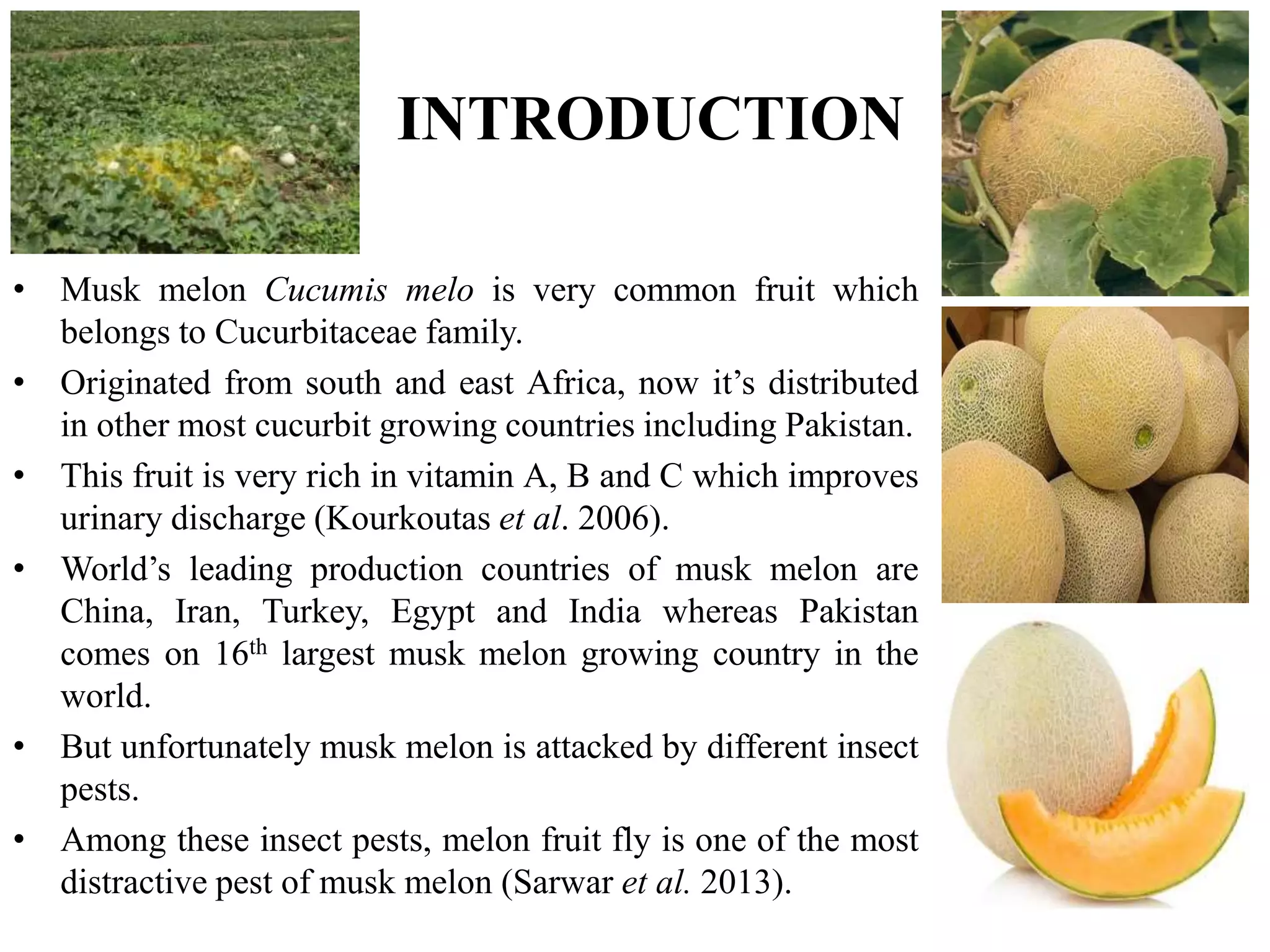
• Musk melon Cucumis melo is very common fruit which
belongs to Cucurbitaceae family.
• Originated from south and east Africa, now it’s distributed
in other most cucurbit growing countries including Pakistan.
• This fruit is very rich in vitamin A, B and C which improves
urinary discharge (Kourkoutas et al. 2006).
• World’s leading production countries of musk melon are
China, Iran, Turkey, Egypt and India whereas Pakistan
comes on 16th largest musk melon growing country in the
world.
• But unfortunately musk melon is attacked by different insect
pests.
• Among these insect pests, melon fruit fly is one of the most
distractive pest of musk melon (Sarwar et al. 2013).
• Fruit flies belong with family Tephritidae and order
Diptera.
• Among them melon fruit fly is regressing the
number of cucurbitaceous crops (Anthony et al.
2005).
• Melon fruit fly is found in tropical regions of the
world including Pakistan (Khan et al. 2005).
• Melon flies have more than 80 hosts, including
edible gourds, musk melon, cucumbers etc.
• The fruit fly attack fruits at different stages off
maturity.
• The damage normally starts when fruit fly
punctures the fruit with its long and sharp
ovipositor.
• The maggots hatches from eggs feed on the
fruits thus render them unmarketable.
• Fruit fly carry bacteria which decay the fruit
and making it more nutritious for the maggots.
• Fruits finally drops down.
• The larvae pupate and adult flies starts
emerging.
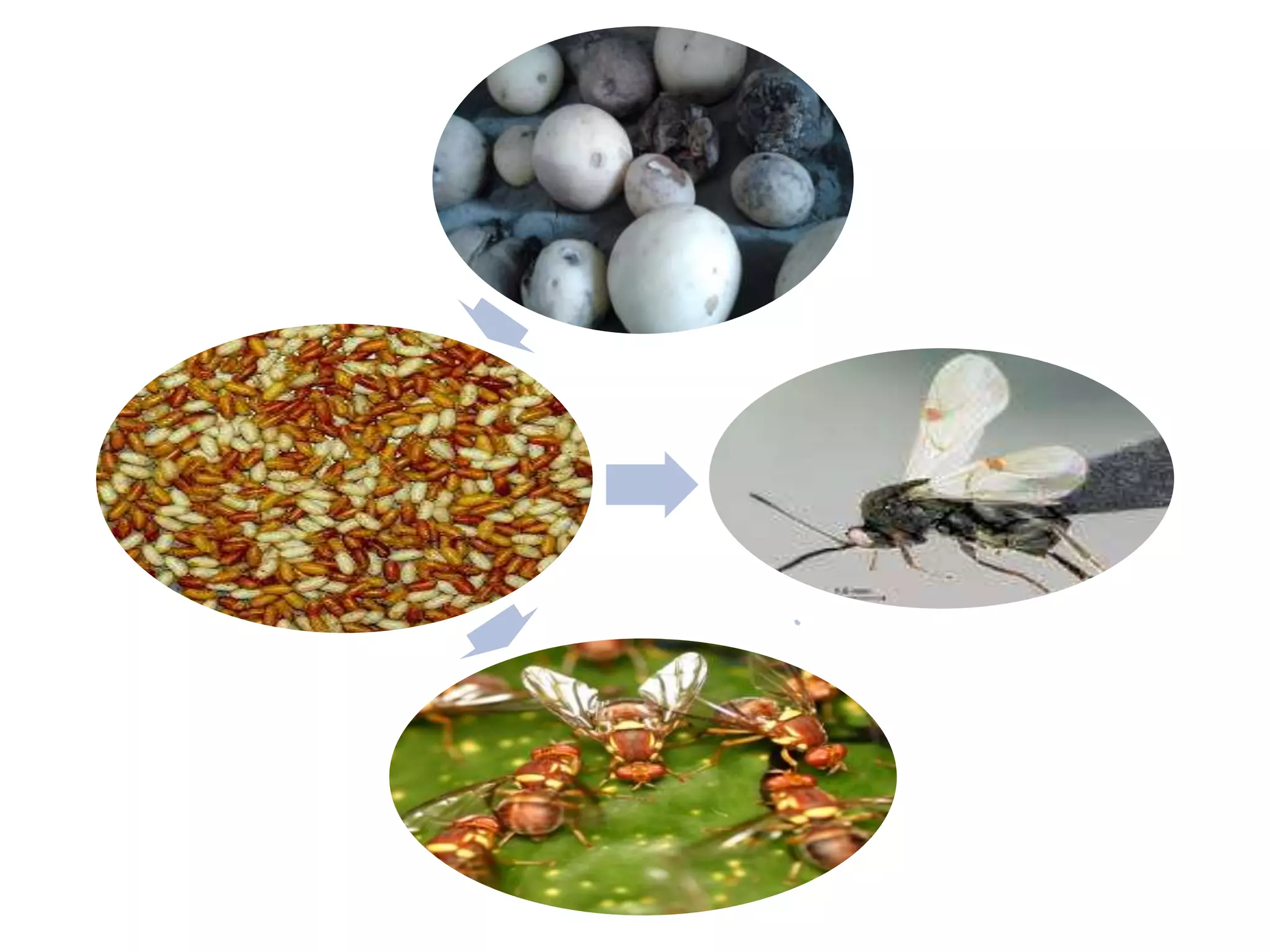
Eggs
1-2 days
Maggots
5 to 11 days
Pupae
9 to 11 days
Adults
25-35 days
Life cycle of melon fruit fly
OBJECTIVES OF THE STUDY
I. To investigate the population density and percent of damage
caused by Bactrocera cucurbitae on musk melon.
II. To monitor the natural enemies associated with Bactrocera
cucurbitae on musk melon.
MATERIALS AND METHODS
Study Site
Lashari fruit farm
Study Methods
During 2015
12 Cue lure baited traps were deployed at 3 ft above the ground
RESULTS
Table-1: Biodiversity of B.cucurbitae catches/traps/day in musk melon fruit farm
during kharif season 2015
Traps
installation
Dates
Trap
1
Trap
2
Trap
3
Trap
4
Trap
5
Trap
6
Trap
7
Trap
8
Trap
9
Trap
10
Trap
11
Trap
12
Total
7th March
15
30 39 39 55 39 43 46 49 45 49 42 45 521
14th March
15 30 30 35 30 27 36 40 28 22 28 20 32 358
21st March
15 10 10 5 11 9 14 12 11 10 11 6 14 123
28th March
15 7 11 5 5 4 9 9 7 11 7 7 2 84
4th April
15 14 14 11 20 16 25 17 23 15 18 14 17 204
11th April
15 8 12 5 13 11 16 9 10 10 9 12 9 124
18th April
L5 2 7 3 6 5 9 5 2 4 4 8 7 62
25th April
15
0 2 1 0 2 1 4 3 1 1 0 0 15
2nd May
15 9 11 8 12 10 9 13 7 11 12 10 13 125
9th May
15 5 9 2 7 0 12 9 9 12 4 11 5 85
16th May
15 9 3 6 2 5 8 2 6 7 1 7 3 59
23rd May
15 0 3 2 1 2 0 1 4 1 2 1 2 19
Table-2: Biodiversity of melon fruit fly and its parasitoids collected from infested
muskmelon fruit during kharif season 2015
Date No. of
fruits
Fruit weight
(kg)
No. of pupae B. cucurbitae T.daci
7-Mar-2015 07 2.50 130 121 6
14-Mar-2015 07 3.00 212 158 3
21-Mar-2015 11 4.00 150 123 0
28-Mar-2015 08 3.00 199 84 0
4-April-2015 10 3.50 320 204 1
11-April-2015 10 3.00 170 124 0
18-April-2015 16 5.00 190 62 6
25-April-2015 08 3.00 221 15 0
2-May-2015 20 6.50 240 125 2
9-May-2015 12 4.00 205 85 1
16-May-2015 12 3.50 160 59 0
23-May-2015 08 3.00 110 19 0
Total 128 44 2307 1179 19
Percentage% 51.10 0.82
Figure-1: Average number of B.cucurbitae catches/traps/day in musk melon
fruit farm during kharif season 2015.
Figure-2: Average population of Trybliographa daci collected from musk melon infested fruit
during kharif season 2015
CONCLUSION
• The present study concludes that the melon fruit fly causes
serious damage in musk melon preferably to young and
immature stages.
• The melon fruit fly causes about 60% losses .
• Application of cue lure traps offer superior yield in terms of
fruit size and quality, and reduced melon fruit fly infestation in
musk melon.
• Although, cue lure is easy to prepare locally and is effective for
the management of melon fruit fly, it requires more frequent
applications owing to more labour cost.
• Therefore, future efforts should be made to increase the
application of cue lures to make fruit cultivation a profitable
business, and to protect environment and life.
RECOMMENDATIONS
 It is recommended that further studies on the infestation of
B.cucurbitae could be carried out.
 Studies on natural enemies may be repeated next year.
PPT SHL

PPT SHL

  • 2.
    TITLE MONITORING OF MELONFRUIT FLY BACTROCERA CUCURBITAE AND ITS NATURAL ENEMIES ON MUSK MELON By SHAHID HUSSAIN LASHARI Reg:# 2K13-ET-302 DEPARTMENT OF ENTOMOLOGY FACULTY OF CROP PROTECTION SINDH AGRICULTURE UNIVERSITY TANDOJAM 2016
  • 3.
    Supervisory Committee SUPERVISOR MUHAMMADIBRAHIM KUBAR Assistant Professor Department of Entomology Faculty of Crop Protection Sindh Agriculture University, Tandojam. CO-SUPERVISOR-I DR. IMRAN KHATRI Associate Professor Department of Entomology Faculty of Crop Protection Sindh Agriculture University, Tandojam. CO-SUPERVISOR-II DR. NIAZ AHMED KHUHRO Sr. Scientist Nuclear Institute of Agriculture (NIA) Tandojam
  • 4.
    INTRODUCTION • Musk melonCucumis melo is very common fruit which belongs to Cucurbitaceae family. • Originated from south and east Africa, now it’s distributed in other most cucurbit growing countries including Pakistan. • This fruit is very rich in vitamin A, B and C which improves urinary discharge (Kourkoutas et al. 2006). • World’s leading production countries of musk melon are China, Iran, Turkey, Egypt and India whereas Pakistan comes on 16th largest musk melon growing country in the world. • But unfortunately musk melon is attacked by different insect pests. • Among these insect pests, melon fruit fly is one of the most distractive pest of musk melon (Sarwar et al. 2013).
  • 5.
    • Fruit fliesbelong with family Tephritidae and order Diptera. • Among them melon fruit fly is regressing the number of cucurbitaceous crops (Anthony et al. 2005). • Melon fruit fly is found in tropical regions of the world including Pakistan (Khan et al. 2005). • Melon flies have more than 80 hosts, including edible gourds, musk melon, cucumbers etc. • The fruit fly attack fruits at different stages off maturity.
  • 6.
    • The damagenormally starts when fruit fly punctures the fruit with its long and sharp ovipositor. • The maggots hatches from eggs feed on the fruits thus render them unmarketable. • Fruit fly carry bacteria which decay the fruit and making it more nutritious for the maggots. • Fruits finally drops down. • The larvae pupate and adult flies starts emerging.
  • 7.
    Eggs 1-2 days Maggots 5 to11 days Pupae 9 to 11 days Adults 25-35 days Life cycle of melon fruit fly
  • 8.
    OBJECTIVES OF THESTUDY I. To investigate the population density and percent of damage caused by Bactrocera cucurbitae on musk melon. II. To monitor the natural enemies associated with Bactrocera cucurbitae on musk melon.
  • 9.
    MATERIALS AND METHODS StudySite Lashari fruit farm Study Methods During 2015 12 Cue lure baited traps were deployed at 3 ft above the ground
  • 11.
  • 12.
    Table-1: Biodiversity ofB.cucurbitae catches/traps/day in musk melon fruit farm during kharif season 2015 Traps installation Dates Trap 1 Trap 2 Trap 3 Trap 4 Trap 5 Trap 6 Trap 7 Trap 8 Trap 9 Trap 10 Trap 11 Trap 12 Total 7th March 15 30 39 39 55 39 43 46 49 45 49 42 45 521 14th March 15 30 30 35 30 27 36 40 28 22 28 20 32 358 21st March 15 10 10 5 11 9 14 12 11 10 11 6 14 123 28th March 15 7 11 5 5 4 9 9 7 11 7 7 2 84 4th April 15 14 14 11 20 16 25 17 23 15 18 14 17 204 11th April 15 8 12 5 13 11 16 9 10 10 9 12 9 124 18th April L5 2 7 3 6 5 9 5 2 4 4 8 7 62 25th April 15 0 2 1 0 2 1 4 3 1 1 0 0 15 2nd May 15 9 11 8 12 10 9 13 7 11 12 10 13 125 9th May 15 5 9 2 7 0 12 9 9 12 4 11 5 85 16th May 15 9 3 6 2 5 8 2 6 7 1 7 3 59 23rd May 15 0 3 2 1 2 0 1 4 1 2 1 2 19
  • 13.
    Table-2: Biodiversity ofmelon fruit fly and its parasitoids collected from infested muskmelon fruit during kharif season 2015 Date No. of fruits Fruit weight (kg) No. of pupae B. cucurbitae T.daci 7-Mar-2015 07 2.50 130 121 6 14-Mar-2015 07 3.00 212 158 3 21-Mar-2015 11 4.00 150 123 0 28-Mar-2015 08 3.00 199 84 0 4-April-2015 10 3.50 320 204 1 11-April-2015 10 3.00 170 124 0 18-April-2015 16 5.00 190 62 6 25-April-2015 08 3.00 221 15 0 2-May-2015 20 6.50 240 125 2 9-May-2015 12 4.00 205 85 1 16-May-2015 12 3.50 160 59 0 23-May-2015 08 3.00 110 19 0 Total 128 44 2307 1179 19 Percentage% 51.10 0.82
  • 14.
    Figure-1: Average numberof B.cucurbitae catches/traps/day in musk melon fruit farm during kharif season 2015.
  • 15.
    Figure-2: Average populationof Trybliographa daci collected from musk melon infested fruit during kharif season 2015
  • 16.
    CONCLUSION • The presentstudy concludes that the melon fruit fly causes serious damage in musk melon preferably to young and immature stages. • The melon fruit fly causes about 60% losses . • Application of cue lure traps offer superior yield in terms of fruit size and quality, and reduced melon fruit fly infestation in musk melon. • Although, cue lure is easy to prepare locally and is effective for the management of melon fruit fly, it requires more frequent applications owing to more labour cost. • Therefore, future efforts should be made to increase the application of cue lures to make fruit cultivation a profitable business, and to protect environment and life.
  • 17.
    RECOMMENDATIONS  It isrecommended that further studies on the infestation of B.cucurbitae could be carried out.  Studies on natural enemies may be repeated next year.